
All posts by webadmin

re-trial lapses do not vitiate a court martial if trial complies with law, rules High Court

The petitioner, a hockey coach, was tried by court martial for sexually harassing a 12-year old girl who was staying at a BSF hostel in Punjab to learn the sport

The Delhi High Court has held that pre-trial lapses during disciplinary proceedings do not vitiate the subsequent trial by court martial if it is done in accordance with law and full opportunity of cross-examining witnesses is provided to the accused.

Upholding the conviction and sentence awarded to an Inspector by a General Security Force Court (GSFC) constituted by the Border Security Force (BSF) for allegedly sexually harassing a minor girl, a Division Bench comprising Justice Om Prakash Shukla and Justice C Hari Shankar, held that in the present case denial of cross-examination during the Recording of Evidence (RoE) under provisions of Rule 45B does not, by itself, vitiate the trial where full opportunity of cross-examination was afforded before GSFC.

“A bare perusal of the record shows that the petitioner cross-examined witnesses during the GSFC trial, satisfying the requirement thereof that was omitted in the preliminary stage, and the same does not taint the trial proceedings, as the trial is done in accordance with law,” the Bench said in their order of September 17.

The petitioner, a hockey coach, was tried by court martial for sexually harassing a 12-year old girl who was staying at a BSF hostel in Punjab to learn the sport. She had confided about the incident to another trainee and later told her parents, following which a complaint was made before the BSF authorities.

In his petition, the BSF inspector had contended that there were lapses in pre-trial proceedings, no FIR was lodged in the case, investigations were not done under the Prevention of Sexual Harassment (POSH) Act and the punishment of dismissal and imprisonment could not have been imposed together.

The failure to refer the matter to the internal complaints committee under the POSH Act, does not, by itself, constitute a gross procedural lapse. Even if the child victim falls within the definition of an “aggrieved woman” under Section 2(a), the complaint mechanism under the POSH Act, is to be invoked by the choice of the aggrieved woman or her guardians, the Bench observed.

“In the light of the present case, the child victim and her parents made a conscious decision not to refer the matter to the internal sexual harassment committee and instead chose to file a complaint with the BSF authorities, which cannot be faulted with nor it in any manner caused prejudice to the rights of the petitioner,” the Bench ruled.

The Bench also did not agree with the contention of the petitioner that Section 50 of the BSF Act puts a restriction on combining the punishment of dismissal with certain others prescribed under Section 48 of the said Act.

A plain reading of both the sections express that the GSFC can lawfully award imprisonment together with dismissal from service, the Bench held.

Junking the petitioner’s claims that some witnesses were not examined, the Bench opined that the evidence of direct testimony of the victim cannot be displaced by the non-examination of an additional witness or by immaterial discrepancies.

“Further, this Court finds that the heinous act of sexual harassment of a girl student who is also a minor, by a sports teacher would figure quite high in the list of offences of grave nature since it has far-reaching consequences, which impact more than just the parties to the proceeding and the said gravity stands multiplied in the case of a disciplined force like the BSF,” the Bench remarked.
Pak defence minister’s U-turn on ‘nukes to guard allies’ claim

Says nuclear weapons not part of agreement

article_Author
Ujwal Jalali Tribune News Service

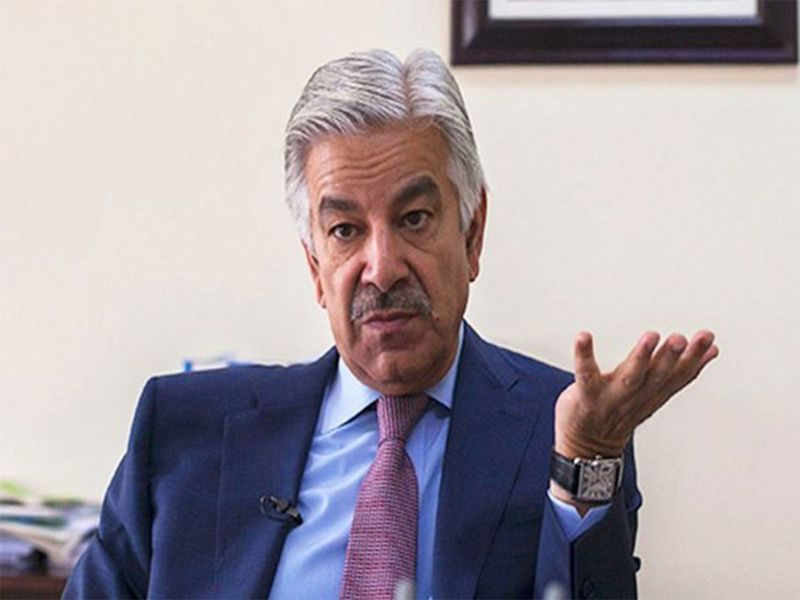
Pakistan Defence Minister Khawaja Muhammad Asif has retracted his earlier statement suggesting that his country’s nuclear capabilities could be extended to Saudi Arabia under a newly signed pact.

Initially, Asif had indicated that Pakistan’s nuclear deterrence might be made available to Riyadh if required, marking the first public acknowledgment of such an arrangement. Following widespread controversy and international scrutiny, he clarified that nuclear weapons were not part of the agreement.

The “Strategic Mutual Defence Agreement”, signed on September 17, during Prime Minister Shehbaz Sharif’s visit to Riyadh, stipulates that an attack on either of the nations would be treated as an attack on both, drawing parallels with NATO’s Article 5. While the pact is described as “purely defensive”, Asif’s initial remarks had raised concerns about the potential for nuclear escalation in the Middle East.

Speaking to reporters in Islamabad, Asif said Saudi Arabia would defend Pakistan if India declared war on its neighbour. “Yes, absolutely. There is no doubt about it,” Pakistan media quoted him as saying. He emphasised that the deal with Saudi Arabia is a defensive arrangement. “If there is aggression, whether against Saudi Arabia or Pakistan, we will jointly defend against it,” he said.

Asif also left open the possibility of other Arab nations joining the framework. “I cannot prematurely answer this, but I will definitely say the doors are not closed,” he added. The minister underlined that he had long advocated a NATO-like security arrangement in the Islamic world. “It is a fundamental right of countries, particularly Muslim nations, to jointly defend their region, countries and people,” he said.

On the Saudi-Pakistan defence pact, India has reacted with guarded concern. The Ministry of External Affairs said that while New Delhi values its strategic partnership with Saudi Arabia, it expects Riyadh to pursue ties with full regard to India’s “interests and sensitivities”. The MEA said that it would study the implications of the pact for regional stability and national security.


Soldier killed in encounter with terrorists in Udhampur

Efforts underway to hunt down terrorists

article_Author
Adil Akhzer

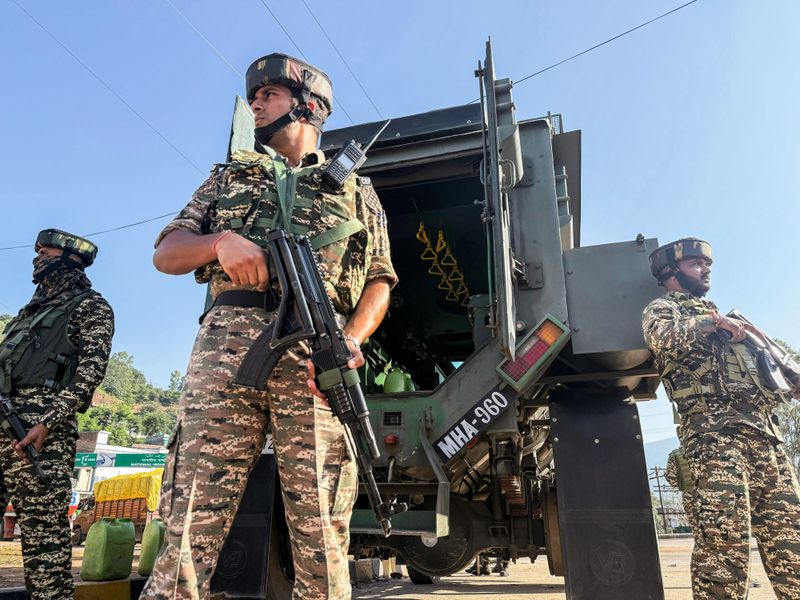
A soldier was killed in an encounter between the security forces and terrorists in the higher reaches of Udhampur district, officials said on Saturday.

The soldier, Lance Dafadar Baldev Chand, was injured late on Friday evening in an exchange of fire between a joint team of the police and the Army and the terrorists at Kanji in the Seoj Dhar, which is located on the Doda-Udhampur border of the Jammu region, the officials said. The soldier was shifted to a hospital where he succumbed to his injuries.

A senior police official said there were inputs that a group of terrorists were present in the area and subsequently an operation was launched.

“There was a firefight with the terrorists. One jawan sustained bullet wounds. He succumbed to injuries,” the senior official said.

“The GOC, White Knight Corps, and all ranks pay solemn tribute to Lance Dafadar Baldev Chand, who made the supreme sacrifice during an ongoing operation at Kanji, Udhampur, on the night of September 19-20,” the Army posted on X.

“We stand with the bereaved family in this hour of grief,” it said.

The Army late on Friday said a contact was established around 8 pm and an “exchange of fire took place”.

On Saturday, sources said efforts were underway to hunt down the terrorists present in the area.

Of late, militants have shifted the battleground from the Valley to the mountainous forests of Jammu, which have witnessed a sharp rise in the number of terror attacks in the recent past. From the mountains of Poonch and Rajouri, militant footprints even spread to the Chenab region and the plains of Kathua bordering Punjab.

Security officials say groups of highly trained militants who are currently operating in the Jammu region are taking advantage of topography and using encrypted communication systems.


3 suspended for Aug 27 floodgate collapse

Panel formed to probe Madhopur barrage incident

article_Author
Ruchika Khanna Tribune News Service

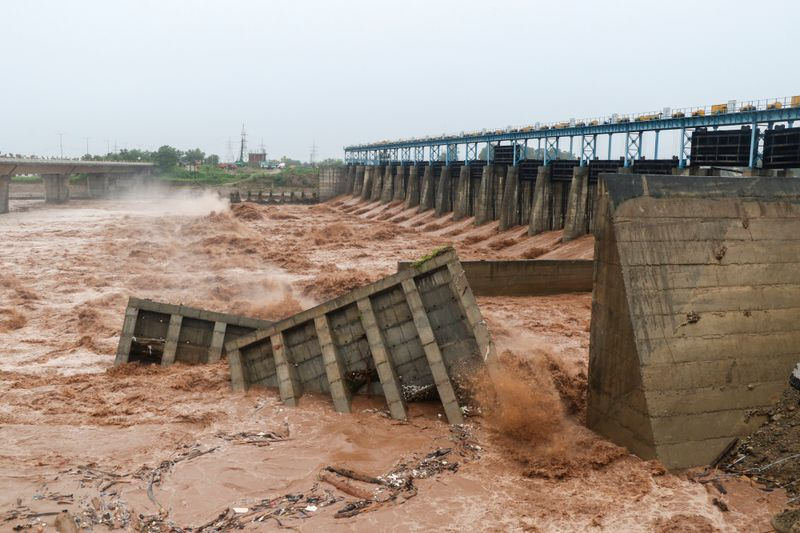
The Punjab Government has ordered an inquiry into the collapse of three floodgates at the Madhopur Headworks on August 27 and placed three of its officers posted at the barrage under suspension.

The State Dam Safety Organisation has constituted a five-member expert committee — headed by AK Bajaj, a hydromechanical expert, with Pradeep Kumar Gupta, Sanjeev Suri, NK Jain and Vias Dev as members — to hold an impartial inquiry.

The committee will investigate the structural, mechanical, hydrological, geotechnical and operational causes that led to the washing away of the gates at the barrage. It will also examine the condition and performance of the gates, the embedded parts, hoisting arrangements and stability of civil structures. The committee will further suggest immediate and long-term remedial and rehabilitation measures.

The upkeep of the barrage has come under scrutiny with experts alleging that the floodgates had corroded and jammed. The working of the floodgates had also not been tested frequently, it is alleged.

Before announcing the committee, the government placed three officers of the department — Executive Engineer Nitin Sood, Sub-Divisional Officer Arun Kumar and Junior Engineer Sachin Thakur — under suspension.

A senior officer in the Water Resources Department said the move was aimed at ensuring an impartial investigation into the incident.

On the intervening night of August 26-27, when over two lakh cusecs of water was released from the Ranjit Sagar Dam reservoir on the upstream of the Ravi, the officials posted there could not open most of the 54 floodgates as these were jammed with silt and debris. Three of these floodgates collapsed under the pressure of the gushing water, exacerbating flooding in downstream areas of Pathankot and Gurdaspur.

Experts who were later called in to help open the gates got stuck in a building at the headworks, prompting the Army to rescue 22 persons from the structure, which collapsed soon after. An employee of the department was swept away and his body was found later.

The floodgates were sealed earlier this year after the government held the Indus River Waters Treaty (IWT) in abeyance. India had said it would not allow the flow of water from IWT rivers into Pakistan.


India, Canada NSAs talk terror, organised crime

National Security Adviser Ajit Doval and his Canadian counterpart Nathalie Drouin recently held wide-ranging talks in New Delhi, covering counter-terrorism, security cooperation and the issue of organised crime.

article_Author
Ujwal Jalali Tribune News Service

The Ministry of External Affairs (MEA) on Saturday said India and Canada had agreed to adopt a collaborative approach towards a “new chapter” in bilateral ties, including working closely to combat terrorism and transnational organised crime.

According to the MEA, National Security Adviser (NSA) Ajit Doval and his Canadian counterpart Nathalie Drouin recently held wide-ranging talks in New Delhi, covering counter-terrorism, security cooperation and the issue of organised crime.

New Delhi has long accused Canada of turning a blind eye to Khalistan separatist networks and their links with organised crime syndicates. Indian officials maintain that such groups not only foment anti-India activities abroad, but also channel funds into extremist propaganda and criminal enterprises. In this backdrop, the NSA-level dialogue is seen as a crucial effort to keep security cooperation on track despite political strains. 

“They (NSAs) agreed to strengthen security cooperation and further reinforce existing mechanisms of engagement. The two NSAs also deliberated on the priority areas for future cooperation and exchanged views on regional and global developments,” the MEA said.

While no breakthrough announcements were made, officials indicated that New Delhi and Ottawa agreed to work closely on the way forward and adopt a collaborative approach towards a “new chapter in bilateral relations”.

Relations between the two countries sharply deteriorated in 2023 after then Canadian Prime Minister Justin Trudeau alleged India’s involvement in the killing of terrorist Hardeep Singh Nijjar in British Columbia, a charge New Delhi dismissed as “absurd and motivated.”

The episode led to tit-for-tat expulsions of diplomats, a freeze in trade negotiations, suspension of visa services, and the recall of High Commissioners from both capitals. The strain also created unease among the Indian diaspora in Canada, including students and workers.

The change of leadership in Ottawa earlier this year created an opening for a reset. Carney’s June meeting with Modi was the first significant effort to put relations back on track, paving the way for the latest consultations.It was also an opportunity to follow up on the discussions between PM Modi and his Canadian counterpart Carney, the MEA said on Doval-Drouin talks.


HEADLINES : 19 SEP 2025: OPEN LINK TO READ DETAILS

Exclusive: After Op Sindoor, Indian Army to set up 19 drone centres at premier training academies

Army, Navy, IAF education wings merged; 3 joint military stations approved

Army organises Ex-Servicemen’s Conference at Hamirpur

DGCA clears helicopter services for Chardham Yatra with enhanced safety norms

Strategic win: Army runs first freight train on USBRL, to return with Kashmiri apples

Women candidates can be inducted against unfilled vacancies for males, rules High CourT

Armed Forces to get 3 joint military stations, common education corps

Army rolls out overhauled armoured recovery vehicle

Global, regional headwinds strong, Govt should pause ONOE, Delimitation: MP MANISH TEWARI

Notify rules for registering ‘Anand Karaj’: SC to states, UTs

Army rolls out initiative to make all soldiers drone-ready

Missing Navy official found dead near Matheran trek route


How India foiled Op Gibraltar in 1965: CAPT AMARINDER SINGH



























