All posts by webadmin

Rajnath Singh Meets Tajikistan Defence Minister Emomali Sobirzoda On Sidelines of SCO Meeting

Defence Minister Rajnath Singh participated in the Shanghai Cooperation Organisation (SCO) Defence Ministers’ meeting held in Qingdao, China, on June 25–26, 2025. The meeting brought together defence ministers from the SCO member states to discuss pressing regional and global security challenges, with a particular focus on counter-terrorism, regional stability, and enhanced defence cooperation.

On the sidelines of the main event, Rajnath Singh held several key bilateral meetings:

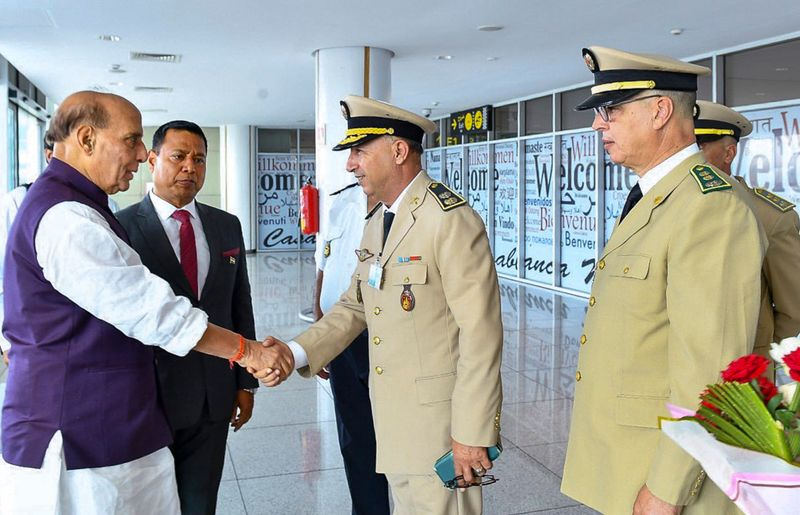
Tajikistan: Singh met with Tajikistan’s Defence Minister, Lieutenant General Emomali Sobirzoda. The discussions centred on strengthening bilateral defence ties and collaborating on regional security matters, including counter-terrorism and connectivity. Singh reiterated India’s commitment to a zero-tolerance policy on terrorism and called for deeper cooperation among SCO members to address radicalisation and security threats.

Belarus: Singh also engaged with Belarusian Defence Minister Lieutenant General Viktor Gennadievich Khrenin. The talks focused on expanding bilateral defence cooperation and reviewing regional security threats. Belarus’s recent accession to the SCO as a full member was noted as a significant development for the organisation.

Russia: A meeting with Russian Defence Minister Andrey Belousov further strengthened the longstanding India-Russia defence partnership. The two sides discussed ongoing projects such as the supply and joint production of military hardware, including S-400 systems, T-90 tanks, and BrahMos missiles, and reaffirmed their commitment to deepening defence collaboration.

During the plenary session, Rajnath Singh addressed the assembly, highlighting the region’s most significant challenges: peace, security, and a deficit of trust. He underscored that terrorism, radicalisation, and extremism are the root causes of instability and called for decisive, united action against these threats. Singh made a strong case for rejecting double standards in dealing with terrorism, implicitly referencing Pakistan’s use of cross-border terrorism as a policy tool and urging SCO members to hold such sponsors accountable.

Singh also referred to the recent Pahalgam terror attack in Jammu and Kashmir, which killed 26 civilians, as a stark reminder of the ongoing threat posed by terrorism in the region. He cited India’s response through Operation Sindoor as an example of exercising the right to self-defence and pre-empting further cross-border attacks.

A significant development at the meeting was India’s refusal to sign the joint declaration. Official sources stated that India was dissatisfied with the document’s language, particularly its omission of any reference to cross-border terrorism and the Pahalgam attack, while it did mention unrest in Balochistan, Pakistan. As a result, the conclave ended without a joint communique, reflecting India’s principled stand on the need for a unified, uncompromising approach to terrorism within the SCO framework.

Singh’s visit to China for the SCO meeting marked the first Indian ministerial visit since the formal conclusion of the prolonged military standoff between India and China at the Line of Actual Control. His presence in Qingdao is seen as part of a cautious Indian strategy to re-engage diplomatically with China and other regional players, while steadfastly upholding India’s core security concerns, especially regarding terrorism and sovereignty.

Throughout the proceedings, India reiterated its high regard for the SCO as a platform for fostering multilateralism and cooperation across political, security, economic, and cultural domains. The Ministry of Defence emphasized India’s commitment to the SCO’s principles, including sovereignty, territorial integrity, non-interference in internal affairs, and equality among member states.

China, as the current Chair of the SCO for 2025 under the theme “Upholding the Shanghai Spirit: SCO on the Move,” hosted the meeting. The event included visits to key venues such as the Qingdao International Conference Centre, symbolizing the organisation’s evolving role in regional cooperation.

Rajnath Singh’s engagements at the SCO Defence Ministers’ meeting in Qingdao underscored India’s proactive approach to regional security, its unwavering stance against terrorism, and its commitment to multilateral cooperation. While bilateral meetings with Tajikistan, Belarus, and Russia reinforced defence ties, India’s refusal to endorse the joint statement highlighted its insistence on a principled and unified approach to regional security challenges, especially terrorism.

Based On ANI Report


THE UNFAIR CAREER PROGRESSION OF INDIAN ARMY OFFRS Vs OTHERS

Author: Dr Ipsa Pattanayak

To become an Army Officer, one goes through UPSC CDS Exam (equivalent to Prelims for Civil Service) followed by a five days long Service Selection Board (SSB) interview. There is no interview in the country that comes close to this. Though the CDSE is relatively much easier to clear (in comparison to Civil Services Mains), but it is the SSB interview that makes the process very stringent. SSB boasts of the fact that it has rejected many renowned people like Amitabh Bachchan, Rahul Dravid and even APJ Abdul Kalam. Many service IFS/ IAS/ IPS Officers have also faced SSB rejections.


As per the internet, approximately 4-5 lakh Graduates appear for the ‘Combined Defence Services (CDS)’ exam conducted by UPSC (once in every six months). Out of these, around 6,000 to 7,500 candidates successfully clear the exam and proceed for SSB interview. Finally some 500 candidates get selected and join training academies.

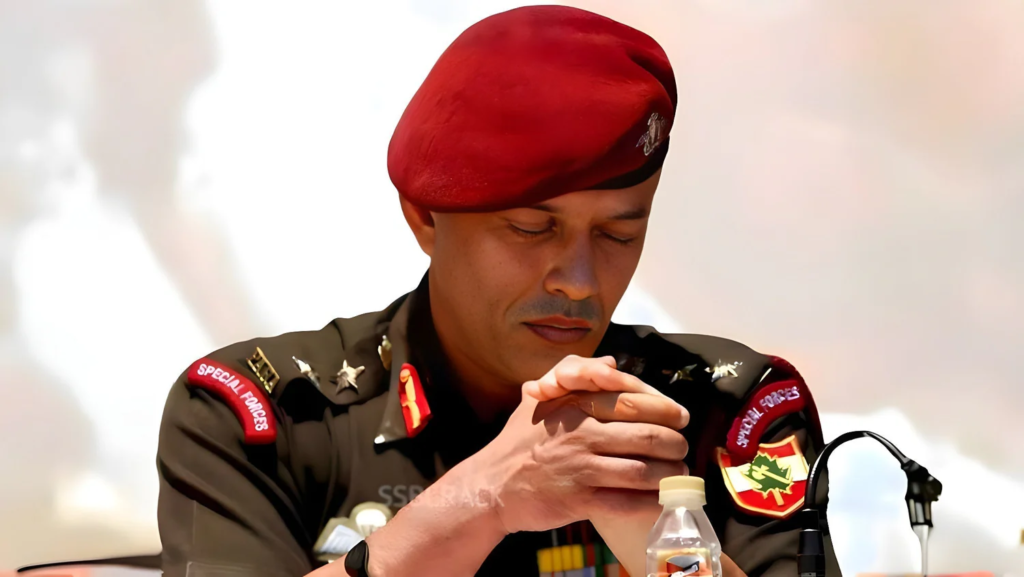
A regular Army Officer’s service starts only on the Commissioning day at his final Academy (eg. IMA). He joins at the rank of Lieutenant/ Lt (two Stars on his shoulders). There he is placed on Pay Matrix 10 (Basic Pay: ₹56,100). After two years of service he becomes Captain/ Capt (three Stars on shoulder). He rises to Pay Matrix 10B (Basic Pay: ₹61,300). After six years of service he becomes Major/ Maj (an Ashoka on his shoulder). He is then placed at Pay Matrix 11 (Basic Pay: ₹69,400). After 13 years of service he becomes a Lieutenant Colonel/ Lt Col (an Ashoka & a Star on shoulder), provided he has passed two promotional exams called Part- B and Part – D. A Lt Col is placed at Pay Matrix 12A (Basic Pay: 1,21,200). This is the final rank for most of the officers due to very less number of vacancies ahead.

All Lt Cols face the promotion board called, Selection Board 3 (SB 3), generally between 15 and 18 years (depending on their arms/ branches), only if they have passed all mandatory training courses (varying between three to four), they are in desired medical standard and not under disciplinary action. On an average, only 25- 30% of Lt Col are declared FIT for the next rank, Colonel/ Col (one Ashoka & two Stars).

The Col are placed in Pay Matrix 13 (Basic Pay: ₹1,30,600) and they stay there for more than ten years.

Cols face another Selection Board, SB2, mostly between 24 and 26 years of service to be considered for the next rank, Brigadier/ Brig (one Ashoka & three Stars), that again, only 25-30% of Col become. Therefore only 10% of Officer Cadre become Brig that is placed at Pay Matrix 13A (₹1,39,600).

Further, after another five years (ie in total service of 28- 30) they are consider for SB1 for the rank of Major General/ Maj Gen (one Star & One Cross- Swords) that again, only 20% clear. So in total only 2% (at max) of Officers become Maj Gen who are placed at Pay Matrix 14 (Basic Pay: 1,44,200).

If age permits, all Maj Gen face Special Selection Board for becoming Lieutenant General/ Lt Gen (one Ashoka & one Cross Swords) that only 20% clear. Thus, only 0.5% of officers get to become Lt Gen, that in Pay Matrix is placed at HAG (Basic Pay: ₹1,82,200). Finally, one officer in every two years gets to become a General/ Gen, the Chief of Army Staff (COAS). In case of Indian Airforce and Navy, the promotions after Lt Col equivalent ranks are both slower and narrower.

The Defence Services are also called the “Services” as they were the only central services at the time of British India. Similar concept for civil sectors were introduced later, so they got called as the “Civil Services”. The parity of Civil Services was at max put a notch lower than the “Services”, because of the valour, sacrifice and pride attached to the latter.

Even till 5th Pay Commission, the joining Pay of Services Officers were one increment higher than that of the Civil Services Officers. That is how, Defence Officers are not allowed to appear for Civil Services exam, during their service, as it used be considered as a demotion.

As it is easier to draw parallel between two uniformed Services with similar insignia for ranks, I shall take you through a comparison between Army Officers and IPS Officers.

Till Independence, every state used to have one Inspector General of Police (IGP) as the head of the state Police. Under him were few Deputy Inspector Generals/ DIGs, heads of Police Ranges/ Zones and under them were Superintendent of Police (SP) as head of Police District. The SP, used to wear the rank of a Capt (three Stars on shoulder) and many even used call him a “Police Capt”. So he was equated with an Army Capt and in formal precedence he used come after a Capt. Even today in UP and Bihar the head of District Police is still fondly called as “Kaptan” (कप्तान). IPS officers with considerable service used to become SP. Similarly, DIGs used be considered junior to Brig and IGs junior to Maj Gen. The only senior Police rank above IG was that of the Director IB (DIB).

IPS Cadre, because of their proximity to the political class, and may be because of the dependency of the latter on them, could over the years, ensure an extraordinary path of career growth for themselves which was comparable to that of the IAS Cadre.

Service of an IFS/ IAS/ IPS starts the day he join his training academy (not at completion of training as in case of Army Officers). Now, in states like J&K, an IPS Officer with 4-5 year service becomes SP and wears an Ashoka & a Star, similar to that of the Lt Col (who reaches there in 13 years). The SP behaves as a senior to all Army Officers below the rank of Lt Col, although they have put in double the service.

By 9 years of service, IPS Officers of such states, start wearing insignia of Colonel and call themselves Senior Superintendent of Police (SSP). They equate themselves with Army Colonels (that only 30% offrs become, that too in 16th- 18th year of service).

By 14 years of service, IPS Officers start wearing insignia of Brigadiers (that only 10% Army Officers become and that too in 24th year of service). Then they feel all Army Officers below the rank of Brig are junior to them.

Similarly, by 19 years of service, IPS Officers start wearing the insignia of Maj Gen (that only 2% Army Officers become, that too after 28 years of service) and call themselves IGP. Also start getting the associated pay.

You would know, each one of the State Services Police Officers like JKPS, who joins one scale down as Deputy SP (Dy SP/ DSP) at least rises till the rank of DIG and wears the insignia of Brig that only 10% of Indian Army Officers commissioned by the President of India get to reach.

One, in his tender age, decides to joins Army, not for Pay and Perks but mostly for the glamour, glory, self-esteem and honour attached to the profession of arm.

The way the officer cadre of Armed forces is systematically degraded pains every Commissioned Officer. It was told an Officer commissioned by the President of India is above the Group- A gazetted officers. Now every Group B services holder is overtaking the majority (70%) of the Commissioned Officers.

There was a “Warrant of Precedence” for equating officials across the institutions and services in the country, surprisingly the internet version of the document, stops at Maj General level and further details till Lt level has been omitted.

There is strong sense of betrayal, anger, helplessness and insecurity among officers as their honour and self-esteem is not protected. The officer feels he is punished and defamed slowly and steadily, just because he chose to become an officer in Indian Army. Once overlooked for a promotion at any stage, his esteem within the organization also starts reducing, as a “superceded officer”. So a large chunk of the Army officers, despite all their talent, unmatched capability, years of training and immense experience are struggling to remain relevant, find a purpose, digest the daily subtle doses of insult as so called ‘superceded officer’.

Those who still have their results to come and have still not faced SB3, slog hard to impress their immediate three superiors so as to grab one berth of Colonel to justify their years of hardwork, practice of negligence towards loved ones, sacrifices of self/ family and to remain honourable within service among the lot of ‘yet to be superceded’.

Lack of career growth and narrow scope of promotions, has brought in selfish careerism, ‘zero error syndrome’, sycophancy and spinelessness among Indian Military leaders, as even one not- so- great Annual Confidential Report (ACR) by immediate superiors can bring an end to his career. The carefree, happy- go- lucky fun of service as a ‘Services Officer’ has gone missing.

To address the issue to some extent, the defence forces tried to expedite the promotions. As a result promotion till the rank of Lt Col in Indian Army became one of the fastest in the world hence bringing disparity in international forums, especially in UN, joint military exercises, foreign courses etc. Despite all this, the ‘Services’ officers are still long way far from the assured growth of ‘Civil Services’ officers.

One strongly believes the solution is not in further expediting promotion of Services officers, as proposed by a section. The actual solution lies in bringing the unreal and irrational promotion back to a realistic system.

Where there used to be an SP traffic today there is an ADG/ DG traffic. When there used to be one SP Home Guard, today there is DG Home Guards. Similarly, there are DG Fire Services, DG Police Housing, DG Police Grievances, DG Police Stationary, and so on. A state that used to have only one IGP today has several DGPs to accomodate every IPS Officer of a batch to become DGP. This demonstration of dominance beyond logic needs to stop.

Here is a five- point solution to uplift the morale of the Services Officers:-

Point I:-

Ensure that no service personnel of any service in this country get to wear/ display the insignias or symbols associated with Military Ranks before serving at least the same length of service required by a military officer to earn the said rank. So no Police/ CAPF/ Custom/ Revenue/ Forest officer should start wearing ranks similar to that of Capt before 2 years, Major before 6 years, Lt Col before 13 years, Col before 16 years, Brig before 24 years and Maj Gen before 28 years.

Point II:-

Rank and appointments held by Civil Srvices officers need to be de-linked. For example if a District Police Chief is of less than 13 years of service he should wear ranks of a Maj (one Ashoka), if between 13 and 16 years of service he should wear ranks of a Lt Col (one Ashoka & one Star) and if between 16 & 24 yr of service he should wear ranks of a Col (one Ashoka & two Stars).

Point III:-

Pay needs to grow gradually and regularly with increase in service for all central services officers including Defence.

Point- IV:-

The officers whom SB3 couldn’t accomodate as Colonels should be accomodated in CAPF/ Other Central services in stature similar to Colonel or allowed to leave Services with a handsome ‘Golden- Handshake’.

Point- V:-

The revised ‘Warrant of Precedence’ be released drawing Precedence and Equivalence starting from the President of India to a Sepoy in Army. The same needs to be publicly circulated and followed in letter and spirit.

Hope one day, people in power shall realise how important is the honour and self-esteem of officers (especially Lt Col and below) of the Services, and thereby, overcoming the mutual-differences/ egos between ministries (especially Home and Defence) shall restore honour in the profession of arms to rejuvenate the Services.

Jai Hind


Rajnath Singh Discusses Closer Cooperation With Russian CounterpartThursday, June 26, 2025 by Indian Defence News

Indian Defence Minister Rajnath Singh has discussed strengthening defence cooperation with his Russian counterpart Andrey Belousov on the sidelines of the Shanghai Cooperation Organisation (SCO) summit in Qingdao, China.

“We had insightful deliberations on boosting India-Russia defence ties,” Singh said on X.

During the meeting, Singh also presented Belousov with a statue of Nataraja, a symbolic gesture highlighting cultural ties.

Agencies


No Handshakes, No Courtesies, Rajnath Singh’s Brutal ‘Diplomatic Strike’ Against Pakistan In China At SCO Summit

At the Shanghai Cooperation Organisation (SCO) Defence Ministers’ Summit held in Qingdao, China, Indian Defence Minister Rajnath Singh delivered a decisive and uncompromising message against Pakistan’s role in cross-border terrorism, marking a significant diplomatic stand-off.

The summit, which brought together defence chiefs from ten member states including China, Russia, Pakistan, and India, was overshadowed by sharp disagreements over how terrorism—particularly incidents involving Pakistan—should be addressed in the joint statement.

Singh refused to sign the final joint declaration after it omitted any mention of the recent Pahalgam terror attack in Kashmir, which killed 26 people and was linked to Pakistan-based terror groups like Lashkar-e-Taiba and its offshoot, 

The Resistance Front. Instead, the draft document subtly implied that India was responsible for instability in regions such as Balochistan and Pakistan-occupied Kashmir, a stance that drew strong objections from the Indian delegation.

Throughout the summit, there were no handshakes or courtesies exchanged between Singh and his Pakistani counterpart, reflecting the deep diplomatic chill. Singh’s address was a direct rebuke to Pakistan and, by extension, China, both of whom reportedly pushed for a softer stance on terrorism in the final document.

He condemned the use of terrorism as a tool of state policy and called out the “double standards” of countries that sponsor or shelter terrorists, insisting that all perpetrators, sponsors, and financiers must be held accountable.

Singh also referenced Operation Sindoor, in which Indian forces targeted terror camps inside Pakistan, asserting India’s right to self-defence and its policy of zero tolerance towards terrorism.

The refusal to sign the joint statement resulted in the SCO Defence Ministers’ Meeting concluding without a communique—a rare occurrence for such high-level summits. Singh’s actions underscored India’s strategic autonomy and its insistence that peace and prosperity in the region cannot coexist with terrorism and the proliferation of weapons of mass destruction in the hands of non-state actors.

He urged SCO nations to reject double standards and take united, decisive action against those who sponsor and nurture terrorism for narrow political ends.

This “diplomatic strike” by Rajnath Singh not only isolated Pakistan on the international stage but also sent a clear message to the SCO and the broader global community: India will not compromise on its core security concerns, especially when it comes to cross-border terrorism.

Agencies


No place for double standards on terrorism: India’s veiled swipe at Pak at SCO Summit

At the meeting in China’s Qingdao, Rajnath Singh says ‘peace and prosperity cannot co-exist with terrorism’

Defence Minister Rajnath Singh, speaking at the Shanghai Cooperation Organisation (SCO) Defence Ministers’ meeting in Qingdao on Thursday, delivered a strong message against terrorism, indirectly targeting Pakistan.

Without naming the country, Singh said that some nations use cross-border terrorism as an instrument of policy and provide shelter to terrorists, stressing that there should be no place for such double standards.

Pakistan, a member of the SCO, was represented at the meeting by its Defence Minister Khawaja Asif.

Singh added that the SCO should not hesitate to criticise such nations that support or enable terrorism.

“It is imperative that those who sponsor, nurture, and utilise terrorism for their narrow and selfish ends must bear the consequences,” Rajnath Singh stated.

He further underlined that peace and prosperity cannot co-exist with terrorism and the proliferation of Weapons of Mass Destruction (WMDs), especially when these fall into the hands of non-state actors and terrorist groups.

Singh called for decisive, united action among SCO members to combat these threats, emphasising the need for collective security.

Speaking about the Pahalgam terror attack on April 22, the Defence Minister said that the terror group ‘The Resistance Front’ (TRF) carried out a dastardly and heinous attack on innocent tourists in Pahalgam, located in the Indian state of Jammu and Kashmir. A total of 26 civilians, including a Nepali national, were killed in the incident. He stated that the victims were singled out and shot after being profiled based on their religious identity.

The Resistance Front, a proxy of the UN-designated terror group Lashkar-e-Taiba (LeT), claimed responsibility for the attack. He noted that the pattern of the Pahalgam attack closely resembles previous terror strikes carried out by LeT in India.

Exercising its right to defend against terrorism and to pre-empt and deter further cross-border attacks, India successfully launched Operation Sindoor on May 7 to dismantle terrorist infrastructure across the border.


French maker Sarfan sets up facility for Rafale engines in Hyderabad

French engine maker, Sarfan, on Wednesday announced the construction of a new maintenance repair and overhaul (MRO) facility dedicated to the Rafale’s M88 engine in Hyderabad.This site will be the first one to maintain M88 engine modules outside of France, Safran said.

The brand-new facility will have a capacity of handling more than 600 engine modules each year, and will help in meeting the strong growth of M88 maintenance activities worldwide. The Indian Air Force already flies the Rafale, while the Navy has ordered its marine version.

Christophe Bruneau, Executive Vice-President, Military Engines at Safran Aircraft Engines, said, “We are delighted to select Hyderabad as a location for the first export maintenance facility dedicated to the M88.”

“This project marks an important step in the development of Indian sovereignty in aerospace and defence, while demonstrating Safran’s commitment to developing a world-class MRO ecosystem for the benefit of all M88 operators,” Bruneau added.

A statement issued by Safran further read: “The new workshop will also benefit from synergies with other Safran production facilities and MRO workshops located in the region, in line with our commitment to develop a comprehensive commercial and military supply chain in India for aircraft engines.”


Pakistan Army officer, who captured Abhinandan Varthaman in 2019, killed

Major Syed Moiz Abbas Shah, 37, was killed on Tuesday in a clash with the Taliban militants in the Sararogha area of South Waziristan near the Afghan border

n officer of the Pakistan Army’s Special Services Group, who had claimed to have captured Indian Air Force pilot Abhinandan Varthaman after his jet was shot down in a dogfight in 2019, was killed in a clash with the Taliban militants, according to the army.

Major Syed Moiz Abbas Shah, 37, was killed on Tuesday in a clash with the Taliban militants in the Sararogha area of South Waziristan near the Afghan border, according to a statement by the Inter-Services Public Relations (ISPR), the media wing of the army.

Lance Naik Jibran Ullah, 27, was also killed in the same battle, it said.

The army troops killed 11 terrorists belonging to the Tehreek-e-Taliban Pakistan (TTP) and wounded seven others in the same operation, the statement said.

Moiz’s funeral prayer was offered at Chaklala Garrison, Rawalpindi, and army chief Field Marshal Asim Munir attended it.

“Major Syed Moiz Abbas fought bravely in the face of resistance and ultimately laid down his life in the line of duty, upholding the highest traditions of bravery, sacrifice and patriotism,” the ISPR statement quoted Munir as saying.

His body was flown to his native home town of Chakwal in Punjab where he was laid to rest with full military honours.

He was commissioned into the Pakistani Army in 2011. However, he later became part of the Special Services Group (SSG) and was currently serving in the volatile Waziristan region.

After his death, it turned out that he was the same officer who had captured Abhinandan and saved him from mob violence, local media reported.

An old clip of his interview with Geo TV on social media shows Moiz, who was captain then, giving details of capturing Abhinandan.

The TTP, also known as the Pakistan Taliban, was set up as an umbrella group of several militant outfits in 2007. Its main aim is to impose its strict brand of Islam across Pakistan.

The group, believed to be close to al-Qaeda, has been blamed for several deadly attacks across Pakistan, including an attack on army headquarters in 2009, assaults on military bases, and the 2008 bombing of the Marriott Hotel in Islamabad.

Pakistan describes TTP as ‘Fitna al-Khawarij’, a reference to a group in earlier Islamic history which was involved in violence.


Iran ‘delivered a hand slap to America’s face’: Ayatollah Khamenei

Iran’s Supreme Leader Ayatollah Ali Khamenei on Thursday claimed victory over Israel and said his country had “delivered a hand slap to America’s face”, in his first public comments since a ceasefire was declared in the war between the two countries.

Khamenei spoke in a video broadcast on Iranian state television, his first appearance since June 19.

He told viewers that the US had only intervened in the war because “it felt that if it did not intervene, the Zionist regime would be utterly destroyed”.

He said, however, the US “achieved no gains from this war”.

“The Islamic Republic was victorious and, in retaliation, delivered a hand slap to America’s face,” he said, in apparent reference to an Iranian missile attack on an American base in Qatar on Monday, which caused no casualties.


Navy hosts 13 nations on maritime security

The Indian Navy hosted the Indian Ocean Naval Symposium on maritime security. The event brought together representatives from Australia, Bangladesh, France, India, Kenya, Mozambique, Oman, Russia, Saudi Arabia, South Africa, Sri Lanka, Tanzania and Thailand. Delegates engaged in deliberations aimed at strengthening security.


Navy staffer held for leaking Op Sindoor details to Pakistan

A Navy staffer posted at the naval headquarters in Delhi was arrested in Jaipur for allegedly leaking defence-related sensitive information to a Pakistani handler in exchange for money, a police official said on Thursday. Vishal Yadav, an upper division clerk in the Directorate of Dockyard at the Navy building, allegedly also shared details on Op Sindoor — strikes carried out by the Indian armed forces in Pakistan and Pakistan-occupied Kashmir in response to the Pahalgam terror attack.