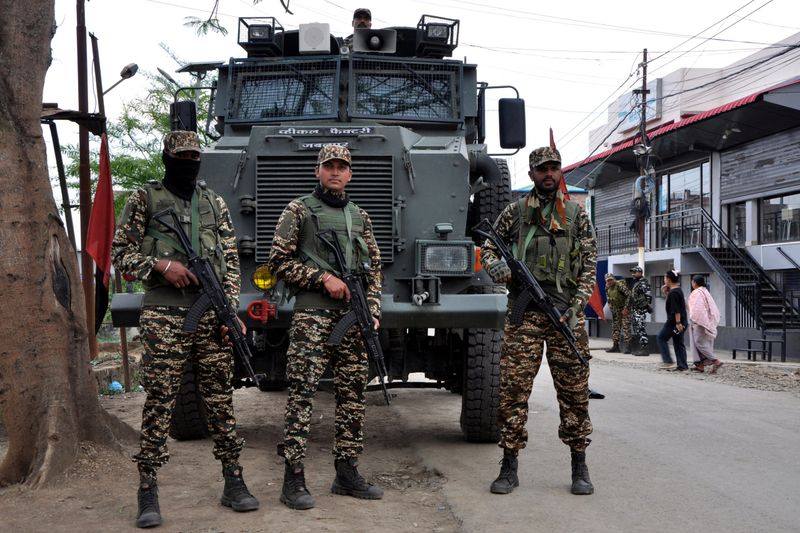
Hubs at IMA Dehradun, OTA Chennai, Infantry School Mhow and others will make drone training part of Army’s standard curriculum
The Army is planning to establish drone training centres and hubs at 19 major training establishments across the country, including the Indian Military Academy in Dehradun, the Infantry School in Mhow, the Officers Training Academy in Chennai and Gaya, and the School of Artillery in Deolali.
The move is intended to integrate drone training facilities into the standard training curriculum for all ranks, in line with the inclusion of drones as a standard weapon system in the defence forces following Operation Sindoor.
In a limited Expression of Interest published for select vendors, the Army has sought proposals for the purchase of training aggregates to establish state-of-the-art drone training facilities in 19 major training establishments across India. The urgency of the move is evident from the fact that these purchases are being made under emergency revenue procurements.
The plan covers multiple categories of drones, training simulators with allied infrastructure, and the setting up of 24×7 outdoor manoeuvre ranges and indoor training areas at all these Category A training establishments.
The decision to establish a unified Tri-Service Education Corps was announced on Wednesday, through the merger of the education branches of the Indian Army, Indian Navy, and Indian Air Force. On the same day, the armed forces also announced the setting up of three Joint Military Stations. Both initiatives are aimed at enhancing integration, strengthening coordination, and improving operational efficiency across the armed forces — objectives encapsulated by the umbrella term “jointness”.
These announcements were made on the third and final day of the Combined Commanders’ Conference (CCC) 2025, held by the armed forces in Kolkata from Monday to Wednesday.
Additionally, Chief of Defence Staff (CDS) General Anil Chauhan reviewed the directions issued to the armed forces by Prime Minister Narendra Modi and Defence Minister Rajnath Singh, and discussed the roadmap for their time-bound implementation, according to Headquarters Integrated Defence Staff (HQ IDS).
Army organises Ex-Servicemen’s Conference at Hamirpur
थल सेना की 9वीं कोर (राइजिंग स्टार कोर) और 21 सब एरिया मुख्यालय पठानकोट की ओर से मंगलवार को नगर निगम हमीरपुर के टाउनहॉल में भूतपूर्व सैनिक सम्मेलन का आयोजन किया गया। सम्मेलन में 9वीं कोर के चीफ ऑफ स्टाफ सेना मैडल एवं विशिष्ट सेवा मैडल से अलंकृत मेजर जनरल अनिल चंदेल मुख्य अतिथि के रूप में उपस्थित रहे। मेजर जनरल ने कहा कि भारतीय सेना अपने पूर्व सैनिकों एवं उनके परिजनों के कल्याण के लिए कृतसंकल्प है और इसके लिए कई कल्याणकारी योजनाएं चलाई जा रही हैं। सभी भूतपूर्व सैनिक परिवारों को इनका लाभ उठाना चाहिए। उन्होंने बताया कि जिला हमीरपुर में ईसीएचएस, कैंटीन और अन्य सुविधाओं का विस्तार किया जा रहा है। उन्होंने 1965 के युद्ध में वीरता पुरस्कार से अलंकृत सूबेदार बलदेव सिंह को विशेष रूप से सम्मानित किया। इसी युद्ध में वीरता पुरस्कार प्राप्त लांसनायक दास राम, कैप्टन एससी दीवान, हवलदार रिखी राम और नानक चंद के परिजनों को भी सम्मानित किया गया। 21 सब एरिया मुख्यालय पठानकोट के कर्नल वेटरन हमिंद्र सिंह ने भूतपूर्व सैनिकों एवं उनके परिजनों के लिए थल सेना की ओर से चलाई जा रही योजनाओं के बारे में बताया। सैनिक कल्याण उपनिदेशक स्क्वाड्रन लीडर (सेवानिवृत्त) मनोज राणा ने विभाग की ओर से सभी का धन्यवाद किया। मुख्य अतिथि और सैन्य अधिकारियों ने भूतपूर्व सैनिकों एवं उनके परिजनों के साथ सीधा संवाद भी किया तथा उनकी कई समस्याओं का समाधान किया। कार्यक्रम में 21 सब एरिया मुख्यालय के ब्रिगेडियर संजीव सहारन, 9वीं कोर के ब्रिगेडियर विजय चहर, सेना के अन्य अधिकारी, भूतपूर्व सैन्य अधिकारी एवं सैनिक तथा उनके परिजन भी उपस्थित रहे।
DGCA clears helicopter services for Chardham Yatra with enhanced safety norms
The clearance comes after multiple rounds of review and inspections
Aviation watchdog Directorate General of Civil Aviation (DGCA) has cleared the resumption of helicopter services for the Chardham Yatra 2025 from this month, after the mandatory monsoon break, with a renewed focus on passenger safety and strict operational protocols.
The clearance comes after multiple rounds of review and inspections directed by Civil Aviation Minister Rammohan Naidu, who has set a “zero tolerance” mandate for safety lapses. Naidu, along with Uttarakhand Chief Minister Pushkar Singh Dhami, held coordination meetings in Dehradun and Delhi with officials of the DGCA, Airports Authority of India (AAI), Uttarakhand Civil Aviation Development Authority (UCADA) and the state government to streamline preparedness.
Between September 13 and 16, DGCA teams carried out extensive inspections and audits of helipads, helicopters, operator readiness, and support facilities. Following these checks, approval was granted to UCADA and participating helicopter operators for recommencement of services. Operators and pilots were also briefed on the challenges of high-altitude flying and additional measures mandated through an Operations Circular on pilgrimage flights.
The helicopter component of the Yatra comprises two segments: charter services from Dehradun’s Sahastradhara helipad to Yamunotri, Gangotri, Kedarnath and Badrinath, and shuttle services to Kedarnath from Guptkashi, Phata and Sitapur. Six operators will manage shuttle services, while seven operators and consortiums will undertake charter flights.
The DGCA’s decision comes against the backdrop of multiple helicopter accidents in the Chardham sector during May-June 2025, which prompted high-powered committees to recommend tighter controls. These included deployment of Air Traffic Controllers by AAI, meteorological officers by IMD, and qualified UCADA personnel at control rooms to strengthen oversight and ensure safe operations in the high-risk sector.Among the measures put in place are mandatory route checks and recurrent training for all pilots, with special focus on high-altitude flying, adverse weather handling and crew resource management. Only previously qualified pilots will be deployed in the sector. The DGCA has also stepped up its airworthiness oversight, carrying out comprehensive inspections and enforcing strict adherence to maintenance schedules, with an increased frequency of checks during the operating season.
Operationally, the regulator has imposed strict enforcement of weight and balance limits, mandated the use of modern navigation and communication aids, and introduced enhanced weather monitoring with real-time updates through a dedicated information system. Passenger safety has been prioritised with compulsory pre-boarding safety briefings, regulated embarkation and disembarkation, and deployment of additional ground staff at helipads to assist pilgrims.
The DGCA has also strengthened its monitoring system. Flight operations and airworthiness teams will be stationed at critical helipads, while surprise checks and audits will be conducted to ensure full compliance with directives. Recognising the vital role helicopters play in transporting pilgrims to remote, high-altitude shrines in Uttarakhand, the regulator said it would maintain constant vigil through the season to ensure safe and seamless operations.
Strategic win: Army runs first freight train on USBRL, to return with Kashmiri apples
The train carried 753 metric tonnes of Advance Winter Stocking load for the Army units and formations stationed in Jammu & Kashmir
The Udhampur–Srinagar–Baramulla Rail Link (USBRL) witnessed a historic milestone with the successful run of the first exclusive freight train of the Army, from BD Bari near Samba to Anantnag on September 12-13.This is strategically significant as it gives a boost to the logistics capability of the Army.
The train carried 753 metric tonnes of Advance Winter Stocking (AWS) load for the Army units and formations stationed in Jammu and Kashmir, marking a decisive turning point in the AWS operations. This initiative underscores the Army’s ongoing capability development efforts to ensure operational preparedness in challenging Himalayan terrain, a defence spokesperson said on Monday.
Earlier, logistic support to Kashmir depended upon road convoys and in winters of monsoons, these were often disrupted due to snow and landslides. Sources said that the rail link to Kashmir would also benefit logistic support further on to Kargil and Ladakh sectors.
In a unique demonstration of dual-use logistics and military–civil fusion, the return rake of the freight train will transport Kashmiri apples to markets in the rest of India. This step not only strengthens the Army’s winter preparedness, but also provides direct benefits to local communities, Army officers said.
Farmers, who in the past suffered heavy losses due to road blockages caused by landslides and floods, will now be able to transport their produce seamlessly, ensuring both economic relief and livelihood security.
The initiative reflects the Army’s role extending beyond its core mission of defence to contribute tangibly to the socio-economic development of Kashmir. By harnessing rail infrastructure for both military and civilian purposes, the Army has taken a major stride in strengthening resilience, connectivity and prosperity in the region, the spokesperson said.
Built at a cost of Rs 43,780 crore, the 272-km-long rail link was inaugurated by Prime Minister Narendra Modi in June this year. The line cuts through some of the most challenging terrain in the Himalayas and provides all weather connectivity to Kashmir.
The project features 36 main tunnels covering nearly 120 km, eight escape tunnels and 943 bridges that span rivers, gorges, and mountain passes. Its notable features include the Chenab bridge, which at 359 metres above the riverbed, is the world’s highest railway arch bridge.
Women candidates can be inducted against unfilled vacancies for males, rules High Court
Says percentage of women candidates cannot be restricted
The Delhi High Court has ruled that additional women officer candidates can be inducted against leftover vacancies for male candidates even if the quota earmarked for women has been filled up.
A Division Bench comprising Justice C. Hari Shankar and Justice Om Prakash Shukla said in their order of September 16 that no restriction on the extent of induction of women candidates can be laid.
Several women candidates, who had applied for Short Service Commission, contended that 169 vacancies had been allocated for male candidates and only 16 vacancies were earmarked for women.
Out of 169 vacancies for males, the final selection was made only for 107 vacancies and 62 vacancies went unutilized. On the other hand, only 16 women candidates were issued call-up letters though 103 candidates were placed in the merit list.
“The benchmark for call-up letter to join pre-commission training for males was 180 marks, whereas the female candidates who had scored much more than the aforesaid benchmark were not issued the call-up letter and thus were deprived of their legitimate right and legitimate expectation to join the Army,” counsel for the candidates, Col Indra Sen Singh (retd) argued.
The petition also drew attention to a recent judgement by the Supreme Court in Arshnoor Kaur vs Union of India holding that in those branches of the Army in which women have already been permitted to join vide the Presidential Notification issued under Section 12 of the Army Act, 1950, no restriction as to the extent of induction can be placed through executive orders as has been done in the instant case.
In the matter of Arshnoor Kaur, six vacancies for the Judge Advocate General’s Department had been notified and three vacancies were notified for women. Two women candidates who were 4th and 5th in the merit list for women had averred that specification of a limited number of vacancies for women candidates was unconstitutional and since more than three vacancies for males were left unfilled, they should be appointed against them.
The High Court observed that the top court’s judgement in the case implies that In respect of corps, departments, or streams of the Army, which stand notified under Section 12 of the Army Act as streams in which women could also be recruited, the percentage of women could not be restricted, nor could reservation for male candidates be permitted, by way of an advertisement or executive instruction.
The High Court also observed that Section 12 of the Army Act does not permit specification of any extent to which women could be inducted into the notified streams, corps or branches.
“We, therefore, direct that the petitioners be considered against the 62 unfilled vacancies of men, as there could have been no limitation on the number of women who could be entitled to recruitment against the corps and services identified in Para 45 of Arshnoor Kaur,” the High Court’s Bench ruled.
“Needless to say, however, the petitioners would not be entitled for induction into any other corps or services, other than the corps or services, which are identified in Para 45 of the decision in Arshnoor Kaur,” the Bench added. There are 10 corps and branches in which women officers can be inducted.
“The directions imply that women candidates must be allowed to compete against all the available vacancies for a particular batch at par with their male counter-parts without any gender discrimination. This has ramifications for all subsequent selection processes,” Col Sen said.
Armed Forces to get 3 joint military stations, common education corps
The decisions were announced on the final day of the Combined Commanders’ Conference in Kolkata
Defence Minister Rajnath Singh with Chief of Defence Staff General Anil Chauhan, Chief of the Army Staff General Upendra Dwivedi, Chief of the Naval Staff Admiral Dinesh K. Tripathi and Chief of the Air Staff Air Chief Marshal Amar Preet Singh during the Combined Commanders’ Conference at the Indian Army’s Eastern Command headquarters, in Kolkata on September 16, 2025. @rajnathsingh/X via PTI
In a major step towards greater integration of the Armed Forces, the military will set up three new joint military stations on the mainland, create a common education corps and implement key transformations across the Army, Navy and Air Force.
The decisions were announced on the final day of the Combined Commanders’ Conference (September 15-17) in Kolkata. The office of Chief of Defence Staff (CDS) General Anil Chauhan, who also heads the Department of Military Affairs, released details of the outcomes.
A key decision is the creation of three joint military stations, where all three Services will share a common establishment. Until now, the only tri-services command with such facilities has been in the Andaman and Nicobar Islands. The new stations are expected to be located on the mainland.
Another landmark reform is the merger of the education branches of the three Services into a single “Tri-Services Education Corps”. This will mean a unified cadre for training institutions, including the National Defence Academy, Indian Military Academy, Indian Naval Academy and the IAF Academy.
The CDS also reviewed directions given earlier in the conference by Prime Minister Narendra Modi and Defence Minister Rajnath Singh. Both had stressed the urgency of jointness and integration to meet future security challengesA post from the CDS office on X said the conference had “identified and finalised the most important transformations required that will drive impactful changes in the future”.
The Ministry of Defence, in a statement, said the deliberations focused on enhancing interoperability, streamlining decision-making and reforming institutional structures for space, cyber, information and special operations. It also emphasised adopting a technology-led approach to modern warfare, with innovations seamlessly integrated into operational doctrine.
This year’s conference, themed “Year of Reforms-Transforming for the Future”, began with a demonstration by the joint operations command centre, followed by a live air defence drill showcasing advanced air surveillance, missile defence and counter-drone capabilities.
The apex-level forum brought together top decision-makers from the Ministry of Defence and the three Services to discuss evolving security dynamics across India’s borders and beyond.
Box: Joint Military Space Doctrine Released
The conference also saw the release of the “Joint Military Space Doctrine”, marking a milestone in institutionalising space as a key element of India’s national security strategy.
Army rolls out overhauled armoured recovery vehicle
It was flagged off from the Army Base Workshop in Pune
The Army has rolled out its first overhauled Armoured Recovery Vehicle (ARV) based on the T-72 tank. The ARV is used to recover tanks that have broken down or been hit during conflict. It was flagged off from the Army Base Workshop (ABW) in Pune. Airbornics Defence and Space Private Limited (ADSL), a subsidiary of the JCBL Group, was the industry partner for the project. As part of the work, ADSL overhauled the ARV by dismantling the vehicle, replacing critical components and repairing or substituting assemblies.Rishi Aggarwal, Managing Director of JCBL Group, said, “We are honoured to partner with the Army for the overhaul of this platform.”
Global, regional headwinds strong, Govt should pause ONOE, Delimitation
n this episode of The Tribune interview, senior Congress leader and former minister Manish Tewari says Indian democracy is strong but weaponisation of social media as the one seen in the 2010 Arab Spring is a worry amid Nepal and earlier Sri Lanka and Bangladesh crises. He also terms cross voting in the recent Vice Presidential election as the betrayal of leadership
The apex court said in a secular framework, which respects religious identity and ensures civic equality, the law must provide a neutral and workable route by which marriages through “Anand Karaj” were recorded and certified on the same footing as other marriages.
The Supreme Court has directed several states and union territories to notify within four months the rules for registering “Anand Karaj” or the Sikh wedding ceremony.
The apex court said in a secular framework, which respects religious identity and ensures civic equality, the law must provide a neutral and workable route by which marriages through “Anand Karaj” were recorded and certified on the same footing as other marriages.
“The fidelity of a constitutional promise is measured not only by the rights it proclaims, but by the institutions that make those rights usable. In a secular republic, the state must not turn a citizen’s faith into either a privilege or a handicap,” a Bench of Justices Vikram Nath and Sandeep Mehta said.
In its September 4 order, the Bench said when the law recognised “Anand Karaj” as a valid form of marriage yet left no machinery to register it, the “promise was only half kept”.
“What remains is to ensure that the route from rites to record is open, uniform and fair,” it said.
The top court passed the order on a plea seeking directions to various states and UTs to frame and notify rules under Section 6 of the Anand Marriage Act, 1909 (as amended in 2012) to facilitate registration of marriages solemnised by the Sikh rite commonly known as “Anand Karaj”.
The Bench said by the 2012 amendment, Parliament inserted Section 6 casting a duty upon the states to make rules to facilitate registration of such marriages, to maintain a marriage register and to provide certified extracts, while clarifying that omission to register would not affect the validity of the marriage.
The Bench said according to the petitioner, while a number of states and UTs had notified rules pursuant to Section 6, which deals with registration of marriages, several others had not yet done so. Referring to Section 6, the Bench said it imposed a positive duty on every state to create a workable registration machinery for “Anand Karaj” marriages.
“That duty is not contingent on the size of the beneficiary group in any jurisdiction, nor can it be deferred on the footing that other marriage laws exist in parallel,” it said, stressing that availability of registration bears directly on equal treatment and on orderly civil administration.
Uneven access to a statutory facility across states and UTs, the Bench said, produced unequal outcomes for similarly situated citizens while underlining the harmonisation with the existing registration regimes as “practicable and necessary”.
“Where a general civil marriage registration framework is in place, it must receive applications for registration of marriages solemnised by Anand Karaj on the same footing as other marriages and, if the parties so request, it should record that the ceremony was by the Anand rite,” the Bench said.
Every respondent state and UT which hadn’t yet notified rules under Section 6, was therefore directed to do so within four months.
“With immediate effect and until such rules are notified, each respondent shall ensure that marriages solemnised by Anand Karaj are received for registration under the prevailing marriage-registration framework without discrimination,” it said.
The Bench directed the Centre to act as the coordinating authority, and compile and present a consolidated status report before it within six months indicating compliance by the states and UTs.
State Stalwarts
DEFENCE MINISTER
Minister Rajnath Singh
ALL HUMANS ARE ONE CREATED BY GOD
HINDUS,MUSLIMS,SIKHS.ISAI SAB HAI BHAI BHAI
CHIEF PATRON ALL INDIA SANJHA MORCHA
LT GEN JASBIR SINGH DHALIWAL, DOGRA
SENIOR PATRON ALL INDIA SANJHA MORCHA
MAJOR GEN HARVIJAY SINGH, SENA MEDAL ,corps of signals
.
.
PATRON ALL INDIA SANJHA MORCHA
MAJ GEN RAMINDER GURAYA ,MADRAS REGIMENT
sanjhamorcha303@gmail.com
PRESIDENT SOUTH ALL INDIA SANJHA MORCHA
COL SS RAJAN BOMBAY SAPPERS,
PRESIDENT UTTARAKHAND ALL INDIA SANJHA MORCHA
COL B M THAPA ,BENGAL SAPPERSS
PRESIDENT HARAYANA STATE CUM COORDINATOR ESM
BRIG DALJIT THUKRAL ,BENGAL SAPPERS
PRESIDENT TRICITY
COL B S BRAR (BHUPI BRAR)
PRESIDENT CHANDIGARH ZONE
COL SHANJIT SINGH BHULLAR
.
.
PRESIDENT PANCHKULA ZONE AND ZIRAKPUR
COL SWARAN SINGH
INDIAN DEFENCE FORCES
DEFENCE FORCES INTEGRATED LOGO
INDIAN AIR FORCE
Air Officer C-in-C WESTERN AIR COMMAND
AIR MSHL S PRABHAKARAN AVSM VM
AOC-IN-C, EASTERN AIR COMMAND
Air Marshal Inderpal Singh Walia
AOC-in-C SOUTH WESTERN AIR COMMAND
Air Marshal Vikram Singh
AOC-IN-C, SOUTHERN AIR COMMAND
Air Marshal J.Chalapati
AOC-IN-C TRAINING COMMAND
AIR MARSHAL SK GHOTIA VSM
AOC-IN-C MAINTENANCE COMMAND
Air Marshal Jagdish Chandra
Flag Officer Commanding in Chief, Western Naval Command
ice Admiral R Hari Kumar, PVSM, AVSM, VSM
Flag Officer Commanding in Chief, Eastern Naval Command
Vice Admiral Sanjay Bhalla, AVSM, NM
Flag Officer Commanding in Chief, Southern Naval Command