All posts by webadmin

India And The New Great Game In Central Asia

SNAPSHOT
PM Modi is setting the stage for India’s outreach to a region to which connectivity has been denied for the last 25 years

Much against what may be imagined, China is actually keen on India’s entry into SCO because it will expand the scope of the club
Prime Minister Narendra Modi is once again visiting Central Asia – Tashkent to be specific, and will be attending the Shanghai Cooperation Organisation (SCO) Summit. If one traces on a map most of the routes of his foreign visits over the last one year or so, and then observes where the common point of interjection is, it will emerge somewhere in Central Asia or nearabout.

Modi is doing something which is of critical importance to India’s strategic dynamics. He is setting the stage for India’s outreach to a region to which connectivity has been denied to it for the last 25 years.

Those who follow the happenings in and around this region are also aware that a ‘New Great Game’ is being played there – a game often revolving around connectivity, infrastructure, energy and ideology. India is a part of that game without being an effective player because of its lack of connectivity. Without commensurate influence arising out of either common borders or connectivity it could at best be a bit player.

The US being a superpower does not require that criteria to be a major player.

Observers and analysts also sometimes forget that the hinge for the US rebalancing and pivot to Asia remains embedded there in Central Asia. The front edge of the swinging door is simply inching from South West and West Asia towards the Indo-Pacific but nothing changes in Central Asia as far as the US interests go, hence the hinge.

Before coming to the SCO itself, it may also be pertinent to point out that the strategic balance in the region of the New Great Game is changing with the emerging return of Iran to mainstream international politics.

Modi was well advised and his focus on Iran emerges from a sense of pragmatism and opportunity. The trilateral transport and transit corridor agreement between India, Iran and Afghanistan is a potential game changer, providing India the opportunity in two fields denied thus far – first an outreach to the Central Asian region and second a chance to partake in the game of infrastructure, trade and transit. Suddenly, it turns on its head the complete concept of Pakistan’s denial to India of the natural outreach to its near abroad region.

The Prime Minister’s visit to Tashkent may carry some symbolic value of 50 years of the Tashkent Agreement between India and Pakistan, signed on 10 January 1966. It isn’t also just about the NSG issue and an opportunity to meet Russian President Vladimir Putin and Chinese President Xi Jinping. These are just contextual issues because the Nuclear Suppliers Group (NSG) meets at Seoul on 24 June, a day after the SCO meeting. No doubt India has invested a lot in the campaign to become a member of the NSG but SCO is something quite different.

SCO, initially an exclusive club formed in 2001, comprising China, Kazakhstan, Kyrgyzstan, Russia, Tajikistan and Uzbekistan, was apparently China’s attempt to influence its near abroad. In due course other countries – India, Mongolia, Iran and Pakistan – joined in 2005 with observer status.

Since 2010, efforts have been on to admit India and Pakistan as full-fledged members. However, as in South Asian Association for Regional Cooperation, other countries are usually apprehensive of India and Pakistan being together in any organisation fearing that their rivalry will dominate proceedings. In 2014, the mechanism for the induction of India and Pakistan was drawn up. It was expected that at the Russian city of Ufa, the final welcome would be made but that did not happen due to the devil of detail.

Much against what may be imagined, China is actually keen on India’s entry into SCO because it will expand the scope of the club and three major economies that of Russia, China and India will push the worth of the organisation manifold. It must be remembered that while China has been pushing relationships with all the member countries on a bilateral basis a multilateral organisation always adds to credibility and opportunities, especially as Beijing seeks certain specific outputs from this.

Firstly, it hopes to get greater substance from President Xi Jinping’s initiative of the One Belt One Road, a development strategy and framework that focuses on connectivity and cooperation between China and countries from Eurasia.

Secondly, the creeping radical ideology into the Central Asian region worries China due to the proximity of Xinjiang, where a restive Islamic Uyghur population resides. China hopes that inclusion of India and Pakistan will assist in greater efforts towards finding ways in diluting radical influence. This may sound a bit of an oxymoron considering that Pakistan itself is the core centre of radicalism.

However, China still believes in Pakistan’s ability to influence a more positive outcome. It cannot push for Pakistan’s full membership and has to per force include India. Russia anyway would look towards full membership for India.

Full membership of SCO for India and Pakistan may yet not materialise at Tashkent. However, the opportunity to engage through a forum which seems to have every nation involved in the New Great Game (dialogue partners included) is a temptation. Even with full membership the sensitivity of the region is such that it will yet take many years for the potential of partnerships to be realised. What India is doing is the right thing, seeking opportunity in the rapidly changing strategic environment and projecting its own relevance now that it has an opening, emerging in the form of connectivity to the region.

Will India’s visibly strengthening relationship with the US be a liability in this group where two US adversaries – China and Russia – hold sway? In fact, SCO would probably welcome India’s presence to forum as it would probably bring far more balance without losing focus.

Lastly, the focus on the actuals should not be lost sight of. SCO’s composition is the only real forum which brings the issues of the New Great Game to the table. Energy, trade, infrastructure, connectivity, ideology or terror, all play a role here. There are politics involved in each. What better way of reducing risk, providing opportunity and ensuring engagement than by being a full-fledged and involved member of this grouping.

Modi’s travel may be with focus on the tactical

purpose of engagement prior to the NSG decision. Yet, the larger picture still revolves around India’s interests in the Central Asian region and the New Great Game which now have a different dimension after the PM’s visit to Iran.
8

Lt. Gen Syed Ata Hasnain (Retd) is the former Corps Commander of the Srinagar based 15 Corps, and is currently associated with Vivekanand International Foundation and the Delhi Policy Group, two major strategic think tanks of Delhi

Most nations back India, China last hurdle in NSG

NUCLEAR CLUB Modi meets Xi in Tashkent; decision on India’s entry likely today

NEW DELHI: China’s great wall appeared to be crumbling before Indian diplomacy on Thursday. Beijing was left isolated as every other government of the 48-member Nuclear Suppliers Group (NSG) spoke at the opening of the Seoul plenary in favour of accepting India into the elite international nuclear technology club.

At the end of the first tense session of the two-day meeting, China found itself isolated over its call for a criteria-based membership that would allow Pakistan to also join the NSG, official sources told Hindustan Times.

China has been trying to block India’s membership by saying entry into the NSG should be limited to countries that have signed the Nuclear NonProliferation Treaty (NPT), a global nuclear arms control pact. India and China’s “allweather ally”, Pakistan, which too is seeking membership of the NSG, have not signed the NPT.

As the NSG works by consensus, China has the ability to veto India’s entry. Even as the Seoul meeting was taking place, on the other side of Asia in Uzbekistan, Prime Minister Narendra Modi was making a direct appeal to Chinese President Xi Jinping to support India’s entry to the NSG, saying China should make a “fair and objective” assessment of India’s candidature. Modi’s message was described as “very direct.”

At the Seoul meeting, Japan led the way by first raising India’s membership at the NSG meeting. It was seconded by Argentina which presented a report praising India’s nuclear nonproliferation record.

China found itself left high and dry as, one by one, more than 30 NSG members declared their support for India’s joining the group. Contrary to initial reports, Brazil and South Africa were strong backers of India’s membership.

PIB HANDOUTPrime Minister Narendra Modi meets Chinese President Xi Jinping in Tashkent, Uzbekistan, on Thursday.

Austria, Ireland, Switzerland and a few others said they supported Indian membership but wanted to know how the induction process would take place. Turkey, seen as Pakistan’s closest friend in the NSG after China, said it supported membership for both countries. However, Pakistan’s application was not even taken up by the other members.

Beijing used a procedural block to hold up the meeting for five hours in the morning. It conceded after an additional clause, separate from the one about India, that the NSG should consider the “political, technical and legal issues” regarding non-NPT members was added. This is seen as a possible fig-leaf for Beijing to take back to Islamabad.

The representatives, after another post-dinner round, broke for the night and contacted their respective governments for further instructions. The formal plenary begins on Friday.

In Tashkent, during his 45-minute meeting with Xi, Modi said China should “join and contribute” to the emerging consensus among NSG members on India’s candidature, according to the external affairs ministry.

Sources said Modi spoke about how India’s entry into the NSG will strengthen the global non-proliferation regime. His meeting with Xi was his first engagement in Tashkent.

There was no official word on the response from Xi, who assured Pakistan President Mamnoon Hussain shortly before the meeting with Modi that China will adopt a “criteria-based approach” for NSG membership that will support Islamabad’s application.

Continued Chinese opposition to India’s membership in the NSG could threaten bilateral relations between the two Asian giants, especially in fora like BRICS, the RussiaIndia-China triangle and even the climate change bloc BASIC.

But officially Beijing has sought to de-link its position on NSG membership from its ties with India.

“We believe that with regard to the admission of new members a decision shall be made with through discussion within the group,” Chinese foreign ministry spokesperson Hua Chunying said ahead of Modi’s meeting with Xi.

“We do not believe that it (Beijing’s position on admitting new members to the NSG) is an issue concerning the bilateral relationship between China and India.”

clip

clip

clip


More delay in OROP, panel gets extension

New Delhi, June 20

The tenure of the committee formed on implementation of the “one rank, one pension” (OROP) scheme has been extended by six months up to the middle of December.The government recently amended the gazette notification issued last year under which the committee headed by former Chief Justice of Patna High Court Justice (Retd) L Narasimha Reddy was scheduled to submit its report by June 14. With the extension, the implementation of OROP may take more time as the panel can submit its report by December 14, official sources said.The government had announced implementation of OROP on November 7, 2015 to benefit over 25 lakh ex-servicemen and war widows. The OROP mandates payment of uniform pension to the armed forces personnel retiring in the same rank with the same length of service, regardless of their date of retirement, which implies that bridging the gap between the rate of pension of current and past pensioners at periodic intervals. The other Terms of Reference of the Committee will continue which include measures for the removal of anomalies that may arise in the implementation of the OROP as notified by the government.The panel is also looking into the measures for the removal of anomalies that may arise out of inter-services issues of the three forces due to implementation of OROP besides implications on service matters. The committee is examining all other matter referred to it by the central government on implementation of the OROP or related issues. In making its recommendations, the committee will take into account the financial impact of its recommendations, as per its Terms of Reference. — PTI

Six-month lease

  • The govt had announced implementation of OROP on November 7, 2015, to benefit over 25 lakh ex-servicemen and war widows
  • A committee headed by former CJ of Patna HC Justice (retd) L Narasimha Reddy was scheduled to submit its report by June 14
  • The panel has now got an extension up to December 14, thus pushing implementation date a little further

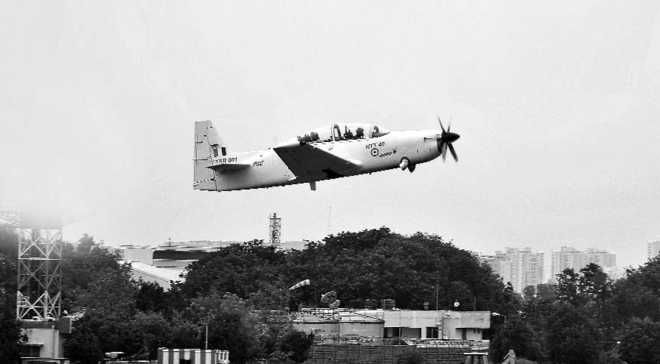
Basic trainer from HAL stable takes to skies htt-40 better than existing pilatus: Parrikar

Basic trainer from HAL stable takes to skies
A Hindustan Aeronautics Ltd-designed Hindustan Turbo Trainer-40 (HTT-40) aircraft flies during its inaugural flight in Bengaluru. REUTERS
  • Defence Minister Manohar Parrikar on Friday said Hindustan Turbo Trainer-40 (HTT-40) was better than the existing Swiss propeller driven Pilatus, whose purchase will now be restricted to just 38
  • HTT-40 could still land in case of engine failure and the pilot could eject even when the plane was in a stationary position, he stressed, praising the basic trainer
  • He said the aircraft was 80 per cent indigenous with about 75 plus systems out of the total 90 of the aircraft sourced locally. HAL was free to export HTT-40, he added


610 cadets pass out of IMA GOC-in-C of South Western Command, Lt Gen Sarath Chand, was the Reviewing Officer

Himanshu Kumar Lall

Tribune News Service

Dehradun, June 11

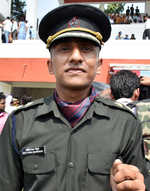
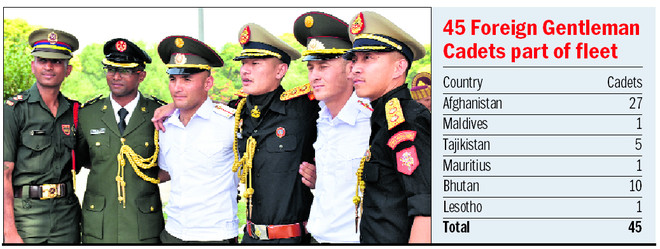
A total of 610 Gentlemen Cadets (GCs) passed out of the Indian Military Academy (IMA) here today. They took part in an impressive passing-out parade held on the drill square in front of the historic Chetwode Hall, marking the end of their training.  Lt-Gen Sarath Chand, General Officer Commanding-In-Chief (GOC-In-C), South Western Command, and Colonel of Garhwal Rifles, and Garhwal Scouts, was the Reviewing Officer of the parade. The fleet of 610 GCs include 425 from 138 Regular Course, including 107 GCs from direct entry, and 140 from 121 Technical Graduate Course, including 24 University Entry Scheme and 45 from six friendly foreign countries.The parade began with company markers marching on the drill square and forming the inspection line. The eight Company Sergeant Major (CSM), who were company markers of their company, formed the line. The physically tough and immaculately dressed GCs in different contingents entered into the drill square on the tunes of the academy song “Bharat Mata Teri Kasam”, “Col Bogey” and “Sare Jahan Se Achcha”. The contingents were led by Parade Commander Academy Cadet Adjutant (ACA) Rajendra Singh Bisht.Lt-Gen Sarath Chand along with IMA Commandant Lt-Gen SK Saini inspected the parade. The most-awaited ceremonial march past began with smartly dressed-up GCs of the passing-out course from different companies of the academy exhibiting their drill skills.In the address to the pass-out course cadets, Lt-Gen Sarath Chand urged them to keep themselves updated about modern warfare as the latest lethal weapons and advance technologies were capable of more casualties. He said the pre-commissioning training would help them to face any adverse situation.“Your juniors will blindly follow you, if as young officers you lead them by setting examples,” he said. It was the need of the hour to remain professionally competent and adept yourself as the situation demands in war or peace time. Lt-Gen Sarath said young officers should work hard to learn new military technologies and strictly take care of men behind weapons. Later, he gave away prizes to GCs who excelled in military training, academics, sports and extra-curricular activities during the pre-commissioning training.ACA Rajendra Singh Bisht won the most coveted “Sword of Honour” for being adjudged the best from the regular course and the bronze medal for standing third in the order of merit. BUO Aman Dhaka wont the gold medal for standing first in the overall order of merit from the regular course while SUO N Dinesh Kumar won the silver medal.Among the technical entries, GC Avijit Hazra Chowdhury won the silver medal for being adjudged second in the order of merit while FGC Choki Dorji from Bhutan bagged the silver medal. The Chief of Army Staff Banner was given to “Imphal” Company for being adjudged the best company among all companies of the academy. Later, emotions ran high among the parents and relatives of the GCs of the passing-out course as they started towards the ‘final step’. Three helicopters showered petals on the GCs as they headed towards Antim Pag (final step), Chetwode Hall. The day ended with the peeping-in and oath-taking ceremony.


Arms, ammunition recovered from militant hideout in Rajouri

Rajouri, June 11

Troops of the 38 Rashtriya Rifles and the Rajouri police this morning busted a militant hideout in Thanamandi tehsil of Rajouri district and recovered a cache of arms and ammunition.Army sources said the operation was launched in collaboration with the personnel of the Special Operations Group of the Rajouri police after specific inputs about the militant hideout in a forest adjoining Phangai village.“The hideout was in a natural cave at Lakrewali Gali near Dera ki Gali, a tourist spot, and was busted this morning after taking every possible security measure,” said a senior Army officer.An Army spokesperson said the recovery included one AK-47 rifle with two magazines and 115 rounds, one Chinese pistol with a magazine, four Chinese grenades and four under-barrel grenade launcher (UBGL) rounds.The grenades and UBGL rounds were destroyed on the spot by the troops while the arms and other ammunition was handed over to the police for further investigation and legal action, he added. — OC


AGUSTAWESTLAND SCAM Probe focus on those named

Vibha Sharma

Tribune News Service

New Delhi, May 4

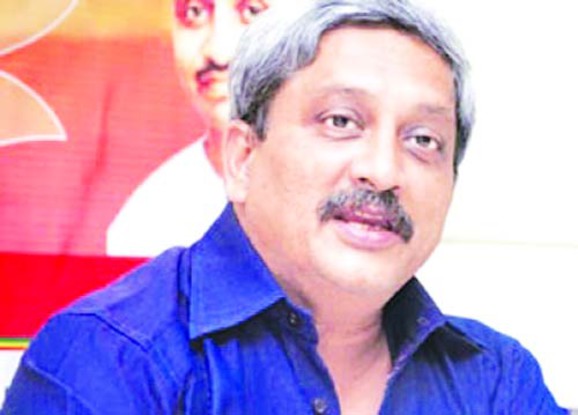
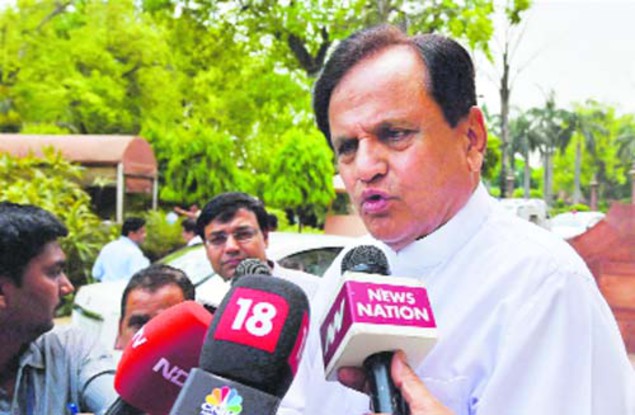
Stating that the CBI had already done considerable investigation in the AgustaWestland chopper scam, Defence Minister Manohar Parrikar today said the inquiry would now focus on the roles of those named by an Italian court in its ruling. In an all-out offensive against the Congress leadership, Parrikar told the Rajya Sabha that there was an agreement that “corrupt practices were involved” in the procurement of VVIP helicopters and the Italian court judgment unequivocally accepted this. The Minister, replying to a debate in the House on the chopper controversy, did not name anybody. Former Defence Minister AK Antony and Congress leader Ahmed Patel, political secretary to Congress president Sonia Gandhi, sought a thorough probe to trace all those who had received kickbacks. “It is proved beyond doubt that there is corruption in the deal. If you have evidence, take action, but do not threaten,” Antony said, reiterating  the demand by other political parties, including the SP, the JD-U, the Left and the BSP, for action against the company and an  SC-monitored probe, a demand that was rejected.  Parrikar said the CBI was on the money trail. “The government will leave no stone unturned to bring to justice those who have committed these corrupt acts against national interest,” he said.  “It is evident that trials were not conducted because chopper was at the development stage. Hence, the main action required is to trace and unmask the means of these corrupt practices,” he said. Patel’s name has been dragged because initials “AP” were found on  documents recovered during the probe by the Italian authorities.  “The inquiry will focus on the roles of those named in the judgment of Italian court… Where has the money (kickbacks) gone? It appears an invisible hand was guiding the action or inaction of the CBI and the ED” Manohar Parrikar, Defence minister”I will quit the Rajya Sabha and retire from public life if any allegation is proved. The propaganda against me, my party and leaders is baseless” Ahmed Patel, Political secretary to Congress president


Wreath-laying ceremony at IMA

Wreath-laying ceremony at IMA
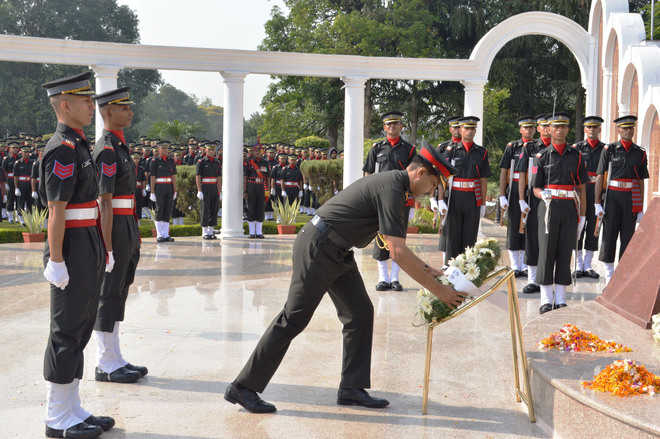
Lt-Gen SK Saini, Commandant, Indian Military Academy, lays a wreath at the war memorial of the academy in Dehradun on Friday. The solemn ceremony is held every term as a precursor to the passing-out parade. Tribune photo

Tribune News Service

Dehradun, June 10

A day before the passing-out parade, a wreath-laying ceremony was held at the War Memorial of the Indian Military Academy (IMA), here today. The solemn ceremony is held every term as a precursor to the passing-out parade.The remembrance ceremony is to pay homage to the brave alumni of the prestigious training academy, who laid down their lives in keeping the highest tradition of sacrifice, upholding the honour of the nation.Lt-Gen SK Saini, Commandant, Indian Military Academy, along with officers and the Academy-under-officer, on behalf of the passing-out course, laid wreaths and offered floral tributes to the gallant martyrs.The sanctum-sanctorum of the War Memorial is a seven-and-a-half-feet bronze statue of a gentleman cadet saluting with a sword. To the rear of the statue are designed arches on which are etched the names of the 832 valiant alumni, who have sacrificed their lives till date.As many as 610 cadets took the resolve to keep the nation’s flag flying high.


Mehbooba Mufti Could Turn A New Leaf In J&K ::::Syed Ata Hasnain

Recognise Jammu And Kashmir Youth's Potential: Mehbooba Mufti To World Community
SNAPSHOT
  • While the Valley’s environment may have been heated enough for detractors to envisage a summer of discontent, things appear to have cooled down.
  • Indicators from the government’s initial moves appear to be more positive than most previous governments.
  • Even as separatists intend to prevent the government from settling down, leaders have displayed maturity by desisting from any contentious comments.

While much has been written and discussed about the situation in Jammu and Kashmir (J&K) in the last few weeks, most of it has been contextual to events. The Handwara incident sent out ominous signals, the fallout wasn’t too psychologically endearing for the Security Forces (SF). The NIT incident wasn’t too positive either. When it comes to J&K, analysts including this one, tend to take every event apart and hardly concentrate on the big picture. Rarely do we have analyses and projections when things are quiet and especially when positive trends are in the making.

One of the recent most positive events on the J&K landscape has been the formation of the new government of the PDP and BJP under the leadership of Chief Minister Mehbooba Mufti. Observers have generally been skeptical about it given the fact that it took almost three months to arrive at some form of agreement between the two parties before its formation.

Skepticism went further as the Handwara incident tested the new government which came into being even as the fallout over NIT was creating turbulence in the environment. That the Deputy Chief Minister rose to the occasion and played his role in keeping with the spirit of the coalition ensured that the fallout in Jammu was not as intense as I would have envisaged. Even the Handwara incident, I am convinced, was an expected manipulation to put the new government off balance.

While the Valley’s environment may have been heated enough for all detractors to envisage a very hot summer of discontent on the streets through 2016, things appear to have temporarily cooled down. However, there is a simmer and the Separatist attempt to trigger a chain of protests has not really manifested. Of course, in the Valley it does not take time beyond a single breath for things to go out of hand and predictions are always premature.

Indicators from the government’s initial moves appear to be more positive than most previous governments. That the Chief Minister found time to start addressing long pending issues on the economic front is itself a positive. I happened to attend a meeting a few months ago on the problems of Trans Line of Control (LoC) trade, which commenced in 2008 but floundered due to inability to go beyond a threshold. I was pleasantly surprised to learn that many of the issues discussed in that meeting with Mehbooba Mufti have been quickly addressed within the first month after government formation.

The durbar is to move shortly to Srinagar and many are expecting the welcome to be turbulent. The intent of the Separatists as assessed earlier is to disallow the government from settling down. I suspect that they too realize that the agenda of this government is going to be different and are attempting to divert that towards the streets.

That, in reality, is the actual theme of this analysis. What should be the attitude of this government and its approach to governance? Mainstream print and visual media was more taken up by the events which morphed with the arrival of the new government. It prevented a more intellectual analysis and advice with the overhang of events such as Handwara or NIT.

The BJP-PDP combine this time seems to have learnt from the experience of the previous government. The BJP has controlled its cadres effectively and avoided triggering contentious issues. We are neither witnessing hyperbole on Article 370, nor on the Kashmiri Pandit issue; both are legitimate issues, but not when a coalition government has come into being with major ideological differences and much give and take. The last time, late Chief Minister Mufti Mohammad Sayeed was embarrassed early in his tenure with the Masrat Alam case and some public statements about Pakistan. This time, the constituents and the leaders are displaying maturity by desisting from any contentious comments.

Patience is a virtue in a volatile environment such as J&K. Sooner than later, if patience starts running out and either political party starts to wrestle its way to garnering advantage in its core constituencies, much of what the government is achieving now will be compromised.

Politicians are usually smarter people than we care to think. Prematurely raising contentious issues which have no easy resolution, just for the sake of flagging their concern tends to move the carpet under their feet. It is smarter to look at issues which are less emotional, more workable in the short term and related to daily lives of the electorate (read people). Playing down emotions on the street will leave sufficient energy in the leadership to focus on issues where the people wish them to perform.

The Chief Minister’s timely intervention in the LoC trade must be taken to the next logical step and similar initiatives, which obviously must come to her through consultation, must show early decisions and progressive monitoring.

I have long believed that one of the issues which any J&K government must focus on is the winter management of Kashmir and Ladakh. Let this government take it upon itself to make a material and perceptible difference to the lives of the people the next winter. Consultation is the key, and that must take place with the lowest strata in remote villages and the gentry in semi-urban and urban areas.

The thing missing in the lives of the people has been grassroot political consultation and activism, because political leaders seldom felt safe to venture out on their own. Engineer Rashid, the independent MLA from Langaite (Handwara) may be a rabble rouser, but he would put to shame many a politician with the kind of following he enjoys in his constituency only on the back of his honesty and outreach to the people.  There are other examples too but Kashmir’s political landscape has largely witnessed only turbulence through emotive triggers. If this government can turn a new leaf, as it obviously is attempting to do, it will be a win-win for the establishment and a dent to the Separatist agenda.


The key for the government settling down well lies in focusing on a few issues in all three regions. No scope for accusations of favoring a region must be allowed to emerge. The government must also concentrate on some of the cultural aspects of all three regions to raise self-esteem about the richness of history and culture. The tourist season must also pan out without hindrances because that is the time money enters into pockets and emotions can be better managed. Lastly, on the governance front, much attention needs to be paid towards rehabilitation of the flood victims, with total control on corrupt practices.

Everything can go well if the security domain remains dormant. This is unlikely. Across the LoC, the United Jehad Council (UJC) and its cohorts in the Pakistan Deep State are unlikely to remain quiet. Infiltration attempts will be of a higher order. Hinterland terrorist activity will crop up from time to time, along with the new tactics of mob surges to the area of contact with terrorists. Thus far, the Army, Central Reserve Police Force (CRPF) and the Jammu and Kashmir Police (JKP) have displayed remarkable alacrity and maturity in the conduct of operations, but sooner than later, there will be incidents which are unpredictable and control of post incident events will be important.

There must be no quarter given to rumor mongering such as the type which emerged after the Handwara incident. There is no alternative to integration as none of the components of the SF can do anything on their own. This is not the time to reduce footprint of the Army, but consciously and with JKP advice, the Army could identify irritants which the Separatists may exploit to their advantage.

The common refrain of all those who know the ground is that having bunkers in close proximity to populated areas is no longer required. Yet, there has to be a degree of pragmatism in this. Much of the Army’s headquarters and units are themselves located within towns or their outskirts. This presence helps in many ways and limits the ability of anti-national elements having a free run.

The SF have now become quite adept at small cordon and search operations and must maintain their focus on these. The vulnerable towns must not be allowed to have a resurgence of terrorist leadership. It means the counter infiltration grid can have no let up. Nontraditional areas and those not activated for infiltration for long must also receive due focus. In North Kashmir, the forest tracts cannot be allowed to become havens and must be addressed.  In South Kashmir, reactivation of the Lidder Valley after long is being experienced. Some degree of redeployment may be necessary to control this.

The summer of 2016 may yet turn out to be different from what many have anticipated. It is good to expect the worst but continue to remain positive about the government’s intent and capacity to turn things around. It has shown promise in the first few weeks. Once ensconced in Srinagar, it must balance itself between the need for security and the demand for governance.

At the same time, some traditional activities such as the Amarnath Yatra and a few cultural activities of the Kashmiri Pandits must receive attention to prevent any emotions going astray. The Separatists will attempt to raise triggers in relation to both these events which must be responded with care and without allowing emotions in the streets or in cyber space.

Lastly, the government and the Army must work in tandem on the management of perception. This can be a completely different trend since it was the Army alone which worked on this for long. Perhaps in the next Unified Command meeting with the Chief Minister in the chair, one of the agenda items must be strategic communication, if not perception management.

This article was first published here.

Displaying images.jpgimages

Lt. Gen Syed Ata Hasnain (Retd) is the former Corps Commander of the Srinagar based 15 Corps, and is currently associated with Vivekanand International Foundation and the Delhi Policy Group, two major strategic think tanks of Delhi


Vajra Corps concludes summer drill

JALANDHAR: In an effort to hone its conventional operational preparedness on the western front, Vajra Corps conducted a series of tactical war exercises with troops under annual summer month’s field exercise programme.

HT PHOTOArmy personnel holding a war drill in the western sector.The areas where the regiment conducted drills included Nakodar-Nurmahal and the vicinity of Ludhiana.

The officials said that they also conducted the exercise at Khem Karan, historically known as ‘Patton Graveyard’ and Jalalabad, both in the general area of Ferozepur by ‘Double Victory Brigade’ and ‘Golden Arrow Division.’

Vajra Corps officers informed that the drills were conducted as per the schedule despite the intense heat inside the tank or infantry combat vehicle, and the troops displayed remarkable skills while undertaking works under the training.

Officers further informed that the exercises involving large scale tank, infantry and aviation manoeuvres were supervised by Lt Gen JS Cheema, general officer commanding Vajra Corps.

Meanwhile, the exercise was witnessed on the concluding day by Lt Gen KJ Singh, general officer commanding-in-chief, Western Command.

Speaking on the occasion, the army commander compliment the troops for displaying professionalism and also appreciated the formation for its innovative training methodology in actual terrain and weather condition that has enhance its operational and logistics preparedness for conventional operations, adding to the might of the Western Command