All posts by webadmin

Indo-Kazakhstan joint exercise concludes

Indo-Kazakhstan joint exercise concludes
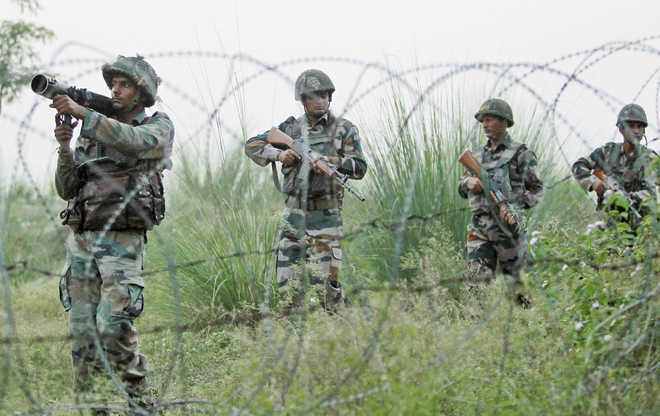
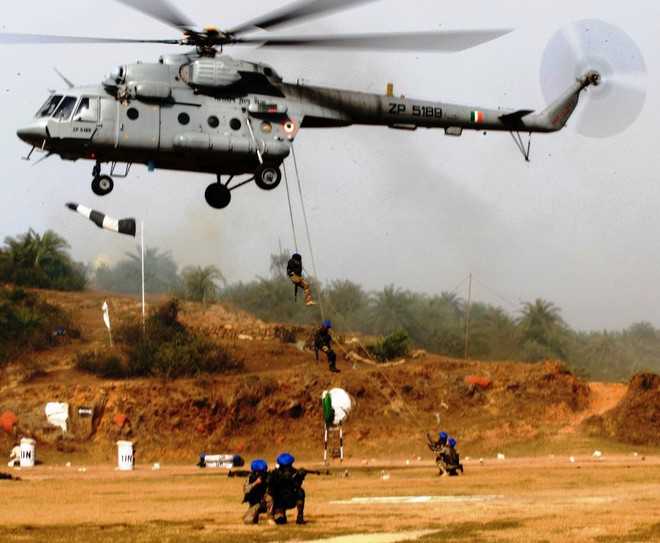
Slithering operation being conducted during the Indo-Kazakhstan Joint Training Exercise on Tuesday. Photo: Ashok Raina

Our Correspondent

Kangra, November 14

The Indo-Kazakhstan Joint Training Exercise, “Prabal Dostyk 2017” culminated today with a closing ceremony at the Bakloh Military Camp here.Col NN Joshi, Defence Spokesperson, today said the exercise was the second edition of the ‘Prabal Dostyk’ series of exercises between the two countries. He said the first was ‘Prabal Dostyk 2016, which was conducted in Kazakhstan.He said the 14-day joint training exercise included basic mutual orientation between contingents of the two armies, a joint training in counter insurgency/counter terrorist operations under the UN mandate and culminated with a validation exercise.Col Joshi said the overall aim of the joint exercise was to understand each other’s operational methodology and develop interoperability to enable joint operations by the two armies.Brigadier Navdeep Brar of the Indian Army presided over the closing ceremony. Besides the two participating contingents, the closing ceremony was also attended by observer delegations of both armies which comprised of senior ranking military officers. Personnel of both contingents expressed their satisfaction on the successful conduct of the joint exercise and were confident of having achieved a high degree of interoperability. The exercise also demonstrated the determination of the two armies in working closely with each other to eradicate the menace of terrorism in all its forms. The joint exercise was a resounding success and will go a long way in enhancing military ties between India and Kazakhstan, Col Joshi added.


Life Certificate

Many elderly pensioners find it difficult to carry out regular banking activity or giving Life certificate.
There are banks which provide home banking facility for elders and disabled. Please give a letter to your branch to ask for the facility.In any case by Dec 2017 as per RBI latest orders as per orders seen at

 https://www.labourlawnews.com/banking-facility-senior-citizens-differently-abled-persons/

For life certificate one need not go the home branch put can submit the life certificate as follows
Go to any one who has Jeevan Praman facility and submit. Some welfare NGO have done this.To find  facility go to

https://jeevanpramaan.gov.in/locater

Electronic Delivery of Certificate :The Life Certificates can also be electronically delivered to the Pension Disbursing Agency, without any manual intervention.
Get your life certificate signed by any of the following officials and submit to the nearest branch of your bank and get a receipt for the same.
Officers Authorized to sign Life Certificates
Life certificates issued/signed by one or other of the following authorities/persons can be accepted:-
A serving or pensioned person exercising the powers of a Magistrate under the criminal procedure code (Act-V of 1898).
A registrar or sub-registrar appointed under the Indian Registration Act 1908 (XVI of 1908).
A Gazetted Officer.
A Munsif.
A police officer not below the rank of Sub-Inspector incharge of Police station.
Master, a Departmental Sub-Post Master or an Inspector of Post Office.
Officers of the Reserve Bank of India and other PSBs in respect of pensioners drawing pension from Banks.
The head of the village Panchayat, Gram Panchayat or Head of an executive committee of a village.
Retired Commissioned Officers of the Armed Forces in respect of pension bill form IAFA-319 of Commissioned Officers, departmental Officers and Warrant Officers.

Demonetisation was not required, I had warned so: Manmohan Singh

Demonetisation was not required, I had warned so: Manmohan Singh
Former Prime Minister Dr Manmohan Singh interacts with students at ISB Leadership Summit 2017 at Sector 81, Mohali, on Friday. Tribune photo: Vicky Gharu

Mohali, September 22

Former Prime Minister Manmohan Singh on Friday said the economy is on a “downhill path” because of the “adventure” of demonetisation undertaken last year which was not required at all, either technically or economically.Singh, a renowned economist considered to be the architect of the reforms of early 1990s, said demonetisation has not been successful in any civilised country, except some of the Latin American nations.“I don’t think demonetisation was at all required… I don’t think it was technically, economically necessary to launch this adventure,” he said at the Indian School of Business (ISB) Leadership Summit here when asked if the note ban decision was the right one.Prime Minister Narendra Modi had announced on November 8 last year scrapping of Rs 500 and Rs 1000 currency notes.He said the process involved withdrawing almost 86 per cent of the currency from circulation and “there was bound to be fallout which we are all seeing.”Singh made a speech before answering a few questions at the event.“The economy has slowed down as I had projected a few months ago as a result of demonetisation and also the fact that demonetisation has been accompanied by the GST, which is a good thing that we have done in the long term. But in the short term, there are glitches that need to be resolved. Therefore, the economy has experienced a downhill path,” he said.He said the GDP growth was much higher in the last quarter of 2016-17 than the first quarter of this financial year.There are certain things that need to be done immediately, Singh said.“When we were in office, investment rate in the economy was 35-37 per cent but now it is less than 30 per cent. Private investment in particular is not growing,” he said.He added that India needs much more investment in public sector “but we cannot rely exclusively on public sector to realise our development initiatives. We must also simultaneously work on a foreign exchange situation.”     Singh, who had served as the country’s finance minister over two decades back, said growth cannot take place at a high rate if banking system is not performing its task of providing money to entrepreneurs and to others who need to invest in our economy.Responding to a question on healthcare, he said it is one of the areas where the country is not spending enough and not giving the required emphasis on preventive healthcare.Although private sector has a role to play, the public health problems require strong leadership and this is one area where markets are important but not the final solution, he said.Asked what he felt would be the role of the government in foreseeable future and its interactions with the private sector, Singh said, “government in our country cannot be wished away.”He said public sector spending is only 30 per cent of the GDP, which is not too big compared to many other nations.Infrastructure, public healthcare, agriculture are the areas where the government will remain important, he said.Responding to a question on globalisation, Singh said it is here to stay.Despite what US President Donald Trump said in his election campaign, the American public opinion will prevail, he said.“Also, I feel in Europe too there is today recognition of multilateral trading system. China today has become a great champion of globalisation,” he said.Asked if the US President was being protectionist, the former prime minister said, “I am quite confident the US President’s current thinking will not last more than a year or so.” — PTI


Army finalises mega procurement plan for infantry modernisation

Army finalises mega procurement plan for infantry modernisation
The combined cost of the LMGs, assault rifles and carbines will be in excess of Rs 40,000 crore. PTI file

New Delhi, October 29

The Army has finalised one of its biggest procurement plans for infantry modernisation under which a large number of light machine guns, battle carbines and assault rifles are being purchased at a cost of nearly Rs 40,000 crore to replace its ageing and obsolete weapons.

(Follow The Tribune on Facebook; and Twitter @thetribunechd)

The broad process to acquire around 7 lakh rifles, 44,000 light machine guns (LMGs) and nearly 44,600 carbines has been finalised and the Defence Ministry is on the same page with the Army in moving ahead with the procurement, official sources told PTI.

The world’s second largest standing Army has been pressing for fast-tracking the procurement of various weapons systems considering the evolving security threats including along India’s borders with Pakistan and China.

Apart from kick-starting the procurement process, the government has also sent a message to the Defence Research and Development Organisation (DRDO) to expedite its work on various small arms, particularly on an LMG.

The sources said a fresh RFI (request for information) to procure the LMGs will be issued in the next few days, months after the defence ministry scrapped the tender for the 7.62 calibre guns as there was only one vendor left after a series of field trials. The plan is to initially procure around 10,000 LMGs.

The Army has also finalised the specifications for a new 7.62 mm assault rifle and the Defence Acquisition Council (DAC), the defence ministry’s highest decision making body on procurement, is expected to give the go-ahead for the much- needed procurement soon.

“The General Service Quality Requirements (GSQR) for the new assault rifle has been finalised. The procurement plan will soon be placed before the DAC for approval,” said a senior official, who is part of the acquisition process.

In June, the Army had rejected an assault rifle built by the state-run Rifle Factory, Ishapore, after the guns miserably failed the firing tests.

The procurement of assault rifles has witnessed significant delays due to a variety of reasons including the Army’s failure to finalise the specifications for it. The Army needs around 7 lakh 7.62×51 mm assault guns to replace its INSAS rifles.

The Army had issued RFI for the rifles in September last year and around 20 firms responded to it. An RFI is a process whose purpose is to collect information about capabilities of various vendors.

In June, the Army had kick-started the initial process to procure around 44,600 carbines, nearly eight months after a tender for it was retracted, also due to single-vendor situation. Around half a dozen firms including a few global arms manufacturers have responded to the RFI.

Army sources said various specifications for the LMGs and battle carbines were tweaked to ensure that the problem of single vendor does not recur.

The combined cost of the LMGs, assault rifles and carbines will be in excess of Rs 40,000 crore, said an official.

On DRDO missing a number of deadlines in finalising the LMG, an official said the defence secretary has called a meeting this week of all stakeholders to discuss the project.

“The infantry modernisation plan is a major initiative of the Army and it will significantly bolster the overall capability of the foot soldiers,” said a senior army official.

The issue was extensively discussed at the recently-concluded Army Commanders conference which felt modernisation of the Army must be in tune with the evolving security threat facing the country.

Defence Minister Nirmala Sitharaman conveyed to the Army during the conference that modernisation of the force was a priority for the government and all its “deficiencies” will be addressed to strengthen its combat capability. PTI

PM Modi’s outreach to Kashmiris needs to become a doctrine by Lt Gen Syed Ata Husnain

Source : narendramodi.in

At a time when the security forces have achieved impressive results in terrorist kills over the last three months, the statement surprised some observers in Kashmir.

When  Prime Minister Narendra Modi uttered his now famous phrase, “ Na Goli Se, Na Gaali Se, Dil Jeetenge Kashmir Ko Gale Lagane Se” (Not by Bullets, Not by Abuse, We Will Win by Embracing all Kashmiris) it is not the first time that the concept of winning over people in an insurgency/terror-stricken area was being advocated. At a time when security forces have achieved impressive results in terrorist kills over the last three months, the statement surprised some observers with Kashmir focus.

They say the time is ripe to continue the hardline operations to eliminate the maximum number of terrorists to bring peace in the Valley. Nothing could be farther from the truth.

Letting relentless operations against the terrorists be the only strategy would be unprofessional for an organization such as the Indian Army, which understands the conflict better than anyone else.

PM Modi has demonstrated this understanding at perhaps the most appropriate time. His detractors point out that he said nothing of this kind in last year’s Independence Day address. But in 2016 when Modi spoke, it was just five weeks after Burhan Wani had been killed; the situation was still chaotic. Governments do not start advocating soft power when the chips are down.

A mix of hard and soft power is the only way forward. It happened in Northern Ireland too, when after a point the British Army took a step back, holding only the periphery and allowed economics and social aspects to play their role. Mixed schooling and the development of tourism along the Belfast waterfront were considered the prime movers.

Through the summer of 2017 the PM kept quiet, while security forces went about their jobs clinically. From the grand low they were at in March 2017, when the ratio of losses to achievements had dipped to a negative of 1:0.8, security forces came back to establish far better statistics. That indicates the return of dominance of the security space although we still have  operations going on almost every day. These do appear to point to the possibility of a larger number of terrorists present, rather than the 250-300 generally spoken about.

The PM chose to speak from a position of strength. He knows that speaking to Pakistan is not something acceptable to the people of India. He has already mounted intense pressure on the Hurriyat by focusing on dismantling its financial networks. The combined strategy of security related operations (at the LoC and hinterland) and targeting of financial networks lacked one element: outreach to the people.

That is a lacuna he attempted to overcome. The PM understands that the security establishment and the political leadership in Delhi and Srinagar must get their act together to ensure that the recent successes are not wasted like before.

To do that, there must be a clearer vision and a full appreciation of the power of outreach. A group of Delhi-based strategic experts has been advocating talks with the Hurriyat, but that strategy is now dated. Others advocating waiting for an alternative, but diffused, leadership will have to wait much longer.

There is only one way. And this was tested in 2011-12 — direct engagement with the people through town hall-type meetings, and engaging with the youth separately as well. It is a model that needs to be examined for its worth. It began by arranging events with people who have rarely seen anyone come to them for a community interaction in all these years. The first step is creating hope and overcoming despair.

Victory does not lie in the domain of only crushing terrorists. The Hearts Doctrine espoused in 2011 had at its core a direct engagement with people without interlocution by any leaders. It started as small gatherings in safe areas with the army and the police providing security and administrative cover. As enthusiasm increased and a platform was available to people to express their thoughts without holding back sentiments, we found that the politicians, legislators, sarpanchs and government officials joined in as well.

It is time to return to that model, it just needs to be updated and a doctrinal touch added to it.

Lt. Gen. Syed Ata Hasnain (Retd), a former GOC of Srinagar-based 15 Corps, is associated with the Vivekanand International Foundation and the Institute of Peace and Conflict Studies. Twitter: @atahasnain53


Army remembers martyrs on Infantry Day

Army remembers martyrs on Infantry Day
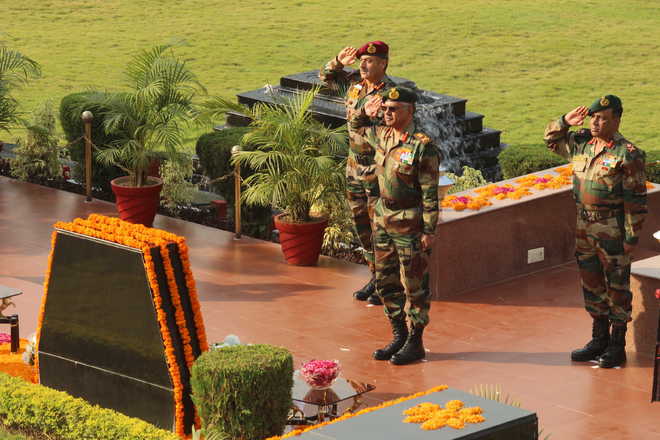
Northern Command chief Lt Gen D Anbu salutes martyrs on Infantry Day at Udhampur. Tribune Photo

Tribune News Service

Jammu, October 27

The Army today celebrated 70th Infantry Day across Jammu region with major functions being held atthe Northern Command Headquarters at Udhampur and the 16 Corps Headquarters at Nagrota.At Udhampur, Lt Gen D Anbu, General Officer Commanding-in-Chief, Northern Command, complimented all ranks of the Infantry for their devotion to duty and indomitable spirit while working under trying and difficult conditions.He commended their tremendous contribution in maintaining the sanctity of the nation’s borders and fighting terrorism in Jammu and Kashmir.The celebrations at the Northern Command, Udhampur, were marked by a wreath-laying ceremony at the ‘Dhurva Shahid Smarak’. On this solemn day, the supreme sacrifices made by the Infantry fraternity in defending the honour and integrity of the nation were remembered by all.At White Knight Corps (16 Corps), the day was marked by laying of wreath by GOC, White Knight Corps, Lt Gen Saranjeet Singh at the Ashwamedh Shaurya Sthal and remembering the martyrs.Serving officers and men paid homage to the brave soldiers who made the supreme sacrifice in the line of duty for the glory of the nation.


Cutting down Army flab Sterner tests lie ahead

Cutting down Army flab

The government must carry forward the momentum generated by its decision to redeploy over 50,000 Army personnel to ensure that this initiative is not a flash in the pan. The Indian Army has downsized itself twice in the past to cut down on the flab and use the savings to buy more weapon systems. In the 1980s, the axe fell on the supply, ordnance and medical corps and signals, while another attempt was abandoned midway because of the Kargil conflict. As opposed to those two efforts, the latest decision improves the numbers in the trenches but does not impact the wage bill. Therefore, the closure of military farms or outsourcing transport in peace locations not only dents revenue expenditure but also divests the Army of noncore activities. The government now needs to review the flab in civilian organisations like defence PSUs and the DRDO.But this is a job that the Army has just begun as compared to its potential adversaries Pakistan and China, whose forces are several times leaner. Therefore, the latest exercise must not be allowed to become an end in itself. Other armies have been much faster in grasping the trend towards reliance on smart weapons. They have also been more radical — China reduced its strength by three lakh soldiers and the UK by 80,000, while Russia has slashed its land forces in two phases. The Indian military, in comparison, is still several initiatives removed from transforming into a smaller, technologically able and mobile force.The government also faces the gigantic task of fostering jointness among the three services. This means having a single chief who will have all the three forces at his disposal, a proposal that has awaited implementation for two decades. Now that China has also reconfigured its military to end departmentalism, it is time for India to bite the bullet. The move to reorganise military manpower and structure to give a better bang to the taxpayer’s buck and reorient to the demands of modern warfare has started afresh. India now needs a full-time Defence Minister to quarterback the tougher reforms.


Navy gets INS Kiltan

clip

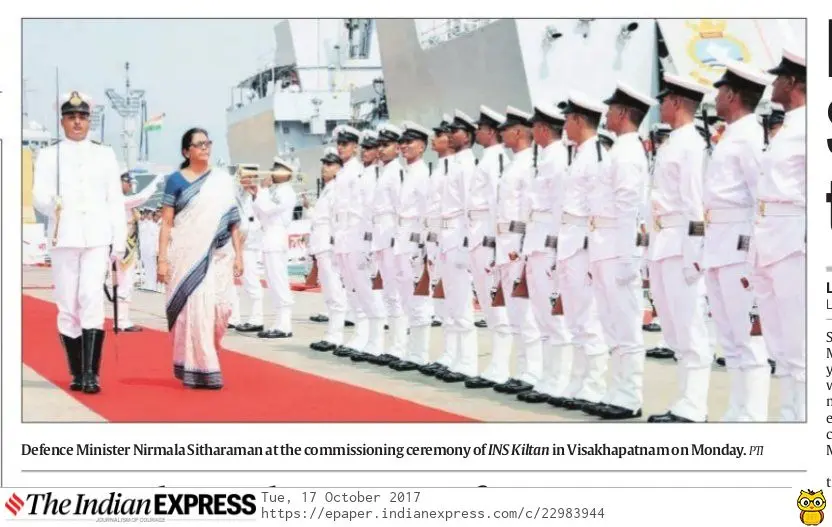
Defence Minister Nirmala Sitharaman with Chief of Naval Staff Admiral Sunil Lanba (2nd from L) in Visakhapatnam on Monday. PTI

The indigenously built anti-submarine warfare stealth corvette INS Kiltan, which was commissioned on Monday, is equipped with a plethora of weapons and sensors to provide a Common Operational PictureIt is India’s first major warship to have a superstructure of carbon fibre composite material resulting in improved stealth features, lower top weight and maintenance costs, the release said


Manmohan Singh Had Backed CBI in Dera Chief Case, Says Investigation Chief

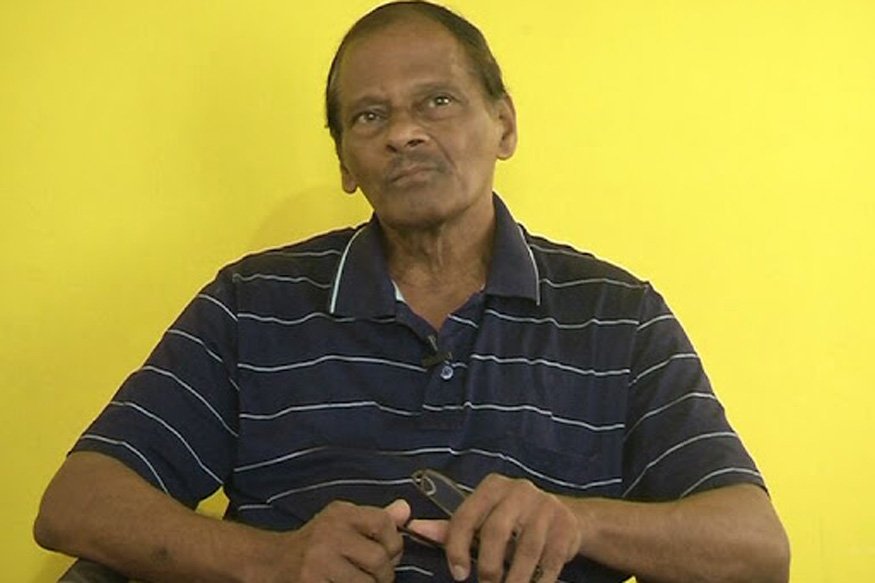
M Narayanan, retired DIG of the CBI, said after a lot of pressure from Punjab and Haryana MPs, former Prime Minister Dr. Manmohan Singh had summoned the then CBI chief Vijay Shanker to his office to discuss the case against Dera chief Gurmeet Ram Rahim Singh.

M-Narayanan-875

Bengaluru: The chief investigating officer in the rape case against Dera chief Gurmeet Ram Rahim Singh has revealed that former Prime Minister Manmohan Singh had ignored political pressure and given Central Bureau of Investigation (CBI) a free hand.

“The then Prime Minister Manmohan Singh stood by the CBI and ordered us to go by the law. He went through the statement made by two Sadhvis before a judge and did not succumb to the pressures from Punjab and Haryana MPs. After a lot of pressure from these MPs, Manmohan Singh had summoned the then CBI chief Vijay Shanker to his office to discuss the case against Gurmeet Ram Rahim Singh. After seeing the victim’s statements before a judge, Singh backed us,” said M Narayanan, retired DIG of the CBI, who was the chief investigating officer in the rape case against Dera chief.
Narayanan has also praised his boss Vijay Shanker for standing up to Punjab and Haryana MPs. Speaking to News18, he said, “When powerful MPs asked him to drop cases against Ram Rahim, Vijay Shanker refused to do so. He backed us fully”.

A native of Kasaragod in Kerala, Narayanan was in Mysore on the day Ram Rahim was sentenced to 20 years in jail. Expressing satisfaction over the punishment handed over to the rapist, he said that Ram Rahim would also be convicted in other cases, including the murder of two people.

Talking about how his team conducted the investigation, Narayanan said, “The complaint was sent in 2002. But nothing had happened till 2007. Expressing serious concerns over the progress of the investigation, the Punjab & Haryana High Court took the CBI to task. It had even summoned the chief Vijay Shanker to court seeking an explanation. After that he gave us Sadhvis letters, files of the murder of journalist Ramachandra Chatrapati and Dera volunteer Ranjit Singh. He ordered us to go ahead and complete the investigation in just 57 days as ordered by the High Court”.

According to him the task was huge as Sadhvis letters were anonymous. “We came to know that between 1999 and 2002, over 200 Sadhvis had left the Dera because of sexual harassment. Finally we could trace just 10 victims. But they were married and did not come forward to lodge a complaint. We managed to persuade just two victims and filed charge sheet before a court in Ambala on the 56th day”.

He said that entering the fortress like Dera Sacha Sauda headquarters in Sirsa itself was a very difficult job. The CBI team led by him was threatened by the goons of Ram Rahim and they had to face a lot of hostility. Narayanan said that Ram Rahim was living like a medieval emperor in his so-called ashram (Goofa) surrounded by pretty women known as Sadhvis. Every night around 10 PM, the head Sadhvi used to get a call from him instructing her to send a Sadhvi to his bedroom and she used to force one of the Sadhvis selected by him to sleep with the “guru”. Narayanan added that Ram Rahim was extremely careful like a seasoned criminal and never used to leave any traces of his crime. “He had a collection of condoms and contraceptives in his room. He was a maniac, a real beast”, the investigating officer said.

“Ranjit Singh was a prominent volunteer at the Dera. After his sister was raped by Ram Rahim, both of them had left Sirsa. A few days later an anonymous letter reached Punjab and Haryana High Court. Suspecting that Ranjit Singh was behind it, Dera chief ordered his men to murder him. It has been proved that the pistol used by his murderers belonged to Dera manager. They had also left a walkie-talkie at the scene of crime. I am sure Ram Rahim will be convicted in these heinous cases too,” said Narayanan who had retired in 2009.


Anatomy of the Doklam face-off MK Bhadrakumar No immediate threat from China

Anatomy of the Doklam face-off
PARANOIA: Reports of ‘Doklam.2’ are untrue. Our foreign policy is too ‘militarised’.

MK Bhadrakumar

THE Press Trust of India featured a stunning report on October 5, quoting sources, that China maintains a sizeable presence of its troops near the site of the Doklam standoff with India and has even started widening an existing road at a distance of around 12 km from the earlier face-off site. Sources confided that “China has been slowly increasing its troop level in the Doklam Plateau which could further escalate the current situation as India has reasons to be concerned over it.” Even as the nameless sources whispered softly, the Chief of Air Staff, Air Chief Marshal BS Dhanoa, also admitted publicly on the same day: “The two sides are not in a physical face-off as we speak. However, their forces in the Chumbi valley are still deployed and I expect them to withdraw as their exercise in the area gets over.”These reports meshed with what the Army Chief, Gen Bipin Rawat, insinuated exactly a month earlier on September 6: “As far as the northern adversary (read China) is concerned, the flexing of muscle has started. The salami slicing, taking over territory in a very gradual manner, testing our limits of threshold is something we have to be wary about and remain prepared (sic) for situations emerging which could gradually emerge into conflict.” It doesn’t need much ingenuity to figure out that there has been some orchestration behind these synchronistic statements. Interestingly, the official Russian news agency Sputnik, too, reported from Delhi on October 5 that a “Chinese troop buildup” in Doklam has “kept the Indian military on its toes, forcing it to stall the annual winter retreat from north Sikkim.”All in all, a strange thing is happening. The military, whom we expect as people who are precise and business-minded and from whom we get definite answers, is posing riddles. Fortunately, the Ministry of External Affairs promptly clarified on October 6: “We have seen recent press reports on Doklam. There are no new developments at the face-off site and its vicinity since the August 28 disengagement. The status quo prevails in this area. Any suggestion to the contrary is incorrect.” The General, the Air Chief, the “sources” — and Sputnik — were apparently put on the mat.The sensational reports regarding fresh Chinese deployment to Doklam were timed to coincide with Foreign Secretary S Jaishankar’s visit to Bhutan for consultations on October 5 and the scheduled visit by the new Defence Minister, Nirmala Sitharaman, to the Sikkim region the next day as part of her familiarisation tour of border areas. As Vladimir Lenin once asked: “Who stands to gain?” This is of a piece with General Rawat’s recent demand for an increase in the defence budget to enable the Army to fight two-and-a-half wars simultaneously.The Chinese reaction to the hullabaloo is insightful. Beijing took a detached view. Surveying the media frenzy about a Doklam.2 in the offing, Chinese commentators made three pointed observations. First, unsurprisingly, an assurance was held out that China does not plan to precipitate a conflict; it was clarified that, in fact, India is not a “major focus for China’s international strategy” currently. Nor is there any conceivable reason for China to regard India as its rival and, therefore, India has no need to work up such paranoia. Second, Beijing appreciated Sitharaman’s open display of goodwill toward the PLA soldiers on October 7 while visiting the Sikkim border and regarded her friendly gesture as an articulation of her hope for peace on the India-China border and her aversion toward a fresh standoff.     Third, and most important, in Beijing’s reading of the tea leaves, Sitharaman’s goodwill gesture faithfully reflects the “realistic and responsible attitude” of the Modi government. Beijing anticipates that a “new era of crisis management” is possible in India-China relations following the Doklam standoff. However, alas, while the two leaderships are exploring more cooperation and their focus and priority should be on avoiding friction and conflict, there is dissonance within India on this account. It is not only that the Army has corporate interests in bargaining for bigger budget allocation, the Indian public opinion too is distrustful of China’s intentions – although only a maverick section of extreme nationalists demands military confrontation with China. Therefore, the path ahead is challenging for the Indian leadership “to fix the stagnated ties” with China.It is difficult to quarrel with the above assessment of the Modi government’s policy predicament vis-à-vis China. The government is riding a tiger. It is not possible to disown the Himalayan blunder of mid-June to walk into the standoff at Doklam. But the saving grace is that the Indian public, willingly, suspends its disbelief and accepts the denouement of end-August as “victory”. However, instead of moving on, a contrived attempt is being made by interest groups to recreate time past. There is a big question involved in all this, which must be asked upfront: Can we really afford to fight “two-and-a-half wars”? The grim realities speak otherwise.In the 2017 Global Hunger Index released last week, the Washington-based International Food Policy Research Institute ranked India 100 among 119 countries, three places down from its last year’s position at 97. It means, shockingly enough, that more than a fifth (21%) of the children in our country are wasted, with stunted growth. India shares its 100th position with Djibouti and Rwanda. China is ranked at 29. Again, Shenzhen city in China’s Guangdong province used to be a market town to the north of Hong Kong 40 years ago and today its GDP alone equals three-fourths of India’s. And, in the Xiongan New Area to the south of Beijing, China is just launching another mammoth Shenzhen over an area that is a third bigger than Delhi state. By the way, China added new steel-making capacity in 2016 alone, which equals half of India’s entire production. TN Ninan wrote recently:“China expects to create 11 million urban jobs this year; for India, don’t ask.”Clearly, China has no reason to view India as “rival” and has nothing to gain out of another war. China belongs to a different league than India’s and is fixated on the obsessive thought that by the centenary year of the communist revolution in 2049, it should transform as a moderately prosperous country. Aren’t we missing the plot? Doklam is a wake-up call that our foreign policy is far too militarised and has jettisoned its core agenda of creating a peaceful external environment for India’s rapid development through the crucial make-or-break period of the coming 15-20 years.The writer is a former ambassado