All posts by webadmin

AgustaWestland: LR reminders sent to 7 countries

short by Anupama K / 10:09 am on 06 May 2016,Friday
The External Affairs Ministry on Thursday sent reminders to seven countries including Italy, and UK among others on the Letter Rogatory (LR) earlier sent by CBI in connection with the AgustaWestland case. The CBI said that these countries did not respond to its LR. An LR is a formal request from a court to a foreign court for judicial assistance.

MEA sends LR reminders to 7 countries

MEA spokesperson Vikas Swarup said the ministry has asked its missions to follow up with the seven countries — Italy, Tunisia, Mauritius, Singapore, British Virgin Islands, UK, UAE and Switzerland — and send “execution reports” to that effect.

The Ministry of External Affairs (MEA) Thursday sent reminders to seven countries for the Letter Rogatory relating to the AgustaWestland case, a day after receiving a communication from the CBI. MEA spokesperson Vikas Swarup said the ministry has asked its missions to follow up with the seven countries — Italy, Tunisia, Mauritius, Singapore, British Virgin Islands, UK, UAE and Switzerland — and send “execution reports” to that effect. The CBI has blamed these countries for not responding to its queries relating to the trail of funds in the alleged kickbacks paid in the Rs 3,600-crore VVIP helicopter deal. LR is a formal request from a court to a foreign court for judicial assistance.

WATCH INDIAN EXPRESS VIDEOS HERE


After blocking F-16 sale, US Congress moves to block all Financial Aid to Pakistan

The US Congress has initiated a move to block $450 million in aid to Pakistan for failing to “demonstrate its commitment” and taking action against the Haqqani terror network.

The provision in the National Defence Authorisation Act (NDAA) for the fiscal year 2017, if passed by the Congress, would not allow the US government to waive this condition in “national interest”.

According to NDAA 2017 as passed by the House Armed Services Committee last week, of the total amount of reimbursement and support authorised for Pakistan during the period beginning on October 1, 2016, and ending on December 31, 2017, $450 million would not be eligible for a national security waiver unless the secretary of defence certifies that Pakistan continues to conduct military operations against the Haqqani network in North Waziristan.

The defence secretary also needs to certify that Pakistan is demonstrating commitment to prevent the Haqqani Network from using North Waziristan as a safe haven and is actively coordinating with Afghanistan to restrict the movement of militants, including the Haqqani network, along the Pakistan-Afghanistan border.

There is similar certification requirement in the current fiscal 2016 ending on September 31, 2016, but the amount is $300 million.

Defence secretary has not been able to give necessary certification for the release of such a fund to Pakistan so far.

The House Armed Services Committee says that it will continue to review the reimbursements made to Pakistan and how it comforts with the future of US policy, including key counterterrorism and security objectives, in the region.

It also asked the secretary of defence to notify the congressional defence committees prior to making any reimbursement to Pakistan for any logistical, military or other support.

It further extends the requirement for the secretary of defense to certify, prior to making any reimbursement to Pakistan, that Pakistan is maintaining security along the Ground Lines of Communications, taking demonstrable steps to support counterterrorism operations, disrupting cross border attacks and countering the threat of improvised explosive devices.

The move comes days after the US told Pakistan to put forward its national funds to buy eight F-16s worth $700 million after some top Senators put a hold on the use of American tax payers’ money to partially finance them.

In a recent Congressional testimony the special US representative for Afghanistan and Pakistan, Richard Olson, said that the Obama administration has $742.2 million in American aid to Pakistan for the fiscal year 2017.

This includes $472.4 million in civilian assistance and USD 269.8 million in security assistance.

“This request strikes the appropriate balance between long-term development and strategic military-to-military cooperation, both of which are in our national security interest, and is at a level that we can responsibly implement,” Olson said.

“This request is considerably lower – indeed, over 60 per cent lower – than our peak funding for Pakistan in FY 2010, the first year under the Kerry-Lugar-Berman authorisation,” he added.

“While this decrease is warranted given urgent needs around the globe, the requested resources remain crucial to advancing cooperation on core areas that matter to us: bolstering Pakistan’s counterinsurgency and counterterrorism operations; empowering women and girls; enabling the return of internally displaced persons; and facilitating private sector investment in Pakistan’s economy and energy sector,” Olson said.


AgustaWestland deal: Ex-IAF chief SP Tyagi ‘admits’ he met Finmeccanica amid chopper talks

Met Finmeccanica amid chopper talks: SP Tyagi

short by Nihal Thondepu / 09:32 am on 04 May 2016,Wednesday
Former Indian Air Force Chief SP Tyagi on Tuesday reportedly admitted that he had met officials of AgustaWestland’s parent company Finmeccanica during negotiations for the VVIP helicopter deal. Notably, the meeting happened before the specifications for the helicopters were changed. This comes after an Italian court said Tyagi met AgustaWestland officials with his cousins when he was IAF Chief.
CBI officials had questioned Tyagi on various aspects of the case including his alleged links with middlemen, his alleged trips to Italy, reasons behind changing specifications, and relations with his cousins, sources said –

ormer IAF Chief S P Tyagi is said to have told the CBI Tuesday that he met senior officials of Finmeccanica, the parent company of AgustaWestland (AW), while negotiations for the purchase of VVIP choppers were going on.

He told CBI interrogators that he had met Chief Operating Officer of Finmeccanica, Georgio Zapa, in Delhi on February 15, 2005.

At the time, Tyagi was over one month into his tenure as Air Chief Marshal and specifications for the purchase of VVIP choppers had not been changed yet.

READ: Govt defers Agusta-Tata joint venture; FIPB took decision on April 8, day after Milan verdict

“He had denied meeting any Finmeccanica official earlier. However, during sustained questioning and on being confronted with evidence of his meetings, he accepted he had met Zapa,” said a CBI official.

The agency is in possession of the visitor’s register as proof of the meeting. As reported by The Indian Express on April 29, the verdict of the Milan Appellate Court clearly says that Tyagi met several AW officials in the presence of his cousins when he was IAF chief. And that even before he became chief, Tyagi was aware of the change in specifications of the helicopter — lowering of height ceiling — and is said to have passed on that knowledge through his cousins and via middlemen to AW officials. CBI sources said Tyagi also told interrogators about companies that he and his wife own together. The companies were identified as Meghanu Realtors, Anuras Properties and Shavan Enterprises, sources said. This was Tyagi’s second consecutive day of questioning at the CBI headquarters. According to CBI sources, the companies were allegedly incorporated after 2011— four years after Tyagi retired from service. But it was also one year into the signing of the chopper deal — the contract with AW for the supply of 12 AW-101 VVIP helicopters was signed on February 8, 2010. “We are looking into the financials of these companies and where the money came from and why were these companies set up,” a CBI official said. The official said the agency was also looking at Tyagi’s international travel details to ascertain where he travelled before and after the deal was signed and for what purpose. Tyagi, who was named in the CBI case registered in March 2013, was questioned for nearly nine hours on Tuesday. According to government records, deliberations to alter specifications of the VVIP chopper — flying ceiling of 6,000 m and a cabinet height of 1.8 metres — started from March 2005 and some senior officials of the IAF, the Prime Minister’s Office and the Defence Ministry had participated. These deliberations continued till September 2006 and suggestions to reduce the flying ceiling were accepted, which brought Finmeccanica’s subsidiary AW’s helicopter in contention for the deal to sell 12 VVIP choppers to India. Tyagi has denied allegations against him, saying the change in specifications was a collective decision in which senior officers of the IAF, SPG, NSA and other departments were involved –


Pay in full for F-16s: US to Pak Aziz says will buy jets from other countries if Washington holds back finances

Washington/Islamabad, May 3

The $700 million F-16 fighter jet deal seems to have hit turbulence with the US telling Pakistan it will have to finance the purchase of fighter jets itself after members of the US Congress objected to using government funds to pay for them. Pakistan, however, said it will buy jets from other countries if the US fails to provide agreed funds.The US has asked Pakistan to “put forward” its “national funds” to buy eight F-16 fighter jets after some top American Senators put a hold on the use of taxpayers’ money to partially finance them. Pakistan has time till May-end to avail the American offer to procure F-16s.“While the Congress has approved the sale, key members have made clear that they object to using FMF (foreign military financing) to support it. Given Congressional objections, we have told the Pakistanis that they should put forward national funds for that purpose,” said US State Department spokesman John Kirby on Monday. Kirby, however, did not say when this decision was taken and when was it communicated to Pakistan.Pakistan Prime Minister’s Adviser on Foreign Affairs Sartaj Aziz, however, said the Congressional blockade might force it to turn to other countries. “Pakistan will buy F-16s from some other country if funding (from US) is not arranged,” Aziz said at a seminar.On February 11, the State Department had informed the Congress about its determination for selling eight F-16s to Pakistan at an estimated cost of $700 million. The move was opposed by the Indian Government, which summoned US Ambassador to India Richard Verma to lodge its protest.US top American lawmakers led by Senator Bob Corker, chairman of the powerful Senate Foreign Relations Committee, put a hold on the sale arguing that it would not let the Obama administration use taxpayers’ money for sale of the fighter jets to Pakistan given that Islamabad was not taking enough action against terrorist organisations, in particular the Haqqani network. — AgenciesCan’t use taxpayers’ money: US Congress

  • Under the $700 m deal, Pakistan was to pay $270 m from its national funds to buy eight F-16s built by American firm Lockheed Martin Corp, while the US was to fund the rest from its Foreign Military Financing (FMF) fund
  • The US Congress, however, refused to approve funding using taxpayers’ money, leaving the deal in limbo, as cash-starved Pakistan may not be able to make the entire payment
  • Last week, top American lawmakers during a congressional hearing told the Obama administration they feared Pakistan will use the F-16s against India and not against terrorists

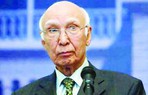
India’s military growth ‘worrisome’Adviser to Pak PM on Foreign Affairs Sartaj Aziz on Tuesday expressed concern over India’s growing military power. He said if India’s growing military power was not checked, Pakistan would be “forced to increase its strategic power” too. “The international community should avoid steps which may disturb the strategic balance in South Asia,” Aziz warned — IANS

Pak to ‘opt for’ other jets, if not F-16s

US decides not to subsidise jet sale through Foreign Military Funding after key Congressmen opposed it

Pakistan said on Tuesday it will acquire combat jets from other countries if the US does not subsidise a deal for eight F-16s, giving a new twist to the controversy over the deal that has run into opposition from American lawmakers.

AFP FILESartaj Aziz’s remarks came after the US confirmed reports that it will not subsidise the proposed sale of F-16 jets to Pakistan.“If funding is arranged, Pakistan will get the F-16s, otherwise we will opt for jets from some other place,” said Sartaj Aziz, the adviser on foreign affairs to Prime Minister Nawaz Sharif. He did not specify which other jets were being considered by Pakistan.

Aziz’s remarks came after the US on Monday confirmed media reports that it will not subsidise the proposed sale of eight F-16 fighter jets to Pakistan. Pakistan can still buy them but by paying fully the amount of nearly $700 million.

The Obama administration has officially, and publicly, said it endorses Pakistani claim that these aircraft will be used to fight terrorists, but many lawmakers seriously doubt it.

At a recent compressional hearing Matt Salmon, a Republican congressman, raised questions about F-16s, saying they “could ultimately be used against India or other regional powers”.

“We have told the Pakistanis that they should put forward national funds for that purpose,” state department spokesperson John Kirby told reporters at a news briefing on Monday.

Kirby said objections from lawmakers was the main reason: “So while Congress has approved the sale, key members have made it clear that they object to using FMF to support it.”

FMF, which stands for Foreign Military Funding, is a crucial US foreign policy tool used to extend aid to friendly nations to secure their friendship. The F-16 deal was supposed to be one.

The deal killer came in the form of a procedural block — called a “hold” — from the Republican chairman of the powerful senate foreign affairs committee Bob Corker.

He told The Wall Street Journal in an interview, “I do not want US taxpayer dollars going to support these acquisitions”. He went on to call Pakistan, an ally, “duplicitous”. PAKISTAN TO MAINTAIN MINIMUM NUCLEAR DETERRENCE: AZIZ

Pakistan would maintain minimum nuclear deterrence for balancing the strategic stability in South Asia, Aziz said.

Addressing a seminar, he said South Asia’s strategic stability has been negatively impacted by policies that override the long-established principles and norms and are guided by individual states’ strategic and commercial considerations. “A case in point is the Indo-US civil nuclear deal and the subsequent discriminatory waiver granted to India by the Nuclear Suppliers Group. Eight years down the road one wonders what benefit the non-proliferation regime has secured from the deal?” he asked.


Army was misled, say Chhawani Colony residents

Army was misled, say Chhawani Colony residents
Former DGP Prakash Singh interacts with victims at the Chhawani Colony in Jhajjar. tribune photo

Ravinder Saini

Tribune News Service

Jhajjar, March 14

The Army was also misled about the location of the violence-hit Chhawani Colony when the unruly mob was setting the houses on fire and attacking residents with firearms and sharp weapons during the Jat stir on February 21. This made the Army take at least three hours to reach the colony for the protection of the residents.This was stated by Chhawani Colony residents during an interaction with Prakash Singh, former DGP, who was in the colony to inspect the damaged properties. He is probing the role of administrative and police officials in the violence and arson during the stir.“On the fateful day, district administrative and police officials along with Army personnel reached our colony in the afternoon. An Army officer said they had received information about the violence, but were misled about the location of the colony, which led to inordinate delay in arrival,” residents told the DGP.They also demanded that the officials who deliberately misguided the Army and sent them in the wrong direction should be traced. They also sought action against the Jhajjar DC and SP for their failure to protect people and their property.Earlier, Prakash Singh accompanied by Vijay Vardhan Singh, Additional Chief Secretary; KP Singh, DGP (Crime), and Chander Prakash, Rohtak Division Commissioner, inspected the damaged Bank of Patiala, Chhotu Ram Dharamshala and shops near the bus stand here.He interacted with the victims Chhawani Colony and also inspected the spot where two men were murdered by the mob.


Defence procurement policy unveiled

Defence procurement policy unveiled
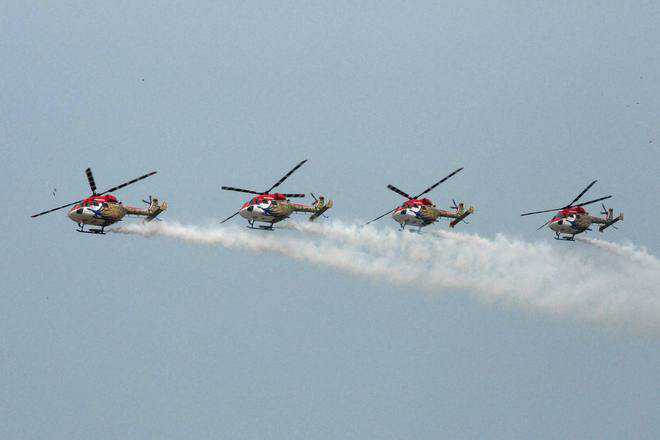
Sarang helicopters maneuvre their skill at the inauguration of the 9th edition of Defexpo in Panaji, Goa, on Monday. PTI

Quepem (Goa), March 28

After a delay of over a year, the much-awaited new defence procurement policy was unveiled by the government today with an aim to ensure transparency, fast-track acquisitions and to lend a push to the “Make in India” initiative.The Defence Procurement Procedure (DPP)-2016 announced by Defence Minister Manohar Parrikar, however, did not contain a key chapter on the proposed strategic partnership. Parrikar said it would take another 2-3 months to finalise the model.To be applicable from April, the procurement policy lays the roadmap on how India, the world’s largest arms importer, will acquire defence equipment in future.The announcement was made at the inaugural ceremony of the Defence Expo (Defexpo)-2016 at Quepem town, about 50 km from Panaji. The new DPP has included a new category to acquire weapons—IDDM (indigenously designed, developed and manufactured). The IDDM will be the first preferred category.Parrikar said a review of the new DPP would be undertaken after six months. “I do not say the document is foolproof. Let us take a review after six months. Nothing is perfect, but we are taking it to perfection,” he said.He said the DPP could push the agenda of “Make in India” and country’s target of achieving defence industry network. With the new DPP, it would be ensured that there was greater transparency and faster clearances, he said.The DPP has been loaded online on the Defence Ministry’s website and will be made available in hard copy format after 15 days.Parrikar said certain concerns of foreign companies would be addressed through this policy over 3-4 months. The new policy also allows the Defence Acquisition Council to take a “fast-track” route to acquire weapons, something which was limited to only the armed forces till now.In a bid to cut down on the time taken for acquisition process, it mandates that all AONs (acceptance of necessity) of a particular platform will be valid for only six months as against the 12-month deadline now.Also, no AON will be notified until it is accompanied by a finalised RFP (request for proposal or tender). This means the time taken for an RFP has been cut down drastically.Parrikar said defence export clearances were to be granted online. He said the policy would also include “Start-up India” initiative.Parrikar had earlier said the new blacklisting policy would also be issued separately next month and made it clear that there would be “no relaxation” for those already blacklisted. “Bribe givers” would be punished, he said.However, the existing blacklisted firms would be allowed to appeal before a vigilance committee of the Defence Ministry for delisting under the new policy. — PTI

Speeding up acquisitions

  • The new policy is aimed at fast-tracking acquisitions and lending a push to the ‘Make in India’ initiative
  • It introduces a new category to acquire weapons-IDDM (indigenously designed, developed and manufactured)
  • It allows the Defence Acquisition Council to take a ‘fast-track’ route to acquire weapons, which was limited to the armed forces till now
  • It will be reviewed after six months and the effort will be to ensure greater transparency and faster clearances, Defence Minister Manohar Parrikar said

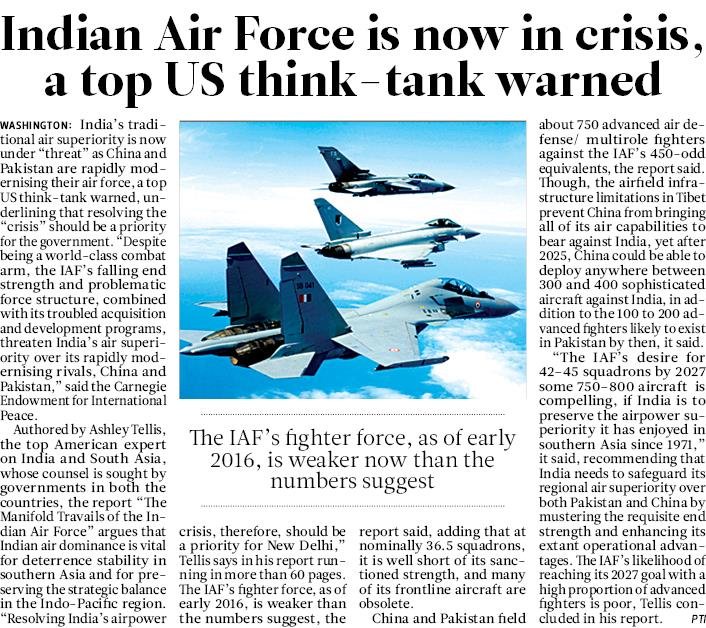
IAF in crisis, says US think-tank

  • India’s traditional air superiority is under ‘threat’ as China and Pakistan are rapidly modernising their air force, a top US think-tank warned on Monday
  • “The IAF’s falling end strength and problematic force structure, combined with its troubled acquisition and development programmes, threaten India’s air superiority over its rapidly modernising rivals, China and Pakistan,” said the Carnegie Endowment for International Peace

6239257364


63667


India, We Are Fighting Our Own Disabled Soldiers:Major Navdeep Singh

On 24 April 2016, three soldiers of the Indian Army lost their lives during a high-profile military exercise in Rajasthan. The deaths were attributed to the excessive heat, injuries sustained while para dropping from helicopters and snake bites. In this context, we delve into the life expectancy of soldiers and non-combat related injuries or health issues of soldiers.

Indian Army dress rehearsal for Republic Day Parade. (Photo: Reuters)

Most nations recognise the inherent stress and strain of military service and its detrimental effect on the health and daily lives of soldiers. India does too. But only in theory, not in practice.
Lip service galore, zilch on-ground support.
Contrary to popular perception, the life expectancy of soldiers is lower than their civilian counterparts. The reason is not difficult to understand. Soldiers live in a regimented lifestyle, away from their families and at times under the shadow of the gun for most of the year. Covered by a tough disciplinary law for twenty-four hours, they face unique stressful conditions which aggravate even regular diseases and ailments.
There is little doubt that soldiers face higher stress levels than ordinary citizens living with their families. This is because soldiers are away from commune living and so, cannot adequately cope up with domestic commitments and stresses.
But in a strange and ironic kind of incorrigibility, it is the defence establishment which is not ready to accept this proposition – a statement which is not rocket science but just common sense.
SnapshotClick here to collapse
Soldiers disabled by high stress levels and other ailments are released from service without regular pension or disability benefits.
Despite Supreme Court orders, Army headquarters has filed appeals against tribunals which have granted disability pension to soldiers.
According to the rules, for a soldier recruited in fit medical condition, any disability is considered to be influenced by service conditions.
Still, benefits are refused on excuses such as ‘disability was incurred in a peace area’ or ‘disability was due to domestic stressors’.
Contrary to popular perception, the life expectancy of soldiers is lower than their civilian counterparts.
Indian Army dress rehearsal for Republic Day Parade. (Photo: Reuters)
Denying Basic Human Dignity to Soldiers
Medical specialists all over the world recognise higher stress and strain in uniformed forces. All democracies endorse this. Disability rules in India also state the same. The Prime Minister feels this to be true. And so does the Defence Minister. The apex military medical body is in agreement. Even the courts, including the Supreme Court, have issued directions along these lines.
But still, many of our disabled soldiers are released and sometimes even thrown out of service on medical grounds, without regular pension or disability pension. This denies them a life of basic dignity – on the pretext that their disabilities were declared ‘neither attributable to, nor aggravated by military service.’
This declaration by military medical boards is a blatant disregard of practical realities, to say the least.
Also Read: Shashi Tharoor on the Declining Status of the Indian Armed Forces
When such soldiers fight long legal battles for their dues, the official establishment is quick to file appeals all the way up to the Supreme Court. And why? In order to deny these soldiers and their families a few thousand, and at times a few hundred rupees. The officialdom is comfortable wasting money and resources on expensive lawyers and litigation. But not with releasing lesser amounts to those who have served us.
Nothing could be more shameful for us as a nation.

An Indian army soldier mans a gun inside his bunker in Odusaa, 79 miles west of Srinagar. (Photo: Reuters)
Hostage to File Notings?
The Supreme Court, in a series of decisions, has directed the Ministry of Defence to grant benefits to disabled soldiers. The Defence Minister constituted a Committee of Experts to look into rising litigation against soldiers, of which incidentally I was a Member. The Committee also recommended the withdrawal of such litigation as well as appeals by the Ministry of Defence against its own soldiers.
Despite all this, recently, elements in the Ministry of Defence had asked the Army Headquarters to file appeals in the Supreme Court against tribunals and court orders wherein disability pension had been granted to disabled soldiers.
And it seems, the Army Headquarters has readily complied.
Having worked for disabled soldiers for close to two decades now, what pains me greatly in writing this, is the fact that even though all stakeholders, including the political executive, are on board and there are all encompassing directions of the highest court of the land, the system is held hostage to contemptuous file notings of lower level officials.
These notings are purportedly based on some legal advice egging on the establishment to file appeals against verdicts rendered in favour of disabled soldiers. The Headquarters of the Defence Services are also meekly accepting this bloodbath, without taking a strong stand on file by pointing out this malaise to the powers that be.

(Photo: iStock Photo)

But, What Do The Rules Say?
Our rules, paradoxically, are liberal and sensitive.
The rules provide that in case a soldier is recruited in a fit medical condition, then any disability arising during service, except when caused due to his or her own illegality such as substance abuse, is deemed as having been affected by service conditions.
This presumption is not unique to India but is followed in almost all democracies. This is because the harmful effects of insidious and invisible pressures of military life are known to manifest themselves negatively on the health of soldiers.

On 24 April 2016, three soldiers of the Indian Army lost their lives during a high-profile military exercise in Rajasthan. (Photo Courtesy: Facebook page of ADGPI)
Still, benefits are refused on unforgivable excuses such as ‘disability was incurred in a peace area’ or ‘disability was due to domestic stressors’ without realising that the inability to attend to personal requirements has a direct link with the military – since it is due to service in the defence services that a person is not there all the time to take care of his or her domestic needs. This is a fact even recognised by successive defence ministers, who themselves have underlined the rise in stress levels faced by soldiers.
Additionally, soldiers living in barracks need permission, even to go to the washroom, are required to sign registers and take an out-pass for a visit to buy a toothbrush from the market. They are denied basic needs such as physical proximity, emotional warmth or even sexual fulfilment for months together.
In such circumstances, it hardly matters whether they are serving in a ‘peace’ area or ‘field’ area. And to top it all, the rules anyway progressively provide that service in ‘peace’ or ‘field’ makes no difference for disability benefits.
On 24 April 2016, three soldiers of the Indian Army lost their lives during a high-profile military exercise in Rajasthan. (Photo Courtesy: Facebook page of ADGPI)
In the ultimate analysis, it seems that it is not the directions of the apex court or the will of the political executive that would be allowed to prevail in our homeland but the sadistic urge of a few stray voices that are holding the morale of our nation to ransom. The courts are clogged with mundane disputes and unwanted litigation thereby burdening the judiciary to unprecedented levels. And here we are, in this great nation of ours, wasting taxpayers’ money in fighting cases against our own disabled soldiers, the ones who silently sacrificed their health to protect us.
Shame on all of us.
(Major Navdeep Singh is a practising Advocate in the Punjab & Haryana High Court. He was the founding President of the Armed Forces Tribunal Bar Association. He is a Member of the International Society for Military Law and the Law of War at Brussels. He is also the author of “Maimed by the System”, a collection of real life accounts of military veterans and their families who had to fight to claim their rights.)
1173683_10151615967190017_472409775_n


‘Territorial aggression’ in PoK’s Gilgit-Baltistan raises eyebrows

New Delhi, March 14

A large chunk of the Gilgit-Baltistan area, part of Pakistan-occupied Kashmir (PoK), has been allegedly occupied by neighbouring North-West Frontier Province, triggering protests in the Shia-dominated region, also claimed by India as part of the disputed Jammu and Kashmir state.Large contingents of Pakistan paramilitary troopers have been deployed in the apprehension of trouble brewing in the occupied 25 km border area that connects divided Gilgit-Baltistan with the Khyber Pakthtunkhwa province, says a news report in “Baad-e-Shimaal”, an Urdu daily in PoK.“And the Gilgit-Baltistan government is watching like a mute spectator,” the daily said in its cover of the Monday edition.“The provincial government has deployed Chitral forces in the area after illegally taking over and including the occupied mineral-rich chunk of land in its territory.” A lawmaker, Sarfaraz Shah, has reportedly written a letter in protest against the “territorial aggression” to the government of the frontier province asking it to vacate the land.But the government has denied the allegation and dismissed the lawmaker’s protest, saying it was part of land forms and “deploying paramilitary Chitral forces is our right”, the daily said.The report came after alarm bells rang in the Indian security establishment following Chinese People’s Liberation Army (PLA) troops being spotted at forward posts along the Line of Control (LoC) along PoK where the Chinese government is building a Jhelum-Neelam 970 MW Hydel power project. —IANS
N-W Frontier Province takes chunk of territory

  • Shia-dominated region Gilgit-Baltistan, which falls in PoK, is claimed by India as part of the disputed territory
  • A chunk of the area has allegedly been occupied by Pakistan’s North-West Frontier Province
  • Pak troopers have been deployed in the occupied 25-km border area fearing trouble, says a newspaper report
  • .

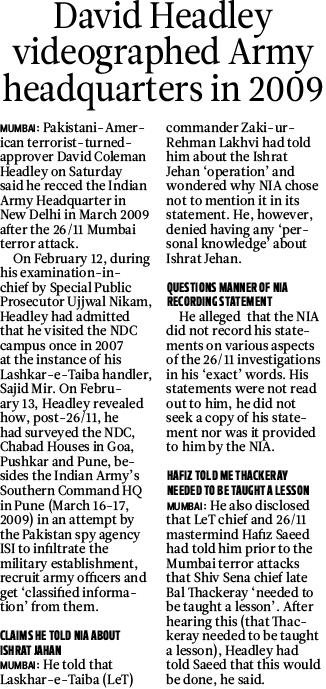
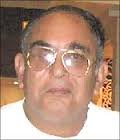
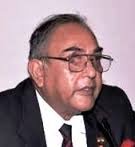
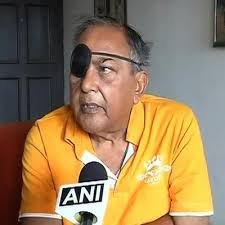
AN APPEAL FROM COL ANIL KAUL Vrc

Col Anil Kaul, media Advisor to united ESM front and IESM who has who is in trouble today due to complicated medical problems.He has sacrificed his healt for OROP struggle at Jantar Mantar. He appeals as follows

Ladies & gentlemen, friends and we’ll wishers ,
In the past year or so while fully engrossed in the OROP struggle, I have had to cope with some personal medical issues. They have now reached a state where I am making this appeal. I have two issues to take care off. One is simple and is being addressed on 11/6 . A cataract operation being done at the Shroff Eye Centre in south Delhi. The other is a more serious and complex problem and that is to do with the failure of both my kidneys necessitating dialysis three times a week. I have been advised to undergo a transplant at the earliest. While all other parameters can be handled the availability of a donor is beyond my control. I have no blood relations to turn to as they have all moved on. I am 65 years, my blood group is A+. Should anyone be kind enough to help me please do contact me on my

mail ID kaulvrcanil@gmail.com.or

my direct no 9810272291.
Thank you in anticipation.
Kaul family.

images (3) images (4) images (5) images (6) images (8) images (9)