









Sanjha Morcha

300-km range Sukhoi missiles on list as MoD approves Rs 1.10L cr buy

The Ministry of Defence on Monday okayed a new long-range, 300-plus km missile for the Sukhoi 30-MKI fighter jets. It also cleared a secure communication system for the IAF’s fleet of jets, transport planes and helicopters.

The ministry also approved the purchase of additional helicopters for the Army, in addition to specialised vehicles designed to operate in nuclear or biological warfare contaminated areas.

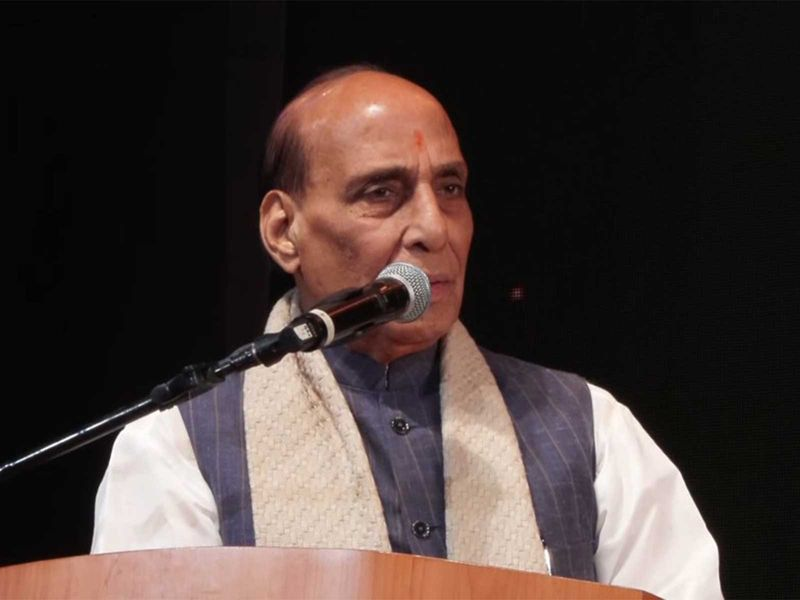
The decisions were taken by the Defence Acquisition Council (DAC), chaired by Defence Minister Rajnath Singh.

The DAC accorded the Acceptance of Necessity — in-principle administrative approval — to various acquisition proposals at an estimated cost of about Rs 1.10 lakh crore, the ministry said in a statement.

“For the IAF, approval was granted to various proposals to enhance the war-fighting capabilities of fighter jets, transport aircraft and helicopters,” it added.

Sources said the first phase of the upgrade involved modifying the Sukhoi jets to integrate them with Russian ‘RVV-BD’ air-to-air missiles, which could strike targets up to 300 km away at speeds exceeding ‘5 Mach’.

This integration significantly enhances the jet’s potency, as it carries the 300-plus km range Brahmos missile for ground strikes and the ‘RVV-BD’ missile for neutralising enemy aircraft and long-range UAVs.

The IAF has 260-plus Sukhoi jets. These played a key role during Operation Sindoor against Pakistan.

The move comes a week ahead of the arrival of Russian President Vladimir Putin for the BRICS leaders’ summit in New Delhi.

The second part of the IAF upgrade involves adding next-generation communication equipment called the Software Defined Radio (SDR). In modern combat, the SDR serves as the primary backbone for communication, electronic warfare and intelligence gathering across multi-domain operations. It enables transmission of high-bandwidth telemetry, video feeds from UAVs, and battlefield awareness updates in real time. All this is done by changing radio frequencies to bypass enemy jamming attempts. It can also scan radio frequency to detect, identify and geolocate enemy communications.

For the Army, the DAC approved the procurement of chemical, biological, radiological and nuclear (CBRN) vehicles for reconnaissance; high mobility vehicles (HMVs); and advanced light helicopters, among others.

The CBRN vehicles will be capable of detecting, identifying, monitoring and marking areas contaminated with CBRN agents. The HMVs will enhance operational capabilities, logistic support and mobility in challenging terrains.

For the Navy, the DAC approved the procurement of Arudhra Radars, as well as the design, development and subsequent procurement of marine gas turbines (MGTs). Arudhra Radar will replace the air surveillance radars at naval air stations, while the MGT, a warship propulsion system, will reduce dependency on foreign vendors.

The DAC also accorded its approval for procuring a ground-based multi-purpose jammer that will provide effective jamming against radars of adversaries.

The ministry will change access systems for military areas. A new Defence Forces Secure Access Card system will replace the existing paper-based identity cards with a radio frequency identification-based smart card system.
Raining Lathees On The Future Of India Regular use of force at Jantar Mantar By Lt General HARWANT SINGH|

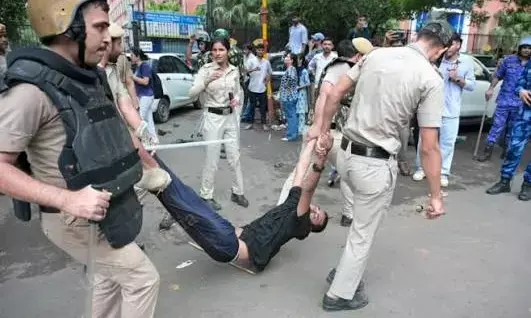
The Constitution gives every citizen the right to protest peacefully. In Delhi, the state has designated exactly one place for it: a stretch of pavement at Jantar Mantar, hemmed in by barricades, within walking distance of Parliament and safely out of its sight. What happens on that pavement tells us what the right is now worth. Consider who has been dragged off it in the last decade: Olympic medallists, decorated soldiers, and schoolchildren. Also Read – A Ceasefire Without Peace In January 2023, some of India’s most decorated wrestlers — Sakshi Malik, Vinesh Phogat, Bajrang Punia among them — sat down at Jantar Mantar and accused Brij Bhushan Sharan Singh, then president of the Wrestling Federation of India and a six-term MP of the ruling party, of sexually harassing junior wrestlers over several years. Delhi Police registered FIRs only in April, after months of protest and a nudge from the Supreme Court. History Also Read – Not A Celebrity, Just An IAS Officer On May 28, as the wrestlers set out towards the new Parliament building, the police did not ask them to leave. They were dragged off the road and detained — national champions, hauled away like contraband, in front of the cameras. On August 3 this year, a Rouse Avenue court acquitted Singh, holding that the prosecution had not proved its case beyond reasonable doubt. That verdict must be respected; it is also worth stating precisely what it means and does not mean. It closed a trial that ran 127 hearings over 1,133 days. It did not establish that the complaints were false, and the wrestlers’ counsel has indicated an appeal. Nor does it retrospectively license what was done on the road on May 28, 2023. Also Read – Is Siang Dam Construction Advisable? Whether or not the allegations could be proved three years later, the women were entitled to make them from a pavement the state had designated for exactly that purpose, without being manhandled. The strength of the case has nothing to do with the propriety of the policing, and one should not be used to excuse the other. Before the wrestlers came the veterans. The One Rank One Pension dharna of 2015 was the quietest agitation this country has seen; the men sat in ranks, and largely did not even raise slogans. On August 14, on the eve of Independence Day, Delhi Police moved to clear them from the site on grounds of security. They came with lathis. A photograph went around the country of an old soldier with his ribbons torn from his shirt. Among the men handled that way were gallantry award winners and soldiers who had left limbs on battlefields. The outrage was such that within days the Joint Commissioner of Police went to Jantar Mantar and apologised, on the Home Minister’s own direction — an admission, if any were needed, that the force used had no justification. Also Read – Nepal Floods, The Cost Of Reckless Development The veterans had already been sending their medals to Rashtrapati Bhavan, in the thousands, over several years, some with letters written in blood. The Supreme Commander of the Armed Forces never received their representatives. OROP was announced on September 5, 2015 and notified that November in a form the veterans called diluted; more than two thousand of them returned their medals again in protest, and two tried to burn theirs before television cameras. The Defence Minister’s response was to call their conduct unlike that of a soldier, and to say they had been misguided. That sentence deserves to be remembered. Men who had spent their lives being shot at were told by a civilian minister that they were behaving unlike soldiers because they asked for their pensions. The serving officer watched all of it. What was unforgivable was that the Army’s own leadership never once told the government, in the terms it deserved, that this was not done. Our police, eighty years after the British left, still conduct themselves as the colonial force they were trained to be — an instrument for managing subjects rather than protecting citizens. Then came the children. Paper leaks in this country are not a lapse; they are an industry, with lakhs changing hands and coaching institutions inside the trade. In May 2026 the NEET-UG medical entrance was cancelled outright after a leak and handed to the CBI. CBSE’s on-screen marking collapsed at the same time, leaving lakhs of school-leavers with no reliable result. A generation that had staked everything on those examinations discovered that its future was a commodity. Some of them did not survive the discovery. Their parents are still living with that. The protest that followed took its name from the Chief Justice of India, who in May had described unemployed young people as cockroaches and parasites who attack the system through social media and litigation. Within days a movement had adopted the insult as its banner. The Cockroach Janta Party’s first sit-in at Jantar Mantar was on 6 June, with police permission, with the national flag, with copies of the Constitution. The demand was narrow and constitutional: that the minister responsible for the examination system resign. Accountability is a small word. This government does not use it. History What followed, over seven weeks, is a catalogue worth reading slowly. On June 20 the site’s lights were switched off and access to food and drinking water was cut off to make the students leave. Sonam Wangchuk began a hunger strike on June 28; by the nineteenth day he had lost 9.1 kilograms and could not stand unaided. The Education Minister called the protesters a B-team of terrorists. On July 18 police carried Wangchuk off the pavement to hospital. On July 20, when thousands marched towards Parliament on the first day of the monsoon session, they met lathis and tear gas. Sixteen metro stations were shut. The Internet was shut around Parliament. Twenty companies of CRPF were flown in from Kolkata. More than a hundred injured protesters reached RML’s emergency ward, some with head injuries, one in intensive care. Police denied using pellet guns, calling the reports completely false and misleading — until a Safdarjung medical report recorded pellet wounds and a police station’s own general diary recorded the rounds fired. Policemen were photographed working in plain clothes. An Additional DCP was filmed slapping a woman protester; he was quietly moved off duty, not charged. When students went to court, the High Court declined an urgent hearing and told them not to drag it into this, and the Chief Justice told a petitioner not to waste the court’s time and that he was not interested in the videos. The doors that opened were those of Gurdwara Bangla Sahib, where the injured and the gassed were carried in, treated and fed. It is worth asking why a langar hall did the work a constitutional court would not. Delhi Police say 118 of their personnel were hurt, that stones were thrown, that vehicles were overturned, and there is footage supporting parts of that account. Honesty requires stating it. It settles nothing. Between a crowd of unarmed nineteen-year-olds who lost their tempers and a state that answers with pellets, tear gas, a CRPF airlift and an internet shutdown, only one party is trained, paid and sworn to keep its head. That is the entire point of discipline. Nor is the police case improved by announcing afterwards that 2,873 men with criminal antecedents were present — a claim that conveniently arrives after the batons, and that no student can disprove. The minister resigned on July 25. An anti-paper-leak amendment was rushed through Parliament and cleared by the President on August 2, with the opposition protesting that the debate had been curtailed. The state deployed everything it had against its own children and still lost the argument. That is not a vindication of the crackdown; it is a measure of how unnecessary it was. And despite written assurances that non-violent protesters would not be pursued, cases have continued to be filed and students arrested. None of this is finally about one pavement. Nearly a lakh government schools have been closed. Thousands run with a single teacher, no electricity and no toilet. The midday meal is what it is. Private schooling has been priced beyond the reach of the poor. We are producing a generation that is uneducated or half-educated, and then filing FIRs against the half that noticed. A government that answers its children with lathis has already conceded the argument. It should think very hard about what it is teaching them. Lt.General Harwant Singh (Retd) is former Deputy Chief of Army Staff. Views expressed here are the writer’s own.

https://www.thecitizen.in/opinion/raining-lathees-on-the-future-of-india-1356544


HEADLINES :03 SEP – 2026

Indian Army Uniform Rules 2026 – Summary of New Rules for Wearing Medals:

Passing Out Parade | Live from Officers Training Academy, Chennai | 5th September 2026

From Havildar to Lieutenant: Gold medallist Sashi Kumar wins Sword of Honour at OTA Gaya

4 Punjab cadets, including two women, commissioned as Lieutenants in Indian Army

DRDO develops jammer to counter AI-enabled ‘smart’ radios

Mecca defence pact has made Pakistan ‘overconfident’: Ex-CDS Gen Anil Chauhan

Air Chief Marshal Amar Preet Singh visits Army’s Western command, focuses on synergised operations

Army Training Command chief retires, curtains fall on a century of family military service

Several top-level Army appointments take effect

Facing contempt before High Court, Defence Ministry hikes payscale of 82 Major Generals getting lower pension than juniors

Air Marshal Jeetendra Mishra is ex-Western Air Command chief with 38-year experience

How Group Captain Varthaman had downed an F-16 jet in a ‘dog fight’ lasting just 90 seconds in 2019

Ministry recalls IAF heroes

Hathnikund Barrage boat tragedy: Army pays tribute to 2 Special Forces soldiers killed on September 1

India, Sri Lanka to sign 3 MoUs during Rajnath’s visit, including one likely on air defence weapons supply

Army sets up lab to detect Chinese components in drones

Military commanders meet at LAC in Arunachal ahead of Chinese President Xi Jinping’s visit to India


Indian Army Uniform Rules 2026 – Summary of New Rules for Wearing Medals:

Indian Army Uniform Rules 2026 – Summary of New Rules for Wearing Medals

  1. Rules for Retired and Honorary Officers

(a) Retired Regular Officers:

They may wear the uniform along with their rank badges on special occasions such as ceremonial parades, military functions, Ex-Servicemen rallies, reunions, and state functions.

(b) Honorary Commissioned Officers / JCOs / Territorial Army:

All honorary commissioned officers and JCOs/jawan holding honorary ranks are entitled to wear the uniform. When in civil dress, they may wear their full-size or miniature medals.


(c) Prohibition:

Medals shall not be worn at any political function. Any soldier who has been dismissed or removed through disciplinary action shall not wear medals on any occasion.

  1. Rules for Ex-Servicemen Wearing Their Own Medals

All medals will always be worn on the left chest.

I. When to wear Full-Size Medals (on Formal Civil Dress):

  • Republic Day Parade, Independence Day, Service Day, Vijay Diwas
  • Wreath-laying at war memorials, receptions at Rashtrapati Bhavan / Raj Bhavan
  • Standard / Colour Presentation Parade, Passing Out Parade
  • Regimental anniversary / reunion, state or military funerals
  • Official functions at embassies / high commissions
  • When reporting for duty at any military headquarters or meeting senior officers
  • Ex-Servicemen rallies

II. When to wear Miniature Medals (small medals on the left chest):

  • Private parties, dinners, cocktails, lunches, tea parties, receptions
  • Messes and regimental institutes during Raising Day, reunions, and similar gatherings
    With suit-coat and tie.
  1. Family Medals (Next of Kin – NoK) – Rules for Wearing on the Right Chest

This is the newest and most respectful provision. The family of a martyr or ex-serviceman (wife, husband, parents, children, ancestors) may wear their medals.

How to wear them:

  • Always on the right chest, so that it is clear these are not the wearer’s own medals but those of a family hero.
  • Both full-size and miniature medals are permitted.
  • If medals of more than one martyr are held, only one set should be worn at a time.
  • Only on formal civil dress (coat-pant / suit / saree).

When they may be worn:

National / regimental war memorials / war cemeteries during homage ceremonies
State or military funerals
Official functions at Rashtrapati Bhavan / Raj Bhavan / embassies
Official functions of the Armed Forces, Ex-Servicemen rallies and reunions
National Day celebrations and when visiting military headquarters
When meeting senior officers such as the Governor, Collector / District Magistrate

Special provisions:

An Ex-Serviceman who is also a Next of Kin may wear his own medals on the left chest and the family medals on the right chest at the same time.

A serving soldier who is a Next of Kin may also wear the family medals on the right chest while in civil dress.

When they must never be worn:

Political functions, private functions, social parties, or while appearing on media channels / YouTube / FacebooK

CLICK BELOW TO OPEN Pdf

NEW RULES ARMY FOR WEARING MEDALS /UNIFORM


From Havildar to Lieutenant: Gold medallist Sashi Kumar wins Sword of Honour at OTA Gaya

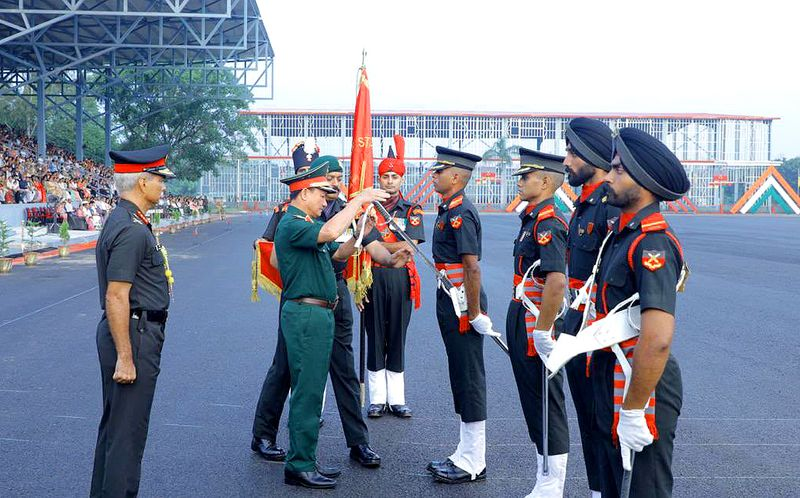
He was among 253 officer cadets, including 35 women, from the Short Service Commission (Technical) Men – 65 and SSC (Technical) Women – 36 courses who passed out on September 5

Lieutenant General Le Van Huong, Deputy Chief of the General Staff of the Vietnam People’s Army, reviewed the passing-out parade.

A story of excellence that began in the rank and file continued with the same inspiration and vigour as Lt P Sashi Kumar went on to win top honours after becoming an Army officer. Kumar, who had initially joined the Assam Rifles as a havildar, was awarded the Sword of Honour after being adjudged the overall best cadet at Officers Training Academy (OTA), Gaya.

Kumar, who held the highest cadet appointment of Academy Under Officer (AUO) during his training, was also awarded the gold medal for standing first in the order of merit. He was among 253 officer cadets, including 35 women, from the Short Service Commission (Technical) Men – 65 and SSC (Technical) Women – 36 courses who passed out on September 5.

Lieutenant General Le Van Huong, Deputy Chief of the General Staff of the Vietnam People’s Army, reviewed the passing-out parade. He also presented the silver medal to Deepak Singh Rawat and the bronze medal to Navneet Singh for securing second and third positions, respectively.

Located in Bihar, OTA Gaya trains officers for the technical stream. At a separate event at OTA Chennai, 342 cadets, including 29 women, along with 17 cadets from friendly foreign countries, were commissioned. Chief of the Naval Staff Admiral Krishna Swaminathan was the reviewing officer. He presented the Sword of Honour to Lieutenant Gurkeerat Singh, who hails from Indore.

Born into the family of Naib Subedar C Pandi of the Army Ordnance Corps, Shashi Kumar grew up deeply inspired by the core values of courage, discipline and selfless service. He nurtured an unwavering, lifelong dream of wearing the coveted olive-green uniform, according to information shared by the Army Training Command.

Kumar completed his graduation and secured a prestigious and highly sought-after position at Tata Consultancy Services. However, he chose to answer his true calling of joining the Armed Forces rather than settle for a comfortable corporate career.

After joining the Assam Rifles, a Central Armed Police Force, as a havildar, he was awarded the Overall Best Recruit medal and served for two-and-a-half years in the counter-insurgency environment of Manipur. He later qualified in the Services Selection Board interview and joined OTA.

“His relentless hard work earned him the coveted and highest appointment of AUO at OTA. His journey exemplifies resilience, proving that unwavering determination and devotion to the right cause ultimately triumph over adversity,” the Army said.

A legacy of four generations

Among the newly commissioned lieutenants was Lt Sparsh Chhetri, an engineer from Thapar University, Patiala, who marked the continuation of a four-generation family legacy in uniform. Donning the olive-green uniform came naturally to him, following in the footsteps of his great-grandfather, who served in the British Indian Army; his grandfather and father, who were infantry officers; and his mother, who served in the Army Education Corps.

A computer science graduate, Sparsh left a flourishing career as a senior data analyst at a top multinational company to join the Indian Army. A versatile all-rounder, he is a national-level equestrian medallist, a district-level badminton and swimming medallist, a skilled marksman and a former NCC under officer. During his training at OTA, he held the appointment of Battalion Under Officer, reflecting his leadership qualities.

The passing-out parade also witnessed several stories of grit, resilience and determination, with cadets from diverse backgrounds overcoming odds to pursue their dreams of joining the Army.

From Agniveer to Lieutenant

Hailing from a small village in Bilaspur district of Himachal Pradesh, Lieutenant Vikas Gautam initially joined the Army as an Agniveer after completing his engineering degree in computer science. He served as a T-90 tank gunner with the Scinde Horse.

The discipline, teamwork and sense of responsibility instilled in him by the regiment strengthened his resolve to become an officer. At OTA, his achievements included leading the academy in cross-country and winning a gold medal, earning a merit card in physical training and becoming a record-holder in the battle obstacle course, the Army said.

Lieutenant Syed Abu Hurera, an engineer from Cuttack and the first person in his family to become an Army officer, is a national-level footballer and state-level athlete. His journey at OTA was severely tested when he sustained a serious ankle injury during training, resulting in medical relegation in his first term. He fought through the pain and showed remarkable patience to restart his training, later excelling in physical training by earning a merit card and a gold medal in athletics.

Sub-Inspector Raghvendra Jha of the Central Reserve Police Force’s CoBRA battalion also made the transition from a Java developer to an Army officer. Having served in Naxal-affected areas of Odisha and in the challenging counter-terrorism environment of Anantnag, he was awarded the Director General’s Commendation.


4 Punjab cadets, including two women, commissioned as Lieutenants in Indian Army

The lady cadets are from Mai Bhago Armed Forces Preparatory Institute for Girls, while the men are from Maharaja Ranjit Singh Armed Forces Preparatory Institute

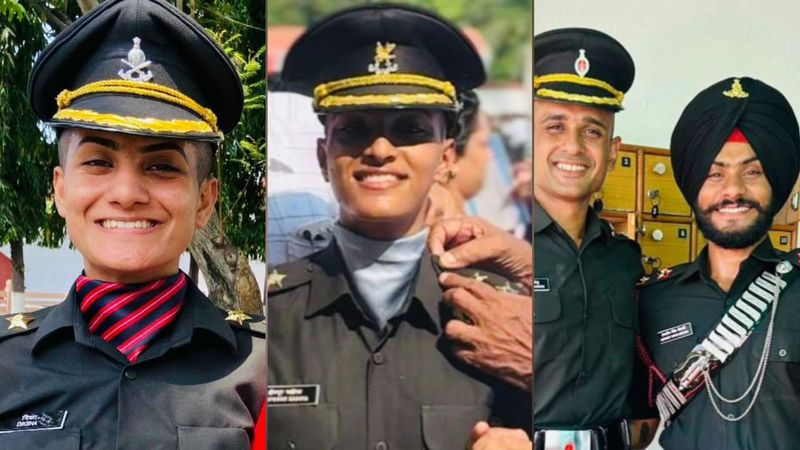
n a proud moment for Punjab’s military legacy, four cadets—two lady cadets from the Mai Bhago Armed Forces Preparatory Institute for Girls and two from the Maharaja Ranjit Singh Armed Forces Preparatory Institute (MRSAFPI)—were commissioned as Lieutenants in the Indian Army on Saturday.

The commissioning took place at the Officers Training Academy (OTA) in Chennai during a spectacular passing out parade reviewed by Chief of Naval Staff Admiral Krishna Swaminathan, PVSM, AVSM & VSM.

Lady Cadet Deepnoor has been commissioned into the elite Army Aviation Corps, while Lady Cadet Diksha Dhiman joins the Army Ordnance Corps. Deepnoor is the daughter of S. Sukhbir Singh, Professor at Sardar Beant Singh State University, Gurdaspur and Ramanpreet Kaur, a Government School Teacher. Diksha is the daughter of Pawan Kumar, a businessman from Pathankot and Indu.

The MRSAFPI duo also made the state proud with Cadet Ishpreet Singh Dhillon, son of late Paramjit Singh Dhillon and Santosh Kaur, joining the Regiment of Artillery, and Lieutenant Arsh Singh, son of Maj Gen P.S. Sandhu (Retd), carrying forward his family’s legacy as a second-generation officer into the Judge Advocate General (JAG) Branch.

Congratulating the newly commissioned officers, Punjab Employment Generation, Skill Development and Training Minister Mr. Aman Arora said, “These young officers will inspire thousands of youth across Punjab to serve the nation. Under Chief Minister Bhagwant Mann’s leadership, the state government is fully committed to handholding and supporting every youth aspiring to join the Armed Forces as a commissioned officer.”

Expressing delight over the achievement, Maj Gen Jasbir Singh Sandhu, AVSM (Retd), Director, Mai Bhago AFPI, said, “This milestone will further energise our mission at Mai Bhago AFPI to prepare more daughters of Punjab for commissioning as officers in the Armed Forces.” He extended warm wishes to the newly commissioned officers.

Maj Gen Ajay H. Chauhan, VSM (Retd), Director, MRSAFPI, exhorted the new officers to uphold the nation’s ideals and make their alma mater proud. He added that 15 more cadets of MRSAFPI have cleared SSB and are awaiting joining letters for the December 2026 course.


DRDO develops jammer to counter AI-enabled ‘smart’ radios

Smart Communication Jammer System to detect and disrupt cognitive radio networks that can rapidly switch frequencies to evade interception

With military communication systems becoming increasingly resilient to electronic countermeasures, the Defence Research and Development Organisation (DRDO) is developing an advanced system to counter ‘smart’ or cognitive radio networks that use artificial intelligence to evade detection and jamming.

Christened the Smart Communication Jammer System (SCJS), the system will be a large vehicle-mounted platform capable of detecting, analysing, classifying, direction-finding, monitoring and jamming tactical communication mobile ad hoc networks (MANETs).

Cognitive radios and MANETs are advanced wireless communication systems that can sense their surrounding environment and automatically alter their settings to use the radio spectrum more efficiently. They can continuously scan for unused or underutilised frequency channels and rapidly switch frequencies, making them difficult to monitor or intercept using conventional jamming systems.

The Defence Electronics Research Laboratory, a DRDO establishment, is the nodal agency for executing the project. It is seeking Indian industry partners for the design and development of the SCJS.

According to DRDO’s requirements, the system should be capable of monitoring and jamming radios operating in the 30 MHz to 6,000 MHz frequency range, with 360-degree detection coverage and a range of 20 km. It should also be capable of countering radios that change frequencies at rates of up to 2,000 hops per second.

The wide frequency range covers several tactical communication bands used by modern military systems, including unmanned aerial vehicles (UAVs), loitering munitions and software-defined radios.

Unlike conventional radios that operate on preset channels, cognitive radios use artificial intelligence and machine learning to analyse their operating environment and dynamically switch between spectrum channels, potentially within microseconds, to evade interference.

Traditional static or brute-force jammers, which use high-power radio-frequency signals across fixed bands, can therefore be less effective against such rapidly changing systems, an officer explained.

Army officers said cognitive radio networks improve the reliability of military communications and the availability of information, but also make it more difficult to monitor an adversary’s activity.

Such networks, however, have significant civilian applications as well, including reducing spectrum congestion and improving the efficiency of wireless communications.


Mecca defence pact has made Pakistan ‘overconfident’: Ex-CDS Gen Anil Chauhan

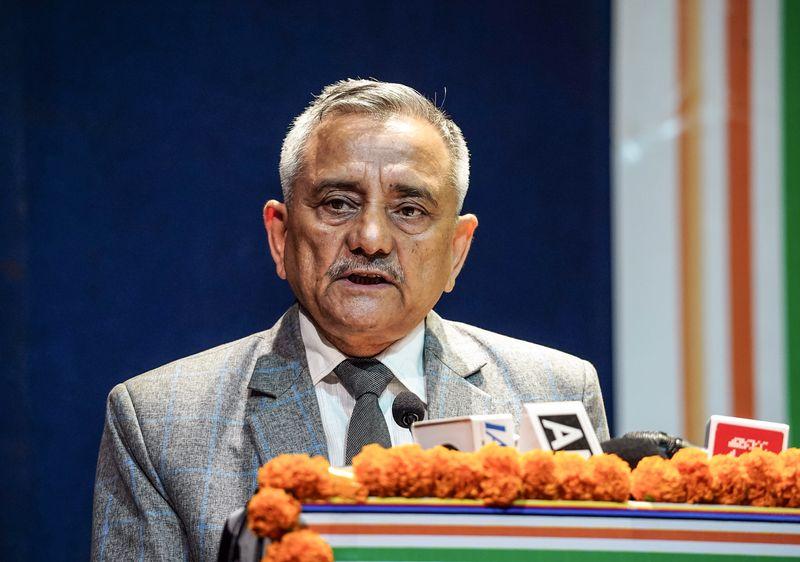
Former Chief of Defence Staff (CDS) General Anil Chauhan addresses the 22nd Bharat Ratna Pandit Govind Ballabh Pant Memorial Lecture on Threats and Challenges to India’s Security at the Pradhanmantri Sangrahalaya in New Delhi on Saturday. ANI

Pakistan remains a cause for concern, and the recently signed “Mecca Defence Agreement” with Saudi Arabia and Türkiye has made Islamabad “overconfident”, something India needs to remain watchful of, former Chief of Defence Staff General Anil Chauhan said on Saturday.

Speaking at the 22nd Govind Ballabh Pant Memorial Lecture here on the theme “Threats and Challenges to India’s Security”, Gen Chauhan, who retired as the country’s top military officer in May this year, also said the unresolved India-China boundary issue continued to carry the potential for friction.

Referring to the Mecca Joint Defence Agreement, Gen Chauhan said, “We have seen the accord and it seems to have induced a kind of overconfidence in Pakistan, and we have to be careful of that.”

The agreement, signed on August 7, 2026, is a mutual defence pact among Pakistan, Saudi Arabia and Türkiye. It states that “an armed attack on one member would be treated as an attack on all three”.

“Pakistan will remain, I think, a major issue of concern in the future,” Gen Chauhan said.

He said the presence of nuclear weapons had created a degree of “static stability” at every level, “but this had also induced instability at the lower levels”.

Pakistan, he said, sought to reduce the space for conventional military operations and relied on sub-conventional warfare, including cross-border terrorism and proxy war.

“Even if a terror network is dismantled, the system, the finance, propaganda and Pakistan’s state support means that terrorism and proxy war will remain a major challenge for us,” he said.

Citing Operation Sindoor and the Balakot strikes as examples of deterrence, Gen Chauhan said India needed to increase the cost of a proxy war for Pakistan.

“India must be able to increase the cost of a proxy war for Pakistan, so that it stops using this as an instrument of state policy,” Gen Chauhan said.

On China, he said it posed an “absolutely different and more long-term and comprehensive challenge”.

The boundary issue remained unresolved and there was no mutually agreeable definition even of the Line of Actual Control (LAC), he said.

“Differences in perception, combined with infrastructure development and power multipliers, create the possibility of friction,” he said.

Border stability required resilience, critical capabilities, clear agreements and consistent adherence to them, he said, in obvious reference to China having breached agreements during the May 2020 military stand-off in Eastern Ladakh.

India and China, he said, were two major nations that cooperated in some areas, competed for influence in markets and held divergent views on aspects of regional and global politics.

“There is a need to engage with China,” Gen Chauhan said, adding that the future of Asia would depend substantially on how India and China managed their relationship.


Air Chief Marshal Amar Preet Singh visits Army’s Western command, focuses on synergised operations

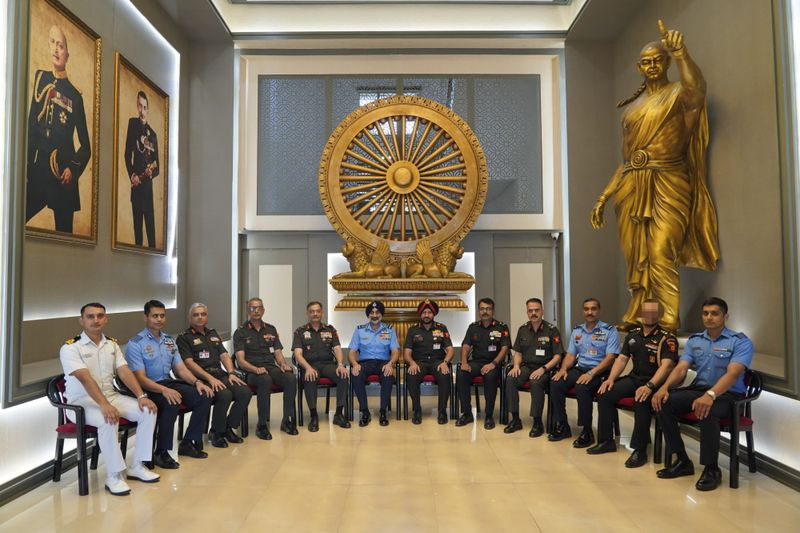
Chief of the Air Staff, Air Chief Marshal Amar Preet Singh, visited Headquarters Western Command, Chandimandir, and interacted with Lt Gen Pushpendra Singh, General Officer Commanding-in-Chief, Western Command and other senior officers.

The interaction focused on enhancing operational preparedness, strengthening joint planning and furthering integration between the Indian Army and the Indian Air Force for synergised operations.

During Operation Sindoor in May 2025, both the services had operated in close coordination for air defence as well as offensive operations through an integrated and networked environment.

The Air Chief also interacted with air warriors serving with the Western Command, acknowledging their vital role in fostering seamless Army-Air Force integration and reinforcing the shared commitment to mission readiness and decisive operational response.