










Sanjha Morcha

No talks with Pakistan except on PoK: Rajnath Singh

Warns Islamabad of any misadventure, pays tributes to Kargil War heroes

Launching an attack on Pakistan, Defence Minister Rajnath Singh on Sunday said there would be no talks with the neighbouring country except on Pakistan-occupied Kashmir (PoK), which he described as an integral part of India. 

“The success of Operation Sindoor is proof that India possesses the capability to respond to Pakistan’s every misadventure with a severity far beyond its imagination,” said Rajnath, adding that “there will be no talks with Pakistan, and any dialogue will focus solely on the PoK.” 

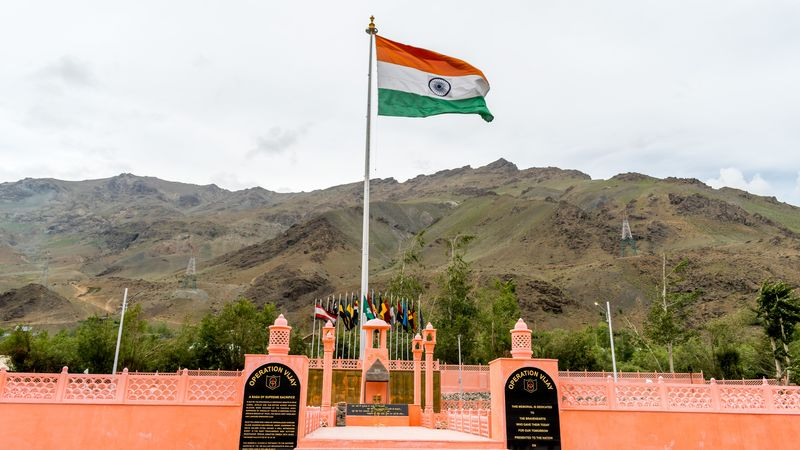
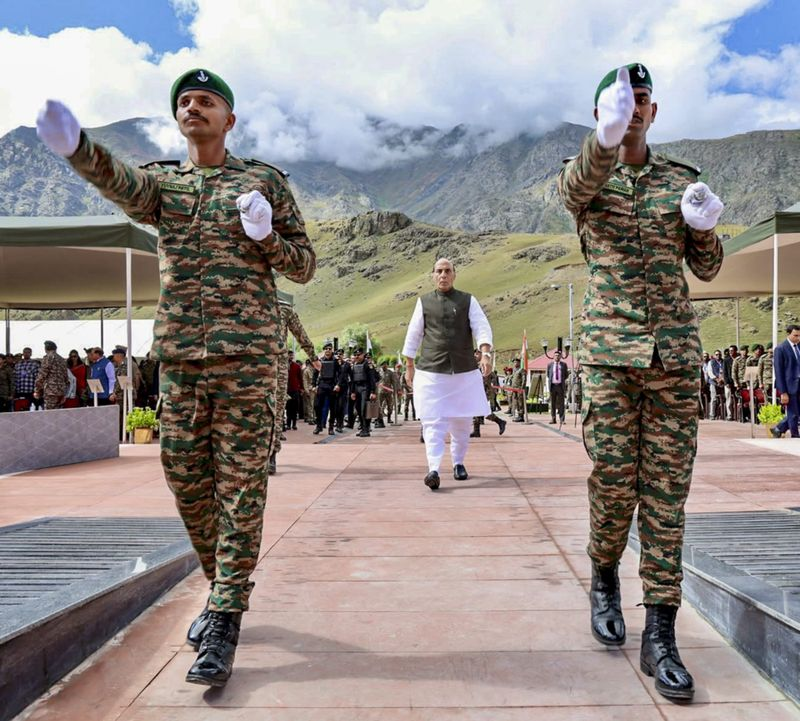
Addressing the 27th Kargil Vijay Diwas celebrations at Dras in Kargil, the minister said every nefarious act against India’s sovereignty “will be met with the same resolute response that the Indian defence forces delivered to terrorists and their patrons through Operation Sindoor with unmatched bravery”.

Rajnath said, “In Pakistan, the distinction between the military and militants has vanished, with the country making terrorism a part of its state policy. Pakistan’s military not only shelters terrorist organisations but also works with them. That is why during Operation Sindoor, we made it clear that India no longer views terrorists and the governments that nurture them as separate entities,” he said.

He added that 27 years had passed after the Kargil War, and the paths taken by India and Pakistan had diverged sharply.

“While India is exploring new avenues of innovation, Pakistan is seeking new routes for infiltration. India is engaged in chip design, whereas Pakistan is busy designing terror. India is building a start-up ecosystem, while Pakistan is constructing a terror ecosystem. India is manufacturing semiconductors, while Pakistan is preparing suicide bombers,” he said.

“India is recognised for space missions, while Pakistan is running proxy missions. India is sending satellites into space, whereas Pakistan focuses on sending terrorists across the border. India is providing software to the world, while Pakistan is exporting sleeper cells. India is establishing data centers, while Pakistan is setting up radicalisation centres. India is connecting the world through UPI, while Pakistan is linking terrorism with hawala networks. In short, our paths diverge; should Pakistan attempt to obstruct our path to prosperity with its nefarious designs, our defence forces stand ready to deliver a befitting response,” Rajnath said. 

He said the Centre possessed the political will to give the defence forces a free hand to respond decisively to threats, exuding confidence that no adversary would dare cast a hostile eye on India while its soldiers guard the nation’s borders. 

He paid tributes to India’s gallant soldiers who sacrificed their lives to defend the motherland during the 1999 Kargil War. He remembered the countless bravehearts, including Param Vir Chakra awardees Capt Vikram Batra and Capt Manoj Kumar Pandey, who made the supreme sacrifice during the war.

He termed Kargil Vijay Diwas a day of inspiration for every young person who seeks to understand the distinction between personal success and national duty.

The minister emphasised that conflicts such as those in West Asia and between Russia and Ukraine had not only tested the capabilities of the defence forces but also the resilience, patience and resolve of nations. He asserted that while India had a strong and capable military, safeguarding national security was a shared responsibility of every citizen.

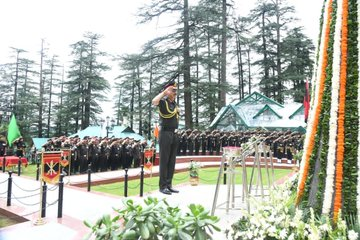
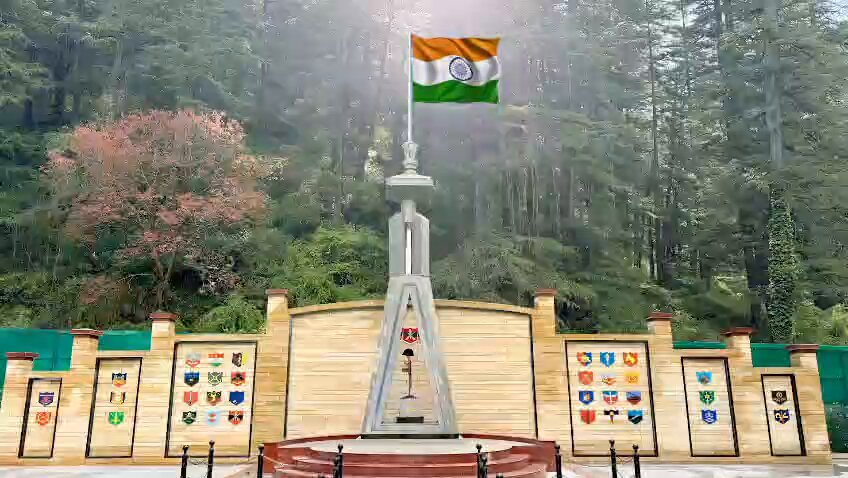
During the event, Rajnath laid a wreath at the cenotaph and observed silence in remembrance of the bravehearts who made the supreme sacrifice during Operation Vijay in 1999.

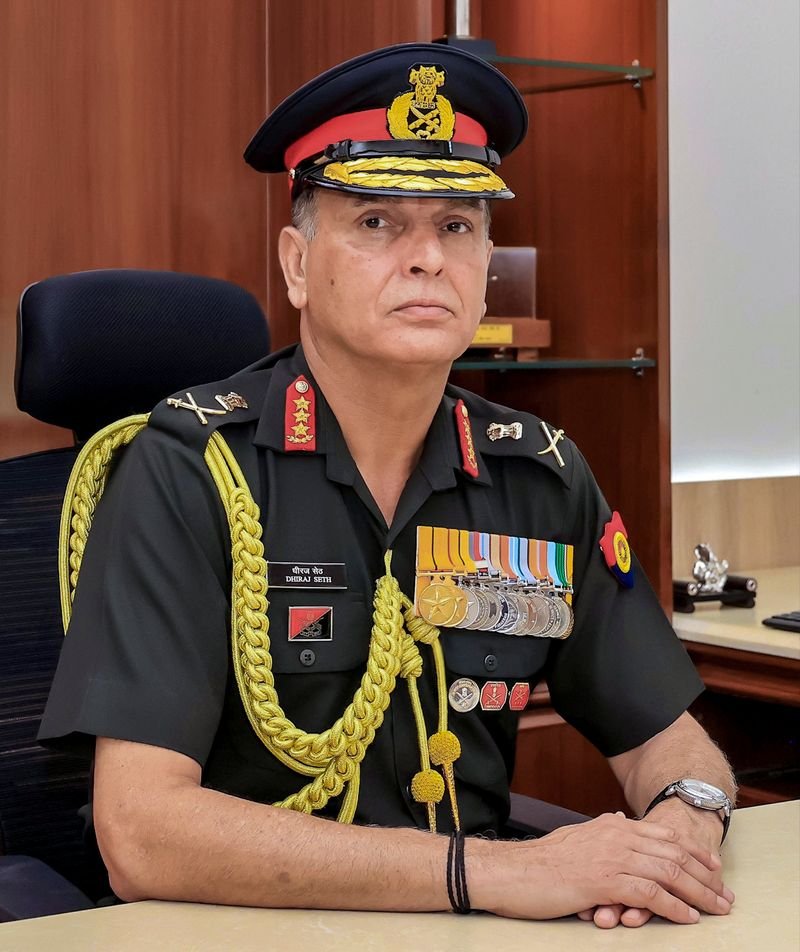
Lieutenant Governor of Ladakh Vinai Kumar Saxena, the Chief of the Army Staff, Gen Dhiraj Seth, the General Officer Commanding-in-Chief, Northern Command, Lt Gen Pratik Sharma, the GOC, 14 Corps, Lt Gen Madanraj Pande, and the GOC, 8 Mountain Division, Maj Gen AP Singh, also joined Rajnath in paying homage to the Kargil War heroes.
HEADLINES 26 JUL 2026

Vedios on kargil Vijay diwas : click and open each of them

KARGIL VIJAY DEWAS :26 JUL

Remembering Capt Batra: Brother’s book goes beyond the battlefield to reveal the person behind the uniform

Panchkula: Tributes paid to Kargil War martyrs

Rajnath Singh in Ladakh for Kargil Vijay Diwas commemorations

ARTRAC commemorates Kargil Vijay Diwas, honours heroes of Operation Vijay

Kargil, as I saw it: On Vijay Diwas, a veteran recalls the highs and lows of the time he spent on the war front

35% of judges, staff posts vacant in Armed Forces Tribunal; 11,000 cases pending

27th Kargil Vijay Diwas: Ladakh girls’ patriotic tribute to soldiers wins hearts online

Defence Minister Rajnath Singh paid tributes to the fallen soldiers of the 1999 Kargil War on the 27th Kargil Vijay Diwas celebrations at Drass, in Ladakh o

Merchant vessel with 4 Indians struck at Ukraine’s Odesa port; 2 safe, fate of 2 awaited


Remembering Capt Batra: Brother’s book goes beyond the battlefield to reveal the person behind the uniform

Yeh Dil Maange More: Remembering Captain Vikram Batra, My Brother’ is a moving and intimate tribute to one of India’s most celebrated military heroes. Written by Vishal Batra, the identical twin brother of Capt Vikram Batra, Param Vir Chakra, along with Anupma Mehta, the book offers readers a rare glimpse into the life, values, and legacy of the Kargil War hero through the eyes of those who knew him best. 

More than 25 years after the Kargil War, Capt Vikram Batra remains a symbol of courage, patriotism, and selfless service. Revered across generations for his extraordinary bravery and remembered for the iconic phrase that became synonymous with his spirit, his story continues to inspire millions of Indians. In ‘Yeh Dil Maange More’, Vishal Batra recounts memories of growing up alongside his twin brother in Palampur, tracing their shared childhood, aspirations and unbreakable bond. The book goes beyond the battlefield to reveal the person behind the uniform — his warmth, determination, sense of humour and deep commitment to those around him.

Part memoir, part tribute, and part celebration of an enduring legacy, the book reflects on the profound impact Capt Batra’s life and sacrifice had on his family, his comrades and the nation. Through personal anecdotes and reflections, it invites readers to understand the man behind the legend and the values that continue to resonate long after his passing.


Panchkula: Tributes paid to Kargil War martyrs

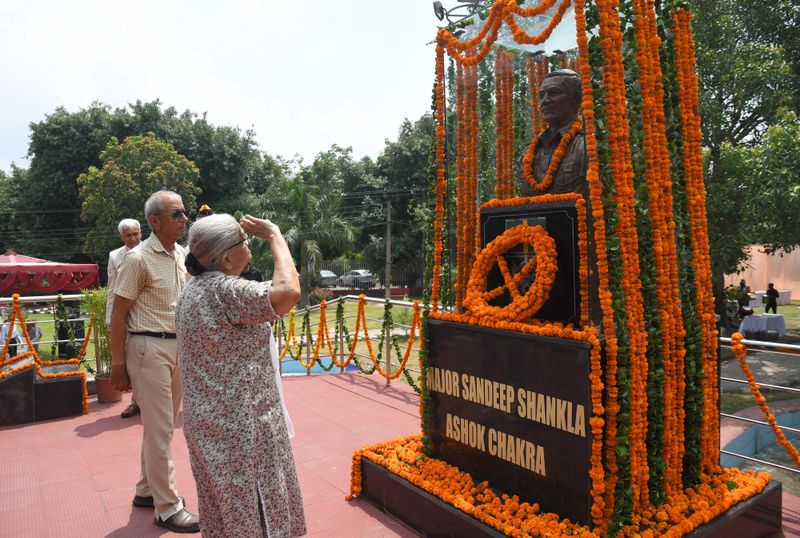
Manju Kanwar, mother of Major Sandeep Shankla, pays tributes to her son on the eve of Kargil Vijay Diwas in Panchkula.

Commemorating the 27th Kargil Vijay Diwas, homage was paid to martyrs of the Kargil War at Major Sandeep Shankla Memorial in Panchkula by veterans under the aegis of the India Ex-Servicemen Movement (IESM).

As many as 527 soldiers made the supreme sacrifice during the war, fought between May and July 1999 in the rugged, icy heights of the Kargil sector of Jammu and Kashmir, with another 1,363 soldiers being severely wounded. Former Chief of the Naval Staff Admiral Sunil Lanba, Panchkula Mayor Sham Lal Bansal and veterans including Lt Gen Harcharan Singh, Lt Gens BS Jaswal, Lt Gen Praveen Bakshi, Lt Gen Shankar Ghosh, Lt Gen JP Singh, Lt Gen AN Aul and Maj Gen RS Mehta, paid floral tributes at the memorial.

During the event, veterans said India has been facing myriad and serious security challenges – continuing terrorism in Jammu and Kashmir, unrest in the north-east, Naxal challenge in central India and Chinese incursions. 


Rajnath Singh in Ladakh for Kargil Vijay Diwas commemorations

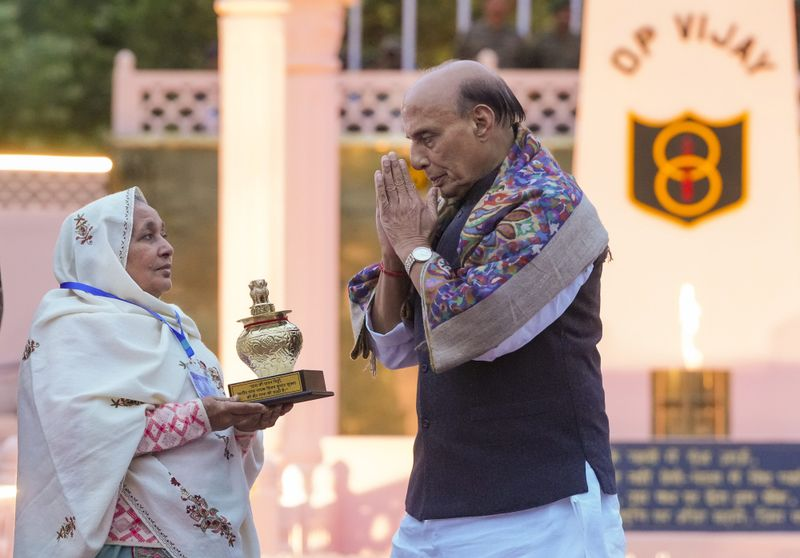
Defence Minister Rajnath Singh presents a memento to the family member of a fallen soldier at the Kargil War Memorial in Drass on Saturday. PTI

Defence Minister Rajnath Singh arrived in Ladakh on Saturday to participate in the 27th Kargil Vijay Diwas commemorations, as the Army launched a series of events at the Kargil War Memorial in Dras to honour the soldiers who laid down their lives during the 1999 Kargil War.

Singh arrived at Srinagar International Airport in the morning, where he was received by Jammu and Kashmir Lieutenant Governor Manoj Sinha. The Defence Minister later proceeded to Ladakh to attend the commemorative events marking India’s victory in Operation Vijay. 

The two-day programme at Dras features a series of events, including Yudh Sansmaran, Shaurya Sandhya, patriotic performances by the Ladakh Scouts Regimental Centre Band, a motorcycle display by the Army’s ‘Shwet Ashwa’ Motorcycle Riders and a wreath-laying ceremony to pay homage to the fallen heroes.

The commemorations began on Saturday with Yudh Sansmaran at the picturesque Lamochen View Point overlooking the historic Kargil battlefield. The programme included a 33-minute documentary on the Kargil War and India’s triumph under Operation Vijay, followed by a commemorative film honouring 40 Kargil martyrs. Their next of kin attended the event.

Senior Army officers, Kargil War veterans, Veer Naris and Veer Matas were present during the programme. Major General Amit Prakash Singh, General Officer Commanding, Forever in Operations Division, was among the senior officers attending the event.

Operation Vijay was launched in 1999 after Pakistani forces infiltrated and occupied strategic heights in the Kargil sector. The operation concluded with India’s victory on July 26, 1999, which is commemorated every year as Kargil Vijay Diwas.

The highlight of Saturday’s programme was Shaurya Sandhya at the Kargil War Memorial, where Defence Minister Rajnath Singh paid tributes to the soldiers who made the supreme sacrifice during the conflict.

On Sunday, the Army will conduct the Shradhanjali Samaroh, a wreath-laying ceremony at the Kargil War Memorial, followed by Gaurav Gatha, recounting the courage and sacrifices of Indian soldiers during the war.

The commemorations will conclude with the flagging-in of the Shaurya Vijay Yatra, a motorcycle rally from the National War Memorial in New Delhi to the Kargil War Memorial in Dras, symbolising the nation’s gratitude towards its bravehearts. The events reaffirm India’s commitment to preserving the legacy of the soldiers whose courage and sacrifice secured victory in the Kargil conflict. 


ARTRAC commemorates Kargil Vijay Diwas, honours heroes of Operation Vijay

Army Commander Lt Gen Devendra Sharma leads tribute at Annandale, calls Kargil heroes’ courage and sacrifice an enduring inspiration for safeguarding India’s unity, integrity and sovereignty

Headquarters Army Training Command (ARTRAC) on Saturday commemorated the 27th anniversary of Kargil Vijay Diwas, with all ranks reaffirming their commitment to uphold the highest ideals of patriotism, courage and selfless service while paying tribute to the brave soldiers who defended the nation’s sovereignty during Operation Vijay in 1999.

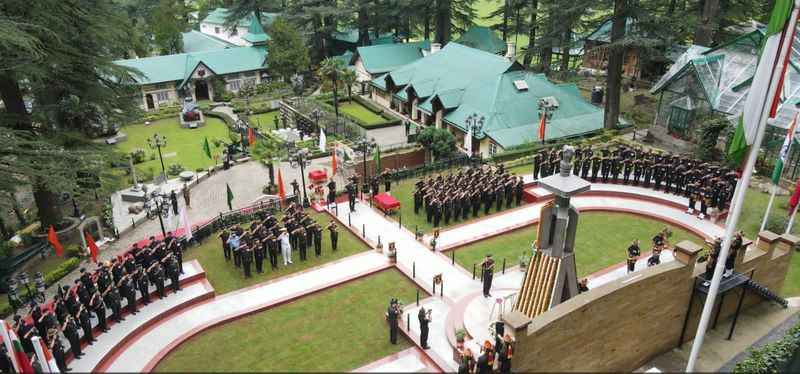
The commemorative ceremony began at the Shradhhanjali Sthal in Annandale, where Lieutenant General Devendra Sharma, PVSM, AVSM, SM, General Officer Commanding-in-Chief, ARTRAC, laid a wreath on behalf of all ranks to honour the fallen heroes. A two-minute silence was observed as buglers sounded the solemn notes of the Last Post.

Paying homage to the heroes of Operation Vijay, Lt Gen Sharma recalled their extraordinary bravery, unwavering resolve and selfless devotion to duty while fighting in the harsh, icy heights of Kargil. He said their legacy continues to inspire generations and reinforces the Indian Army’s unwavering commitment to safeguarding the country’s unity, integrity and sovereignty. IndiaNews Updates

He added that the sacrifices of the Kargil heroes remain forever etched in the nation’s collective memory and continue to inspire millions of Indians.

Later, the Army Commander visited the Army Heritage Museum at Annandale. Located in the scenic Annandale valley, the museum showcases the courage and sacrifices of Indian soldiers across generations. He appreciated the museum’s efforts to preserve valuable military artefacts, battle memorabilia and historical records, ensuring that the legacy of patriotism and military honour is passed on to future generations.

On the 27th #KargilVijayDiwas, HQ #ARTRAC paid rich tribute to the extraordinary courage, grit and supreme sacrifice of the bravehearts of #OperationVijay. Lt Gen Devendra Sharma,PVSM, AVSM, SM, GOC-in-C, ARTRAC led the wreath laying ceremony at the Shradhhanjali Sthal, Annadale, Shimla , paying solemn homage on behalf of all ranks. Marking the day, the Army Commander visited the Army Heritage Museum at Annadale, appreciating its dedicated efforts in safeguarding military heritage and passing on the legacy of patriotism to future generations. The valour of our heroes remains an enduring beacon of resolve for the


Kargil, as I saw it: On Vijay Diwas, a veteran recalls the highs and lows of the time he spent on the war front

The soldier, above all other people, prays for peace, for it is the soldier who must suffer and bear the deepest wounds and scars of war. — Douglas MacArthur

The writer (second from right) with other crew members of  31 Recce & Observation flight. This photo was taken at an aviation base in Kashmir.

The writer (second from right) with other crew members of 31 Recce & Observation flight. This photo was taken at

an aviation base in Kashmir.

It was a sweltering summer afternoon and we were watching a World Cup cricket match. “This is the time to be in Kashmir,” said Paramjit, my closest friend in the squadron. Sometimes, a casually expressed wish comes to pass. Because that very evening, we received orders to mobilise and to provide aviation support to our troops battling intruders in Ladakh. Kargil, until then a little-known town, had suddenly emerged on the world map. The war had begun. Thirty-six hours later, we were headed for Kashmir.There hasn’t been a more tearful goodbye than the one I received from my newly-wed wife that morning of departure.

New to the profession of flying with no hill-flying experience, I underwent on-the-job training, co-piloting alongside seasoned aviators. While these mavericks executed unconventional flight manoeuvres, I kept watch for enemy activity in air and on ground. Our fighter jet and a helicopter had recently been downed by the enemy and we couldn’t afford to let our guard down. “Sir, I see low clouds on the valley floor,” I once reported to the captain. “Dammit, that’s the enemy’s artillery barrage,” he replied, making me instantly wiser.

Pre-flight briefings outlined our missions; post-flight debriefings revealed the ground situation to us. With the Line of Control rendered irrelevant, another challenge emerged; we had to determine whether the landing sites lay in friendly or hostile territory. Many would realise that they had been fortunate to return unscathed from ‘foreign’ territory. Others who returned with the enemy’s ‘autograph’ — splinter marks on their helicopters — truly deserved gallantry awards.

Operating at those unforgiving altitudes, with thin air and reduced oxygen, tested both human and machine endurance. The helipads were barely wide enough to land, leaving no margin for error. Flying in pairs offered some solace that at least our location would be known in an emergency. Every sortie was a new experience and every landing back at base felt like a great homecoming. Stress and anxiety were writ large on the faces of commanders, as we flew on reconnaissance missions. Heavy lies the head that wears the crown; many lives depended on their decisions.

Evacuating the wounded, with hope flickering in their eyes, was deeply gratifying. Sadly, some would not survive or be maimed for life. Carrying body-bags was heart-breaking; a dead man weighs as heavy in the aircraft as he does in the mind of the pilot.

The media had inundated the war zone. We flew many other journalists as they covered the war which the nation watched unfold on television. For the first time, war scenes went live in everybody’s homes, stirring a wave of patriotism, which till then had been hijacked by cricket. Watching Tiger Hill being bombarded by our soldiers became a greater thrill than India defeating Pakistan and knocking it out of the World Cup. For a soldier at the front, however, war never evokes the same elation it does for a citizen watching on TV.

Bollywood stars Vinod Khanna, Nana Patekar, Salman Khan and several others visited us, bringing a welcome splash of colour to the otherwise grey battle zone. For a change, these celebrities requested to be photographed with us. The moral support extended by the nation was deeply heartening. Restaurants and shops proudly offered ‘Army discounts’, while donations poured in from across the country. Thousands thronged the funerals of the ‘unknown soldiers’ killed in action.

Every day was an emotional seesaw. Paramjit’s crash one day reduced me to tears; a stunned silence engulfed the crew room. Thankfully, he survived with only minor injuries. News of his wellbeing became a cause for celebration.

Capt Vikram Batra’s legendary words on TV — “Yeh dil maange more” — cheered us up; his death just days later came as a rude shock. There was jubilation when we recaptured Tololing Ridge and Tiger Hill. Yet, that joy was dampened by the solemn task of carrying the mortal remains of those who had secured this victory.

Those fateful days were filled with anxiety, uncertainty and anger. We prayed for the safe return of Flt Lt Nachiketa, who had ejected and was taken prisoner; the enemy’s unsoldierly treatment of Lt Saurabh Kalia was still fresh in our minds. For my parents, too, it was a harrowing time, with both their sons in the war zone. One newspaper even carried our story. The ceasefire was declared as the enemy retreated. Having lost over 500 men, with more than twice that number wounded, the enemy certainly deserved no mercy; so we felt, then, in our twenties.


We returned to Jalandhar with mixed emotions after the guns fell silent. Battle-inoculated, I now viewed life through a different lens. We had won the war, yet the relief of returning was overshadowed by tragedy. Paramjit did not come back with us. Providence had spared him when he crashed, but fate caught up with him three months later when carbon monoxide poisoning claimed his life. Such is the fickleness of fortune.

Twenty-seven years later, I salute our hardy, patriotic and valiant soldiers who scaled those unforgiving heights against fearsome odds. Their victory resonated well with the codename of the operation: Operation Vijay.

Otto von Bismarck observed, “Anyone who has looked into the glazed eyes of a soldier dying on the battlefield will think hard before starting a war.” Thankfully, there hasn’t been a major war since then. But who can predict a soldier’s fate or an enemy’s intent?


35% of judges, staff posts vacant in Armed Forces Tribunal; 11,000 cases pending

More than 35 per cent of the sanctioned posts for judges and office staff in the Armed Forces Tribunal (AFT) remain vacant, even as the judicial forum continues to grapple with a backlog of around 11,000 pending cases.

Of the 34 sanctioned posts for judicial and administrative members across the AFT’s 11 Benches, 12 are vacant, leaving an overall shortfall of just over 35 per cent, according to information shared by the Ministry of Defence in Parliament on July 24.

Three Benches located at Srinagar, Jabalpur and Guwahati are functioning without a single member, with both their judicial and administrative posts lying vacant. In contrast, the Principal Bench in New Delhi and the Mumbai and Jaipur Benches are operating at full sanctioned strength. 

Also read: Government appoints 11 judicial, 12 administrative members to the Armed Forces Tribunal

Each AFT Bench comprises one or more courts. The Principal Bench and the Chandigarh Bench are sanctioned three courts each, while the Lucknow Bench has two courts. The remaining Benches, including those located at Kochi, Chennai and Kolkata, are sanctioned one court each.

The AFT Chairperson must be a former Supreme Court judge. Each court is presided over by a judicial member, who must have served as a High Court judge, along with an administrative member, traditionally a retired defence officer of the rank of Major General or above. Recently, the eligibility rules were amended to allow persons with experience in fields such as economics, management, commerce and industry to be appointed as administrative members.

As far as the office staff strength is concerned, of the 564 sanctioned posts, 205 are vacant, according to the Defence Ministry’s data.

Among the AFT’s three largest Benches, the Principal Bench has a sanctioned staff strength of 103, followed by Chandigarh with 89 and Lucknow with 88. Vacancies at these Benches stand at 37 per cent, 29 per cent and 35 per cent, respectively. At the Guwahati and Kolkata Benches, the number of vacant posts is higher than the current posted strength.

Official Ministry of Defence figures reveal that as of March 2026, about 11,000 cases are pending for adjudication before the AFT. A total of 44,622 cases were registered with the AFT from 2021 to January 2026. A large number of cases are also awaiting execution, where judgment and directions passed by the AFT have not been implemented by the government.

The Armed Forces Tribunal was inaugurated in August 2009 under the Armed Forces Tribunal Act 2007, passed by Parliament, with the power to adjudicate disputes and complaints with respect to commission, appointments, enrolments and conditions of service relating to persons subject to the Army Act, 1950, the Navy Act, 1957, and the Air Force Act, 1950.

It can further provide for appeals arising out of orders, findings or sentences of court-martial held under the said Acts and for matters connected therewith or incidental thereto. Prior to the AFT being established, all such cases used to be filed before the High Court. Orders passed by the AFT can be appealed by either party before the High Court, and thereafter the Supreme Court.