










Sanjha Morcha

Sanskrit will be compulsory, Punjabi optional subject in Punjab army schools sparks outrage

Parents of students studying in Army Public Schools located in Punjab being asked to give their consent if their wards wish to study Punjabi language as an additional subject has ruffled some feathers in the state.

Several Punjab-based political and cultural organisations have termed the move as a conflict with the Punjab Learning of Punjabi and Other Languages (Amendment) Act, 2008, which mandates Punjabi instructions and learning in schools up to Class 10 across the state. They have termed the policy to be against the interests of the state and called for a review of the policy.

“All parents are hereby informed that Sanskrit language is compulsory for the session 2026-27,” Students who wish to tale Punjabi language as additional subject need to bring the consent slip duly filled and signed by parents,” a communiqué sent by one school in Punjab on May 5 states.

According to sources, Sanskrit has already been made compulsory in some Army Public Schools, while the remaining are expected to do so in the coming year. “The pan-India spread of Army Public Schools, coupled with the mid-session transfer of parents, dictates that only standardised language subjects can be taught in our schools in classes VI to VIII,” an officer said. “These languages are English, Hindi and Sanskrit. However, schools may opt to teach a fourth regional language, if sufficient students opt for the same,” he added.

Army Public Schools are run by the Army Welfare Education Society under the aegis of the Ministry of Defence. There are 140 such schools in major military cantonment across the country, where have been established over the years as a welfare measure for Armed Forces personnel to ensure continuity in their children’s education in view of their frequent transfers.

All schools follow National Council of Educational Research and Training (NCER) and are affiliated to the Central Board of School Education (CBSE). In addition AWES also runs 12 professional colleges in medical, technology, hotel management, management, law, dental sciences, education, fashion design and nursing fields.

Punjab Chetna Manch, a political forum, comprising of CPI members, Punjabi writers and political activists, termed the move “arbitrary”. In a joint statement, its representatives Dr Lakhwinder Singh Johal, Satnam Singh Manak, and Gurmeet Singh Palahi argued that the reported structure of language options does not align with the broader spirit of the National Education Policy (NEP) 2020 and the National Curriculum Framework, both of which emphasise multilingual education and flexibility in learning languages, especially mother tongues.

The manch has also written to the Chief Minister, Bhagwant Singh Mann, Education Minister, Harjot Singh Bains, and the Central Board of Secondary Education (CBSE), urging a review and clarification on the policy.

Reacting to the news, Rajya Sabha MP Vikramjit Singh Sawhney, has asked the Defence Minister, Rajnath Singh, to intervene. He urged him to ensure that Punjabi continues to be a compulsory subject in Army Schools in Punjab.

Ramesh Yadav, a scholar and political activist and president of Folklore Research Akademi, said that giving priority to other languages while ignoring Punjabi language in Punjab is a matter of great concern. “It will be unfair to those children whose mother tongue is Punjabi. This decision should be reconsidered keeping in mind the interests of the students and Punjabi should be made a compulsory subject for schools in Punjab,” he said.

The Communist Party of India (Marxist-Leninist) New Democracy members too have strongly opposed the attempts to marginalise Punjabi language in Army Public Schools in Punjab.


The Lion of Tololing: Havildar Udham Singh’s final charge at Kargil War

Havildar Udham Singh’s wife Nirmala Devi receiving Vir Chakra from KR Narayanan, the then President

Was born on March 16, 1959, in quiet village of Cheri in Bilaspur district | Joined the 18th Battalion of the Grenadiers

Fighting in the fierce Tololing Point 4590 in Kargil War, Havildar Udham Singh displayed extraordinary courage as his battalion paved the way for India’s first major victory in 1999, reclaiming critical heights under impossible odds.

The battle account on his bravery reads: “During the battalion attack on Bump on night of June 14/15, 1999, Havildar Udham Singh, one of the section commanders, volunteered to lead the attack with his section on area Hump. As the section came closer to the enemy’s position, its advance was held up by the intense fire from automatic weapons sites in bunkers. To neutralise the enemy fire, Udham Singh reacted immediately. After ordering his men to keep engaging the enemy, with a small team, he crawled towards the enemy position from the flank. After halting his team close to the enemy’s forward most bunker, he himself inched closer to lob a hand grenade inside. His movement was noticed by the enemy who fired several volleys in his direction. Hit by a hail of bullets, he was flung to the ground.

Havildar Udham Singh with his better half.

Havildar Udham Singh with his better half.

After few seconds, without caring for his wounds, he mustered his Himachali grit and Grenadier’s killing instinct, got up and rushed to the enemy bunker where from the fire was coming and lobbed a hand grenade inside. Firing from his personal weapon from close range, he killed three Pakistanis and rallied his men to charge ahead.

While leading the charge onto the next bunker, Udham Singh got a machine gun burst on his forehead and he died instantly. Seething with anger at the loss of their commander, his men, the fiery Grenadiers, rushed uphill and, in one fell swoop, drove the enemy out from all bunkers thereby attaining spectacular victory for 18 Grenadiers.

No such victory can be gained without individual acts of gallantry that turn the tide in difficult situations and inspire all. The individual act of gallantry by Havildar Udham Singh inspired all and hastened the capture of the objective, besides saving many lives. For displaying exceptional courage and leading his section boldly despite being critically wounded, Havildar Udham Singh was posthumously awarded the Vir Chakra.

Dogra warrior who fought till his last breath

Born on March 16, 1959, in the quiet village of Cheri in Bilaspur district, Havildar Udham Singh embodied the grit and pride of Himachal Pradesh. After completing his matriculation from Government High School, Bilaspur, he joined the 18th Battalion of the Grenadiers — an illustrious regiment that has gifted the nation three Param Vir Chakras.

A spirited youth, an exceptional wrestler and a passionate kabaddi player, Udham Singh carried the same fire onto the battlefield. During the Kargil War of 1999, he displayed unparalleled bravery as the 18 Grenadiers fought ferociously to reclaim critical heights. His supreme sacrifice in the line of duty earned him the prestigious Vir Chakra (Posthumous), forever etching his name among India’s bravest.

He is survived by his wife, Nirmala Devi, whom he married in 1983, and three children. His son, now employed at the SDM office in Sawarghat, was just six when the braveheart attained martyrdom. Both his daughters are happily married. Today, his family lives with pride at their ancestral home in Cheri village, upholding the legacy of a hero who gave everything for the motherland.


67 years of BRO: Connecting remote areas in India and abroad through strategic roads, tunnels, bridges

Raised on May 7, 1960, BRO has emerged as India’s largest construction agency and neighbouring countries, such as Afghanistan, Bhutan, Myanmar, Tajikistan and Sri Lanka

From the freezing heights of the Himalayas to the scorching sand of Rajasthan, from the swampy jungles of the north-east to the terror infested plains of Chhattisgarh, the Border Roads Organisation (BRO) has, over the past 67 years, made huge strides in developing road infrastructure under adverse climatic conditions and trying conditions to provide a lifeline to the soldier on the far flung frontlines as well as succour to civilians residing in remote areas.

Raised on May 7, 1960, BRO functions under the aegis of the Ministry of Defence (MoD) and is mandated with the construction and maintenance of roads, bridges and tunnels along the border areas, as well as some naxal-infested areas in central India.

It has emerged as India’s largest construction agency, with operations spread across 19 states and three union territories, including Andaman and Nicobar Islands, as well as neighbouring countries, such as Afghanistan, Bhutan, Myanmar, Tajikistan and Sri Lanka, and a total budgetary allocation of Rs 13,388.13 crore for the 2026-27 fiscal.

Since its inception, BRO has constructed over 64,100 km of roads, 1,179 bridges, seven tunnels and 22 airfields across India’s border areas and in friendly neighbouring countries, forming a key pillar of national security, strategic preparedness and regional development. BRO connects forward-most border posts to the rear echelons.

Expansion over the years

From humble beginnings with just two projects – Beacon in the North and Vartak in the East, BRO now comprises 18 projects. These include nine in north-west India in Jammu and Kashmir, Ladakh, Himachal Pradesh, Uttarakhand and Rajasthan, eight in the north-east in Sikkim, Arunachal Pradesh, Nagaland, Mizoram and Meghalaya, and one in Bhutan.

Each project is commanded by an officer of the rank of Brigadier drawn from the Indian Army’s Corps of Engineers. The BRO’s officer strength comprises a mix of its own cadre and officers on deputation from the Army.

In Arunachal Pradesh, BRO projects such as Vartak, Arunank, Udayak, and Brahmank tackle some of India’s most challenging frontiers, connecting remote villages to the Line of Actual Control (LAC) through critical infrastructure including Sisseri Bridge, Siyom Bridge, Sela Tunnel and Nechiphu Tunnel.

In Ladakh, projects like Himank, Beacon, Deepak, Vijayak, and Yojak maintain vital lifelines to Kargil, Leh and the Karakoram region, covering strategic routes such as the Srinagar–Leh Highway, Darbuk–Shyok–Daulat Beg Oldie Road, Atal Tunnel in Himachal Pradesh and the ongoing Shinku La Tunnel.

The north-east projects like Swastik in Sikkim, Pushpak in Mizoram, Setuk in Assam and Meghalaya and Sewak in Nagaland and Manipur strengthen regional access, while on the western borders, Sampark in Jammu and Chetak in Rajasthan enhance strategic mobility in the plains.

In addition, Project Shivalik ensures reliable access to the Char Dham Yatra in the Himalayas of Uttarakhand, while Hirak extends connectivity into left-wing extremism-affected areas of Chhattisgarh.

Project Dantak in Bhutan, at present BRO’s only permanent overseas formation, plays a key role in reinforcing bilateral ties through the development of an extensive network of roads, bridges and infrastructure in the Himalayan kingdom.

Missions in foreign countries

Dantak, among BRO’s oldest and most enduring missions, which was launched in 1961, has shaped Bhutan’s modern connectivity.

It has built bridges, developed key airports such as Paro and Yonphula and supported telecom networks and hydropower infrastructure, contributing directly to Bhutan’s socio-economic development and symbolising the deep Indo-Bhutan partnership.

In Myanmar, BRO has strengthened regional integration through projects, such as the 160 km India-Myanmar Friendship Road, inaugurated in 2001, which connects Moreh in India to Tamu and Kalewa in Myanmar.

Towards the north-western neighbourhood, BRO constructed the 218 km Delaram-Zaranj Highway (Route 606), providing Afghanistan with direct access to Iran and the Port of Chabahar.

This project enhanced regional trade options and demonstrated India’s commitment to development-led diplomacy.

Further up in Tajikistan, BRO undertook strategic reconstruction at the Farkhor and Ayni air bases, including runway expansion, air traffic control systems, hangars and navigational upgrades, strengthening India’s strategic reach and reinforcing its role as a trusted regional partner.

Role in disaster management

Beyond infrastructure development, BRO plays a crucial role in disaster management and humanitarian assistance, often being among the first responders to rescue victims and restore lines of communication in areas struck by natural disasters.

Road opening parties, avalanche detachments and bridge units work around the clock to clear landslides, rebuild washed-away bridges and reopen mountain passes after cloudbursts, flash floods or earthquakes.

By restoring access to advanced landing grounds and helipads, BRO also enables the Indian Air Force and Army Aviation Corps to fly in relief and evacuate the injured.

Every winter, most passes in the high mountains in the eastern and western theatres close due to heavy snow and every spring, the men and machines of the BRO cut through the towering walls of snow and ice to restore the vital lifelines to areas that have remained cut off from the mainland for months.

In 2026, BRO made history when Zoji La, a treacherous pass on the Srinagar-Leh highway, was kept open for vehicular traffic all through the winter season.

The road ahead

Border infrastructure development received impetus after the 1999 Kargil conflict, and long-term plans were drawn up to ensure the rapid movement of troops to forward areas. Increasing Chinese activity along the northern borders further accelerated the works.

Over the past two years, 356 infrastructure projects executed by the BRO have been dedicated to the nation, setting a significant benchmark in the development of strategic border infrastructure.

To maintain the pace of development, the central government increased the capital expenditure allocation from Rs 6,500 crore in 2024–25 to Rs 7,146 crore in 2025–26. For the current 2026-27 fiscal year, the capital allocation is Rs 7,394 crore.

In FY 2024–25, the Border Roads Organisation (BRO) achieved its highest-ever expenditure of ₹16,690 crore. Continuing this upward trajectory, an expenditure target of ₹17,900 crore has been set for FY 2025–26.

Under the Border Roads Development Programme 2023-28, over 1,000 projects are underway, focusing on all-weather connectivity as well as upgrading some forward airfields.

Key plans include constructing 17 new road-rail tunnels totalling about 100 km, 410 bridges, 73 pending projects and 2,000 km of strategic roads.

As part of BRO’s perspective plan, 470 roads covering about 27,300 km are planned in border areas.

The Trans-Kashmir Connectivity project, spanning about 717 km, has been approved for development to National Highway Double Lane specifications, with paved shoulders.

The alignment will run from Poonch to Sonamarg, strengthening strategic road infrastructure across key mountain passes.

Tunnels are planned at Sadhna Pass, Razdhan Pass, Peer Ki Gali and Zamindar Gali, in western Jammu and Kashmir, to ensure all-weather connectivity.

The project will be executed phase-wise by the BRO, with funding from the Ministry of Defence.

Once completed, it will significantly enhance forward connectivity, improve inter-sector movement and strengthen inter-valley linkages, thereby boosting operational preparedness and long-term regional integration.


BABA BANDA SINGH BHADUR :LEGENDARY SIKH GENERAL

The Sikh community, known for its rich history and vibrant culture, has been marked by remarkable people who have shaped its narrative. Among these luminaries stands Baba Banda Singh Bahadur, a revered Sikh general renowned for establishing Sikh rule across vast expanses of Punjab. Born Lachhman Das to Rajput parents, his transformation from a fervent hunter to a devout bairagi sadhu epitomizes the profound shifts that define his extraordinary life.

Who was Baba Banda Singh Bahadur?

Baba Banda Singh Bahadur, born in 1670 in Rajouri to a Rajput family, stands as a pivotal figure in Sikh military history. He spearheaded the first Sikh offensive war against the Mughal rulers, expanding Sikh territory and defending India with remarkable bravery. He embraced the path of a bairagi sadhu before embarking on his journey for national awakening and liberation from Mughal oppression. Baba Banda Singh Bahadur’s legacy echoes through time as he instilled in Indians the spirit of resistance and the vision of establishing independent rule, laying the groundwork for the eventual independence of India.

The story 

 Baba Banda Singh Bahadur once encountered a pregnant deer during a hunt. Tragically, the dying creature gave birth to two offsprings before his eyes, only for them to perish soon after. This heart-wrenching event shook Lachhman to his core, leading him to renounce the world and become a sadhu. He became a disciple of many none could ease the turmoil within him. Eventually, he turned to tantric sadhus, delving into their teachings and gaining mystical powers known as riddhis and siddhis. His mastery of these abilities made him a revered figure among the locals residing near his ashram on the banks of the river Godavari.

 Though, none benefitted from his powers, he used them to humiliate religious leaders and other saints who ever happened to visit his ashram. Whenever any such saint visited, he would make their beds flip over using his powers.

 Guru Gobind Singh after leaving Punjab traveled towards South India along with some Sikhs, visited Lachhman Das’s ashram and sat on his cot in his absence. 

 Accepting defeat, Lachhman Das Bairagi fell at the feet of Guru Gobind Singh and sought forgiveness and said, “O, Guru Ji, I am your Banda (Slave). Show me the right path.”

 Guru Gobind Singh taught him the basic principles of Sikhsim and baptised him. Lachhman was given the name ‘Banda Singh’. He transformed from a proud bairagi to a humble and brave Sikh of Guru.

 Banda Singh mission in Punjab 

The Guru sent  Banda Singh to Punjab with a clear mission: to hold the ruthless rulers of the era accountable for their actions. Accompanied by five courageous Sikhs as advisors and armed with necessary weapons, Banda Singh embarked on his task. Swiftly, he garnered the support of thousands of Sikhs in his campaign against the oppressive rulers. Under Banda Singh’s guidance, the Sikhs swiftly ended the reign of numerous tyrants, including Nawab Wazir Khan, who was responsible for the tragic demise of Guru Gobind Singh’s younger sons. 

Banda Singh’s efforts resulted in the capture of a significant portion of Punjab, establishing Sikh authority in the region. He even minted coins in honour of Guru Nanak Dev and Guru Gobind Singh. However, the ascension of Faruksiyar as the emperor of Delhi brought new challenges. Enraged by Banda Singh’s successes, Faruksiyar mobilized a considerable force from Delhi and other parts of Punjab to crush and capture him.

 In the fortress of Gurdas Nagal, Sikhs faced a large number of Mughal forces. Banda Singh led them in a valiant fight. However, their rations ran low, weakening their ability to resist.

After eight months, brave Banda Singh Bahadur and seven hundred Sikh soldiers were captured and taken to Delhi. They survived inside the fortress by eating leaves and tree bark. In Delhi, they endured humiliation, paraded through its markets. The Mughals offered them amnesty if they converted to Islam. Yet, not one Sikh abandoned their faith. Instead, they endured torture and public execution.

 After enduring a three-month ordeal, Baba Banda Singh was subjected to one of the most brutal executions recorded in history on June 9, 1716.Banda Singh’s four-year-old son, Ajai Singh, was brutally killed before him, with his liver forced into his mouth. Despite the horrors, Banda remained remarkably composed, unyielding in his resolve. His tormentors, resorting to merciless methods, gradually tore his flesh with hot pincers, gouged out his eyes, and severed his feet.

Following Banda’s martyrdom, new leaders emerged in the Khalsa, including Baba Deep Singh, Nawab Kapur Singh, Chhajja Singh, Bhuma Singh, Hari Singh Dhillon, Jassa Singh Ramgarhia, Jassa Singh Ahluwalia, Budh Singh, Naudh Singh, Charhat Singh Sukerchakia, and others. In just ninety years, Maharaja Ranjit Singh established the Sikh kingdom, carrying forward the legacy of those who had sacrificed everything for their beliefs.

Banda Singh holds an immortal place in Sikh history. His fame extends beyond the Sikh community, especially in Bengal. Nobel laureate Rabindranath Tagore penned a poem called ‘Bandi Bir’ or ‘The Captive Brave’chronicles the courageous acts of Sardar Banda Singh Bahadur during his uprising against the Mughal Empire and his eventual martyrdom. In this poem, agore upholds that the seeming defeat of the Sikhs was a victory in the test of history. He highlights the victory of Sikh spirituality over the brute force they faced. The poem’s opening and closing lines, written in Bengali, resonate deeply. Let’s explore some excerpts and their translations.


Pakistan allowed parking of Iranian military aircraft on its airfields despite mediator role: Report

Washington DC [US], May 12 (ANI): Pakistan’s role as a mediator between the United States and Iran has come under scrutiny after CBS reported on Monday, citing US officials, that Pakistan quietly allowed Iranian military aircraft to park on its airfields, possibly shielding them from American airstrikes.

The two officials told CBS News that while Iran also sent civilian aircraft to be parked in Afghanistan, it was not clear if military aircraft were among those flights.

The US officials speaking on anonymity told CBS News that days after Trump had announced the ceasefire with Iran in early April, Tehran sent multiple aircraft to Pakistan’s Nur Khan Air Base. Among the military hardware was an Iranian Air Force RC-130, a reconnaissance and intelligence-gathering variant of the Lockheed C-130 Hercules tactical transport aircraft.

While a senior Pakistani official rejected the claims, an Afghan civil aviation officer told CBS News that an Iranian civilian aircraft belonging to Mahan Air landed in Kabul shortly before the war started.

However, Taliban’s chief spokesman Zabihullah Mujahid denied the presence of any Iranian airplanes in Afghanistan, and told CBS News, “No, that’s not true and Iran doesn’t need to do that.”

Shortly afterwards, US Senator Lindsey Graham questioned Islamabad’s role and called for a complete reevaluation of the country’s actions as a mediator.

He said, “If this reporting is accurate, it would require a complete reevaluation of the role Pakistan is playing as mediator between Iran, the United States and other parties. Given some of the prior statements by Pakistani defense officials towards Israel, I would not be shocked if this were true.”

If this reporting is accurate, it would require a complete reevaluation of the role Pakistan is playing as mediator between Iran, the United States and other parties.

Given some of the prior statements by Pakistani defense officials towards Israel, I would not be shocked if… 

— Lindsey Graham (@LindseyGrahamSC) May 11, 2026

As the situation continues to evolve in the region, Iranian state broadcaster Press TV reported on Monday that the head of the Atomic Energy Organization of Iran (AEOI) Mohammad Eslami told lawmakers that the issues of nuclear technology and uranium enrichment are not on the agenda of any possible negotiations with the United States, and that Tehran insists that the talks must focus only on ending the war in the region.

He made the remarks while briefing the members of Parliament’s Foreign Policy and National Security Committee on Monday.

“According to the head of the Atomic Energy Organization [of Iran], the issue of nuclear technology is not on the agenda of the negotiations [with the US] and enrichment is not negotiable,” Ebrahim Rezaei, the committee spokesperson, said after the meeting as per Press TV.

Also on Monday, Iran’s Foreign Ministry spokesman Esmaeil Baghaei told reporters that the country’s proposal for ending the war was reasonable.

However, on Monday (local time), Trump told the media from the Oval Office that Iran is the weakest it has been and called Tehran’s proposal “a piece of garbage”.

He said, “After reading that piece of garbage they sent us, I didn’t even finish reading it. They (Iran) are on life support. The ceasefire is on massive life support.” (ANI)

(This content is sourced from a syndicated feed and is published as received. The Tribune assumes no responsibility or liability for its accuracy, completeness, or content.)


Totally unacceptable’: Donald Trump rejects Iran’s peace proposal

US wants Tehran to make a clear commitment to end its uranium enrichment programme in exchange for sanctions relief 

US President Donald Trump has rejected Iran’s proposal to end the months-long war as “totally unacceptable” without sharing details even as a key Republican leader urged him to consider the “military option”.

Trump received the Iranian proposal on Sunday amid hopes that it could lead to a breakthrough to end the war with Iran that began on February 28, blocking the key sea route for global oil supplies, leading to fuel shortages in several countries.

“I have just read the response from Iran’s so-called ‘Representatives.’ I don’t like it – TOTALLY UNACCEPTABLE!” he wrote on his Truth Social platform on Sunday.

Earlier, Trump accused Tehran of playing games with the United States for nearly 50 years. “They will be laughing no longer!” he added.

“I don’t like their letter. It’s inappropriate. I don’t like their response,” Trump told US media outlet Axios, declining to go into further details about what was in the Iranian response.

“They have been tapping along many nations for 47 years,” he said.

Meanwhile, Republican Senator Lindsey Graham said Trump should now consider taking military action.

“I appreciate President Trump’s earnest efforts to seek a diplomatic solution to change the behaviour of the Iranian terrorist regime,” he said in a post on X.

“However, between their constant attacks on international shipping, the persistent attacks on our Middle Eastern allies and now a totally unacceptable response to America’s diplomatic proposal, it is in my view, time to consider changing course,” Graham said.

“Project Freedom Plus sounds pretty good right about now,” Graham said, referring to the naval operation to guide ships through the Strait of Hormuz that Trump abruptly suspended after less than 48 hours.

Trump told Axios he had spoken with Israeli Prime Minister Benjamin Netanyahu on Sunday and discussed the Iranian response, among other things.

“It was a very nice call. We have a good relationship,” he said of Netanyahu, but he added that the Iran negotiations are “my situation, not everybody else’s”.

The US and Israel war on Iran started on February 28 and attacks have been paused since April 8 when the warring sides agreed to a ceasefire.

The US and Iran have been negotiating a deal to end the hostilities for good, but peace has been elusive so far.

The US has been insisting that Iran give a clear commitment to end its uranium enrichment programme in exchange for lifting of sanctions and release of billions in frozen Iranian funds.

The negotiations also entail both Iran and the US lifting the blockade of the Strait of Hormuz, a key passageway for one-fifth of the global crude supplies.


I am an ordinary worker of Army chief Munir, says Pakistan minister; draws flak

Federal Minister for Energy Ali Pervaiz Malik, a close aide to the premier, was addressing a press conference on Saturday

A Pakistani minister has described himself as an “ordinary worker” of Field Marshal Asim Munir, drawing ire on social media with critics arguing that the remark underscored the military’s expanding influence over civilian politics in the country.

Federal Minister for Energy Ali Pervaiz Malik, a close aide to the premier, while addressing a press conference on Saturday, said: “As an ordinary worker of the team led by Prime Minister Shehbaz Sharif and Field Marshal Asim Munir, I want to assure the public that as petroleum prices decline in the international market, we will reduce them here at the same speed.”

The minister’s remarks triggered a sharp backlash on social media, where critics questioned how far the ruling Pakistan Muslim League-Nawaz (PML-N) was willing to go to appease the military establishment in what many describe as Pakistan’s “hybrid” system of governance.

“When ministers begin introducing themselves as ‘humble workers’ of powerful men rather than representatives of the people, one has to ask — is this democracy or the court of loyal servants?” wrote Fatima Malik on X.

Another user, Mohsin Ali Khan, said: “Ali Pervaiz Malik is merely speaking the truth — a federal minister today is little more than a humble worker of a military general.”

“A humble worker of the Field Marshal. The PML-N has sunk to such depths that calling it a political party now feels like an insult to politics itself,” Waqar Ahmad posted.

“The ministers now appear completely liberated from even the pretence of political restraint. They have stopped pretending to uphold democracy altogether. Incredible,” journalist Maleeha Hashmi posted on social media.

Senior television anchor Talat Hussain said it was “shameful” for ministers to speak of public “relief” while simultaneously burdening citizens with crushing increases in petroleum prices.

“What is equally shameful,” he said, “is the spectacle of ministers sitting before television cameras congratulating one another on their performance while the majority of the public struggles under dire economic conditions”.

“The entire ruling setup appears to believe that a wartime victory gives it licence to treat people’s hardships with contempt. That is more than shameful,” he added.

Pakistan Defence Minister Khawaja Asif has already declared that there has been a “hybrid system” in the country.


HEADLINES : 11 MAY 2026

As Garhwal Rifles gets its first 4-star officer, a throwback into its historical linkage with Gorkha Rifles

‘Burning service records of living pensioner mechanically after 50 years not logical, increase retention period’: AFT

The covenant and the contract

Army-backed FM stations amplify local voices, counter misinfo long LAC

Most dangerous terrorists exploit data, encrypted networks to operate across borders: J-K L-G

‘Didn’t want fathers to bury sons’: Ex-Tibri commander Brig Kochhar on Operation Sindoor

Army boosts combat edge with drones, AI, strike units

A year after Op Sindoor, Armed Forces open tri-services ‘drone warfare’ training school 

Ready to counter Chinese missile threats from Pakistan: Military top brass on Operation Sindoor anniv

Pak has understood it will pay a cost if it conducts terror strikes : Katju & Gen Hooda

Who asked you to speak in English?’ Pakistan military spokesperson ‘questions’ Indian officers, gets trolled


As Garhwal Rifles gets its first 4-star officer, a throwback into its historical linkage with Gorkha Rifles

Of the 32 four-star generals who have been at the helm of the Indian Army post-Independence, including two British officers, 20 have been from the Infantry, six from the Armoured Corps, five from the Artillery and one from the Engineers

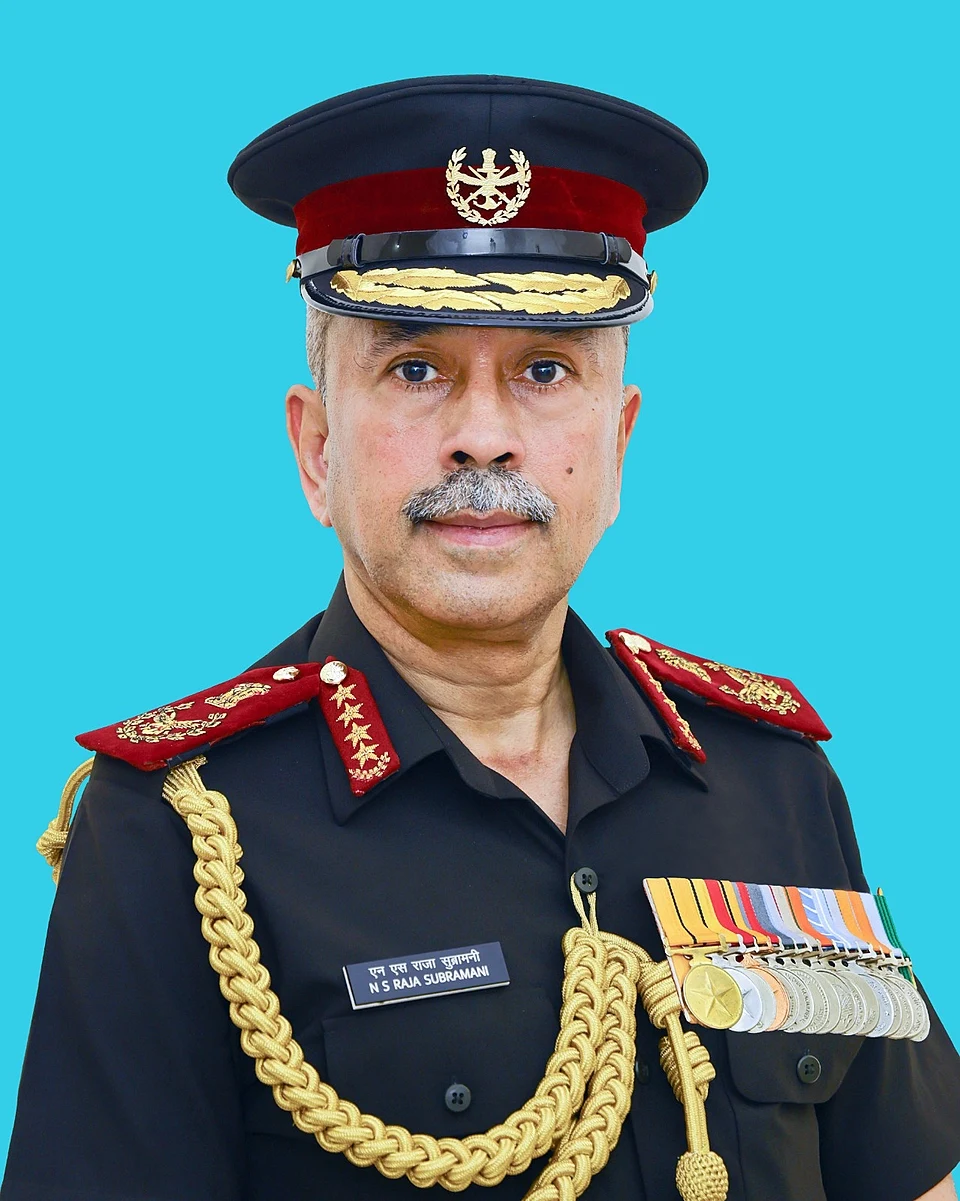
When Lieutenant General N.S. Raja Subramani dons the rank of Chief of Defence Staff (CDS) following the retirement of the incumbent, Gen Anil Chauhan, the Garhwal Rifles, among Indian Army’s oldest and most highly decorated Infantry regiments that was carved out from the Gorkha regiments 139 years ago, will get its first four-star officer.

General Chauhan will superannuate on May 30 and Lt Gen Raja Subramani’s term will begin from the date he assumes charge subsequently. Presently, serving as a military adviser at the National Security Council Secretariat, he had retired as Vice Chief of the Army Staff in July 2025.

Under law, the government can select any senior serving or retired officer from amongst the Three Services for appointment to the post of CDS who, by stature, is the senior-most military officer in the country. The CDS is the principal military adviser to the government but does not exercise any operational command over the Services.

Commissioned into the Garhwal Rifles in December 1985, Lt Gen Raja Subramani is closely associated with two of its battalions – the 8th into which he was commissioned, and the 16th which he later commanded in Assam.

The rank and file of the Garhwal Rifles comprises troops from the Garhwal region of western Uttarakhand. In fact, the Kumaon regiment, another illustrious Infantry regiment drawing its manpower from the neighbouring Kumaon region in eastern Uttarakhand, has produced one Army Chief, Gen TN Raina, a Maha Vir Chakra recipient who headed the Army from June 1975 to May 1978.

The Gorkha Rifles has produced three Army Chiefs — Field Marshal Sam Manekshaw, Gen Dalbir Singh Suhag and Gen Bipin Rawat, who was later appointed as the first CDS.

Of the 32 four-star generals who have been at the helm of the Indian Army post-Independence, including two British officers, 20 have been from the Infantry, six from the Armoured Corps, five from the Artillery and one from the Engineers. The rank and status of the CDS and the three Service Chiefs is denoted by four stars.

The historical Gorkha linage

With 21 regular battalions, three Rashtriya Rifles battalions and two Territorial Army battalions at present, the Garhwal Rifles was raised in 1887 as the 39th (Garhwal) Regiment of the Bengal Army of the East India Company. It traces its lineage to the Gorkha Regiments, the first of which was raised by the British in 1815 and is now the Indian Army’s First Battalion of the First Gorkha Rifles (1/1GR).

Until 1887, troops from Garhwal were enlisted in the Gurkha regiments, as Gorkha is spelled by the British, which were part of the Bengal Infantry and the Punjab Frontier Force. The first proposal to raise a separate regiment of Garhwalis was initiated in January 1886 by Lieutenant General (later Field Marshal) Sir Frederick Sleigh Roberts, the then British Commander-in-Chief in India.

Gorkha troops were in the news recently with the British Army raising a new Artillery regiment exclusively comprising these hardy mountain warriors, even though recruitment of Gorkhas into the Indian Army has been in a limbo since 2020.

Christened the King’s Gurkha Artillery (KGA) by King Charles III, the current British monarch, the unit’s ‘Kasam Khane Parade’ for its first batch of 20 directly selected recruits from Nepal was held at Larkhill Camp in south-west England on April 20.

After Independence, some Gorkha units of the British Indian Army were transferred to the UK under an India-Nepal-UK tripartite agreement and currently about 4,000 Gorkhas, directly recruited from Nepal, serve in the British forces and undertake the same duties as other British soldiers.

After an overall hiatus on intake in the aftermath of the Covid-19 pandemic came the Agnipath scheme that entailed short-term recruitment into the rank and file of the Armed Forces for a period of four years instead to the earlier term of 15 years or more. Nepal did not agree to the terms of the scheme for its citizens, saying that it violated the terms of the agreement, and also voiced concern over the re-employability of Gorkha soldiers after their 4-year term is over.

Both Gorkha and Garhwali troops have seen extensive combat over the past two centuries, serving in campaigns around the world, including the two World Wars, as well as all post-Independence wars and major operations and United Nations peacekeeping missions, and earning numerous gallantry awards and battle honours.

The first India-born recipient of the Victoria Cross, the highest British award for gallantry in the face of the enemy, was Naik Darwan Sing Negi of the 39th Garhwal Rifles, who was decorated for his actions near Festubert in France in 1914 during the First World War. Three Indian recipients of the Victoria Cross and one recipient of the Ashok Chakra, India’s highest peacetime gallantry award, belong to the Garhwal Rifles.

As part of their ceremonial attire, officers and troops of the Garhwal Rifles wear a wide-brimmed felt slouch hat, called Terai hat, the rakishly worn headgear that is widely associated with the Gorkha Rifles.

Legacy of the 8th Battalion

The 8th Battalion of the Garhwal Rifles, Lt Gen Raja Subramani’s parent unit, has a chequered history. It is known for its role in the Battle of Butur Dograndi fought in the Sialkot sector of Punjab during the 1965 India-Pakistan War.

The battalion was deployed as the advance guard for the 43 Lorried Infantry Brigade under 1 Armoured Division. On September 8, it launched an offensive that penetrated about 20 km into Pakistan, which was one of the deepest thrusts in the sector. It faced intense enemy counterattacks supported by armour, artillery and aircraft but repelled them successfully and held on to its objectives.

The fighting was extremely fierce and costly, with the battalion losing its Commanding Officer, Lt Col JE Jhirad, and the Second-in-Command, Major AR Khan and about 130 other officers and men. For its role in the 1965 war, the battalion was awarded the Battle Honour Butur Dograndi and Theatre Honour Punjab 1965.

The 1971 Indo-Pak War saw the unit in action again on the Western Front. Elements of the battalion captured the enemy’s Ghurki post and held it under continuous shelling until ceasefire.

In 2014, a team from 8 Garhwal led by Major Lalit Mohan Joshi won the Gold Medal at the Cambrian Patrol, a prestigious international military skills competition held in Wales, in the United Kingdom. The Garhwalis excelled in tactical skills, navigation and endurance, outperforming over 140 teams, including international and UK Special Forces, in a gruelling 80-km competition often described as the “Olympics of patrolling”.


‘Burning service records of living pensioner mechanically after 50 years not logical, increase retention period’: AFT

Observing that an 80-year-old widow could not get family pension after the death of her husband because the relevant documents had been destroyed after the specified period, the Armed Forces Tribunal (AFT) has asked the government to revise the stipulated period after which documents are automatically destroyed.

The applicant’s husband, late Audesh Narain Singh of the Rajputana Rifles, was enrolled in the Indian Army in August 1948 and discharged from service in October 1963. After his death in 2021, the applicant did not receive family pension. It emerged that the wife’s name was not entered in the personal service records after marriage. Amendments in the records could not be carried out because they had been destroyed on completion of 50 years after the individual’s retirement.

There is a requirement of the relevant authorities revising the policy on destruction of documents mechanically after 50 years of retirement of an individual without consideration to the fact that either the pensioner or his dependent receiving a family pension is alive,” the Tribunal’s Bench comprising Justice Suresh Kumar Gupta and Maj Gen Sanjay Singh, ruled while holding that the applicant was entitled for pension and directing the authorities issue the relevant documents in respect of the applicant.

“Life expectancies have considerably increased over the years and there is an urgent need to revise the policy on retention of documents of retirees to ensure that documents of an individual are not destroyed, while pension in respect of an individual and his or her dependent is still being disbursed and for some years thereafter to cater for life time arrears,” the Bench said.

To this end, data available with the Controller General of Defence Accounts (CGDA) through existence/annual life certificate, etc. be synchronised with data at the Record Office periodically, and the duration for which data is retained in physical or digital form post- retirement or discharge of an individual is revised,

After leaving the Army, the soldier was re-enrolled in the Central Reserve Police Force (CRPF) from where he was also granted service pension on completion of service. At the time of his death, he was in receipt of pensions both from the Army and the CRPF. Thereafter, the applicant received family pension from the CRPF.

Aggrieved with non-grant of family pension from the Army, she submitted an application to the Records Office, The Rajputana Rifles, in July 2021, annexing the requisite documents and later visited the Zila Sainik Kalyan Evam Punarvas, for grant of family pension. After protracted correspondence, it emerged that ‘Part-II Order’ regarding her marriage with the deceased soldier was not published and that was the reason she was not granted family pension from the Army.

During hearings before the AFT, the authorities contended that service documents of the deceased soldier had been destroyed by burning in 2013 on expiry of its stipulated period of retention and since the name of the applicant was not recorded in the Long Roll, she is not entitled to grant of family pension. Further, he had been advised in October 2022 to submit certain documents for publication of Part-II Order, but due to non-receipt of the complete set of documents, it could not be published.

Observing that it was not in dispute that the soldier was receiving both the pensions and the applicant was receiving pension from CRPF, the Bench said that destroying service documents of a pensioner, who is in receipt of benefits, was not rational or logical.