Among negotiators, UAE and Bahrain are already members of the Accords, and Trump expects Saudi Arabia, Qatar, Pakistan, Turkiye, Egypt and Jordan to sign up
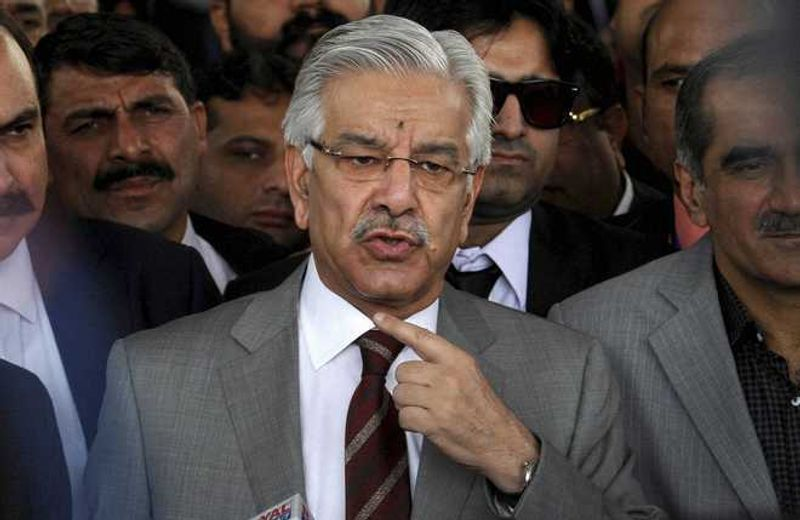
Pakistan’s Defence Minister Khawaja Asif has said that he was not in favour of Islamabad joining the Abraham Accords to normalise relations with Israel.
His comments came after US President Donald Trump asked countries involved in the peace talks with Iran to sign on to the Abraham Accords, which deal with establishing diplomatic, economic and security ties between Israel and Arab nations.
“Personally, I don’t think we should join any such accord which clashes with our fundamental ideologies,” Asif said during an interview on a talk show with Samaa TV on Monday night.
Among the negotiators, the UAE and Bahrain are already members of the Accords, and Trump expects Saudi Arabia, Qatar, Pakistan, Turkiye, Egypt and Jordan to sign up.
Pakistan’s Defence Minister also talked about his country’s long-standing position to not accept Israel until the Palestinian state on the pre-1967 borders with East Jerusalem as its capital is established.
“We have a very clear stance that it is not acceptable to us,” he said.
The minister also highlighted the question of credibility. “How will you sit with those people whose word cannot be trusted for even a single day?” he asked.
He also mentioned Pakistan’s passport, which says it is not valid for travel to Israel.
Asif is among the politicians who vehemently oppose any idea of normalisation of ties with the Jewish state. Last month, he called Israel a “curse for humanity”, while accusing it of carrying out genocide in the region.
India, US sign landmark pact to secure critical minerals supply chain amid China concerns
India, US sign landmark pact to secure critical minerals supply chain amid China concerns
US Secretary of State Marco Rubio highlighted strategic partnership between US and India and its importance for respective national interests of both countries
US Secretary of State Marco Rubio, left, and India’s External Affairs Minister S Jaishankar sign an MOU at Hyderabad House in New Delhi, on Tuesday. Image credits/Reuters
India and the US on Tuesday firmed up a key framework for cooperation in ensuring steady supplies of critical minerals, a move that comes amid growing concerns over China’s export controls on rare earth elements and strategic metals vital for global technology supply chains.
The framework on securing supplies of mining and processing of critical minerals was signed on the sidelines of the Quad foreign ministers’ meeting here.
“It is one more sign of how close our cooperation has been in a world where there are so many challenges but also so many opportunities,” he said.
In his remarks, Rubio highlighted the strategic partnership between the US and India and its importance for the respective national interests of both countries.
“It is a tangible example of that,” Rubio said referring to the inking of the pact.
“We are two countries that have strategic interests in ensuring reliable long-term access to critical minerals and supply chains that are important for our innovation economy,” he said.
A readout by the US said the agreement marked a milestone in the strategic partnership between the two nations to ensure that the foundational elements required for advanced technology and energy are available within trusted networks.
Through this framework, the US and India will engage in international efforts to protect sensitive supply chains from coercive market practices and reduce our collective vulnerability to single-source monopolies, it said.
The US government is mobilising unprecedented resources to secure critical mineral supply chains, supporting projects with more than USD 30 billion in investments, loans, and other support in partnership with the private sector.
These investments, along with Pax Silica and our reinvigorated diplomatic and commercial engagement are having a multiplier effect, mobilising private capital many times greater than government outlays, it said.
Rubio also mentioned the US-backed Pax Silica initiative.
“The groundwork was laid for this on February 4 when you joined us at the Critical Minerals Forum that we hosted in Washington DC,” he said, adding it gained momentum after India signed on to Pax Silica.
“Today, because we both have a strategic and shared interest in the fact that vibrant innovation economies such as ours cannot afford to leave the foundational materials of these industries vulnerable to single source monopoly that could deny us these things, not just in a time of conflict, but as a leverage point contrary to our sovereign national interests,” he said.
“I’m glad we were able to sign this because in addition to being an important document and important agreement, it brings a tangible example of the strategic partnership between the US and India,” he said.
The Pax Silica initiative was launched in December last year to build a secure, resilient, and innovation-driven supply chain for critical minerals and artificial intelligence (AI).
ndian Army brings mechanised infantry back under armoured corps in major rejig
In an important development, the Indian Army has decided to integrate its mechanised infantry battalions with the armoured corps, bringing both under the same directorate from June 1. They were once together, but were separated some years ago. Now, the Army feels that bringing both together in a single directorate will improve efficiency levels.
The first mech-inf regiment was constituted in 1969, and in the early days, existing battalions of premier infantry regiments (often, the first battalion of the regiment) like Madras, Sikh, Kumaon, Dogra and Jat as well as the Gorkha and Garhwal Rifles became mechanised. In fact, the first 14 battalions were all existing infantry battalions that were converted.
Currently, the Army has over 25 mechanised infantry battalions and most of them have Russia/Soviet designed BMP-II infantry combat vehicles as do the Guards units. Each battalion has roughly 750-800 officers and men and 45 BMP-IIs. They perform two major tasks. First, they allow the infantry to move with the tanks, ensuring much-needed mobility in the battlefield. When tanks are supported by infantry, they are often more effective as enemy infantry attacks from close using hand-held anti-tank weapons can be foiled. In the early stages of the war in Ukraine, the Russians used tanks without infantry and paid a heavy price. That they were moving down a road, one behind another, made them easier targets.Related video: Indian defence forces get new top commanders (WION)
Secondly, the BMP-IIs armour, though comparatively thin, allows protection to the infantry from enemy small-arms fire. A BMP– the Indian Army infantry combat vehicles made in Avadi, carries 6-7 soldiers apart from the crew and is often equipped with anti-tank weapons .
The amalgamation, highly placed sources said, was part of an “organisational rejig for better efficiency,” and in the past, they were part of the armoured corps.
Parliamentary Defence Standing Committee meeting
The Parliamentary Defence Standing Committee– members of the Lok Sabha and the Rajya Sabha were briefed in Srinagar, Jammu and Kashmir, about preparedness and the security situation by top-level armed forces officers. It is a 31-member committee, including 21 from the lower house. One of the members is the Congress leader, Rahul Gandhi, but he wasn’t present at the Srinagar meeting.
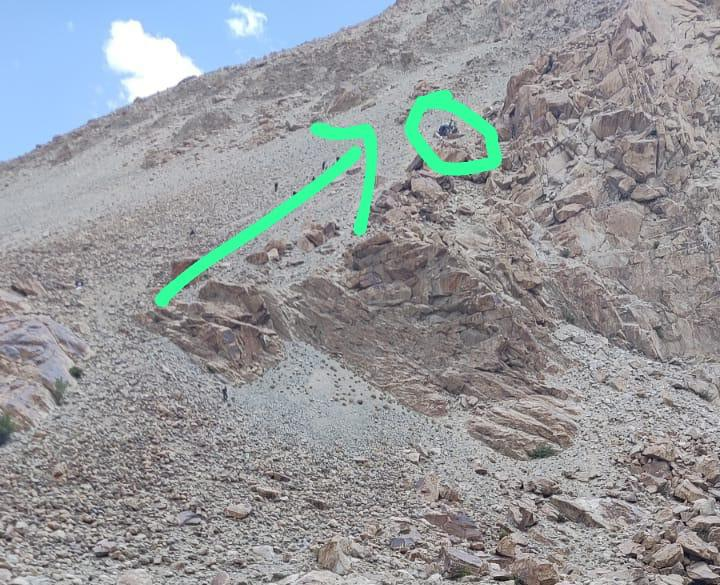
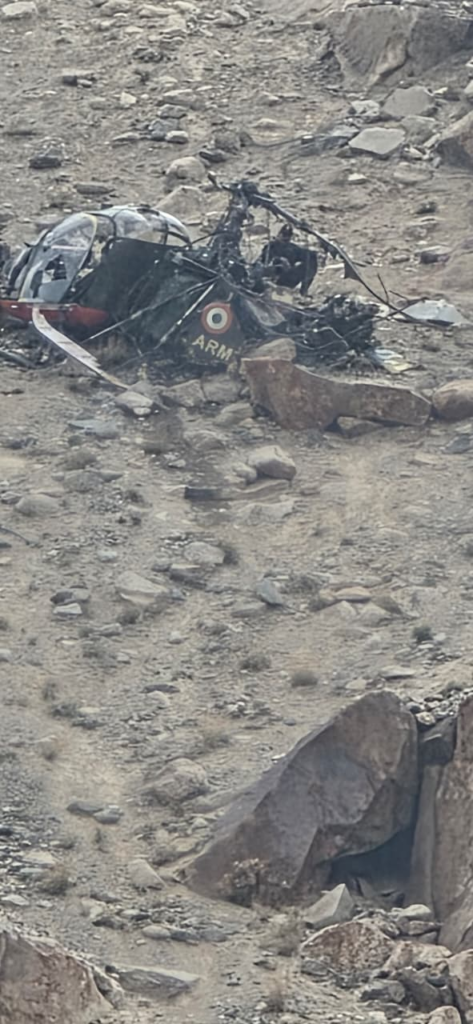
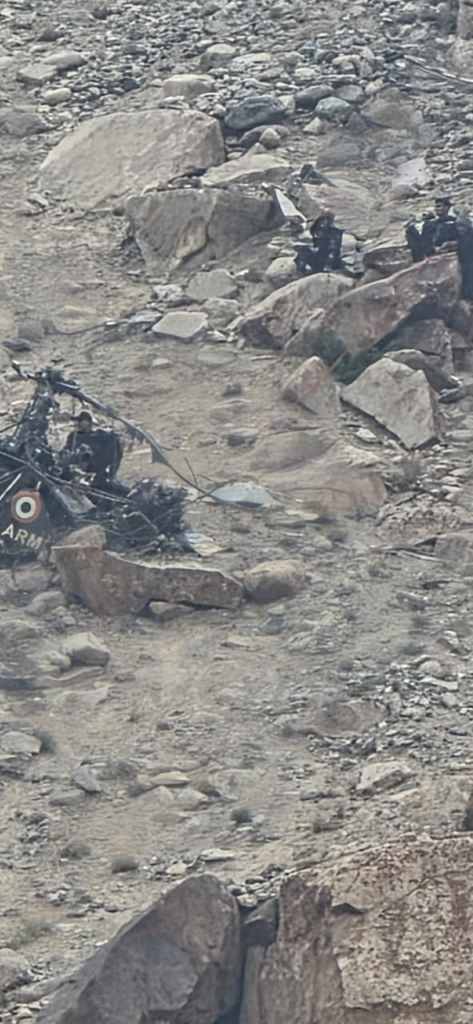
Cheetal crash with GOC 3Div on board . Looking at the place of crash , all 3 SUPER LUCKY, after hitting the hill side between 2 rock faces on soft ground, heptr slid down about 20-30 ft n got stuck on a singular rock n no fire. Gradient of the hill side about 60-70 degree, without that rock they would have gone down another hundreds of feet.
BSF’s first all-women expedition scales Mount Everest
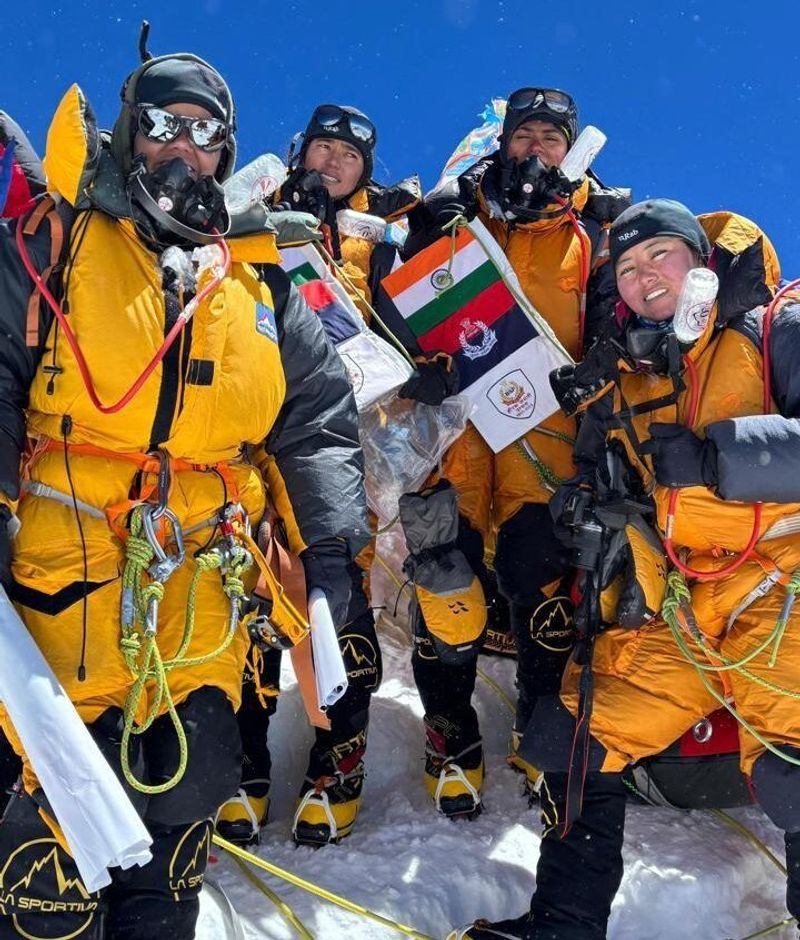
The BSF team comprising constable Kouser Fatima from Ladakh, constable Munmun Ghosh from West Bengal, constable Rabeka Singh from Uttarakhand and constable Tsering Chorol from Kargil scaled the world’s highest peak on Thursday morning.
Border Security Force personnel have earlier scaled 50 prominent peaks, including Mount Everest expeditions in 2006 and 2018
The first all-women mountaineering expedition to Mount Everest by the Border Security Force (BSF) successfully scaled the world’s highest peak on Thursday morning. The expedition, christened ‘Mission Vande Mataram’, is part of the BSF’s Diamond Jubiliee celebrations.
The team comprises constable Kouser Fatima from Ladakh, constable Munmun Ghosh from West Bengal, constable Rabeka Singh from Uttarakhand and constable Tsering Chorol from Kargil. Representing diverse regions of the country and coming from humble backgrounds, the four mountaineers embody the spirit of courage, determination, discipline and dedication to the service of the nation.
Following the successful summit, Praveen Kumar, Director-General, BSF, interacted live with the team through a radio link from the peak that rises 8,848.86 metres above sea level, and congratulated them on behalf of the entire force and the nation.
The BSF chief praised the mountaineers for their exemplary courage, resilience and unwavering determination, describing the expedition as a shining symbol of the indomitable spirit, professionalism and dedication of BSF personnel, a BSF spokesperson said.
Promoting the motto “Clean Himalaya – Clean Glaciers”, the BSF mountaineering contingent will collect 500 kg of waste from higher camps on Mount Everest and transport it to Namche Bazaar for proper disposal, reaffirming the force’s commitment to environmental conservation.
The expedition aims to promote women’s empowerment while strengthening high-altitude operational capabilities, resilience, and an adventure-driven mindset among women personnel, the BSF said. The expedition also reflects the growing role and capabilities of women personnel of the BSF in challenging operational and adventure activities.
The team had undergone a specialised training programme for the expedition under the aegis of the Atal Bihari Vajpayee Institute of Mountaineering and Allied Sports (ABVIMAS), Manali. This mission was flagged off from New Delhi on April 6.
In continuation of this mission, the BSF’s all-men mountaineering team will also attempt to summit Mount Lhotse in the next 2-3 days. Located on the border of Nepal and Tibet, the 8,516-metre high peak is the world’s fourth-highest, and directly connected to Mount Everest via the South Col, from where the women’s team had launched their ascent.
BSF personnel have earlier scaled 50 prominent peaks, including expeditions to Mount Everest in 2006 and 2018.
Raised in 1965, the BSF is responsible for the peacetime management of the International Border with Pakistan in the west and Bangladesh in the east. It is also co-deployed with the Indian Army along the Line of Control in Jammu and Kashmir, serving in high altitude areas like Kargil.
In first drill of its kind, Army hosts militaries from 12 countries for joint training
The drill will also focus on counter-terrorism operations in semi-mountainous and jungle terrain
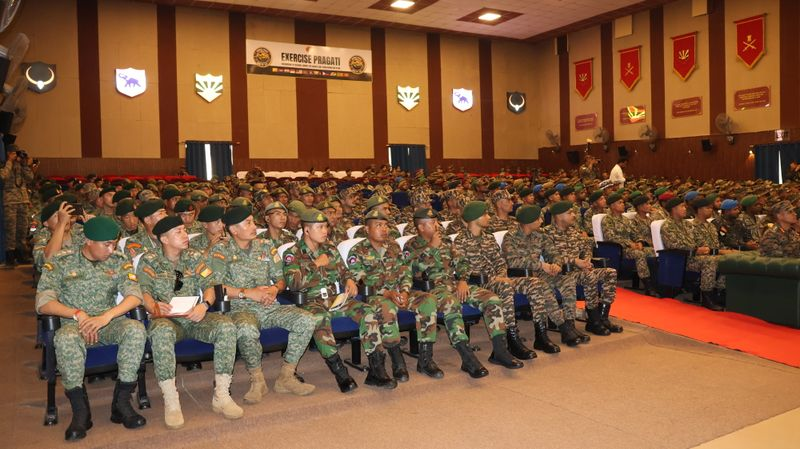
A two-week long multilateral training exercise involving the militaries from 12 friendly countries, PRAGATI 2026, commenced on Wednesday at the Umroi Military Station in Meghalaya. This is the first such exercise to be hosted by the Indian Army.
The exercise’s constituent nations include Bhutan, Cambodia, Indonesia, Laos, Malaysia, Maldives, Myanmar, Nepal, Philippines, Seychelles, Sri Lanka and Vietnam.
PRAGATI, which stands for Partnership of Regional Armies for Growth and Transformation in the Indian Ocean Region, provides a common platform for participating armies to engage in professional exchange, learn from one another’s experiences and build closer military-to-military ties.
The exercise’s stated objectives include enabling seamless coordination among participating nations in joint operations and identifying common areas of cooperation, sharing expertise and establishing an institutionalised mechanism for exchange of best practices evolved through individual experiences, strengthening defence ties and camaraderie through joint training and cultural exchange, and evolving common concepts for management and sharing of intelligence in a multinational environment, according to an official statement.
The drill will also focus on counter-terrorism operations in semi-mountainous and jungle terrain. The training programme will include joint planning exercises, tactical-level drills and coordinated operations designed to improve adaptability, endurance and tactical proficiency of participating troops. Emphasis will be laid on physical fitness, discipline and coordination while operating in challenging conditions.
As part of the exercise, Indian technology and defence companies will showcase indigenous equipment and innovations under the Atmanirbhar Bharat initiative, providing a platform for knowledge exchange and highlighting India’s growing capabilities in defence production, innovation and self-reliance.
The opening ceremony was attended by senior military officials and dignitaries. In his address, Major General Sunil Sheoran, Additional Director General Infantry, highlighted the importance of collective engagement in addressing contemporary security challenges, a defence spokesperson said.
He encouraged all participants to engage with openness, mutual respect and a willingness to learn from one another’s experiences, while highlighting that the strengths and perspectives brought by each nation would contribute meaningfully towards achieving the collective objectives of the exercise.
Besides military drills and wargames, a key component of the event is a two-day industry exposition, highlighting the Army’s capabilities and fostering industrial partnerships with ASEAN nations. During exercises with foreign countries, military contingents are able to effectively highlight capabilities of Indigenously manufactured hardware and equipment and provide a realistic hand-on experience.
Unmanned aerial systems and countermeasures, autonomous surveillance and intelligence gathering systems and robotics, including unmanned ground vehicles, robotic mules for logistics and reconnaissance and remotely operated martitime systems, AI-based capability enhancement, precision ammunition, electronic and laser warfare and cyber defence are among the major domains to be showcased.
Human survivability and solutions like equipment sustenance, parachutes and multispectral camouflage nets, land-based, naval and aerial surveillance, spatial intelligence, smart surveillance and perimeter security, secure communication and satellite systems, medical equipment and personal protection gears are other products.
Besides the Indian Air Force and the Indian Navy, representatives from the border guarding forces and the state police forces would also participate in the event.
India has a structured programme for conducting bilateral and multilateral training exercises with many foreign countries to boost interoperability, enhance combat skills, and strengthen defence cooperation. Several such events are held in India and overseas every year involving all three services.
Former J&K Governor says if India could have policies on health, agriculture, industries, international trade, nuclear and telecom sectors, then why not on national security?
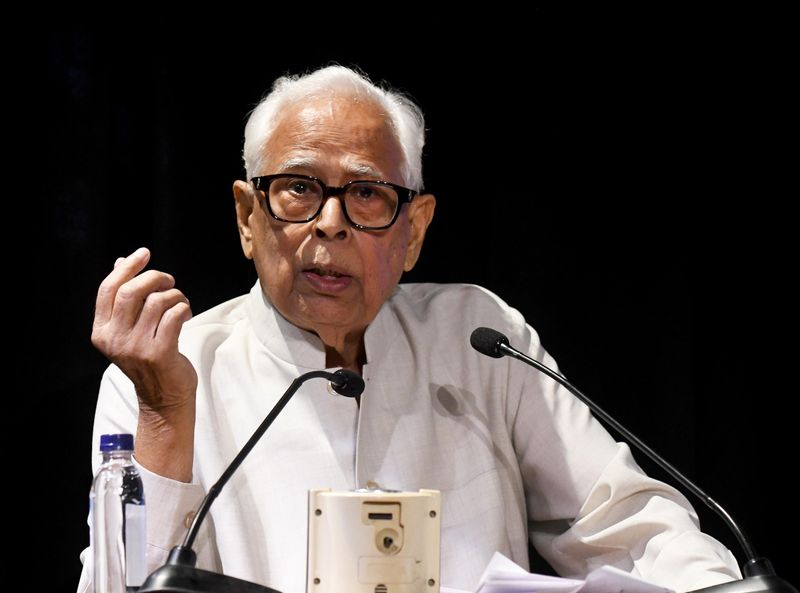
India needs to have a declared national security policy and a specialised cadre for national security administration, former Defence Secretary NN Vohra said on Friday, while delivering the keynote address at an event at the India International Centre (IIC).
The discussion titled “Civil Military Relations and National Security” saw former Navy Chief Admiral Arun Prakash, former Northern Army Commander Lt Gen DS Hooda and former Defence Secretary Sanjay Mitra explore a slew of national issues such as the impact of theatre commands, slowness in the acquisition process and the role of the civilian bureaucracy in the Ministry of Defence. Former Foreign Secretary Shyam Saran moderated the discussion.
Vohra, also a former Governor of Jammu and Kashmir, set the ball rolling by saying, “There is no substitute for not having a national security policy,” adding that if India could have policies on health, agriculture, industries, international trade, nuclear and telecom sectors, then why not on national security?
Such a policy, he reasoned, would identify national security priorities, including things that must not be done and threats that must be guarded against.
“The time has come to have a national security administration service that runs institutions, bodies and agencies concerned with national security,” said Vohra.
Admiral Arun Prakash said civilian control over the military meant that political leadership exercised authority, though the Defence Minister often delegated powers to the bureaucracy. “Parliament has never discussed the defence budget, nor sought a white paper,” the Admiral pointed out.
He also backed the idea of a national security policy and a national security administration cadre. He suggested that the government should define the status of the military, noting that it was neither classified as an all-India service nor as a Group-A service.
On acquisitions, he said, “For 40 years, we have not been able to produce a jet engine or marine engine. That is where we stand on self-reliance.”
General Hooda commented on the transformed nature of political-military relations, saying, “We now have political leadership that is less risk-averse in using military force.”
“A crisis will occur periodically and escalate rapidly. Crisis management needs good military-civilian relations,” he added.
Former Defence Secretary Sanjay Mitra offered a different perspective on the idea of a national security policy. “I don’t think a written-down document adds much value. It certainly is not going to ensure funds. It will only put pressure on the civilian and political class, which is well known to be unwilling to take that pressure,” he said.
The panel also discussed the role of the Chief of Defence Staff (CDS) and the theatre commands. Vohra asked, “Who will the theatre commander talk to? If operations are ongoing and he faces a problem, whom will he approach — the Army Chief, the CDS or the Defence Minister?”
General Hooda said theatre commands would change the route of military advice to the political leadership.
“At the moment, force employment is controlled from New Delhi through the service chiefs. A theatre commander sitting in Lucknow will be empowered to employ force,” he said.
Vohra said the CDS currently enjoyed no operational authority and yet he was required to introduce jointness and integrating the combat capability of the three services. “He is a four-star officer and his peers, the three service chiefs, are equal in rank,” Vohra noted.
“After getting four-star rank, you are supposed to coordinate, influence and direct the thought processes of three serving chiefs who are also four-star officers. These are large issues which are bothersome,” he added.
Describing the role of the CDS as crucial, Vohra said it had to be within the framework a certain statute of government. “So it has a certain sanctity and a certain lasting quality,” he suggested.
Mitra, who was Defence Secretary during the Balakot air strike in February 2019 and the Doklam stand-off with China in 2017, said: “I can tell you that the Chief of Staff Committee works. Earlier, it used to be headed by one of the three service chiefs by rotation. Since January 2020, it has been headed by the CDS.”
India ramps up multilateral military outreach with Army drill, Navy mission
Army launches multinational ‘Pragati’ exercise in Meghalaya as INS Sunayna returns after seven-week Indian Ocean deployment with foreign sailors onboard
India’s multi-lateral push on military exercises, with a focus on the extended neighbourhood, saw two separate developments on Wednesday.
An Indian Navy warship, INS Sunayna, with sailors from 16 countries, completed its unique seven-week mission, while the Army announced the start of a two-week multinational exercise involving contingents from 12 countries.
The Naval warship’s mission, named ‘Indian Ocean Ship Sagar’, concluded with the vessel docking in Kochi, Kerala, on Wednesday. It had been flagged off from Mumbai on April 2 by Minister of State for Defence Sanjay Seth.
During the deployment from April 2 to May 20, INS Sunayna made port calls at Colombo in Sri Lanka, Phuket in Thailand, Jakarta in Indonesia, Singapore, Chittagong in Bangladesh, Yangon in Myanmar and Male in Maldives.
Joint exercises and professional exchanges onboard and ashore provided comprehensive training to Indian Navy and foreign sailors from UAE, Indonesia, Malaysia, Myanmar, Singapore, Thailand, Maldives, Seychelles, Kenya, Mauritius, Mozambique, South Africa, Tanzania, Timor-Leste and Bangladesh.
Far away from Kochi, the Indian Army on Wednesday said the multinational exercise named ‘Pragati’ is being conducted in Meghalaya, in the north-eastern part of the country.
Contingents from the armies of 12 friendly nations are participating: Bhutan, Cambodia, Indonesia, Laos, Malaysia, Maldives, Myanmar, Nepal, Philippines, Seychelles, Sri Lanka and Vietnam.
Both military drills — the Naval sail and the Army exercise — aim to improve interoperability with international partners. Both exercises include countries that are involved in maritime disputes with China.
The Army’s exercise named ‘Pragati’ is an acronym for ‘Partnership of Regional Armies for Growth and Transformation in the Indian Ocean Region’.
The Ministry of Defence said the objective of the exercise includes enabling seamless coordination among participating nations in joint operations and identifying common areas of cooperation. The two-week exercise will focus on counter-terrorism operations in semi-mountainous and jungle terrain.
The training programme will include joint planning exercises, tactical-level drills and coordinated operations designed to improve adaptability, endurance and tactical proficiency of participating troops.
As part of the exercise, Indian technology and defence companies will showcase indigenous equipment and innovations under the Atmanirbhar Bharat initiative.
Meanwhile, the Naval warship that concluded its seven-week deployment demonstrated to participating countries how to tackle a range of challenges, including maritime security threats, piracy, illegal fishing, trafficking, natural disasters and the growing need for safe and secure sea lines of communication.
Prior to sailing out, there was a two-week harbour phase at the Southern Naval Command in Kochi from March 16 to 29. This was designed to build foundational and advanced competencies across a broad spectrum of naval operations.
A key highlight of the training was the extensive use of state-of-the-art simulators and modern training infrastructure, enabling realistic, scenario-based learning.
These advanced facilities provided participants with hands-on exposure to complex maritime situations, enhancing decision-making and operational readiness in a controlled environment. The integration of theoretical instruction with practical application ensured a holistic learning experience aligned with contemporary maritime challenges.
State Stalwarts
DEFENCE MINISTER
Minister Rajnath Singh
ALL HUMANS ARE ONE CREATED BY GOD
HINDUS,MUSLIMS,SIKHS.ISAI SAB HAI BHAI BHAI
CHIEF PATRON ALL INDIA SANJHA MORCHA
LT GEN JASBIR SINGH DHALIWAL, DOGRA
SENIOR PATRON ALL INDIA SANJHA MORCHA
MAJOR GEN HARVIJAY SINGH, SENA MEDAL ,corps of signals
.
.
PATRON ALL INDIA SANJHA MORCHA
MAJ GEN RAMINDER GURAYA ,MADRAS REGIMENT
sanjhamorcha303@gmail.com
PRESIDENT SOUTH ALL INDIA SANJHA MORCHA
COL SS RAJAN BOMBAY SAPPERS,
PRESIDENT UTTARAKHAND ALL INDIA SANJHA MORCHA
COL B M THAPA ,BENGAL SAPPERSS
PRESIDENT HARAYANA STATE CUM COORDINATOR ESM
BRIG DALJIT THUKRAL ,BENGAL SAPPERS
PRESIDENT TRICITY
COL B S BRAR (BHUPI BRAR)
PRESIDENT CHANDIGARH ZONE
COL SHANJIT SINGH BHULLAR
.
.
PRESIDENT PANCHKULA ZONE AND ZIRAKPUR
COL SWARAN SINGH
INDIAN DEFENCE FORCES
DEFENCE FORCES INTEGRATED LOGO
INDIAN AIR FORCE
Air Officer C-in-C WESTERN AIR COMMAND
AIR MSHL S PRABHAKARAN AVSM VM
AOC-IN-C, EASTERN AIR COMMAND
Air Marshal Inderpal Singh Walia
AOC-in-C SOUTH WESTERN AIR COMMAND
Air Marshal Vikram Singh
AOC-IN-C, SOUTHERN AIR COMMAND
Air Marshal J.Chalapati
AOC-IN-C TRAINING COMMAND
AIR MARSHAL SK GHOTIA VSM
AOC-IN-C MAINTENANCE COMMAND
Air Marshal Jagdish Chandra
Flag Officer Commanding in Chief, Western Naval Command
ice Admiral R Hari Kumar, PVSM, AVSM, VSM
Flag Officer Commanding in Chief, Eastern Naval Command
Vice Admiral Sanjay Bhalla, AVSM, NM
Flag Officer Commanding in Chief, Southern Naval Command