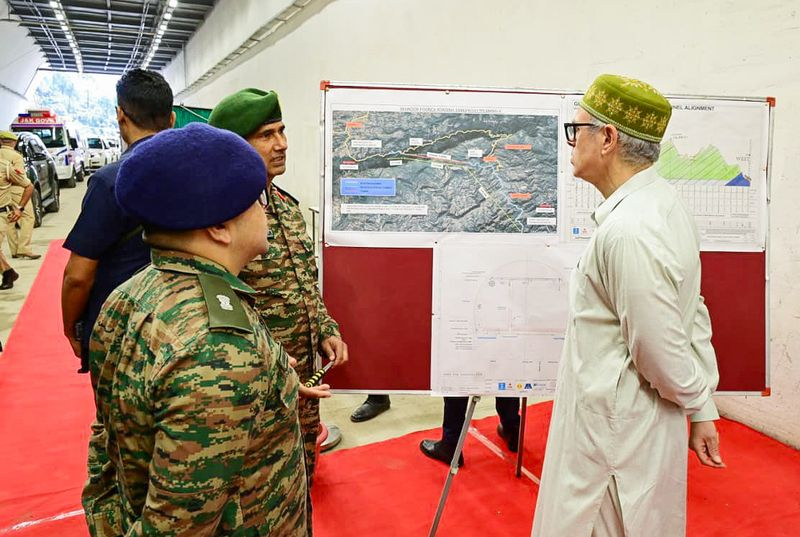
CM Omar Abdullah on his way to Nowshera inspects the ongoing works on the Sungal Tunnel project and reviews the progress on site.




















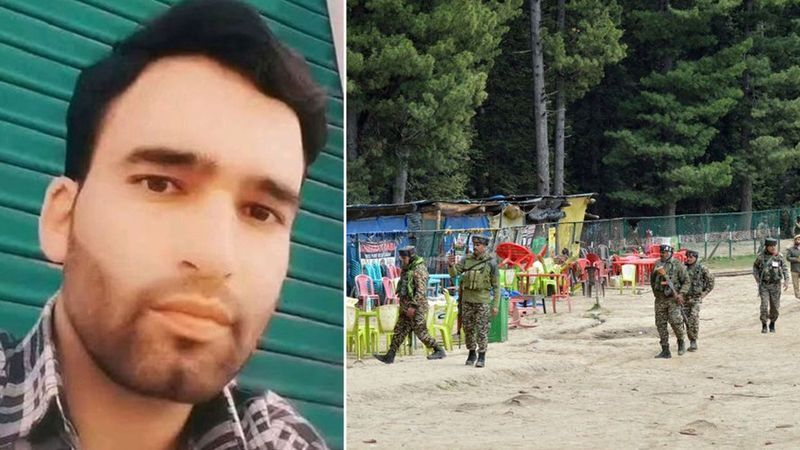
Maharashtra Deputy Chief Minister Eknath Shinde on Tuesday handed over a newly constructed house to the family of Adil Shah, the lone local victim of the Pahalgam terror attack, fulfilling a promise he made last year.
Adil was a ponywallah who, along with 25 tourists, lost his life in the attack by a group of terrorists in Baisaran Valley, a popular tourist spot, on April 22, 2025.
The Shiv Sena organised a function in Adil’s native Hapatnar village here on the eve of the first anniversary of the attack. Shinde participated virtually in the function.
Maharashtra ministers Sanjay Shirsat and Yogesh Ramdas Kadam were present in Hapatnar to hand over the house built as a tribute to Adil.
His father, Syed Haider Shah, said the family is thankful to Shiv Sena chief Shinde for the house and the financial assistance.
He added that they are also thankful to the J-K Government for providing a job to Adil’s wife and his younger brother.
“We are very grateful to Shinde ji. After the incident, he sent his aides to our home with financial help and promised to build a house. He has built the house and given it to us, along with financial support,” Syed Haider said.
He said the outreach from the Maharashtra deputy CM has continued beyond initial assistance. “He (Shinde) called us to Srinagar for a meeting, and his team remains in touch even now. One of his aides told us, ‘We are like your sons…I am also your Adil.’ That gives us strength,” Syed said.
The family has also received support from the government, including a job for Adil’s wife and financial aid. However, Shah said no assistance can compensate for the loss of a son. “No matter what is given, the person will not come back. There is no peace,” he said.
Recalling his son’s sacrifice, Syed said it stood as an example of valuing humanity above religious divisions.
“He did not care for his own life. He gave his life to save others. He did not see Hindu, Muslim or Sikh. He showed that humanity comes first, that the same blood runs through everyone’s veins,” the grieving father said.
Syed said he takes pride in the fact that Adil’s actions demonstrated through his sacrifice what humanity stands for.
Adil, he added, was the backbone of the family. “All responsibilities were on him…taking care of parents, brothers, everyone. But this was Allah’s will.” Syed said memories of him remain vivid even after a year.
“We remember him every moment. When we see his photos at home, we remember him even more, he said, adding that this time of the year he used to go to Pahalgam. Today, he is buried in the ground.
“His sense of humour was very good. He used to keep laughing and playing. You wouldn’t even feel that he was the elder brother,” Syed said.
The family takes pride that Adil did not care for his own life, he said. “There were thousands of other labourers too – horse riders, the ones who carry loads, and the hotel people – everyone saved their own lives and ran away.
But Adil gave his own life for the people who were there, the father said.

Seventy-five years after India played a stellar role in non-combat role during Korean war, Defence Minister Rajnath Singh will visit South Korea next month for the joint inauguration of a War Memorial being built to commemorate India’s participation in the War.
When the Korean War broke out in June 1950, India, then a newly independent country, tested out its nascent foreign policy of Non-Alignment.
While India did not contribute combat troops, its influence on the war’s outcome was noted globally. Prime Minister Jawaharlal Nehru made the strategic decision not to send combat battalions, fearing that military involvement would compromise India’s neutral status. Instead, India dispatched the 60th Parachute Field Ambulance, an airborne medical unit. Led by Lt Col AG Rangaraj, the unit arrived in November 1950. Their impact was immediate: called ‘Parachute Doctors’, they frequently dropped behind or near enemy lines to treat the wounded.
By 1952, the war had reached a stalemate. The primary obstacle to a ceasefire was the issue of Prisoners of War (POWs). India proposed a Neutral Nations Repatriation Commission (NNRC). The plan suggested that prisoners who refused to go home should be handed over to a neutral body to decide their fate.
Initially rejected by both sides, the resolution eventually became the blueprint for the 1953 Armistice Agreement. India’s ability to talk to both Washington and Beijing—at a time when they were not talking to each other—was the key that unlocked the peace process.

The Ministry of Defence today inked a Rs 975 crore contract for equipment used by Army tanks to breach enemy minefields. Called the ‘Trawl assembly’, this is used by Army’s T-72 and T-90 tanks.
The Ministry of Defence said two contracts – one with Bharat Earth Movers Limited (BEML) and the other with Electro Pneumatics and Hydraulics (India) Private Limited — for the procurement of ‘Trawl assembly’ at an approximate cost of Rs 975 crore.
The contracts were inked in the presence of Defence Secretary Rajesh Kumar Singh.
The ‘trawl’ is a critical equipment developed by DRDO to enhance the minefield breaching capability of the Indian Army. It would generate additional capability of creating ‘vehicle safe lanes’ through minefields with anti-tank mines. “It would enhance the operational effectiveness of the Indian Army,” the MoD said.
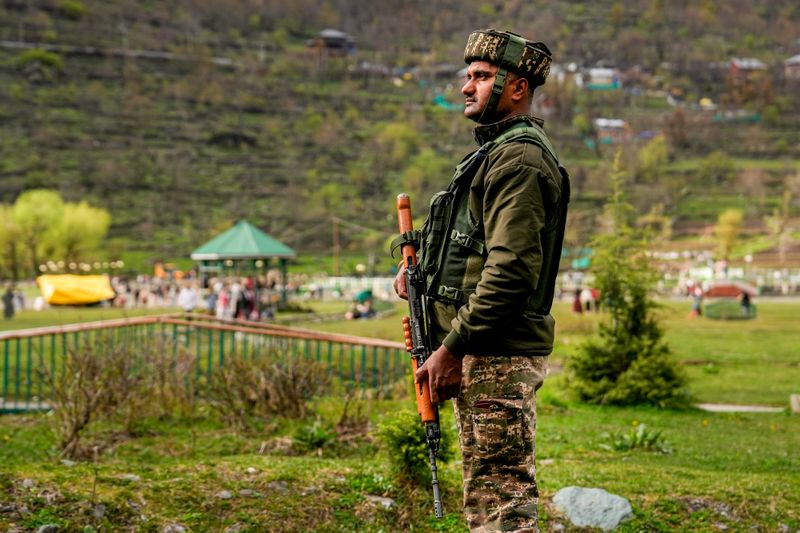
Soon after terrorists targeted tourists in the Baisaran valley in Pahalgam, killing 25 tourists and a local, on April 22 last year, sending shockwaves across the nation, the primary task before the security forces was to trace the attackers.
With limited information about their identity, the Jammu and Kashmir Police, along with other security agencies, took time to gather intelligence.
As the Pahalgam attack completes one year on Wednesday, The Tribune tracks how the security forces eventually zeroed in on the terrorists.
Sources said a few days after the attack, the first trail emerged. Technical inputs were received from South Kashmir, following which a massive search operation was launched in the upper reaches of Hapatnar. The operation continued for around two weeks. Although it yielded limited success, inputs indicated that the attackers were moving.
By mid-June, temporary operating bases were established in the upper reaches of Dachigam and adjoining dense forests, which are connected to South Kashmir forests.
The security forces faced a major challenge as the attackers were operating from deep forest areas, marking a shift in militancy patterns away from urban setups where intelligence inputs are more readily available.
The sources said the first major breakthrough came in the second week of July when technical inputs regarding the militants were tracked, confirming their presence in the Dachigam belt.
Subsequently, multiple high-level meetings were held and extensive mapping of the area was carried out by joint forces in coordination with central agencies. Given the dense and vast terrain, multiple teams were deployed simultaneously to comb the area.
The sources said the region was divided into sectors, with joint teams assigned to each. “Teams would remain deployed for days, carrying out sustained search and scanning operations before rotating back,” they said.
After days of sustained effort, contact was eventually established between the militants and an Army Special Forces unit operating in the area. “It was a swift operation, and the terrorists were neutralised, marking a significant success,” the sources said.
The identity of the slain militants responsible for the Pahalgam attack was later confirmed through multiple pieces of evidence. Union Home Minister Amit Shah told Parliament that three Pakistani terrorists — Faisal Jatt, alias Suleman Shah, Habeeb Tahir, alias Jibran, and Hamza Afghani — identified as being involved in the attack, were killed by the security forces under Operation Mahadev in July.
Officials said ballistic analysis showed that the bullet shells recovered from Pahalgam matched the weapons recovered in Dachigam. Technical inputs also matched those recorded on the day of the attack.
Questioning of a Gujjar family that reportedly provided food and shelter to the attackers further confirmed that the Dachigam militants were the same who carried out the Pahalgam attack.
In August last year in Delhi, the Home Minister felicitated the joint personnel involved in the operation, recognising their coordinated efforts and success.
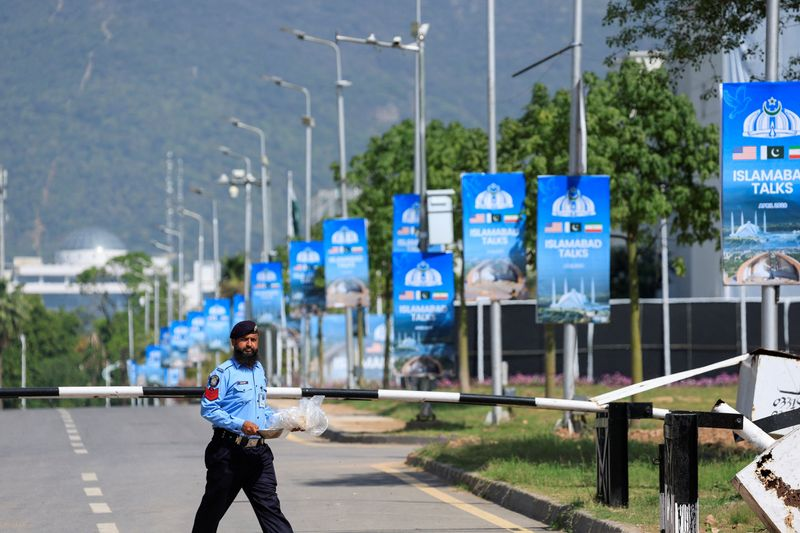
US Vice-President JD Vance’s visit to Islamabad for peace talks with Iran to end the seven-week war has been put on hold after Tehran failed to respond to American negotiating positions, the New York Times reported on Tuesday.
Vance was scheduled to depart on Tuesday morning for Islamabad, where talks were set to resume on Wednesday, the day the fragile ceasefire between the US and Iran is set to expire. Without an Iranian response, the diplomatic process was in effect paused, though the trip had not been cancelled, a US official was quoted in the New York Times report.
As Tehran failed to respond, US President Donald Trump threatened to bomb Iran if it did not agree to a deal before the end of the two-week ceasefire, even as Pakistan urged the two sides to extend the truce and give diplomacy a chance. An Iranian Foreign Ministry spokesman said “no final decision” had been taken on whether to attend the talks.
Even as diplomatic channels remained active, indications from Tehran pointed towards preparations for a possible resumption of hostilities. Reports suggested that Iran had undertaken military redeployments over the past two weeks and drawn up a fresh list of targets, anticipating that negotiations may collapse amid disputes over US demands and a reported naval blockade.
Trump said on Tuesday that Iran would send a delegation for talks in Islamabad, but made it clear that Washington was prepared to resume bombing if the deal was not reached before the end of the ceasefire deadline. “They have no choice but to send them…. I think we’re going to end up with a great deal,” Trump said in an interview, projecting confidence while simultaneously signalling readiness for military action.
Underscoring the narrowing diplomatic window, Trump indicated that he was reluctant to extend the ceasefire even if talks showed progress. “We don’t have that much time.… They have to negotiate,” he said, adding that the US was in a “very strong negotiating position” after weeks of military operations that he claimed had significantly degraded Iran’s capabilities. In a stark warning, Trump suggested potential strikes on critical infrastructure, including logistical networks used for missile movement, and asserted that the US military was “ready to go”.
Adding to the diplomatic flux, Pakistan said it was still awaiting confirmation from Iran on participation in the proposed peace talks, effectively placing the onus on Tehran as the ceasefire deadline loomed. Attaullah Tarar, Pakistan’s Minister for Information and Broadcasting, said Islamabad was in “constant touch” with Iranian authorities and was making “sincere efforts” to bring them to the negotiating table.
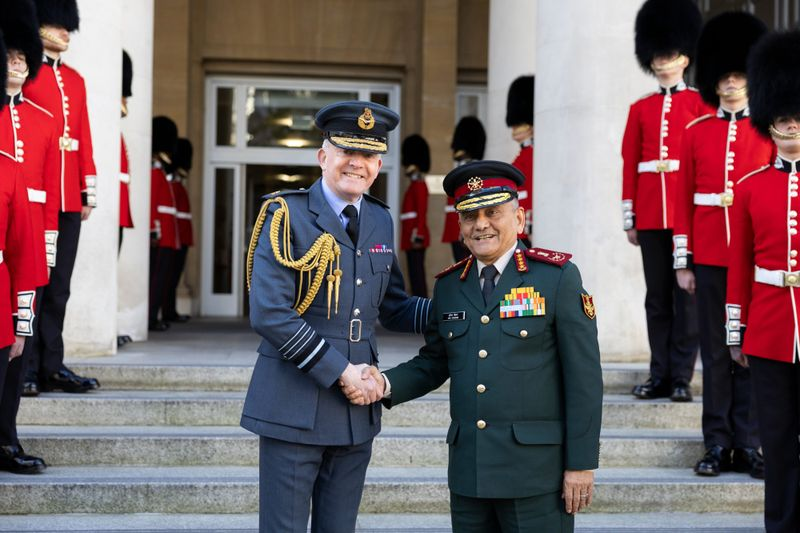
ndia and the UK have discussed means to deepen defence cooperation to advance defence industrial and intelligence collaboration and cyber cooperation.
India’s Chief of Defence Staff General Anil Chauhan and his UK counterpart Air Chief Marshal Sir Richard Knighton have discussed these issues at a meeting in UK. The Air Chief Marshal posted on X: “Great to discuss defence and security cooperation with India’s Chief of Defence Staff General Chauhan today”.
The Office of the Indian CDS posted on X that “the visit will further deepen defence cooperation”.
General Anil Chauhan is on a three‑day visit (April 19-21) to the UK. The two military commanders have discussed deepening cooperation across training, operations and defence industry partnerships.
Senior UK civil and military leaders will also interact with General Chauhan during his visit. Representatives of the British defence industry will meet him to progress talks on greater defence co-production between the two countries. General Chauhan will also be given a tour of the Royal College of Defence Studies, where he will meet a multinational cohort of students.
This is the first official visit by an Indian CDS to the UK and marks the fifth senior UK-India military engagement this year, following the UK Chief of the Air Staff Air Chief Marshal Harv Smyth’s visit to India in March.
Lindy Cameron, British High Commissioner to India, said: “We are stepping up cooperation to strengthen interoperability, spur innovation and support a free, open and secure Indo‑Pacific.
“India is a key defence partner for the UK. We will continue to build on this momentum in the months ahead,” Cameron said.
The UK and India had launched a 10‑year Defence Industrial Roadmap under the Vision 2035 agreement to support growth, strengthen security and contribute to international stability. The UK Ministry of Defence has set up a dedicated programme office, Defence Partnership‑India, to drive bilateral defence collaboration.
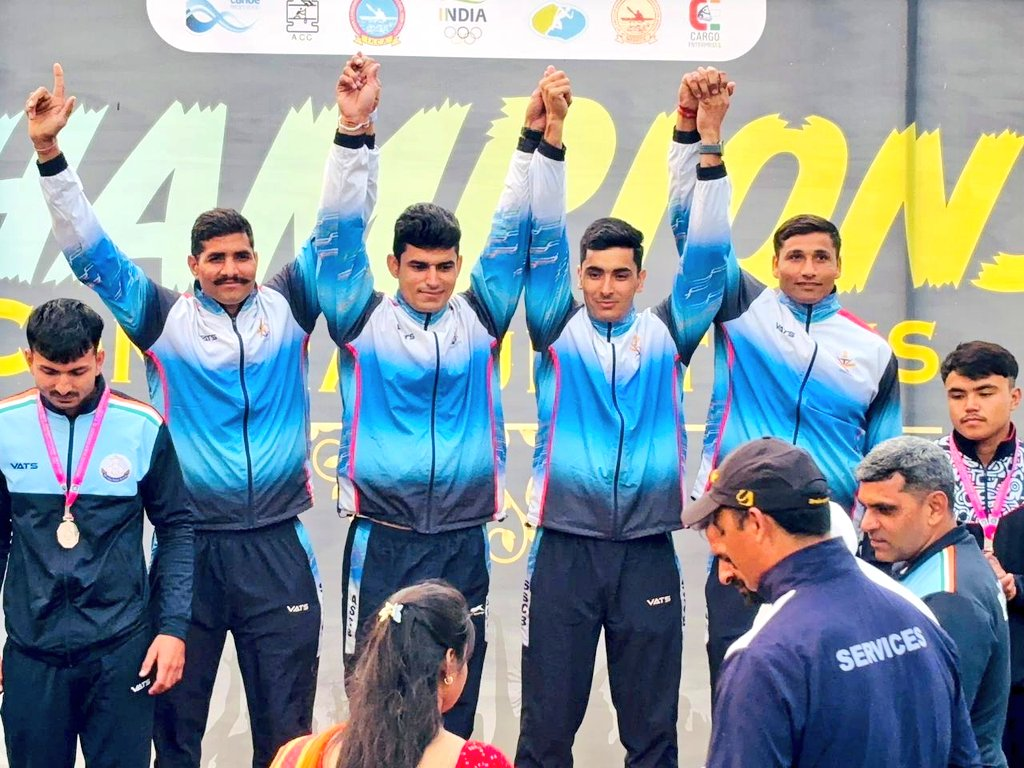
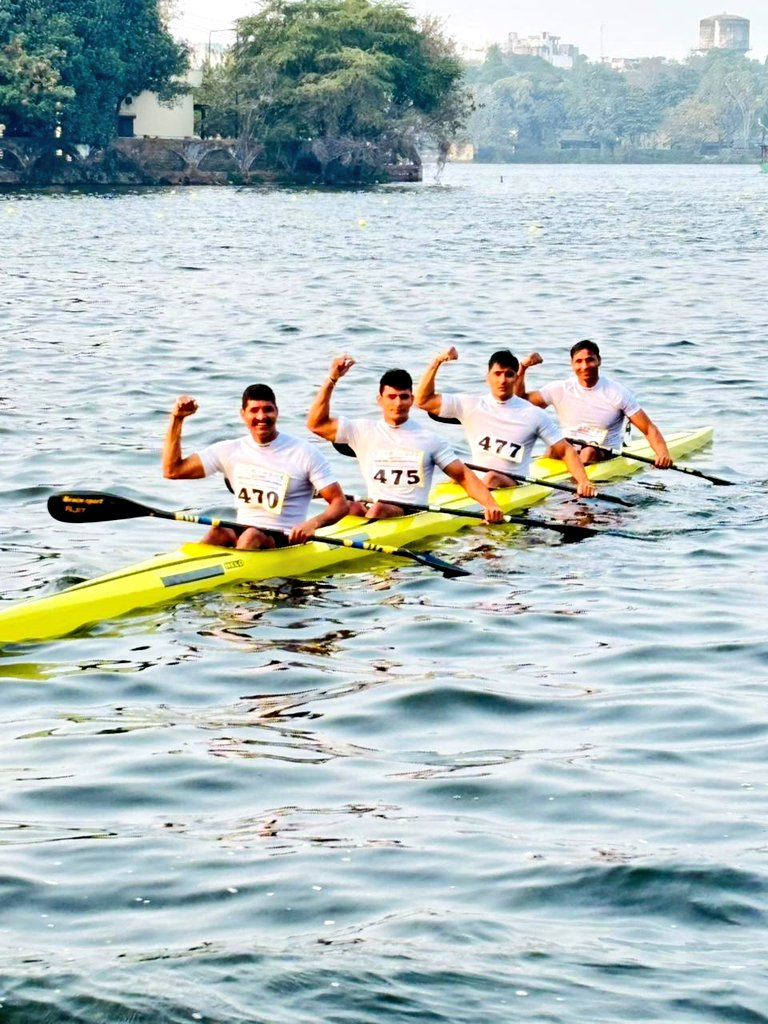
The Kayaking & Canoeing Node of BEG & Centre, Roorkee shines at the 36th Senior National Kayaking & Canoeing Championship in Bhopal.With an incredible haul of 7 GOLD 🥇 and 1 BRONZE 🥉medals, these water warriors have proven their mettle once again. The “Sarvatra” spirit shines bright on the water. 🇮🇳
The Kayaking & Canoeing Node of BEG & Centre, Roorkee shines at the 36th Senior National Kayaking & Canoeing Championship in Bhopal.With an incredible haul of 7 GOLD 🥇 and 1 BRONZE 🥉medals, these water warriors have proven their mettle once again.The “Sarvatra” spirit shines bright on the water. 🇮🇳


Received from


Colonel Mukul@Warrior_Mukul
A Soldier with more than three decades of Active Combat and Judicial Service to the Nation who CANNOT tolerate Injustice. Re-Attired now.






























