










Sanjha Morcha

India Strengthens Orbital Surveillance With Space Tracking Radar In Northeast And Telescope In Ladakh

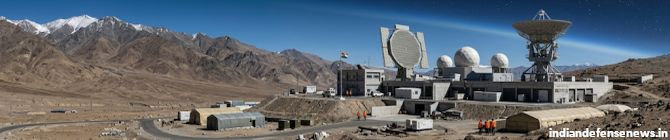
The Indian Space Research Organisation (ISRO) is expanding its network of facilities to track space objects in Earth’s orbit, with plans to establish a phased array radar in the north-eastern region of India and an optical telescope at Hanle in Ladakh.

These developments are part of a broader effort to enhance India’s Space Situational Awareness (SSA) capabilities at a time when Low Earth Orbit (LEO), ranging between 500 and 1,000 kilometres above Earth, is becoming increasingly congested with satellites and debris, raising the risk of accidental collisions.

Currently, ISRO operates the Multi-Object Tracking Radar (MOTR) at the Satish Dhawan Space Centre in Sriharikota. This L-Band Active Phased Array Radar is capable of tracking multiple objects simultaneously.

It can monitor objects with a radar cross section of 0.25 square metres at distances of up to 1000 kilometres. The MOTR plays a crucial role in tracking Indian rocket bodies and satellites, ensuring operational safety in orbit.

The upcoming radar in the Northeast is being indigenously developed, with its design and review completed by a national-level expert committee in 2025. Alongside this, the optical telescope at Hanle is being installed in the high-altitude cold desert region of Ladakh, chosen for its clear skies and minimal atmospheric interference. Optical telescopes, unlike radars, can only operate at night and rely on detecting sunlight reflected off satellites and other space objects.

ISRO also highlighted the refurbishment of the Baker Nunn Schmidt Telescope (BNST) at Nainital, in collaboration with ARIES. Once operational, this telescope will further strengthen India’s ability to track space objects. Together, these facilities will provide a complementary mix of radar and optical systems, essential for comprehensive SSA.

Radars, which use radio waves and their reflections to estimate the position of objects, have the advantage of functioning both day and night. Optical telescopes, however, are limited to night-time operations but are invaluable in detecting objects at higher altitudes.

By combining these technologies across multiple locations, ISRO aims to build a robust network capable of monitoring satellites and debris across different orbital ranges.

SSA involves tracking, monitoring, and predicting the positions of satellites and debris to ensure safe and sustainable space operations. It requires data gathered from ground-based sensors and telescopes to avoid collisions and assess risks to space assets.

ISRO’s expansion of facilities reflects India’s growing commitment to safeguarding its space infrastructure and contributing to global efforts in managing orbital congestion.
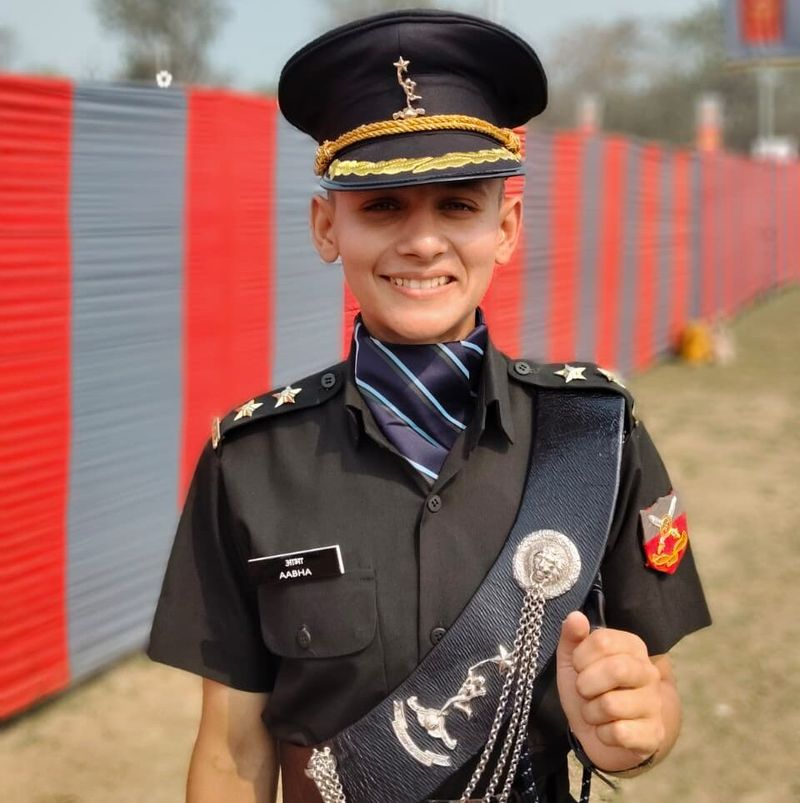


Palampur martyr’s daughter commissioned as Lieutenant

Aabha is daughter of Naik Jeet Singh of Mahar Regiment, who laid down his life fighting Pakistan-sponsored terrorists in Anantnag in April 2003

In a proud moment for Palampur and Himachal Pradesh, Aabha, daughter of a martyr from Kandbari village near here, has been commissioned as a Lieutenant in the Army.

Aabha is daughter of Naik Jeet Singh of the Mahar Regiment, who laid down his life fighting Pakistan-sponsored terrorists in the dense forests of Anantnag in Jammu and Kashmir in April 2003. For displaying exceptional bravery during the operation, he was awarded the Sena Medal posthumously.

At the time of her father’s martyrdom, Aabha was barely two-and-a-half years old and too young to understand the significance of the Tricolour-draped coffin that returned home. As she grew older, the stories of her father’s sacrifice inspired her to follow in his footsteps and serve the nation.

Aabha completed her schooling at Crescent Public School, Banuri (Palampur), where she excelled in academics. She later pursued engineering from the National Institute of Technology (NIT), Hamirpur. During her college years, she joined the National Cadet Corps (NCC) and served as a Senior Under Officer in the NCC unit at Hamirpur, displaying strong leadership qualities.

Her academic excellence earned Aabha campus placement with global technology company Oracle and she even worked in Bengaluru for about a month. However, her dream of serving the nation in uniform remained unchanged. Choosing duty over a promising corporate career, Aabha left the job and started preparing for a career in the Armed Forces. She was later selected for the Army through the Short Service Commission (SSC Tech) entry.

After successfully completing training at the Officers Training Academy (OTA), Gaya, she was commissioned as Lieutenant in the Army on March 7. Abha carries forward the proud military legacy of her family. Her grandfather Kaffu Ram had also served in the Army, making her commissioning a continuation of the family tradition in service of the nation.

Residents of Kandbari and Palampur have hailed her success as an inspiring example of determination, courage and patriotism.


Army shifts to night-time activities as climatic shifts and heat waves affect training

Hot weather poses significant challenges to military training as it increases the risk of exertional heat illnesses such as exhaustion, fluid loss and stroke

The severe climatic shifts afflicting the globe are also leading the Army to change its training schedules. With extreme heat and humidity hitting parts of the country between March to November having an adverse impact on the training of recruits, the Army is tweaking the time table at some centres to carry out more activities at night.

Transformation of raw youth into “battle-ready and razor-sharp Agniveers” is fraught with challenges of overcoming inclement weather conditions. Early start to the day and extended night training to overcome vagaries of weather, says a post on X by the Army’s Surya Command.

“Institutionalising night training as a forward-looking step towards climate-responsive military training. In response to intense summer conditions, structured night training has been integrated as a regular feature for Summer Batch Agniveers at #ArmyAirDefenceCentre. This calibrated shift ensures uninterrupted training cycles while maintaining peak physical efficiency and instructional effectiveness,” the post says.

Operating under low-visibility conditions enhances discipline, coordination and adaptability, preparing Agniveers for round-the-clock operational scenarios. The initiative reflects a balanced blend of innovation and practicality, optimising training hours without compromising on standards, the post adds.

Operational training is biased towards current generation equipment and institutionalised training is focusing on technology infusion and absorption in niche domains, according to the Command.

With India among the countries most affected by climatic change, summers are becoming hotter, with some regions experiencing heatwaves that start earlier and last longer. According to reports, Central India is already experiencing intense heat wave conditions, with temperatures surpassing 40 degrees Celsius in many areas, along with a high ultraviolet index.

Weather experts have predicted a harsh summer over parts of India in 2026, with above-normal heat wave days expected from April to June, Temperatures are projected to frequently hover between 42-45 degrees Celsius that may peak to 48 degrees Celsius, and nights are expected to be warmer than usual.

Hot weather poses significant challenges to military training as it increases the risk of exertional heat illnesses such as exhaustion, fluid loss and stroke and requires intense hydration protocols to prevent casualties among personnel, particularly new recruits. It also reduces physical and cognitive performance.

A large part of military training, especially that for recruits, involves outdoor activities such as physical fitness, weapons, drill, fieldcraft, route marches and firing. Many regimental centres and training establishments are located in the plains that frequently encounter hot and humid climate.


Veterans call influencer’s jibe at Army men’s fidelity ‘immature’, ‘in bad taste

A Facebook post by a Himachal-based social media influencer casting aspersions on the moral character of Army personnel has drawn the ire of the Armed Forces personnel as well as the society at large, who have termed the comments not only to be in bad taste and malicious but also a manifestation of immaturity and a cheap attempt to grab attention.

In a Facebook video post, Ishita Pundeer had said, “Army men are not loyal to their girlfriends or their wives. They are definitely loyal to their nation, but they can never be loyal to their girlfriends or their wives. I’ve heard of many such cases and girls will agree with me, as 90 per cent of them are not loyal. I am not talking about all of them. Though I have not had any such experience, when they come on leave they have four or five girlfriends.”

Casting such aspersions and making irresponsible off-the-cuff remarks is simply not acceptable,” Lt Col SS Sohi (retd), president of Ex-servicemen Grievance Cell said.

“Leave aside some isolated incident that she might have stumbled across, for which effective corrective mechanisms exist within the forces, nobody has the right to tarnish the image and character of Armed Forces personnel or hurt their dignity. She should be hauled before the court and asked to prove her allegations,” he added.

Hailing from Himachal Pradesh’s Sirmaur district, Ishita is active on the social media, especially Facebook and Instagram, where she shares posts relating to lifestyle. She has about 35 lakh followers on Facebook and 11 lakh followers on Instagram.

“The remark appears rather immature and shaped more by social media narratives than by real-life understanding. In reality, the majority of those who choose military service are among the most respected, grounded and deeply committed individuals — both to the nation and to their loved ones. Loyalty is not selective; it is intrinsic to their character,” Col GPS Virk (retd), a lawyer said. “Perhaps the young lady should first understand a soldier beyond stereotypes in movies — experience that commitment first-hand — before attempting to judge or ‘test’ loyalty,” he added.

“The lady has apparently tendered an apology for her comments and the video has been deleted, but the episode is unfortunate. What it seems is an attempt to garner publicity because anything adverse about the Armed Forces tends to go viral on social media,” Major Abhishek Dogra, a short service commission officer now working in the corporate sector said. “Ideally, one should not give importance to such gimmicks or comments made simply out of ignorance or misunderstanding,” he added.

While several veterans’ organisations have condemned the video and its comments, the police have also received complaints from various quarters, including local political leaders, which are being perused


India, China hold talks on Shanghai Cooperation, signal push for coordinated engagement

India and China held their first bilateral consultations focused exclusively on the Shanghai Cooperation Organisation (SCO) in New Delhi, underscoring a shared intent to deepen engagement within the regional grouping despite broader complexities in ties, the Ministry of External Affairs announced on Friday.

The two-day consultations, held from April 16 to 17, brought together India’s SCO National Coordinator Alok A. Dimri and China’s National Coordinator Yan Wenbin, who led their respective delegations.

According to official details, the discussions focused on the implementation of decisions taken by SCO leaders and the future trajectory of the organisation, which has emerged as a key platform for regional security, economic cooperation and connectivity across Eurasia.

“Both sides agreed to continue and consolidate cooperation and consultations in SCO matters,” the MEA said, indicating convergence on the need for sustained coordination within the bloc.

In a parallel engagement, the two delegations jointly called on Secretary (West) Sibi George to review ongoing cooperation under the SCO framework. The interaction covered a broad spectrum of areas, including security collaboration, trade linkages, connectivity initiatives and people-to-people exchanges—pillars central to the organisation’s evolving agenda.

The consultations assume significance as they come at a time when India and China are navigating a complex bilateral relationship, even as both remain key stakeholders in multilateral platforms such as the SCO. The decision to institutionalise dialogue on SCO-specific issues suggests a pragmatic approach aimed at leveraging common ground in regional forums.

Both sides agreed to continue such consultations in the future, signalling that the mechanism could evolve into a regular channel for aligning positions and advancing shared priorities within the SCO framework.


No stranded Indian vessel has crossed Hormuz, all seafarers safe: Govt

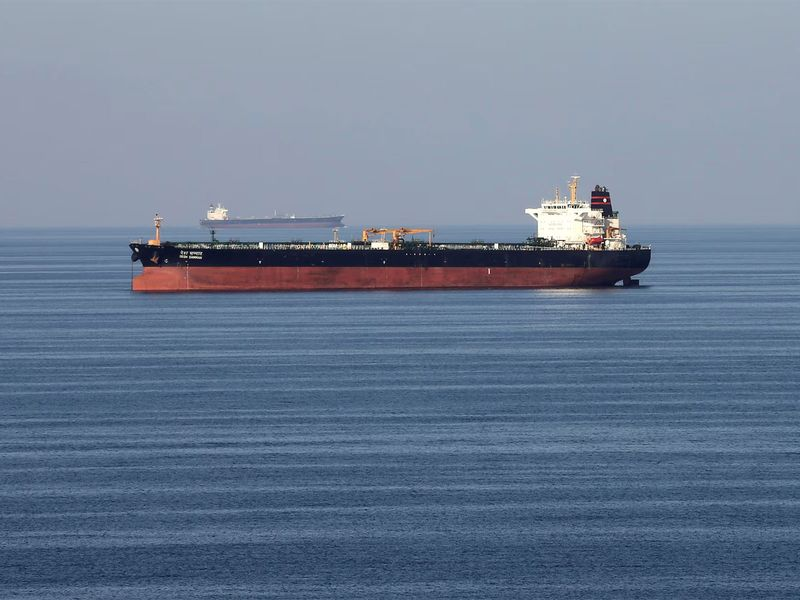
The government on Friday said not a single stranded Indian vessel had crossed the Strait of Hormuz, and that all Indian seafarers in the region remained safe. It added that no incidents involving Indian-flagged vessels had been reported in the past 24 hours.

It may be noted that the government had earlier informed that 15 Indian-flagged vessels were currently stranded in the Strait of Hormuz, underscoring the continuing challenges in the region amid evolving geopolitical developments.

Addressing an inter-ministerial briefing on the situation, Mukesh Mangal, Additional Secretary in the Ministry of Ports, Shipping and Waterways, said the Directorate General of Shipping control room had been actively monitoring the situation. Since its activation, the control room has handled 6,727 calls and over 13,900 emails, including 147 calls and 276 emails in the past 24 hours alone.

He further said more than 2,400 Indian seafarers had been safely repatriated so far, including 30 in the last 24 hours from the Gulf region. The official added that the ministry continues to coordinate closely with the Ministry of External Affairs, Indian missions abroad, and other maritime stakeholders to ensure the welfare of Indian seafarers and the smooth functioning of maritime operations.

Regarding the safety of Indian nationals in the region, Aseem R Mahajan, Additional Secretary (Gulf) in the Ministry of External Affairs, said flights continued to operate from countries where airspace remained open. Since 28 February, around 10,38,000 passengers have travelled from the region to India.

He added that in the United Arab Emirates, airlines continue to operate limited non-scheduled commercial flights between the UAE and India based on operational and safety considerations, with around 105 flights expected between the two countries today.

The official further said the Embassy of India in Tehran had so far facilitated the movement of 2,358 Indian nationals from Iran to Armenia and Azerbaijan for onward travel to India, including 1,041 Indian students and 657 Indian fishermen.

Amid concerns over the West Asia crisis, the government assured that domestic fuel supplies remained stable, with no shortages reported across the country. Sujata Sharma, Joint Secretary in the Ministry of Petroleum, said that the availability of LPG, petrol, and diesel continues to remain normal, with no instances of dry-outs reported. She noted that LPG distribution is stable, with nearly 98 percent of bookings being made online and deliveries authenticated.

Providing details, she said that since 14 March, around 89 lakh LPG cylinders equivalent to approximately 1.5 lakh tonnes have been delivered. Commercial LPG supply has also remained steady, with about 8,200 tonnes supplied recently. Auto LPG availability has increased to 296 tonnes per day in April, with public sector oil companies accounting for nearly 67 percent of the market share.

The official added that states such as Karnataka, Tamil Nadu, Telangana, Rajasthan, and West Bengal have witnessed higher LPG consumption, driven by awareness campaigns and increased adoption of 5 kg cylinders.

Petrol pumps across the country are functioning normally, she said, adding that enforcement measures have been strengthened. Authorities have imposed penalties on 255 distributors and suspended 65 others for violations.


Govt authorises private company to make weapons

The licence authorises the company to manufacture 12.7 mm, 23 mm, 30 mm and 40 mm weapons — critical systems with applications in air defence, naval operations and counter-unmanned aircraft system (C-UAS) roles.

Zen Technologies on Friday said it has been granted an arms manufacturing licence by the Government of India under the Arms Act, 1959.

The licence authorises the company to manufacture 12.7 mm, 23 mm, 30 mm and 40 mm weapons — critical systems with applications in air defence, naval operations and counter-unmanned aircraft system (C-UAS) roles.

These rapid-fire cannons serve as effective last-layer defence against drones, loitering munitions and low-flying aerial threats.

When integrated with advanced fire-control systems, radar, electro-optical/infrared (EO/IR) sensors and programmable ammunition, the systems can provide responsive, accurate and cost-effective protection for strategic assets, armoured formations, border areas and critical infrastructure.


Explainer: Why the India-Pakistan fence shift

While the survey is only a first step, the challenge lies in balancing security concerns with livelihood rights of Punjab border resident

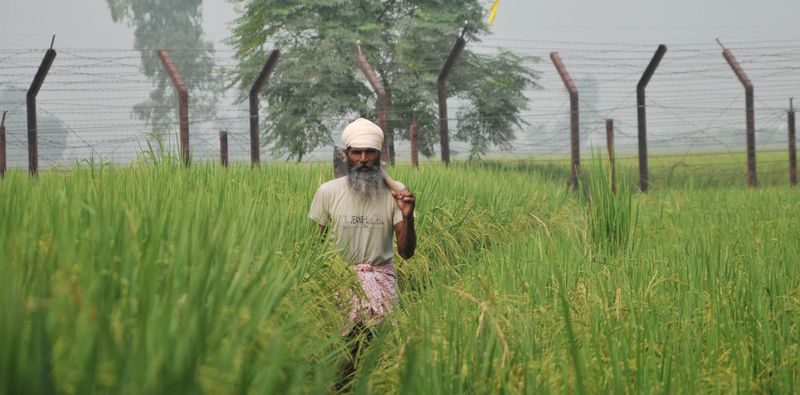
The barbed fence, erected during the militancy years in the late 1980s, does not run along the Zero Line — the actual international boundary — but up to 3 km inside the Indian territory in some stretches. Photo: Vishal Kumar

A fresh push by the Centre to conduct a social impact survey on shifting the barbed fence along the Indo-Pak border has rekindled hope among thousands of farmers in Punjab who have, for decades, tilled land trapped in a bureaucratic and security limbo.

The barbed fence, erected during the militancy years in the late 1980s, does not run along the Zero Line — the actual international boundary — but up to 3 km inside the Indian territory in some stretches. As a result, vast areas of fertile farmland were left between the fence and the border, effectively placing them in a restricted zone.

Across the six border districts of Amritsar, Tarn Taran, Gurdaspur, Pathankot, Ferozepur and Fazilka, around 21,600 acres in 220 villages fall into this category. In Amritsar district alone, 3,801 acres remain beyond the fence. Punjab shares a 553-km-long border with Pakistan.

Border Security Force (BSF) officers say the fence cannot be erected at a uniform distance from the Zero Line as it depends on factors such as terrain and defence strategy. However, at places where it is much farther away, shifting the fence could immensely help farmers.

Restoring access

The Union government has asked district administrations to assess the social and economic impact of potentially shifting the fence closer to the Zero Line. If implemented, this could restore easier access to farmland, improve productivity and income, reduce dependence on security clearances, and address long-standing grievances of border residents.

For farmers, cultivating land beyond the fence is not just difficult but often unviable. They are allowed entry only during fixed hours, typically from 10 am to 4 pm, and even that window shrinks in winter due to fog or heightened security alerts. “At least two hours are lost in security checks every day,” says Arjan Singh, a farmer from Hoshiarnagar near Attari.

The problems do not end there. Labourers avoid working in these areas due to restricted hours and often charge more. Combine harvester operators are also reluctant because of the time lost at security points. Installing new tubewells is nearly impossible and requires special permissions.

Ranjit Singh from Tarn Taran district sums up the economic hit: “The 8 acres across the fence give me less yield than 5 acres on this side.” Even land prices are significantly lower, and finding buyers is nearly impossible.

Patchy compensation

Initially, in 1998, the Centre started giving an inconvenience allowance of Rs 2,500 per acre to farmers. Later, in 2015, after the Punjab and Haryana High Court intervened, the compensation was increased to Rs 10,000 per acre.

Despite this, payments are often delayed, are irregular, and inadequate compared to the losses incurred over the years. Veteran farmer leader Rattan Singh Randhawa of the Border Area Sangharsh Committee says, “Even now, farmers are waiting for compensation for 2024. Every year, it is another battle we have to fight.”

Calculated decision

A retired BSF officer highlights that the fence’s position well inside Indian territory was never an error, but a calculated decision rooted in security strategy. “It helps in maintaining a clear observation zone,” he explains.

Natural constraints, including rivers, uneven terrain and flood-prone stretches, also played a decisive role in fixing the alignment of the fence, he says. “More importantly, this buffer creates a crucial window of response; any movement detected between the Zero Line and the fence can be tracked, assessed, and intercepted in time, giving security forces the advantage of preparedness rather than reaction.”

Policy movement

The issue has remained on the fringes of political discourse. Randhawa points to a stark reality: “If urban residents protesting against the lack of basic civic amenities don’t get attention, how can poor border farmers expect priority?”

While the survey is only a first step, it signals policy movement. Experts say shifting the fence, though sensitive from a security point of view, could be a game-changer if done carefully. Surjit Singh of Boora Kona village in Tarn Taran, who has also pursued related cases in courts, says, “We demand that the fence be shifted to around 50 metres from the Zero Line. If this happens, thousands of acres of land would come within the fence, and things would automatically improve.”

The challenge lies in balancing national security concerns with livelihood rights. Any decision to shift the fence will require coordination between the civil administration, security agencies, and local communities.


Iran opens Strait of Hormuz, but Trump blockade stays until final truce

Iran on Friday announced that the crucial Strait of Hormuz will remain open to commercial ships for the remainder of the ceasefire, easing pressure on global energy markets and signalling a tentative de-escalation in the West Asia crisis. The US, however, said its blockade targeting Iran would remain in place until the ongoing negotiations were fully concluded.

Iran’s Foreign Minister Seyed Abbas Araghchi said the passage for all commercial vessels had been declared “completely open” for the duration of the ceasefire, with shipping to follow coordinated routes designated by Iran’s Ports and Maritime Organisation.

The announcement effectively ends weeks of disruption in one of the world’s most critical energy chokepoints, through which nearly a fifth of global oil and liquefied natural gas supplies transit. The Strait had been shut since late February following US and Israeli strikes on Iran, choking supply lines, spiking crude prices and rattling global trade.

Within hours of Tehran’s declaration, Brent crude prices plunged to around $88 per barrel from above $98 earlier in the day, extending a sharp retreat from peaks exceeding $119 in March.

Global equity markets responded with equal vigour: US indices surged, with the S&P 500 rising 0.8 per cent and both the Nasdaq and Dow Jones gaining over 1 per cent, while major European indices posted gains of up to 2 per cent. Seizing the moment, Trump issued a series of triumphant statements, asserting that Iran had agreed to never again weaponise the strait. “A great and brilliant day for the world,” he declared, while crediting regional partners, including Pakistan, Saudi Arabia, the UAE and Qatar, for their role.

The US President further claimed that Iran, “with the help of the US”, had begun removing sea mines and insisted the situation was now “completely open and ready for business”, even as he maintained that a US naval blockade targeting Iran would remain in place until the ongoing negotiations were fully concluded. “This process should go very quickly in that most of the points are already negotiated,” he said. In a notable divergence, Trump dismissed any direct linkage between the Hormuz breakthrough and the Lebanon ceasefire, even as Tehran explicitly tied the reopening to the truce. He said Washington would separately address the situation involving Hezbollah and ensure that Israel halted further strikes in Lebanon.

Iranian diplomatic voices, meanwhile, pointed to a broader regional effort involving Pakistan to create space for diplomacy, framing the reopening as part of a wider push towards stability, economic recovery and collective security.

Caution, however, came from the International Maritime Organisation, whose Secretary-General Arsenio Dominguez said the body was verifying whether the reopening fully complied with established norms on freedom of navigation and safe passage.

Meanwhile, the Islamic Revolutionary Guard Corps (IRGC) of Iran said crossing the strait now required its permission. Separately, Reuters news agency said all commercial vessels, including US-flagged ships, were permitted to pass through the strait, while naval vessels would not be granted transit.


HEADLINES :15APR 2026

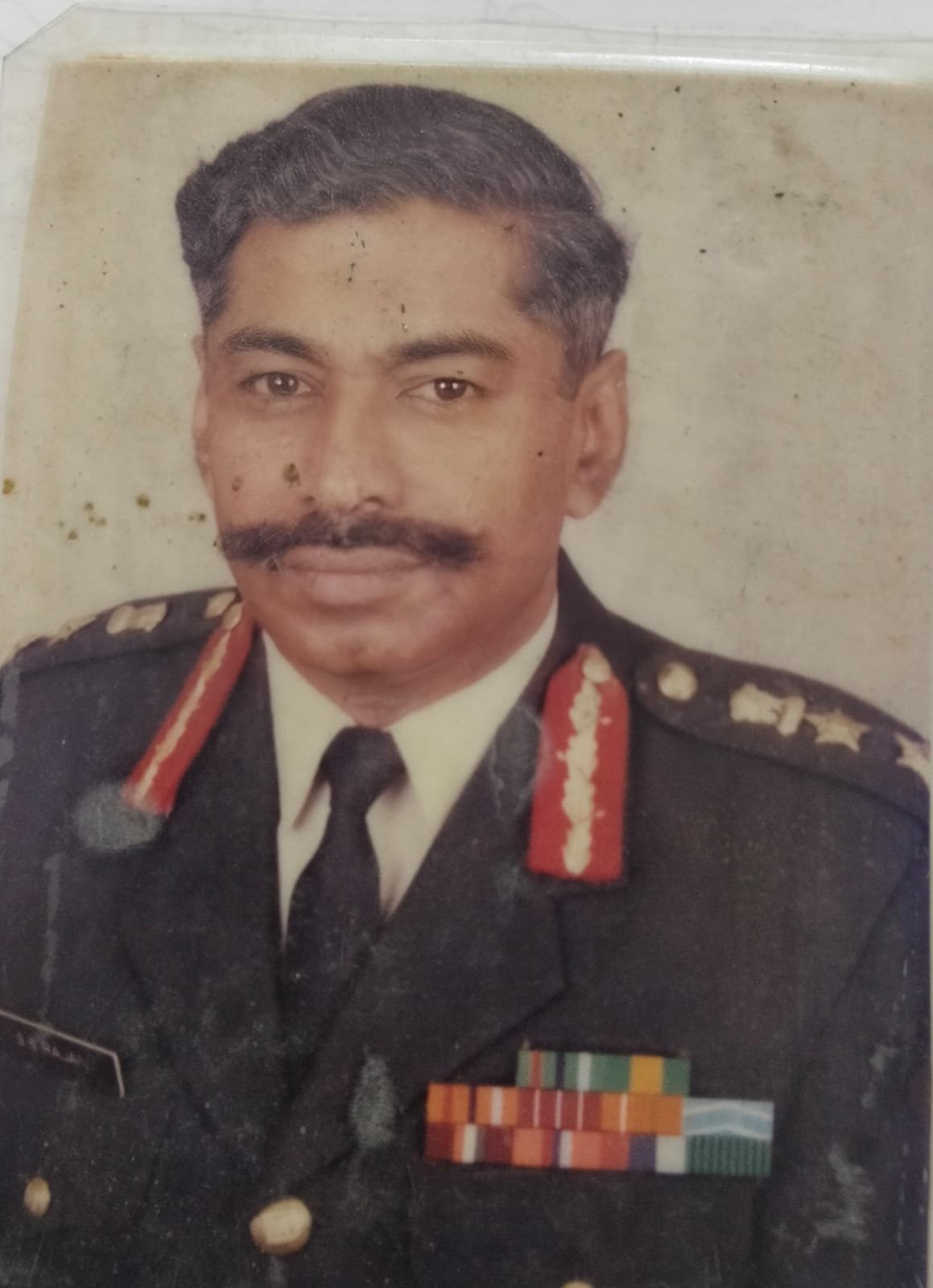
BENGAL SAPPERS LOST AN OUTSTANDING VETERAN GENERAL: Maj Gen Kunal Mukherjee

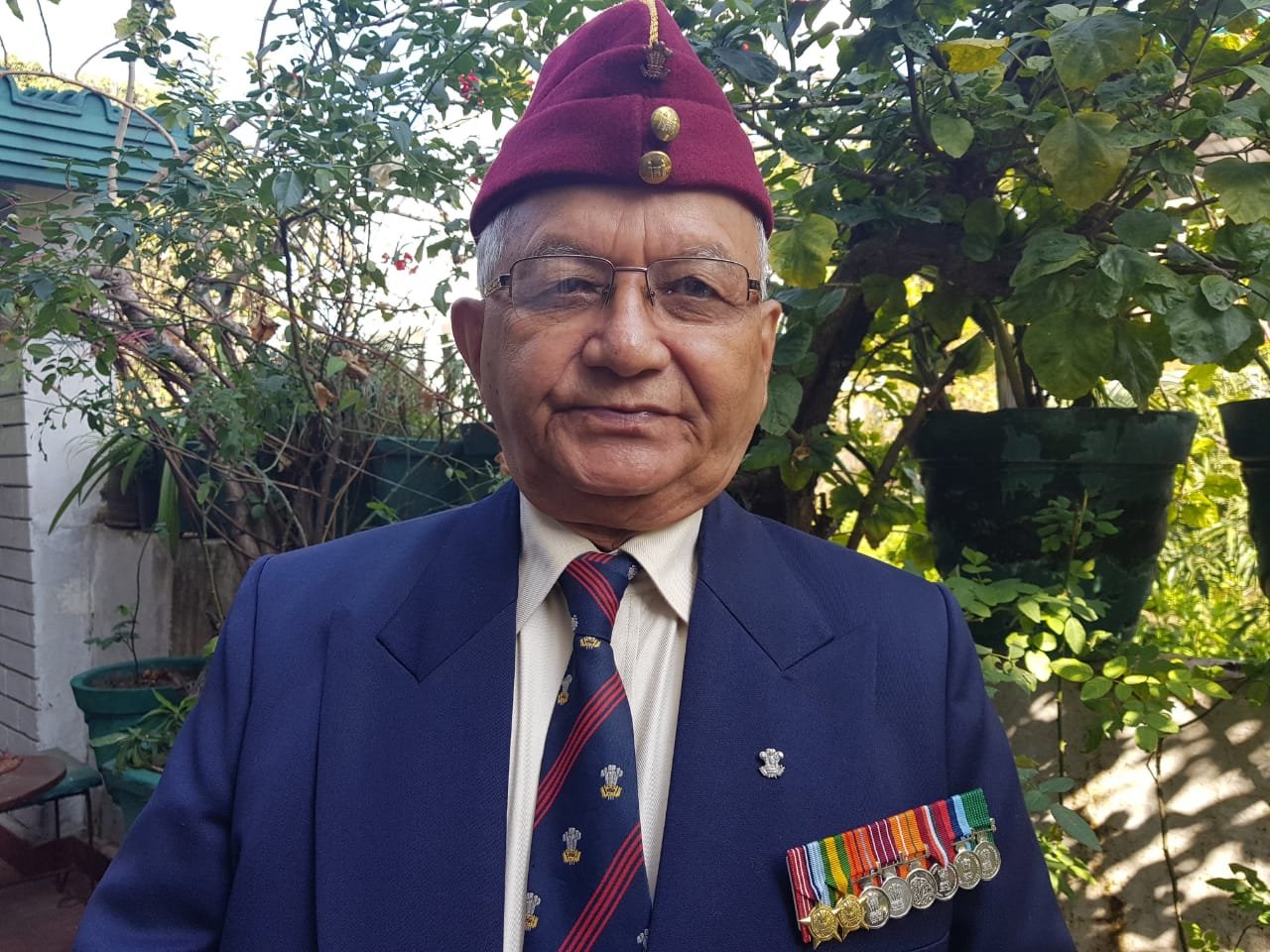
COL BM THAPA, BENGAL SAPPERS COMES BACK IN THE FOLDS OF SANJHA MORCHA

Delhi LG ordered security for an Army officer

Cabinet Secy urges Army to develop sovereign AI

Iran-Israel War LIVE updates: Trump hints at new Iran talks as Hormuz standoff intensifies

The Law of Flow

A missed opportunity: A precedent lost at Islamabad