




Sanjha Morcha

Son in US Army, 53-yr-old Punjabi woman detained by ICE, ‘denied’ food and water for 24 hours

Meenu Batra, a 53-year-old Indian-origin court interpreter who has lived in the United States for 35 years, has been detained by US Immigration and Customs Enforcement (ICE) in Texas, prompting a legal battle over her continued custody.

Batra was reportedly arrested by plainclothes ICE agents at Harlingen International Airport on March 17 while travelling to Milwaukee for an immigration court assignment. She is currently being held at a detention centre in Raymondville, Texas.

According to her lawyers, Batra had valid work authorisation under a decades-old “withholding of removal” order, which protects individuals from being deported to countries where they may face persecution. However, it does not provide permanent residency or cancel an earlier deportation order.

Batra moved to the US as a child in the late 1980s after her parents were killed during the 1984 anti-Sikh violence in India. Over the years, she built a career as a certified interpreter and is said to be Texas’s only licensed court interpreter for Hindi, Punjabi and Urdu.

Her legal team has filed a habeas corpus petition in a Texas federal court, arguing that her detention is unlawful and violates due process protections. They are also seeking to prevent her transfer to another facility and have requested her immediate release.

The petition alleges that Batra was held for nearly 24 hours without food or water after her arrest and has faced inconsistent medical care while in custody. Her lawyers said she is recovering from recent surgeries and has also developed a respiratory illness.

Batra’s son, who recently enlisted in the US military, has submitted a parole application on her behalf that could allow her to remain in the country temporarily.

A spokesperson for the Department of Homeland Security said Batra has a final removal order dating back to 2000 and will remain in custody pending further proceedings. The government has until April 21 to respond to the petition.
China sets up new county in Xinjiang near PoK, Afghan border

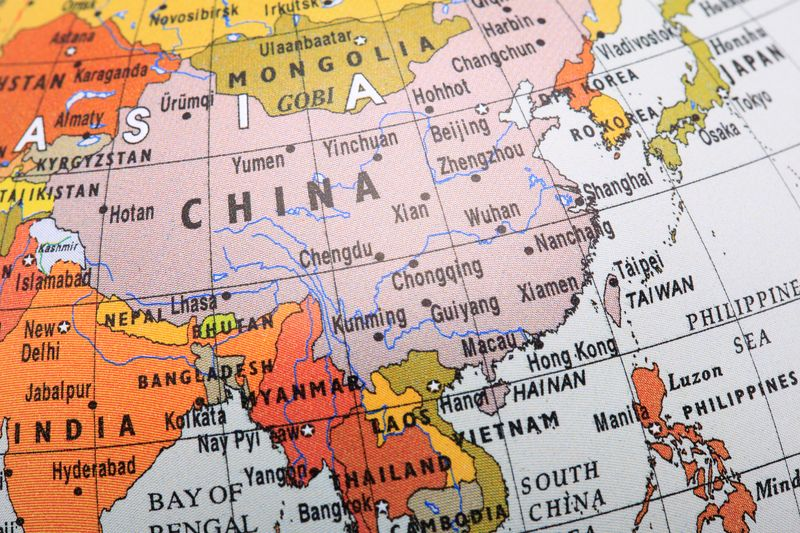
China has set up a new county in its volatile Xinjiang province near Pakistan-occupied Kashmir (PoK) and the Afghanistan border in an apparent move to beef up security along the narrow Wakhan Corridor to curb infiltration of Uyghur separatist militants.

The county, named Cenling, is located near the Karakoram mountain range and close to the borders with PoK and Afghanistan, underscoring its strategic significance.

This is the third new county established by China in Xinjiang, a predominantly Muslim Uyghur region, in just over a year.

India last year lodged a protest with China over the creation of Hean and Hekang counties, stating that parts of their jurisdiction fall within its union territory of Ladakh.

Hean includes much of the disputed Aksai Chin plateau, which is part of Ladakh occupied by China in the 1962 war and has remained a focal point of the India-China border dispute.

The Xinjiang Uyghur Autonomous Region government announced the establishment of Cenling on March 26, though details of its administrative divisions and exact boundaries were not specified.

It will be administered by Kashgar prefecture, according to a report in the Hong Kong-based South China Morning Post.

Kashgar, a historic city located on the ancient Silk Road, is a strategic gateway connecting China with South and Central Asia.

It is also the starting point of the controversial USD 60 billion China-Pakistan Economic Corridor (CPEC), which passes through PoK and has been opposed by India.

Experts say the creation of Cenling reflects Beijing’s growing focus on border security and governance.

Lin Minwang, a professor at the Institute of International Studies in Shanghai-based Fudan University, said the move “reflects China’s deeper recognition of the strategic importance of this region”.

“At a broader level, the decision signals China’s emphasis on its borderlands,” Lin was quoted as saying by the Post.

He noted that the new county is geographically connected to Afghanistan’s narrow Wakhan Corridor, a 74-km strip bordering Xinjiang that separates Tajikistan and PoK, highlighting China’s security and counterterrorism concerns.

Beijing in past has expressed concern about Uyghur militants of the East Turkestan Islamic Movement (ETIM) using the Wakhan Corridor as a route to enter Xinjiang from Afghanistan.

Yun Sun, a senior fellow at the Stimson Centre in Washington, said the new county represented a drive towards a “stronger grass-roots level government structure for effective governance and control”.

“It helps to strengthen the stabilisation efforts by the government in the frontier region, which is traditionally more subject to ethnic turbulence and potential infiltration of foreign militants from Central Asia,” she said.


108 cops trained in counter-terror ops

Focused on drones, ambush tactics, intelligence sharing

A total of 108 police personnel underwent training by the Army to enhance coordination and operational synergy in the dynamic security environment of Jammu and Kashmir.

A Joint Counter-Terrorism Refresher Course for J&K Police personnel, conducted under the aegis of the Tiger Division, concluded on Saturday.

The course, held from April 7 to 18, was jointly conceptualised by the senior leadership of the Army and J&K Police with the aim of enhancing operational coordination, synergy and standardisation of procedures.

“A total of 108 police personnel underwent intensive training conducted by Miran Sahib Brigade. The training focused on strengthening junior leadership capabilities, which are critical for effective execution of small team operations in counter-terrorism scenarios,” an Army spokesperson said.

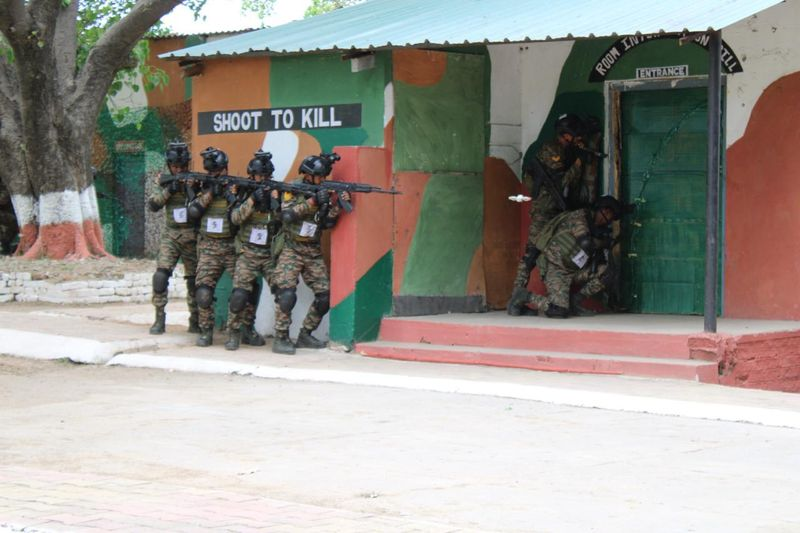
During the course, participants were trained in a wide spectrum of operational aspects, including small team operations and patrolling, quick reaction team and mobile vehicle check post drills, ambush and counter-ambush techniques, cordon and search operations and room intervention procedures.


Distance from conflict does not ensure immunity: Indian Navy Chief on West Asia war

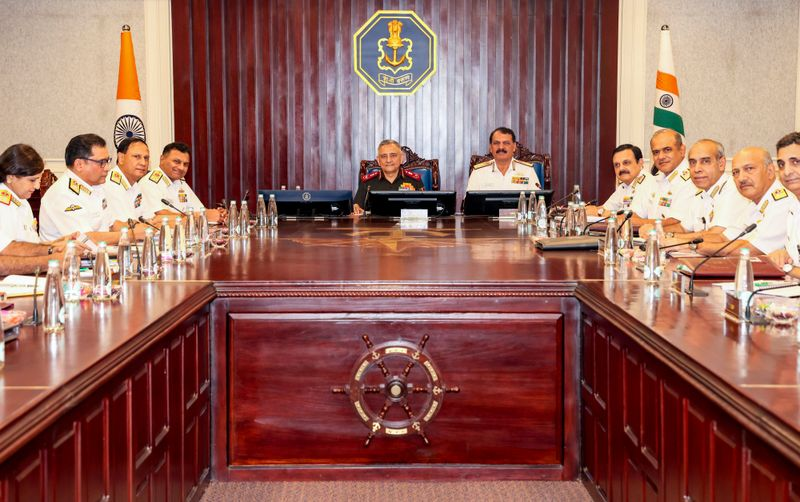
Chief of the Defence Staff (CDS) General Anil Chauhan and Chief of the Naval Staff (CNS) Admiral Dinesh K Tripathi during the Indian Navy Commanders’ Conference in New Delhi. PTI

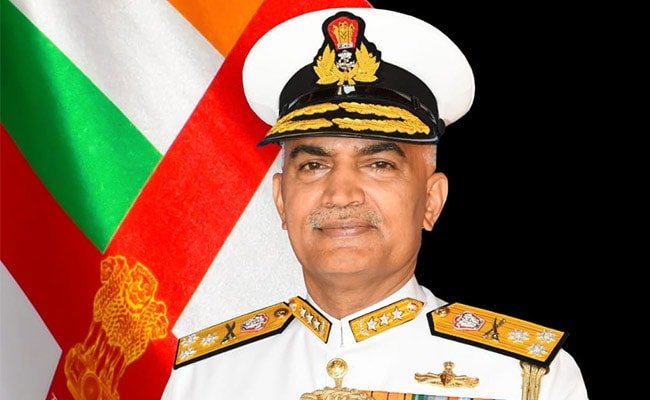
Instability in West Asia and the linked disruptions to maritime traffic are a reminder that distance from a conflict does not ensure immunity from its consequences, said Navy Chief Admiral DK Tripathi on Wednesday.

He was addressing the top brass of the Navy at the Commanders’ Conference and added “concurrent conflicts and increased capabilities create a highly contested space for the Navy on a day-to-day basis”.

The conference conducted in New Delhi reviewed the impact of the conflict in West Asia on maritime readiness and the role the Navy played in ensuring energy security. Navy played a major role in the safe transit of merchant ships moving out of the Persian Gulf.

Highlighting the impact of the ongoing conflict, both economic and military, Admiral Tripathi said it was also about shaping of perception of the conflict building narratives, and not just operational outcomes.

The Navy Chief stressed various aspects have caused the maritime security environment to reach an inflection point. The three day conference (April 14-16) has the senior naval leadership and the Navy Chief commended the force for safeguarding India’s maritime interests including energy security, amidst ongoing conflict in West Asia.

The Chief of the Defence Staff, General Anil Chauhan, addressed and interacted with the Naval Commanders on matters pertaining to changing geo-political orders, and urged the Navy to plan for rapidly evolving character of war, including economic and technological factors.

The conference discussed operational highlights including salient issues pertaining to jointness, capability enhancement, maintenance, training, foreign cooperation indigenisation.

The Navy Chief highlighted the achievements of the Navy in its journey towards becoming a combat-ready, credible, cohesive, and future-ready force.

Admiral Tripathi highlighted there has been a significant increase in the operational deployment of naval platforms over the past five to ten years. He highlighted upgradation and augmentation of war-fighting capabilities in the surface, sub-surface, and air domains, supported by major infrastructural developments, robust maintenance practices.

The Navy is the middle of various technology-intensive capability developments that have taken place, along with those in various phases of development and induction, including incorporation of artificial intelligence in the operational framework.


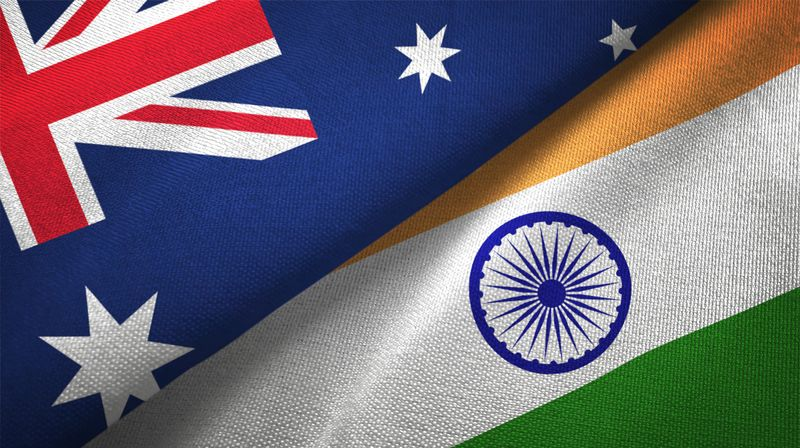
Australia names India ‘top-tier’ defence partner in 2026 strategy, plans USD 887 billion investment

Australia today released its ‘National Defence Strategy for 2026’ and named India as its ‘top-tier’ security partner and ‘most important’ defence partner. The document on national defence strategy, an update over the previous one in 2024, was released by the Australian Defence Ministry today. It said, “India is a top-tier security partner for Australia and our most important defence partner in the Northeast Indian Ocean.” The Northeast Indian Ocean is central to the safety of Australia’s sea lines of communication that are used by mercantile shipping, including for transporting crude oil, gas, and coal.

Australia’s interests lie in a stable region that is well-disposed to Australia, the national defence strategy said.

The Australian Government said it will continue to prioritise practical and tangible cooperation with India that enhances collective strength and directly contributes to Indo-Pacific stability. The two sides have Australia-India Comprehensive Strategic Partnership and are also partners in the Quad along with Japan and the US.

Australia also said it will ‘continue to support’ India’s key role in the region and build interoperability by increasing the depth, complexity, and frequency of defence cooperation.

“The Government will continue to pursue opportunities with India to drive practical bilateral and multilateral cooperation across all domains, defence industry cooperation, and information sharing,” the document said.

The Australian defence strategy also said that, in addition to engagement with India, the Government’s defence engagement in the Northeast Indian Ocean region will continue to focus on regularising the presence of Australian defence forces, including deployments, training, and exercises.

This would include regional maritime domain awareness, defence industry engagement, and education and training cooperation. The Quad remains a vital diplomatic partnership between Australia, India, Japan, and the US.

“Australia will seek to expand cooperation between Australia, India, Japan, and the US to advance regional peace, security, and prosperity,” it said, adding this includes strengthening maritime domain awareness, operational interoperability, and humanitarian assistance and emergency response cooperation.

The Australian Defence Ministry also put out an ‘Integrated Investment Programme’ that reaffirmed the longstanding practice of providing a 10-year funding model for defence. This funding model will provide defence, including the Australian Signals Directorate, Australian Submarine Agency, and Australian Naval Nuclear Power Safety Regulator, with total funding of USD 887 billion for a ten-year period till 2036.

The total funding of USD 887 billion over the decade includes around USD 425 billion in allocated funding for the capabilities set out in the 2026 Integrated Investment Programme.


Iran-Israel war: Iran fires on ships in Strait of Hormuz as Tehran imposes restrictions again

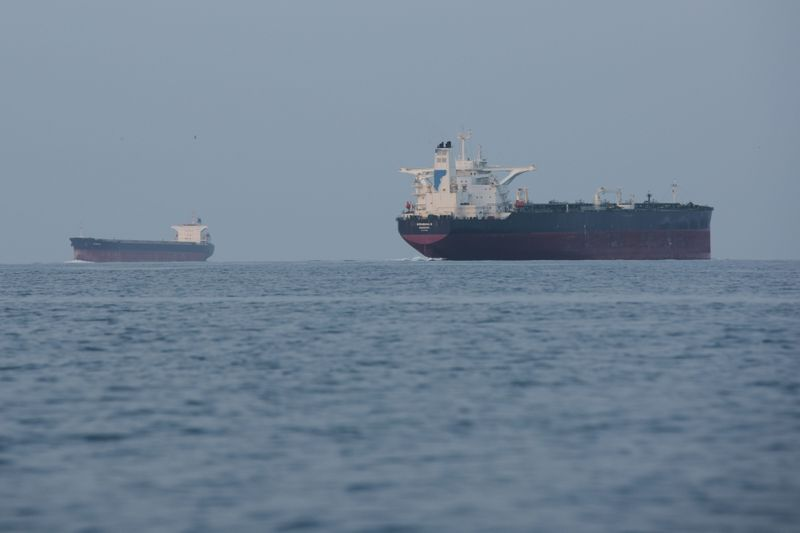
Dubai: Iran reversed its decision to reopen the Strait of Hormuz and fired on a tanker trying to pass the waterway on Saturday. It also warned that it would continue to block transit through the strait as long as the US blockade of Iranian ports remained in effect.

Confusion over the critical chokepoint threatened to deepen the energy crisis roiling the global economy and push the two countries towards renewed conflict, even as mediators expressed confidence a new deal was within reach.

Iran’s joint military command said on Saturday that “control of the Strait of Hormuz has returned to its previous state … under strict management and control of the armed forces”.

Two gunboats from Iran’s Revolutionary Guard opened fire on a tanker transiting the Strait of Hormuz, the British military’s United Kingdom Maritime Trade Operations centre said. It reported the tanker and crew as safe, without identifying the vessel or its destination.

TankerTrackers.com reported vessels were forced to turn around in the strait, including an Indian-flagged supertanker, after they were fired on by Iran.

Saturday’s developments came after US President Donald Trump said the blockade “will remain in full force” until Tehran reaches a deal with the US that includes its nuclear program. Tehran had reopened the strait on Friday to commercial vessels.

Despite the escalation, Pakistani officials say the United States and Iran are still moving closer to a deal ahead of the April 22 ceasefire deadline.

The fighting has killed at least 3,000 people in Iran, nearly 2,300 in Lebanon, 23 in Israel and more than a dozen in Gulf Arab states. Thirteen US service members have also been killed. AP

Hezbollah leader dismisses ceasefire paper published by US

April 19, 2026 10:45 am

Dubai: Naim Kassem, head of the Iran-backed Lebanese militant group Hezbollah, in a statement read on the group’s al-Manar TV said a paper published by the US State Department that it described as the text of a ceasefire agreement between Lebanon and Israel “means nothing at the practical level, but it is an insult to our country”. “Everyone knows that the government of Lebanon has not met or approved this statement,” he said. The text published by the US described the 10-day truce as a gesture by Israel “to enable good-faith negotiations” towards a permanent peace agreement with Lebanon. The text gives Israel the “right to take all necessary measures in self-defence, at any time, against planned, imminent, or ongoing attacks”. It does not mention any similar right for Lebanon or Hezbollah. Kassem said the truce should entail “a complete cessation of all hostilities” and that Hezbollah “will respond to enemy violations”. AP

UN chief condemns attack in Lebanon that killed French peacekeeper

April 19, 2026 9:44 am

Dubai: Stephane Dujarric, the spokesman for UN Secretary-General Antonio Guterres, said Guterres has strongly condemned the killing of a French peacekeeper and the wounding of three others in an attack in southern Lebanon. The UN peacekeeping force in southern Lebanon came under attack with small-arms fire on Saturday morning. Two of the injured were hurt seriously, France’s president and the force known as UNIFIL said. Both President Emmanuel Macron and the UNIFIL force blamed Hezbollah, but the Lebanese militant group denied involvement. AP

Another Israeli soldier dies in combat

April 19, 2026 9:43 am

Dubai: Israel’s military says another soldier died in combat in southern Lebanon, the second death announced in under 12 hours. It brought the total number of soldiers killed in Lebanon to 15, and was the second soldier killed in combat since the ceasefire. The military said another soldier was badly wounded in the same incident, along with four moderately wounded and four lightly injured. AP


HEADLINES :18APR 2026

Shocking details of Kargil war hidden from Indians | Brigadier Surinder Singh

At Army commanders meet focused on self reliance

India, China hold first bilateral consultations on SCO matters, discuss future roadmap

India Strengthens Orbital Surveillance With Space Tracking Radar In Northeast And Telescope In Ladakh

Palampur martyr’s daughter commissioned as Lieutenant

Army shifts to night-time activities as climatic shifts and heat waves affect training

Veterans call influencer’s jibe at Army men’s fidelity ‘immature’, ‘in bad taste

India, China hold talks on Shanghai Cooperation, signal push for coordinated engagement

No stranded Indian vessel has crossed Hormuz, all seafarers safe: Govt

Govt authorises private company to make weapons

Explainer: Why the India-Pakistan fence shift

Iran opens Strait of Hormuz, but Trump blockade stays until final truce


At Army commanders meet focused on self reliance

The Army Commanders’ Conference, held from April 13-16, 2026, in New Delhi, finalized a roadmap focusing on Atmanirbharta (self-reliance) and the induction of indigenous technologies to transform the force into a future-ready, networked entity. Chaired by the Chief of the Army Staff, the apex leadership designated 2026 as the “Year of Networking and Data Centricity” to enhance battlefield transparency and decision-making. 

This video provides an overview of the key discussions and goals of the Army Commanders’ Conference 2026:

Key outcomes and focus areas included:

  • Technological Push: Emphasis on integrating artificial intelligence (AI),, swarm drones, and counter-drone systems (C-UAS) to address modern operational challenges.
  • Indigenous Procurement: A strong push for utilizing indigenous defence systems to reduce reliance on foreign imports.
  • Operational Preparedness: Discussions included leveraging lessons from recent global conflicts and Operation Sindoor to refine combat strategies.
  • Jointness and Structure: The conference, which included briefings from the Chief of Defence Staff, accelerated plans for theatre commands and increased synergy between the Army and other services.
  • Data-Driven Warfare: A, shift towards, digitizing the battlefield, ensuring secure, high-speed communication, and enhancing data-centricity in operations. News On AIR +4

The conference brought together top leadership to deliberate on reforms, training, and operational logistics for the upcoming year. 


India, China hold first bilateral consultations on SCO matters, discuss future roadmap

New Delhi [India], April 17 (ANI): India and China held their first bilateral consultations on Shanghai Cooperation Organisation (SCO) matters in the national capital, exchanging views on the implementation of SCO Leaders’ decisions and the future course of the organisation.

According to a statement by the Ministry of External Affairs (MEA) on Friday, both sides agreed to continue and consolidate mutual cooperation and consultations within the SCO framework.

The consultations were held in New Delhi on April 16 and April 17, with India’s SCO National Coordinator

Two sides exchanged views on implementation of SCO Leaders’ Decisions, and the future-course of the organization. Both sides agreed to continue and consolidate mutual-cooperation and consultations in SCO matters,” the statement read.

Both delegations also jointly called on Secretary (West) Sibi George to review ongoing cooperation within the SCO framework.

During the meeting, the delegations reviewed key aspects of SCO engagement and discussed ways to strengthen coordination on various fronts. They focused on advancing cooperation in areas such as security, trade, connectivity, and people-to-people exchanges.

“Both delegations, jointly, called on Secretary (West) Shri Sibi George to review cooperation within the SCO framework, including in the areas of security, trade, connectivity, and people-to-people ties,” the statement added.

The MEA noted that India and China agreed to continue mutual consultations in the future, underlining the importance of sustained dialogue within the SCO platform.

The visit comes as part of ongoing diplomatic engagements between India and China within the SCO framework, aimed at strengthening cooperation and dialogue on regional and multilateral issues.

Comprising 10 member countries in addition to India, SCO includes Belarus, China, Iran, Kazakhstan, Kyrgyzstan, Pakistan, Russia, Tajikistan, and Uzbekistan. There are also several dialogue partners and observers.

India has been a member of the SCO since 2017, after having been an Observer since 2005.

During its membership period, India has held the chair of the SCO Council of Heads of Government in 2020 and of the SCO Council of Heads of State from 2022 to 2023.

India, as the chair of SCO, had articulated its priorities as moving towards a ‘Secure’ SCO – Security, Economic Development, Connectivity, Unity, Respect for sovereignty and territorial integrity, and Environmental protection.

India had also directed the cooperation in SCO towards five new verticals like Startups and Innovation, Traditional Medicine, Science and Technology, Youth Empowerment and Shared Buddhist Heritage.

In the course of its Presidency of SCO in 2022-2023, New Delhi worked on a diverse range of themes to give a new dynamism to the multifaceted cooperation and, in many areas, opened up new vistas of cooperation to meaningfully enrich SCO’s agenda. (ANI)

(This content is sourced from a syndicated feed and is published as received. The Tribune assumes no responsibility or liability for its accuracy, completeness, or content.)