Despite global tensions across multiple flashpoints, India continues to balance its military ties with diverse partners. It is currently engaging simultaneously with the militaries of the US and Russia at Guam and Visakhapatnam, respectively.
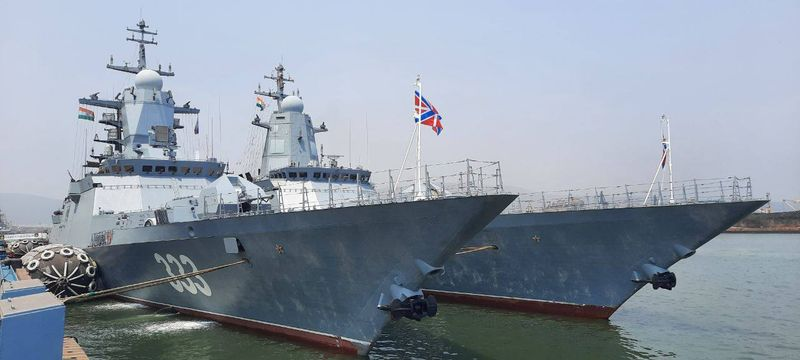
Two warships — Sovershenny and Rezky — from the Vladivostok-based Russian Pacific Fleet arrived at the eastern port of Visakhapatnam on March 14. The ships’ crews will participate in cultural and sports events with Indian naval personnel, while also restocking supplies. The vessels, which departed Vladivostok on February 12, are on a long-distance Asia-Pacific deployment.
Meanwhile, at Guam — a US base in the western Pacific Ocean — the Indian Navy has joined an anti-submarine warfare exercise hosted by the US, along with fellow Quad partners Japan and Australia. New Zealand is also participating in the multinational exercise, ‘Sea Dragon 2026’, at Andersen Air Force Base in Guam. The drills began on March 9 and will continue for nearly three weeks.
These engagements come against the backdrop of tensions in West Asia. While the US and Israel are aligned against Iran, India has, for the past two weeks, hosted the Iranian warship IRIS Lavan at Kochi; the vessel and some of its crew remain in India. Meanwhile, the US and its NATO allies remain at odds with Russia over the ongoing war in Ukraine.
At Guam, all five participating navies are deploying long-range maritime reconnaissance aircraft such as the Boeing P-8 and its variants, which are capable of tracking submarines. These aircraft can generate a shared operational picture of the maritime domain and enable seamless communication between forces.
According to a US Navy statement, Sea Dragon 2026 is aimed at enhancing aircrew proficiency in anti-submarine warfare (ASW), progressing from simulated targets to detecting and tracking a live submarine.
India has been steadily refining its military ties with both the US and Russia. In November last year, India and the US discussed ways to enhance bilateral and multilateral exercises, including adding complexity such as simulated submarine hunts and tracking “enemy vessels”, to strengthen maritime cooperation and advance shared strategic interests in the Indo-Pacific. India and the US are also part of multilateral frameworks such as the Combined Maritime Forces (CMF), which operates in the Red Sea and the Persian Gulf.
Meanwhile, a joint statement issued after Prime Minister Narendra Modi’s meeting with Russian President Vladimir Putin in New Delhi in December said the six-decade-old India-Russia defence partnership would be “re-oriented” towards co-development and co-production of advanced technologies, setting a new benchmark in support of the ‘Make in India’ initiative.
Search operations intensified across Jammu region after suspicious movements
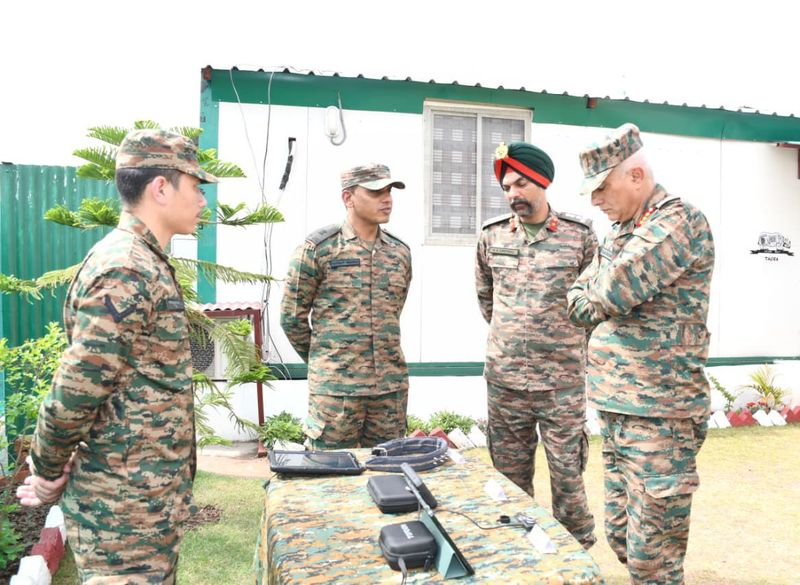
GOC, Rising Star Corps, Lt Gen Rajan Sharawat, along with other officers, reviews operational preparedness of the troops in Machhedi sector of Kathua district on Wednesday.
Security forces on Wednesday launched multiple search operations across the Jammu region following reports of suspicious movements in several areas.
Joint teams of the Army, police, and CRPF conducted operations in Doda, Rajouri, and Poonch districts.
In Doda, searches were carried out in the Marmat area after locals reported suspected terrorist movement. The area is known as a transit route for militants moving between Doda and Basantgarh in Udhampur. Additional operations were conducted in the Sarlea area.
In Poonch district, search operations were underway in Dandi Dhara and Ari Sarooti, located along the Line of Control (LoC).
Meanwhile, in Rajouri, a combing operation was launched in Khandli and adjoining areas near Palma after a local reported sighting two suspicious individuals moving towards a nearby forest.As of Wednesday evening, no recoveries or encounters had been reported.
Senior Army officials also reviewed security arrangements in the region. The General Officer Commanding (GOC) of White Knight Corps, Lt Gen PK Mishra, visited forward areas in Akhnoor along the LoC and interacted with troops.
White Knight Corps in a statement said, “He interacted with troops deployed on the LoC and was briefed on measures undertaken to strengthen defences and enhance operational effectiveness. The GOC commended all ranks for their high morale, professionalism and steadfast commitment to duty.”
Similarly, GOC Rising Star Corps, Lt Gen Rajan Sharawat, reviewed operational preparedness in the Bani–Machhedi sector of Kathua. A statement said the GOC lauded their “battle readiness, high morale and steadfast commitment to mission success under all conditions”.
Kathua has witnessed multiple encounters during the past few years as it is located on the traditional infiltration route of Pakistani terrorists who enter into this side of the International Border and reach Doda, Udhampur and other districts through hills of Kathua.
India’s energy policy: A masterclass in ‘loss control’
THE convulsions in global energy markets, precipitated by the US-Israeli strikes on Iran and the subsequent choking of the Strait of Hormuz, have again laid bare the profound vulnerability of India’s energy infrastructure. The LPG shortage and over $100-a-barrel oil are not black swan events but the inevitable, cyclical consequence of a persistent failure of strategic vision.
India’s energy policy is a masterclass in ‘loss control’: a reactive exercise in the face of externally induced shocks. We scramble for alternative suppliers, dip into strategic reserves and engage in frantic diplomatic cajoling with a motley crew of nations. It is a doctrine of ‘risk retention’ that perpetually keeps our diplomacy off-balance, our exchequer bleeding and our national security hostage to the whims of global turmoil.
In view of 88% import dependence for crude oil and over 45% for natural gas, even a $10 increase in the per-barrel price adds $15-20 billion to our import bill, a bill that already haemorrhages $150-200 billion annually. The question before us is no longer one of diversification within a fossil-fuel paradigm. The question is, do we continue to manage a crisis or do we architect a sustainable exit from it? The answer, grounded in the immutable laws of physics and geology, lies in our own soil. India must adopt a ‘risk avoidance’ doctrine fuelled by thorium.
Paradoxically, there exists an ironic policy tragedy — the SHANTI (Sustainable Harnessing and Advancement of Nuclear Energy for Transforming India) Act. Albeit it purports to boost nuclear capacity, in reality it’s a Trojan horse that privatises profit and socialises liability while fundamentally undermining India’s three-stage nuclear programme. This programme is a closed fuel cycle designed explicitly to bypass the global uranium cartel.
The first stage, using uranium in Pressurised Heavy Water Reactors, was meant to be the ignition key. The second stage centred on the Fast Breeder Reactor (FBR) as the engine. Expected to be commissioned this year, the 500-MWe (megawatt-electric) Prototype Fast Breeder Reactor (PFBR) at Kalpakkam is a crucial milestone as it is designed to ‘breed’ more fuel (plutonium-239) than it consumes, and crucially, to convert our vast thorium reserves into uranium-233. This is the gateway. The third stage is the thorium-based reactor, and the most promising, efficient and inherently safe design for this is the Molten Salt Reactor (MSR).
By incentivising and fast-tracking uranium-based Light Water Reactor technology, the SHANTI Act locks India into a perpetual cycle of fuel dependence. We will be importing not just the reactors, but the very fuel to run them, trading our reliance on Middle East oil for that on foreign uranium, likely from the uranium cartel of nations. It sidelines the MSRs just as the foundational technologies are maturing.
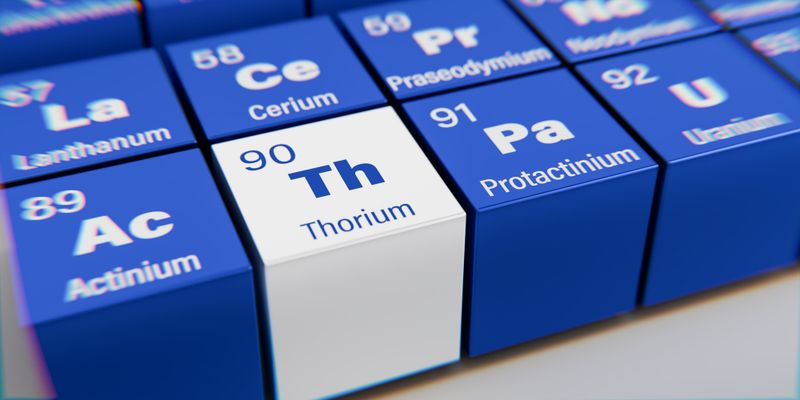
Thorium is not merely an alternative fuel; it is India’s oil. We sit atop the world’s largest proven reserves, around 1.07 million tonnes, comprising a quarter of the global total. Thorium-232 is itself not fissile. It is a ‘fertile’ material. In the crucible of a reactor, it absorbs a neutron to become thorium-233, which decays into protactinium-233 and finally to uranium-233, which is an artificial fissile material suitable for nuclear fuel.
One thousand megawatts of power from a uranium-fuelled reactor requires around 200 tonnes of natural uranium per year. A thorium-fuelled reactor, in a closed cycle, could theoretically produce the same power with less than one tonne of thorium annually. Multiply that by hundreds from our reserves, and the implications for perpetual, self-reliant energy generation are staggering. It is a national energy grid that, once the initial fissile inventory (from plutonium-239 bred in our FBRs) is established, can run on indigenous fuel, recycled and bred in situ, for millennia.
The PFBR is the vital, non-negotiable bridge to the thorium future. The technology for harnessing this white-silver metal is not a distant dream. It is here, evolving and being aggressively pursued by our strategic competitors. The most promising pathway is the MSR. Unlike conventional solid-fuel reactors, an MSR dissolves the thorium (and the bred uranium-233) in a molten fluoride or chloride salt, which serves both as the fuel and the coolant. The advantages are profound and manifold.
First, the breeding cycle occurs within the sealed reactor core, and the uranium-233 produced is contaminated with uranium-232, whose highly energetic gamma decay products make the fuel extraordinarily difficult and dangerous to handle for military purposes. It is, by its very physical nature, a more peaceful fuel.
Second, MSRs operate at atmospheric pressure, eliminating the risk of a catastrophic pressure vessel failure. The fuel is already molten; a runaway reaction causes the salt to expand, reducing reactivity passively, or a freeze plug can melt, draining the fuel into passively cooled dump tanks. The China Syndrome — the worst-case scenario of a nuclear meltdown — is near-impossible.
Third, MSRs can achieve very high burn-up rates, extracting far more energy from the fuel and drastically reducing the long-term radiotoxic waste. The waste stream is smaller and more manageable.
Recognising the strategic potency of this technology, China has made thorium MSRs a national priority. Through its Thorium Molten Salt Reactor project, it is aggressively pursuing a solid-fuel and liquid-fuel demonstration reactor, aiming for commercialisation within a decade.
If China succeeds in perfecting and mass-producing commercial thorium MSRs before India, it will not only achieve its own energy dominance but also corner the global market for this technology, leaving India (the country with the most thorium) as a potential technology purchaser and licensee. The irony would be Shakespearean in its tragedy.
India’s diplomatic and scientific outreach must be leveraged now. To lead, we need not go it alone. The US (with renewed interest in advanced reactors and companies like the Clean Core Thorium Energy exploring thorium-based fuel), Canada (with CANDU reactor expertise), Russia (with experience of fast reactors and closed fuel cycles) and Europe (through its nuclear research consortia) can be vital partners in regulatory innovation and high-assay, low-enriched uranium (HALEU) production for the initial fissile stock.
A successful thorium programme will permanently de-risk the Indian economy from the vagaries of the petro dollar and the weaponisation of energy. India needs a national mission on thorium, on par with the Green Revolution in its ambition and execution. This mission must aim to demonstrate a fully operational, grid-connected thorium-fuelled MSR within the next 10-12 years and to begin commercial deployment by 2040.
This requires establishing a dedicated thorium technology innovation hub, bringing together the Bhabha Atomic Research Centre (BARC), Indira Gandhi Centre for Atomic Research (IGCAR), IITs and the private sector in a synergistic partnership.
A thorium-powered grid, operating at high-capacity factors, provides the perfect, carbon-free baseload partner to other variable renewable energy sources. When the sun doesn’t shine and the wind doesn’t blow, the thorium reactor hums quietly, ensuring grid stability. This is how we truly decarbonise.
Panel seeks review of tax on disability pensions for armed forces personnel, flags fighter jet upgrade
The Parliamentary Standing Committee on Defence on Wednesday recommended that the proposal to impose income tax on disability pensions for armed forces personnel be “examined” and reconsidered. Separately, it flagged the urgent need for upgradation of fighter aircraft as a priority.
The committee said it had been apprised of the proposal to bring disability pensions, currently non-taxable, under the ambit of income tax. While taxation falls under the jurisdiction of the Ministry of Finance, it noted that the Ministry of Defence is a key stakeholder and should take up the issue at an appropriate level to examine the proposal.
The panel also stressed the need to prioritise next-generation fighter jet technology. “Technical upgrade of aircraft is required on top priority to enhance combat capability,” it said, adding that the Ministry of Defence should chart a clear trajectory for the development and acquisition of sixth-generation fighter aircraft to strengthen India’s air power in an increasingly contested environment.
On budgetary requirements, the committee recommended that additional funds, if needed, be allocated to the Ministry of Defence in the next fiscal beginning April 1, to ensure optimal combat preparedness of the armed forces.
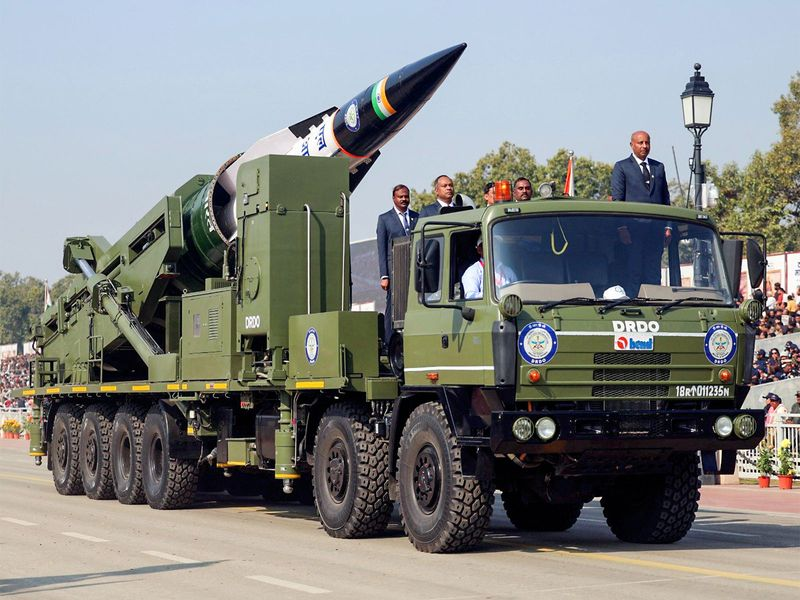
It called for a greater focus on network-centric and cloud-enabled operations, and emphasised that indigenous research and development in glide missile technology would boost strategic preparedness and operational flexibility.
The panel also recommended the creation of a separate budget head for critical and emerging technology R&D to ensure timely execution of priority projects.
Further, it urged expediting ongoing efforts to exclude civil areas from select cantonments, stating that priority should be accorded to resolve issues faced by civilians in Cantonment Boards.
On technology infusion, the committee stressed that all initiatives and programmes must adhere to defined timelines to enable the armed forces to adopt and operationalise new capabilities in a timely manner. It also took note of efforts such as the national quantum mission and high-performance computing and AI cloud initiatives.
Iran-Israel War LIVE updates: Strikes hit world’s largest natural gas field in Iran; Tehran retaliates with more attacks
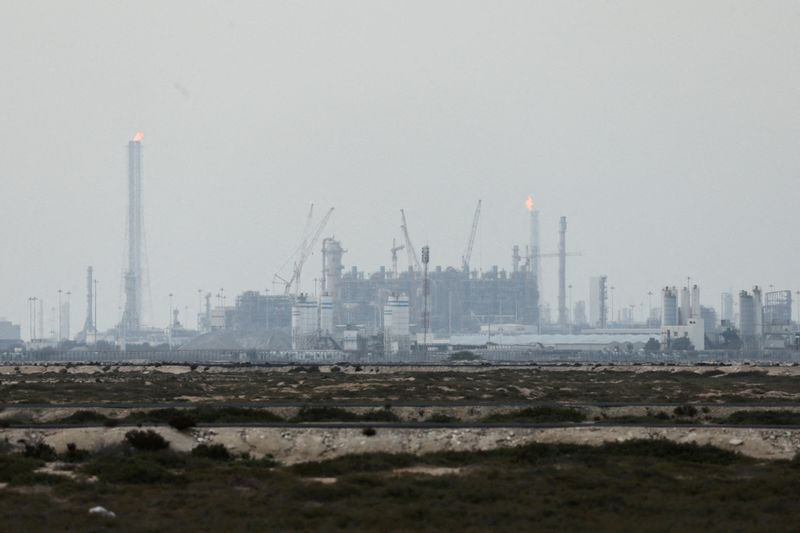
Dubai: Qatar said on Thursday that Iranian missile attacks damaged more liquefied natural gas sites in the energy-rich nation, “causing sizable fires and extensive further damage.”
Qatar Energy, the nation’s state-owned oil and gas company, announced the damage. It said firefighters were working to halt the blazes and no one had been hurt so far.
Qatar is a key source of natural gas for the world’s energy markets. It already shut in its production earlier in the war, but extensive damage could delay Qatar in getting its supplies to the market after the Iran war ends.
Israel killed Iran’s intelligence minister as it kept up its campaign against the Islamic Republic’s top leadership and reportedly attacked an Iranian offshore natural gas field on Wednesday, as the war escalated pressure on the region’s economic lifeblood: energy.
Iran condemned the strike on its massive South Pars natural gas field, with Iranian President Masoud Pezeshkian warning of “uncontrollable consequences” that “could engulf the entire world.”
Iran escalated strikes on its Persian Gulf neighbours’ energy facilities, hitting gas facilities in Qatar after Israel launched an attack against Iran’s South Pars offshore natural gas field in the Persian Gulf that it shares with Doha. Qatar in response ordered Iranian Embassy officials to leave the country within 24 hours.
Tehran also struck the Habshan gas facility and Bab field in the United Arab Emirates, which the government there called a “dangerous escalation” in the Islamic Republic’s war against Israel and the United States. Authorities in Abu Dhabi say the gas operations had been shut down after interceptions over the sites. AP
Trump says US will retaliate if Iran attacks Qatar again
March 19, 2026 8:29 am
President Donald Trump pledged that Israel would make no more attacks on Iran’s major South Pars gas field, but if Iran attacked Qatar again, the US would retaliate and “massively blow up the entirety” of the field. Trump made his threat on social media on Wednesday night as the war roiled global energy markets and Iranian missiles hit Qatar. “I do not want to authorise this level of violence and destruction because of the long-term implications that it will have on the future of Iran,” Trump said, but added that he would “not hesitate to do so,” if Qatar’s liquified natural gas sites were attacked again.
Saudi Arabia reserves right to military action against Iran: Foreign Minister
March 19, 2026 8:29 am
Saudi Arabia reserves the right to act militarily against Iran and any trust with Tehran has been shattered, the Saudi Foreign Minister said early on Thursday, after Riyadh was targeted by Iranian ballistic missiles. Iran accused Israel of striking its facilities in the huge South Pars gas field on Wednesday, and retaliated by vowing attacks on oil and gas targets throughout the Gulf, firing missiles at Qatar and Saudi Arabia. In the harshest comments to come out of the Gulf kingdom in nearly three weeks of war, Farhan accused Iran of premeditated hostile actions against its neighbours, both directly and via an array of regional proxies which he urged Tehran to reign in.
Iran launches multiple-warhead missiles at Israel
March 19, 2026 8:19 am
Responding to the killing of Larijani, the paramilitary Revolutionary Guard said Wednesday it had attacked central Israel with multiple-warhead missiles that have a better chance of evading defense systems. Footage filmed by The Associated Press showed at least one missile releasing a cluster of munitions over Israel.
Israel pressures Hezbollah in Lebanon
March 19, 2026 8:19 am
Keeping up pressure on Iran-backed Hezbollah militants, Israeli strikes hit multiple apartment buildings in Beirut, killing at least a dozen people. Israel flattened an apartment building in central Beirut about an hour after issuing an evacuation notice – the fourth time the building was targeted. Israel’s military claimed it was being used by Hezbollah to store “millions of dollars intended to finance its activities,” without providing evidence.
Iran keeps up strikes on Gulf countries’ oil facilities
March 19, 2026 8:19 am
QatarEnergy said on X that a missile hit its massive Ras Laffan liquefied natural gas facility, sparking a fire that caused “extensive” damage before it was extinguished. The company had already halted production there because of Iranian attacks. Since the war started, a small number of ships from Iran, Turkey, India and elsewhere have gotten through the Strait of Hormuz, which leads from the Persian Gulf to the open ocean. Iran insists the waterway is open, just not to the US or its allies.
Army foils infiltration attempt along LoC in Rajouri, terrorist killed
The Army on Tuesday said it foiled an infiltration attempt along the Line of Control in the Rajouri district of the Jammu region, killing one militant while a search operation is underway to track down another.
According to officials, the incident occurred in the Nowshera sector after security forces received inputs about the movement of suspected terrorists in the area.
In a post on X, the Army’s White Knight Corps said that acting on credible intelligence inputs from security agencies, the movement of two militants was detected in the general area of Jhangar in Nowshera around 3 pm.
Alert troops responded with what the Army described as “swift and calibrated combat action,” engaging the infiltrators and foiling the attempt to cross the LoC.
“In the ensuing engagement, a Pakistan-sponsored terrorist was eliminated, effectively denying any breach of the LoC,” the Army said.
Officials said a search operation has been launched in the area to locate the second militant who is believed to have escaped during the encounter.
“Troops have been reoriented to track the second terrorist and ensure domination of the area, supported by integrated ground and aerial surveillance,” the Army added.
Security forces have maintained a robust operational posture and heightened alert across the sector following the incident.
Forest fire triggers landmine blasts along LoC
Some landmines exploded on Tuesday due to a forest fire along the Line of Control (LoC) in Poonch district, triggering panic among border residents, officials said. No casualties were reported in the blasts and efforts are on to douse the flames, they said. The fire broke out in forward area in Balakote sector, Dadote, around 9.55 am, causing some landmines to explode due to heat. The fire had not been put out till last reports, they said.
Forward areas are dotted with landmines as part of an anti-infiltration system.
Drone sighted near IB in Samba
Security forces detected suspected Pakistani drone movement late Monday night in the Daboh area along the International Border in Samba district
Following the alert, forces deployed additional personnel and initiated surveillance to check any possible air-dropping of weapons or narcotics
A coordinated search operation involving the Army, J&K Police and BSF was launched in the suspected area
Security teams also conducted searches in Bhai Nallah, Lala Chack and Malani in the Rajpura belt of Samba following reports of suspicious movement
Bilaspur boy commissioned as Lieutenant in Indian Army
Lt Karnaveer Singh Thakur with his family at OTA, Chennai.
Karnaveer Singh Thakur, a resident of Khandgadh village in Nichli Bhated gram panchayat of Bilasur district, has joined the Indian Army as a Lieutenant. He was commissioned as Lieutenant in the Army on March 7 after completing his training at the Officers Training Academy in Chennai. He will serve Assam Regiment of the Army.
Lt Karnaveer hails from a family having a history of national service for three generations. His father, Col Vikram Singh Thakur, is also serving in the Indian Army while his mother, Narisha Thakur, is a homemaker. His grandfather Ramdhan Verma had retired from the Indian Army as a Colonel while his uncle is Group Captain Ajay Singh Thakur is serving the Indian Air Force.
Col Ramdhan Verma said that Karnaveer had nurtured a dream since childhood of joining the Army to serve the nation. He had achieved this milestone due to his hard work, discipline and dedication. The family, relatives and local residents congratulated Karnaveer on his success and wished him a bright future.
Technical Education Minister Rajesh Dharmani said that Karnaveer’s achievement would inspire the youth of the region to step forward to serve the nation. MLA Trilok Jamwal extended his best wishes to Karnaveer. Members of Nichli Bhated gram panchayat and social organisations also extended their best wishes to.
in one widely shared example, a clip claiming to show a US warship shooting down an Iranian aircraft was later identified as footage from the video game War Thunder
WITHIN hours of the first exchanges of strikes between Iran and Israel, dramatic videos began circulating online, claiming to show fighter jets shot down and cities reduced to rubble. Several were quickly exposed as fiction. Some clips have turned out to be images from video games. Others appear to have been
Colonel Pushpinder Singh Bath and his son Angad under treatment. File photo
Nearly a year after he and his son were allegedly assaulted by police personnel in Patiala, Colonel Pushpinder Singh Bath has written to Director General of Police (DGP) Gaurav Yadav, seeking a “thorough investigation” into alleged misconduct, coercion and attempts at a cover-up by local police officials.
In a letter sent to the DGP on Monday, Colonel Bath demanded that the officers concerned be placed under suspension until the trial concludes, citing concerns about his family’s security. A copy of the letter has also been sent to Chief of Army Staff General Upendra Dwivedi.
Bath alleged the police officials who assaulted him snatched his military identity card and mobile phone and later created a false witness to cover up the incident. “The trail of lies that have been cooked up to say that these items were found by someone and handed over to the police needs to be exposed,” he said.
Bath further alleged that false reports were submitted by the police officers concerned to the court as well as to their department, and demanded an inquiry into the matter. He said strict action should be taken if the reports were found to be fabricated.
He also sought a departmental inquiry against the officers involved, including senior officials, and asked that fairness and transparency be ensured so that the accused could not influence the judicial process. A Punjab Police spokesperson said an FIR in the case was registered on March 22, 2025, at the Civil Lines police station in Patiala. The investigation was later transferred to the CBI.
The spokesperson said under the Punjab Police rules, the Senior Superintendent of Police was the competent authority to take disciplinary action against inspectors and lower ranks. Disciplinary action, including permanent forfeiture of three years of service, has been ordered against four inspectors and Constable Jai Singh, and all of them have been transferred out of the Patiala range.
In December, the CBI filed a chargesheet in a special court in Mohali against four inspectors — Harjinder Singh Dhillon, Shaminder Singh, Harry Boparai and Ronnie Singh — under relevant provisions of the BNS.
US says it destroyed 16 mine-laying vessels as Iran threatens to block Gulf oil exports
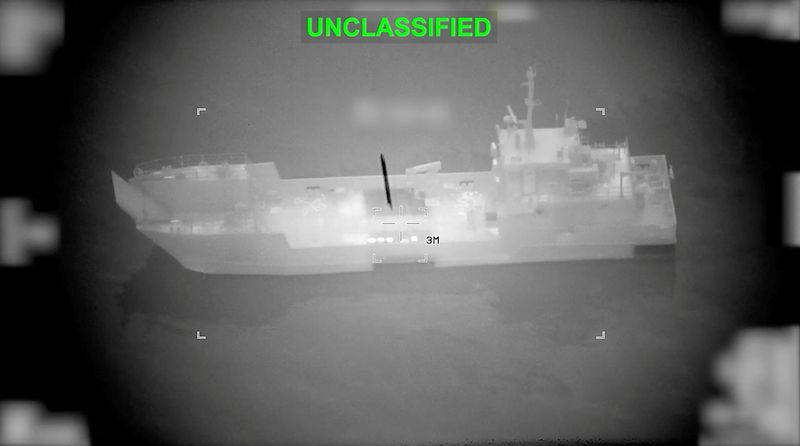
A projectile approaches what U.S. Central Command (CENTCOM) says is an Iranian naval vessel, during strikes that included attacks on mine-laying vessels, at a location given as near the Strait of Hormuz, amid the U.S.-Israeli conflict with Iran, in this screen grab from video released March 10, 2026. CENTCOM/Handout via
Dubai: The US military said it took out multiple Iranian vessels on Tuesday as the Islamic Republic vowed to block the region’s oil exports and concerns grew about the country’s threats to stop tankers from using a waterway through which 20 per cent of the world’s oil is shipped.
The US destroyed 16 mine-laying Iranian vessels, though President Donald Trump said in social media posts that there were no reports of Iran planting explosives in the Strait of Hormuz.
The American military released the figure, along with unclassified footage of some of the vessels, after Trump earlier warned Iran against laying mines in the strait.
Both sides sharpened their rhetoric as the war entered its 11th day, with Trump threatening to hit Iran at “a level never seen before” if the country failed to immediately remove any mines it might have deployed in the channel.
US Defence Secretary Pete Hegseth promised the most intense strikes yet, while the Pentagon detailed the broader toll of injuries sustained by US troops.
Advertisement
The conflict’s effects rippled across the Middle East and beyond. Iranian leaders ruled out talks, threatened Trump and launched new attacks against Israel and Gulf Arab countries.
In Iran, residents of Tehran said they experienced some of the war’s heaviest strikes. A woman said she saw a residential building get hit. She and others reached by The Associated Press spoke on condition of anonymity to prevent reprisals. Tens of thousands of Iranians have sought shelter in the countryside. AP
UN warns of higher food prices, cost-of-living if Strait of Hormuz shuts
March 11, 2026 8:55 am
United Nations: The United Nations has warned of significant risks to global trade and development, including higher food prices and cost-of-living, if the Strait of Hormuz is closed amid the West Asia conflict. The UN Conference on Trade and Development (UNCTAD) said in a report on Tuesday that the ongoing military escalation in the region due to the US-Israeli strikes on Iran and retaliation by Tehran has disrupted shipping flows through the Strait of Hormuz, one of the world’s most critical maritime chokepoints. The narrow passage carries around a quarter of global seaborne oil trade and significant volumes of liquefied natural gas and fertilisers. “The resulting ripple effects go far beyond the region, affecting energy markets, maritime transport and global supply chains,” the report said. PTI
Lebanon reports more deaths
March 11, 2026 8:16 am
Dubai: Multiple Israeli strikes killed seven people across southern Lebanon, the Lebanese Health Ministry said early on Wednesday. Also killed was a Red Cross member who died early on Wednesday after an Israeli strike targeted his team on Monday while they were rescuing people following an earlier attack, the health ministry said. On Tuesday, Israeli airstrikes killed four people, including a paramedic who worked for the Hezbollah-affiliated Islamic Health Authority who was treating the wounded. AP
State Stalwarts
DEFENCE MINISTER
Minister Rajnath Singh
ALL HUMANS ARE ONE CREATED BY GOD
HINDUS,MUSLIMS,SIKHS.ISAI SAB HAI BHAI BHAI
CHIEF PATRON ALL INDIA SANJHA MORCHA
LT GEN JASBIR SINGH DHALIWAL, DOGRA
SENIOR PATRON ALL INDIA SANJHA MORCHA
MAJOR GEN HARVIJAY SINGH, SENA MEDAL ,corps of signals
.
.
PATRON ALL INDIA SANJHA MORCHA
MAJ GEN RAMINDER GURAYA ,MADRAS REGIMENT
sanjhamorcha303@gmail.com
PRESIDENT SOUTH ALL INDIA SANJHA MORCHA
COL SS RAJAN BOMBAY SAPPERS,
PRESIDENT UTTARAKHAND ALL INDIA SANJHA MORCHA
COL B M THAPA ,BENGAL SAPPERSS
PRESIDENT HARAYANA STATE CUM COORDINATOR ESM
BRIG DALJIT THUKRAL ,BENGAL SAPPERS
PRESIDENT TRICITY
COL B S BRAR (BHUPI BRAR)
PRESIDENT CHANDIGARH ZONE
COL SHANJIT SINGH BHULLAR
.
.
PRESIDENT PANCHKULA ZONE AND ZIRAKPUR
COL SWARAN SINGH
INDIAN DEFENCE FORCES
DEFENCE FORCES INTEGRATED LOGO
INDIAN AIR FORCE
Air Officer C-in-C WESTERN AIR COMMAND
AIR MSHL S PRABHAKARAN AVSM VM
AOC-IN-C, EASTERN AIR COMMAND
Air Marshal Inderpal Singh Walia
AOC-in-C SOUTH WESTERN AIR COMMAND
Air Marshal Vikram Singh
AOC-IN-C, SOUTHERN AIR COMMAND
Air Marshal J.Chalapati
AOC-IN-C TRAINING COMMAND
AIR MARSHAL SK GHOTIA VSM
AOC-IN-C MAINTENANCE COMMAND
Air Marshal Jagdish Chandra
Flag Officer Commanding in Chief, Western Naval Command
ice Admiral R Hari Kumar, PVSM, AVSM, VSM
Flag Officer Commanding in Chief, Eastern Naval Command
Vice Admiral Sanjay Bhalla, AVSM, NM
Flag Officer Commanding in Chief, Southern Naval Command