














Sanjha Morcha

Seychelles Hosts Tri-Service India Drill in ‘Friendship’ Exercise Lamitiye 2026

India and Seychelles have launched the 11th edition of their biennial joint military exercise, Exercise Lamitiye 2026, underscoring deepening defence ties in the Indian Ocean region.

A tri-service contingent from the Indian armed forces departed New Delhi on Monday to participate alongside Seychelles Defence Forces (SDF) troops from 9 to 20 March at the Seychelles Defence Academy.

The term ‘Lamitiye’ translates to ‘friendship’ in the Creole language, reflecting the exercise’s ethos of fostering camaraderie since its inception in 2001.

This year’s iteration marks a notable milestone as it features participation from all three branches of the Indian military for the first time. The Indian contingent includes personnel from the Assam Regiment, alongside elements from the Indian Navy—represented by INS Trikand—and the Indian Air Force, which has deployed a C-130 aircraft.

The exercise aims to bolster synergy and interoperability between the two militaries, particularly in sub-conventional operations within semi-urban environments. It also emphasises cooperation during peacekeeping missions, aligning with broader bilateral defence objectives.

Government contract consulting

Participants will engage in joint training, planning, and execution of tactical drills to neutralise potential threats in semi-urban settings. These drills will leverage new-generation equipment and technology, enabling both sides to showcase advanced capabilities.

The 12-day program encompasses a diverse range of activities, including field training exercises, combat discussions, case studies, lectures, and demonstrations. It will culminate in a two-day validation exercise to assess acquired skills and operational cohesion.

Beyond tactical proficiency, the exercise seeks to promote bilateral military relations by facilitating the exchange of skills, experiences, and best practices. This interaction is expected to enhance mutual understanding and reinforce jointness among the troops.

In the strategic context of the Indian Ocean, such initiatives gain added significance amid evolving regional security dynamics. Exercise Lamitiye strengthens India’s defence footprint in the archipelago nation, vital for maritime security and countering non-traditional threats.

The Indian contingent’s arrival in Seychelles signals the prompt commencement of activities, with both forces poised to derive substantial benefits from this platform for interoperability.

Veteran support services

Overall, the exercise will contribute immensely to developing shared operational perspectives, magnifying defence cooperation between India and Seychelles.

PTI


DRDO Awards Paras Defence ₹80 Crore Contract For Advanced Air Defence Optics

Paras Defence and Space Technologies has secured a significant contract from the Defence Research and Development Organisation (DRDO), valued at approximately ₹80.28 crore inclusive of taxes. This order pertains to the development of a high-precision optical system tailored for air defence applications.

The announcement, made via an exchange filing on Monday, underscores the company’s growing role in India’s indigenous defence manufacturing ecosystem.

The contract, awarded by DRDO under the Ministry of Defence, involves specialised development work on the optical system. Such systems are critical for modern air defence networks, enabling precise detection, tracking, and engagement of aerial threats.

This aligns with India’s push towards self-reliance in defence technologies, particularly in optronics and electro-optical systems that enhance situational awareness on the battlefield.

Paras Defence clarified in its filing that neither the promoters nor the promoter group holds any interest in the awarding entity. The order does not qualify as a related party transaction, ensuring transparency and compliance with regulatory norms. The execution timeline is set at 18 months from the date of the supply order, reflecting a structured approach to project delivery.

Investment in India

Financially, Paras Defence demonstrated robust performance in the December quarter. Net profit surged 21.3% year-on-year to ₹18.2 crore, up from ₹15 crore in the prior year. Revenue expanded by 24% to ₹106.4 crore, compared to ₹85.8 crore previously, driven by strong contributions from core segments.

EBITDA rose 19% to ₹26.3 crore, though the margin contracted slightly to 24.7% from 25.8%. This moderation stemmed from elevated total expenses, including higher finance costs and employee benefits, which partially offset operational gains.

Segment-wise, the Optics and Optronics Systems business shone brightly, with revenue climbing to ₹58.4 crore from ₹44.4 crore a year earlier. This segment’s growth is particularly noteworthy, as it directly ties into the new DRDO order and positions Paras as a key player in high-precision defence optics.

The Defence Engineering segment also advanced, posting ₹47.95 crore in revenue against ₹41.33 crore in the corresponding quarter last year. These figures highlight Paras Defence’s diversified portfolio and its ability to capitalise on India’s defence indigenisation drive.

This DRDO contract arrives at a pivotal moment for Paras Defence, which has been scaling up its capabilities in aerospace and defence domains. The company, listed on the stock exchange, has increasingly partnered with public sector undertakings and DRDO labs, contributing to projects in missiles, UAVs, and surveillance systems.

Defence expo coverage

High-precision optical systems like the one under development are vital for air defence platforms such as the Akash missile system or emerging integrated air defence networks. They incorporate advanced lenses, sensors, and stabilisers to function in harsh environments, providing real-time targeting data to command centres.

India’s defence sector has witnessed accelerated procurement and development under initiatives like Atmanirbhar Bharat. Paras Defence’s order exemplifies how private firms are filling critical gaps left by traditional public sector entities, fostering innovation and faster timelines.

The 18-month execution period allows Paras to leverage its Bengaluru-based facilities, known for optics manufacturing. This could enhance the company’s technical expertise and open doors to follow-on orders or exports, aligning with India’s strategic ambitions in the Indo-Pacific region.

Looking ahead, this order strengthens Paras Defence’s order book, potentially improving investor sentiment despite the day’s share price dip. With a track record of quarterly growth and a focus on high-margin defence segments, the firm appears well-positioned amid rising geopolitical tensions and defence budgets.

Defence policy analysis

ET News


IAF Moves To Acquire 200 Israeli ROCKS Missile Pods With Plans For Local Production And Technology Transfer

WarThunder Image     

The Indian Air Force is actively pursuing the acquisition of about 200 Israeli‑made ROCKS air‑launched quasi‑ballistic missiles, while also working to secure a Transfer of Technology that would permit the missile’s domestic manufacture in India, reported TOI.

India travel guide

If finalised, such a deal would make ROCKS only the second Israeli air‑launched strike missile to be produced under licence in the country, underscoring a deepening pattern of technology‑based collaboration rather than plain import‑only procurement.

This drive gathered substantial momentum after the IAF successfully test‑fired the missile, designated Crystal Maze-2 in Indian service, from a Sukhoi Su‑30MKI over the Andaman and Nicobar Islands in April 2024.

The test demonstrated a standoff strike capability extending beyond 250 kilometres, allowing the launch aircraft to remain safely outside the engagement envelope of hostile air defences while still engaging high‑value targets at long range.

The Crystal Maze-2, or ROCKS, employs a hybrid guidance suite combining electro‑optical and inertial navigation, which enables high‑precision strikes even in GPS‑denied or contested environments. This is particularly relevant to India’s western and northern operational theatres, where adversarial electronic‑warfare and jamming capabilities are significant, and reliance on GPS‑centric systems would be risky.

Fresh urgency has been injected by the missile family’s combat‑proven performance in Israel’s Operation Epic Fury in February 2026, during which Israeli air‑launched ballistic assets were rigorously employed against heavily defended targets.

India traditionally places high weight on real‑world operational validation before committing to large‑scale acquisitions, and the documented success of similar systems in active conflicts has accelerated decision‑making on the ROCKS package.

The proposed order sits within a broader, rapidly expanding Israeli missile‑acquisition architecture being assembled by New Delhi. In December 2025, the Defence Acquisition Council approved several Israeli‑origin systems, including SPICE‑1000 precision‑guided kits, Rampage stand‑off missiles, Air LORA, and the Ice Breaker stand‑off cruise missile, all designed to diversify the IAF’s long‑range strike options.

Government contract consulting

Prime Minister Narendra Modi’s state visit to Israel on 25–26 February 2026 further expanded the technological horizon, with Israeli authorities indicating willingness to transfer know‑how on systems such as Iron Dome, Iron Beam, Arrow, David’s Sling, and the Golden Horizon long‑range air‑launched ballistic missile.

These overtures, coming alongside the ROCKS‑ToT discussions, suggest Israel is positioning itself as a core technology partner for India’s next‑generation air‑defence and deep‑strike architecture.

If the ROCKS procurement and co‑production project are finalised, the Indian Air Force’s standoff strike architecture would rest on a layered mix of different speed and guidance regimes.

BrahMos‑A supersonic cruise missiles and SCALP‑EG stand‑off cruise systems would continue to deliver high‑precision, terrain‑following attacks, while the ROCKS and related ballistic options would provide faster, lofted trajectories suited to penetrating dense air‑defence belts.

Acquiring roughly 200 missiles is seen as the minimum order size that would justify establishing a local assembly and, eventually, full‑scale manufacturing line, aligning with the “Make in India” push in defence.

Preliminary talks have reportedly already begun with an Indian private‑sector defence firm identified to partner the Israeli manufacturer, with the eventual goal of progressively indigenising subsystems, final assembly, and later integration on multiple Indian platforms.

Domestic production of ROCKS would also reduce long‑term logistical and political dependencies, while giving India the flexibility to tailor warhead options—including penetration and blast‑fragmentation variants—against hardened targets such as command bunkers, air‑defence nodes, and reinforced infrastructure.

India travel guide

At the doctrinal level, the missile fits into an evolving “outside‑in” strike concept, where the IAF can launch salvos from beyond the first‑tier air‑defence cordon, thereby degrading the adversary’s ability to respond before own‑force assets ingress.


Army conducts interaction with ex-servicemen in Reasi

Enabled direct feedback, fostering a better understanding of their concerns and requirements

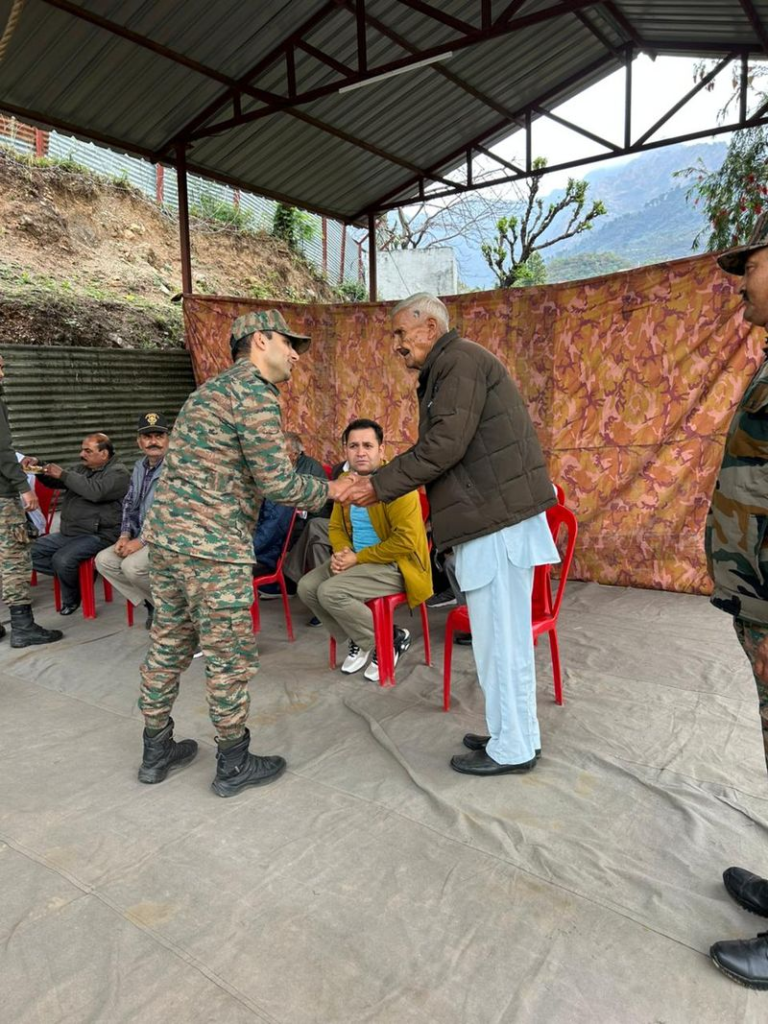
The Army conducted an interaction with ex-servicemen at Katra in Reasi district, with over 30 veterans in attendance.

The session provided a valuable platform to connect with veterans, honour their invaluable service, and acknowledge their enduring sacrifices. Deliberations focused on addressing grievances, creating awareness about various welfare schemes, and strengthening support mechanisms for veterans and their families,” an Army spokesperson said.

The interaction also enabled direct feedback, fostering a better understanding of their concerns and requirements.

“The initiative reflects the Army’s continued commitment to ensuring the well-being, dignity, and care of its veterans, while nurturing a strong and lasting bond with those who have served the nation with dedication and pride,” the spokesperson added.


Navy set to commission frontline stealth frigate ‘Taragiri’ on April 3

The ceremony in Visakhapatnam is scheduled to be presided over by Defence Minister Rajnath Singh, and it will serve as powerful testament to the nation’s journey, say officials

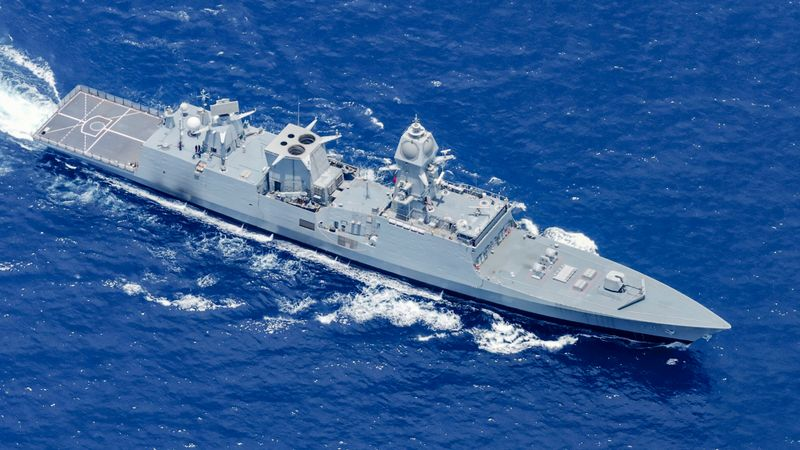
Indigenous stealth frigate ‘Taragiri’, endowed with the cutting-edge weapon suite including supersonic missiles, is set to be commissioned into the Indian Navy on April 3, officials said on Saturday.

The ceremony in Visakhapatnam is scheduled to be presided over by Defence Minister Rajnath Singh, and it will serve as a powerful testament to the nation’s journey toward becoming a completely self-reliant naval power, they said.

As the fourth potent platform of the Project 17A class, ‘Taragiri’ is not merely a ship; it is a 6,670-tonne embodiment of the ‘Make in India’ spirit and the sophisticated engineering capabilities of our indigenous shipyards, a Navy spokesperson said.

The fourth ship of Nilgiri-class (Project 17A) and the third one built by Mazagon Dock Shipbuilding Ltd (MDL), ‘Taragiri’ (Yard 12653), was delivered to the Navy on November 28 last year at MDL, Mumbai, marking a major milestone in achieving self-reliance in warship design and construction.

This state-of-the-art frigate reflects a “quantum leap” in naval design, stealth, firepower, automation and survivability, and is a symbol of ‘aatmanirbharta’ in warship building, the Navy had then said.

“In a ceremony that will mark a defining moment for India’s maritime sovereignty, the Navy is preparing to commission its latest stealth frigate, ‘Taragiri’ (F41), on April 3,” the spokesperson said.

Driven by a Combined Diesel or Gas (CODOG) propulsion plant, ‘Taragiri’ is designed for “high speed, high endurance versatility and multi-dimensional maritime operations,” the Navy said.

“The ship’s weapon suite is world-class, featuring supersonic surface-to-surface missiles, medium range surface-to-air missiles, and a specialised anti-submarine warfare suite,” the spokesperson added.

These systems are seamlessly integrated through a state-of-the-art Combat Management System, ensuring that the crew can “respond to threats with split-second precision,” the official said.

Built by MDL, Mumbai, this frigate represents a “generational leap” over earlier designs, offering a sleeker form and a significantly reduced radar cross-section that allows it to operate with lethal stealth, the Navy said.

With indigenous content exceeding 75 per cent, the ship highlights the maturity of a domestic industrial ecosystem that now spans over 200 Micro, Small and Medium Enterprises (MSMEs), and contributing to the government’s Aatmanirbharta initiative, supports thousands of Indian jobs, the officials said.

Beyond its role as a “premier hunter of the seas”, ‘Taragiri’ is built for the complexities of modern diplomacy and humanitarian crises.

Its “flexible mission profile” makes it ideal for everything from high-intensity combat to humanitarian assistance and disaster relief (HADR), the Navy said.

“The Indian Navy continues to grow as a combat-ready, cohesive, credible, Aatmanirbhar force, safeguarding the seas for a ‘Viksit, Samriddha Bharat’ guarded by ships designed by Indians, built by Indians and operated by Indians. ‘Taragiri’ stands ready for a promising future as a beacon of rising maritime power and an ironclad guardian of our blue frontiers,” it said.


Universe: Morality in times of war

When those entrusted with authority abandon justice, society itself becomes vulnerable to catastrophe

article_Author
Roopinder Singh

West Asia is engulfed in a war that threatens to spread wider. Nothing about war is surgical; nothing about it is clean. The violence unfolding evokes memories from a very different moment in history. This region is one where Guru Nanak travelled during his fourth Udasi, conversing with scholars, mystics and ordinary people about the nature of God and the ethical foundations of society. These spiritual journeys in the early 16th century were not pilgrimages; they were dialogues across cultures. Accompanied by Bhai Mardana, Guru Nanak travelled westwards through Afghanistan and Iran to the Arab world, visiting centres of Islamic learning.

Seeing the destruction, one is reminded of Guru Nanak’s shabad in which he says: “In the Dark Age of Kalyug, kings have become butchers and Dharma has sprouted wings and flown away. In this dark night of falsehood, the moon of Truth is not visible anywhere.”

This shabad was composed in response to Babur’s invading army rampaging through Saidpur and forms part of the hymns later known as Babar Bani, enshrined in Guru Granth Sahib. Guru Nanak spoke truth to power, writing from the perspective of the suffering populace.

In one striking passage, he likens those in authority to predators: “The kings are like tigers and their officials like dogs who harass the helpless.” The imagery is unsparing. What is particularly remarkable is that Guru Nanak’s criticism was not directed only at the invading forces. He questioned the failure of the rulers to defend their people. For him, the tragedy of the invasions was not simply a military defeat but a deeper moral failure of leadership. When those entrusted with authority abandon justice, society itself becomes vulnerable to catastrophe.

Perhaps the most poignant moment in these hymns is when Guru Nanak turns his anguish into a question addressed to the Divine: “When such terrible suffering was inflicted and people cried out in agony, did You not feel compassion, O Lord?” This is not an expression of disbelief but a profound moral lament — a sensitive observer confronting injustice while affirming faith in a higher moral order.

From these reflections emerges a clear ethical framework. Violence against the weak and the innocent is morally indefensible. The rulers’ legitimacy rests not on conquest but on justice and compassion. At the moment, both these qualities are scarce.

It seems we live in a society that has lost its moral moorings. The societal guardrails have been eroded, in some cases almost to invisibility. The social compact is severely damaged. We are lied to so often that we fail to trust; we shout and no longer listen; we exaggerate divisions and divide the world into binaries, ever eager to condemn those who do not agree with us.

As people, we need to engage with others, seek to understand their point of view, advance our opinions if necessary, and then decide whether we agree or not. We have the paradigm of Guru Nanak, who met people, held a dialogue with religious leaders of the time, and laid great stress on developing inner moral and spiritual strength. He stressed the Oneness of humanity and stood against divisiveness and greed.

The Janamsakhi episode of Guru Nanak arriving in Multan particularly resonates. The locals wished to indicate that there was no room for another holy man and sent a bowl filled to the brim with milk. The Guru quietly placed a jasmine petal on the surface. It floated gently without causing the milk to spill. The symbolism was clear: a truly spiritual presence does not displace others but coexists with them, enriching society without disturbing its balance.

At a time when conflicts continue to scar societies, Guru Nanak’s message offers a distinct perspective. Political authority must ultimately answer to the higher standard of morality.

— The writer is a senior journalist & author


Iran fires surprise 4,000-km missiles at US-UK joint base in Indian Ocean

Iran expanded the ambit of the West Asian conflict and launched an unsuccessful twin missile attack on Diego Garcia, the joint US-UK military base some 3,800 km away in the Indian Ocean, even as the UN nuclear watchdog confirmed that key Iranian nuclear facility at Natanz was targeted in a fresh strike on Saturday. Iran also claimed to have hit an Israeli F-16 fighter jet.

The Diego Garcia attack showed Tehran’s hidden ability that it had missiles that could travel almost 4,000 km, a possibility flagged in January by ‘Iran Watch’, a think-tank operated by US-based Wisconsin Project on Nuclear Arms Control.

One missile reportedly failed in flight while the other was intercepted by a US warship mid-flight. The Diego Garcia base is on a small, remote atoll but is strategically located and capable of accommodating long-range bombers. It has been used as a launchpad for operations in West Asia for years.

Iran launching a 4,000-km-range missile has propelled it into a select league of nations, including the US, India, China, Russia, UK, France and North Korea. Tehran had earlier declared a missile range limit of 2,000 km.

Western analysts pointed out that Iran probably used Khorramshahr-IV to attack Diego Garcia. ‘Iran Watch’ had, in its January assessment, said the missile was “likely deployed”, and that it “could almost certainly reach longer ranges (greater than the declared 2,000 km) if equipped with a lighter warhead”.

For a missile to travel 4,000 km, it takes a parabolic arc, exiting the inner atmospheric core of the earth and then re-entering to hit the target. A missile of 3,000-km-plus range is classified as intermediate range ballistic missile (IRBM).

Since the 1980s, Iran has set up its missile project and slowly improved the manoeuvrability of its re-entry vehicles and warheads. The country has an active missile research and development programme based at Shahid Hemmat Missile Industries Complex in Tehran.

The US Congress in June last year made an assessment ‘Iran’s Ballistic Missile Programs’, which said, “Iran continues to bolster the lethality and precision of its domestically produced missile and has the largest stockpiles of these systems in the region.” The US National Air and Space Intelligence Center catalogues at least 14 Iranian ballistic missile variants.

The US Institute of Peace has expressed concern about the potential dual purpose of Iran’s space launch vehicle programme, noting that it could be used to develop ballistic missiles.

On the technology front, Iran has probably been inspired by the North Korean systems. The Khorramshahr appears to be based on North Korea’s Hwasong-10 IRBM, which is referred to as ‘Musudan’ by the US intelligence. Its range is estimated to be between 2,500 and 4,000 km, which exceeds the 2,000-km range limit claimed by Iran for Khorramshahr.

Meanwhile, UN nuclear watchdog International Atomic Energy Agency (IAEA) has confirmed that Iran’s key nuclear facility at Natanz was targeted in a fresh attack on Saturday, even as it reported no increase in off-site radiation levels.

In a brief statement on X, the IAEA said it had been informed by Iran that the Natanz enrichment site had been hit, and that it was closely assessing the situation.

IAEA Director General Rafael Grossi reiterated an urgent call for military restraint, warning that continued strikes on nuclear facilities could trigger a dangerous radiological incident.

The development comes amid intensifying military activity involving Iran and Israel, with nuclear infrastructure increasingly emerging as a potential flashpoint in the widening conflict.

Preliminary reports indicate that while the site was struck, no radioactive leakage was detected outside the facility, suggesting that any potential impact remained contained for now. However, experts cautioned that even limited damage to nuclear infrastructure carried inherent risks.

The IAEA has consistently warned that attacks on such facilities could have severe consequences for human safety, environment and regional stability, even if immediate radiation levels appeared normal.

The Natanz facility, central to Iran’s uranium enrichment programme, has been targeted multiple times in the past, reflecting its strategic importance in the broader geopolitical contest over Tehran’s nuclear ambitions.

Grossi emphasised that the agency was actively monitoring developments and seeking further information from Iranian authorities, while maintaining contact with inspectors on the ground.


47 injured as Iran strikes Israel’s Dimona, home to its nuclear reactor and known as ‘Little India’

At least 47 people were injured on Saturday evening after an Iranian missile struck the southern Israeli town of Dimona—famous for the dome-shaped structure atop its nuclear centre and popularly known as “little India”, rescue services said.

Among the injured was a 12-year-old boy in serious condition after being hit by shrapnel, officials from the Magen David Adom (MDA) rescue services and local residents said.

A woman in her 30s was moderately hurt by glass shards, and 31 others suffered minor injuries from shrapnel or were hurt after falling over while running to shelters, they said. Some 14 others were treated for acute anxiety at Soroka Hospital in Beersheba.

“The missile fell on a community building, and nearby older houses collapsed under the impact. Most of the people were in shelters, so they were not hurt badly, except for the young boy who stayed outside,” a local resident said.

The Israel Defence Forces (IDF) said it is investigating the failure to intercept the Iranian ballistic missile. The Israeli army said the air defences engaged the ballistic missile, but the interceptors failed to knock it down.

“The incident will be investigated,” it said.

UN nuclear watchdog IAEA issued a call for “maximum military restraint” after the attack.

“The IAEA is aware of reports of an incident in the city of Dimona, Israel, involving a missile impact and has not received any indication of damage to the nuclear research center Negev,” the IAEA said in a post on X.

Iran said it is targeting Dimona as a “response” to an earlier strike on the Natanz nuclear enrichment site. The IDF, however, said it was not responsible for striking Natanz earlier in the day.

Dimona has a large Indian-Jewish population, and the community members, mostly from the state of Maharashtra, maintain strong links with India and have consistently put efforts to solidify them. This has earned the town the nickname of “Little India”.

Indian shops are spread across the town, and Marathi can be heard everywhere, with 7,500 strong Indian community making up for some 30 per cent of the town’s population. Cricket is popular in the town, and the younger generation is very familiar with local Indian snacks like ‘sonpapdi,’ ‘gulab jamun,’ ‘papri chaat,’ ‘bhelpuri,’ which several shops sell.


Iran-Israel war LIVE Updates: Open Hormuz or will destroy power plants, Trump threatens Iran

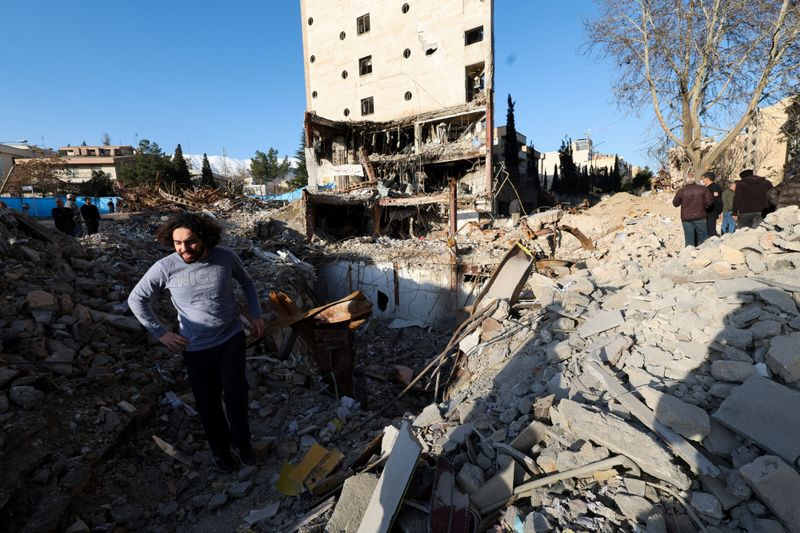
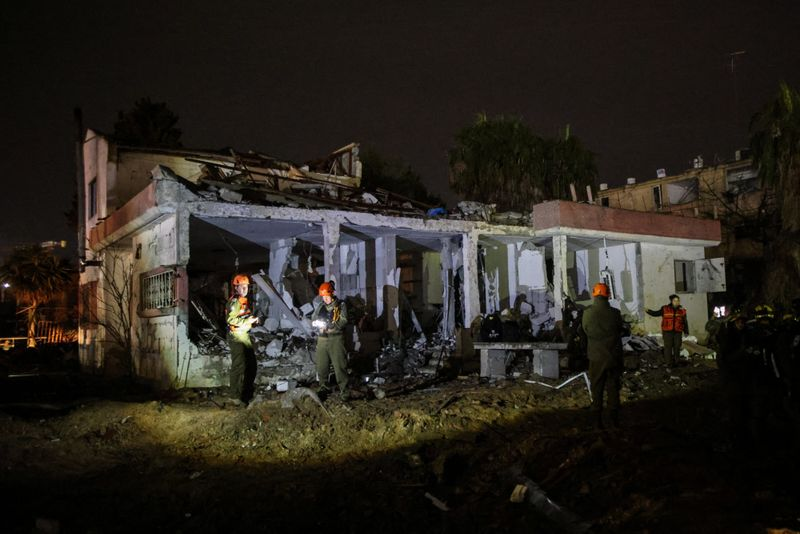
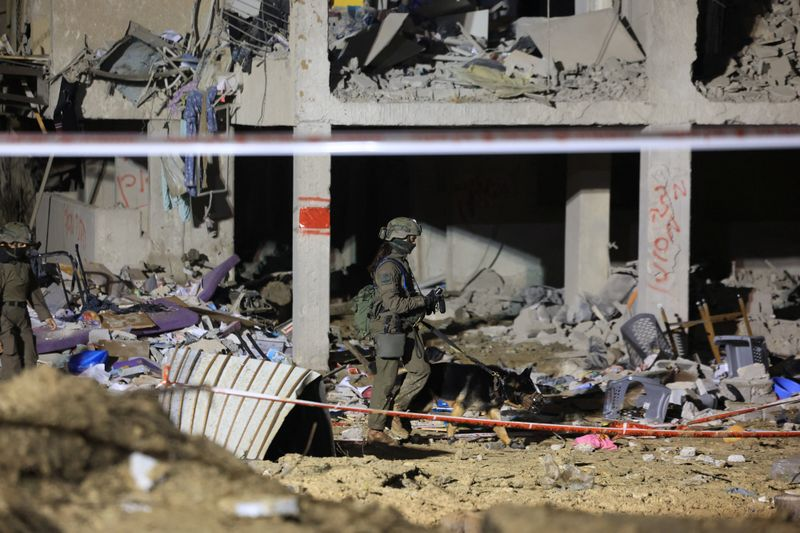
Israeli soldiers work at the scene of damage after Iranian missile barrages struck residential buildings in Arad, amid the U.S.-Israel conflict with Iran, in southern Israel, March 22, 2026. REUTERS

Cairo: Iranian missiles struck two communities in southern Israel late on Saturday, leaving buildings shattered and dozens injured in dual attacks not far from Israel’s main nuclear research centre, while President Donald Trump warned the US will “obliterate” Iranian power plants if it doesn’t fully open the Strait of Hormuz within 48 hours.

Trump — who is facing increasing pressure at home to secure the strait as oil prices soar — issued the ultimatum in a social media post while he spent the weekend at his Florida home.

Trump said he’s giving Iran 48 hours to open the vital waterway or face a new round of attacks. He said the US would destroy “various POWER PLANTS, STARTING WITH THE BIGGEST ONE FIRST!”

The Iranian strikes in Israel came after Tehran’s main nuclear enrichment site at Natanz was hit earlier in the day.

Israel’s military said it was not able to intercept missiles that hit the southern cities of Dimona and Arad, the largest near the centre in Israel’s sparsely populated Negev desert. It was the first time Iranian missiles penetrated Israel’s air defence systems in the area around the nuclear site.

“If the Israeli regime is unable to intercept missiles in the heavily protected Dimona area, it is, operationally, a sign of entering a new phase of the battle,” Iran’s Parliament Speaker Mohammad Bagher Ghalibaf said on X before word of the Arad strike spread.

Projectile hits close to a vessel off UAE coast

March 22, 2026 11:05 am

Cairo: A projectile struck close to a bulk carrier off the coast of the United Arab Emirates, causing an explosion, the British military’s United Kingdom Maritime Trade Operations (UKMTO) centre said early on Sunday. The attack occurred about 15 nautical miles north of Sharjah in the UAE. The UKMTO said the ship’s crew was safe. AP

Saudi air defenses intercept missiles, drones

March 22, 2026 11:04 am

Cairo: Air defences early on Sunday tracked the launch of three ballistic missiles towards Saudi Arabia’s capital, Riyadh, intercepting one, while the other two fell in an uninhabited area, according to the Defence Ministry. The ministry said it downed six drones headed towards the kingdom’s eastern region, one of its least densely populated areas near Iran and home to major oil installations. No casualties or damage were immediately reported. AP

Israeli troops and Hezbollah militants clash in Lebanon

March 22, 2026 10:13 am

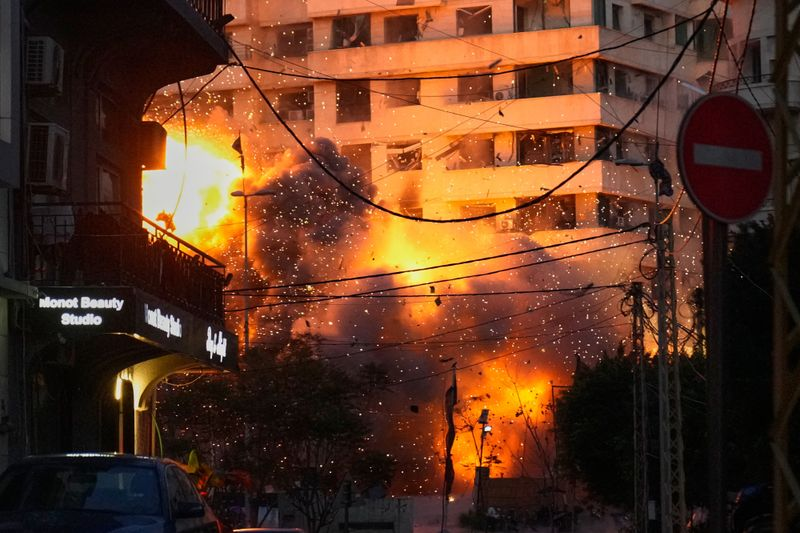
Cairo: Israel’s military said it was conducting a “targeted ground operation” in southern Lebanon and at least four militants were killed. Hezbollah said its fighters clashed with troops in the southern village of Khiam. Israeli strikes targeting Hezbollah have killed more than 1,000 people and displaced more than 1 million, according to the Lebanese government. Hezbollah’s civilian assets also have been targeted. AP

Global pressure increases to get shipping back on track

March 22, 2026 10:11 am

Cairo: As Iran threatens shipping on the Strait of Hormuz, the United Arab Emirates joined 21 other countries including the UK, Germany, France and Japan in expressing “readiness to contribute to appropriate efforts to ensure safe passage”. The Trump administration announced it was temporarily lifting sanctions on Iranian oil that was already loaded on ships as of Friday, but that does not increase oil production, a central factor in surging prices. The oil ministry of Iran, which has evaded sanctions for years, replied that it “essentially has no crude oil left in floating storage”. AP

US can use Diego Garcia base to protect Strait of Hormuz

March 22, 2026 10:11 am

Cairo: UK officials did not give details of the strike that targeted the Diego Garcia base on Friday, which was unsuccessful. Britain’s Ministry of Defence described Iran as “lashing out across the region”. It’s unclear how close the missiles came to the island. Iran previously asserted that it has limited its missile range to below 2,000 kilometres. But military experts said Iran may have used its space launch vehicle for an improvised firing. “If you’ve got a space program, you’ve got a ballistic missile program,” said Steve Prest, a retired Royal Navy commodore. AP

Israel had denied responsibility for attack on Natanz

March 22, 2026 10:09 am

Cairo: Israel on Saturday denied responsibility for the strike on the Natanz nuclear facility, nearly 220 kilometres southeast of Tehran. The Iranian judiciary’s official news agency, Mizan, said there was no leakage. The International Atomic Energy Agency has said the bulk of Iran’s estimated 970 pounds (440 kilograms) of enriched uranium is elsewhere, beneath the rubble at its Isfahan facility. It said on X it was looking into the strike. The Pentagon declined to comment on the strike on Natanz, which was also hit in the first week of the war and in the 12-day war last June. Russian Foreign Ministry spokesperson Maria Zakharova said such strikes posed a “real risk of catastrophic disaster throughout the Middle East”. Iran retaliated hours later. AP

A dangerous new direction in the war

March 22, 2026 8:55 am

Cairo: “The war is not close to ending,” Israel’s army chief, Gen Eyal Zamir, said. Iran also targeted the joint UK-US Diego Garcia military base in the Indian Ocean about 2,500 miles away, suggesting that Tehran has missiles that can go farther than previously acknowledged – or that it had used its space program for an improvised launch. The US and Israel have offered shifting rationales for the war, from hoping to foment an uprising that topples Iran’s leadership to eliminating its nuclear and missile programs and its support for armed proxies. There have been no signs of an uprising, while internet restrictions limit information from Iran. The war’s effects are felt far beyond the Middle East, raising food and fuel prices. AP


HEADLINES :19 MARCH 2026

Armed Forces Tribunal puts Col Shrikant Purohit’s retirement on hold

Promote superseded JCO retrospectively, reinstate him in Army: Armed Forces Tribunal

BRO facing officer shortage of over 32 per cent: Parliamentary panel

The Steel of the 14th Army: Honoring the Indian Heroes of the Burma Campaign By Maj Gen Harvijay Singh, SM

Raghav Chadda of AAP Panjab on Disability Pension Taxation in RS

Israel Hammers Tehran Command Hubs In Retaliatory Blitz After IRGC’s Tel Aviv Missile Barrage

China Ramps Up Stealth Fighter Production With J-20, J-35 Jets

Jag Laadki Docks At Mundra with UAE Crude As Operation Sankalp Shields Indian Ships From West Asia Turmoil

Indian Navy’s IOS SAGAR 2.0 Bolsters Regional Maritime Ties With 16 IONS Nations

he U.S. just deployed a weapon that was supposed to stay classified for another decade. And it changes EVERYTHING about this war.

NEXT

India balances US, Russia ties with parallel naval engagements

Search operations intensified across Jammu region after suspicious movements

India’s energy policy: A masterclass in ‘loss control’

Panel seeks review of tax on disability pensions for armed forces personnel, flags fighter jet upgrade

Iran-Israel War LIVE updates: Strikes hit world’s largest natural gas field in Iran; Tehran retaliates with more attacks