
















The Indian Army has recently received its first batch of 480 Nagastra-1 loitering munitions from Solar Industries’ subsidiary, Economics Explosives Ltd (EEL). This acquisition is a significant step in enhancing the Army’s precision strike capabilities through indigenous technology.
The Nagastra-1 is a UAV-based loitering munition that operates similarly to a drone, capable of hovering over a target area and engaging with high precision. The system is man-portable, and light and is intended to be used for precision strike capabilities by the Army troops, officials said.
The Nagastra-1 was developed by EEL, which boasts an indigenous content of approximately 75%. The system was ordered under emergency procurement powers, allowing for rapid delivery following successful pre-delivery inspections.
Specifications:
– Weight: Approximately 9 kg
– Payload Capacity: 1 kg
– Endurance: Up to 60 minutes
– Operational Range:
– Manual control up to 15 km
– Autonomous mode up to 30 km
– Accuracy: Capable of striking within a 2-meter radius using GPS-guided systems.
– Kamikaze Mode: The munition can be deployed in “kamikaze mode,” where it can destroy targets by crashing into them. If the target is not found or the mission is aborted, it can safely return using a parachute recovery mechanism.
– Surveillance Capabilities: Equipped with day-and-night cameras, the Nagastra-1 can conduct reconnaissance missions in addition to offensive operations.
The induction of the Nagastra-1 aligns with global trends in modern warfare, where drone technology plays a crucial role. The use of loitering munitions has been highlighted in recent conflicts, showcasing their effectiveness against various targets, including soft-skinned vehicles and enemy personnel.
Solar Industries is working on the advanced versions of the munition named Nagastra-2 and Nagastra-3 with extended performance and warhead carrying capabilities. A few other Indian firms are also now moving towards developing the MALE indigenously under the defence ministry’s Indigenously Designed, Developed and Manufactured (IDDM) category for acquisition.

Capt J.K. Sengupta (from right), Rita Sengupta, Gen V.N. Sharma, Brig. Ravi Malhotra. — Anil Bhat
Some have probably heard about or have met this extraordinarily brilliant Officer Captain Jojo Sengupta, late trustee of Midas foundation who died on 31 August 2013 of cancer at Pune.
Captain Jayanta Kumar Sengupta, popularly known as Jojo, was the second son of Amar Prashad and Namita Sengupta and was born on 17 October, 1942, at Lahore, where Mr Sengupta, working with Shalimar Paints, was posted.
After his initial schooling at Huddard High School, Kanpur, he later joined Rashtriya Indian Military College (RIMC), Dehra Dun. Brilliant and talented as he was, it was no surprise that he turned out to be a triple gold medalist from RIMC, National Defenc Academy (NDA) and Indian Military Academy (IMA). He was commissioned into the 16th Light Cavalry, one of Indian Army’s oldest regiments, in December 1962. His third gold medal was awarded for topping his batch, the 31st IMA Course, the training period of which was telescoped to six months of the scheduled one year in order to enable Indian Armed Forces to meet the new defence challenges confronted by it owing to China’s unprovoked aggression in October 1962.
Jojo was doing a gunnery instructors course at the Armoured Corps Centre and School, Ahmednagar (Maharashtra), when the second India-Pakistan war, waged again by Pakistan in 1965, broke out. All ranks doing courses at this training establishment were re-called to their respective regiments.
Jojo reported to 16th Cavalry and was pitched into the operations. On September 21, his fourth day in the war, he was very effectively conducting an artillery shoot from his tank, sighting targets through the binocular sights in the commander’s hatch of the Centurian tank, when an armour-piercing projectile hit very close. All the glass of the sights got shattered and hit Jojo in his eyes and face.
After a prolonged period of convalescing at Army Hospital, Delhi Cantt and INHS Asvini, the Naval Hospital at Mumbai, Jojo underwent rehabilitation and mobility training at St. Dunstan’s in England. He also got the opportunity to learn Braille and typing and was able to access other rehabilitation services. He left the Army in 1967 and took up the dealership of Tata Oil Mills in Calcutta. In 1972, he also was also allotted the LPG distributorship of Indian Oil in Siliguri by the Directorate General Resettlement.
Jojo married Rita, a trained teacher and they had twin daughters, Sreerupa and Sreemoyee and son, Bibek. In 2003 Sreerupa got married to Major Gopal Mitra (Retd), SM (Sena Medal for gallantry). Major Mitra, who served in 15 Mahar Regiment lost his vision as a result of an explosion while fighting Pakistan supported terrorists in Kupwara, Jammu and Kashmir in 2000. Major Mitra completed his Masters in Social Work from Tata Institute of Social Sciences, Mumbai (TISS) and went on to obtain a scholarship to undertake an MSc in Development Management at the London School of Economics. Having worked earlier as the International Campaign Manager for Youth Voices, Leonard Cheshire Disability, a UK-based charity organisation working for the rights of persons with disabilities all over the world, he is now working in United Nations Children’s Emrgency Fuund as Programme Specialist for disability. He is the first Indian with disabilities to occupy this key Unicef post. Sreerupa did her Masters from London School of Economics and also Masters in Social Work from Tiss, Mumbai. The other twin Sreemoyee, who teaches, is presently doing a course at the London Institute of Education. Bibek is an executive director with Goldman Sachs.
In 1990 Jojo and Rita, with several like minded disabled youth founded the North Bengal Council for the Disabled (NBCD) and in 1998 they raised the Prerana Educational Centre, which began in a small garage in their house. Prerana, which grew into a major Special Educational Centre in North Bengal, is a cross disability educational centre for children with disabilities and seeks to provide holistic learning through a well designed curriculum. In 1998 NBCD also launched a large Community Based Rehabilitation Programme covering disabled persons in 700 villages in the Siliguri Sub Division.
In 2009 National Institute for the Visually Handicapped observed the International Day of Persons with Disabilities by felicitating five visually challenged persons for their contribution in the various fields. Capt JK Sengupta was one of five visually challenged persons selected for being conferred the NIVH Excellence Award 2009 presented by Mrs. Margaret Alva, governor of Uttarakhand.
I had the pleasure of meeting Jojo and Rita again during the February 2012 Cavalry Veteran’s Reunion at Delhi Cantt in the presence of former Army Chief General V.N. Sharma, of 16th Cavalry and Jojo’s course-mate, Brigadier Ravi Malhotra, secretary, Cavalry Officers’ Assoc-iation, when they happened to be in Delhi for a Prerana-related workshop. Little did we know during that visit that they would again be meeting him after that mostly in hospital. Soon afterwards, he was diagnosed with cancer of the lungs. It was a most unkind blow for a person like Jojo, already suffering blindness, to be further afflicted with cancer. But true to his form, he battled it most bravely and stoically. He could still surprise his visiting friends by asking them everything about them rather than talk about his own illness. He bravely fought his last battle in and out of Command Hospital and his brother’s residence at Pune succumbing after much pain and suffering, on August 31, 2013.
For the fraternity of the Armoured Corps, the Armed forces and a large circle of Jojo’s friends and dear ones, his demise is an irreparable loss of a great mind, an excellent person and a wonderful friend and family member and unforgettable by anyone who met him. May God bless his soul. Long Live Jojo.
The Army Service Corps (ASC) and Rajasthan Polo Club won their respective matches on the inaugural day of the Maharaja Ranjit Singh National Polo Trophy being organised at Chandigarh Polo Club, Khuda Lahora, under the aegis of Indian Polo Association….

The Army Service Corps (ASC) and Rajasthan Polo Club won their respective matches on the inaugural day of the Maharaja Ranjit Singh National Polo Trophy being organised at Chandigarh Polo Club, Khuda Lahora, under the aegis of Indian Polo Association.
The ACS kicked off their campaign on a winning note as they outclassed Hyderabad Polo and Riding Club (HPRC) 8-4.5. Sepoy Mukesh Gurjar of Supply Corps remained the top scorer with four goals and controlled the game for Services, while Sepoy Ravinder Mang smashed three. Major Qaramat Ali scored one goal. Salim Azmi managed three goals for the losing side.
The RPC defeated host Chandigarh Polo Club 12.5- 4. Col Manoj Dewan gave Chandigarh an excellent start by scoring a goal in the very first minute. However, the hosts faced a massive blow after Jitendra Singh received a major injury. The RPC made a comeback in the second round with the help of trio — Shubham Gupta, Alan Shaun Michael and Yuvraj Singh Ranawat. At the end of the second round, the RPC was in the commanding position with a score line of 9-3. Despite the best efforts of Dilpreet Singh Sidhu and Col Diwan, the CPC lost the match. Shubham Gupta scored the highest eight goals, and Alan scored four. Col Diwan scored three goals for the hosts.
Meanwhile, the General Zorawar Singh Trophy matches for Young Riders will be played tomorrow. The hosts Chandigarh will take on Panchkula in the opening encounter. Remount and Veterinary Corps will play against 61 Cavalry on the second day of the Maharaja Ranjit Singh Trophy, followed by a match between Army Service Corps and Hyderabad Polo and Riding Club.
Junaid Ahmed Bhat was a category ‘A’ terrorist
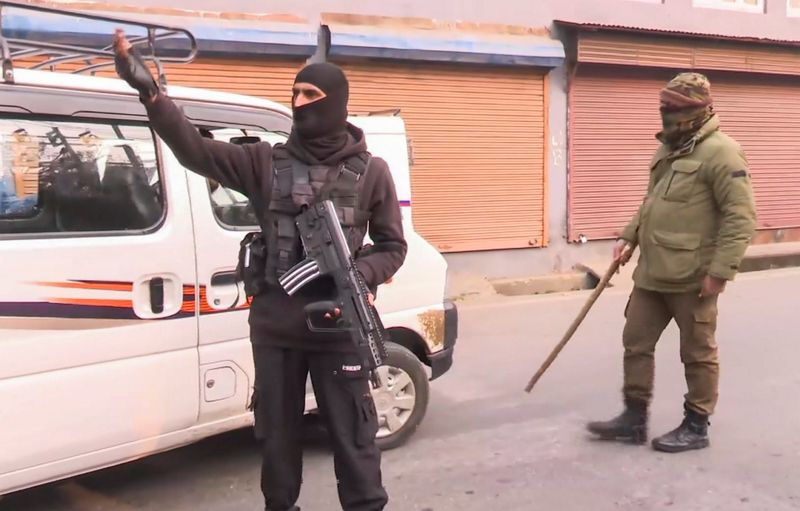
A Lashkar-e-Taiba terrorist, allegedly involved in an attack near a tunnel construction site in Jammu and Kashmir’s Gagangir in October this year, was killed in an encounter with the security forces in the Dachigam forest area here on Tuesday, officials said.
Acting on specific intelligence inputs, security forces launched a cordon-and-search operation in the upper reaches of Dachigam on Monday night, the officials said.
The search operation turned into a gunfight after terrorists fired at a search party, who retaliated. In the exchange of fire on Tuesday morning, a terrorist identified as Junaid Ahmed Bhat was killed, the officials said.
Bhat, a category ‘A’ terrorist of the Lashkar-e-Taiba, was wanted for his alleged involvement in the October 20 attack near a tunnel construction site in the Gagangir area of Ganderbal in which a local doctor and six non-local labourers were killed, they added.
“OP Dachigam: In the ongoing operation, one terrorist is killed and has been identified as Junaid Ahmed Bhat (LeT, Category A). The said terrorist was involved in civilian killing at Gagangir, Ganderbal, and several other terror attacks,” the Kashmir Zone Police said in a post on X.
The police said a cordon-and-search operation was underway in the upper reaches of Dachigam, and further details were awaited. Dachhigam, a national park on the outskirts of Srinagar, covers an area of about 141 square kilometres.
Animosity towards India is a defining element of the ethos of the Muhammad Yunus-led interim government of Bangladesh.


MONDAY’S talks in Dhaka between India’s Foreign Secretary Vikram Misri and his Bangladeshi counterpart Mohammad Jashim Uddin had, as their background, the squally passage buffeting ties between the two countries since Sheikh Hasina’s ouster as Bangladesh’s Prime Minister on August 5.
Going by reports, the talks may not have been a slugfest, but they left unresolved all contentious issues between Delhi and Dhaka, particularly that of the persecution of minorities in Bangladesh.
While Misri flagged India’s concern over it, Jashim Uddin said the reports were false and exaggerated and, in any case, it was Bangladesh’s internal affair and India had no business to interfere.
Mutual expressions of goodwill and a resolve to carry the ties forward, doubtless, followed. Nevertheless, expectations of India-Bangladesh relations soaring amicably hereafter, are a chimera. Animosity towards India is a defining element of the interim government’s ethos. Consider two incidents. In Agartala, Tripura, on December 2, supporters of the Hindu Sangharsh Samiti, protesting against the arrest of the Sommilito Sanatan Jagaran Jot’s spokesperson, Chinmoy Krishna Das, and atrocities on minorities in Bangladesh, attacked the premises of Bangladesh’s Assistant High Commission, damaging property and burning Bangladesh’s flag.
On that day itself, India suspended three police officers for failing to fend off the demonstrators and arrested seven of the latter. It has since bolstered security around the mission. Besides announcing the deployment of additional security details at Bangladesh’s High Commission in New Delhi and other diplomatic missions in the country, India’s Ministry of External Affairs deeply regretted the incident. It affirmed that “diplomatic and consular properties should not be targeted under any circumstances.”
Notwithstanding all this, Bangladesh’s foreign ministry, in a strongly-worded statement issued on December 2 itself, reminded India that it was the host country’s responsibility to “protect diplomatic missions from any form of intrusion or damage.” It called upon India “to take immediate action” to thoroughly investigate the incident and “prevent any further acts of violence against the diplomatic missions of Bangladesh in India, including the safety and security of the diplomats and the non-diplomatic members of staff and members of their families.” The statement further affirmed that the “accounts received” had “conclusively attested’ that the protesters were allowed to enter the premises in “a pre-planned manner.”
Among other steps, it summoned the Indian High Commissioner to Bangladesn, Pranay Verma, to its foreign office and served him with a formal protest, suspended all visa and consular services at the Agartala Assistant High Commission, and recalled its acting Deputy High Commissioner in Kolkata and the Assistant High Commissioner in Tripura, for consultations.
Bangladesh has reason to protest against what happened in Agartala and Kolkata. In the latter, demonstrators protesting against Chinmoy Krishna Das’ arrest, set Bangladesh’s national flag and Muhammad Yunus’ effigy aflame on November 28, 2024. Dhaka’s response, however, suggested an attempt to dramatise the incidents and stoke anti-India sentiments at home.
The second incident mentioned above occurred on August 5, 2024, when, in the aftermath of Sheikh Hasina’s exit, a violent mob in Dhaka attacked and vandalised the Indira Gandhi Cultural Centre (IGCC) — the hub of India’s cultural activity in Bangladesh — setting some sections of it on fire.
With the security personnel fleeing, the mob ransacked the premises from the evening of August 5 to August 6, looting books — the library had 21,000 of them — computers and even stationery. With mobs ruling the streets, the High Commission gathered all its officials, staff and their families within its premises and contacted Bangladesh’s army for protection. The latter sent troops, but made it clear that it would not fire on any mob. This meant that the army would have just watched had a mob attacked the High Commission and the people inside it.
Pranay Verma raised the issue of the vandalisation of the IGCC with Chief Adviser Muhammad Yunus at his meeting with the latter on August 22, but no arrest has been made till now.
An intense anti-India feeling was also manifest in the pronouncements of the leaders of the Anti-Discrimination Student Movement (ADSM), when they blamed India for the floods that devastated parts of eastern Bangladesh in August. The ADSM attributed the deluge to India opening the sluice gates of the Dumbur Dam on the Gumti river flowing into Bangladesh without warning to the latter’s authorities. Thus, no time was given to them to deal with the consequences. As such, the ADSM led processions and rallies, condemning this country.
According to a report in The Daily Star (August 22, 2024), Mohammad Nahid Islam, an adviser holding multiple portfolios, including Information and Broadcasting, told journalists in Dhaka, “India has shown inhumanity and non-cooperation by opening the dam without prior warning.”
He added, “We will urge, and hope that India will refrain from this kind of policy against the people of Bangladesh soon.” He had also said, “Students and people of Bangladesh are angry with this policy of India” and that the people of Bangladesh were struggling for their share of the water for a long time, implying that India had been denying it to them.
Nahid Islam’s outburst was most unfortunate because, being an adviser, his pronouncements bore the stamp of the government’s authority. Moreover, he was wrong. India subsequently showed that the floods were caused by unprecedented heavy rainfall in the contiguous areas of India and eastern Bangladesh.
Also, there are advisers who are pathologically anti-India. Home Adviser, Lt-Gen Jahangir Alam Chowdhury’s (Retd), antagonism towards this country was evident when he was Director-General of Bangladesh Rifles (now Border Guards Bangladesh).
During a visit to India for talks with the then Director-General of the Border Security Force (BSF), Ajay Raj Sharma, he had, on September 28, 2004, mockingly dismissed the detailed information India had provided about the location of training camps of north-east India’s secessionist rebel groups in Bangladesh and said, with reference to illegal Bangladeshi infiltrators, “Why should people come from Bangladesh to India? Your economic situation is not better than Bangladesh’s.”
The Adviser, Religious Affairs, AFM Khalid Hossain, is a Nayeb-e-Ameer of the Hefazat-e-Islam Bangladesh, which is bitterly hostile to India. Thirteen persons were killed and scores injured when its supporters had clashed with members of the security forces and the Awami League’s activists in its violent protests against Prime Minister Narendra Modi’s visit to Dhaka on the occasion of the 50th anniversary of Bangladesh’s independence on March 26, 2021.
The Indian Army and the Singapore Armed Forces, on Saturday concluded a three-day joint military exercise at Field Firing Ranges at Devlali in Maharashtra. The Singapore Artillery and the Indian Army Artillery contingent took part in the joint exercise. Named…
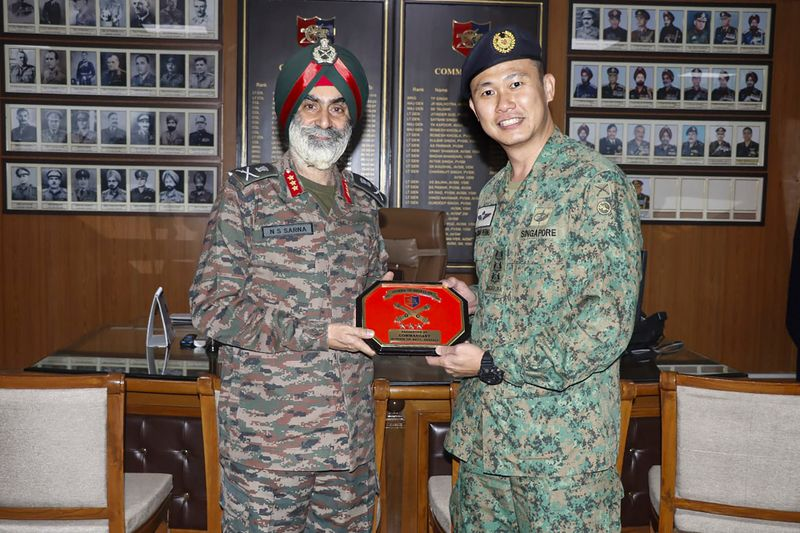
The Indian Army and the Singapore Armed Forces, on Saturday concluded a three-day joint military exercise at Field Firing Ranges at Devlali in Maharashtra.
The Singapore Artillery and the Indian Army Artillery contingent took part in the joint exercise. Named ‘Agni Warrior’, it was the 13th edition of the joint exercise.
It was aimed at maximising mutual understanding regarding drills and procedures to achieve joint efforts as a multinational force under the United Nations Charter. The exercise showcased joint firepower planning, execution and use of new generation equipment by the artillery of both armies.
The exercise involved extensive joint preparation, coordination, understanding of each other’s capabilities, procedures and evolution of common interface between the Indian and Singapore Artillery procedures. It marked the culmination of successful training by the troops of the Singapore Armed Forces, exposing them to intricacies of fire power planning.
The event was witnessed by Lieutenant General Adosh Kumar, Director General of Artillery, Lieutenant General NS Sarna, Commandant School of Artillery and Colonel Ong Chiou Perng, Chief Artillery Officer, Singapore Armed Forces.
India must mobilise friendly Arab states to prevent a destructive dynamic taking hold

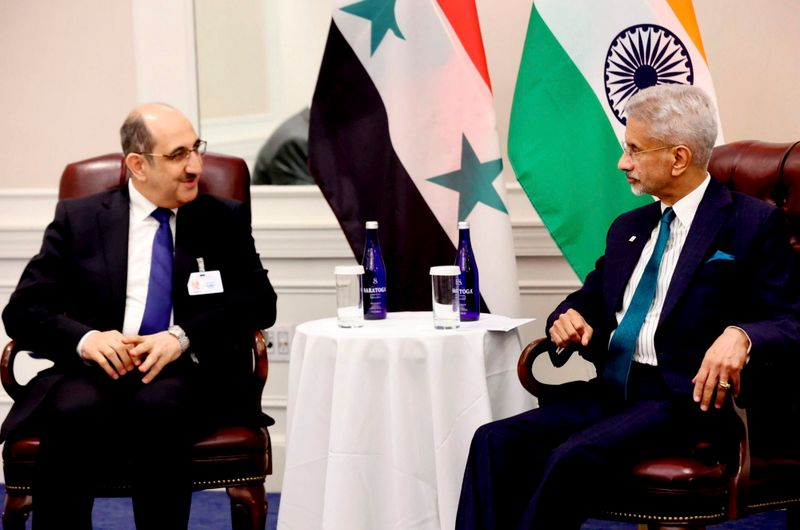
ANY political turmoil and violence in the Gulf and West Asia directly and significantly impact India’s security interests.
One, the welfare and safety of nine million Indians living and working in this swathe of territory on our western flank are a huge preoccupation.
Two, this region is critical to India’s energy security as it supplies a significant part of our oil and gas requirements.Three, of late, the Gulf countries have become major economic and commercial partners, with rising trade and investment flows.
And, four, India has become much more deeply engaged with Israel, which is now a significant defence and technology partner and this adds a complex dimension to our West Asia policy.
Both on Syria and Iran, Indian interests may be at odds with Israel. India has maintained a friendly relationship with the Assad (both Hafez and Bashar) regime in Damascus over the past six decades. Iran is the most proximate power to India in the Gulf region and lies on the western flank of Pakistan, a perennial adversary. It impinges directly on India’s maritime security. It provides access to Central Asia through the Chabahar port and the “northern corridor” of rail and roads connecting Afghanistan and beyond. The longstanding and deep civilisational ties which bind India and Iran are important in themselves.
If, encouraged by the serious weakening of Iran by the decimation of Hezbollah in southern Lebanon and now the fall of Assad in Syria, Israel and the US launch an attack to cripple Iran’s nuclear and oil facilities, as some are loudly advocating both in Tel Aviv and Washington, the entire western flank of India is likely to go up in flames. All vital interests of India listed above will be damaged severely and over the long term.
The Arab states are also deeply worried about the risks of such a war. They may have been wary of Iran, but not to the extent of risking a regional war. On this critical issue, their interests should be closely aligned with India’s. Should India be prepared to confront Israel and the US to safeguard its interests? Should it mobilise friendly Arab states to prevent a destructive and dangerous dynamic taking hold? It should.
The events in Syria leave several questions unanswered. Assad would have known that the fall of Aleppo would leave Damascus dangerously exposed. This was probably the most fiercely fought-over city when Assad began to regain the territory lost in the initial phase of the civil war post 2012. And yet, Aleppo fell to the Hayat Tahrir al-Sham (HTS) militant group, led by Mohammad al-Jolani, after half-hearted resistance from the Syrian military. From Aleppo to Damascus, there were virtually no Syrian military forces to deter the advancing rebel army, which literally walked into Damascus unopposed. There was time for Assad and his family to take a flight out to Russia, while his Prime Minister stayed behind to announce that he would stay in office to help with the “transition” of power.
Jolani announced that there would not be any reprisals against those who had worked in Assad’s government and that only the intelligence agencies which had oppressed and tortured Syrian people would be brought to justice. These are reassuring words.
The Iranians evacuated from Damascus in advance of the advancing rebels, making no attempt to fight along with Syrian soldiers. The Russians, too, kept a low profile and were assured that their naval base in Tartus on the Mediterranean coast and military facilities and personnel in the Latakia province would not be targeted.
There is no word about the 900 US military personnel who are based in the area controlled by the Syrian Kurds, who have maintained an autonomous swathe of territory, supported by the US.
Turkey controls the adjacent area as a buffer and has reportedly backed the HTS and associated militant groups in carrying out the operations against the Assad regime.
The HTS is proscribed as a terrorist organisation and the US has a bounty of $10 million on head of its leader Jolani. Will that be pursued or quietly dropped? Was this a deal put together behind the scenes by the key stakeholders, including the US, Russia, Turkey and, perhaps, even Iran? With Hezbollah neutralised, the Iranians would have been reluctant to enter the fray themselves. The Turks may have seen a chance to expand their presence and influence in Syria not only to begin the repatriation of the large Syrian refugee population in Turkey, but also, most importantly, to keep a check on the activities of the Kurds who are considered a major security threat to Turkey.
This would suggest that the likelihood of Syria emerging as an independent, sovereign state with control over all the territories within its formal borders is minimal. It will continue to be the playground of proxies that it has been for several decades now, though the nature of play may be different.
The HTS has criticised Iran, declaring that Syria would no longer be a playground for Iranian ambitions. But there have also been video clips of HTS fighters declaring their intent to advance into Gaza and to occupy Jerusalem. If the HTS leadership reverts to a pro-Palestinian and anti-Israel posture, Israel would not hesitate to use coercive military measures against it. Israel has already carried out air raids against suspected missile and chemical weapon storage sites within Syria.
It is an irony of history that the only two secular and plural countries in the West Asian region — Iraq and Syria — were destabilised and subverted by the US and its allies. They proved to be an anachronism in the western strategy of sowing sectarian divisions and creating a so-called “Sunni crescent” to isolate Shia Iran after the Islamic revolution there in 1980. They may have been ruled by autocratic leaders, but their societies accommodated diverse ethnic and religious communities. A plural India shared a sense of affinity with them.
One should learn a lesson from our western neighbourhood. Succumbing to sectarian impulses can unravel nations, even those that have long histories of embracing diversity.
Captain Avhilash Rawat has received the 2024 International Maritime Organisation (IMO) Award for Exceptional Bravery at Sea for the “extraordinary courage” shown in a Red Sea rescue mission earlier this year. At an awards ceremony at the IMO headquarters in…

Captain Avhilash Rawat has received the 2024 International Maritime Organisation (IMO) Award for Exceptional Bravery at Sea for the “extraordinary courage” shown in a Red Sea rescue mission earlier this year.
At an awards ceremony at the IMO headquarters in London on Monday, Rawat accepted the award on behalf of his crew of the oil tanker Marlin. The captain and crew were lauded for the “determination and endurance” they demonstrated while coordinating firefighting and damage control efforts to combat a fire that broke out after an anti-ship ballistic missile struck their vessel back in January.
Alongside, Captain Brijesh Nambiar and the crew of the Indian Navy ship INS Visakhapatnam were conferred a “Letter of Commendation” for the support to Marlin Luanda during distress.
“I want to take this opportunity to thank my entire crew for their exceptional courage, professionalism, and unwavering dedication; your support and trust were invaluable during those critical hours, and together, we overcame challenges that seemed insurmountable,” said Rawat in his acceptance address.
“On behalf of the Marlin Luanda crew, I would also like to convey our sincere thanks to the Indian, French and US Navies; your timely intervention and steadfast commitment were crucial in guiding us through the most critical moments of our firefighting efforts,” he said.
Asked about security concerns in the Red Sea, which has been the target of Yemen’s Houthis, Rawat noted that the situation remains “tense”.
“I would request that stop sending ships through the Red Sea. My company has already stopped after this incident,” said Rawat, who hails from Dehradun and is a Master Mariner with Suntech Ship Management.
In a message for those considering a seafaring profession, he added: “The life at sea has always been very lucrative. It is a very good profession and youngsters should be encouraged to join at sea.”
“It enables us to know different people, countries and cultures. It instils great confidence and helps one survive in any situation,” said Rawat.
Captain Rawat and his crew were nominated for the award by the Marshall Islands for their brave efforts on the evening of January 26, when the Marlin Luanda carrying 84,147 tons of Naphtha was struck by an anti-ship ballistic missile. The explosion ignited a cargo tank, creating a significant fire hazard with flames exceeding 5 meters.
According to the IMO panel’s assessment, despite the extreme danger and the constant threat of further attacks, Rawat and his crew fought the fire using fixed foam monitors and portable hoses.
After four and a half hours fighting the fire on their own, assistance arrived from the merchant tanker Achilles and later from the French frigate FS Alsace and the United States frigate USS Carney, which provided additional firefighting support, followed soon after by the Indian warship INS Visakhapatnam.
Professionally trained firefighters from the Indian Navy boarded the ship and managed to get closer to the fire due to their superior equipment and their efforts, combined with those of the Marlin Luanda crew, finally succeeded in extinguishing the fire and sealing a significant hull breach.
“Twenty-four hours after the missile strike, the Marlin Luanda sailed to safety under naval escort,” the IMO citation notes. The annual IMO honours are awarded to provide international recognition for those who, at the risk of losing their own life, perform acts of exceptional bravery, displaying outstanding courage in attempting to save life at sea or in attempting to prevent or mitigate damage to the marine environment.






























