Security forces on Wednesday detected and destroyed a suspected improvised explosive device (IED) on the Handwara-Baramulla highway in Kashmir, officials said. This is second IED which has been detected in north Kashmir this week. A joint patrolling party of police…
Security forces on Wednesday detected and destroyed a suspected improvised explosive device (IED) on the Handwara-Baramulla highway in Kashmir, officials said.
This is second IED which has been detected in north Kashmir this week.
A joint patrolling party of police and Army found a suspicious bag by the roadside on the highway at Langate in Handwara area of Kupwara district, the officials said.
They said a bomb disposal squad was rushed to the spot and the suspicious bag taken to an isolated place. The squad destroyed the suspected IED in a controlled explosion, the officials said, adding there was no damage done.
The Army wrote on X, “Indian Army remains resolute in its commitment to keep Kashmir terror-free.”
Earlier this week, a major terror incident was averted after an IED was recovered on the Srinagar-Baramulla national highway.
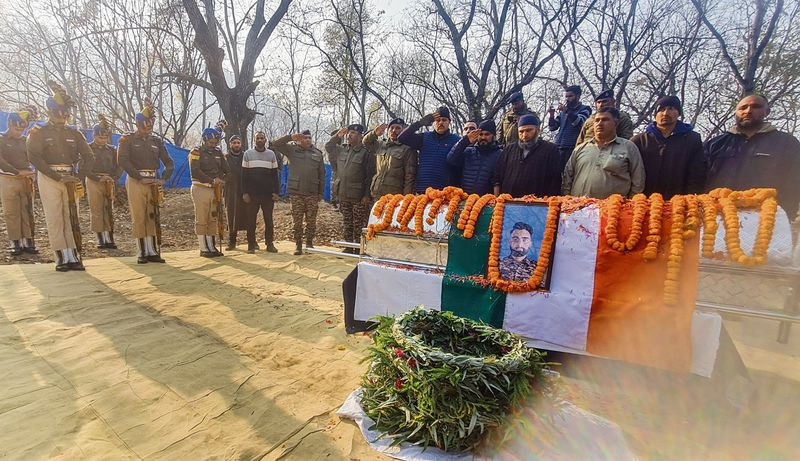
Jawan dies of cardiac arrest during search op in Srinagar
An Army jawan who was part of a search operation on the city outskirts died following a cardiac arrest, officials said on Friday. A senior official identified the deceased as Jasvinder Singh of the Army’s 34 Assam Rifles. Sources said…
An Army jawan who was part of a search operation on the city outskirts died following a cardiac arrest, officials said on Friday.
A senior official identified the deceased as Jasvinder Singh of the Army’s 34 Assam Rifles. Sources said the deceased was part of a group of personnel engaged in a search operation in the Faqeer Gujri Dara Harwan area on the Srinagar outskirts.
CRPF constable too collapses on duty
A CRPF constable died after he fell unconscious in Anantnag district on Thursday
He was posted in the Matan area. Initial investigation suggested that he died of cardiac arrest
Earlier this week, a Lashkar-e-Toiba terrorist allegedly involved in the October attack near a tunnel construction site in the Gagangir area of Ganderbal was killed in the Dachigam forest. Junaid Ahmed Bhat, a category “A” LeT militant, was wanted for his alleged involvement in the October 20 attack in which a local doctor and six employees of Apco Infratech were killed.
After the operation, the security forces had started search operations in the forest areas. The Dachigam forest, around 20 km from Srinagar, is also close to the Zabarwan range of the Himalayas where a gunfight took place between terrorists and security forces last month.
3 Indian students killed in Canada, India takes up issue of safety with Ottawa
Official data states that over 400,000 Indian students reside across Canada
Three Indian students have been murdered in Canada last week and the Indian high commission in Ottawa has taken up the matter of safety of Indians with the Canadian authorities, the Ministry of External Affairs (MEA) said on Friday.
The safety, security and welfare of Indian nationals in Canada remains of utmost importance to us, MEA spokesperson Randhir Jaiswal said.
“In the last week or so we have had unfortunate tragedies. Three Indian students have been murdered. We are saddened at these terrible tragedies that have struck our nationals in Canada,” Jaiswal said.
“We extend our deepest condolences to the grieving families. Our High Commission and Consulates in Toronto and Vancouver are extending all possible help in the matter,” he said. Jaiswal said the Indian missions in that country are in touch with the local authorities for thorough investigation of the incidents.
“Issues faced by them, especially Indian students, are raised by our high commission and Consulates with the relevant Canadian authorities on a regular basis,” he said.
“We have also issued an advisory for our nationals and Indian students to exercise extreme caution and remain vigilant in view of the deteriorating security environment in Canada as a result of the growing incidence of hate crimes and criminal violence,” Jaiswal added.
According to official data, over 400,000 Indian students are studying in Canada. Asked about reports of instances of the Indian high commission not granting visas in Canada, Jaiswal described them as a “disinformation” campaign.
“We have seen the said media report. It is yet another example of Canadian media’s disinformation to malign India,” he said.
“Granting of Indian visas is our sovereign function and we have the legitimate right to deny visas to those who undermine our territorial integrity,” he said.
“The commentary that we see in the Canadian media on this matter is akin to foreign interference in India’s sovereign affairs,” Jaiswal added
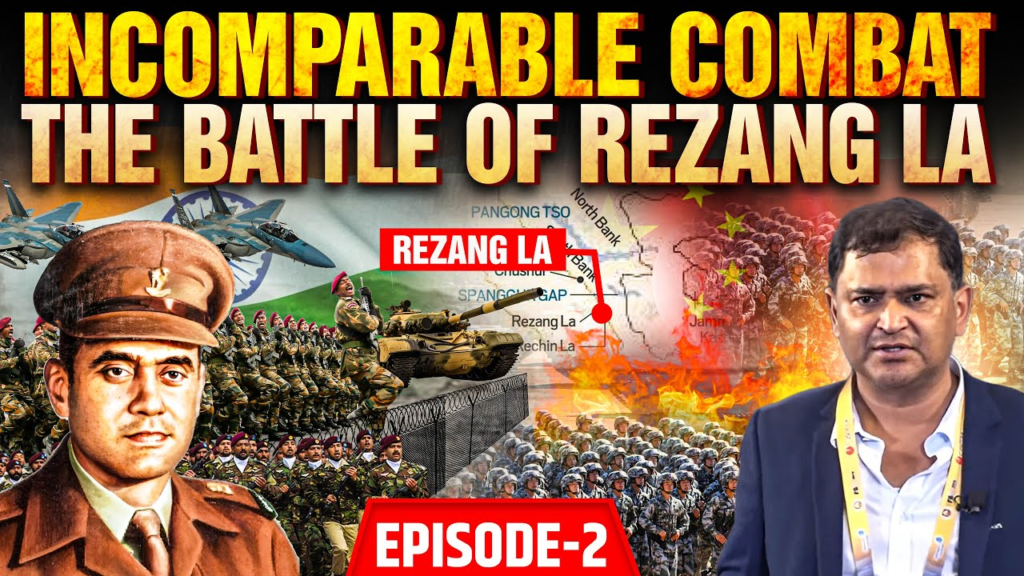
Battle of Rezang La: Incredible Story of Indian Bravehearts, wiping out Chinese | Major Gaurav Arya
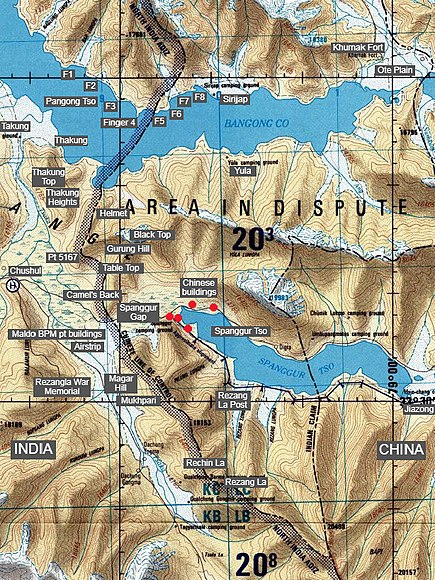
In October 1962, China launched a large-scale offensive against Republic of India in the disputed border areas of Aksai Chin and Arunachal Pradesh (then NEFA). The Indian Army, under-prepared and outnumbered, was tasked with defending these high-altitude regions. Rezang La, a pass located in the Chushul sector of Ladakh, became a key defense point as it guarded the vital airstrip at Chushul.[7]
The defense of Rezang La was entrusted to the 13th Battalion of the Kumaon Regiment, under the command of Major Shaitan Singh. The battalion was positioned on the barren, exposed ridges of the pass, without adequate artillery support or reinforcements.[8]
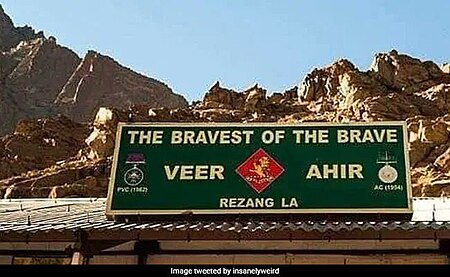
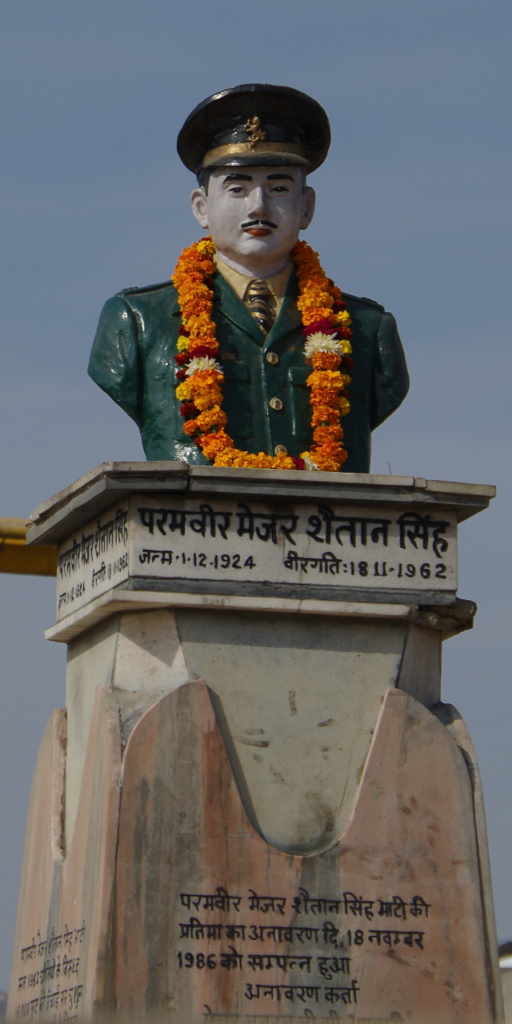
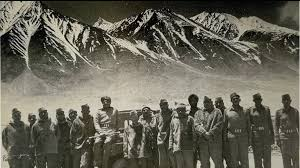
The Battle of Rezang Lah lah meaning hill in Tibetan/Ladhaki language was a major military engagement that took place on 18 November 1962, during the Sino-Indian War between the Indian Army’s 13th Kumaon Regiment and China’s People’s Liberation Army (PLA). 120 Indian soldiers of all-Ahir Charlie C Company faced more than 3000 Chinese soldiers and successfully defended the strategic mountain pass of Rezang Lah in Ladakh. Fought at an altitude of 16,000 feet, against overwhelming Chinese forces, the battle saw one of the greatest last stands, with Indian sources documenting more than 1400 Chinese casualties. Major Shaitan Singh, who led the defense, was posthumously awarded the Param Vir Chakra, India’s highest military honor, for his extraordinary bravery. Several other decorations were awarded posthumously to many officers and soldiers of the company.[6]
During the Sino-Indian War in 1962, Rezang La was the site of the last stand of the Charlie “C” Ahir company[9][10][11] of 13 Kumaon, consisting of 124 Indian soldiers.[12][13] According to the official Indian history of the war, the Rezang La picket of Charlie company was located at an elevation of 5,500 metres (18,000 ft), 11 km south of the Spanggur Gap, on the same ridge line as Rezang La.[14] Rezang La had the drawback that an intervening feature blocked artillery operation, so that the Indian infantry had to do without artillery cover.[15] The Indian side was led by Major Shaitan Singh,[16] who perished in battle and posthumously won India’s highest military decoration, the Param Vir Chakra, for his actions.[17][18][15]
The Chinese employed human wave tactics, sending up to eight waves against the Indian troop positions.[19][20][21] Eventually, the Indian position was overrun, and Indian troops were forced to withdraw to high mountain positions. After the conclusion of battle, their valor was recognized by the Chinese, who had covered the bodies of the Indian soldiers with blankets and even placed bayonets over them so that the makeshift covers did not fly off. This mark of respect is exceptional and atypical of practices of that time.
Both sides took overwhelming casualties, though both countries disagree over how many were killed. It is generally accepted 114 Indian soldiers out of a total of 120 lost their lives.[23][24] However, Indian sources claim upwards of 1,300 Chinese troops were killed in Rezang La alone.[24][25][26]
Eventually, the Chinese captured Rezang La and Gurung Hill, but was unable to advance further due to Indian reorganization.[27]
Aftermath
The heroic defense by the Kumaon Regiment became a source of inspiration for the Indian military and the nation. Major Shaitan Singh‘s bravery and leadership were recognized with the posthumous award of the Param Vir Chakra.[28] The battle is considered one of the most heroic last stands in modern military history.[citation needed]
Legacy
The Battle of Rezang La remains a symbol of Indian courage and determination. Memorials have been erected at Rezang La and at various places in India to commemorate the bravery of the soldiers who fought and died in the battle.[6]
In 2012, on the 50th anniversary of the battle, veterans and military historians gathered to pay tribute to the fallen soldiers, and the battle continues to be studied as a lesson in mountain warfare.[29]
The Battle stands out for sheer valour, grit and dogged determination of C Company of 13 KUMAON that fought to the last man, defending Rezang La, under the dynamic leadership of Major Shaitan Singh. Against all odds and grossly outnumbered, the valiant soldiers of ‘C’ Company, 13 KUMAON, repulsed seven attacks by the Chinese, launched in waves. Despite heavy artillery shelling and fierce Chinese assaults, Major Shaitan Singh and his 113 brave hearts delivered the heaviest blow to the Chines
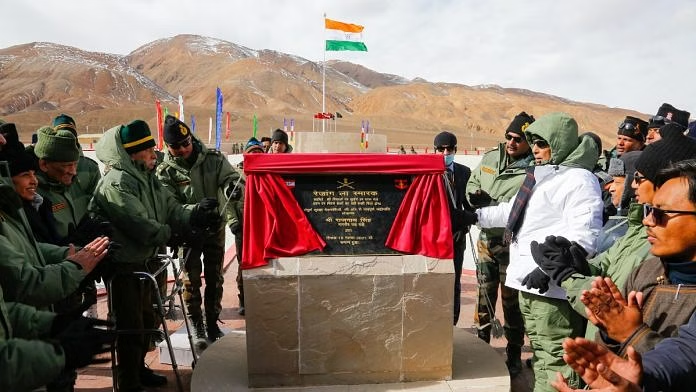
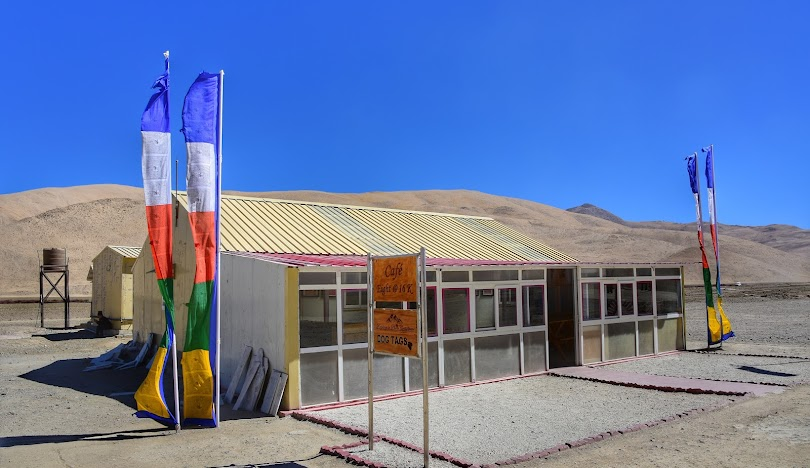
Rezang La War Memorial, Ahir Dham
File photo of Defence Minister Rajnath Singh inaugurating the renovated Rezang La memorial in Chushul | PIB
IAF’s Su-30 fleet: 12 aircraft lost, 3 pilots killed in 22 years
The Ministry of Defence announced that a Rs 13,500 crore contract has been awarded to state-owned Hindustan Aeronautics Limited (HAL) for procuring 12 Sukhoi-30 MKI fighter aircraft along with associated equipment
The Ministry of Defence announced that a Rs 13,500 crore contract has been awarded to state-owned Hindustan Aeronautics Limited (HAL) for procuring 12 Sukhoi-30 MKI fighter aircraft along with associated equipment for the Indian Air Force (IAF). These aircraft are meant to replace aircraft lost in crashes and accidents over the years.
The sanctioned strength of the Su-30 fleet is 272, and at present 260 aircraft are said to be in service with 13 operational squadrons, besides other technical establishments like Tactics and Air Combat Development Establishment (TACDE).
The heavy, two-engine twin-seat multirole aircraft now form the backbone of the IAF’s combat fleet. The original Su-30 entered Russian air force service in 1994 and development of the India-specific MKI variant started in 2000, with a pact in 1996 to manufacture 140 aircraft.
The first Russian-made Su-30 MKI variant out of the 50 to be delivered directly was inducted into the IAF in 2002, and the first of the remaining aircraft assembled by HAL in India entered service in November 2004. In December 2000, a deal was signed for full technology transfer to India and the numbers required went up to 272 aircraft.
After seven years of incident free flying, the first major accident involving this aircraft happened on April 30, 2009 when a Su-30 from No. 30 Squadron crashed in Rajasthan. Both pilots ejected, but one succumbed to injuries. Some reports later said that the crew had inadvertently switched off the aircraft’s flight control system that led to the crash.
Another aircraft was lost the same year when the aircraft’s engine caught fire during a training sortie over the Pokhran range in November. Both the pilots from 31 Squadron bailed out safely.
Other crashes happened in December 2011, April 2012, February 2013, October 2014, May 2015 and March 2017 during routine sorties and training missions. Some were attributed to technical defects and others to human error.
The crash that took place in 2013 was a result of defective ordnance release during a night sortie over Pokhran range. The live bombs that the aircraft was carrying failed to release and exploded while still attached to the underwing pylons, inflicting serious damage and injuring the pilots, though they managed to bail out and survived.
On May 23, 2017, the IAF lost two pilots from No. 2 Squadron when their aircraft went down in dense forests of the northeast during a training sortie. The aircraft had taken off from Tezpur airbase as part of a two-aircraft formation, lost radar and radio contact with the air traffic control at 11.10 am. The last reported position of the aircraft was 60 km northwest of Tezpur and there were no reports of the pilots having ejected.
Four crashes happened in June 2018, August 2019, January 2023, June 2024. Among them, two involved aircraft at HAL’s Nashik plant in Maharashtra and in both the cases as well as the one in 2024, the pilots bailed out safely.
On January 28, 2023, a Su-30 and a Mirage 2000 from TACDE in Gwalior were involved in a mid-air collision. While the Mirage pilot was unable to eject and died in the accident, the two Su-30 pilots ejected and sustained only minor injuries.
The Su-30 is a large, long-range aircraft that can carry over 8,000 kg of bombs, air-to-air missiles, air-to-surface missiles and anti-ship missiles. It has also been modified to air launch the Brahmos supersonic cruise missile.
The IAF has experienced some technical issues with the fleet in the past like engine problems and unintended triggering of the ejection seats. The fleet has gone in for several upgradation and capability enhancement programmes with the integration of new avionics, subsystems and weapons sourced from Indian, Russian, Israeli and French agencies.
Another major upgrade programme, referred to as Super Sukhoi, is on the anvil with Defence Acquisition Council, issuing an Acceptance of Necessity for the Rs 60,000 crore project that would be undertaken by HAL in collaboration with the Defence Research and Development Organisation (DRDO), industry and academia.
This could involve new engines, avionics, electronic warfare suite, radar and navigation systems along with life extension. The aircraft are expected to remain in service till 2060.
60 years after husband’s death in 1965 war, widow gets enhanced pension
About 60 years after her husband was killed in action during the 1965 Indo-Pak War on the western front due to a mine blast, an 87-year-old war widow has finally got her due pensionary benefits following intervention of the Punjab and Haryana High Court.
On the death of her husband, Nater Pal Singh of Rajput Regiment, Anguri Devi was granted special pension (SFP) by the Army. In 1972, the government introduced a new policy for grant of a higher amount of pension with retrospective effect covering all operations from 1947 onwards, termed liberalised family pension (LFP).
When the policy was issued, the husband of the petitioner had already died in 1965, but the authorities failed to give effect to the said policy for the widow. Another policy was issued in January 2001 with financial effect from January 1, 1996 granting enhanced death and disability benefits for operational casualties including deaths or disability due to mine blasts.
Under this policy, the kin of casualty cases were entitled liberalised family pension, but the said policy contained a cut-off date that made it applicable only to cases of death or disability occurring after January 1, 1996. On the other hand, in case of civilian casualties, it was made applicable both to pre- and post-1996 cases. The cut-off date of January 1, 1996 was later struck down by the Supreme Court which allowed financial effect from January 1, 1996.
When the widow approached the Armed Forces Tribunal (AFT), it granted her relief citing a similar case decided by the Tribunal earlier, but restricted the arrears to three years prior to filing of the petition on the grounds that she had approached the court after a delay of 54 years.
She challenged the restriction of arrears on two grounds. First, that it was the duty of the authorities to release her pension themselves and the Supreme Court (SC) had made it clear that such benefits would be granted from January 1996, and second, there was no such restriction imposed in the earlier case on which the AFT had relied to grant her relief, which was also based on SC directions.
Setting aside the restriction by the AFT, a division bench of Justice Sureshwar Thakur and Justice Sudeepti Sharma has ruled on November 29 that arrears would have to be released to the war widow in terms of policy of January 2001.
Suspected IED found near Ghanian-Ke-Bangar police station
Panic gripped the Batala area after a suspected Improvised Explosive Device (IED) was found in the compound of Ghanian-Ke-Bangar police station here on Friday, a police officer said.
Senior police officers immediately reached the spot and initiated investigation into the matter.
The police station is nearly 14 km away from Batala city.
Incidentally, Defense Minister Rajnath Singh is slated to visit Qadian on Sunday. The Batala police have made extensive security arrangements for his visit. Senior officers of the Batala police district were busy with his visit when news of the incident surfaced.
DIG (Border) Satinder Singh said the police were verifying the object. “For some reason it cannot be a hand-grenade,” he said.
“We have called in experts from the Forensic Science Laboratory and will give details once we have some clarity,” another police officer said.
An official disclosed that two Babbar Khalsa International (BKI) sympathisers-Gopi Nawashaharia and Harpreet Singh alias Happy Pashia-had taken responsibility of the incident.
According to sources, Gopi is involved in the murder of former BKI militant, Rattandeep Singh, and had fled to the US on a fake passport in May. He is believed to be hiding in California. Happy Pashia, a US-based gangster-turned-terrorist, is actively recruiting vulnerable youth from weaker sections in Amritsar’s Ramdass and Gurdaspur’s Dera Baba Nanak regions near the international border for criminal and terror operations. Pashia, wanted in over 15 cases of murder, attempted murder and extortion, has been linked to multiple criminal modules in Punjab.
Fourth Edition of India-Malaysia Joint Military Exercise Commence
he fourth edition of the India-Malaysia Joint Military Exercise, known as HARIMAU SHAKTI, commenced on December 2, 2024, at the Bentong Camp in Pahang district, Malaysia. This exercise will continue until December 15, 2024, and is designed to enhance bilateral defence cooperation and improve the interoperability of the Indian and Malaysian armed forces, particularly in counter-insurgency operations within jungle terrains.
The Indian contingent consists of 78 personnel from the MAHAR Regiment, while the Malaysian side is represented by 123 troops from the Royal Malaysian Regiment.
Structure: The exercise is divided into two phases:
Phase I: Focuses on cross-training activities, including lectures and demonstrations tailored for jungle operations.
Phase II: Involves a simulated counter-insurgency operation where troops will engage in tactical drills such as reconnaissance patrols, ambushes, and offensive manoeuvres against terrorist positions.
The primary aim of HARIMAU SHAKTI is to foster interoperability and camaraderie between the two armies, allowing them to share best practices in tactics and techniques for conducting joint operations.
This joint military exercise reflects the growing trust and partnership between India and Malaysia, which have been collaborating on defence matters since their diplomatic relationship was established in 1957. The initiative also underscores a mutual commitment to addressing regional security challenges.
HOW VETRANS ARE THANKED FOR THEIR SERVICES TO THE NATION IN OTHER COUNTRIES ONLY
INS Vikrant, India’s first indigenous aircraft carrier, has officially achieved full operational status after completing its final operational clearance. This announcement was made by Vice Admiral V. Srinivas, the Flag Officer Commanding-in-Chief of the Southern Naval Command, during a media interaction aboard the naval ship INS Shardul in Kochi.
Vice Admiral Srinivas confirmed that INS Vikrant is now fully operational and integrated into the Western Fleet of the Indian Navy. The completion of various trials and successful fleet integration has marked this significant milestone.
INS Vikrant is a symbol of national pride and represents a major advancement in India’s maritime capabilities. It is the largest ship ever constructed in India’s maritime history.
The aircraft carrier was designed by the Indian Navy’s Warship Design Bureau and built by Cochin Shipyard Limited. It features approximately 2,200 compartments and is equipped to accommodate around 1,600 personnel, including women officers and sailors.
INS Vikrant Powerful Platform For Projecting Military Power
INS Vikrant, as India’s first indigenous aircraft carrier, plays a pivotal role in the Indian Navy’s strategic plans, significantly enhancing its maritime capabilities and power projection.
The INS Vikrant serves as a formidable platform for projecting military power across the Indian Ocean Region (IOR) and beyond. Its ability to operate a diverse air wing allows for rapid response to emerging threats and ensures a continuous naval presence, which is crucial for maintaining regional stability and deterring adversaries like China.
Two-Carrier Operations: With the induction of Vikrant, the Indian Navy can now conduct simultaneous operations with two aircraft carriers (INS Vikrant and INS Vikramaditya). This capability marks India’s return to an elite group of navies capable of executing complex multi-carrier operations, thereby enhancing its tactical flexibility and operational readiness in the IOR.
The carrier also plays a vital role in maritime diplomacy. Its presence can influence regional dynamics and reassure allies of India’s commitment to collective security. This is particularly significant in the context of China’s increasing assertiveness in the region.
INS Vikrant showcases India’s growing self-reliance in defence manufacturing. Its advanced systems, including surveillance and fire-control radars, enhance the Navy’s operational capabilities against modern threats, thus contributing to India’s strategic autonomy.
Expansion of Naval Capabilities
The Indian Navy is considering expanding its fleet further with plans for a third aircraft carrier, which would bolster its operational capabilities and ensure sustained maritime dominance in the region. This expansion is critical for countering not only Chinese naval activities but also for securing vital sea lanes essential for trade and energy supplies.
The integration of Vikrant into the Navy’s operational framework allows for comprehensive training exercises that validate its capabilities in various scenarios, from combat operations to humanitarian assistance missions. This versatility is essential for adapting to the dynamic security environment of the IOR.
INS Vikrant is capable of operating a diverse range of aircraft, including MiG-29K fighter jets projecting diverse air wing capabilities, it also comprises of Kamov-31 helicopters, MH-60R multi-role helicopters, as well as indigenously developed Advanced Light Helicopters (ALH) DHRUV and TEJAS Navy tailored for naval operations.
State Stalwarts
DEFENCE MINISTER
Minister Rajnath Singh
ALL HUMANS ARE ONE CREATED BY GOD
HINDUS,MUSLIMS,SIKHS.ISAI SAB HAI BHAI BHAI
CHIEF PATRON ALL INDIA SANJHA MORCHA
LT GEN JASBIR SINGH DHALIWAL, DOGRA
SENIOR PATRON ALL INDIA SANJHA MORCHA
MAJOR GEN HARVIJAY SINGH, SENA MEDAL ,corps of signals
.
.
PATRON ALL INDIA SANJHA MORCHA
MAJ GEN RAMINDER GURAYA ,MADRAS REGIMENT
sanjhamorcha303@gmail.com
PRESIDENT SOUTH ALL INDIA SANJHA MORCHA
COL SS RAJAN BOMBAY SAPPERS,
PRESIDENT UTTARAKHAND ALL INDIA SANJHA MORCHA
COL B M THAPA ,BENGAL SAPPERSS
PRESIDENT HARAYANA STATE CUM COORDINATOR ESM
BRIG DALJIT THUKRAL ,BENGAL SAPPERS
PRESIDENT TRICITY
COL B S BRAR (BHUPI BRAR)
PRESIDENT CHANDIGARH ZONE
COL SHANJIT SINGH BHULLAR
.
.
PRESIDENT PANCHKULA ZONE AND ZIRAKPUR
COL SWARAN SINGH
INDIAN DEFENCE FORCES
DEFENCE FORCES INTEGRATED LOGO
INDIAN AIR FORCE
Air Officer C-in-C WESTERN AIR COMMAND
AIR MSHL S PRABHAKARAN AVSM VM
AOC-IN-C, EASTERN AIR COMMAND
Air Marshal Inderpal Singh Walia
AOC-in-C SOUTH WESTERN AIR COMMAND
Air Marshal Vikram Singh
AOC-IN-C, SOUTHERN AIR COMMAND
Air Marshal J.Chalapati
AOC-IN-C TRAINING COMMAND
AIR MARSHAL SK GHOTIA VSM
AOC-IN-C MAINTENANCE COMMAND
Air Marshal Jagdish Chandra
Flag Officer Commanding in Chief, Western Naval Command
ice Admiral R Hari Kumar, PVSM, AVSM, VSM
Flag Officer Commanding in Chief, Eastern Naval Command
Vice Admiral Sanjay Bhalla, AVSM, NM
Flag Officer Commanding in Chief, Southern Naval Command