The Chinese People’s Liberation Army (PLA) Xinjiang Military Command, deployed in China’s high altitude western regions, revealed that it has taken delivery of three new advanced weapons systems over the past week, including armoured vehicles and artillery pieces, as analysts said on Sunday that troops are upgrading their arsenal to meet modern warfare demands. Dozens of a new type of armoured assault vehicle recently entered service with a PLA Xinjiang Military Command unit deployed in a snowy plateau region at an elevation of more than 4,500 meters, js7tv.cn, a video news website affiliated with the PLA, reported on Sunday. The eight-wheeled armoured vehicles come in different variations, with some equipped with large calibre rifled guns, some with auto cannons, some with machine guns and some with howitzer systems, the footage shows. Another newly delivered weapons system is a new-type, four-wheeled self-propelled howitzer, to a group which recently conducted its first live-fire target practice deep in the Karakorum Mountains at an altitude of 4,500 meters, China Central Television (CCTV) reported on May 10. In addition, a batch of new self-propelled heavy rocket launchers, which are highly mobile, fast-reacting, highly accurate, very deadly and jamming-resistant, recently went into service at a unit deployed in a snow-covered region at an elevation of more than 5,200 meters, a separate CCTV report on May 8 revealed. These three new weapon systems are identified as the Type 08 armoured vehicle, a 122mm-caliber self-propelled howitzer partially using technologies from the PCL-181 155mm-caliber self-propelled howitzer, and the PHL-03 long-range multiple rocket launcher system, Shanghai-based news website eastday.com reported. By upgrading their arsenal with the latest weapons and equipment, the PLA’s high-altitude troops are gaining enhanced mobility and fire power, so they can better fulfil their missions in safeguarding the country’s sovereignty and territorial integrity, a Chinese military affairs analyst who requested anonymity told the Global Times on Sunday. The PLA Xinjiang Military Command has been commissioning multiple types of advanced weaponry over the past year, observers said. In early 2021, the command received delivery of the first batch of newly developed Type 15 light tanks, which analysts said excel at rapid reaction combat in plateau regions. Other weapons and equipment, including the PLC-181 howitzer and third-generation Mengshi assault vehicles, are also found in official reports, eastday.com said. These are forming a complete, modern ground combat system which is particularly of significance to plateau combat, analysts said.
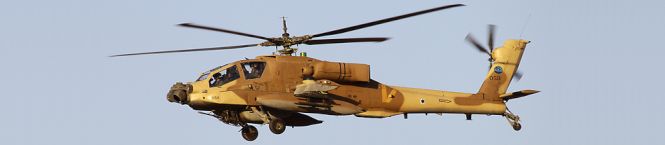
An Israeli attack gunship flying over Gaza during a anti-terror operation At the centre of the latest fighting is the divided city of Jerusalem, which is among the holiest places for all three Abrahamic religions — Judaism, Islam and Christianity. Alleged desecration of the Al Aqsa mosque and plans by new Jewish settlers to evict Palestinians from East Jerusalem triggered a rocket barrage towards Israel from Gaza. Hence, the Hamas is describing it as ‘defence of Jerusalem’. It does not augur well for peace that three days after a ceasefire was brokered to end 11 days of fighting between Israel and the Palestinians in Gaza, both sides may be said to have achieved victory in the conflict. The short war was inconclusive. In coronavirus terms — which is a marker for most things these days — the fighting destroyed the only facility in Gaza undertaking coronavirus tests for the small coastal territory of two million Palestinians. Thirty health facilities in Gaza were crippled in the fighting, according to the World Health Organization (WHO) and testing for Covid-19 has been halted. But the Hamas, which rules Gaza, is unbowed. Despite losing 243 of its people, at least 100 of them women and children, damage to Gaza’s near non-existent infrastructure and facing a continued blockade from both Israel and Egypt, Gazans quickly returned to what has been their ‘normal’ life as they live from one fight to another. In their third war with Israel since Hamas broke away in 2007 from the widely recognised “State of Palestine”, now confined to the West Bank, 4,300 rockets rained on Israel since May 10. Some of these reached Jerusalem and Tel Aviv for the first time, but both cities were protected by the “Iron Dome”, Israel’s durable missile shield. It is the increasing capability of Hamas to strike farther and farther into Israel with each conflict that makes Palestinians claim victory in the latest war. Israel, of course, has such overwhelming strength in entire West Asia that it is capable of overrunning all of Palestine by ground invasion, attempted successfully several times in the past. Its Prime Minister, Benjamin Netanyahu, praised the Iron Dome and said a ground invasion was not necessary to protect Israel this time. All the same, Israel’s Air Force conducted several hundred bombing raids and claimed that 1,600 military targets in Gaza were destroyed. Israel is also claiming victory as the rationale for a ceasefire. At the centre of the latest fighting is the divided city of Jerusalem, which is among the holiest places for all three Abrahamic religions — Judaism, Islam and Christianity. Alleged desecration of the Al Aqsa mosque and plans by new Jewish settlers to evict Palestinians from East Jerusalem triggered a rocket barrage towards Israel from Gaza this time. Hence, the Hamas is describing the latest war as “defence of Jerusalem”. India explicitly referred to this root cause in two statements last week — one to the United Nations Security Council and another to the General Assembly + by its Permanent Representative in New York, TS Tirumurti. This is India’s first major West Asian diplomatic challenge since the country became a member of the Security Council on January 1. However, deluged by the tweets, statements, counter-statements and press conferences through most of last week after Delhi Chief Minister Arvind Kejriwal invented a Singapore strain of the Coronavirus, India’s foreign policy enthusiasts largely missed a fine balancing act by their country’s diplomats in the national capital, New York and in West Asia. That India’s stand on the latest round of violence between Israel and Palestinians left neither side entirely happy is proof of its correctness and its impact. For most of the seven decades since India’s independence, New Delhi’s stance on the Arab-Israeli conflicts was one-sided. It inevitably made Israel very unhappy every time such a stand was articulated, while the Palestinians were ecstatic. In transactional terms, India got nothing out of this policy. That has changed in recent years. What last week saw, however, was a contradiction between bilateralism and multilateralism in India’s West Asia policy. Bilaterally, one of India’s most important relationships is now with Israel. It spans national security, defence purchases, irrigation, high technology, and most recently, jointly fighting Covid-19. But when Tirumurti made his two statements at the UN, this close relationship did not influence those statements. Instead, he commendably inserted a national element into what is at stake in Jerusalem. “Jerusalem has a special place in the hearts of millions of Indians, who visit the city every year. It also houses the Al Zawiyya Al Hindiyya — the Indian Hospice, which is a historic place associated with a great Indian Sufi saint, Baba Farid, and located inside the Old City. India has restored this Indian Hospice. The historic status quo at the holy places of Jerusalem, including the Haram al-Sharif/Temple Mount, must be respected.” Tirumurti’s harsh criticism was also directed at Hamas. “We condemn the indiscriminate rocket firings from Gaza into Israel, which have caused deaths of a number of civilians.” National interest was again reiterated. “India has also tragically lost one of its nationals during this rocket fire — a caregiver living in Ashkelon in Israel… We deeply mourn the loss of the lives of innocent civilians, including the Indian national, in the current cycle of violence. We reiterate our strong condemnation of all acts of provocation, violence and destruction.” Tirumurti’s statements were not off-the-cuff. A fly on the wall in South Block, seat of the Ministry of External Affairs, said several drafts went back and forth between New York and New Delhi. The Prime Minister personally authorised the final statements. It is necessary to underline this, lest an army of trolls, self-styled Indian supporters of Israel, go after the public face of Indian representation at the UN. Israel, of course, would have preferred India to wholly support it against Hamas. But they will understand India’s compulsions. The Palestinians also know that India has much at stake bilaterally with Israel, although they too would have preferred the pre-Narasimha Rao line of all out support for them. Palestinians also know that when they desperately needed help after the United States under Donald Trump and Canada under Stephen Harper cut all aid, Narendra Modi was there for them. In 2018, one month after Modi visited Palestine, he increased four-fold India’s contribution to the UN Relief and Works Agency for Palestine Refugees. India’s recent policy of separating its bilateral interests from the multilateral outlook on West Asia deserves praise. Threats to such innovation come not from direct stakeholders Israel or Palestine, but from irrational supporters of Israel within India’s ruling party, who are fortunately not decision-makers, and fail to understand the nuances behind South Block’s considered views on West Asia.
Antarctica is headed for a climate tipping point by 2060, with catastrophic melting
Icebergs in the Southern Ocean around Antarctica | FlickrText Size: A- A+
While U.S. Secretary of State Antony Blinken draws attention to climate change in the Arctic at meetings with other national officials this week in Iceland, an even greater threat looms on the other side of the planet.
New research shows it is Antarctica that may force a reckoning between the choices countries make today about greenhouse gas emissions and the future survival of their coastlines and coastal cities, from New York to Shanghai.
That reckoning may come much sooner than people realize.
Scientists have long known that the Antarctic ice sheet has physical tipping points, beyond which ice loss can accelerate out of control. The new study, published in the journal Nature, finds that the Antarctica ice sheet could reach a critical tipping point in a few decades, when today’s elementary school kids are raising their families.
The results mean a common argument for not reducing greenhouse gas emissions now – that future technological advancement can save us later – is likely to fail.
The new study shows that if emissions continue at their current pace, by about 2060 the Antarctic ice sheet will have crossed a critical threshold and committed the world to sea level rise that is not reversible on human timescales. Pulling carbon dioxide out of the air at that point won’t stop the ice loss, it shows, and by 2100, sea level could be rising more than 10 times faster than today.
The tipping point
Antarctica has several protective ice shelves that fan out into the ocean ahead of the continent’s constantly flowing glaciers, slowing the land-based glaciers’ flow to the sea. But those shelves can thin and break up as warmer water moves in under them.
As ice shelves break up, that can expose towering ice cliffs that may not be able to stand on their own.
There are two potential instabilities at this point. Parts of the Antarctic ice sheet are grounded below sea level on bedrock that slopes inward toward the center of the continent, so warming ocean water can eat around their lower edges, destabilizing them and causing them to retreat downslope rapidly. Above the water, surface melting and rain can open fractures in the ice.
The study used computer modeling based on the physics of ice sheets and found that above 2 C (3.6 F) of warming, Antarctica will see a sharp jump in ice loss, triggered by the rapid loss of ice through the massive Thwaites Glacier. This glacier drains an area the size of Florida or Britain and is the focus of intense study by U.S. and U.K. scientists.
Other projections don’t account for ice cliff instability and generally arrive at lower estimates for the rate of sea level rise. While much of the press coverage that followed the new paper’s release focused on differences between these two approaches, both reach the same fundamental conclusions: The magnitude of sea level rise can be drastically reduced by meeting the Paris Agreement targets, and physical instabilities in the Antarctic ice sheet can lead to rapid acceleration in sea level rise.
The new study, led by Robert DeConto, David Pollard and Richard Alley, is one of the few that looks beyond this century. One of us is a co-author.
It shows that if today’s high emissions continued unabated through 2100, sea level rise would explode, exceeding 2.3 inches (6 cm) per year by 2150. By 2300, sea level would be 10 times higher than it is expected to be if countries meet the Paris Agreement goals. A warmer and softer ice sheet and a warming ocean holding its heat for centuries all prevent refreezing of Antarctica’s protective ice shelves, leading to a very different world.
The vast majority of the pathways for meeting the Paris Agreement expect emissions will overshoot its goals of keeping warming under 1.5 C (2.7 F) or 2 C (3.6 F), and then count on future advances in technology to remove enough carbon dioxide from the air later to lower the temperature again. The rest require a 50% cut in emissions globally by 2030.
Although a majority of countries – including the U.S., U.K. and European Union – have set that as a goal, current policies globally would result in just a 1% reduction by 2030.
It’s all about reducing emissions quickly
Some other researchers suggest that ice cliffs in Antarctica might not collapse as quickly as those in Greenland. But given their size and current rates of warming – far faster than in the historic record – what if they instead collapse more quickly?
Second, allowing global warming to overshoot 2 C is not a realistic option for coastal communities or the global economy. The comforting prospect of technological fixes allowing a later return to normal is an illusion that will leave coastlines under many feet of water, with devastating economic impacts.
Third, policies today must take the long view, because they can have irreversible impacts for Antarctica’s ice and the world. Over the past decades, much of the focus on rapid climate change has been on the Arctic and its rich tapestry of Indigenous cultures and ecosystems that are under threat.
As scientists learn more about Antarctica, it is becoming clear that it is this continent – with no permanent human presence at all – that will determine the state of the planet where today’s children and their children will live.
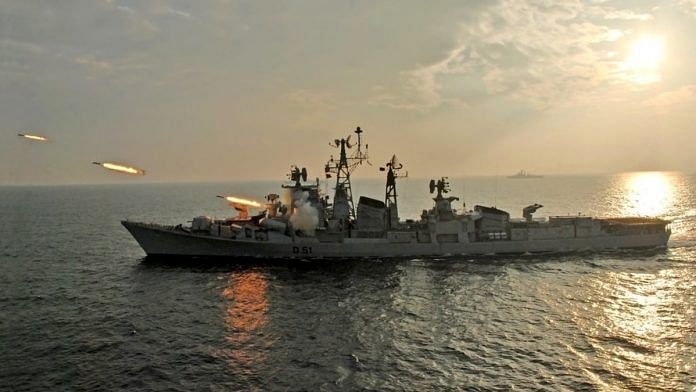
file photo of INS Rajput. | Photo: Twitter/@indiannavyText Size: A- A+
New Delhi: After four decades of service, the Indian Navy’s INS Rajput sailed into sunset Friday in a low-key ceremony at the Naval Dockyard in Visakhapatnam. The event was attended only by in-station officers and sailors, in view of the Covid-19 pandemic.
Commissioned on 4 May 1980, Rajput was the first Indian Naval Ship (INS) to be affiliated with an Army regiment — the Rajput Regiment.
“As the sun sets on 21 May, 2021, the Naval Ensign and the Commissioning Pennant will be hauled down for the last time onboard INS Rajput, symbolising the decommissioning,” a statement from the Navy said.
“With the motto ‘Raj Karega Rajput’ firmly etched in their minds and indomitable spirit, the gallant crew of INS Rajput have remained ever vigilant and always ‘on call’ to protect the maritime interest and sovereignty of the nation,” it added.
The lead ship of the Kashin-class destroyers, Rajput was built by the erstwhile USSR. She was constructed in the 61 Communards Shipyard in Nikolaev (now in Ukraine) under her original Russian name ‘Nadezhny’ (meaning ‘hope’).
The keel of the ship was laid on 11 September 1976. She was launched a year later.
The ship was commissioned three years later as INS Rajput at Poti, Georgia by I.K. Gujral, the then ambassador of India to USSR, with Captain Gulab Mohanlal Hiranandani as her first Commanding Officer.
In her 41 years of service, the ship has the distinction of serving in both Western and Eastern Fleets. She had 31 Commanding Officers (COs) at her helm, with the last CO taking charge of the ship on 14 August 2019.
Over the last four decades, the ship participated in multiple operations including Operation Aman off Sri Lanka to assist Indian Peace Keeping Force, Operation Pawan for patrolling duties off the coast of Sri Lanka, and Operation Cactus to resolve hostage situation off Maldives.
The ship’s crest design displays a head protector helmet and crossed spears, used by Rajput warriors, on a red background.
Speaking about the ship, a senior Navy officer told ThePrint that INS Rajput was among the formidable and powerful ships of the Indian Navy and her commissioning marked a quantum leap for the service in terms of technology and weaponry and speed.
“For instance, earlier, the Soviet-era ships bought by us had a displacement of 1,000 tonnes and INS Rajput had a displacement of around 5,000 tonnes,” the officer said on condition of anonymity.
With a length of 146 metres, beam of 15.8 m, INS Rajput was capable of speed in excess of 30 knots. Its array of weapons and sensors included surface-to-surface and surface-to-air missiles, the supersonic cruise missile BrahMos, anti-aircraft and anti-missile guns and torpedo and anti-submarine rocket launchers.
“Her range of missiles and armament fitted was much more than any other previous ships. It was majestic and formidable and the best looking ship in the Navy,” the officer quoted above said.
From the 1980s until the advent of the Delhi-class ships in 1997, INS Rajput and INS Godavari were the principal combatants of the Navy.
“She was deployed in various missions in the 1990s. After the advent of Delhi-class ships, the Rajput class ships were all based in Visakhapatnam and became the work horses of the Eastern Fleet,” the office added.
He added that she subsequently went for a midlife upgrade and went on to serve the Navy for nearly another two decades.
The ship was also capable of operating the Chetak helicopter, enabling her to perform coastal and offshore patrolling, monitoring of sea lines of communication, maritime diplomacy, counter terrorism and anti-piracy operations.
Vice Admiral Anil Chopra (Retd), who commanded the ship around 2000, told ThePrint that INS Rajput is special to him not just because he held its charge, but also because he had served on it as a young officer.
“There are a lot of memories associated with the ship. It is always sad when a ship sails into the sunset but I look forward to its reincarnation. In the Navy, new ships are often given the names of those which served earlier… There was a Rajput before this one too. So even as it gets decommissioned today, its spirit will live on,” he said.
Vice Admiral Chopra also recalled a notable deployment of Rajput in the South China Sea. “I took her to Vietnam and the South China Sea, long before it became famous as it is today. We conducted some submarine exercises,” he said.
“We also had an interesting deployment when we came to the west coast for the President’s Fleet Review in 2001, when there was a large congregation of naval ships at Mumbai,” he said.
Rear Admiral Sandeep Beecha (Retd) who commanded the ship in 2010-2011 said it is a nostalgic day for him as commanding INS Rajput was one of the highest points in his career. He recalled it as the first ship in the Eastern Fleet that conducted anti-piracy operations in the Gulf of Aden.
“The ship lived up to its reputation and motto. Every mission in which the ship took part was successfully completed. It was a happy ship and was awarded the most spirited of the Eastern Fleet,” he said. “I feel very proud. Hopefully, a new ship will be christened Rajput and the legacy will live on.”
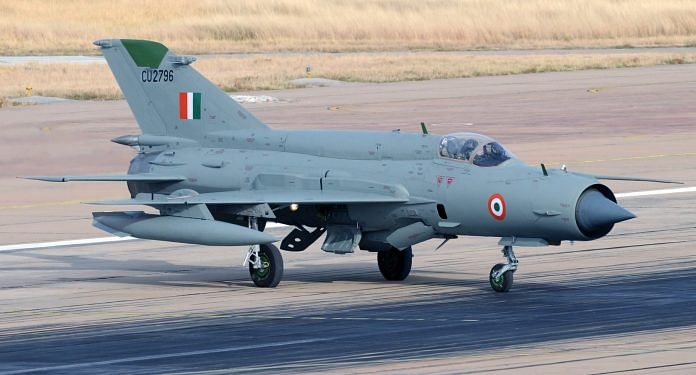
New Delhi: The crash of a MiG-21 Bison in the early hours of Friday, which killed Squadron Leader Abhinav Choudhary, has once again led to questions on safety that have dogged the Soviet-era aircraft for decades now.
Just this year alone, there have been three accidents involving the MiG-21 Bison, which was originally supposed to be replaced by the Tejas.https://cc74827f9cd7885f1372b62f6f32ccd0.safeframe.googlesyndication.com/safeframe/1-0-38/html/container.html
A MiG-21 Bison crashed on 17 March in Gwalior killing Group Captain Ashish Gupta, while another crashed in Rajasthan’s Suratgarh in January, when the pilot ejected safely.
The latest crash, which took place at around 2 am in Punjab’s Moga district Friday, occurred when Squadron Leader Choudhary was on his way back to his base in Suratgarh.
Accidents such as these have led to the aircraft’s safety record being called into question on a number of occasions in the past few decades.
They have also led to the MiG-21s being dubbed the ‘flying coffin’ or the ‘widow maker’.
In 2013, then Defence Minister A K Antony had said since its induction into the Indian Air Force (IAF) in 1963, as many as 482 MiG-21s had been involved in accidents leading to the death of 171 pilots, 39 civilians and eight personnel from other services.
But for all its dubious distinctions, there are still many in the IAF who swear by the MiG-21s and argue that the ‘flying coffin’ tag is misleading. But they do agree that it has been flown beyond its utility only to maintain squadron strength as the Light Combat Aircraft (LCA) project got delayed.
A number of personnel of the IAF, serving and retired, vouch for the safety record of the MiG-21s.
IAF officers point out that the current chief, Air Chief Marshal R.K.S. Bhadauria, flew the MiG-21 Bison solo after taking charge.
They also point out that his predecessor, Air Chief Marshal B.S. Dhanoa (retd), also flew the MiG 21 Bison solo during his tenure as the chief.
They do, however, agree that it is high time that the aircraft is finally replaced. Not because of safety issues but because the force needs more modern aircraft.
Another argument put forward is that the MiG-21 Bison is just an upgraded aircraft with better avionics and armament than all of the other variants.
A former IAF commander, who did not wish to be identified, said: “Be it any variant, the fact is that it is a MiG-21.”
He added: “The MiG-21 Bison is an upgrade of the MiG-21bis, which was on its last leg of flying. What has improved is avionics and armament. Armament has no role in crashes. The engine remains the same. It is like taking a Ford T model car onto the roads today.”
Sources said one of the problems for MiG-21 accidents was that earlier pilots trained on subsonic Kiran trainer aircraft and then moved to a squadron of the supersonic MiG-21s.
“The move was a quantum leap for the pilots as the dynamics of the two aircraft are totally differen,” an IAF source said. “With the induction of the Hawk trainers in 2008, the transformation is now much smoother.”
The sources also said the delay in the induction of advanced jet trainers led to the MiG-21s themselves being used for training pilots between the 1980s and early 2000s.
Air Marshal Anil Chopra (retd), the Director General of Centre for Air Power Studies (CAPS), told ThePrint that earlier pilots moved from training to MiG-21s and then later to aircraft like the Mirages and others.
“Now there are multiple levels of training and it is more streamlined. The majority of the earlier accidents involved younger pilots,” he told ThePrint. “The MiG-21 Bison is an upgraded aircraft. While the aircraft has got the tag of flying coffins, the safety record of the aircraft is actually good if one compares the years in service and the flying hours.”
Air Marshal Chopra (retd) referred to an article carried on his blog Air Power Asia, which was written by Dr Shiv Sastry, an aviation enthusiast.
It was a study of all peacetime attrition of Indian fighters before the Mirages were inducted in the 1980s. Sastry has asserted that the MiG-21 has a better safety record than all others.
“Most often, neither the public nor the media knew the difference between MiG-21, 23 or 27,” he has written. “A MiG was a MiG was a MiG. Even a Mirage or An-32 was a MiG. From this grew the idea that the MiG-21 was a flying coffin, an unfair description.”
According to the database of Bharat-Rakshak.com, an aviation website that works closely with the IAF, there have been 57 aviation accidents in the last five years (2016 till today) involving all arms of the military — IAF, Navy, Army and Coast Guard.
Of these, only six involved the MiG-21 Bison. This includes the one one flown by Wing Commander Abhinandan Varthaman and was shot down by Pakistan in 2019, besides the three this year.
If other variants of the MiG-21s are included, the figure rises to 11.
In 2016, there were 11 aviation accidents of the IAF but none included the MiG-21 Bison. However, a MiG-21 M and a MiG-21 UM crashed that year.
A MiG-21 aircraft overshot the runway and was badly damaged that year.
The year 2017 witnessed nine accidents, again none of which was that of the MiG-21 Bison. The IAF aircraft involved were two Su30 MKI, one MiG-23 UM, two Mi 17 choppers and two Kiran trainers.
In 2018, of the 16 accidents, 12 were of the IAF. Among the 12, one MiG-21 Bison and a MiG-21 trainer aircraft crashed that year.
The rest included three Jaguar aircraft, one Su 30 MKI, one MiG-27 UPG, besides one each of Kiran and Hawk aircraft.
Two MiG-21 Bison aircraft crashed in 2019, including that of Wing Commander Varthaman, in a year that saw IAF suffer 14 aviation accidents.
There was also a MiG-21 U that crashed besides two MiG-27 UPG, two Hawks, one Su 30 MKI and the Mi 17 V5 helicopter, which was shot down in friendly fire.
No MiG-21 Bisons crashed in 2020 in which there were four accidents. One of the crashed involved a MiG-29 UPG.
A source, however, pointed out that the 11 crashes in the last five years involving MiG-21 variants comes at a time when they are being flown much less than earlier. Just the Bisons remain with the IAF as the other variants have been phased out over the last few years.
A section of the IAF believes that more than safety, the Russian aircraft has outlived its utility and should have been phased out in the 1980s.
“The aircraft was designed in the 1950s and should have served maximum until the 1980s,” an IAF source said. “The Soviet Union, which made these fighters, retired them somewhere around 1985. The Russians took a MiG-21 from us to put them in their museum. That is how vintage these aircraft are.”
The former IAF commander quoted above said, “If these aircraft were not flying coffins, then they are flying coffins now. This aircraft is still flying because of the delay of the LCA programme and inability to go ahead with the larger acquisition. The accident rate is too high”.
Incidentally, in 2003 when the MiG-21s first earned ‘flying coffin’, the then Defence Minister George Fernandes took a 25-minute sortie to counter “attempts to degrade these fighters and I want to dispel apprehensions about its safety”.
Popular culture further besmirched the aircraft’s reputation. The 2006 Aamir Khan blockbuster Rang De Basanti revolves around an IAF pilot losing his life in a MiG-21 crash.
A Soviet-era aircraft
The MiG-21 (Mikoyan-Gurevich), whose NATO reporting name is ‘Fishbed’, was designed as supersonic jet interceptor aircraft by the Mikoyan-Gurevich Design Bureau (OKB) of the erstwhile Soviet Union.
The aircraft, which made its maiden flight on 16 June 1955, holds the record of being the most produced supersonic jet in aviation history.
The MiG-21 has had a long production run from 1959 to 1985 and underwent updates and modification thereafter in many countries including India.
The first single-engine MiG-21 aircraft came into the air force in 1963 and since then a total of 874 of them have been inducted, including various variants.
The Soviet-origin supersonic fighters had become the mainstay of the Air Force over the years, because of sheer numbers, even as they force more modern aircraft like the Mirages and the others.
The aircraft first underwent an upgrade in the 1970s and the variant was known as the MiG-21 Bis.
With the Light Combat Aircraft Tejas, nowhere in the horizon, the IAF decided to upgrade 125 of the MiG-21 Bis to MiG-21 Bison in 2000, despite a spate of crashes in the 1990s that claimed lives of many pilots.
The MiG-21 Bisons are expected to be out of service completely by 2024.
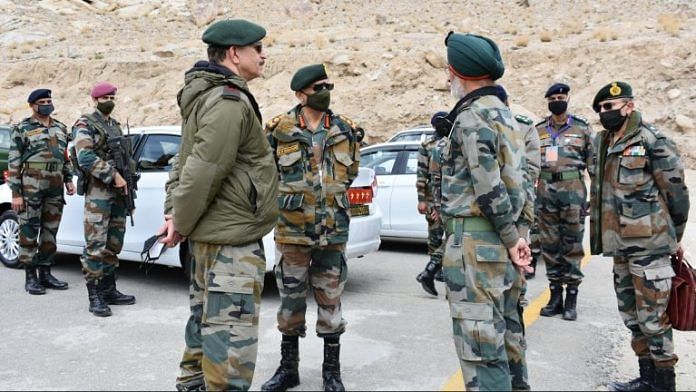
With tensions continuing with China, India has deployed more troops along the Line of Actual Control this summer than before.
File photo of Army Chief General M.M. Naravane at Leh to review security situation and operational preparedness along the Line of Actual Control in Eastern Ladakh | Photo: Twitter | @adgpiText Size: A- A+
New Delhi: The Indian military is bringing a series of key changes, including in the Order of Battle (ORBAT), with the strategy being punitive deterrence against Pakistan and credible deterrence against China, ThePrint has learnt.
This strategy, which called for integrated formations rather than just corps-level response, forms the foundation of the Indian military’s re-balance from the western borders with Pakistan to the northern and eastern borders with China.
Government sources told ThePrint that the overall strategy does not involve the military alone but also diplomacy and economics.
“From a military point of view, the western theatre has always been the focus area. Our strategy there has been that of punitive deterrence. This means that India has overwhelmingly higher military power for punitive action,” a source said.
“Under credible deterrence, the opposite side should know that India has the ability for a counter operation and to inflict damage. China sees itself equal to the US in terms of military power. However, it has realised that while militarily it might be bigger, India won’t budge and can actually hit back. This affects the image that they want to portray internationally. This is called credible deterrence,” the source said, refusing to go into the key changes planned and set in motion.
Sources gave the example of the last year’s August 29/30 operation by the Indian forces when they outflanked the Chinese and occupied the heights in the southern banks of Pangong Tso, much to the discomfort of the Chinese.
Sources explained that this strategy is for along the Line of Actual Control (LAC) with China and not just Ladakh which comes under the Northern sector. This means that the strategy will extend to the Central and Eastern sectors too.
The Army chief Gen M M Naravane had in January this year said the force was “re-balancing” its deployment and strategy along the western, northern and northeastern borders to deal with any kind of threat that might emerge — be it from Pakistan or China.
The re-balance strategy came following an internal study conducted by the Army on how to prepare for the threat from China and Pakistan.
ThePrint had on 12 April reported that a summer strategy has already been put in place in Eastern Ladakh and also implemented key changes in the ORBAT.https://ae75613b3bbdf22645761414edf68c48.safeframe.googlesyndication.com/safeframe/1-0-38/html/container.html
There is a higher concentration of troops in Ladakh with the focus being on Reserves and enough troops in the front to counter any possible Chinese move as tensions remain between the two countries.
Sources said the same strategy has been implemented all along the LAC, which meant there are a higher number of troops in each location with new counter operational strategies in place.
However, they made it clear that that more troops does not mean sitting all along the LAC like the Line of Control with Pakistan, but having enough troops to counter any aggression and for its own counter operations.
This meant the Army retained a higher number of troops and equipment in Ladakh, besides the 3 Division, in-charge of the LAC there, and the 14 Corps Reserve.
This includes some of the formations pumped in last year following the tensions with China, besides new elements brought in for summer deployment.
The same strategy is being followed all along the LAC as the force maintains a high state of operational alert.
Focus on integrated battle and not just Corps level response
Under the changes in ORBAT, while India earlier had three Strike Corps focused against Pakistan, it now has two. And instead of just one Strike Corps against China, it has two now.
“The focus is not just on corps-level response to an aggression but also a more integrated response,” said a source.
This means not just the Integrated Battle Groups (IBGs), the brainchild of Chief of Defence Staff Gen Bipin Rawat when he was the Army chief, but also a joint response from the three Services — Army, Navy and Air Force.
Incidentally, the Army had in October 2019 put into action its concept of IBGS for the first time.
The IBGs were carved out of the Panagarh-based 17 Corps’ (Mountain Strike Corps) 59 Mountain Division.
The plan was that this would be a study case and the IBGs would be rolled out after fine-tuning.
Each IBG would be based on specific operational requirements considering the topography as well as threat perceptions.
Gen Naravane had in May last year said the IBGs would be operational “soon”. However, the process got hit because of the pandemic and the tensions that broke along the LAC in eastern Ladakh.
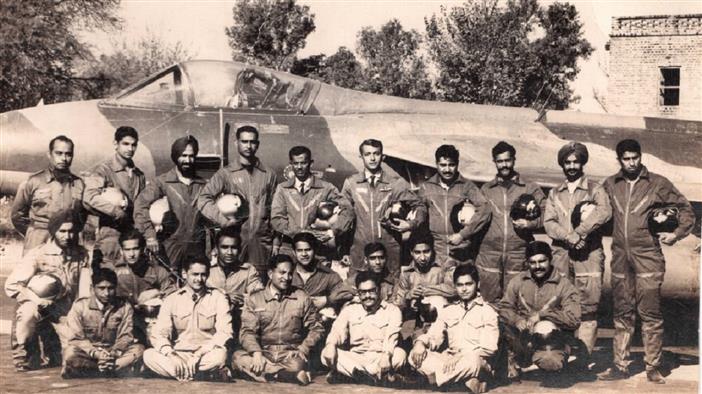
A group photograph of 20 Squadron after the 1971 war. The MVC recipients, Wg Cdr Cecil Parker is standing fifth from left and Sqn Ldr Ravi Bhardwaj fourth from left. Vir Chakra awardees Lt Arun Prakash of the Indian Navy, who later became the Chief of Naval Staff, is in the middle row (second from left) and Flying Officer BC Karambaya is on the extreme right in the standing row. Photo courtesy: AVM Cecil Parker
KS Nair
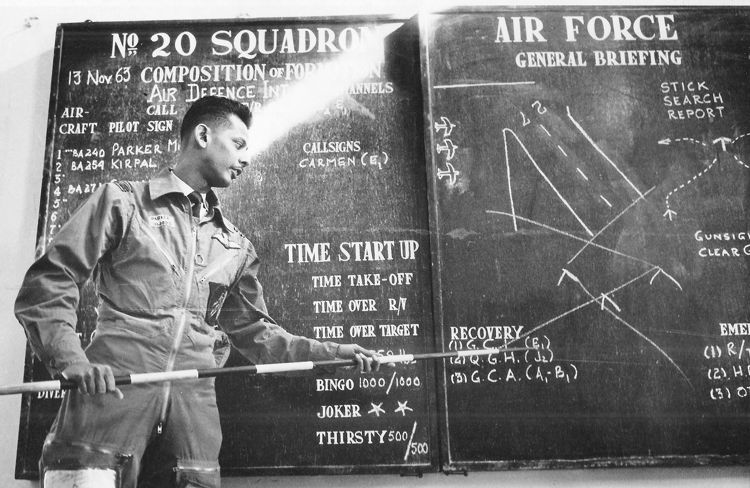
By the time of the 1971 Bangladesh liberation war, 20 Squadron of the Indian Air Force, the Lightnings, was well prepared. Its CO, then Wing Commander Cecil Parker, had been in the role for over two years. He had previously founded the Operational Training Unit of the IAF, on the same Hawker Hunter aircraft that the Lightnings were now operating, and had been Lightning Flight Commander. With over a thousand hours, he was one of the most experienced IAF Hunter pilots of the time.
The squadron also had a solid Flight Commander in Squadron Leader Jal Mistry. In addition, as part of the strengthening of all units in preparation for the war, they had an experienced supernumerary, then Squadron Leader Ravi Bhardwaj, on attachment. As it happens, he was a coursemate of Sqn Ldr Mistry, had himself been Flight Commander of the Lightnings earlier, and had served under Wg Cdr Parker in the OTU as well.
Wg Cdr Cecil Parker
Other personnel had been rigorously trained and exercised, and knew what was expected of them. Everyone knew war was coming; the Lightnings knew their targets, and had prepped carefully for each one.
So, when the shooting started, with the attempted Pakistani pre-emptive strike on the evening of December 3, the squadron was as ready as could be. There was just one tiny snag — most of the aircraft and pilots weren’t at their base that evening.
For some time previously, in the full expectation that war was imminent, IAF squadrons at forward locations intermittently withdrew their aircraft to rear bases. On the evening of the Pakistani strike, 20 Squadron’s aircraft and personnel were scattered between Ambala and Hindon, their previous base.
They would start flying into Pathankot early next morning. But the squadron’s orders for the next day’s counter-strikes arrived overnight. And the first one had a Time Over Target of sunrise Pakistan time. Which meant the mission would have to take off well before dawn in India. Their own aircraft would not be back in time.
Undaunted, the squadron launched its first two missions before dawn, using aircraft borrowed from the co-located 27 Squadron. Wg Cdr Parker, “exercising his prerogative”, as the squadron diary noted, led the squadron’s first foray into enemy territory, with then Flight Lieutenant Charan Singh “Chhani” Dhillon as his No. 2.
That first mission, target Peshawar, was one of the longest-range strikes undertaken by single-engine, single-seater aircraft during India-Pakistan wars. During the 1965 war, the Pakistan Air Force had treated Peshawar as their safe harbour, and withdrawn their most valued assets there during the night.
That 1971 morning, at high speed and low level, Parker and Dhillon hooked around Peshawar, so as to approach unexpectedly from the West rather than the East. They executed two passes, hitting a Sabre being refuelled from a bowser, and a fuel installation, before exiting. They were pursued by three or four Pakistani Sabres, who over a long chase were able to gradually catch up. Because of fuel and aircraft configuration, the Hunters could not engage in combat, and had to simply jettison auxiliary tanks and fly hell for leather. The Sabres were able to close in and fire, and managed several hits on the Hunters. Wg Cdr Parker called for a tactical break, timed so his No. 2 would be breaking in the direction of India. One Sabre, unable to stay with Parker’s tight turn (his g-counter showed he had pulled 10g), overshot. Wg Cdr Parker emptied his remaining ammunition on that Sabre, catching it squarely in his sights as confirmed by his gun-camera films. Unfortunately, he did not have enough shells left to bring the Sabre down, having nearly emptied his cannons over Peshawar itself. By then, he was almost at the border, and the Pakistanis gave up the chase.
Parker and Dhillon approached Pathankot, eking out the last few miles literally on fumes. Wg Cdr Parker was cleared for a straight-in approach, and his engine flamed-out immediately on landing. Flt Lt Dhillon’s engine actually flamed-out while still in the air, but skilled airmanship brought him and his Hunter safely down to a dead-stick landing. Both aircraft were back from the squadron’s first mission with tanks completely dry, and peppered with bullet holes.
The squadron settled, if that can be said of wartime, to a stern but matter-of-factly executed routine of about 20 sorties a day. Most of its pilots flew at least one sortie into enemy territory each day. They endured two losses, one on that first day itself, the young and always smiling Flying Officer KP Muralidharan. The other was the following day, their trusted Flight Commander, Squadron Leader Jal Mistry, lost to missile-armed PAF Mirages, while (successfully) attacking the ferociously-defended PAF Operations Centre at Sakesar.
The squadron continued its assigned counter-air role over the next few days, striking enemy airfields. One of their targets was Chaklala, the airfield for Rawalpindi, where they destroyed a few light transport aircraft — one of which, as it turned out, was the personal aircraft of Brigadier-General Charles “Chuck” Yeager, the USAF Second World War ace and jet-era test pilot, who was at this time a military adviser to the US Ambassador to Pakistan. Yeager’s reaction was said to be of fury, but has been rendered into laugh-out-loud funny accounts by both a US diplomat serving alongside him in Pakistan, and by the Lightning pilot responsible for that demonstration of accurate gunnery under fire.
Another memorable counter-air strike, led by Sqn Ldr Bhardwaj, was on Murid, a new airbase in Pakistani Punjab, where five enemy aircraft were destroyed in a single strike. Bhardwaj and his formation actually only claimed two destroyed; the full toll they had exacted was confirmed in Pakistani accounts later.
Yet another spectacular strike was on an economic target: the Attock oil refinery, one of only two in Pakistan at the time. The squadron diary describes, and numerous photos confirm, “towering sheets of orange flames, and billows of oily black smoke”.
After five days of non-stop raids mainly on enemy airfields, the Lightnings turned to a different task: close air support (CAS) for the Army at Chhamb. As is well known, the Chhamb sector, where geography favours Pakistan and where the Pakistan army concentrated skilfully in twice our strength, was where the Indian Army was hardest pressed during the war. CAS was needed, and the Lightnings, based close by, flew nearly a dozen sorties each day, in support of troops on the ground, for the next few days.
One morning during that period, Sqn Ldr Bhardwaj was leading a CAS pair orbiting over Munnawar Tawi, hampered by the early morning mist common in the North Indian winter, when his wingman, Flying Officer BC “Lofty” Karambaya, spotted two Pakistani Sabres firing at him. Fg Off Karambaya has shared a detailed account. He describes using the Hunter’s flaps to turn tighter than his pursuer, while calmly remaining in continuous R/T contact with his leader even as a few shells hit his Hunter. When Bhardwaj confirmed visual contact, and not before, Karambaya broke East. The Sabre tried to follow, but Sqn Ldr Bhardwaj had caught up, and opened fire. The Sabre exploded in an orange fireball, giving Sqn Ldr Bhardwaj an air-to-air kill, still an iconic token of air superiority.
In talking to former Lightnings years later, their collective pride in the squadron’s successes is clear. Air Vice Marshal (as he later became) Parker is always quick to turn the conversation to the officers and men he commanded, and to highlight the squadron’s wider accomplishments.
Among the Lightnings that year was a young Indian Navy aviator, then Lieutenant Arun Prakash, doing the regular exchange programme with the IAF that many IN aviators do. He went on to significant career accomplishments himself, rising eventually to Chief of Naval Staff. In later years, both AVM Parker and Admiral Prakash had occasion to speak in public on leadership and war. Interestingly, both invariably paid tribute to the other. The respect is clearly mutual, and has lasted these 50 years.
At the end of the war, Parker and Bhardwaj (who later became Air Marshal) both received Maha Vir Chakras. AVM Parker will be the first to say that his decoration is an honour not only to him personally, but to the team he led. The 28 officers and 300-odd other personnel under his command bore themselves to become one of the most highly-decorated units in the armed forces. Apart from the two MVCs, the squadron received five VrCs (including Sqn Ldr Mistry, Lt Prakash and Fg Off Karambaya) and numerous other honours.
— The writer is the author of ‘Ganesha’s Flyboys’ and ‘The Forgotten Few’. His third book, ‘er in Dacca’, is expected later this year
At the centre of the latest fighting is the divided city of Jerusalem, which is among the holiest places for all three Abrahamic religions — Judaism, Islam and Christianity. Alleged desecration of the Al Aqsa mosque and plans by new Jewish settlers to evict Palestinians from East Jerusalem triggered a rocket barrage towards Israel from Gaza. Hence, the Hamas is describing it as ‘defence of Jerusalem’.
Picking up pieces: Despite the damage caused by fighting, life is back to ‘normal’ in Gaza. Reuters
KP Nayar
Strategic Analyst
It does not augur well for peace that three days after a ceasefire was brokered to end 11 days of fighting between Israel and the Palestinians in Gaza, both sides may be said to have achieved victory in the conflict. The short war was inconclusive. In coronavirus terms — which is a marker for most things these days — the fighting destroyed the only facility in Gaza undertaking coronavirus tests for the small coastal territory of two million Palestinians. Thirty health facilities in Gaza were crippled in the fighting, according to the World Health Organization (WHO) and testing for Covid-19 has been halted.
But the Hamas, which rules Gaza, is unbowed. Despite losing 243 of its people, at least 100 of them women and children, damage to Gaza’s near non-existent infrastructure and facing a continued blockade from both Israel and Egypt, Gazans quickly returned to what has been their ‘normal’ life as they live from one fight to another.
In their third war with Israel since Hamas broke away in 2007 from the widely recognised “State of Palestine”, now confined to the West Bank, 4,300 rockets rained on Israel since May 10. Some of these reached Jerusalem and Tel Aviv for the first time, but both cities were protected by the “Iron Dome”, Israel’s durable missile shield. It is the increasing capability of Hamas to strike farther and farther into Israel with each conflict that makes Palestinians claim victory in the latest war.
Israel, of course, has such overwhelming strength in entire West Asia that it is capable of overrunning all of Palestine by ground invasion, attempted successfully several times in the past. Its Prime Minister, Benjamin Netanyahu, praised the Iron Dome and said a ground invasion was not necessary to protect Israel this time. All the same, Israel’s Air Force conducted several hundred bombing raids and claimed that 1,600 military targets in Gaza were destroyed. Israel is also claiming victory as the rationale for a ceasefire.
At the centre of the latest fighting is the divided city of Jerusalem, which is among the holiest places for all three Abrahamic religions — Judaism, Islam and Christianity. Alleged desecration of the Al Aqsa mosque and plans by new Jewish settlers to evict Palestinians from East Jerusalem triggered a rocket barrage towards Israel from Gaza this time. Hence, the Hamas is describing the latest war as “defence of Jerusalem”.
India explicitly referred to this root cause in two statements last week — one to the United Nations Security Council and another to the General Assembly + by its Permanent Representative in New York, TS Tirumurti. This is India’s first major West Asian diplomatic challenge since the country became a member of the Security Council on January 1.
However, deluged by the tweets, statements, counter-statements and press conferences through most of last week after Delhi Chief Minister Arvind Kejriwal invented a Singapore strain of the coronavirus, India’s foreign policy enthusiasts largely missed a fine balancing act by their country’s diplomats in the national capital, New York and in West Asia.
That India’s stand on the latest round of violence between Israel and Palestinians left neither side entirely happy is proof of its correctness and its impact. For most of the seven decades since India’s independence, New Delhi’s stance on the Arab-Israeli conflicts was one-sided. It inevitably made Israel very unhappy every time such a stand was articulated, while the Palestinians were ecstatic. In transactional terms, India got nothing out of this policy. That has changed in recent years.
What last week saw, however, was a contradiction between bilateralism and multilateralism in India’s West Asia policy. Bilaterally, one of India’s most important relationships is now with Israel. It spans national security, defence purchases, irrigation, high technology, and most recently, jointly fighting Covid-19. But when Tirumurti made his two statements at the UN, this close relationship did not influence those statements. Instead, he commendably inserted a national element into what is at stake in Jerusalem. “Jerusalem has a special place in the hearts of millions of Indians, who visit the city every year. It also houses the Al Zawiyya Al Hindiyya — the Indian Hospice, which is a historic place associated with a great Indian Sufi saint, Baba Farid, and located inside the Old City. India has restored this Indian Hospice. The historic status quo at the holy places of Jerusalem, including the Haram al-Sharif/Temple Mount, must be respected.”
Tirumurti’s harsh criticism was also directed at Hamas. “We condemn the indiscriminate rocket firings from Gaza into Israel, which have caused deaths of a number of civilians.”
National interest was again reiterated. “India has also tragically lost one of its nationals during this rocket fire — a caregiver living in Ashkelon in Israel… We deeply mourn the loss of the lives of innocent civilians, including the Indian national, in the current cycle of violence. We reiterate our strong condemnation of all acts of provocation, violence and destruction.”
Tirumurti’s statements were not off-the-cuff. A fly on the wall in South Block, seat of the Ministry of External Affairs, said several drafts went back and forth between New York and New Delhi. The Prime Minister personally authorised the final statements. It is necessary to underline this, lest an army of trolls, self-styled Indian supporters of Israel, go after the public face of Indian representation at the UN.
Israel, of course, would have preferred India to wholly support it against Hamas. But they will understand India’s compulsions. The Palestinians also know that India has much at stake bilaterally with Israel, although they too would have preferred the pre-Narasimha Rao line of all out support for them. Palestinians also know that when they desperately needed help after the United States under Donald Trump and Canada under Stephen Harper cut all aid, Narendra Modi was there for them. In 2018, one month after Modi visited Palestine, he increased four-fold India’s contribution to the UN Relief and Works Agency for Palestine Refugees.
India’s recent policy of separating its bilateral interests from the multilateral outlook on West Asia deserves praise. Threats to such innovation come not from direct stakeholders Israel or Palestine, but from irrational supporters of Israel within India’s ruling party, who are fortunately not decision-makers, and fail to understand the nuances behind South Block’s considered views on West Asia.
The ex-servicemen (ESM) body at Baldwara, under the Sarkaghat Assembly segment of Mandi district, is urging the district health authorities to open a Covid care centre at Jahu, which is located in the centre of Mandi, Bilaspur and Hamirpur.
Capt Jagdish Verma (retired), president of the ESM body, said, “More than 5,000 ex-servicemen and their dependents reside in Baldwara sub-division. In view of the increasing number of Covid-19 cases in the region, patients are transferred to the hopital at Nerchowk in Mandi, which is more than 50 km away from here. It takes a lot of time for the ambulance to come from Nerchowk and travel back.”
“We are urging the district health authorities to create a Covid centre in Jahu to cater to the medical needs of the area during the pandemic and save the time wasted in travel,” he said.
He said it would be a boon for local residents of Baldwara, Sarkaghat, Dharampur, Ghumarwin and Bhoranj. Verma stated a government building with about 45 rooms meant for “vegetable market” was lying vacant in Jahu and it could be used for the Covid hospital on a temporary basis.
“We have already sent a proposal through email to the Chief Medical Officers of Hamirpur, Bilaspur and Mandi for opening a Covid hospital in Jahu, keeping in view the surge in the second wave,” he said.
Army helps douse major forest fire near LoC in Jammu and Kashmir’s Rajouri
The Indian Army on Sunday doused a major fire near the Line of Control (LoC) in Rajouri district of Jammu and Kashmir, preventing damage to seasonal crops in two villages, officials said.
The fire in Lam forest in Nowshera sector started around 12.30 am and took the army and the locals several hours to put it off, the officials said.
“The Indian Army at Lam undauntingly, regardless of personal safety went over the steep hillocks by midnight around 0030 hrs and helped douse the forest fire spread preventing damage to seasonal crops of residents of Kallar nd Gunni villages,” Army’s Jammu-based White Knight Corps said in a tweet.
The officials said the fire spread fast, threatening the standing wheat crops, but timely intervention by the Army averted a major tragedy.
A defence spokesman said the army, in a separate case, extinguished a house fire and also provided relief to the affected family in Mangat area of Ramban district.
“At midnight of May 22, a major fire broke out in the house of Mohammad Yusuf Wani at Mangat. Army personnel from Mohubal immediately rushed for assistance and doused the fire using their fire extinguishers,” the spokesman said.
He said the quick response by the Army and locals could control the fire and its spread to neighbouring houses after five hours of efforts.
“Army personnel entered the house and successfully retrieved important household items as well. The upper floor of the house was completely damaged, however, the lower floor was saved due to the joint efforts,” he said.
The spokesman said no one was injured in the incident.
Later, the Army also provided relief material to the house owner and his family, the spokesman said, adding the village is remotely located, where such incidents are mostly handled by joint efforts
State Stalwarts
DEFENCE MINISTER
Minister Rajnath Singh
ALL HUMANS ARE ONE CREATED BY GOD
HINDUS,MUSLIMS,SIKHS.ISAI SAB HAI BHAI BHAI
CHIEF PATRON ALL INDIA SANJHA MORCHA
LT GEN JASBIR SINGH DHALIWAL, DOGRA
SENIOR PATRON ALL INDIA SANJHA MORCHA
MAJOR GEN HARVIJAY SINGH, SENA MEDAL ,corps of signals
.
.
PATRON ALL INDIA SANJHA MORCHA
MAJ GEN RAMINDER GURAYA ,MADRAS REGIMENT
sanjhamorcha303@gmail.com
PRESIDENT SOUTH ALL INDIA SANJHA MORCHA
COL SS RAJAN BOMBAY SAPPERS,
PRESIDENT UTTARAKHAND ALL INDIA SANJHA MORCHA
COL B M THAPA ,BENGAL SAPPERSS
PRESIDENT HARAYANA STATE CUM COORDINATOR ESM
BRIG DALJIT THUKRAL ,BENGAL SAPPERS
PRESIDENT TRICITY
COL B S BRAR (BHUPI BRAR)
PRESIDENT CHANDIGARH ZONE
COL SHANJIT SINGH BHULLAR
.
.
PRESIDENT PANCHKULA ZONE AND ZIRAKPUR
COL SWARAN SINGH
INDIAN DEFENCE FORCES
DEFENCE FORCES INTEGRATED LOGO
INDIAN AIR FORCE
Air Officer C-in-C WESTERN AIR COMMAND
AIR MSHL S PRABHAKARAN AVSM VM
AOC-IN-C, EASTERN AIR COMMAND
Air Marshal Inderpal Singh Walia
AOC-in-C SOUTH WESTERN AIR COMMAND
Air Marshal Vikram Singh
AOC-IN-C, SOUTHERN AIR COMMAND
Air Marshal J.Chalapati
AOC-IN-C TRAINING COMMAND
AIR MARSHAL SK GHOTIA VSM
AOC-IN-C MAINTENANCE COMMAND
Air Marshal Jagdish Chandra
Flag Officer Commanding in Chief, Western Naval Command
ice Admiral R Hari Kumar, PVSM, AVSM, VSM
Flag Officer Commanding in Chief, Eastern Naval Command
Vice Admiral Sanjay Bhalla, AVSM, NM
Flag Officer Commanding in Chief, Southern Naval Command