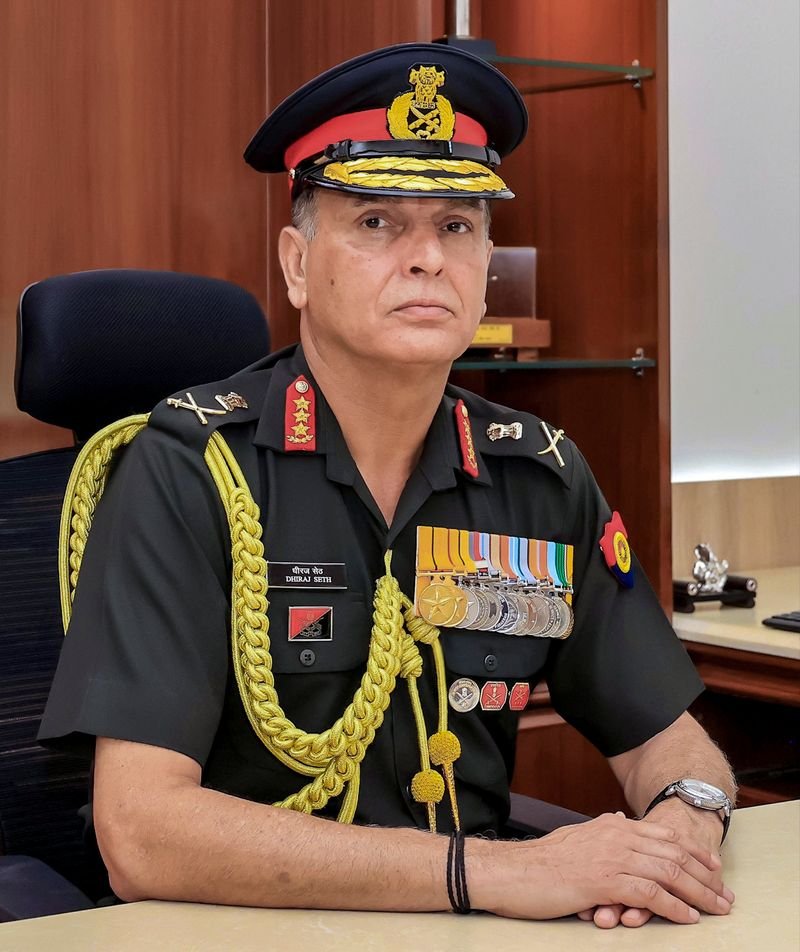
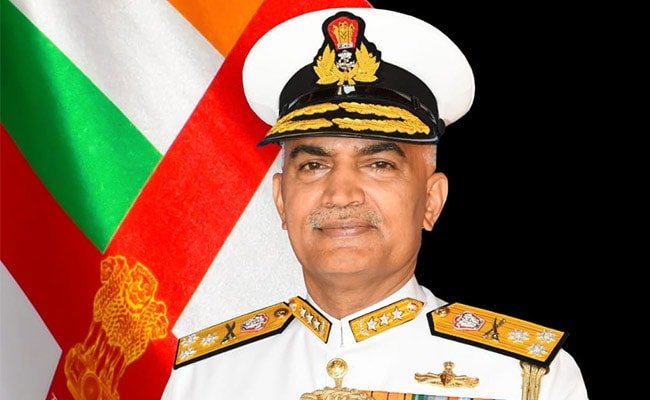
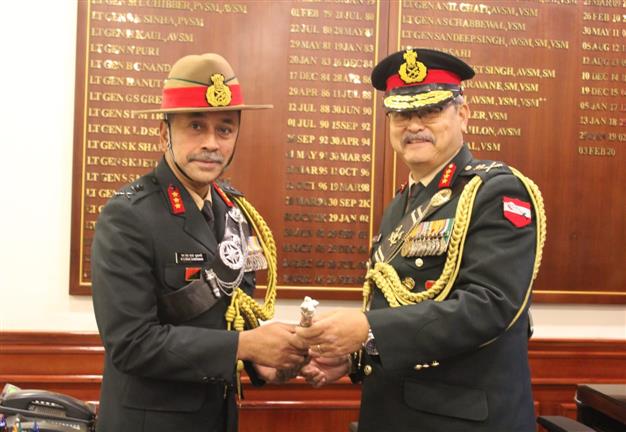
Lt Gen Ram Chander Tiwari, UYSM, AVSM, SM GOC-in-C Eastern Command & Col of the Kumaon & Naga Regts and Kumaon Scouts
GOC-in-C SW Command
LT GEN AMARDEEP SINGH BHINDER, AVSM, VSM,
GOC-in-C Southern Command
Lt Gen Ajai Kumar Singh, AVSM, YSM, SM, VSM
Monthly Archives: October 2022
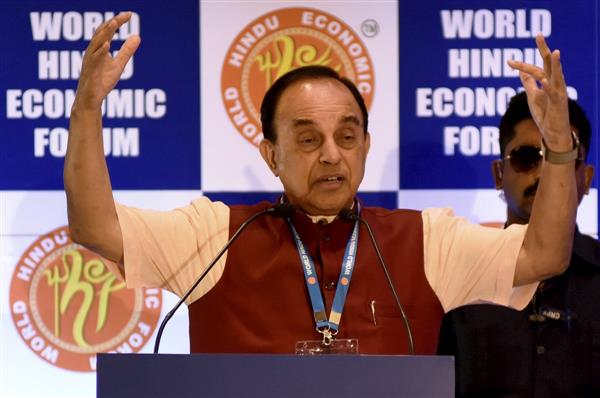
Farmer agitation may soon become international issue, says Subramanian Swamy The BJP MP says human rights groups plan to approach the International Labour Organisation of the United Nations on the issue of farmers’ agitation
Subramanian Swamy took to Twitter on Saturday to criticise the Centre’s treatment of the farmers’ agitation.
The BJP MP said the farmers agitation may soon become an international issue as human rights groups plan to approach the International Labour Organisation of the United Nations.
“The farmer agitation may soon become an international issue. Human rights groups plan to approach the International Labour Organisation, UN Body, in which India is a member, which could take it up. As Chairman of Labour Standards, I produced, in 1996, a three volume Report for Govt,” Swamy tweeted.
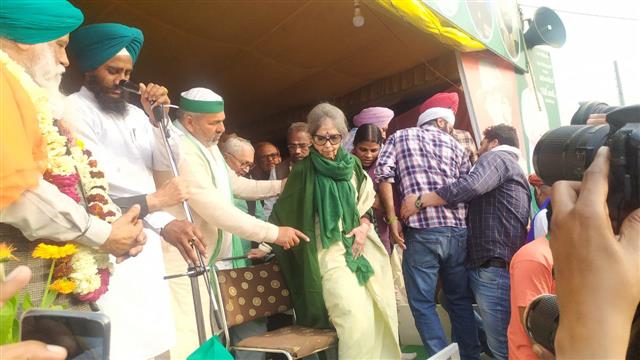
Mahatma Gandhi’s granddaughter Tara Gandhi Bhattacharjee at Ghazipur border during their ongoing protest against Centre’s farm laws, in New Delhi. Tribune photo
Ghaziabad, February 13
Mahatma Gandhi’s granddaughter Tara Gandhi Bhattacharjee on Saturday visited Ghazipur on the Delhi-Uttar Pradesh border to extend support to the farmers’ movement against the Centre’s contentious farm laws, according to a BKU statement.
The 84-year-old Bhattacharjee, who is also the chairperson of National Gandhi Museum, exhorted farmers to remain peaceful in their protest and urged the government to “take care” of the farming community.
She was joined by Gandhi Smarak Nidhi chairman Ramchandra Rahi, All-India Sarv Seva Sangha managing trustee Ashok Saran, Gandhi Smarak Nidhi director Sanjay Singha and National Gandhi Museum director A Annamalai.
“We have not come here as part of any political programme. We have come here today for the farmers, who have fed all of us our whole life,” Bhattacharjee said, according to the statement by the Bharatiya Kisan Union (BKU), the farmers union leading the protest here.
“We are because of you all. In the benefit of farmers lies the benefit of the country and all of us,” she was quoted as telling the protesters, who are camping at Ghazipur since November with a demand that the Centre repeal the three new farm laws and make a new one to guarantee minimum support price (MSP) for crops.
She recalled that the first fight for independence from the British rule in 1857 had also started from Meerut in western Uttar Pradesh.
Bhattacharjee said she has come to the protest site to pray for the farmers, according to the statement issued by BKU’s media in-charge Dharmendra Malik.
“I want that whatever happens, farmers should be benefitted by it. Nobody is unaware of the hard work that the farmers do and it is not to be said again that in the benefit of farmers lies the benefit of our country, and all of us,” she said.
Thousands of farmers are camping at Delhi’s border points of Singhu, Tikri and Ghazipur since November in protest against the three farm laws enacted by the Centre in September.
They claim that the new laws and lack of a law on MSP would hurt their livelihoods while the government has maintained that the legislations are pro-farmer. The impasse continues even after 11 rounds of formal talks between the government and farmers. PTI
TMC Member of Parliament Mahua Moitra alleges she is under surveillance Asks police to withdraw security that she ‘neither asked nor wanted’
MC MP Mahua Moitra during the ongoing Budget Session of Parliament in New Delhi on February 11, 2021. PTI file photo
Tribune News Service New Delhi, February 13
Trinamool Congress Member of Parliament Mahua Moitra has claimed she is being put under “some sort of surveillance” after Border Security Force (BSF) officers were deputed outside her Delhi residence.
Mitra raised this allegation in a letter addressed to the SHO of Barakhamba police station, which was also marked to Delhi Police Commissioner SN Shrivastava, and has requested withdrawal of the security which she “neither ask nor want”.
The force as per her was deputed outside her house late on Friday night and it was done after a visit from SHO of Barakhamba Police Station visited her the same evening.The Krishnanagar MP has alleged the officers were noting all the movements coming in and going out of her residence.
“The conduct of these armed officers indicates that they are making notes of movements to and fro from my residence, it appears to me that I am under some sort of surveillance. I wish to remind you that Right of Privacy is a Fundamental Right, guaranteed to me, as a citizen of this country, under the Constitution of India, 1950,” Mitra wrote in her letter.
“Upon making inquiries, I was informed that the armed officers from Police Station Barakhamba Road for my protection, however, I being an ordinary citizen of this country, did neither ask or want any such protection. Therefore, you are kindly requested to withdraw these officers,” she added.
Forgotten hero who brought Tawang under Indian Union to be honoured Khathing’s son, other family members will be present at the function
Major Ralengnao Bob Khathing, who was instrumental in bringing Tawang in Arunachal Pradesh under the Indian Union, will be honoured for the first time on Sunday here in presence of Chief of Defence Staff General Bipin Rawat, two chief ministers, a central minister and a governor.
As an assistant political officer of the erstwhile North East Frontier Agency (NEFA) and present-day Arunachal Pradesh, Khathing had carried out an audacious operation to bring Tawang under the Indian Union in the early 1950s under the direct supervision of the then Assam governor Jairamdas Daulatram.
Arunachal Pradesh Chief Minister Pema Khandu, Meghalaya Chief Minister Conrad Sangma, Union Sports Minister Kiren Rijiju, Arunachal Pradesh Governor Brigadier (Retd) B D Mishra and General Rawat arrived here this afternoon to attend the foundation stone laying ceremony of Major Ralengnao Bob Khathing Memorial at Kalawangpo auditorium.
“Khathing was one of the most significant heroes of India whose immense contribution cannot be forgotten. A due recognition will be given to Khathing, who was so far neglected,” Rijiju told PTI.
Khathing’s son John, a retired IRS officer, and other family members will also be present at the function.
Khathing, who was a Naga from Manipur, was given order by Daulatram to march towards Tawang with 200 soldiers of Assam Rifles and 600 porters on January 17, 1951.
Before World War II, Tawang was under the administrative control of the then independent Tibetan government.
Despite several attempts, the British could not annex it.
According to historical accounts of the NEFA, when Khathing and his men arrived in Tawang, he called a meeting on a high-ground near the Tawang Monastery for meeting local tax officials, village elders and prominent people of Tawang.
He used diplomatic skills to win over the locals. He soon realised that the local Monpa community was struggling under the harsh taxes imposed by the Tibetan administration. He told the local people about India, its democracy and assured them that India will never impose unjustified tax on them.
Soon, with the Assam Rifles men, Khathing took control of Tawang, tricolour was hoisted in Tawang and Bumla and the area became part of India. PTI ACB
CHANDIGARH COUNCILLOR IN SUPPORT OF MOHALI MC CANDIDATES
Gurbax Rawat speech during a public Meeting at sector 68 Mohali Smt. Gurbax Rawat Councillor & Former Deputy Mayor Chandigarh addressing public at sector 68 Mohali during a public meeting for MC Election Mohali in presence of S. Balbir Singh Sidhu (MLA Mohali, Punjab)
Deepender Deswal Tribune News Service Hisar, February 13
Haryana Agriculture Minister Jai Prakash Dalal said 200 farmers who died during the ongoing protests would have died anywhere—remarks that could be seen as insensitive.
Dalal, who was addressing a press conference in Bhiwani, said the farmers who died during the protests would have “died even if they were home (ye ghar par hote toh bhi marte)”.
He followed up this remark by saying that one only had to look at the data on deaths to know this.
“They have died in the same ratio of deaths. Would 200 people have not died in a lakh or two in the last few months,” he said, adding heart failures and illnesses usually caused deaths.
He then accused the protesters of having been spurred on “Left activists who dance on China’s tunes to create a hostile environment” to drive out investment.
He also called Bharatiya Kisan Union’s national spokesperson Rakesh Tikait a ‘sadak chhap’ (vagabond) leader with vested interests.
He claimed another leader from Western Uttar Pradesh was brewing trouble in Haryana. Although he did not name anybody, he seems to be hinting at Yashpal Malik.
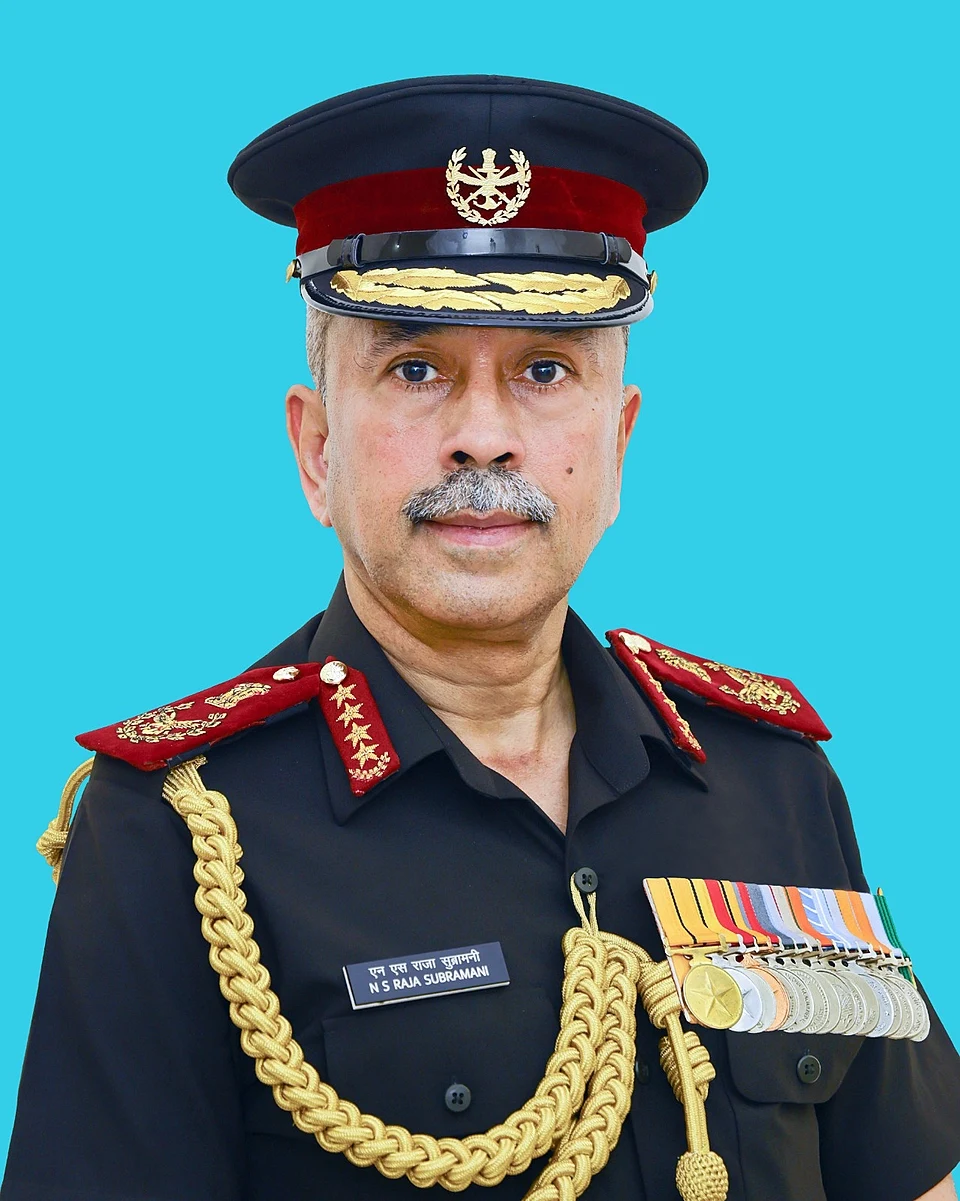
Lieutenant General NS Raja Subramani (left) takes over General Officer Commanding of the Ambala-based Kharga Corps from Lt Gen SS Mahal. Tribune photo
Tribune News Service Chandigarh, February 12
Lieutenant General NS Raja Subramani has been appointed as the General Officer Commanding (GOC) of the Ambala-based Kharga Corps, one of the Army’s three-strike formations.
He takes over from Lt Gen SS Mahal. On change of guard today, both the commanders paid tributes to martyrs at the Vijay Samark War memorial in Ambala Cantonment.
Commissioned into the Gharwal Rifles, Lt Gen Subramani has vast operational experience and has held important command and staff appointments in peace, field’ and active counter-insurgency environment and possesses. This includes GOC of the Black Cat Division in the north-east and GOC Uttar Bharat Area.
Meanwhile, Lt Gen PS Minhas took over as the GOC of Konark Corps headquartered at Jodhpur, from Lt General Anil Puri. Prior to this, Lt Gen Mihnas, an Armoured Corps officer, was the GOC, Madhya Bharat Area, and had earlier commanded the White Tiger Division.
How does PLA see India’s strategic ambitions? Chinese military document holds clues
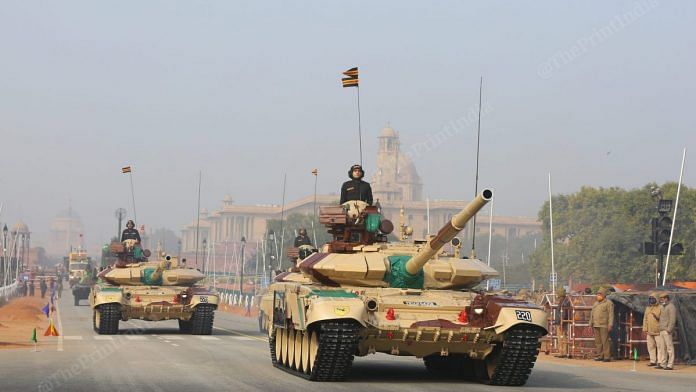
Representational image | Indian Army tanks at the Republic Day parade | Suraj Singh Bisht | ThePrint File Photo
New Delhi: India has always seen itself as a regional power and has wanted to dominate the Indian Ocean Region — this is how Beijing perceives New Delhi’s strategic ambitions, according to a recently translated document on China’s military strategy.
The US-based China Aerospace Studies Institute (CASI) translated a 2013 document, which is a doctrine of China’s Academy of Military Sciences.
The document traces the evolution of India’s strategic thought — as perceived by China — and gives a broad outline of the People’s Liberation Army’s military strategy. Of note is the fact that such documents are drawn up only once in about every 13 years.
In episode 682 of Cut The Clutter, ThePrint Editor-in-Chief Shekhar Gupta analyses the aspects of the document that talk about India, using it as a unique opportunity to look at India from the lens of its biggest adversary.
According to the document, China sees India’s strategic thought as having developed in multiple stages after Independence.
The first stage is ‘Limited Offensive Strategy’, between 1947 and 1960, occurring right after Independence, when India was a young, economically backward and militarily weaker nation.
According to the Chinese, India laid major emphasis on building its economy rather than defence. However, since Pakistan remained a threat, there was limited offence but increased deployment on the Western front, and movement to the northern frontiers along Tibet, which, from the Chinese perspective, is south of the McMahon line.
“Essentially, what that means is that India asserted control over new regions of Arunachal Pradesh, or what the Chinese call South Tibet. But I suspect this is also an oblique reference to the fact that it was in this period that India went up to Tawang and asserted control,” said Gupta. By 1958, according to the Chinese, India gained control over all contested areas near the India-China border.
Between 1960 and 70, the paper says India’s strategy focused on expansion on two fronts, especially after the 1962 war, when the country started building its military power. In 1964, it started a defence modernisation plan with the first defence five-year-plan, pegged at Rs 5,000 crore. The paper says this led to two things — it gave India greater strength for its operations in the West, and provided in-depth defence against China.
In the next two decades, between 1970 and the late 1980s, the paper notes, India’s objective was to maintain land and control the sea. According to it, India had contained Pakistan at this point and its focus shifted towards gaining control over the sea, particularly the northern part of the Indian Ocean. India started focusing on building its Navy to gain power in South Asia.
In the 90s, the focus shifted from regional offence to regional deterrence. By this time, the paper says, the traditional view of annihilatory war had changed. So, India tried to build influence in an entire region on the back of a strategy of regional deterrence, from the Himalayas to the Indian Ocean, from Iran in the West to Myanmar in the East.
By the 21st century, India’s economy boomed, making it stronger than its South Asian neighbours, and leading to its strategy evolving again. The paper also notes that India’s strategy became two-pronged — practising defensive deterrence against China and punitive deterrence with others.
Characteristics that define India’s strategic thought
The Chinese paper notes that there are four inter-woven characteristics to India’s strategic thought. It says India has a strong geopolitical core since the nation believes it’s the heart of Asia, and its region of influence is South Asia. The paper also says Pakistan and China are India’s biggest obstacles in achieving its geopolitical goals.
Indo-centricism has been identified as another objective, one the Chinese think India has inherited from the British. India considers itself the heart of the continent, and regions at its peripheries, including Kashmir, Assam, Bangladesh, Sikkim and Bhutan, are its internal line of defence. The country also wants Tibet as a buffer zone with China. The paper says India relies on the Chanakyan philosophy, dealing with peripheral nations as rivals and regions that are far off as friends.
According to China, India wants to dominate South Asia and the Indian Ocean Region, and rise as a first rate world power for which a strong but limited offensive is needed. The paper also says India has been ‘nibbling’ away at Chinese territory in the meantime.
“Chinese say this ‘nibbling’ has been done rather carefully, to turn defence into offence during war time,” Gupta said.
Finally, the paper says, India’s strategic thought emphasises deterrence in all directions. This analysis breaks India’s deterrence strategy into two distinct halves — ambition for dominance and ambition for deterrence.
“India knows that its military power is limited, so for the second one, India has reached out to countries like the US and Japan, and improved its relations to get more people into the tent… you can see that the Chinese scholars had foreseen the coming up of the Quad in 2013,” Gupta said.
Enhanced pension for death during natural calamities, says AFT
The Armed Forces Tribunal has ruled that the next of kin of a soldier who dies while on duty combating natural calamities is entitled to higher pensionary benefits than those applicable to death during routine service.
Closing the case of the widow of a soldier, who lost his life while extinguishing a forest fire on the Indo-China border, the tribunal has directed the Centre to grant her Liberalised Family Pension rather than Special Family Pension that she was getting.
Liberalised Family Pension is equivalent to the last drawn emoluments of the deceased, and is applicable in case where death occurs during operations or other specified field circumstances, whereas Special Family Pension is 60 per cent of the last drawn pay.
Champa Devi’s husband, late Naik Surinder Kumar of the Punjab Regiment, was deployed near the China border in the northeast when he died after he was called to assist in extinguishing a forest fire. He died after a tree fell on him.
Though the Army had declared the death a “battle casualty” as per applicable provisions, the office of the Principal Controller of Defence Accounts (Pensions) at Allahabad had rejected her papers saying the death fell in the category of rules which dealt with organised sports and recreation.
Setting aside the rejection order of the accounts branch, the tribunal’s Bench comprising Justice Mohammad Tahir and Vice Admiral HCS Bisht held that the death fell in the category of the rules that dealt with deaths arising out of duty during natural calamities, which entitled a widow to Liberalised Family Pension.