









Sanjha Morcha

Citizenship Amendment Act: ‘Principle of discrimination based on faith will be difficult to limit’

Understanding the context and philosophy of Indian citizenship, the situation in countries around the world, and why the implications of the Citizenship Amendment Act may extend to other realms as well
Citizenship Act, Citizenship Act protests, Citizenship Act protests delhi, Citizenship Bill protests, CAA protests, CAB protests, Citizenship Amendment Act, Citizenship Amendment Bill, India news, Indian Express

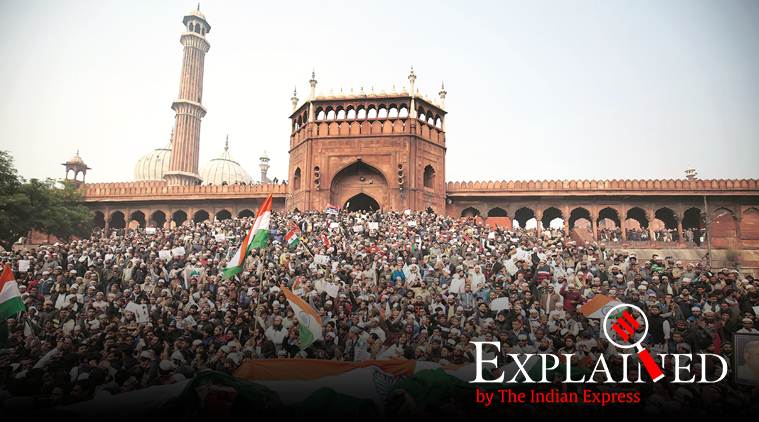
Large crowds have been protesting against the Citizenship Amendment Act in cities across the country. (Express Photo by Praveen Khanna)

What were the Indian ideas and rules of citizenship in the Constitution before the Citizenship Amendment Act (CAA), 2019?

 The Articles (5-11) on citizenship in the Constitution of India were formulated specifically for the immediate aftermath of the Partition, leaving it to Parliament to enact the law on citizenship, which it did in 1955.

The Constituent Assembly held the principle of jus soli (citizenship based on birth on the soil of a country) to be the more “enlightened modern civilised” principle, as compared to the “racial” principle of jus sanguinis (citizenship based on descent); although citizenship by descent, as well as registration and naturalisation, also found recognition in The Citizenship Act of 1955.

The law on Indian citizenship is located within a constitutional framework that confers equal rights on all citizens, and does not discriminate between them on grounds of caste, creed, tribe or gender.
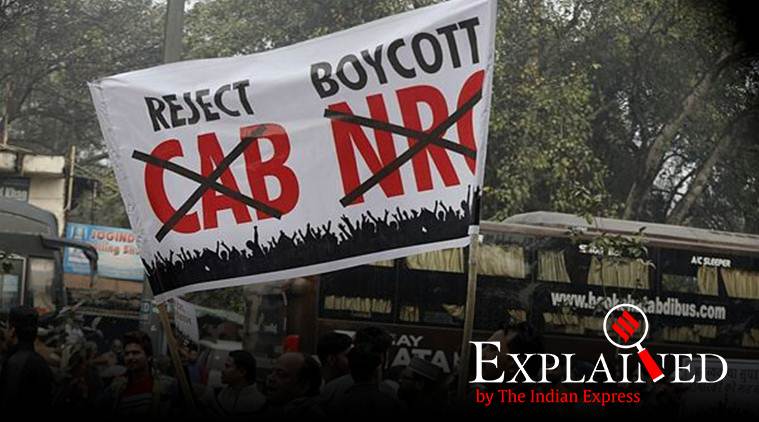
 A demonstration against the CAA and NRC near the Red Fort on December 19. Amit Mehra

But if the new citizenship law does not impact Indian Muslims, should the exclusion of Muslims from Pakistan, Bangladesh, and Afghanistan bother Indians?

It is true that the CAA per se does not impact Indian Muslims. When twinned with the National Register of Citizens (NRC), however, it could adversely impact not only Indian Muslims, but also poor Indians of all faiths.

Even if (given the conflicting signals from the government) the NRC is not implemented, and the differentiation is only in relation to illegal migrants in the CAA, the very introduction of the principle of religious discrimination is cause for concern. Once the principle is admitted, that discrimination on religious grounds is permissible in law, it may not be possible to limit or contain its application to other realms as well.

How has the switch to jus sanguinis been significant in the great citizenship debates of the world?

The direction of change varies. When Donald Trump became President of the United States, he did indeed signal a questioning of the idea of birthright citizenship. On the other hand, Germany has moved in a more inclusive direction, combining elements of both jus soli as well as jus sanguinis. So there are historical fluctuations and hybridisations.

The Indian law of citizenship recognizes both — but through an amendment enacted when Atal Bihari Vajpayee was Prime Minister, jus soli was undermined in favour of jus sanguinis, through the exclusion of people born in India, but with one parent who was an illegal migrant at the time of their birth.

The new amendment consolidates this shift, introducing an explicitly religious criterion into a hitherto religion-neutral law.
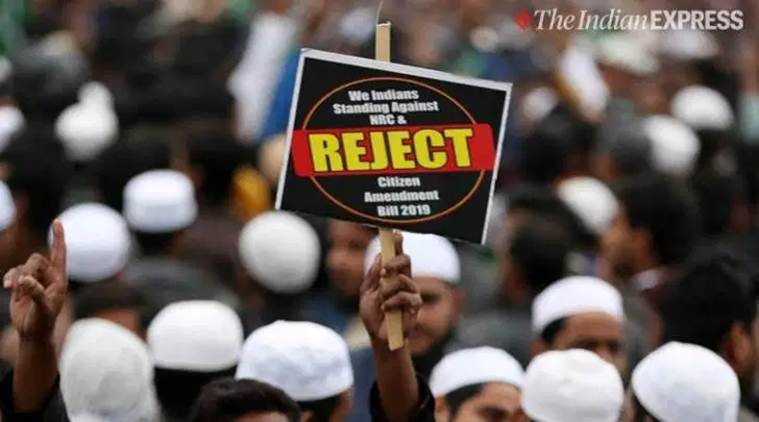
 AIMIM members hold a protest against CAB at the clock tower in Lucknow (Express photo by Vishal Srivastav/File)

Did the collapse of countries such as the USSR and Yugoslavia feed the idea of ethnicity/race and nudge India towards an exclusive idea of citizenship?

The disintegration of the Soviet Union and the break-up of Yugoslavia were a long time ago.

The hyper-nationalism and xenophobia in countries experiencing populist regimes have been attributed to the perceived excesses of globalisation. But the fact is that we have been in what is called a post-multicultural world since at least the mid-1990s.

The impetus for the decline of multiculturalism in Europe had different sources. From left to right, it ranged from the broadly left dissatisfaction with identity politics as a distraction from the project of equality to the concern that it had failed to improve the condition of minorities to the populist worry that being over-solicitous of minority cultures was threatening the majority’s way of life.

The Indian case is, however, distinct from all of these. The great civilisational diversity of this country makes imperative an inclusive architecture of governance.

This found powerful expression in the freedom movement, in the deliberations of the Constituent Assembly, and in our Constitution. Even if the word ‘secular’ was a later addition, India’s Constitution is a document that builds the imperatives of diversity and pluralism into the architectural design of how we are governed, from reservations for historically disadvantaged groups to cultural rights for religious minorities and even the federal arrangement initially based on language.

The questioning of this architecture has less to do with the outside world and more to do with our own polity.
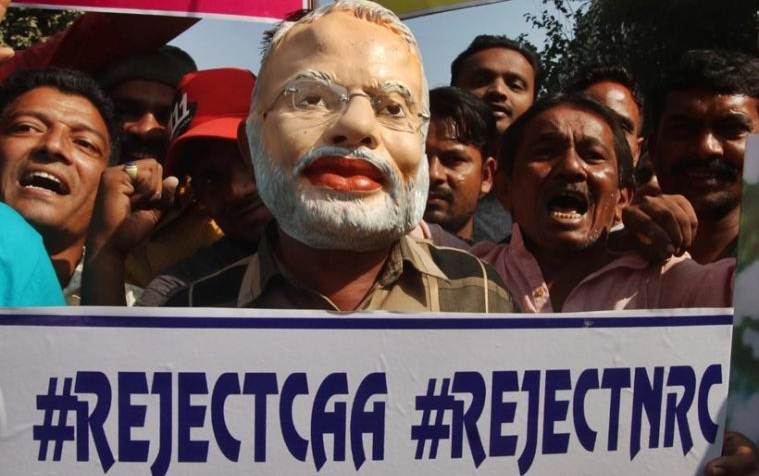
citizenship Act protest, NRC protest, government on NRC, Nitish kumar, chirag paswan, What BJP allies says on NRC, Ram madhav, Mukhtar abbas naqvi, indian express Opposition leaders have accused the ruling BJP of trying appease the Bengali Hindu vote-bank by passing CAA and raising the pitch on a nationwide NRC

What other examples are there in the world of countries asking all citizens to prove citizenship at government windows, in the way that some fear the NRC might do? Does that not mean assuming everyone is illegal unless proven otherwise?

I am not aware of any example in the world in which an entire population has been asked to prove its citizenship.

Even national ID cards have been controversial. In 2006, the United Kingdom legislated National ID cards, to be linked to a National Identity Register, carrying 50 categories of information on every citizen. Among the significant objections were concerns about discrimination expressed by black and South Asian citizens. Significantly, the Commission for Racial Equality said that this could result in a two-tiered racial structure, in which British ethnic minorities may be obliged (by the state or by employers) to register while white British people may not. The Act was repealed in 2011, and the data on the National Identity Register was destroyed within a month.

Based on the experience in Assam, how much might a nationwide NRC exercise cost?

The cost of the Assam NRC was Rs 1,600 crore, and 50,000 officials were deployed to enrol 3.3 million applicants. We now know that it ended up excluding 1.9 million people, mostly genuine citizens of all religious affiliations. If we take this as the basis of a back-of-the-envelope calculation, counting only the Indian electorate of 879 million voters, an all-India NRC would entail an expenditure of Rs 4.26 lakh crore, and would require 1.33 crore officials to conduct it.

Can the NRC be “done again”, as is being said in Assam’s case? How does a repeat of the exercise impact the credibility of the state?

The huge margin of error — especially exclusion errors — obviously dents seriously the credibility of such an exercise.

But there can also be errors of inclusion. As Kamal Sadiq’s book Paper Citizens: How Illegal Immigrants Acquire Citizenship in Developing Countries showed, there is a greater likelihood of poor illegal migrants holding proper documents than of poor nationals. Migrants, because that’s the condition for their survival, have to organise papers on arrival, through what Sadiq calls “networks of kinship” and “networks of profit”. This is what he describes as “documentary citizenship”.

Essentially, it means that documented non-nationals (illegal migrants) may be able to prove their citizenship even as undocumented nationals are unable to do so. The dangers of stripping legitimate citizens of their citizenship should surely outweigh any advantage of ‘detecting’ illegal foreigners.

Credibility is also called into question when the authenticity of documents issued by the state is impugned. The courts have been known to cast doubts on the legitimacy of the citizenship of Indian passport holders, on the grounds that a passport could have been acquired by misrepresentation and fraud.

Prof Niraja Gopal Jayal is one of India’s most well-known political scientists, with extensive work on the question of citizenship. She is the author of Citizenship and its Discontents: An Indian History. She spoke to Seema Chishti.


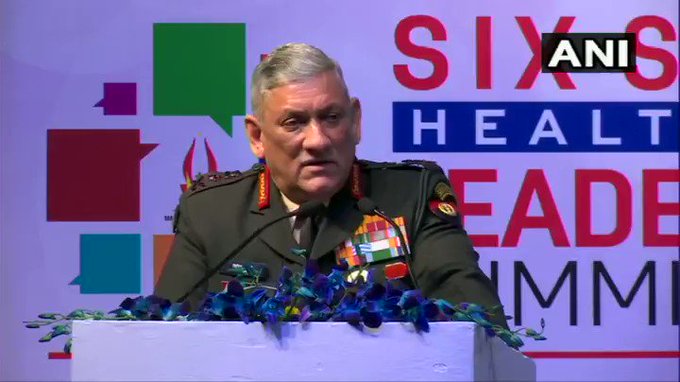
Exhorting people to violence not leadership: Army chief Bipin Rawat on anti-CAA stir; takes flak

Exhorting people to violence not leadership: Army chief Bipin Rawat on anti-CAA stir; takes flak

Tribune Web Desk
Chandigarh, December 26

Army chief General Bipin Rawat kicked up a storm on Thursday when he commented on the anti-CAA protests across the country, condemning those leading the “crowds to carry out arson and violence”.

Speaking at an event-Six Sigma Healthcare Delhi-he said it is not leadership if people lead university and college students towards violence.

General Rawat said: “Leaders are not those who lead people in inappropriate directions. We are witnessing in a large number of university and colleges students, the way they are leading masses of crowds to carry out arson and violence in cities and towns. This is not leadership (sic).”

Since both Houses of Parliament approved amendments to the citizenship law earlier this month, protests — sometimes violent — have taken place across the country. Multiple protestors have been injured and have died in these protests, especially in Uttar Pradesh and Karnataka.

Gen Rawat, who is due to retire on December 31 as Army Chief, is tipped to be India’s first Chief of Defence Staff who will be the single-point military adviser to the government on tri-services matters. In his three-year tenure as Army Chief, he has faced allegations of not remaining politically neutral.

Since both Bouses of Parliament approved amendments to the citizenship law earlier this month, protests — sometimes violent — have taken place across the country during which many protesters have died, especially in Uttar Pradesh and Karnataka.

“What is so complex about leadership, if it is all about leading. Because when you move forward, everybody follows. It is not that simple. It appears simple, but it is a complex phenomenon,” Rawat said in his speech.

“Even amongst the crowd you find that the leaders emerge. But leaders are those who lead people in the right direction. Leaders are not those who lead people in inappropriate directions,” he added.

However, Gen Rawat’s comments triggered a massive row.

Former Navy Chief Admiral L Ramdas said Gen Rawat was “wrong” in making such remarks as people in the armed forces must follow the decades-old principle of serving the country and not any political force.

“The rule is very clear that we are serving the country and not political forces, and to express any political views as we have heard today are quite a wrong thing for any serving personnel whether he is the top gun or at the bottom rank. It is not proper,” Ramdas said.

The Section 21 of the Army Act prohibits any Army personnel to attend or address any meeting or to take part in any demonstration organised by anybody for any political or other purposes. It also bars them from communicating to press or to publish any book relating to any political question.

The Army Chief’s comments also evoked sharp response from political leaders.

The CPI(M), in a statement, asked the General to apologise to the nation for his “indiscretion”, holding that his remarks will have extremely adverse ramifications for the constitutional arrangement in the country.

The Politburo of the party said the General has “directly indulged” in condemning the student protestors who have been opposing the Citizenship Amendment Act and the proposed pan-India National Register for Citizens.

“Army Chief’s statement underlines as to how the situation has degenerated under the Modi government where the highest officer in uniform can so brazenly breach the limits of his institutional role. It is, therefore, necessary to raise the question as to whether we are going the Pakistan way of politicizing the military. Such obnoxious interference in matters of democratic struggles from top ranking military professionals is unheard of in the history of independent India,” it said.

Congress Spokesperson Brijesh Kalappa too slammed Gen Rawat for his remarks.

“Army Chief Bipin Rawat speaking against #CAAProtests is wholly against Constitutional democracy. If Army Chief is allowed to speak on Political issues today, it also permits him to attempt an Army takeover tomorrow!!,” he tweeted.

After his remarks generated a storm, Army issued a clarification, saying the Army Chief has not referred to the CAA.

“He has not referred to any political event, personality. He was addressing the future citizens of India who are students. (It is his) righteous duty to guide students on whom shall depend the future of the nation. In the Kashmir valley, youths were misguided the first, by people whom they trusted as leaders,” the Army statement said.

Rights activist Yogendra Yadav said: “I agree with him, yes leaders should lead (people) in the appropriate direction. I am absolutely sure, he has the Prime Minister of this country in mind when talking about that.”

AIMIM chief Asaduddin Owaisi said leadership is about knowing the limits of one’s office. “It is about understanding the idea of civilian supremacy and preserving the integrity of the institution that you head,” he said.

K C Tyagi, leader of the JD(U), an ally of the BJP, also criticised Gen Rawat for making “political comments”.

Twitter also erupted in response to the Army Chief’s statement, with some suggesting he be “given a party ticket now”. (With PTI)

Ruchica Tomar@ruchicatomar
  

Please end the misery and give him an election ticket… https://twitter.com/ANI/status/1210083310547849216 

ANI

@ANI


#WATCH Army Chief Gen Bipin Rawat: Leaders are not those who lead ppl in inappropriate direction. As we are witnessing in large number of universities&colleges,students the way they are leading masses&crowds to carry out arson&violence in cities & towns. This is not leadership.

Embedded video

Saket Gokhale@SaketGokhale
  

Never before have we had a CoAS as openly politicized as this one (not even VK Singh).

When the Army Chief & prospective Chief Of Defense Staff starts commenting so blatantly on civilian issues, it bodes very dangerously for democracy. His political ambitions need curbing. https://twitter.com/ani/status/1210083310547849216 

Ramachandra Guha


@Ram_Guha

A fact-check for the Army Chief, from today’s Indian Express:
“The civic protests against the controversial Citizenship Amendment Act (CAA) reported from cities across the country have been largely peaceful, barring in states ruled by the BJP…” https://twitter.com/ANI/status/1210083310547849216 

Vinay Kumar Dokania | विनय कुमार डोकानिया@VinayDokania


An army chief making a political comment that too during his tenure is the new low in our fading democratic republic. It’s shameful that to appease the regime the army chief indulges in political commentary to get a big post after retirement. https://twitter.com/ANI/status/1210083310547849216 

Rijin R@Rijin2204
 You are not a politician
Try to respect the Position that you hold.
If you can’t better resign yourself and join the party that you are supporting for. Country doesn’t need an Army Chief who is politically inclined

View image on TwitterView image on Twitter

digvijaya singh


@digvijaya_28

“Leaders Not Those Who Lead Masses In Arson”: Army Chief On Citizenship Protests
I agree General Saheb but also Leaders are not those who allow their followers to indulge in Genocide of Communal Violence. Do you agree with me General Saheb? https://www.ndtv.com/india-news/army-chief-general-bipin-rawat-says-on-citizenship-law-protests-leaders-are-not-those-who-lead-masse-2154552 

Controversy Over Army Chief’s “Political” View On Citizenship Law Protest

Army chief Bipin Rawat today criticized violence during protests over the citizenship law, saying “leaders are not those who lead masses in arson and violence”.

ndtv.com


War of words erupts between Sidhu, Kirron over airport’s nomenclature

HT Correspondent

chandigarh@hindustantimes.com

Mohali : Days after the UT administration wrote to the state government objecting to the removal of ‘Chandigarh’ from the international airport’s name in signage in Punjab, a war of words ensued between MP Kirron Kher and Punjab health and family affairs minister Balbir Singh Sidhu.

The letter written by the UT home department, dated December 17, had asked the director, civil aviation, Punjab, and director, Chandigarh International Airport, Mohali, to take necessary action on the complaint of one Ajay Jagga, a member of the Chandigarh Heritage Protection Cell, who initially brought the issue to the notice of UT administrator VPS Badnore and advisor Manoj Kumar Parida.

“The dropping of Chandigarh from the airport’s name is an attempt at dilution of the original name of the airport. Punjab has no authority to change the name of the airport without the acquiescence of all the stakeholders in the project, namely, Chandigarh, Haryana and most importantly the Airport Authority of India,” a senior UT official, who didn’t want to be named, had said.

In a statement, Kirron Kher had stated that the airport should be named after Chandigarh alone, as “Mohali is not very popular”. She had said, “If the airport is built on the land that is in Mohali, it does not mean it should be named after Mohali.”

She had also said that she will take up the matter with the central government.

Punjab health and family affairs minister Balbir Singh Sidhu, on the other hand, demanded that the airport constructed in Mohali be named after the city alone, adding that those in opposition were demonstrating their narrow thinking.

Training his guns on MP Kirron Kher, Sidhu said Kher should know the city is named after the tenth Sikh master’s eldest son Sahibzada Ajit Singh. Sidhu said if Kher kept up with her antics, on her arrival in Mohali, she would be “gheraoed and we will boycott her”.

Significantly, both Haryana and Punjab governments have agreed over naming the airport after Shaheed Bhagat Singh, but the main dispute continues over prefixing Mohali or Chandigarh to the name. The UT administration and Haryana favour keeping the original ‘Chandigarh’ in the airport’s name, but Punjab insists on ‘Mohali’ owing to it being located in Mohali.


Parliamentary panel calls for more funds for forces

Parliamentary panel calls for more funds for forcesconcerNS Underlines need to buy equipment, pay for the ones for which contracts signed
The armed forces have projected a combined requirement of almost ~1 lakh crore more under the capital head for 2019-20. PTI FILE

Rahul Singh

rahul.singh@hindustantimes.com

NEW DELHI : A parliamentary panel has asked the defence ministry to “strongly press” for additional funds from the finance ministry to enable the military to buy new equipment and also pay for weapons and systems it has already contracted to purchase, at a time when the armed forces have projected a combined requirement of almost ~1 lakh crore more under the capital head for 2019-20.

In a series of reports on demands for grants of the defence ministry for 2019-20, the Parliamentary standing committee on defence on Monday underlined the need to provide adequate budgetary support to the armed forces for powering different modernisation programmes and also pay for committed liabilities or procurements already made in the previous years.

India’s defence budget for 2019-20 stands at ~3.18 lakh crore. This includes a capital outlay of just ~1,03,394 crore that is not enough to upgrade capabilities and more money is required to avoid a funding crisis, said three senior military officers asking not to be named. The additional money sought by the army, navy and air force almost equals this year’s capital expenditure.

Measured against the country’s GDP, India’s defence spending currently stands at around 1.5% of the GDP, the lowest in decades. Several experts have argued that India should spend 3% of its GDP to build military capabilities to counter a combined threat from China and Pakistan. In written submissions to the parliamentary panel, the defence ministry said the requirements projected by the three services had been forwarded to the finance ministry for “favourable consideration”.

“While allocating funds, the ministry of finance analysed past absorption capacity of the services and the pace of expenditure in the current financial year. The committee understood that if this logic was applied, there was no reason not to allocate requisite budget for the forces as for the past few financial years they had been able to fully utilise the funds allocated to them at the revised estimates stage,” the panel said.

The armed forces have so far spent over 90% of funds on modernisation and committed liabilities, said the first senior officer. “Under the defence services estimates, committed liabilities constitute a significant element in respect of the capital acquisition segment, since one project may span several financial years. As such, it is important to track the element of committed liabilities, which hold first charge on budget allocation. The committee found the shortage baffling, as these are payments towards procurements made in previous years,” the panel said, recommending that allocation as promised should be disbursed for committed liabilities. On December 3, navy chief Admiral Karambir Singh highlighted that the navy needed funds for pursuing modernisation programmes as its share of the defence budget had declined from 18% to 13% during the last five years. The capital expenditure of ~23,156 crore earmarked for the navy isn’t sufficient to meet requirements and the service needs at least ~20,000 crore more, said the second officer.

Likewise, the capital expenditure of ~39,300 crore earmarked for IAF in this year’s budget is not enough and it requires an additional ~40,000 crore to upgrade capabilities, he added.

The army is seeking additional funds as the ~29,461 crore earmarked for the force fall short of its needs, said the third officer. Experts agree that the military needs more money.

“A higher outlay is necessary for the armed forces to start becoming future-ready. While it is axiomatic that this will need more capital funding, the services too need to invest these and future funds more imaginatively,” said military affairs expert Rear Admiral Sudarshan Shrikhande (retd).


Encouraging Punjab youth to join armed forces

Tribune News Service

Chandigarh, December 22

To encourage the youth of Punjab to join the armed forces, the Chandigarh Chandigarh Defence Academy, has initiated a campaign named ‘Vision 2022’.

Punjab Cabinet Minister Sukhjinder Singh Randhawa today announced various scholarship schemes for meritorious and needy students of Punjab. Randhawa also announced a sum of Rs 5 lakh from his funds to the Chandigarh Defence Academy.

Under the campaign, scholarships will be awarded to the children of martyrs’ families, meritorious children living in orphanages, students living below the poverty line and single mothers’ children. Scholarships will also be awarded to the children of retired Armed forces soldiers and officers and those students of Punjab who have scored more than 80 per cent marks in Class X.


पाक को भारत से खतरा बढ़ा : इमरान

Posted On December – 22 – 2019

इस्लामाबाद, 21 दिसंबर (एजेंसी)
पाकिस्तान के प्रधानमंत्री इमरान खान ने शनिवार को आशंका जताई कि भारत घरेलू परिस्थितियों से ध्यान भटकाने के लिए उसके खिलाफ ‘छद्म कार्रवाई’ कर सकता है और साथ ही चेतावनी दी कि पाकिस्तान ऐसी किसी भी कार्रवाई का मुंहतोड़ जवाब देगा। खान ने कई ट्वीट कर कहा कि मोदी सरकार में भारत ‘फासीवादी विचारधारा’ के साथ ‘हिंदू राष्ट्र’ की ओर से बढ़ रहा है। उन्होंने भारत में संशोधित नागरिकता कानून के खिलाफ हो रहे प्रदर्शन की पृष्ठभूमि में कहा, ‘वे सभी भारतीय जो बहुलवादी भारत चाहते हैं, वे संशोधित नागरिकता कानून के खिलाफ प्रदर्शन कर रहे हैं और यह अब जन आंदोलन बनता जा रहा है।’ खान ने कहा कि भारत में जिस तरह से विरोध प्रदर्शन बढ़ रहा है, उससे ‘पाकिस्तान पर खतरा भी बढ़ रहा है और भारतीय सेनाध्यक्ष जनरल बिपिन रावत की नियंत्रण रेखा पर हालात को लेकर की गई टिप्पणी से ‘छद्म कार्रवाई को लेकर पाकिस्तान की चिंता भी बढ़ गई है।’

ਪਾਕਿ ਨੂੰ ਭਾਰਤ ਤੋਂ ਖ਼ਤਰਾ ਵਧਿਆ: ਇਮਰਾਨ ਖਾਨ

Posted On December – 22 – 2019

ਇਸਲਾਮਾਬਾਦ, 21 ਦਸੰਬਰ
ਪਾਕਿਸਤਾਨ ਦੇ ਪ੍ਰਧਾਨ ਮੰਤਰੀ ਇਮਰਾਨ ਖਾਨ ਨੇ ਅੱਜ ਖ਼ਦਸ਼ਾ ਪ੍ਰਗਟਾਇਆ ਕਿ ਭਾਰਤ ਵਲੋਂ ਆਪਣੇ ਘਰੇਲੂ ਹਾਲਾਤ ਤੋਂ ਧਿਆਨ ਲਾਂਭੇ ਕਰਨ ਲਈ ਉਨ੍ਹਾਂ ਦੇ ਮੁਲਕ ਖ਼ਿਲਾਫ਼ ‘ਝੂਠੀ ਵੱਡੀ ਕਾਰਵਾਈ’ ਕੀਤੀ ਜਾ ਸਕਦੀ ਹੈ। ਨਾਲ ਹੀ ਉਨ੍ਹਾਂ ਚਿਤਾਵਨੀ ਦਿੱਤੀ ਕਿ ਅਜਿਹੀ ਕਿਸੇ ਵੀ ਕਾਰਵਾਈ ਦਾ ਉਨ੍ਹਾਂ ਵਲੋਂ ਮੂੰਹ-ਤੋੜ ਜਵਾਬ ਦਿੱਤਾ ਜਾਵੇਗਾ। ਖਾਨ ਨੇ ਕਈ ਟਵੀਟ ਕਰਦਿਆਂ ਕਿਹਾ ਕਿ ‘ਫਾਸ਼ੀਵਾਦੀ ਵਿਚਾਰਧਾਰਾ’ ਵਾਲੀ ਮੋਦੀ ਸਰਕਾਰ ਦੀ ਅਗਵਾਈ ਹੇਠ ਭਾਰਤ ‘ਹਿੰਦੂ ਰਾਸ਼ਟਰ’ ਬਣਨ ਵੱਲ ਵਧ ਰਿਹਾ ਹੈ। ਭਾਰਤ ਵਿੱਚ ਨਵੇਂ ਨਾਗਰਿਕਤਾ ਕਾਨੂੰਨ ਖ਼ਿਲਾਫ਼ ਚੱਲ ਰਹੇ ਜ਼ੋਰਦਾਰ ਪ੍ਰਦਰਸ਼ਨਾਂ ਬਾਰੇ ਖਾਨ ਨੇ ਕਿਹਾ, ‘‘…ਹੁਣ ਨਵੇਂ ਨਾਗਰਿਕਤਾ ਸੋਧ ਐਕਟ ਨਾਲ ਸਾਰੇ ਅਜਿਹੇ ਭਾਰਤੀਆਂ, ਜੋ ਬਹੁਲਤਾ ਵਾਲਾ ਭਾਰਤ ਚਾਹੁੰਦੇ ਹਨ, ਨੇ ਰੋਸ ਪ੍ਰਦਰਸ਼ਨ ਕਰਨੇ ਸ਼ੁਰੂ ਕਰ ਦਿੱਤੇ ਹਨ ਅਤੇ ਇਹ ਲੋਕ ਲਹਿਰ ਬਣਦੀ ਜਾ ਰਹੀ ਹੈ।’’
-ਪੀਟੀਆਈ


Pathankot retired air force officer loses ₹7.4 lakh to Paytm hacker  

HT Correspondent

letterschd@hindustantimes.com

Pathankot : A retired warrant officer from the Indian Air Force (IAF), Onkar Singh, was duped of ₹7.4 lakh from his State Bank of India (SBI) savings account on December 19, after he fell into the trap of an online hacker and followed his instructions to recharge his Paytm account, police have said.

The exact mechanism of the fraud is not clear, but Onkar from Manwal Bagh village in Pathankot told HT that he received a message from Paytm, saying him that his account had been closed and to revive it, he needed to call at a phone number, 9851967090.

“Upon calling at the said number, a man claiming to be Shakeel Ahmed, speaking from West Bengal, said that he would help me with my application. He told me to deposit ₹3 in his Paytm wallet from my savings account. I did this. Within a few minutes, however, I received a message that ₹5.06 lakh had been transferred from my savings account to the hacker’s account,” he told HT.

He claimed that not only this, his fixed deposit of ₹5.16 lakh in the bank was also transferred to his savings account.

From there, another ₹45,000, ₹49,000, ₹10,000, ₹9,999, ₹5,000, ₹1 lakh and ₹1.45 lakh were transferred out to the hacker’s account till the bank stopped transactions from his account, after he sent his son to the bank to lodge a complaint.

“I have lodged a complaint with the office of the Pathankot SSP, the RBI and Paytm with the details. A case has been lodged at the Shahpur Kandi police station, where I have submitted documentary proof. Police must help me get my money back, catch these criminals and hand them exemplary punishment,” said Onkar.

SP (investigation) Prabhjot Singh Virk said the cyber crime cell was investigating the case that has been registered under section 420 (cheating) of the Indian Penal Code (IPC) and 66-A of the Information Technology Act.

“We are taking help from the police in other states too,” the SP added.


Army studies extension of service by 10-18 years

Army studies extension of service by 10-18 years
 Rahul Singh

rahul.singh@hindustantimes.com

NEW DELHI : The Indian Army is scrutinising a proposal that seeks to employ its specialised manpower for longer periods by granting soldiers from some of its select wings a service extension of 10 to 18 years — a move that could benefit more than 400,000 jawans, two senior army officers said on condition of anonymity on Saturday.

The army is in the process of identifying cadres — ranging from the Corps of Electronics and Mechanical Engineers and Army Air Defence to Army Aviation and Army Medical Corps — where soldiers can discharge their duties and responsibilities efficiently till the ages of 50, 54 and even 58 instead of retiring at 40, said the first officer cited above.

The proposed service extension, backed by army chief General Bipin Rawat, is different from another scheme being implemented by the army to increase the retirement age of jawans by two years, the second officer said.

The army headquarters asked all seven commands across the country to identify arms and services where soldiers could serve longer but the initial response was not encouraging. The feedback indicated that only about 10% jawans could be eligible for the proposed extended tenure.


Digital clampdown Disproportionate imposition of curbs chokes free speech

Digital clampdown

The wall has been breached.’ This tweet said it all as several parts of Delhi witnessed an unprecedented Internet shutdown during protests against the Citizenship Amendment Act (CAA). Phone calls and SMS services were also suspended, throwing life out of gear for lakhs of residents. Ironically, the public was made to suffer hardships in the ‘interest of public safety’. A similar clampdown was foisted on Mangaluru, where two persons were killed in police firing, and some cities of UP.

Citing law and order, the powers that be have been making disproportionate use of authority to deprive people of the telecommunication lifeline. According to a UNESCO report, citizens of South Asian countries experienced at least 97 instances of Internet shutdown between May 2017 and April 2018, including 82 cases in India alone. The South Asia Press Freedom Report observed that Net shutdown and deliberate slowdown were increasing across the world, with the subcontinent faring the worst. However, the efficacy of these curbs is debatable. In August 2017, Haryana, Chandigarh and Punjab were digitally cut off ahead of (and after) the verdict in a rape case against Dera Sacha Sauda head Gurmeet Ram Rahim Singh. Despite the preventive measure, around 40 persons died in violence that broke out after the sect chief was convicted.

The digital gag, especially if it’s enforced without substantial provocation, is an infringement of the citizen’s right to freedom of speech and expression. The law-enforcement agencies should try to counter misinformation and fake news by reaching out to the people through various channels. Repressive measures show Indian democracy in a poor light and reek of authoritarianism. No wonder a Chinese news website has hailed the shutdown in India as a ‘necessary regulation’ and a ‘reasonable choice based on national interests’. China has itself been blocking the Net in its troubled Xinjian region over the years, including a period lasting over 300 days in 2009-10. With the anti-CAA fire spreading fast, the Indian authorities need to realise that the excessive use of force is only worsening the tense situation. Clampdown and crackdown ought to be the last resort, not the first.


Army Chief concerned about non-contact warfare challenges

Army Chief concerned about non-contact warfare challenges

New Delhi, December 21

Army Chief General Bipin Rawat will hold deliberations on Monday over how technology was rapidly changing the character of war fighting across the globe and challenges before the Indian forces in non-contact warfare.

During the deliberation, Indian Army Chief-designate Lt Gen Manoj Mukund Naravane will focus on contact-less wars and how major powers have increased the non-conventional components as part of their force restructuring.

Rawat will retire on December 31 and the government has announced Lt Gen Naravane his successor.

Concerned about non-contact warfare challenges before India, Rawat had stated: “It is a serious issue. We are preparing for non-contact warfare.” The discussion, slated to take place during Army Technology Seminar at Manekshaw Centre, will be attended by stakeholders — military operations practitioners, policy makers, industry and academia.

The focus areas would also be on harvesting indigenous capabilities in the defence sector and uses of technologies for non-contact warfare and emerging challenges from other actors.

“The innovators in uniform will showcase their products and offer these to industry to refine and productionise,” said a senior Army officer.

In non-contact warfare, the victory of any country would be on defeating the opponent’s armed forces in his own territory, destroying of the enemy’s economic potential and subverting adversary’s political system.

“For that the country needs to technologically upgrade their command, control, communications, computer, intelligence, surveillance, and reconnaissance mechanism,” the officer said, adding the meet would chart the future course of action in non-contact warfare. — IANS

Lt Gen Manoj Naravane

‘Real spy world not like Bond, girls, guns’

Pune: Underlining the importance of intel in successful military operations, Army Chief-designate Lt Gen Manoj Naravane on Saturday said the world of intelligence is not like the glamorous portrayal of “James Bond, guns and girls” but more of “John Le Carr’s ‘Smiley’ novels”. ‘When we talk or think about intelligence, we normally think of James Bond, guns, girls, guitar and glamour, but the world of Intelligence is not that. The world of intelligence is more of John Le Carre’s Smiley novels… Unseen, unheard, unknown, working behind the scenes, analysing volumes of information,”the Lt General said. pti

सैन्य अभियान में खुफिया एजेंसियां जरूरी : नरवाने

Posted On December – 22 – 2019

पुणे, 21 दिसंबर (एजेंसी)
नये थल सेना प्रमुख नामित किए गए लेफ्टिनेंट जनरल मनोज नरवाने ने यहां शनिवार को कहा कि कोई भी सैन्य अभियान खुफिया एजेंसियों के सहयोग के बगैर सफल नहीं हो सकता। लेफ्टिनेंट जनरल नरवाने ने यहां एक पुस्तक विमोचन कार्यक्रम में कहा, ‘सैन्य अभियान और खुफिया सूचनाओं का आपस में करीबी संबंध है। जब कभी हमें संचालन ब्रीफिंग की जरूरत होती है, तब यह हमेशा ही ‘खबर दुश्मन के बारे में’ के साथ शुरू होता है और ‘खबर’ वह होती है जो हम अपनी खुफिया एजेंसियों से प्राप्त करते हैं।’ उन्होंने कहा, ‘मैं यह दावे के साथ कह सकता हूं कि हमारा कोई भी सैन्य अभियान तब तक सफल नहीं हो सकता, जब तक कि इसे ‘रॉ’ सहित विभिन्न खुफिया एजेंसियों से सहायता नहीं प्राप्त होती है।’