Sanjha Morcha

VETERANS REACTIONS TO MAJ GEN SATBIR HOLDING ON JM

from: Cdr Chandra Shekhar <cdrcshekhar@gmail.com>
to: Sanjha Morcha <sanjhamorcha303@gmail.com>

Personal ambition, perhaps over rides the larger interest.
Cdr Chandra Shekhar

Plot No 31, Green Avenues,
Nizampet Hyderabad 500090
96422 50666
===================================================
from: Pradeep Goyal <colpgoyal@gmail.com>
to: Sanjha Morcha <sanjhamorcha303@gmail.com>
I have repeatedly said from d1 of jm that Satbir will look for political gains rather than be loyal to the cause of esm……!
==================================================
Gadepally Kameswara rao <kamu1932@gmail.com>
to: sanjhamorcha303@gmail.com,
“Col CK Sharma, IESM” <seekayess@gmail.com>,
gove body IESM <IESM_GovBody@yahoogroups.com

First Raj kadiyan, now Satbir- who next?- trying for political gain for self , making the veterans problems a stepping stone to gain personal benefits! The whole issue is becoming murkier and murkier! – 

Veteran Lt Col G Kameswararao ( retd)
4 aug 17
Secunderabad
=================================================
Rakesh Pandey <rpandey1162@gmail.com>
to: Sanjha Morcha <sanjhamorcha303@gmail.com>
Dear Sir,

With due respect to all senior veterans I once again retreat some of our Veterans are too ambitious and want to enjoy personal life on cost of ESM fraternity.
MGen Satvir Singh had been too vocal and feels wrongly he is the only ONE who put in efforts for Jantar Mantar agitation.
He tried his level best to have seat from BJP/Other party for elections when denied switched over to Congress.
Why , now he feels Capt Amrinder Singh NOT listening to him.
Its OPEN, politicians never trust such characters. They are SELFISH and thats the agony of this NATION in after 70 years of Independence people remain POOR.
Thanks ..
Rakesh
==========================================

ÈSM Welfare meet was organised by Stn Cdr Kandrori on 06 AUG 2017

IMG-20170807-WA0039 IMG-20170807-WA0040 IMG-20170807-WA0041 IMG-20170807-WA0042 IMG-20170807-WA0043
ESM Welfare meet was organised by Stn Cdr Kandrori at Nangal Bhur to resolve their problems as regards CSD,ECHS,Pension or arrears.
Approx 400 ESM participated.
THOSE WHO WERE PRESENT
Serving Officer
Col Naveen Bansal (Col Veteran 21 Sub Area)
and Stn Cdr Kandrori Col Parisat Uppadya
Veterans
Brig Prahlad Singh,Col Sunit Pathania,Col Ravi Pathania,Col RK Salaria,Col Chib,Col Manas,Col Rana and Large  numbers of ESM
The Pictures show Brig Prahalad , Chairman Sanjha Morcha AND President United Front ESM Pathankpt ,addressing the Veterans and giving away the gifts to the Gallantary awardee Praents,widows etc
All arrangement were done by the Station Head quarters.
IMG-20170806-WA0052 IMG-20170806-WA0053 IMG-20170806-WA0054 IMG-20170806-WA0055 IMG-20170806-WA0056

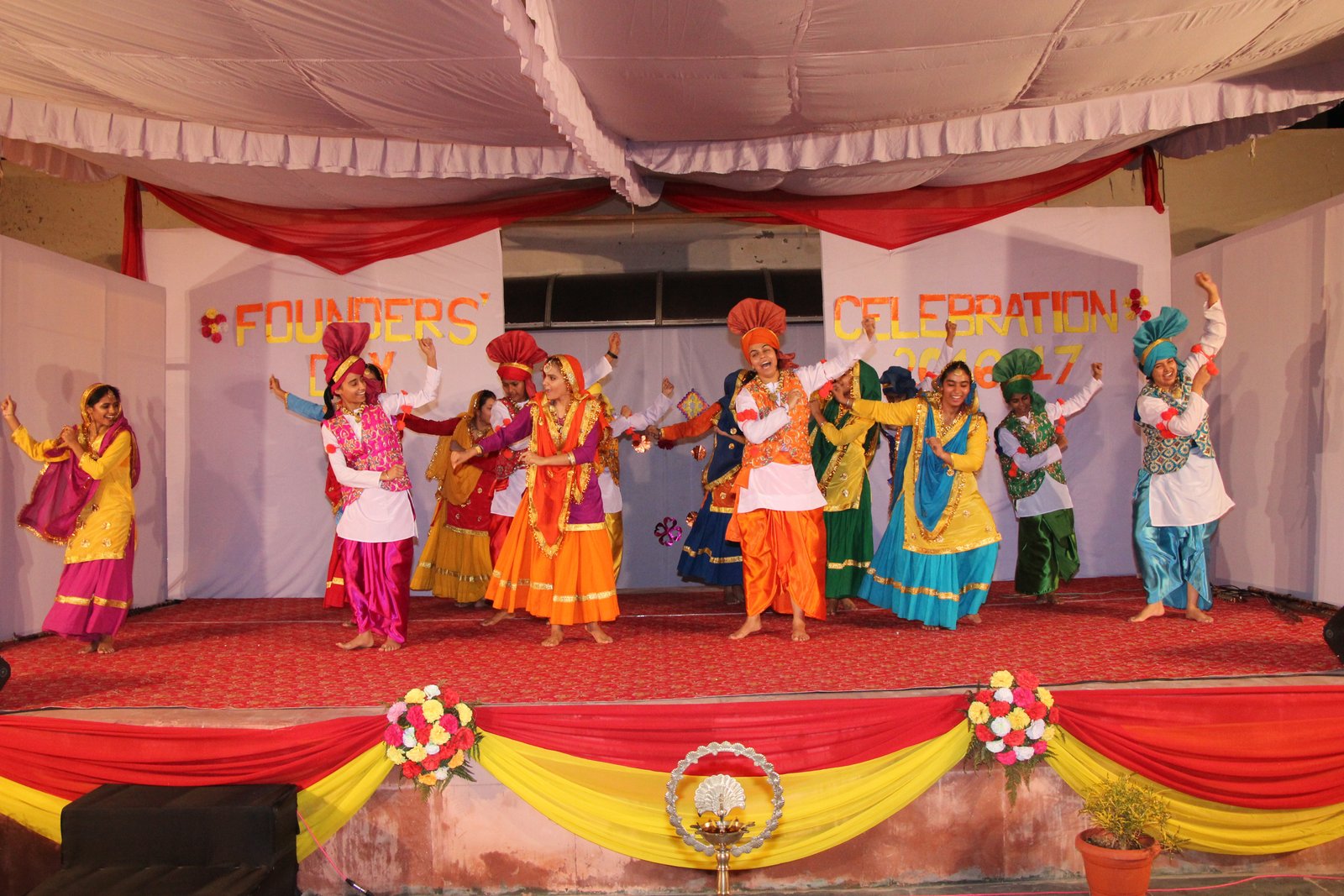
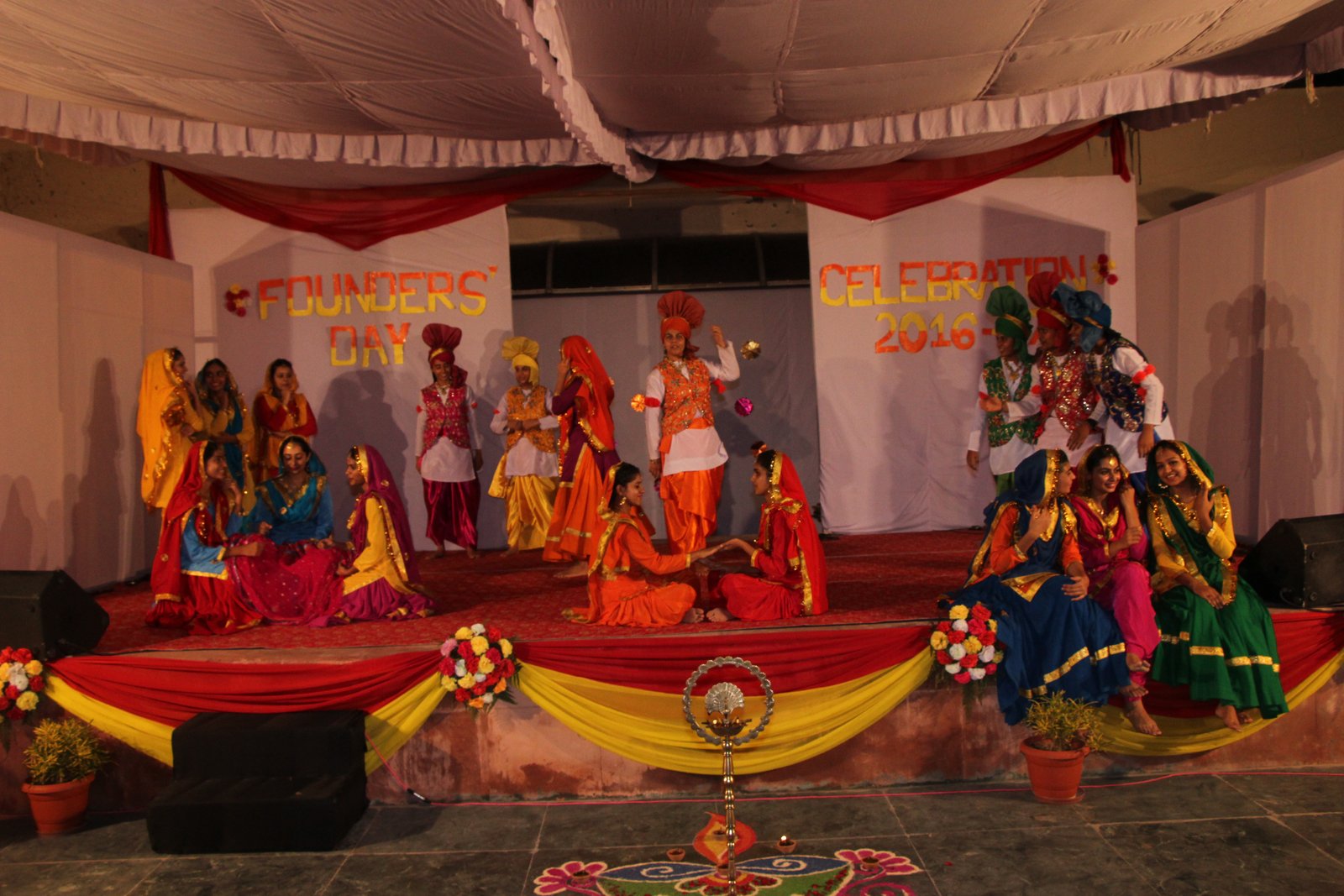
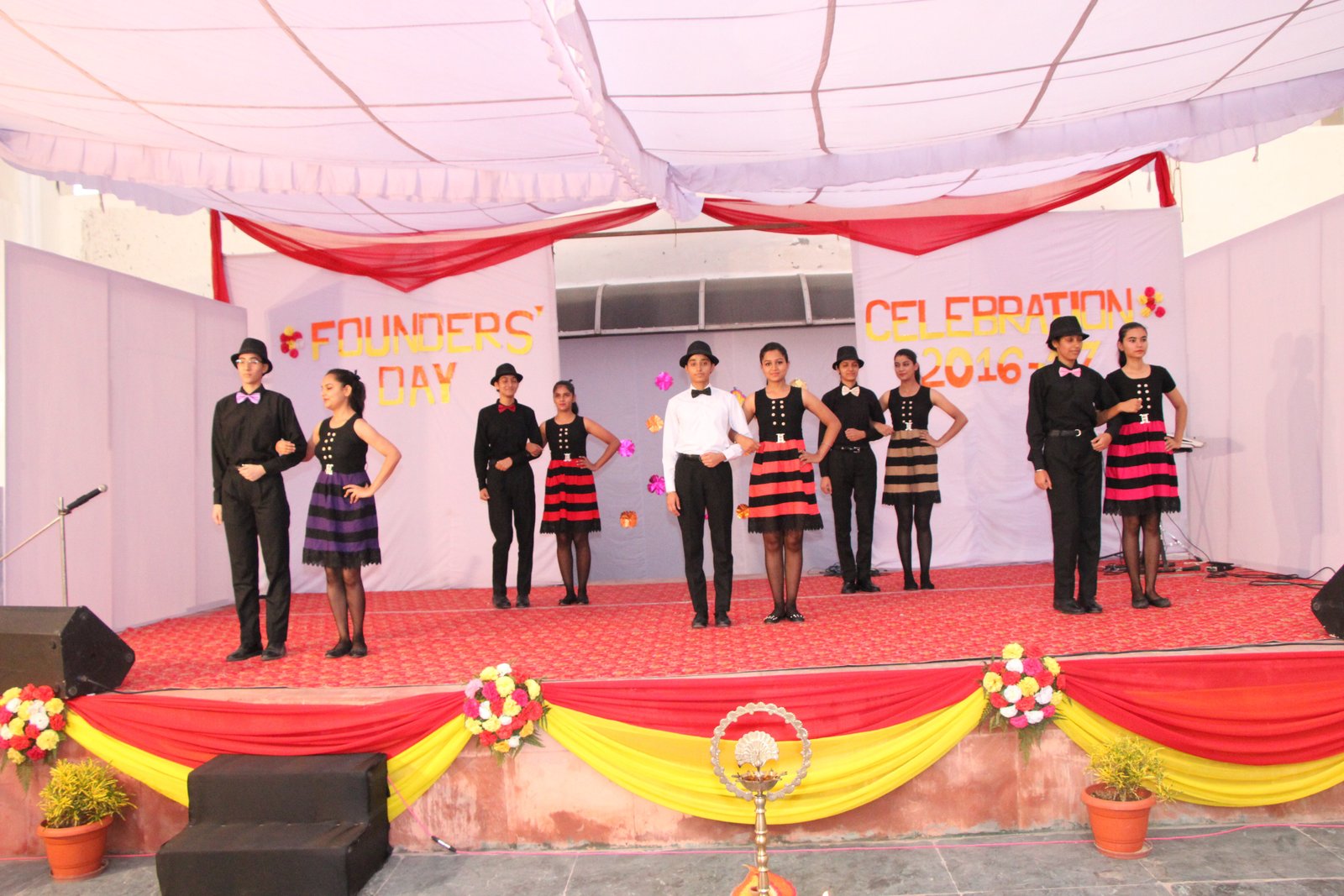
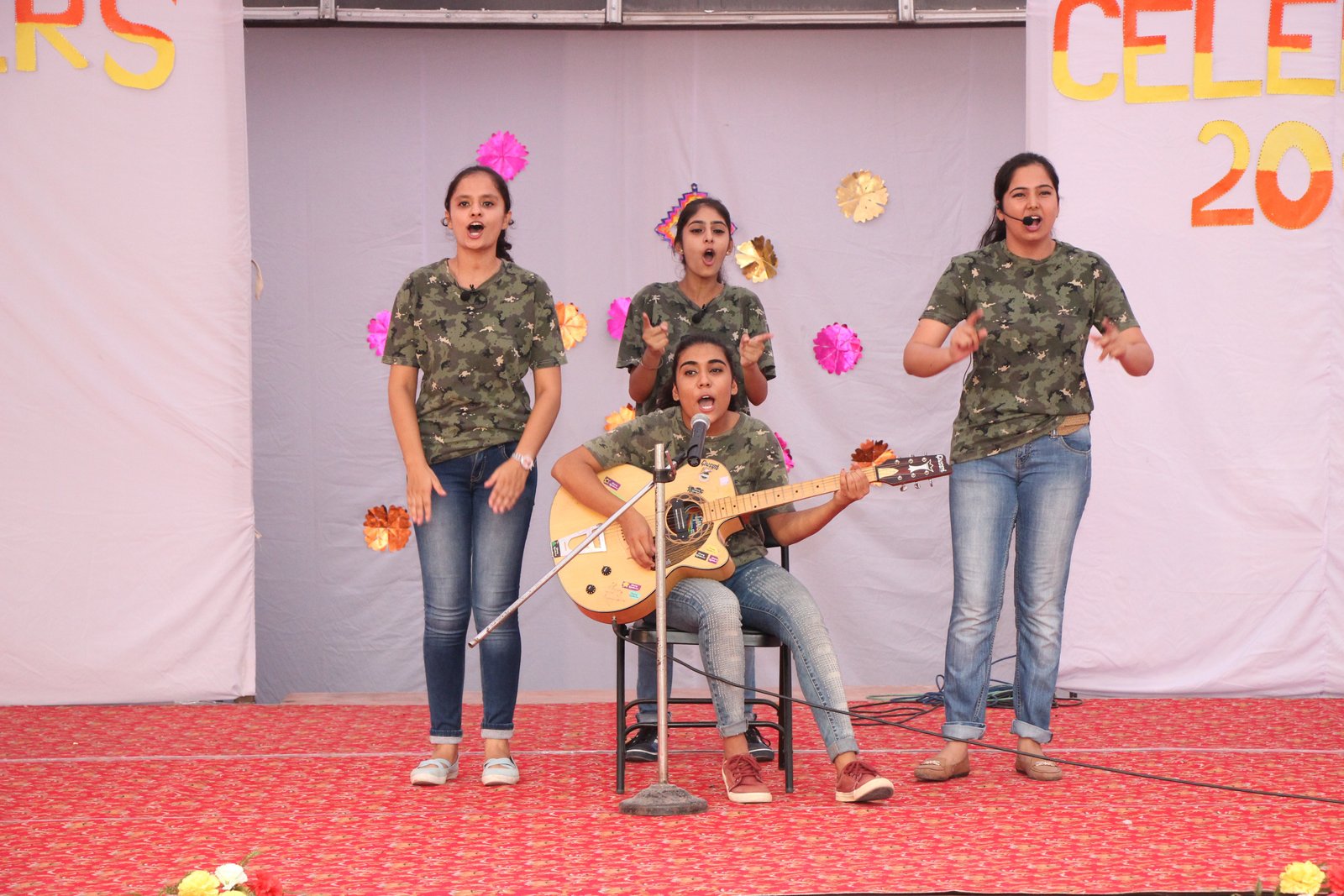
FOUNDERS DAY CELEBERATION MAI BHAGO ARMED FORCES PREPARATORY INSTITUTE: MOHALI

Mai Bhago Armed Forces Preparatory Institute: A new kind of finishing school for Punjabi girls

Mai Bhago Armed Forces Preparatory Institute for Girls has been set up by Punjab government as an exclusive all girls training Institute.

The Mai Bhago Armed Forces Preparatory Institute in Mohali (MBAFPI), to formally be inaugurated by Defence Minister Manohar Parrikar on July 25, has been christened after the valiant 18th Century woman warrior who battled the Mughal armies alongside the Tenth Sikh Guru, Guru Gobind Singh.

It is a unique, first of its kind initiative in the country for the girl child. The Institute provides a lifetime golden opportunity to 10 plus 2 level girls from Punjab to choose an elite career as a Commissioned Officer in the Defence Services.

The Institute, named after Mai Bhago Ji, the famous Sikh saint warrior, is laid out on a sprawling 8 acres beautifully landscaped area in Sector 66, SAS Nagar. Hon’ble Raksha Mantri, Sh Manohar Parrikar, inaugurated the Institute with its first batch of 25 Lady Cadets on 25 Jul 2015.

The Institute is fully residential and has all the modern facilities to include multi gym, swimming, shooting, sports fields, walking plaza etc.

The training includes three years graduation in MCM DAV College Sector 36, Chandigarh; Sports and Physical Fitness, Personality Development, Communication Skills, Grooming, Extra Curricular Activities,

NCC, Professional Training and preparation for SSB Interview. At the end of three years the Lady Cadets are made to appear in the competitive examination to seek admission into the officer Training Academies based on different Women Entry Schemes for commission into the Defence Services.

FOUNDER DAY CELEBRATION

Maj Gen SPS Grewal ,Chairman cum Managing Director PESCO was the Chief Guest. A cultural Programme was organised in the evening by the Lady Cadets followed by Dinner.

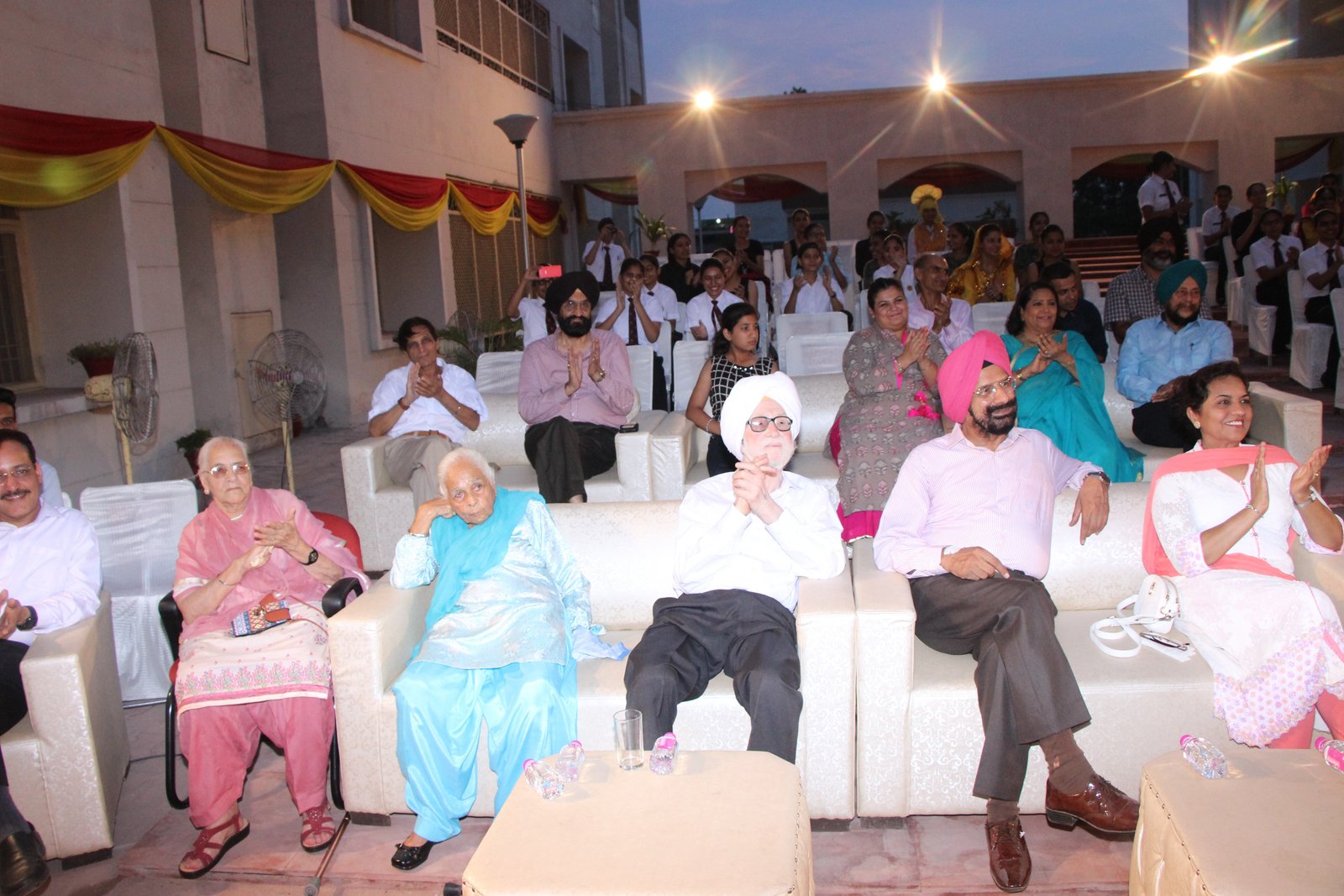
The entire programme  was flawless and beautifully presented by the Girls Cadets and their performance was outstanding. One could see a great hidden talent in the Young Lady Cadets who are all out and greatly Motivated to join Armed forces.

IMG_0357 (1)


Chief Guest along with Maj Gen IP Singh Director enjoying the Cultural ProgramIMG_0358


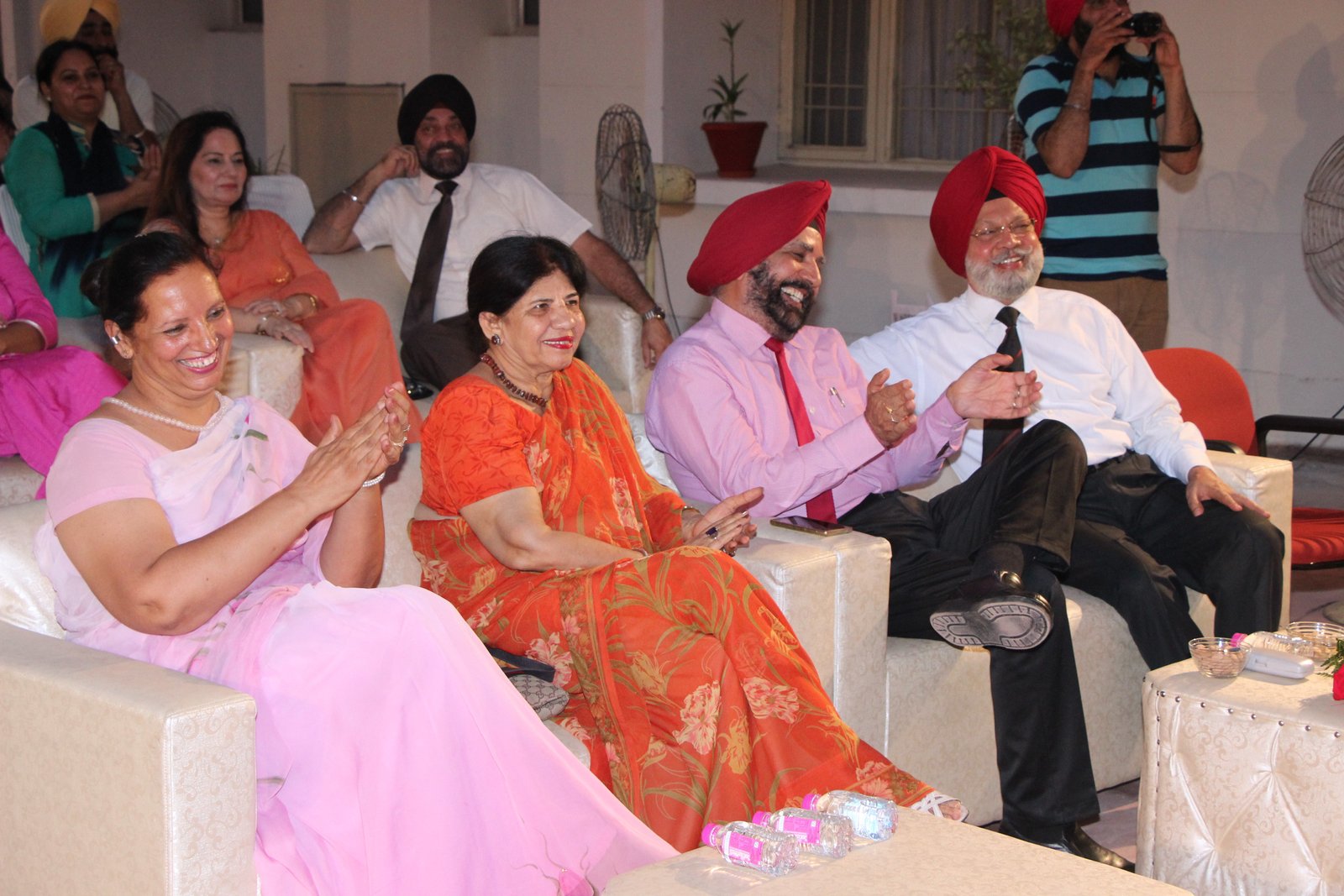
Col CJS Khera along with 91 yrs old Ex-AEC Veterans and his better half watching the program

IMG_0196


.Direct and Admin officer along with warden waiting to receive the Chief Guest.

IMG_0195


IMG_0467IMG_0464IMG_0301IMG_0248


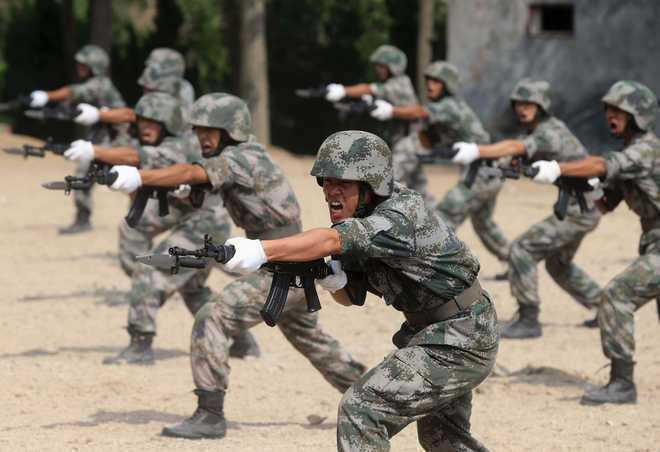
Chinese troops transgress into Uttarakhand, Delhi downplays

Chinese troops transgress into Uttarakhand, Delhi downplays

New Delhi/Dehradun, July 31

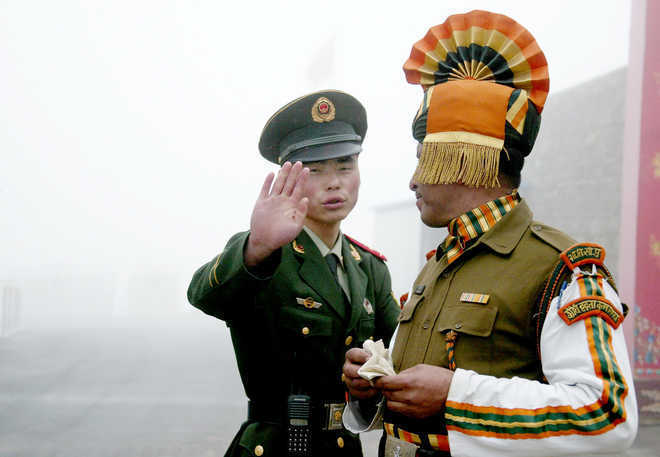
Chinese soldiers transgressed into Indian territory twice this month in the Barahoti sector of Uttarakhand, but the incidents were downplayed by Indian officials today, saying these should not be given “undue importance”.Around 15-20 personnel of China’s People’s Liberation Army (PLA) came 800 metres inside Indian territory in Chamoli district on the morning of July 25, officials said.(Follow The Tribune on Facebook; and Twitter @thetribunechd)The incident took place just a day before National Security Adviser Ajit Doval left for Beijing to attend a meeting of NSAs of BRICS. It also comes amid the standoff between the armies of the two countries in Dokalam at the India-China-Bhutan tri-junction.The first transgression took place on July 15 and the other on July 25. In both instances, Chinese soldiers numbering about 15-20 came into Indian territory, stayed there for a while and left, Indo-Tibetan Border Police (ITBP) sources said. On July 25, the PLA troops  even threatened the shepherds in Barahoti during their two-hour stay. They left after the Indians protested.However, official sources said such incidents have happened in the past but are normally sorted out locally. They added that transgressions occur due to differing perceptions of Line of Actual Control (LAC). — PTI

clip


India’s refusal to budge on Dokalam will resonate well, says ex-envoy

India’s refusal to budge on Dokalam will resonate well, says ex-envoy
India dealt with the Dokalam standoff in a more mature and sensible way. AFP file

Beijing, August 30

India’s refusal to back off from the Dokalam standoff despite heavy pressure mounted by China will have a wider resonance in the region against Beijing’s assertive behaviour, former Indian Ambassador to China Ashok Kantha said.

India and China on Monday ended their standoff in Dokalam by withdrawing their troops from the area. Troops of the two countries had been locked in a standoff in Dokalam since June 16 after Indian troops stopped the Chinese Army from building a road in the strategically key Dokalam region, a disputed area between China and Bhutan.

“The way India dealt with Dokalam standoff has wider resonance. Because what the Chinese are trying to do in Dokalam is part of a larger pattern,” Kantha, who served as India’s envoy here from 2013 to January last year, told PTI in a wide-ranging interview on the Dokalam issue from Delhi over phone.

China is trying to achieve its contested territorial claims though unilateral actions like the disputed South China Sea, where smaller states have accepted Beijing expansive territorial claims as a “new normal”.

“But that did not happen in Dokalam. India and Bhutan did not follow the script, so China has to back off and revisit their position,” Kantha, now director of a New Delhi-based think tank, the Institute of Chinese Studies (ICS), said.

“If India had succumbed to Chinese pressure, it would have made it even more difficult for China’s smaller neighbours to stand up. It would have undermined India’s credibility, first in Bhutan and other South Asian neighbours,” he said.

“How we dealt with it definitely has resonance in terms of encouraging greater pushback in the region to China’s assertive behaviour. This also may lead to some introspection on the part of China, especially why the rise of China and its behaviour is creating anxieties among its neighbours,” he said.

Both India and Bhutan challenged changing facts on the ground catching China by surprise, while showing restraint on the ground, he said.

Also, India “very deliberately and consciously made an effort not to indulge in tit for tat polemics as only through a quiet diplomacy a solution can be found”, he said.

Also, the assessment on the Indian side is that there was no real risk of war breaking out and war was not an option for either side, including on the Chinese side, so that there is space to convey our concerns and interests, he said.

“China also realised that finding resolution by taking recourse through force is really not an option.

Notwithstanding what they were saying, they had to find a diplomatic solution. Since India maintained a firm position, given the BRICS summit was around the corner, China didn’t want it to be overshadowed by the Dokalam standoff,” he said.

While there will be greater clarity in the coming days about the understanding reached between India and China to end the 73-day standoff, India has achieved its objective to prevent China from building the road close to the narrow Chicken Neck connecting the North-Eastern states, he said.

“That was the provocation for Indian personnel to step into the area of standoff. The objective has been achieved and we have also managed to defuse the situation, without India yielding space,” he said.

Kantha said China also has shown flexibility after initial belligerence.

“Initially, they said there has to be unilateral Indian withdrawal to enter into meaningful talks. They changed their position and agreed on mutual engagement, which has been achieved through bilateral understanding. Now, they also indulged in war-like rhetoric, but came around to accepting that the use of force is not an option for them,” he said.

India on the contrary dealt with Dokalam in a more mature and sensible way.

Though both the countries have managed to defuse the current situation, the Dokalam standoff has seriously affected the bilateral relations, he said. PTI



CM: Dera to pay for security forces too Govt to submit detail of loss to property in HC

CM: Dera to pay for security forces too
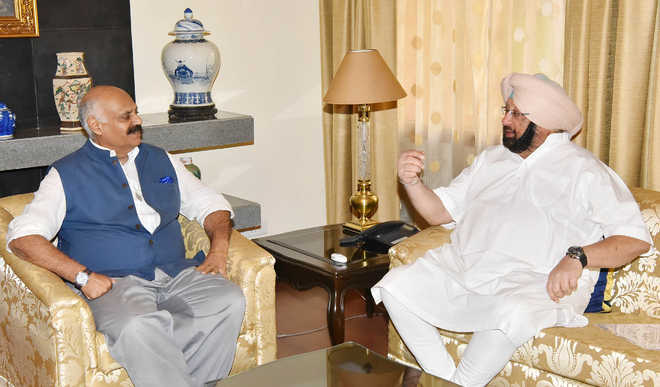
CM Capt Amarinder Singh briefs Governor VP Singh Badnore on the law and order situation, in Chandigarh on Monday. Tribune photo

Tribune News Service

Chandigarh, August 28

The state government wants Dera Sacha Sauda to pay for the expenditure incurred on the deployment of central as well as state forces during the period of dera-related disturbance in the state. A senior government functionary said the total expenditure would be between Rs 150 crore and Rs 200 crore.The claim will be in addition to the property loss, both of public and private, to be filed before the Punjab and Haryana High Court. The Union Government will bill the state for the deployment of central forces, which the state will submit in the high court for necessary action.After briefing Punjab Governor VP Singh Badnore on sporadic incidents of arson and looting and preventive arrests in the state, Chief Minister Capt Amarinder Singh said the quantum of loss would be available once a list of properties damaged in the violence was compiled by the authorities concerned.Of 32 people killed in police firing in Panchkula on August 25, 12 were from Punjab. The cremation of identified persons went off peacefully.“The government has already stated that there is no question giving compensation to the kin of the deceased as they were part of the mob. We can still consider cases on merit,” said an official spokesman.The CM said the government would review the situation on Tuesday before taking any decision on lifting curfew imposed in some areas.Of the 10 districts, the curfew has been lifted in five. Night curfew will continue for the time being in Mansa, Bathinda, Faridkot, Barnala and Samna, and Patran.While mobile data services in Punjab would be lifted tomorrow, the decision to open schools and colleges in sensitive districts had been left to the respective DCs, said the CM, who earlier held a high-level meeting with administrative and police officials.


Mobile internet services to remain suspended in Haryana, Punjab

Mobile internet services to remain suspended in Haryana, Punjab
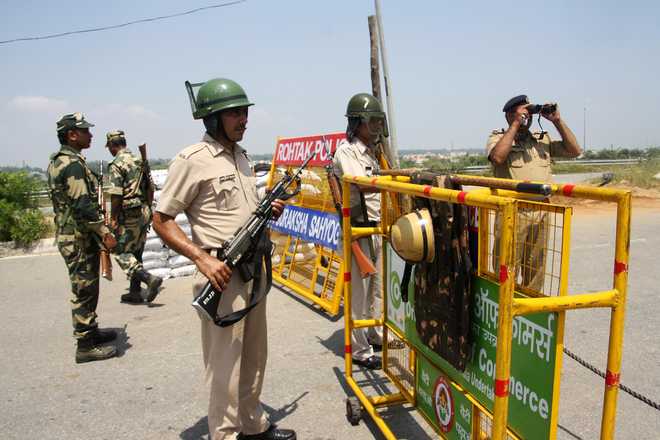
Security forces deployed at main junctions stand guard near a jail where dera head Gurmeet Ram Rahim Singh is awainting sentencing, in Rohtak on August 27, 2017. — AFP

Chandigarh, August 27

Mobile internet services will remain suspended in Haryana and Punjab till Tuesday, besides internet lease lines on the premises of the Dera Sacha Sauda headquarters at Sirsa have also been suspended for the said period, officials said on Sunday.The authorities had earlier suspended the services to prevent rumours from being spread, ahead of the court verdict against Dera Sacha Sauda chief Gurmeet Ram Rahim Singh, who was convicted by a CBI court in Panchkula on Friday in a 15-year-old rape case.(Follow The Tribune on Facebook; and Twitter @thetribunechd)Now, the ban has been extended till Tuesday to prevent any disturbance of peace and public order in view of the quantum of punishment to be pronounced against the Dera chief in Rohtak tomorrow, officials said.Mobile internet services, which were suspended for 72 hours in Haryana, ahead of Friday’s court verdict, would continue to remain suspended in the state till 11.30 am on Tuesday, they added.Besides, all educational institutions in Panchkula, Rohtak, Kaithal, Ambala, Bhiwani and Fatehabad districts will remain closed tomorrow, the officials said.Mobile internet services, which were suspended in Punjab three days back, would also remain suspended till Tuesday, Chief Minister Amarinder Singh had announced yesterday.The Haryana government said today it had extended the period of suspension of mobile internet services, including 2G, 3G, 4G, CDMA and GPRS, all SMS and dongle services provided on mobile networks, except voice calls, in the state till 11.30 am on August 29.“Besides, the internet lease lines on the premises of the Dera Sacha Sauda, Sirsa have been suspended till August 29.Any person found guilty of violating these orders would be liable to face legal action,” Additional Chief Secretary, Home Department, Ram Niwas, said here.He added that the orders had been issued under the Temporary Suspension of Telecom Services (Public Emergency or Public Safety) Rules, 2017.“The orders have been issued considering the critical law-and-order situation, to maintain peace and communal harmony in the state and prevent any loss of life or further damage to property. It has been reported by the IG, CID that the situation is tense and violence may continue for several days, especially on August 28, when the quantum of punishment (against the Dera chief) will be announced,” an official release quoted Niwas as saying.He added that it had been reported by the Deputy Commissioner and Superintendent of Police, Sirsa that the devotees might attempt to breach peace and tranquillity and resort to arson, leading to damage of properties.”Since the environment is tense, rumours of different kinds may be spread through broadband and internet lease lines on the premises of the Dera Sacha Sauda,” Niwas said.Directions had also been issued to the telecom service providers and those providing the internet lease lines on the premises of the Dera Sacha Sauda, Sirsa to ensure compliance of these orders, he added.Thirty-six people died in violence in Panchkula and Sirsa after the Dera Sacha Sauda chief’s conviction on Friday.Punjab and Haryana have been on a high alert with curfew imposed at many sensitive areas of the two states.The CBI court will pronounce the quantum of sentence in the rape case against Gurmeet in Rohtak tomorrow. — PTI 


53 defunct bomb shells recovered

53 defunct bomb shells recovered
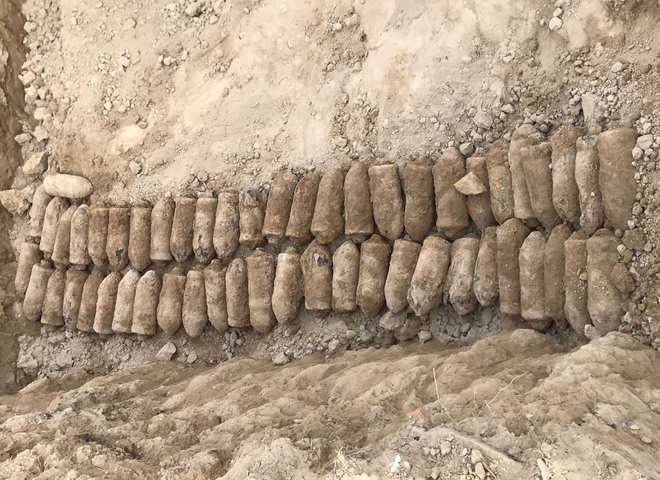
Bomb shells recovered from a religious place at Dhunda village in Tarn Taran on Wednesday. Tribune Photo

Our Correspondent

Tarn Taran, August 23

As many as 53 decades-old bomb shells have been recovered from Tomb Baba Anait Shah (religious place of a Muslim saint) in Dhunda village, 25 km from here, today. The place is situated on the banks of Beas.Goindwal Sahib DSP Satpal Singh said the bomb shells were seen by the sewadars of the tomb when they were digging the land for construction. The tomb head informed the police.The DSP said the police reached the spot and cordoned off the area to prevent any untoward incident. The DSP said the explosive could be related to the 1965 Indo-Pak war when the Indian Army had stationed here. He added that such type of 28 bomb shells were recovered from the same spot about six months ago. The DSP said experts had been called to defuse the bombs.Three bombs spotted near rail trackAbohar: Three bombs were spotted near the railway track in the border district of Jaisalmer on Wednesday. SP Gaurav Yadav said some villagers noticed the bombs lying near the railway track in Dagania village and informed the authorities. The area has been cordoned off. The anti-bomb squad and dog squad have been dispatched to the site and Army officers were also informed. Preliminary investigations indicate that the bombs appeared to be defused. OC


Trump rules out hasty withdrawal from Afghanistan, warns Pak for support to terror

Trump rules out hasty withdrawal from Afghanistan, warns Pak for support to terror
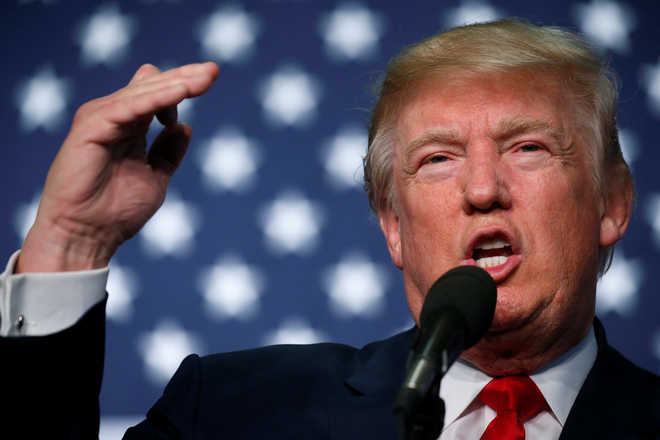
Donald Trump. Reuters file

Washington, August 22

The US on Tuesday ruled out a hasty withdrawal of its troops from Afghanistan as President Donald Trump warned Pakistan of consequences if it continued to provide safe havens to terror groups and sought an enhanced role for India to bring peace in the war-torn country.Trump, in a prime-time televised address to the nation, laid out his South Asia policy saying a “critical part” of it was to further develop US’ strategic partnership with India.He said after a “comprehensive review”, it had been decided that the American strategy in Afghanistan and South Asia would change dramatically.

(Follow The Tribune on Facebook; and Twitter @thetribunechd)

“A core pillar of our new strategy is a shift from a time-based approach to one based on conditions. I’ve said many times how counterproductive it is for the United States to announce in advance, the dates we intend to begin, or end, military operations,” Trump said in his address.”We will not talk about numbers of troops or our plans for further military activities,” Trump said as he announced his South Asia policy in front of about 2,000 people from all five services and top officials of his administration.Trump slammed Pakistan for its continued support to terrorist groups and warned Islamabad of consequences if it continued to do so.”We can no longer be silent about Pakistan’s safe havens for terrorist organisations, the Taliban, and other groups that pose a threat to the region and beyond,” Trump said.”Pakistan has much to gain from partnering with our effort in Afghanistan. It has much to lose by continuing to harbour terrorists,” he said, in a apparent warning to Pakistan.The US President reached out to India seeking an enhanced role for New Delhi, especially in the economic field, to bring peace and stability in Afghanistan.India, the world’s largest democracy, is a key security and economic partner of the United States, he said.”We appreciate India’s important contributions to stability in Afghanistan, but India makes billions of dollars in trade with the United States, and we want them to help us more with Afghanistan, especially in the area of economic assistance and development,” Trump said. PTI


Defence Minister as a force multiplierby Lt Gen Bhopinder Singh (retd)

The post of the Minister of Defence is the singular nodal point for all matters pertaining to the defence forces. Despite internal and external security challenges, India has been consistently bereft of a passionate Minister of Defence, who could effectively address and allay institutional concerns.

Defence Minister as  a force multiplier

INDEPENDENT India’s short history has seen five of its Defence Ministers rise to be the Prime Ministers of India (Indira Gandhi, PV Narsimha Rao, Rajiv Gandhi, VP Singh and Chandrashekar), one Deputy Prime Minister (Jagjivan Ram), and two who went on to become the Presidents of India (R Venkataraman and Pranab Mukherjee). Besides these, topical satraps like VK Menon, Sharad Pawar, Mulayam Singh Yadav, AK Anthony and Arun Jaitely have adorned the office of the Raksha Mantri in the South Block of the Central Secretariat. Yet this crucial ministry in the national narrative is not the most-aspired for or sought-after portfolio amongst the mainstream politicos. As the corridor-joke goes, it comes without the “votes or the notes”! Ostensibly part of the critical  Defence, External Affairs and Finance triad of national governance, currently it retains a lamentable status of “additional charge”. The post of the Minister of Defence (MoD) is the singular nodal point for all matters pertaining to the defence forces — all historic and prevailing woes, concerns and challenges that require “governmental approval” are supposed to be articulated, proposed and championed by the incumbent MoD. Therefore, notwithstanding the ceremonial position of the President as the Supreme Commander of the Armed Forces — the buck realistically stops at the desk of the MoD. The preparedness and the systemic angst within the institution is indirectly reflective of the quality of political support lent by the MoD to the armed forces, as the institutional caretaker under the constitutional wirings of participative democracy. The basic institutional woes of the Indian armed forces are: Firstly, the material wherewithal. The lack of adequate weaponry, munitions, indigenisation efforts, wares etc.. Secondly, the personnel issues that include debilitating shortages of officer cadre, qualitative issues of intake, consistent down-slide in the official warrant of precedence, socio-economic degradation with issues like OROP and the successive Pay Commissions. Third is the crucial struggle with strategic integration. This includes concerns on insufficiency of joint-command structures within the three services, appointment of CDS etc. Lastly, the over-stretch of deployment, resulting in almost permanent deployments in insurgency-affected states, to now even in the realms of basic “policing” during civic disorders, in places like Muzzafarnagar and Rohtak. From time to time, specific issues of the defence forces hit their peak-decibels, with specific circumstances warranting their public concerns, mainstreaming and prominence. However, the specificities and emotional impulses of each of these institutional concerns bely the most fundamental issue concerning the defence forces in our form of governance — that is the historical absence of an empathetic, enlightened and powerful “voice” in the corridors of power,  a “voice”, that in our constitutional-political-administrative construct, can only come from the Minister of Defence in India. Unlike, China or Pakistan, where the military apparatus and the accompanying “voice” of their defence forces are predominant and impactful, the tenets, instincts and compulsions of a democracy in India, relegates the bare necessities of the “voice” of the Indian defence forces to occasional faux-nationalistic fervour. This is without any meaningful investments in addressing the increasing laundry-list of institutional concerns. Reality is that from the inadequacy of fighter squadrons, basic infantry rifle procurement, OROP to even CSD-related concerns — the defence forces maintain a disciplined public silence. This is mandated in the constitutional wiring of “civil supremacy over military matters”. Whereas, the politicos and the generalist civil bureaucrats maintain an equally silent posture that basically exposes the defence forces to an unfair and undefended position of either misunderstood criticism, (for example the “Sahayak” system), disinterest (successive Pay Commission degradations) or even disagreements (annual budgetary allocations).This dysfunctional marginalisation of the armed forces on matters pertaining to security and the decision- making process has a historical faultline of suspicion of the “uniformed” fraternity by the politico-bureaucrat combine. This has been conveniently perpetuated by all political dispensations, irrespective of their ultra-nationalistic posturings. Of the 20 incumbents as the Minister of Defence, none except for the short tenure of Jaswant Singh, could claim any professional affinity or having propounded or published any seminal work on strategic/security relevance or on any other larger security imperatives. Also, unlike the Minister of Law (where 23 out of 26 incumbents have been lawyers), or in other ministries like ICDS, Tribal Affairs or Minority Affairs — where each and every minister till date has been from the respective domain, it is not essential that the Defence Minister needs to be an ex-soldier necessarily. The position demands an individual to feel passionately, intellectually and empathetically concerned about the institution. Former Minister of State for Defence, Arun Singh (Congress), like Jaswant Singh, (BJP) had a natural proclivity and sensibility on defence matters. Similarly, the Rajya Sabha MP Rajeev Chandrasekhar, though a civilian entrepreneur, has espoused the cause of the institution. None of the political heavy-weights can claim to such a concrete body of tangible contribution —materially, intellectually or even emotionally.From Baldev Singh (the first and the longest-serving MoD) to the military-despising VK Menon — the institution has steadily witnessed a free-fall in the decision-making hierarchy. Today the essential “sword-arm” of the nation has regressed to a purely “requisitioned-arm” that is utilised for its pure functional abilities, kinetic capabilities and delivering results (irrespective of the cost to itself!). While India essentially lacks a strategic-security culture per se, the current civil-politico-military relations are fraught with increasing tensions and suspicions as the much-promised reforms and corrections have so far eluded the services. Today, as the nation undergoes its most ambitious and revolutionary fiscal reform via the GST, the same individual has the ominous charge of managing the parallel challenge of the ongoing stare-down at Doklam, in his capacity as the MoD. All global-powers without exception, combine the economic-military prowess in their quest to protect their sovereign interests and future needs. However India, with all its internal and external security challenges, has been consistently bereft of a passionate Defence Minister who could effectively subsume, address and allay institutional concerns. The fundamental issue has always been the Minister of Defence, whereas the headline-grabbing noise of specific individual issues is only an outcome of this historic anomaly.


photo


The writer is a former Lt Governor of Andaman & Nicobar Island