Sanjha Morcha

India’s attempts to stem Chinese imports will fail

Build a broader trade plan since Chinese traders are adept at overcoming barriers

In trade as in cricket, batting against a chinaman is about countering the unorthodox and deceptive. India has made a renewed effort to try and set up non-tariff barriers to floods of Chinese-manufactured goods. In the past India has been among the most active users of anti-dumping duties and other standard WTO-approved methods to stem the flow of Chinese imports. New Delhi has now turned to the use of technical and safety standards against the Made in China hordes. India’s China trade was responsible for half of its entire trade deficit of $106 billion, in 2016. More importantly, this shortfall has grown exponentially since 2006. This has been driven by two factors.

One is a rising Indian appetite for Chinese equipment. The Modi government has increased tariffs on electronic products and is using the new standards to encourage domestic manufacturers to enter these fields. There is minimal evidence this is working. The many constraints facing Indian factory-owners in the form of high taxation, greater logistics costs, more expensive power explain India’s inability to make its own phones and chips. The other reason are the hundreds of non-tariff barriers that Beijing places against Indian and other imports.

India’s present attempts to stem Chinese imports are unlikely to have much impact. Chinese firms are adept at overcoming such trade barriers. What New Delhi should be looking at is a more comprehensive trade strategy regarding Beijing. Potentially, if India were to cause enough problems for Chinese imports, Beijing might be prepared to negotiate some sort of bilateral trade understanding. More sensible would be to build a global coalition to push for China to become more transparent about its use of subsidies, do more to protect intellectual property and so on. Either or both of these responses requires a degree of trade diplomacy that has not been evident in the Modi government. It is time New Delhi try to acquire such skills.


Border row with India put in perspective

The People’s Liberation Army’s parade on Sunday reflected the Chinese military’s latest efforts to strengthen its combat readiness and joint operation capability.

The PLA also used the occasion to publicize its achievements in armament modernization as nearly half of the weapons and equipment used in the event were presented for the first time in a parade, according to organizers.

The military sent 12,000 troops, about 600 land and naval weapons, and nearly 130 aircraft to participate in the parade, the first in the PLA’s history to celebrate its birthday, which falls on Tuesday. The event was organized by the PLA Central Theater Command on orders of the Central Military Commission.

Field parade

The event began at 9 am at a training field of the Zhurihe Training Base, Inner Mongolia, as President Xi Jinping, also chairman of the Central Military Commission, took a car to inspect troops from all military branches who were taking part in the event. After the president returned to a central stage built to review the parade, more than 200 soldiers, carried by assault vehicles, escorted flags of the Party, the People’s Republic of China and the PLA and passed the central stage.

Then 17 attack helicopters flew past the parade zone, forming the two Chinese characters of Aug 1, the birthday of the PLA. They were followed by another 24 helicopters that flew in a shape of the Arabic numerals of 90, which symbolized the 90-year history of the PLA.

Next, 18 transport helicopters, guarded by eight attack helicopters hovering low in the air, landed and deployed hundreds of soldiers at a rough training ground in front of the stage.

The demonstration of helicopters carrying troops to “penetrate enemy defense” was the first time the PLA has presented fighting maneuvers in a parade and also marked the public debut of the PLA Ground Force’s airborne assault unit.

Weapons used by the ground strike group were the Type-99A main battle tank, Type-08 and Type-04A infantry fighting vehicles, 122-milimeter and 155-mm self-propelled howitzers, 300-mm multiple rocket launcher as well as HJ-10 anti-tank missile carrier. All represent the best arms of Chinese land forces.

Next in line was the information support group. It showed some of the nation’s latest electronic warfare devices, such as electronic reconnaissance and electronic countermeasure vehicles, as well as anti-radar and communication-jamming drones, making public the PLA’s information operation capacity for the first time.

The third group represented the Chinese military’s special warfare prowess, with hundreds of elite commandos riding on dozens of light-duty reconnaissance and armored assault vehicles.

The fourth group – air and missile defense – featured early-warning radar, anti-aircraft missiles and anti-missile interceptors. The HQ-9B and HQ-22 missiles are new-generation weapons in China’s air and missile defense systems.

The next formation, the naval combat group, was composed of marine and naval missiles including the latest models – HHQ-9B air defense missile and YJ-12A anti-ship cruise missile.

Up in the sky, the bulk of the aerial combat group roared through the dust and exhaust produced by moving vehicles on the ground. The group comprising seven elements – early-warning and control aircraft, bombers, transport planes, refueling tankers, aircraft carrier-borne and land-based fighter jets as well as a mechanized parachute unit.

Aircraft taking to the sky included almost all of the PLA’s most advanced types, such as the J-20 supersonic stealth jet, the world’s third type of fifth-generation fighter jet, KJ-500 early-warning and control plane and Y-20 strategic transport jet.

The next two groups were logistical support and counterterrorism forces.


The last, perhaps also the most eye-catching, group was from the PLA Rocket Force. Five types of ballistic missiles including DF-16G, DF-21D and DF-26 were carried by wheeled launch vehicles.

According to the Rocket Force, DF-16G carries conventional warhead and has high accuracy, strong destructive power and a short preparation time.

The DF-21D land-based, anti-ship ballistic missile features a large coverage and good penetration and target-tracking capabilities. It is a milestone in the PLA’s effort to implant strategic capacity into its conventional ballistic missiles.

The DF-26, a new strategic deterrence weapon, is capable of conducting off-road launches of conventional and nuclear warheads in tough terrain. It can carry out a rapid nuclear counterattack and medium – to long-range precision strikes using a conventional warhead, the Rocket Force said.

Closeness to combat

Sergeant Major Ding Hui, a veteran tank driver who has taken part in four national-level parades – in 1999, 2009, 2015 and on Sunday, said the public can see via the Zhurihe parade what his unit, a mechanized infantry division, has gained through its combat-ready training in the recent years.

“You can see that we are well trained and equipped. Our training is now very close to actual battle. Our weapons keep improving – the Type-99A is the most advanced tank I’ve operated,” he said. “Compared with previous tanks, it is easier and more comfortable to use and can communicate with other units such as aircraft to call for reinforcement.”

Ding also said the tanks moved at a speed of 15 kilometers per hour in Sunday’s parade, faster than that in previous parades, which was maintained at 10 km/h. He said the higher speed was meant to demonstrate the “fighting status” of tanks.

Major General Tang Ning, deputy chief of staff of the Central Theater Command’s ground force, said the PLA Ground Force has been seeing huge strides in terms of information capacity and diversification.

Now, more combat units have air defense missiles and self-propelled guns in addition to their traditional weapons such as tanks and armored vehicles, Tang said. They have adapted to those new arms and modern joint operation, he said.

Major Mao Lei, an Air Force staff member in charge of training the paratrooper unit in the parade, said the composition pattern of his unit revealed its sense of combat readiness.

“During previous parades at Tian’anmen Square, we sent only one type of airborne tracked armored vehicle, but this time, our parade unit had not only the armored vehicle but also an airborne wheeled assault vehicle,” he said. “This was because their combination, rather than merely one of them, is what we would use for a real battle. We showed today what we would be like in an actual war.”

He said the Chinese parachute force has become capable of making long-range deployment of heavy-duty weapons thanks to the intensified training and deliveries of new equipment during the past five years.

“For instance, compared with the past, when we were capable of airdropping just one type of heavy-duty equipment in each operation, we are now able to deploy multiple types of such equipment in a single mission,” he said.

Lieutenant Colonel Qing Yingsong, an Air Force officer from the Central Theater Command who makes plans for bombers’ training, said the bomber units that appeared in the parade engage in regular drills to confront anti-aircraft, radar and electronic-warfare forces to hone pilots’ capabilities.

He said the units also conduct long-range flight training over the high seas to test their strike capability.

Qing’s colleague, Colonel Fan Huiyu, an Air Force researcher in the command, said the headquarters for air units in the parade used command and communications vehicles instead of fixed facilities in previous parades.

“This was because we treated this parade as an opportunity to verify our readiness for a real combat, which requires us to be mobile and to be able to respond quickly,” he said.

Contact the writer at zhaolei@chinadaily.com.cn


Howitzer mishap pours cold water on manufacturing plan

NEWDELHI: The death of two South Korean soldiers in a K-9 howitzer explosion three days ago has raised doubts about the performance of a Korea-origin artillery gun set to be built in India on the same platform.

REPRESENTATIONAL PICTUREKorean newspaper reported that there were more than 1,700 reports of K­9 artillery malfunctioning over the past five years.The Korean media questioned the reliability of the self-propelled howitzer, a gun meant for firing shells on high trajectories, after the incident occurred during an artillery training session in Gangwon province on Friday. Five others were also injured in the explosion.

Private sector defence major Larsen & Toubro and South Korean firm Hanwha Techwin are in the process of executing a $720-million contract for supplying 100 K9 VAJRA-T guns to the Indian Army.

The contract was signed on April 21, and the weaponry will be produced at Talegaon near Pune in Maharashtra. The guns are expected to be delivered in three years.

The Korea Herald reported on Monday that the Army has decided to halt training sessions with K-9 artillery until the exact cause of the explosion is identified. “According to a parliamentary inquiry in 2016, there were more than 1,700 reports of K-9 artillery malfunctioning over the past five years,” the news report said. The 155mm/52-calibre tracked self-propelled K-9 gun has a range of 40 km.

A report in the Korea Times said securities firms were rushing to downgrade their outlook for Hanwha Techwin in the aftermath of the explosion. India is the fourth country to opt for the artillery gun, after Turkey, Poland and Finland. “There may be something wrong with the K-9 howitzer. Regardless of the findings, the incident will certainly dampen Hanwha’s campaign to sell the weapon to foreign countries,” the Korea Times quoted an analyst as saying.

Former Army chief General Deepak Kapoor said the explosion was a cause for concern because the weaponry meant for the Indian Army would be built on the same platform. “But let’s be clear: We induct weapons only after rigorous testing in all types of conditions,” Kapoor, a former artillery officer, said.

Another Army officer said the K-9 cannot be dismissed as a “useless weapon” because of a single mishap.


Navy issues tender for buying 234 copters

New Delhi, August 22The Navy today issued global request for information (RFI) for procurement of 111 utility and 123 multi-role helicopters under the recently launched strategic partnership model for defence procurement.Official sources said the RFI had been issued to identify original equipment maker for both the utility helicopters as well as multi-role choppers, which are being procured as part of the Navy’s modernisation plan.The procurement of both categories of choppers would cost the government in excess of $15 billion, according to experts who said the two contracts could be one of the largest globally in recent times.They said the Defence Ministry was likely to soon issue RFI to select the Indian defence manufacturer, which will join hands with the foreign entity or entities for production of the choppers as mandated under the strategic partnership model.The last date to respond to the RFI issued today by the Navy is October 6. — PTI


Army to review Purohit’s suspension from service after examining SC order

New Delhi, August 21

Lt. Col. Shrikant Prasad Purohit, who was granted bail by the Supreme Court on Monday in the 2008 Malegaon blast case, will have to report o his unit after walking out of jail and the Army will review his suspension from service after examining the court order, army sources said on Monday.They said Purohit will be placed under same restrictions as an officer in “open arrest” and his movement will be confined to his residential accommodation and camp of his unit.An officer is placed under open arrest when court martial proceedings are initiated against him. The Army had initiated a Court of Inquiry against Purohit in April 2009.Purohit spent almost nine years in jail for his alleged role in the Malegaon blast case. The apex court observed that there were contradictions in the charge sheets filed by different investigating agencies.The army sources said the Army headquarters will study the Supreme Court’s order granting him bail and accordingly a call will be taken on whether to revoke his suspension from service.They said Purohit will have to wear uniform while being in his unit but he may be permitted to wear plain clothes as well.Purohit, who was posted with a unit under Southern Command and was an officer from intelligence corp, was suspended from service soon after he was arrested in connection with the Malegaon blast case in in late 2008.”He will have to report back to his unit after getting out of jail. He can be attached to any other unit after that,” said a source.According to defence regulation service rules, while under suspension, an officer will be placed under the same restrictions as an officer in open arrest.Six people were killed in the blast on September 29, 2008, at Malegaon, a communally-sensitive textile town in Nasik district of north Maharashtra.The apex court set aside the April 25 verdict of the Bombay High Court denying bail to Purohit, but imposed certain restrictions while granting him relief after he spent eight years and eight months in jail. PTI


Army Chief in Ladakh, reviews LACstrategy

Army Chief in Ladakh, reviews LACstrategy
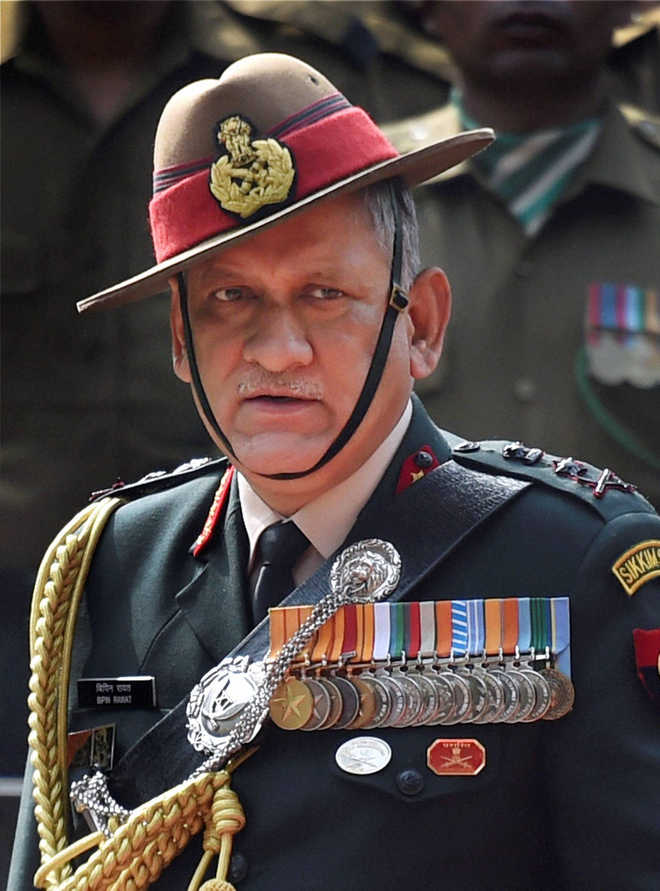
General Bipin Rawat

Amit Khajuria

Tribune News Service

Jammu, August 20


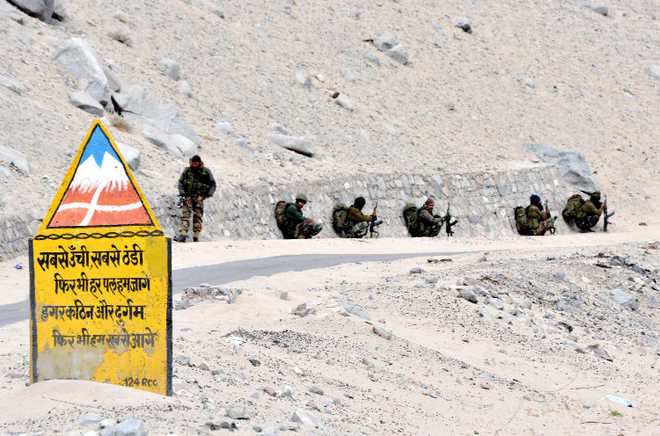
Army Chief General Bipin Rawat arrived in the Ladakh region today and took stock of the security scenario in the state with the top brass of the Northern Command.His three-day visit comes nearly a week after a scuffle between Indian and Chinese troops near Pangong Lake in Ladakh. The armies also resorted to stone-throwing.Sources said General Bipin Rawat chaired a high-level meeting today to discuss the Army’s strategy at the Line of Actual Control (LAC) and reviewed the preparations for the President’s visit to Ladakh tomorrow.President Ram Nath Kovind is visiting Ladakh on his maiden domestic tour. He will present President’s Colours (a rare military honour) to five battalions of the Ladakh Scouts during his one-day visit to the region.During the function tomorrow, the Army Chief will be accompanied by Northern Command chief Lt Gen D Anbu. The function will be held at Ladakh Scouts Regimental Centre in Leh.Ladakh Scouts had shown extraordinary bravery during the Kargil war in 1999 and was incorporated into the Army in 2001.Sources said the Army Chief is in Ladakh to encourage Indian soldiers deputed along the Line of Actual Control.

Chairs meeting

  • Army Chief General Bipin Rawat took stock of the security scenario in the state with the top brass of the Northern Command on Sunday
  • Sources said General Rawat chaired a high-level meeting to discuss the Army’s strategy at the Line of Actual Control

Amid standoff, Centre reviews Ladakh security, infra projects

Amid standoff, Centre reviews Ladakh security, infra projects
The Centre recently cleared a Rs 120.58 cr border road project for Leh

Mukesh Ranjan

Tribune News Service

New Delhi, August 18

Amid ongoing border tension in the Ladakh region, Union Home Secretary Rajiv Mehrishi today held a security review meeting and assessed the progress in the ongoing border infrastructure projects with senior MHA and ITBP officials.Sources said officials of the intelligence wings were also present and discussed reports on the recent developments and additional measures needed.ITBP personnel are deployed on the border in the Ladakh region along with the Army and they patrol along the Line of Actual Control (LAC) with China to ensure Indian positions are protected. Another issue that came up for discussion was the infrastructure requirements of the forces in the border areas, sources said.Recently the Ministry of Home Affairs (MHA) has cleared a proposal to construct a road from Marsimik La to Hot Spring as a “standalone project” in the region to ensure access to “vantage points” for security forces.Sources in the government said the project worth Rs 120.58 crore has been sanctioned by the MHA. The 32.9-km road will help connect security forces to remote areas to the east of Ladakh region, which has earlier witnessed aggression from the Chinese forces, officials said. The project, officials added, is part of the India-China Border Road-I, where India is building 73 other border roads.


Keeping Pace With Change: Indian Army Through 70 Years by Lt Gen Ata Husnain

Keeping Pace With Change: Indian Army Through 70 Years

SNAPSHOT

How the nature of military threats, and warfare, India faces from its neighbours has changed over the last 70 years, and how the Indian Army has responded to them.

Classically, when one reviews a complex and operationally diverse organisation such as the Indian Army, there are mainly four areas to be examined. First, the organisation and structure itself. The second is operational and tactical tenets, which always remain dynamic. Third comes the technology and advancements which enable matching, or better capability than adversaries. And the fourth and last is the sociology of the organisation, whether it has supported the professional culture through the growth process. This review can be as elaborate as one may wish to make it, and given my passion as a second generation soldier it can border even on the inane and irrelevant. To keep it balanced, only some of the major issues will be addressed. The aspect of military sociology will be touched upon only perfunctorily.

The purpose here is to review the Indian Army’s ability to withstand threats through 70 years of Independence, in a short essay without getting too bogged down with detail. The areas described above will concurrently run through the essay in each described phase of the Indian Army’s existence. The 70 years can be broadly divided into phases as follows:-

– Post-Independence, from 1947 to 1962

– The Reorganisation and retrieval, from 1962 to 1971

– The consolidation, from 1972 to 1991

–  Multiple threats and challenges in the path to modernisation, from 1992 to 2017

Post-Independence, from 1947 to 1962

Emerging from the victory of the Allies in 1945, the then British Indian Army went through a phase of virtual chaos till 1950. First came the downsizing from the war time strength of almost 2.5 million soldiers, which was followed by Partition and the division of the British Indian Army into the armies of independent India and Pakistan.

Two Indian gunners, contributing their services to the Allied Army, at their machine gun in the Libyan desert. (Keystone/Getty Images)

The ensuing confusion was exacerbated by the fact that within three months of Independence, the Indian Army was at war with an awkward mix of regulars and criminal tribals led by the newly formed Pakistan Army’s officer cadre. Even as the two armies remained at war from 27 October 1947 to the end of 1948, the assets of the pre-Partition British Indian Army were being divided and handed over to the Pakistan Army. Armies at war do not aid the other by parting with assets, which may be due to be given under any agreement. Yet, the code of ethics of the Indian Army remained intact through a strange war in which old friends and comrades in arms continued to remain in touch even as battles between their two armies raged.

The Indian Army ensured that Jammu and Kashmir (J&K) did not fall into the hands of the marauders through the valiant battles it fought at Zojila, Leh, Uri, Poonch and Naushera among many others. The ceasefire halted what would have been a sure culmination of the campaign with capture of the entire territory of J&K. The operational experience and training of the Second World War was a great contributor to the professional capability and ingenuity displayed during the 1947-48 campaign in J&K. The transportation of light tanks to Zojila in semi-knocked down condition, to be assembled and employed in battle, and the manner in which Gurez was captured by manually pushing artillery guns up the Razdan Pass, were just some of the examples of ingenuity.

In September 1948, the Indian Army launched Operation Polo to wrest Hyderabad in five days of fighting against the Nizam’s state forces once the Nizam had refused to accede to India. The government obviously did not wish to have a balkanised subcontinent of independent states and parts of the Indian union mixing with each other.

After the J&K campaign, the Army underwent little change in organisation, operational concept, doctrine or even weapons and equipment. Armour and artillery continued to be characterised by tanks and guns from the Second World War and the Infantry had the vintage .303 rifle as its main personal weapon. Even as the Army entered Nagaland in its first counter insurgency operation in 1955, there was no attempt to acquire any specialist equipment to successfully pursue the operation. In 1961, the Army launched a swift operation to capture Goa where it met little resistance.

The period up to 1962 did not see any other conventional operations after the hard fought success of 1947-48. The only other deployment was of an Indian infantry brigade as the Custodian Force of India to oversee peace in Korea and the 60th Parachute Field Ambulance Company as part of the UN force to fight the invasion by the Chinese and North Koreans. A brigade was also deployed in Congo as part of the UN forces and it participated in some robust operations too.

In terms of training institutions, the Defense Services Staff College at Wellington which moved from the original location at Quetta, was re-established with much care and attention, thus retaining its premier status as a leading centre for joint training. Two more major institutions were established. In January 1955, the National Defence Academy (NDA), Khadakvasla, was inaugurated at the culmination of a long process with much care and focus of the civilian and military leadership. NDA ensured the concept of joint training at the entry level, something rarely found anywhere else in the world. The other institution which has met the challenges of the times till today is the National Defence College (NDC). Established in 1960, as an institution of strategic learning for various departments of the government and housed centrally at Tees January Marg at New Delhi, this institution was established on the lines of the Imperial Defense College, now called Royal College of Defence Studies. All three institutions exemplified the early realisation of the need for joint operational philosophy.

The social makeup of the Army remained essentially steeped in British traditions. The Army succeeded in retaining the British Army’s regimental system, its strict code of conduct and discipline, never mixing on and off parade stances of its officers. Indian officers pushed into senior ranks at relatively young age and service profiles displayed much maturity and yet ruthlessness in ensuring the highest standards of probity. The officer man relationship remained one of deep mutual respect.

The Sino-Indian border war of 1962 did not come as a surprise as there was a gradual buildup leading to the show down. A little more than a division worth of troops was involved from the Indian Army in three broad areas – Ladakh, Kameng division of North East Frontier Agency (NEFA), and the Rest of NEFA. Unfortunately, the then government of India had failed to appreciate threats to the nation as they would manifest and invested little in the Armed Forces. The result of the Chinese invasion was an ignominious defeat which shook the nation and led to a dented psyche for long.

Indian officers occupying one of the forts in the Ladakh region of northern India during border clashes between India and China. (Radloff/Three Lions/GettyImages)
Indian officers occupying one of the forts in the Ladakh region of northern India during border clashes between India and China. (Radloff/Three Lions/Getty Images)

The Reorganisation And Retrieval, From 1962 to 1971

Post 1962 saw the sudden expansion of the Army. Specialist terrain related organisations such as mountain divisions and scouts units were raised for the Himalayan front while additional infantry divisions were raised for the plains. The semi-automatic 7.62 mm SLR rifle, L1A1, became the personal weapon of the Infantry. The Centurion Mk 7 and the indigenous Vijayanta emerged as the main battle tanks for a short period even as the Soviet T-55 competed for space. The need for manpower resources for expansion at the level of enrolled ranks was met by increasing the capacity of training centres and resorting to emergency commission (EC) for officers. There was no shortage of officers and the performance of EC officers in subsequent operational situations was always at par.

The India-Pakistan conflict of 1965 was triggered by Pakistan on the premise that the reorganisation and re-equipping of the Indian Army would make it near impossible for the Pakistan Army to defeat it in a battle. Thus Pakistan decided to launch operations in 1965 before the Indian Army’s makeover could be complete. The intent was to wrest J&K and make maximum inroads into the plains sector of the western theatre. The 22-day war of August–September, 1965, preceded by another short war in the Kutch sector of Gujarat, was largely a stalemate, although Pakistan celebrates 6 September each year as Victory Day.

The truth is that Pakistan failed to achieve its stated objectives. The Indian Army made some spectacular gains in the mountains capturing Haji Pir in J&K but lost ground in Akhnur and in Southern Punjab. A major defensive armour battle at Asal Uttar destroyed a large part of Pakistan’s pivotal 1st Armoured Division. Pakistan’s attempt to motivate the local population of J&K to rise against India through Operation Gibraltar, did not succeed.

The Indian Army thoroughly reviewed its failings of 1965 and conducted a major training event to validate changes that were envisaged after lessons learnt. Exercise Betwa, conducted in early 1967, examined and practised operations of the then only offensive Corps size formation. In September 1967, serious clashes broke out at Nathula on the Sino-Indian border. The ability of the Indian troops to resist Chinese attempts at intimidation was a major morale booster although there were large scale casualties on both sides resulting from the rogue action by Chinese People’s Liberation Army (PLA). This action, coming after the successful dissuasion of any Chinese pro-activeness to assist Pakistan in 1965 by opening another front, helped the Indian Army redeem much of its lost self-esteem resulting from the reverses of 1962.

Although India accorded a lower priority to the then territory of East Pakistan in terms of threats and own equipment profile, it was the eastern front which got activated in 1971. The possibility of a two-front war was overcome by ensuring that no hostilities took place before the winter of late 1971. General (later Field Marshal) Sam Manekshaw bought time for preparations once it was evident that war could be a possibility given Pakistan’s rogue handling of the civil strife in East Pakistan. The broad strategy if India was pushed into a war dwelt upon sufficient buildup of forces on the East Pakistan front with forces deployed to prevent any Pakistani ingress in the West; only short offensive thrusts were activated to tie down Pakistani reserves along the entire western front. Despite winter, the troops on the Sino-Indian border remained deployed at battle stations to dissuade any Chinese pro-activism. A rapid switch of selected formations from east to the western front was planned and executed.

Indian troops repairing the Jessore Road from Kolkata in India to Jessore in Bangladesh, during the India-Pakistan War of 1971, (William Lovelace/Daily Express/GettyImages)

The 1971 war was a spectacular success on the eastern front resulting in the surrender of 93,000 Pakistan Army soldiers, although success on the western front was limited as intended.

The Consolidation, From 1972 To 1991

Despite the spectacular military victory of 1971 the nature of threats to India’s borders did not dilute. In fact, the clear Pakistani intent for retribution for the military disgrace remained a threat in being. The Pakistan mindset which remains fixated to the day is that the loss of East Pakistan (Bangladesh) was not a result of the competent military showing on the part of the Indian Army but rather the disloyal actions of the Mukti Bahini and the Bengali people. It continued to perceive that the war on the western front remained in its favour, and given more time and resources, it could have executed a breakthrough on this front. This psyche and mindset remains till today and much of the threats arise from the arrogance of this thinking.

Lt Gen Niazi signing the Instrument of Surrender on behalf of Pakistan in 1971 (Indian Navy. Wikimedia Commons) 

To meet the threat from Pakistan the then Army Chief, General TN Raina, ordered a review of the mobilisation procedures. This resulted in the move of operational formations to stations closer to the western front. Regimental centres at Dehradun, Meerut and Nasirabad made way for fighting formations and moved into Central India. However, India’s stance still remained reactive contingent upon any offensive intent of Pakistan. A second armoured division was raised as also more independent armoured brigades to add teeth to strike forces which were now more potent having been organised into two corps sized forces with an armoured division each. A major decision in the reorganisation of forces was the setting up of Headquarters (HQ) Northern Command at Udhampur and the move of HQ 15 Corps to Srinagar thus effectively splitting up the rather large Western Command whose responsibility had been from Ladakh to Southern Punjab and North Rajasthan. Simultaneously, HQ 16 Corps was raised at Nagrota to take responsibility from south of Pir Panjal to Pathankot.

Alongside the reorganisation, which anyway remained an ongoing process, an experts committee comprising Lieutenant General (later General) KV Krishna Rao, and Major General (later General) K Sundarji, deliberated on the future organisational structure and operational doctrine of the Indian Army. These deliberations were to be largely the basis upon which all subsequent raising of additional resources and the restructuring of the order of battle was to be based. An aspect which assisted in the discourse of future expansion to meet threats was the assured supply of weapons and equipment from the Soviet Union. Since the 1971 India-Pakistan conflict was followed closely by the Arab-Israeli conflict of 1973, much of the Soviet equipment employed effectively by Egypt in the latter conflict was made available to India. It led to a revamp of the air defence with induction of missiles and anti-tank resources through anti-tank guided missiles (ATGMs). The T-72 tank became the main battle tank and the BMP 1 followed by BMP 2 became the infantry carrying vehicle (ICV). The focus remained very largely on the mechanised battlefield and the deployment in the mountains on the line of control (LoC) did not receive matching attention primarily as the winning ability in the mountains was perhaps considered questionable.

T-72 FWMP Tanks pass through the saluting base on Rajpath during the full dress rehearsal of the Republic Day on 23 January 2012 in New Delhi, (Mohd. Zakir/Hindustan Times via GettyImages)

It was in the late seventies that a potential nuclear threat from Pakistan started to emerge. Gloved in frequent denial and deliberate leaks to create a psychological effect, Pakistan was desperate to acquire nuclear capability in order to conceptually offset India’s asymmetric conventional advantage. The concept of nuclear red lines did not seriously emerge at this time although this has today become a major factor in our operational doctrine. Through the eighties, the Indian mechanised forces were expectedly gung ho with their numerical and qualitative advantage. Deep objectives were sought and planned for, with destruction of the Pakistan war machine as the prime intent of battle.

What really assisted in the adoption of some offensive concepts was the early decision after 1972 to construct the ditch cum bund (DCB), a continuous anti-tank obstacle through the plains sector of J&K, Punjab and the Rajasthan-Punjab border. Although linear obstacles have been known to have been breached many times in history, they do prevent surprise and early loss of territory. Defensive stance can then be lighter with dependence on reserves that are available for both defensive and offensive operations. Progressively, the offensive content of the doctrine for the plains, obstacle ridden and desert terrain has thus witnessed an increase. The same could not be said of the mountains where the doctrine remained largely defensive. Till 1991, except for the raising of one mountain division for the Kameng sector in the East, no accretions took place signifying how much more the commitment of India was towards the threat emanating from Pakistan.

From 1978 to 1984, India witnessed increasing intimidation by Pakistan in the Siachen area. It was an area with an un-demarcated LoC . Left to the Pakistan domination it would have meant a broader swathe of territory to give depth to the Pakistan-occupied Kashmir (PoK)–China border and thus assist in their collusive strategy. Rightly, in one of the finer strategic decisions, the Indian Army occupied the Saltoro Ridge and denied the Siachen Glacier to Pakistan. An additional division was raised to take charge of the LoC in Ladakh and a new terminology came into being – the Actual Ground Position Line (AGPL) in the general area of Siachen. It is important to remember that Siachen’s strategic importance cannot simply be wished away; its holding is even essential for the defence of Leh.

In 1987, the Indian Army ventured on its first out of area operation; Operation Pawan was perceived as necessary to retain the regional influence, but assessment about the way the operation would pan out went completely awry. Admittedly, an unclear aim and an uncertain strategy ensured that 30 months of deployment resulted in little gain except in refining the infantry’s basic tactics and getting many units battle inoculated under fire. In late 1988, another out of area operation (Operation Cactus) led to the scuttling of an attempt to overthrow the legitimate government of Maldives. By any yardstick it was a highly successful operation launched with uncharacteristic decision-making which was speedy and correct. If anything, India did learn from Operation Pawan that launching out of area operations or deploying forces in assistance of another government should only be done with extreme care and full war-gaming of contingencies. Without a matching strategic and logistics air-lift capability, taking decisions on out of area operations will always be fraught with danger.

The threat scenario came to a head in 1989 when Pakistan took full advantage of the prevailing chaos in the world order and the political and financial instability at India’s centre to launch a proxy war in J&K and instigate the population to revolt. This was far bigger than Operation Gibraltar attempted in 1965 and was a result of the elaborate strategy of Zia ul Haq and the Inter Services Intelligence (ISI). The aim was to tie down India in a ‘war of a thousand cuts’, instigate separatist tendencies, restrict the achievement of India’s aspirations. Although the conflict was centred on J&K, the intent was to target different parts of India. By 1991 the proxy war was already raging through Kashmir. The Indian Army undertook responsibility for countering the proxy war, which over a period of time has evolved into an effective hybrid war against India. The Rashtriya Rifles (RR) was raised for the purpose of fighting the insurgency to relieve the main Army units and formations from the responsibility. However, the campaign has evolved into a mixed responsibility model.

The period 1972 to 1991 did not see a conventional conflict but the threats kept the Indian Army deeply involved in low intensity conflict of different kinds which kept its ranks actively involved and sufficiently inoculated. It was the well thought through structural changes, the regular induction of military wherewithal, reorganisation of support organisations such as Defence Research & Development Organisation (DRDO) and Ordnance Factory Board (OFB) plus a score of other progressive changes which kept the Indian Army sufficiently geared for combat across the spectrum of conflict. The one single fault that one could pin point now was perhaps the lack of sufficient attention towards infrastructure at the northern borders, something we rue even today.

Multiple Threats And Challenges In The Path To Modernisation, from 1992 to 2017

In the nineties, the main theme in the threat scenario was terror and its manifestation in J&K. The Northeast also remained unstable. On the conventional front, China was in the process of its modernisation and involved with high percentage economic growth. Agreements not to disturb the status quo at the Line of Actual Control and remain in engagement helped create a more congenial relationship with China. However, Pakistan continued to sponsor a proxy war in J&K ensuring at the same time that it kept the threshold just below India’s limit of tolerance. The degree of success gained in neutralising foreign and local terror groups through the nineties was a remarkable achievement leading to the showdown at the Kargil heights.

The Kargil conflict (Operation Vijay) was a high octane war fought by the zeal and leadership of India’s new generation officers and soldiers. However, it was a landmark event in that India and its Army were taken by surprise even as the operations revealed glaring intelligence, equipment, ammunition and organisational frailties. The fact that Pakistan could re-energise the Valley simply by forcing out a full formation from there, as a response force did prevail on the minds of India’s strategic planners. The strategic space lost in North Kashmir took almost three years to regain.

Kargil operation, 1999 

The one aspect made reasonably clear by the Kargil conflict was the relative reluctance of India to expand the ambit of the conflict beyond the localised scope of Kargil to the entire international border. At least that is how it was perceived by Pakistan. The reason Pakistan perceived it as such was the nuclear angle which could emerge should Pakistan feel it was threatened conventionally.

The entire J&K experience in fighting proxy war operations has matured the Army to a great extent in the finer nuances of hybrid conflict. However, a full understanding is yet to dawn on middle and lower level functionaries. The resistance towards soft power, over reliance on kinetic operations to bring about conflict resolution and the inability to convincingly see the larger picture through balanced employment of hard and soft power may prevent the emergence of a fuller understanding. However, the higher leadership is fully seized of this and conceptually is following the right course. What it needs today is to take the state government on board in a more pro-active way to ensure that the hard earned stability through robust counter terror operations is not lost due to inability of the government to cash the success. Inanities like attempted removal of Armed Forces (Special Powers) Acts, which became the bane of our success of 2011-12 must be guarded against.

The Kargil Review Committee, which took stock of various nuances of India’s security, made a number of recommendations which were then reviewed by the Group of Ministers (GoM). Almost every facet of functioning of the Army was touched upon, but even after approval of the GoM many recommendations did not see the light of day. The delegation of powers to the Service HQ should have been progressive, not a one-time exercise. The integration of the MoD and the creation of the Chief of the Defence Staff (CDS) for single point advice have not seen the light of day despite the half way measure of creating a HQ Integrated Defence Staff (IDS).

The other major landmark of this period was Operation Parakram, the response to the Pakistan-sponsored attack on India’s Parliament on 13 December 2001. The yearlong mobilisation and stand to of the Armed forces did not result in any major achievement except that it spawned the new doctrine, then called Cold Start and now referred as proactive strategy. It was the arrival of a major change in that instead of responding to Pakistan’s pro-activeness India would undertake the initiative if it felt threatened or subjected to a Pakistan-sponsored targeting by proxy groups. It would not await full mobilisation and would launch trans-border operations as its battle groups arrived or were ready for launch. It forced Pakistan to redeploy its formations to meet the threat. It also forced Pakistan to look at tactical nuclear weapons (TNWs) as a means to counter the ingress of Indian battle groups. The claims by Pakistan of having developed TNWs remain shrouded in the same strategy it followed in the eighties when it developed nuclear weapons.

The ceasefire at the LoC, in November 2003, helped calm the threat scenario and gave peace a chance but 26/11 upset the momentum of peace parleys. Getting increasingly restive about its inability to drive its J&K agenda successfully, Pakistan has exploited every possible situation to promote alienation in the Valley and counter the Indian Army’s successful marginalisation of the terrorist strength. The brief hiatus with the coming of the National Democratic Alliance (NDA) government in 2014 was entirely upset with the Pathankot and Uri attacks in 2016. Pakistan continues to maintain its belief that keeping slow fires burning will serve its eventual purpose. The Indian surgical strikes were a one-time message of capability and not a deterrent action. There will be fresh situations which will demand fresh responses at the LoC and in the hinterland.

The last is reserved for modernisation and the response to China’s challenge. On modernisation, the much touted transformation, the study of which was undertaken in 2005-2006 remained only on paper as the then government lacked the imagination or the concern of the Army. With procurement of essential equipment in the field of artillery and air defence at stake as also ammunition stockpiles dwindling, the hollowness in the Army’s critical stocks and capability took a beating. The NDA government has made efforts towards preventing the free fall in capability, but there is much, which is yet to be done. The streamlining of defence procurement through revision of the defence procurement procedure (DPP) has been an achievement but its true worth is yet to fructify on ground. What is actually required is to return to transformation as a concept, meshing a full rooted revamp of doctrine and capability in a given time bound programme.

Although China deserves a couple of pages it would suffice to say that India remains threatened by the possibility of a two or two-and-a-half front war with Pakistan and China in collusion with ongoing insurgencies providing the half front. We may be in the process of raising an additional Corps to undertake contingency tasks, yet we severely lack infrastructure to optimally employ such a formation. It is China’s intent to keep India pegged to the continental domain so as not to concentrate on the one area where it can upset China’s intentions; that is the maritime zone. China’s vulnerability lies in the oceans where it needs to be confronted.

Modernisation to meet collusive threats, especially in the light of an ever deepening Sino-Pakistani relationship is a prerequisite. Earlier the stranglehold on procurement is loosened the quicker will the targets be achieved.

This essay has not touched upon issues concerning military diplomacy and UN operations, two areas which contribute to India’s image in the world. It has also paid a comparatively low key focus to issues concerning nuclear aspects of security. It is time that cyber and space domains are also given their due and the higher organisation for the management and employment of Special Forces is professionalised.


Functioning of CSD outlets Lt Gen Raj Kadiyan,Chairman writes to COAS

letter


Lt Gen Raj Kadyan, PVSM, AVSM, VSM (Retd)

Chairman

Email: rajkadyan8@gmail.com

Telephone:    09811226676


Vet/CSD/2017                                                                                      26 Aug 2017

To:


General Bipin Rawat, UYSM, AVSM, YSM, SM, VSM
Chief of the Army Staff                                         
Integrated HQ of Ministry of Defence (Army)

South Block, New Delhi-110011

Functioning of CSD outlets


  1. This is to bring to your notice the problems being faced by the veterans with respect to the unit run canteens. As learnt through interaction with canteen managers, there are presently three limitations imposed on the canteens. These are:
  1. The limit laid on the individual canteen cards. These are in terms of financial limit for groceries and in terms of units in liquor.
  1. There is also a monthly limit on how much a URC can buy in a month. This is in contradiction of (a) above. Based on the dependency, Gurgaon canteen for example, should be buying goods worth Rs 7 Crore every month to meet the demands of all veterans. However, his monthly purchase limit has been pegged at Rs 2 Crore. This leads to shortages and of late it is not unusual to see empty shelves in the canteen.
  1. Restriction on URCs of buying only once a month from the depot. This causes three problems. Firstly, the URC must have enough funds to buy the monthly quota in one go. Secondly, it leads to a storage problem, particularly for URCs functioning from small spaces. Thirdly, there is almost unmanageable rush of buying on the day following the date of collection.
  1. It is recommended that optimally, collection of stores from the depots should be allowed thrice in a month.
  1. It is learnt there is also a (new) requirement to get the canteen demands countersigned by a ‘brigade commander’. This is likely to cause an administrative delay in case of URCs located in remote areas far away from a formation commanded a Brigadier. This may kindly be reviewed, more so, since we have experienced veterans managing the canteens.
  2. AIbEiAIAAABDCPTLtYO_nOaJNyILdmNhcmRfcGhvdG8qKDgxY2NiNzYwYzcwZGUwMTY1YWQwNzZlODU5ODVhMDM0YTE3MjcwN2YwAcUV_kHCp8VJa-6VmfMQ1VqHUueY

Lt Gen Raj Kadyan


After 33 years, Op Bluestar Major wins ‘battle of honour’

Vijay Mohan

Tribune News Service

Chandigarh, August 29

For 33 years an Army Major who was recommended for the Ashoka Chakra — the highest peacetime gallantry award — for his actions during Operation Bluestar, was forced to fight a different battle to redeem his honour after he was “wrongly” convicted for retaining some electronic item recovered during anti-terrorist operations.The Armed Forces Tribunal (AFT) has held that the officer’s trial by the then General Officer Commanding of the Amritsar-based 15 Infantry Division was not only without jurisdiction and not in conformity with law, but also based on unfounded facts on account of total lack of evidence.In its order passed a few days ago, the Tribunal’s Bench, comprising Justice DP Singh and Air Marshal Anil Chopra, has directed the central government to pay a compensation of Rs10 lakh to the officer, Maj KA Singh. The Bench also directed that the officer will be promoted notionally to the rank of Lieutenant Colonel and shall be deemed to have retired from this rank at the age of 51 years after completing the required period of service for the purpose of payment of arrears of salary, post-retirement dues and for all other consequential benefits.The officer was posted as a Company Commander with an infantry battalion during the operations, when troops recovered four electronic items — a colour TV, VCR, deck and a three-in-one. The troops requested that these items be kept with the unit as souvenirs and the request was acceded by the commanding officer.Following an anonymous complaint, searches were conducted in the residence of some unit officers and a court of inquiry was ordered, which held five officers, including the commanding officer and the petitioner, blameworthy for the illegal detention of the items. This included a Captain being blamed for illegally retaining a Webley .38 revolver.Pointing out that the recovery and possession of the electronic items was the combined decision of all officers and they were collectively responsible for their retention, the Bench observed that the items were not recovered from the house of the petitioner but from another officer and the petitioner seems to have no major role in retaining them.“No punishment has been awarded to others by appropriate trial. Rather, the officers involved in the matter have been promoted to the higher posts, whose names came to light during Summary Inquiry as well as Summary of Evidence,” the Bench observed. “There appears to be gross injustice done to the petitioner’s career. He has been made a scapegoat, who suffered because of incorrect decision and wrong committed by the then commanding officer,” the Bench ruled.Charge against Major KA Singh

  • Major KA Singh, who was recommended for the Ashoka Chakra, was ‘wrongly’ convicted of retaining some electronic item recovered during anti-terrorist operations
  • He was posted as a Company Commander with an infantry battalion during the operations, when troops recovered four electronic items — a colour TV, VCR, deck and a three-in-one
  • Searches were conducted at the residence of some unit officers and a court of inquiry was ordered, which held five officers, including him, blameworthy for illegal detention of the items
  • The Bench said the items were not recovered from the petitioner’s house but from another officer and he seemed to have no major role in retaining them