










Sanjha Morcha

Grammar Of Silence: Analysing The Strategic Aspects Of The Modi Speech by Lt GenAta Husnain

Grammar Of Silence: Analysing The Strategic Aspects Of The Modi Speech

SNAPSHOT

If the strategic aspects of PM Modi’s Independence Day speech in 2016 were revealed by what he said, this year it was all about what was left unspoken.

If anything, Prime Minister Narendra Modi’s speech, on Independence Day 2017, contained a plethora of issues from the political, social and economic domains, most of which have been related to his pet projects. It was a review, creation of hope through projection of future endeavours and an urging to the people to do more even as the government did its bit.

What appeared to have taken a slightly lower rung in priority appeared to be the strategic realm, an area which he has very keenly and energetically steered for the last three years.

People expected him to lay emphasis on the achievements of some of his recent foreign visits such as to the US, Israel and Germany; especially the partnerships that have been successfully established. Some segments also expected references to the ongoing stand-off with China at Doklam Plateau for over two months; perhaps even a word or two on Pakistan’s negativity and an odd reference to the regional security environment, especially in the light of India’s decision not to participate in the Belt and Road Initiative (BRI) conference in Beijing.

These expectations were perhaps raised by the Prime Minister’s speech on Independence Day 2016 in which he devoted much time to Pakistan; two minutes each to Gilgit-Baltistan (GB), Pakistan-occupied Kashmir and Baluchistan. That reference had an electrifying effect almost immediately. Baloch nationalists stationed at or residing in virtual exile in different parts of the world were hugely enthused by the reference to them. Baloch think tanks emerged out of nowhere and many articles authored by Baloch appeared in international media emphasising on their nationalism and separatism. All this happened much to the discomfort of Pakistan, whose attempts to rake up Kashmir internationally did not meet even half the attention the Baloch managed to attract.

The absence of any such reference to foreign affairs, regional or international, in this year’s speech appears to indicate Mr Modi’s experiment with communication strategy; a successful experiment if at all. Surprise and the unexpected are principles in the use of communication strategy, which is really a refined euphemism for perception management. It is sometimes a term to cover up for the far less discrete term – psychological warfare. Nations indulge in this through carefully chosen words and gestures of their leaders and spokesmen. China has of course taken the concept and turned it on its head through its far from discrete, and in fact, fairly crude usage of words in chosen media; something that is hardly fetching it the dividends it sought.

So how does the absence of reference to borders, China, or Pakistan in the Prime Minister’s speech aid Indian policy and strategy? How does the reference to Kashmir in far more benign terms stand as an element of internal strategy? These are interesting issues to analyse. The focus on Pakistan in the 2016 speech no doubt came from the fact that Pakistan was on a high after the 8 July 2016 killing of Burhan Wani in Kashmir, an event which had thrown the Valley into utter mayhem, fully exploited by Pakistan to turn alienation to unprecedented levels. Its confidence then needed to be pricked and it was embarrassed and forced to look within with the raking of issues of PoK, GB and Baluchistan.

This year the focal point in foreign and strategic affairs at this juncture is Doklam and in turn, China. With this, at the centre, it was important to build narratives of perception through unsaid things. The silence on Doklam must have perturbed observers in Beijing who may have imagined that the Indian Prime Minister would, like them, resort to rhetoric for the sake of his constituency and popularity, thus offering them a handle to work on and respond. By denying that opportunity to the Chinese officials through studied silence and leaving communication of India’s stance to what was spoken by External Affairs Minister Sushma Swaraj in Parliament, Mr Modi has actually scored more brownie points for the Indian strategy and probably enhanced his own stature a notch or two in the eyes of the international community.

Neither has a weakness been projected nor a perception that India was spoiling for a showdown. This needs to be linked to the silence on the China Pakistan Economic Corridor (CPEC) and the larger BRI, issues on which the lack of Indian support have reportedly irked China. Since Doklam is the result of these issues, commenting on them would also be counterproductive. Mention of only international support without naming any nations ensured once again that he gave no opportunity for anyone to comment on the emerging partnerships which some may find irksome.

On Pakistan, the silence should be interpreted by the link to the issues with China, which has been making snide public comments about Kashmir. It has also sent its Vice Premier to Islamabad for Pakistan’s Independence Day where the issue of Kashmir and Doklam are bound to be on the cards. In the same light, even Afghanistan did not find mention although gratitude was expressed to those nations, who have been assisting India in its fight against terrorism; cooperation of Afghanistan is a part of this.

Very importantly, Mr Modi probably chose to address Pakistan through the medium of expression of gratitude to the international community for the support against terror. In addition, he spoke just sufficiently on Kashmir, choosing also to communicate a message. The recent large-scale success of the Indian Army and other security forces (SF) in counter-terror operations was deliberately omitted and instead for the first time an element of soft power strategy was enunciated through his statement – Na goli se, na gaali se, Kashmir ki samasya suljhegi gale lagaane se (Not by bullets, not by abuse, Kashmir’s problem will be resolved by embracing all Kashmiris)”.

There is expected cynicism in some quarters, but Mr Modi has actually enunciated a long-standing requirement to change concept to a mix of hard and soft power. The seizure of opportunity is pragmatic. Communication strategy in Kashmir is all about messaging. By allowing the SF to dominate the security scenario over the last three months and chalk up an impressive record in neutralising terrorists, the next step is from a position of strength; the next step inevitably in such situations is the employment of soft power. What is most impressive is that Mr Modi has not bothered about the flow of public opinion on social media nor come under pressure of rabble rousers, who still think that Kashmir should only be resolved through the hard kinetic route. Translating the balanced strategy will not be easy as there are few among the SF hierarchy who understand this beyond the tactical level.
Gen SA Hasnain 1

Chief Minister Mehbooba Mufti has the experience of doing this in 2002-05 through the Healing Touch programme but her party representatives presently are not in sync with the people. The clarity in concept of outreach after the Prime Minister’s sensible indicator is the crucial first step. Both the Healing Touch of 2002-05 and Heart Doctrine of 2010-12 had the right approach. A more detailed examination of these may provide the line to move ahead.
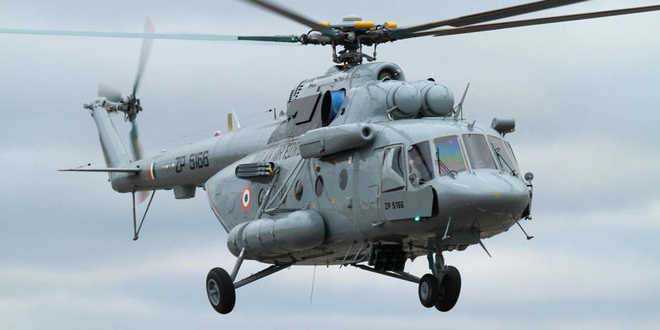

Ministry to decide on buying armed copters

Ministry to decide on buying armed copters
File photo

Ajay Banerjee

Tribune News Service

New Delhi, August 13

The Ministry of Defence (MoD) is to decide if 11 more attack helicopters are to be procured as a follow on to the existing order of 22 ‘AH-64-D Apache’ copters from US-based giant Boeing.The Defence Acquisition Council (DAC), the highest decision-making body of the MoD, is to meet after Independence Day. However, “wrinkles” of the purchase are still being ironed out for the project that is expected to cost about $900 million ( Rs 60,000 crore). The DAC will assess a request made by the Army, which wants the MoD to exercise the “option clause” that allows the purchase of 11 more helicopters. The MoD’s finance wing has its reservations and is not in favour of giving the copters to the Army as the first lot of 22 is contracted for the Air Force.(Follow The Tribune on Facebook; and Twitter @thetribunechd)The Services Capital Acquisition Categorisation Higher Committee, with representatives of the IAF and the Army, has decided that the 11 copters should be taken as the capability was needed. “The narrow matters of inter-service operations cannot hold back the use of helicopters,” an official said.  The first lot of 22 copters approved by the MoD in September 2015 has been allocated to the IAF, the Army wants the follow-on order for itself.  The US copter had won the bid in an open competition beating the Russian built Mi-28-H.For a number of years, the Army and the IAF have been sparring over who should operate the future fleet of Apache copters. The Army initially asked for the gunships to be inducted into its ranks, or for the IAF to at least share the helicopters with the ground forces. The IAF, however, rejected both proposals.In 2014, the MoD had an in-principle agreement allowing attack helicopters for the Army. Till now, the Army has only ‘non-armed’ helicopters. The MoD has accepted the need to have some 39 armed helicopters for the Army which will fly overhead when ground-based troops move in for attack. Such copters usually carry missiles.


India not responding positively to peace efforts: Pak Foreign Minister

India not responding positively to peace efforts: Pak Foreign Minister
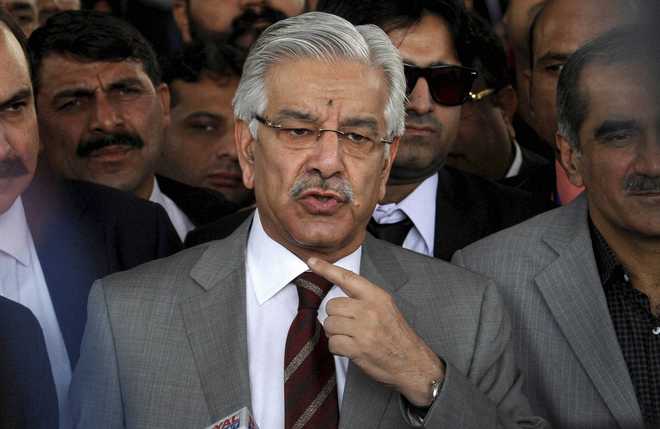
Pakistan has always wanted to have good relations with its neighbours, says Asif. AP/PTI

Islamabad, August 7

India and Afghanistan should and must respond positively to Pakistan’s peace efforts and not mistake Islamabad’s desire for peace and good relations with its neighbours as its weakness, said Foreign Minister Khawaja Muhammad Asif.

(Follow The Tribune on Facebook; and Twitter @thetribunechd)

Addressing a press conference at the PML-N House in Sialkot, Asif said Pakistan has always wanted to have good relations with its neighbours, and especially with India and Afghanistan, and maintained that both countries are currently not responding positively to Pakistan’s initiatives for durable peace in the region.

The Dawn quoted him, as saying, “It’s high time for both India and Afghanistan to come forward as good neighbours and give positive response to Pakistan’s peace initiatives and end the blame game.” He alleged that India is violating the ceasefire along the Line of Control (LoC) and attempting to destabilise Pakistan economically and politically. He also said that Pakistan is fully capable of defending its territory through its armed forces.

On the issue of terrorism, Asif said that the federal government has been battling it successfully for several decades, by uprooting and crushing terrorists. He said that the world was praising Pakistan’s frontline role against terrorism.

He also alleged that India and the United States were involved in an international conspiracy to sabotage the 1960 Indus Water Treaty, posing great danger to the subcontinent.

He pointed out that Pakistan had never been taken into confidence by the international community on all the clauses of the treaty.

Pakistan has now effectively taken up the burning issue of stoppage of water by India into Pakistani rivers with the World Bank which had been playing its role as a guarantor in the Indus Water Treaty. He said Pakistan wanted an amicable solution to the problem and was making all-out sincere international efforts to resolve this prolonged issue as soon as possible.

He disclosed that the issue of construction of the controversial Kishanganga dam had almost been resolved by Pakistan and India about one-and-a-half years ago, but progress on it was halted due to suspension of further talks by India thrice afterwards. — ANI


SGPC to remember 1965 war heroes

A FUNCTION WILL BE HELD TO HONOUR 1965 INDO­PAK WAR HEROS, LT GENERAL HARBAKHSH SINGH AND ABDUL HAMID AT ASAL UTTAR

AMRITSAR: The Shiromani Gurdwara Parbandhak Committee (SGPC) will hold a grand religious function as a tribute to the 1965 Indo-Pak war hero, late Lieutenant General Harbakhsh Singh on September 8.

“Lieutenant General Harbakhsh Singh, who was the then commandant of army unit, played a key role in defeating Pakistani troops. To create awareness among youth of his bravery and inspire them, the SGPC will hold a function at Asal Uttar, the battle field of the war along the border in Tarn Taran,” SGPC chief Kirpal Singh Badungar said.

He was speaking to media persons on the sidelines of a function at the Golden Temple Complex on Friday.

The SGPC launched a drive to preach Sikhism, ‘Dharam Parchar Lehar’ in Majha on Friday at the Diwan Hall Manji Sahib in the Golden Temple complex.

“The family of Abdul Hamid, the martyr of the war, will also be invited to the function. His portrait will also be installed at the Central Sikh museum in the Golden Temple to pay tribute to him,” Badungar added.

On whether the anniversary of ‘Dharam Yudh Morcha’ had been forgotten, Badungar said, “Punjab is the sole state of the country deprived of its own capital, a high court, river waters and Punjabi-speaking areas. Punjabis have sacrificed countless lives and eradicated shortage of foodgrain.”

Claiming that the Congress was responsible for the alleged discrimination with Punjab, he said,“Congress leaders have never delivered on their promise. Even the Rajiv-Longowal Accord that has not been implemented so far — was another betrayal with Sikhs.”

SGPC general secretary Amarjit Singh Chawla and other executive members, including Bhai Ram Singh, were accompanying Badungar. He was, however, evasive on Anandpur Sahib Resolution that the Akalis had drafted.

Earlier, Akal Takht jathedar Giani Gurbachan Singh and Golden Temple head granthi Giani Jagtar Singh honoured Badungar for starting the ‘Dharam Parchar Lehar’ .


clip

clip


Himachal announces Rs 20 lakh compensation to kin of soldier killed in Shopian

Himachal announces Rs 20 lakh compensation to kin of soldier killed in Shopian
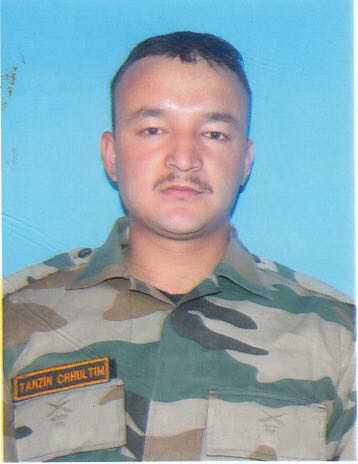
Army personnel Tanzin Chhultim

New Delhi, August 3The Himachal Pradesh government has announced Rs 20 lakh compensation to kin of Army personnel Tanzin Chhultim, who lost his life in Shopian encounter on Thursday.Two Army personnel–Major Kamlesh Pandey and Sepoy Tanzin Chhultim–were killed and two other personnel were injured when terrorists opened fire on a search party of security forces in Jammu and Kashmir’s Shopian district.

(Follow The Tribune on Facebook; and Twitter @thetribunechd)

A police official said a cordon and search operation was launched by Army in Zaipora area of Shopian during Wednesday night following intelligence inputs about the presence of militants there.He said that during the search operation, the terrorists fired upon the party in which four army personnel were injured.He said the injured were taken to hospital, where two of them succumbed to their injuries.In another encounter, two terrorists were killed in Kulgam district early on Thursday morning. ANI


LPG prices to be hiked by Rs 4 per month Subsidies to be eliminated by March

LPG prices to be hiked by Rs 4 per month
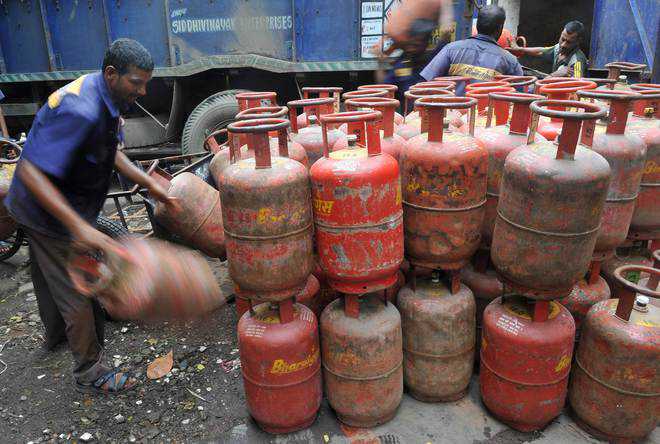
There are as many as 18.11 crore customers of subsidised LPG in the country. Fie photo

New Delhi, July 31

The central government has ordered state-run oil companies to raise subsidised cooking gas (LPG) prices by Rs 4 per cylinder every month to eliminate all the subsidies by March next year, Oil Minister Dharmendra Pradhan said on Monday.

The government had previously asked Indian Oil (IOC), Bharat Petroleum (BPCL) and Hindustan Petroleum (HPCL) to raise rates of subsidised domestic LPG (liquefied petroleum gas) by Rs 2 per 14.2-kg cylinder per month (excluding VAT).

Now, the quantum has been doubled so as to bring down the subsidy to nil, he said in a written reply in the Lok Sabha here.

Every household is entitled to 12 cylinders of 14.2-kg each at subsidised rates in a year. Any requirement beyond that is to be purchased at market price.

“Public sector oil marketing companies (OMCs) were authorised to increase price of subsidised domestic LPG cylinder by Rs 2 per cylinder (14.2-kg) per month (excluding VAT) with effect from July 1, 2016,” he said.

Oil companies had hiked LPG rates on 10 occasions since that go-ahead.

“The government vide its order dated May 30, 2017, has again authorised OMCs to continue to increase the effective price of subsidised domestic LPG by Rs 4 per cylinder effective June 1, 2017, per month (excluding VAT) till the reduction of government subsidy to ‘nil’, or till March 2018, or till further orders, whichever is earliest,” he said.

Oil companies have raised rates twice since then, the last being on July 1 when rates were up by a steep Rs 32 per cylinder — the steepest increase in six years. This hike was because of the May 30 order as well as reflection of hiked tax rates under the Goods and Services Tax (GST) regime.

Subsidised LPG now costs Rs 477.46 per 14.2-kg cylinder in Delhi. It was priced at Rs 419.18 in June last year.

The rate of non-subsidised LPG, which consumers pay after exhausting their quota of below-market priced bottles, costs Rs 564.

“The price for the other subsidised cylinders (i.e. 5 kg) would be increased proportionately by the OMCs,” Pradhan said.

The subsidy on LPG was Rs 86.54 per cylinder for July, he said.

There are as many as 18.11 crore customers of subsidised LPG in the country. These include 2.5 crore poor women who were given free connections during the last one year under the Pradhan Mantri Ujjwala Yojna.

There are another 2.66 crore users of non-subsidised cooking gas. — PT


Doklam, dera & more KC Singh BJP’s missteps have outnumbered its successes

Doklam, dera & more
Under Fire: The biggest setback is the mishandling of the Ram Rahim episode.

KC Singh

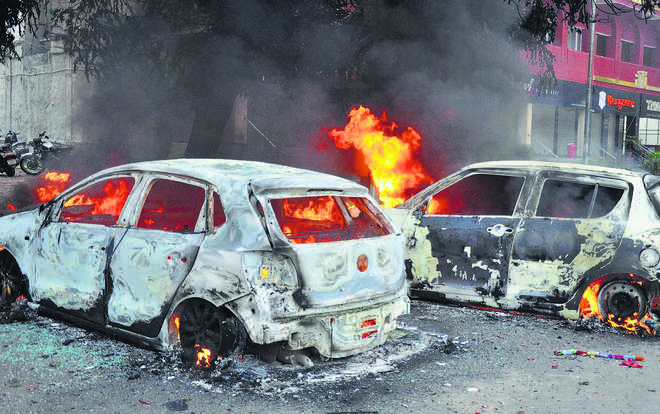
PAST fortnight has been a mixed bag politically for the BJP. The setbacks outnumber the lone success at handling the Doklam imbroglio effectively.  The list of missteps is long — the nine Bench judgment of the Supreme Court holding the right to privacy as a fundamental right, on which the government unconvincingly pirouetted to claim it favoured the right anyway. Trouble simmers in the Centre’s arranged marriage between two factions of the orphaned AIADMK, ignoring that Jayalalitha’s conscience-keeper Sasikala, though jailed, still possesses the legacy and vast resources. Honeymoon for another marriage — BJP and JD-U in Bihar — is interrupted by the news of a fodder scandal II that may singe two union ministers and worthies in the state alliance. The BJP’s perennial nemesis, Arvind Kejriwal, has scored a decisive win in the Bawana byelection, putting paid to attempts to marginalise him. Among the reasons is growing job losses in the informal sector due to GST implementation, hitting Poorvanchalis the most.The biggest setback has been the mishandling of the Gurmit Ram Rahim episode. The Haryana Government’s pandering to him by letting him mass-gather followers at Panchkula and then permitting him to careen through the heartland of Haryana in a 200-car motorcade was a blatant attempt to intimidate the judiciary. The high court, particularly the bench of acting Chief Justice Saron, held the Haryana administration’s feet to the fire. Then special CBI judge delivered the coup de grace by upholding the might of the law. The BJP defence that the Chief Minister was beyond reproach as the outbreak of violence was controlled in hours ignores that nearly 40 lives were lost. This was not sensible policing. It was enforcement of law of the land by massacre. The governments in Chandigarh and Delhi may or may not introspect on their lapses, but the region needs to examine why common folks are flocking to the deras of conmen masquerading as messengers of God. Gurmit Rahim displayed not only extremely flawed moral sense, but even cowardice when he fell sobbing on hearing the verdict. Clearly, this was no messenger of God that humanity worships. Studies done globally on the rise of cults or alternative faith systems have arrived at different conclusions about why people flock to them. Most are idiosyncratic groupings that are generally peaceable, but some have turned violent. What makes deras dangerous in India is their ability to turn their followers into electoral behemoths that political parties woo. Dera Sacha Sauda leadership has been a political pestilence in Punjab and Haryana for two decades, blackmailing and bargaining for greater power and affluence. The fault lay with both states, which did not cater to marginalised beings, and organised religions, including Sikhism, which did not make many of their adherents stakeholders in their institutions, or sometimes even welcome in their places of worship. One baba jailed will not change the fundamental socio-religious deficiencies, which will invariably breed the next ‘Love Charger’.The only good news for the BJP comes from the successful handling of the Doklam standoff. The differences in statements by the two sides can be ignored as both needed face-savers. The crucial test of success would be if indeed China abandons attempts to build a road or infrastructure in an area vital to Indian security. The issue needs deeper analysis.Henry Kissinger is a great resource for reading the Chinese mind having interacted with all five generations of Chinese leaders, beginning with Mao. In his book On China, he narrates Mao Zedong telling his military brass on the eve of their 1962 attack on India that the two nations had already fought ‘one and a half’ wars. The first war was during Tang Dynasty (618-907) when China sent troops to help a kingdom counter a usurper. The second was the Mongol sacking of Delhi 600 years later, on the assumption that China and Mongolia then were part of the same political entity. The lesson that India needs to draw from this is that China views events through the prism of history and on a millennium long scale.Later in his book, Kissinger analyses the Chinese diplomatic strategy, explaining that diplomacy for them is the weaving together of political, military and psychological elements in an overall strategic design. Personal equations do not affect their calculations, except where necessary to advance their interests. Hence, PM  Modi sharing a swing with Xi Jinping in Ahmedabad would have minimal effect on power play at the border. Above all, China acts with suddenness after making time their ally.The Chinese did strategic cost-benefit calculations about Doklam. Threats and fire-power drills were not affecting India; the US and Japan were threatening war against a recalcitrant Democratic People’s Republic of Korea, unwilling to listen to Chinese advice; India had begun investigations against Chinese companies for suspected Indian data transfer off-shore; trade war would affect China more as their exports are nearly four times those of India; and President Donald Trump’s speech spelling out the new Afghan policy included kudos to India, imploring it to play a greater security role in Asia-Pacific. What finally clinched success for India was the shutting window for time as the BRICS summit was a week away and a boycott by PM Modi would have embarrassed President Xi on the eve of the crucial 19th Party Congress, where he names his new team and successor, if any.Paradoxically, while being resolute and unbending worked with China as geopolitics favoured India, the same when translated into cussedness domestically is bad politics. In a vast nation like India, policy making must be by building support and co-opting the Opposition. Retaining ineffective leaders like CM Khattar, or using whatever means possible to divide and pillory opposition turns the political environment toxic and the people sullen. The mood of the nation will swing away from the BJP government if the missteps persist. Doklam too could buy success in the short run as China, recalling Mao’s contextualisation of the 1962 War, has an elephantine memory. The writer is a former Secretary, Ministry of External Affairs


2 years on, Jaipur labourer waiting for wife’s return from Sirsa dera

2 years on, Jaipur labourer waiting for wife’s return from Sirsa dera
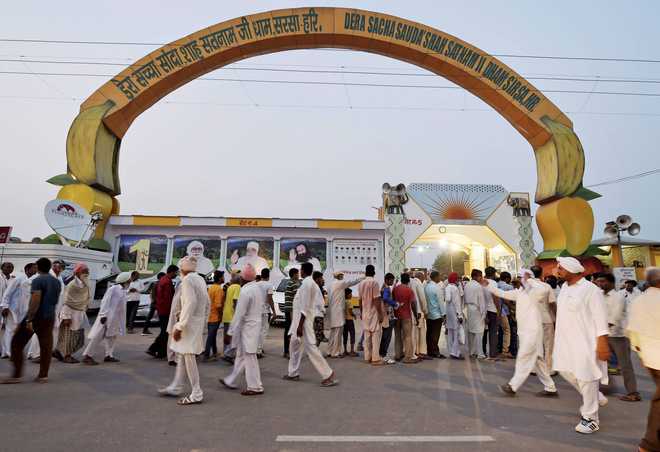
The Dera Sacha Sauda headquarters at Sirsa. — PTI

Yash Goyal

Jaipur, August 27

For over two years, a local daily-wage earner is waiting for his young wife and mother of two to return from Dera Sacha Sauda in Sirsa where she is reportedly living in ‘servitude’.Kamlesh Raigar (27), who does not know how to use a mobile phone, is dependent on police investigation and his three brothers’ assistance to locate his wife with whom he first visited the Sirsa dera in March 2015.His wife, Guddi Devi (25) was taken by dera premis on the pretext that Ram Rahim has called her for ‘Dera Pramukh seva’ on March 28, 2015.  Kamlesh Raigar had lodged an FIR through an ‘istgasa’ (complaint in court) with the Jawahar Circle police station here in May 2015 that his wife was kept bondage in the ashram of Dera Sacha Sauda chief Gurmeet Ram Rahim Singh, who was on Friday convicted in a rape case.On the basis of Kamlesh’s complaint of May 5, 2015, the CJM court in Jaipur on May 7, 2015 had asked the police to lodge the FIR of missing woman who was reportedly kept as bondage in the dera. Spending a lot of money on court fee which he borrowed from relatives, Kamlesh also filed a habeas corpus petition in the High Court in January 2016 for his wife’s “unlawful detention or imprisonment at Sirsa dera”.In March this year, the Jawahar Nagar police had put an “FR” in the case and filed the report in the local court, an investigating cop told The Tribune on Sunday on the condition of anonymity.The police had marked “FR” because they considered that Kamlesh himself had left his wife in the dera in 2015 and the case belonged to Sirsa police and it should be investigated by police of that state.The police had also found that the victim couple was involved in “mantra-tantra” at their home and used to attract local people for treatment of “evil spirits”.Besides, the police also alleged that the missing woman was ‘mentally challenged’.The complainant also filed a ‘protest petition’ against the police FR with the ACJM court-7 here, and its hearing is scheduled for September 7, where the police would also represent the case on which it put FR. Kamlesh went to the Sirsa dera a number of times to get his wife “relieved”, but he was told that she (Guddi) was in a pose of “samadhi” and will automatically return home.His two sons, aged 6 and 4, were not aware of the dera affairs have been given assurance by relatives that their mother will return one day, for sure. 


DGP authorised to clamp curfew if needed: Capt

CHANDIGARH:Punjab chief minister Captain Amarinder Singh on Thursday authorised Punjab director general of police (DGP) Suresh Arora to impose curfew in case the situation spiralled out of control.

SANJEEV KUMAR/HTPunjab Police personnel taking out a flag march in Bathinda on Thursday.

Addressing a press conference after the cabinet meeting on the eve of the court hearing in the rape case against Dera Sacha Sauda chief Gurmeet Ram Rahim Singh in a Panchkula court, the chief minister said, “Punjab is absolutely ready and will not let things go out of control.”

Capt asked all MLAs and ministers of his cabinet to be in their constituencies and advise people to maintain calm. “Punjab has got 65 companies of Central Reserve Police Force and 10 of the Border Security Force. Thousands of Punjab Police personnel are out on the roads, particularly in the districts of Malwa belt,” the CM said.

Army personnel from the Western Command, Chandimandir, and South Western Command in Jaipur, were on standby and will move if needed, he said.

In an ostensible appeal to the dera followers, he said, “They are also Punjabis and law-abiding citizens, and I am sure they will not hamper the peace in Punjab.”

On dera followers gathering in the Naam Charcha Ghars in various towns and cities, Amarinder said the government had nothing to do with what they did inside their premises, but they will not be allowed to have their way outside.

The CM also announced that all government offices in Chandigarh and schools and colleges across the state were closed, and bus and train services were also suspended.