Sanjha Morcha

Lashkar chief killed in Pulwama Abu Dujana had plotted several fidayeen attacks; civilian protester shot

Majid Jahangir

Tribune News Service

Srinagar, August 1

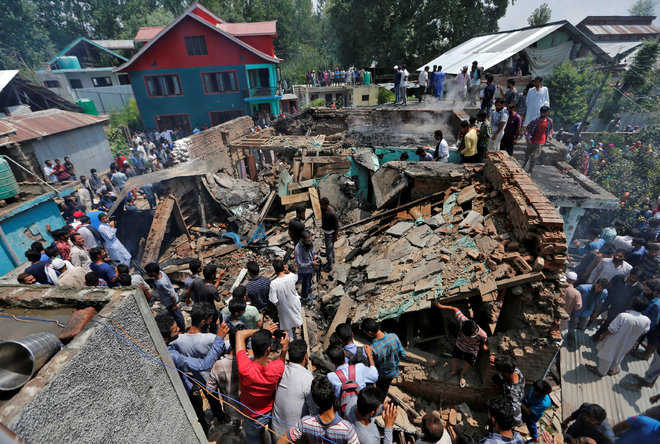
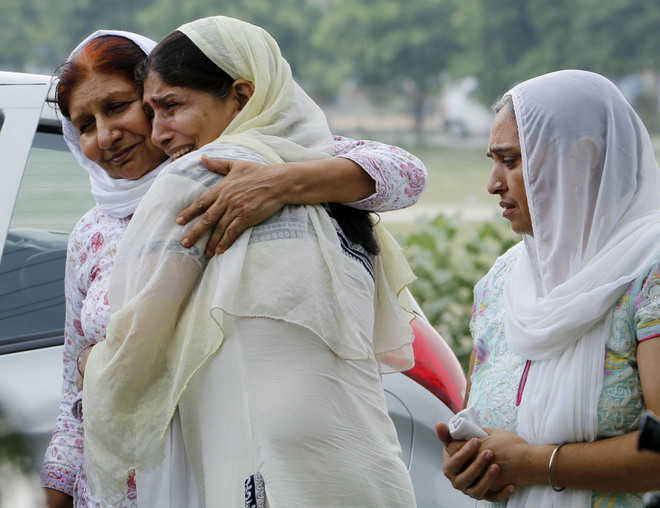
Lashkar-e-Toiba chief Abu Dujana, recently named the second-in-command of the Zakir Musa-led outfit with Al-Qaeda links, was killed in a surgical operation in south Kashmir’s Pulwama district early this morning.   Married seven months ago, the “most-wanted” terrorist was killed at his in-laws’ house while visiting his wife. Dujana’s aide, a local man, was killed too. (Follow The Tribune on Facebook; and Twitter @thetribunechd)As the gunbattle raged, locals, mostly youngsters, marched to the encounter site and hurled stones at the security forces. They were fired upon. One person, identified as Firdous Ahmad of Begumbagh, Kakapora, was killed and several others were injured. The protests spread to other parts of the Valley, including Srinagar, leaving several injured. Thereafter, educational institutions across Kashmir were closed for the day and mobile Internet services suspended. The operation was jointly launched by the Army, police and CRPF in the wee hours at Hakripora Pulwama, 25 km from Srinagar. “The Army and the CRPF cordoned off 10 to 12 houses at about 4 am. We zeroed in on a house and spoke to the owner. We learnt that terrorists were not allowing members of the family to come out. After a couple of hours, all  came out and that is the time we launched an operation at 8 am. Within a couple of hours, two terrorists were killed,” the GOC of Army’s 15 Corps, Lt Gen JS Sandhu, said.“Those killed are Abu Dujana, the LeT chief in Kashmir and an A plus terrorist, and Arif Nabi Dar, also a terrorist,” he said. Dujana had escaped the police dragnet more than 12 times earlier, officials claimed.Police chief SP Vaid called the killings a huge success. He said Dujana, who belonged to Gilgit-Baltistan, had been active in Kashmir for six years. He had masterminded several fidayeen attacks  on security forces along the Srinagar-Anantnag highway in the last two years. Kashmir IGP Muneer Khan claimed Dujana had “become a ‘nuisance’ for everyone, specially the girls.”


Manmohan Singh Had Backed CBI in Dera Chief Case, Says Investigation Chief

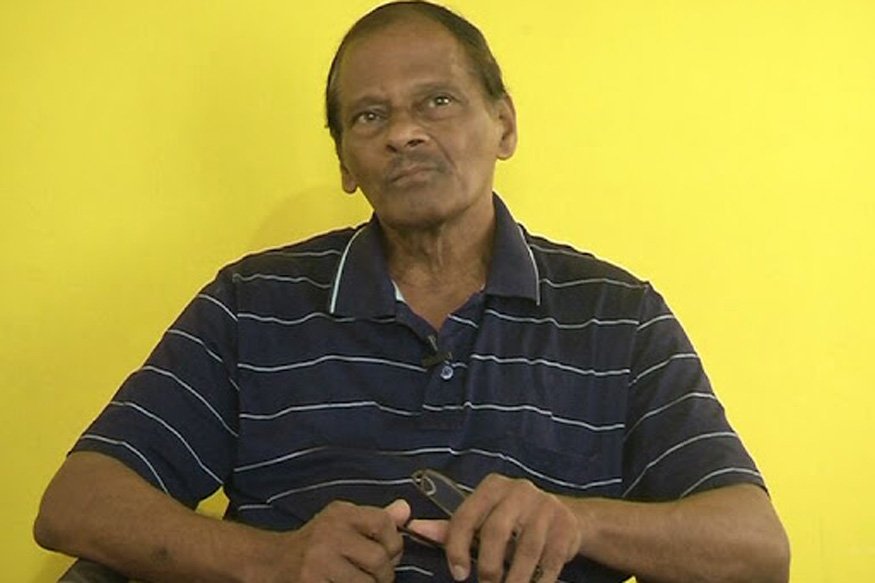
M Narayanan, retired DIG of the CBI, said after a lot of pressure from Punjab and Haryana MPs, former Prime Minister Dr. Manmohan Singh had summoned the then CBI chief Vijay Shanker to his office to discuss the case against Dera chief Gurmeet Ram Rahim Singh.

M-Narayanan-875

Bengaluru: The chief investigating officer in the rape case against Dera chief Gurmeet Ram Rahim Singh has revealed that former Prime Minister Manmohan Singh had ignored political pressure and given Central Bureau of Investigation (CBI) a free hand.

“The then Prime Minister Manmohan Singh stood by the CBI and ordered us to go by the law. He went through the statement made by two Sadhvis before a judge and did not succumb to the pressures from Punjab and Haryana MPs. After a lot of pressure from these MPs, Manmohan Singh had summoned the then CBI chief Vijay Shanker to his office to discuss the case against Gurmeet Ram Rahim Singh. After seeing the victim’s statements before a judge, Singh backed us,” said M Narayanan, retired DIG of the CBI, who was the chief investigating officer in the rape case against Dera chief.
Narayanan has also praised his boss Vijay Shanker for standing up to Punjab and Haryana MPs. Speaking to News18, he said, “When powerful MPs asked him to drop cases against Ram Rahim, Vijay Shanker refused to do so. He backed us fully”.

A native of Kasaragod in Kerala, Narayanan was in Mysore on the day Ram Rahim was sentenced to 20 years in jail. Expressing satisfaction over the punishment handed over to the rapist, he said that Ram Rahim would also be convicted in other cases, including the murder of two people.

Talking about how his team conducted the investigation, Narayanan said, “The complaint was sent in 2002. But nothing had happened till 2007. Expressing serious concerns over the progress of the investigation, the Punjab & Haryana High Court took the CBI to task. It had even summoned the chief Vijay Shanker to court seeking an explanation. After that he gave us Sadhvis letters, files of the murder of journalist Ramachandra Chatrapati and Dera volunteer Ranjit Singh. He ordered us to go ahead and complete the investigation in just 57 days as ordered by the High Court”.

According to him the task was huge as Sadhvis letters were anonymous. “We came to know that between 1999 and 2002, over 200 Sadhvis had left the Dera because of sexual harassment. Finally we could trace just 10 victims. But they were married and did not come forward to lodge a complaint. We managed to persuade just two victims and filed charge sheet before a court in Ambala on the 56th day”.

He said that entering the fortress like Dera Sacha Sauda headquarters in Sirsa itself was a very difficult job. The CBI team led by him was threatened by the goons of Ram Rahim and they had to face a lot of hostility. Narayanan said that Ram Rahim was living like a medieval emperor in his so-called ashram (Goofa) surrounded by pretty women known as Sadhvis. Every night around 10 PM, the head Sadhvi used to get a call from him instructing her to send a Sadhvi to his bedroom and she used to force one of the Sadhvis selected by him to sleep with the “guru”. Narayanan added that Ram Rahim was extremely careful like a seasoned criminal and never used to leave any traces of his crime. “He had a collection of condoms and contraceptives in his room. He was a maniac, a real beast”, the investigating officer said.

“Ranjit Singh was a prominent volunteer at the Dera. After his sister was raped by Ram Rahim, both of them had left Sirsa. A few days later an anonymous letter reached Punjab and Haryana High Court. Suspecting that Ranjit Singh was behind it, Dera chief ordered his men to murder him. It has been proved that the pistol used by his murderers belonged to Dera manager. They had also left a walkie-talkie at the scene of crime. I am sure Ram Rahim will be convicted in these heinous cases too,” said Narayanan who had retired in 2009.


With Doklam, ends 2nd longest India-China standoff along LAC ‘Don’t leave ground’ is the lesson for New Delhi after 31 years

With Doklam, ends 2nd longest India-China standoff along LAC
Bhai bhai’ again: India and China have agreed to withdraw their troops from the disputed Doklam territory. file photo

Ajay Banerjee

Tribune News Service

New Delhi, August 28

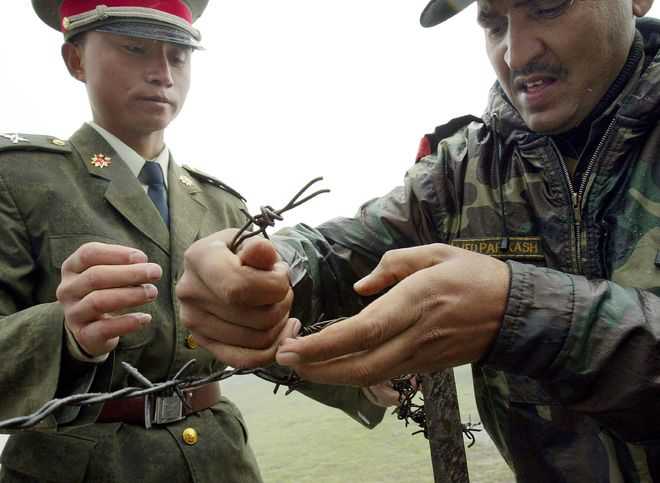
India and China today ended what was their second longest standoff along the un-demarcated Line of Actual Control (LAC). An important lesson was repeated that militarily it’s important to stand ground against China.In this case, India was standing in for friend Bhutan. The end of the 74-day stand-off at Doklam plateau came after a small statement from the Ministry of External Affairs (MEA) this morning.(Follow The Tribune on Facebook; and Twitter @thetribunechd)On its part, the Indian side had dug in its heels in the military stand-off at Doklam. It was reminiscent of a similar event at Sumdrong Chu (October 1986 to May 1987) in north-western part of Arunachal Pradesh.The eight months at Sumdrong Chu were the longest stand-off between the two armies. In comparison, the one at Doklam lasted just 74 days even though things had been simmering since May this year when China stopped the Mansarvoar Yatra through Nathu La in eastern Sikkim. In October 1986, Chinese leader Deng Xiaoping warned India that China would have to “teach India a lesson”. Almost similar were the words this time. On the Indian side, indications were clear that it will let diplomacy prevail over the “bayonets”.The key difference between 1986 and now was the changes in India-China relations. Post the Sumdrong Chu incident, the then Prime Minister Rajiv Gandhi had paid a visit to China. It was peak of the ‘Cold War’ (1945-1991) between the US and the then USSR. India, though officially non-aligned, was seen with the ‘Soviet camp’.Since 1993—the time line, incidentally, coincides with the economic rise of India and China—the two countries have had a few key treaties, which have ensured peace along the LAC. There have been a series of agreements that dictate the conduct of soldiers and also how a high-powered committee with members of both sides will sort out matters.These treaties came in handy this time for negotiators. Also in the past decade, India has “militarily tailored” its defences along the Himalayas. A repeat of the 1962 debacle was just not possible in 2017.In early 2004, India stepped up efforts to secure areas along the 3,488 km long LAC—the de facto boundary—aligned on an east-west axis in the Himalayas.


The way around China

The way around China
In Knots: China has, no doubt, landed itself in a military and diplomatic pickle.

G Parthasarathy

DENG Xiao Ping, who survived Maoist repression and became China’s supreme ruler from 1978 to 1997, set the stage for dumping Maoist communist dogma and releasing the creative energy of Chinese entrepreneurship. He rationalised discarding orthodox Communist ideology, proclaiming: “It does not matter if a cat is black or white, as long as it can kill mice.” Deng was the “helmsman” of China’s breath-taking economic growth, which transformed his country into the world’s economic powerhouse, within three decades.Deng urged caution in the conduct of security policies. Shortly after the 1989 Tiananmen massacre, Deng advised his countrymen: “Observe calmly, secure our position, cope with affairs calmly, hide our capabilities and bide our time”. Deng had practical reasons for rendering this advice to his countrymen. China was badly mauled during the Ussuri river clashes with the Soviet Union in 1969. Worse still, was the humiliation China suffered following Deng’s visit to Washington in 1978, where he was feted, wined and dined by President Carter and the barons of American business. Shortly thereafter, he proclaimed: “Vietnam is a hooligan. We must teach it a lesson.”  It was, however, China which was taught a lesson by Vietnam, when it invaded its neighbour in 1979.Deng faced a similar setback in 1986, when China’s PLA occupied vacated Indian posts in Sumdorong Chu/Wangdung in Arunachal Pradesh. India responded by airlifting forces to the McMahon Line, along the Sino-India border. Deng warned India in 1986 that it would be taught a “lesson” if it did not withdraw its forces, with US Defence Secretary Caspar Weinberger acting as an intermediary. New Delhi, however, stood firm and a military stalemate followed. External affairs minister ND Tiwari visited Beijing in May 1987 and clarified that India was not interested in escalating tensions, while holding out the possibility of a visit to China by PM Rajiv Gandhi. The visit took place in November 1988, with Deng personally welcoming the “young” Indian PM and setting the stage for seeking a new relationship with India. Chinese troops, however, pulled back fully from Sumdorong Chu only in 1993. China’s misadventure in Sumdorong Chu led to Arunachal Pradesh soon becoming a state of the Indian Union in 1987.Much has changed in the last three decades in China. It is now an economic powerhouse with a GDP five times that of India and defence spending six times that of India. China has impressive defence production facilities and armed forces with huge firepower. But, China’s economic rise has also led to the country discarding Deng’s prescription of “hide our capabilities and bide our time”. China is now flexing its economic and military muscle across Asia, while also using its maritime power across the Western Pacific and Indian Ocean Regions. The use of maritime power has been accompanied by China defining its maritime borders arbitrarily, drawing a “nine dotted line”, to occupy and build military bases on several islands, hundreds of miles from its shores, which are legally claimed by its neighbours. Its maritime boundary claims, many coercively enforced, have included unilaterally defining its maritime boundaries with South Korea, Japan, Taiwan, the Philippines, Vietnam, Brunei, Malaysia and Indonesia. Beijing has, however, been circumspect, in not biting off more than it can chew, on in its maritime boundaries with Japan!China has coerced a number of ASEAN countries, compelling them not to join partners like Vietnam and Indonesia, which have demanded that Beijing should adhere to rulings of the UN Arbitration Tribunal on its maritime boundaries. This fear of Chinese power has torn ASEAN solidarity apart, with many ASEAN members refusing to accept any critical references to China in the recent ministerial conference in the Philippines. Not content with establishing its hegemony in Southeast Asia, China has also moved to contain and erode India’s influence in South Asia and the Indian Ocean. The ambivalence of the Trump administration on containing Chinese power and its revocation of the Trans-Pacific (economic) partnership has raised serious doubts about American reliability as an economic and military partner in East and Southeast Asia. China has benefited immensely from this.Pakistan is predictably the primary instrument for China’s policy of “containment” of India. The China-Pakistan Economic Corridor, stretching from the PoK to the port of Gwadar,  has been accompanied by a decision to enhance Pakistan’s maritime power, with a decision to supply eight frigates and eight submarines to Pakistan. Across India’s eastern shores, China has outmanoeuvred the US, Japan and India by strengthening its political and economic influence in the economic and political policies of Aung San Suu Kyi. It is set to build the strategic port of Kyaukpyu in the Bay of Bengal, while shaping its maritime silk road by taking over Hambantota Port in Sri Lanka. Riding on hubris, China, however, gravely miscalculated what the response of India and Bhutan would be to its intrusion in Doklam.By its intrusion in Doklam, Beijing violated written agreements with Bhutan signed in 1988 and 1998, which pledged to “maintain status quo on the boundary as before March 1959”, and “refrain from taking unilateral action, or use of force, to change the status quo on the boundary”. It also violated the December 2012 “common understanding” reached by Special Representatives of India and China, agreeing to maintain the status quo, pending a tripartite agreement on the location of the India-China-Bhutan tri-junction. China has now landed itself in a military and diplomatic quagmire. The Sikkim-Bhutan border is the worst location for China for a confrontation with India. India has huge advantages in terrain, logistics, firepower and numbers in this area. Any military misadventure could destroy the image of invincibility the Chinese have assiduously built, while bullying weaker maritime neighbours.China can possibly undertake intrusions in sections of its borders with India, where it enjoys logistical advantages. India has to be prepared for this. In the meantime, imaginative diplomacy is required to ensure China is given a face-saving way out from its present predicament. A visit by Mr Modi to China for the forthcoming BRICS Summit would largely depend on his reading of Chinese intentions and flexibility. Much will, however, depend on how President Xi Jinping decides to deal with domestic challenges he is likely to face during the forthcoming Communist Party Congress, scheduled for later this year.



IMA cadet from Bathinda dies 6 others collapse; court of inquiry ordered to fix responsibility

Dehradun/Bathinda, Aug 19

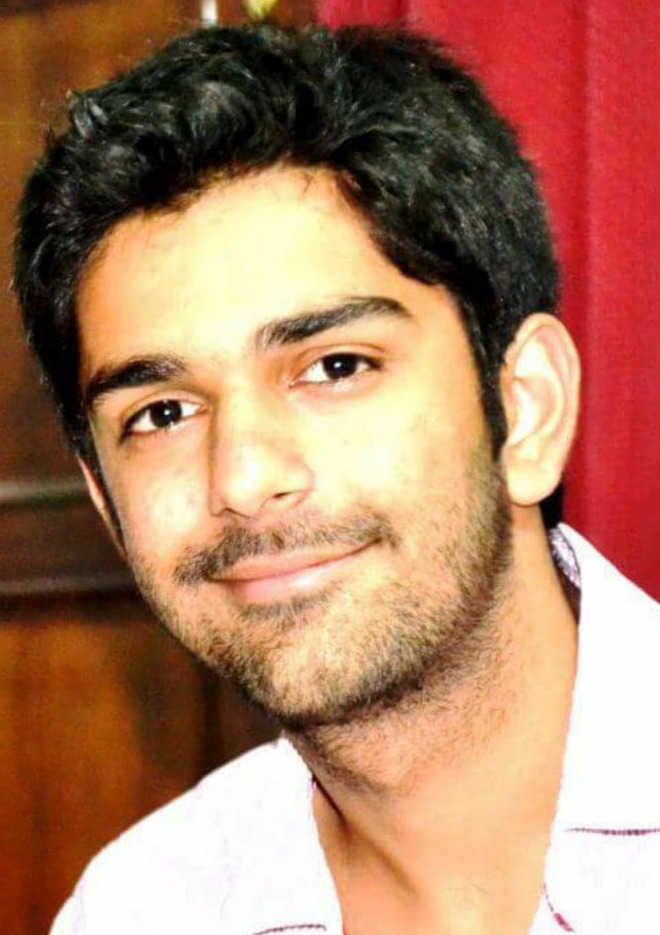
A Gentleman Cadet of the Indian Military Academy (IMA), Dehradun, Deepak Sharma (22) of Bathinda, reportedly died of exhaustion during a 10-km cross-country race, a regular feature of the IMA training, on Friday. Six other cadets collapsed too.At 2 pm, the cadet fainted in Badshahi Bagh area neighbouring UP’s Saharanpur district, a few kilometres from the final destination. He was administered first-aid. As his condition deteriorated, he was rushed to the nearest Lehman Hospital in Vikasnagar where doctors declared him ‘brought dead’. (Follow The Tribune on Facebook; and Twitter @thetribunechd)The body was sent to Coronation Hospital, Dehradun, for postmortem. The status of the other six cadets could not be ascertained, but an officer claimed they were not in the  Military Hospital this morning. The Army has ordered a court of inquiry to ascertain facts  and fix responsibility. The incident turns focus on the level of fitness of cadets as well as the training methods and conduct of instructors. In Bathinda, the deceased’s brother-in-law, Dr Rajiv Kapila, claimed Deepak was physically fit and could not have collapsed. “His camp started on August 14. A day earlier, he sounded cheerful over the phone.”Deepak had joined the IMA in January after completing studies at GNDU. — TNS


DOKLAM Diplomacy it is: Delhi Says will continue to engage with China

Diplomacy it is: Delhi
MEA: Incidents (like in Ladakh recently) not in anyone’s interest. File

Tribune News Service

New Delhi, August 18

Amid the continuing stand-off on Doklam, India today reiterated it will continue to engage with China to arrive at a mutually acceptable solution while emphasising that peace and tranquillity on the border is an important pre-requisite for “smooth bilateral relationship’’.In response to a question, Ministry of External Affairs (MEA) spokesperson Raveesh Kumar underscored New Delhi’s standpoint on the issue that remains unresolved since India prevented Chinese troops from building a road in the tri-junction border with Bhutan.(Follow The Tribune on Facebook; and Twitter @thetribunechd)Reacting to reported incident between Indian border personnel and Chinese troops in Ladakh on August 15, the spokesperson said without elaborating on its nature, “Such incidents are not in the interest of either side.”Under the existing agreed system in place, he said two border personnel meetings took place at Chushul and Nathu La between the Indian border guards and Chinese troops.When a correspondent referred to the incident as stone pelting, the spokesperson clarified he was not confirming it to be either stone pelting or use of rods.Published reports said troops on either clashed with fisticuffs and stone-pelting resulting in some personnel receiving injuries after land-based patrols on either side came face to face north of Pangong Tso lake in Ladakh region of Jammu and Kashmir.To a question on the current floods in eastern parts of India and sharing of hydrological data from China, Kumar said although the arrangement was for Beijing to share data on flow of rivers Brahmaputra and Sutlej between May 15 and October 15, no data has been received this year till now.He, however, said non-sharing of such data by China could not be linked to the current standoff as there could be technical reasons for it.


Viceroy’s House : Expect to be bored, confused

he intention seems sincere, but this historical drama about the 1947 partitioning of the British Indian Empire is weighted down by a verbose script, leaden direction and a tacked-on fictional romance straight out of a Z-grade Bollywood melodrama.

A still from Viceroy’s House.More inept than inspiring, Viceroy’s House monotonously sets about depicting the political and religious schisms that led to the division of the country into two independent nations.

The primary setting is the palatial titular mansion, which served as the seat of government as well as the residence of Lord Mountbatten (Hugh Bonneville).

The last viceroy to serve in India, he has been dispatched to New Delhi to oversee the transition to self-rule of India and the newly founded state of Pakistan.

Mountbatten has his work cut out for him, amid escalating tensions between the populations and the new leadership — Jawaharlal Nehru (Tanveer Ghani), Mahatma Gandhi (Neeraj Kabi) and Muhammad Ali Jinnah (Denzel Smith).

Curiously, there are no allusions to the alleged affair between Lady Mountbatten (Gillian Anderson, impressive) and Nehru.

Unable to rise to the challenge of conveying the complexities of this time in our history, director Gurinder Chadha ends up trivialising the struggles of the people on both sides of the new divide.

The pat resolution to the ‘impossible’ relationship between the Hindu valet (Manish Dayal) and the Muslim ladyin-waiting (Huma Qureshi) is indicative of the tendency to sentimentalise issues of vital importance.

The handsome production design (courtesy Laurence Dorman) is offset by an overwrought background music score by AR Rahman, who needs to reinvent himself.

With the singular exception of the late Om Puri as the blind father, the rest of the Indian ensemble is unremarkable.

On the other hand, there are terrific supporting turns by British stalwarts Simon Callow (who plays the reluctant official in charge of mapping the Indo-Pak territories) and Michael Gambon, as the Machiavellian General Hastings.

The premise remains pertinent in the current conflicted global situation. Unfortunately, Viceroy’s House is a less-thancompelling account of the strifetorn last days of the Raj.

For those who might be interested, a dubbed version in Hindi, titled Partition: 1947, is also being released this week.


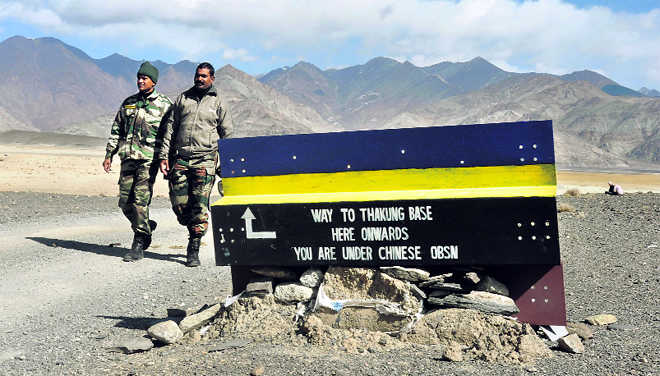
Chinese troops attempt to cross LAC at Ladakh, stopped by Indian Army

Chinese troops attempt to cross LAC at Ladakh, stopped by Indian Army

A minor scuffle took place between the Indian and Chinese forces on Tuesday after the former stopped the Chinese People`s Liberation Army troops from crossing the Line of Control (LAC).

New Delhi: A minor scuffle took place between the Indian and Chinese forces on Tuesday after the former stopped the Chinese People’s Liberation Army troops from crossing the Line of Control (LAC), according to PTI.
The scuffle lasted for at least 30 minutes, said a report.
The development took place after the Chinese PLA tried to cross the Line of Actual Control at Pangongtso at Ladakh today. However, they were interrupted by the Indian forces and were sent back.
Soldiers on both sides were injured in stone pelting during the confrontation, said officials.
Meanwhile, the Indian government is planning to raise the issue with its Chinese counterparts in a flag meeting on Wednesday.
The latest incident comes in the wake of a stand-off between Indian and Chinese troops along the border in Sikkim.

A ceremonial Border Personnel Meeting on the Indian Independence Day was also not held this time as the Chinese side did not respond to a communication from the Indian side.


CRPF CO’s daughter, wife unfurl flag at the spot where he fell last year

CRPF CO’s daughter, wife unfurl flag at the spot where he fell last year
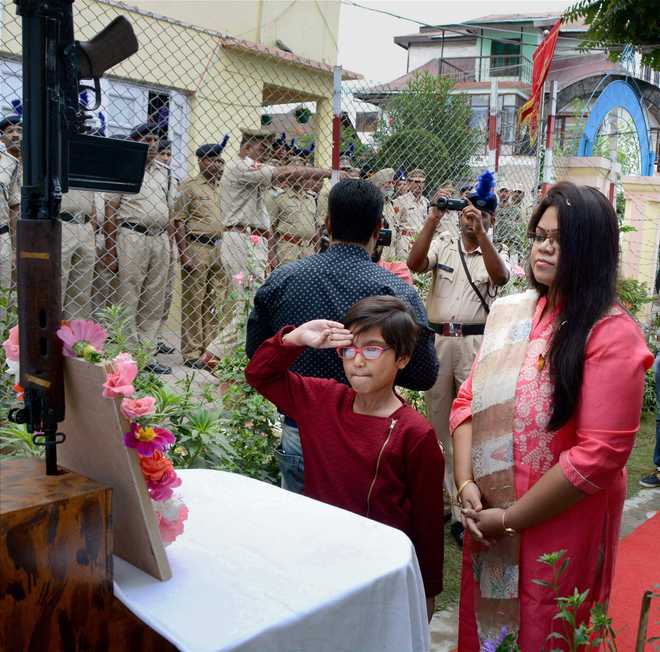
Martyred CRPF Commandant Pramod Kumar’s wife Neha Tripathi and six-year-old daughter Arna Kumar paying tribute to him, after unfurling the Tricolour during 71st Independence Day celebration at CRPF camp in Srinagar on Tuesday. PTI

Srinagar, August 15

The six-year-old daughter of slain CRPF Commandant Pramod Kumar and his wife on Tuesday unfurled the Tricolour at the same battalion camp here, where exactly a year ago he hoisted the flag and was killed minutes later in an encounter with militants.Kumar’s wife Neha Tripathy and daughter Aarna performed the ceremonial unfurling and saluting the flag at the 49th battalion camp in the Karan Nagar area.Tripathy then performed the traditional drill of distributing sweets to the men of the battalion, once commanded by her husband. She also placed a wreath at the martyr’s memorial built at the camp.Kumar (44) was on Monday decorated by the government with the Kirti Chakra (posthumously), the third highest peacetime gallantry medal, for his daredevil action where he picked up his AK-47 rifle and rushed to the Nowhatta Chowk area after he was told his patrol party was under attack, during the last Independence Day.He suffered a fatal bullet shot in his head during the encounter at Nowhatta Chowk area and succumbed soon after.Kumar’s wife had on Monday told PTI that she wanted her daughter to know what her father did for the country and hence decided to mark his first death anniversary at the same camp where he took his last salute.“I want my daughter to know what her father stood for and what he did. She should know that what is the importance of earning a Kirti Chakra. Hence, I made it a point to be on the same soil where my husband lost his life, to mark his first death anniversary.“As he unfurled the Tricolour at the 49th battalion camp exactly a year before, we will be doing it on Tuesday,” she had said.On the last Independence Day, the Central Reserve Police Force (CRPF) CO had hoisted the flag between 8.30 am and 8.40 am and in his speech remarked that with India clocking 70 years of its freedom, the responsibility on security forces had “increased” and they had to effectively tackle militants and incidents of stone-pelting in Jammu and Kashmir.Just before he ended his speech, Kumar, in a recorded video of the event, is seen looking at his watch and saying “it is an important day”, unaware of the fate that awaited him.Minutes later he was killed at the Nowhatta Chowk fighting militants.While Kumar and his men eliminated the two armed foreign militants, nine other personnel, including a state police official, were injured in the attack.The CO was posted to Srinagar in April 2014 and was promoted as a Commandant only days before the fateful day, on July 12.He hailed from Patna in Bihar but lived in neighbouring Jharkhand’s Jamtara district.The officer had been thrice decorated with the CRPF Director General’s commendation in 2015, 2014 and in 2011.He had also served in the Special Protection Group (SPG) for three years.The officer joined the force in 1998. PTI


Army for rescue ops in flooded Assam IAF on standby; PM talks to CM Sonowal, offers full support to tackle fury

Army for rescue ops in flooded Assam
Soldiers rescue people from flood-affected Debasatra village in Nagaon district of Assam on Sunday. PTI

Bijay Sankar Bora

Tribune News Service

Guwahati, August 13

The Army has been called out to help in rescue operations in western Assam areas and in Karbi Anglong district of central Assam that has been hit by a fresh wave of floods.All branches of the Armed Forces, including the Indian Air Force, in the region are in a state of full readiness to launch flood rescue operations when required to provide speedy relief and succor to those affected.Meanwhile, Prime Minister Narendra Modi today called up Assam Chief Minister Sarbananda Sonowal to enquire about the scale of devastation caused by the floods as the situation has remained grim and more deaths have been reported from different corners.Sonowal apprised the PM of the measures taken by the government to provide relief to the flood-affected people and that the administrations of all 19 flood-hit districts have been directed to ensure speedy relief distribution to the victims, a source in the CM’s office said. The PM assured all cooperation from the Centre in overcoming the havoc caused by floods.Nripendra Mishra, Principal Secretary of the PMO, on Sunday directed Chief Secretary of the state VK Pipersenia to submit a report to the PMO detailing the damage and devastation caused by the floods.The CM has directed the district deputy commissioners to provide ex gratia to the next of kin of those killed in floods within 48 hours of every such death.Meanwhile, the Red Horns Division of the Army moved swiftly to the aid of flood-hit western Assam and in Karbi Anglong in Central Assam. In response to a call for help from the civil administration, the Army sent out multiple teams in areas of Bodoland Territorial Autonomous Districts (BTAD) and Karbi Anglong district of Assam.Nearly 3,000 people trapped in villages were rescued amidst strong water currents and taken to relief camps. The Army has deployed its boats to reach the marooned people and made a number of trips against the swift current to rescue them.Sonowal today visited flood relief camps at Bhismak LP School at Panchmile, Sadiya, and took stock of the arrangements for the inmates. He also visited Kundil riverside over Kundil Bridge and directed the Water Resource Department to take immediate measures to stop erosion.The continuous erosion by the Kundil has been causing serious threat to Panchmile, Lakhimi Gaon, Bogoribari apart from threatening Kundil Bridge. Sonowal said dredging of the Kundil would be taken up in winter so that the change in the course of river can be tackled.


In Nepal, 200 Indians stranded 

  • Nearly 600 tourists, including 200 Indians, have been stranded in central Nepal’s Chitwan due to flooding triggered by heavy rains that have claimed 55 lives, officials said on Sunday
  • Heavy rains have lashed Nepal for the past three days, causing flooding and landslides at several places
  • The swollen Rapti river flooded several hotels in the Chitwan Valley, where the country’s first national park is located PTI

320 NDRF personnel rushed to Bihar

  • Union Home Minister Rajnath Singh on Sunday discussed with CM Nitish Kumar the flood situation in Bihar where nearly 320 NDRF personnel have been rushed
  • Movement of 17 trains was affected due to heavy rain in Seemanchal region, while several trains were cancelled due to inundated Kishanganj railway station
  • Nitish sought 10 additional companies of NDRF and IAF personnel and helicopters for rescue and relief operations TNS