Sanjha Morcha

US amends law for closer defence relations with India

Washington, July 15

The US House of Representatives has passed the annual defence budget of $621.5 billion for 2018 fiscal. Among other things, it seeks advancing of military cooperation with India, already a major defence partner of America.An amendment on enhancing cooperation with India was moved by Indian-American Congressman Ami Bera and was adopted by a voice vote by the House as part of the National Defense Authorisation Act (NDAA) 2018, beginning October 1 this year. The NDAA-2018 was passed by the House 344-81.The India-related amendment passed by the House requires the Secretary of Defence, in consultation with the Secretary of State, to develop a strategy for advancing defence cooperation between the US and India.“The US is the world’s oldest democracy and India is the world’s largest democracy. It is vitally important to develop a strategy that advances defence cooperation between our two nations,” Bera said.“I am grateful this amendment passed and look forward to the Defence Department’s strategy that addresses critical issues like common security challenges, the role of partners and allies, and areas for collaboration in science and technology,” he said. “Cooperation between the US and India enhances our own defence and ability to meet the evolving security challenges,” Bera said. Following the passage of the Act, the Secretary of Defence and Secretary of State have 180 days to develop a strategy for advancing defence cooperation between the US and India. — PTI

Senate nod needed

  • The National Defence Authorisation Act (NDAA-2018) will now go to the Senate before US President signs it into law
  • The Secretary of Defence and Secretary of State have 180 days to develop a strategy for advancing defence ties between US and India
  • The Act involves developing a strategy to address common security challenges and the role of US partners and allies

Conditional funding to Pakistan

  • The US House of Representatives has voted for three legislative amendments to impose tougher conditions for reimbursement of defence funding to Pakistan, making it conditional to Islamabad showing satisfactory progress in the fight against terrorism
  • The conditions are related to Pakistan’s support to terrorists and terror outfits, about which several top US officials and lawmakers have repeatedly expressed concern about in the past

Why mum on convicted netas, SC pulls up EC

Why mum on  convicted netas, SC pulls up EC

Satya Prakash

Tribune News Service

New Delhi, July 12

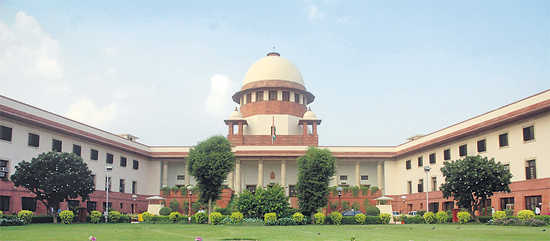
The Election Commission on Wednesday found itself at the receiving end of the Supreme Court’s wrath for failing to take a clear stand on a PIL demanding a life ban on convicted lawmakers from contesting polls.“When a citizen comes to the EC seeking lifetime ban on convicted lawmakers, is silence an option for you? You must say either yes or no. How can you be silent? If you are constrained, please let us know,” a Bench headed by Justice Ranjan Gogoi asked the counsel for the commission which had earlier supported the petition.(Follow The Tribune on Facebook; and Twitter @thetribunechd)In its affidavit filed in April, the commission had said it espoused the cause of the petitioner to decriminalise politics. It had said it was “alive to the issues that concern the conduct of free and fair elections and functioning of healthy democracy and as such asserting for bringing in electoral reforms which further the cause of free and fair elections.”But on Wednesday, the commission’s counsel said: “The commission is not taking an adversarial stand. We feel the issue (debarring convicted politicians) is in the legislative domain and we have no stand.”An angry Bench said: “If you feel constrained by the legislature, let us know.” The Bench fixed July 19 for further hearing.Under the current election law, a convicted politician immediately loses his/her seat in Parliament or state Assembly/legislative council and becomes ineligible to contest polls for six years from the date of completion of the sentence. But petitioner Ashwani Upadhyaya — a local BJP leader — has demanded that there should be a life ban on convicted politicians.


Mishra’s plea with HC

  • The Supreme Court on Wednesday transferred to the Delhi HC a plea of Madhya Pradesh Cabinet Minister Narottam Mishra
  • He was disqualified by the EC from contesting polls for three years over paid news charges
  • The EC had on June 23 held him guilty of filing wrong accounts of poll expenses in 2008


Necessary symbolism? by Lt Gen BHOPINDER SINGH,

photo

India’s extreme physical and socio-economic diversities make it susceptible to both natural and man-made disasters. Nature’s unpredictable fury resulted in the debilitating Tsunami in 2004, Uttarakhand flash floods in 2013, Kashmir floods in 2014 etc.

Disasters of such magnitude routinely challenge the nation’s ability to respond in a coordinated, holistic and effective manner. Pursuant to the same, the government in 2005 enacted the National Disaster Management Authority (NDMA) to spearhead a cohesive ‘disaster resilience’ culture of prevention-preparedness-mitigation by deploying a dedicated, technology-enabled and empowered body.

However, while NDMA does articulate frameworks, policies and best practices for situations like ‘managing crowds at events and venues of mass gathering’, the man-made and civic challenges like protests, riots and disorders are realistically managed by the local state police forces, para-military forces or even, by the requisitioned elements of the armed forces.

Despite an overall improvement in understanding the nuances, sensitivities and implications of various disasters, the state is forever challenged in its ability to handle such events with the limited resources, equipment, training and ‘culture’. Besides the men-material shortfalls, the ‘cultural-lacunae’ results in the events prolonging dangerously, deteriorating further and engulfing other areas and even getting overtly politicised, thereby limiting damage control. 

In India, the cultural challenges manifests immediately in gawkers insensitivity which ensures that there is an immediate animated huddle, aimless circle of people, or worse, irate and opinionated crowd around the epicentre of the disaster, and the only thing such aimless public participation achieves is the further hindering of rescue efforts by the competent authorities and rousing public passions unnecessarily.

While there are instances of responsible local communities, organisations and NGOs who do collaborate in the relief and rehabilitation measures in a professional and coordinated manner, yet, in certain conflict zones like Kashmir, there are increasing instances of locals deliberately distracting the efforts of security forces during the operations by pelting stones, breaking cordons and moving towards the operational area etc.

The Indian Army chief went to the extent of calling such elements ‘over-ground workers of the terrorists’. Such participants are not innocent bystanders or aimless tourists. Instead, these are deliberate partakers of symbolic, material and functional support to the inimical elements during an operational event.

The system of participative democracy entails challenges of managing ‘public perception’ in the eyes of the civil society that is invaluable to the political leadership of various parties. Unfortunately, this insecurity often results in ‘competitive concern’, with made-for-camera dashes by the politicians of all hues (accompanied either by entourage of overzealous officials or partymen).

These swoops to ‘take stock of the situation’ is not uniquely Indian phenomenon, but a practiced photo-op tactic of all major democracies for demonstrating public concern by politicians with a correlated eye at the electoral sweepstakes.

Reminiscent of the oft-repeated Rockefeller creed, ‘never let a good crisis go waste’, that was invoked from Winston Churchill to Rahm Emanuel. The earlier ‘lame-duck’ mayor of New York, Rudolf Giuliani, became the gold standard for aspiring politicians’ world over for demonstrating active political leadership in the immediate aftermath of 9/11.

Events like the Dadri lynching or the more recent Madhya Pradesh farmers protest witnessed a flurry of political top brass from all opposition parties, besides the parallel optics of the state chief minister himself going on a hunger-fast for the ‘restoration of peace’!

While the Centre accused the opposition parties of instigating and politicising the tragic event, it was a mirror-image repeat of the Uttarakhand floods situation wherein, despite a Central government statement dissuading political leaders from visiting the ground-zero, the then opposition party president defied the directive (even social media was rife with the likes of, ‘#NoPoliticsOverCalamity’), the ‘me-too’ saga of ‘competitive concern’, continues today.

Another perversion of power is the uniquely Indian and meaningless act of, ‘conducting an aerial survey’ during floods and other disasters. Simply put, disasters and disturbances have indisputable political considerations, import and consequences – clearly, the political perils of not showing up at disaster sites tantamount to undercutting political future.

The court of public opinions gets immediately swayed by an overenthusiastic media that creates a TRP-driven hype that invariably demands a prime ministerial or at least a chief ministerial visit to the area, and spends a lot less time on evaluating the more crucial aspects like the quantity and quality of response mechanism by the administration, material commitments and the ground rehabilitation efforts.

‘Wooden approach’

British Prime Minister Theresa May was recently grilled for her ‘wooden’, ‘insensitive’ and ‘reluctant’ approach to meet the survivors of the Grenfell fire tragedy, this, when the opposition Labour leader Jeremy Corbyn was shown comforting the affected residents on-the-ground, reiterating the political currency of optics.

The public reaction is often fickle and contradictory, sometimes it pans the politicians for not ‘reaching out’ and at other times it shuns the ‘photo-ops’. However, the more laborious and unglamorous aspect of holding the administration-politicos of the day accountable for adequacy and appropriateness of response, gets lost in the more vivid political accusations and counter-accusations.

While disaster tourism is both distasteful and avoidable, there needs to be a principle stand enforced by the government of the day that firmly disallows the unnecessary symbolism and posturing at the cost of disturbing the ground efforts by the specialists – the empathy, sympathy and political commitment should be allowed to play out at an alternative site without impacting the crucial relief, rehabilitation or other operational work.

Till date, without exception, all political parties are guilty of pandering to the emotional symbolism, disaster-tourism and the ‘first-mover’ tactics of banking electoral gold. It is only a voluntary stand by the political parties to shun populism, opportunism and entrepreneurialism that can make a difference – as admittedly, in the prevailing political and social circumstances, such symbolic visits make for good TV/PR.

Realistically for change, creations of alternative platforms to ask tough questions (other than at the event site itself), public enlightenment about the wasteful distractions and prudence from the over-hyped media, can change the ‘culture’ surrounding the symbolism of disaster tourism.

(The writer is former Lt Governor of Andaman & Nicobar Islands, and Puducherry)


North Korea vows even more ‘gifts’ of missile tests for US

TAKING A HARD LINE Supreme leader Kim Jong­un says country’s nukes not on the negotiating table

From page 01 SEOUL: Grinning broadly, North Korean leader Kim Jong-un delighted in the global furore created by his nation’s first launch of an intercontinental ballistic missile, vowing on Wednesday to never abandon nuclear weapons and to keep sending Washington more “gift packages” of missile and atomic tests.

SOURCE: AGENCIES

Kim vowed his nation would “demonstrate its mettle to the US” and never negotiate its weapons programmes after watching the test-launch.

The hard line suggests that more tests are being prepared as North Korea tries to perfect a nuclear missile capable of striking anywhere in the US.

Tuesday’s ICBM launch, confirmed later by US and South Korean officials, is a milestone in Pyongyang’s efforts to develop long-range nuclear-armed missiles.

The ensuing uproar only seemed to inspire the North’s rhetoric in official media.

The North was also pleased that its test came as Americans celebrated its independence day. Kim, the state media report said, told “scientists and technicians that the US would be displeased to witness the DPRK’s strategic option as it was given a ‘package of gifts’ incurring its disfavour by the DPRK on its ‘Independence Day.’”

The North has a history of conducting weapons test on or around July 4.

Kim reportedly “stressed that the protracted showdown with the US imperialists has reached its final phase and it is the time for the DPRK to demonstrate its mettle to the US, which is testing its will in defiance of its warning.”

The test, North Korea’s most successful yet, is a direct rebuke to US President Donald Trump’s earlier declaration that such a test “won’t happen!”

North Korea’s Academy of Defence Science, in a bit of hyperbole, said the test of what it called the Hwasong-14 marked the “final step” in creating a “confident and powerful nuclear state that can strike anywhere on Earth.”


5th Commando Battalion to be stationed in Bathinda

5th Commando Battalion to be stationed in Bathinda
The building in Police Lines allotted to the 5th Commando Battallion. Photo: Vijay Kumar

Gagandeep Sharma

Tribune News Service

Bathinda, June 29

For security and confidential inputs received by the state police, the Punjab Government has decided to shift the 5th Commando Battalion from Bahadurgarh (Patiala) to Bathinda.The battalion will reach the district next week. The battalion was headquartered in Bahadurgarh Qila, a historical place in Patiala.The new office of the battalion will be situated in Police Lines, Bathinda.As per sources, the state government’s decision is based on intelligence reports submitted by officials of the Malwa zone.Followers of Dera Sacha Sauda and ‘Panthak’ organisations have been active in the region.The state government doesn’t want to take any risk and plans to requisite measures.As many as six senior officers of the state police will be deputed with this battalion along with a gazetted officer.The district police have started the process for the accommodation of these officers.The district had acquired VIP tag when Harsimrat Kaur Badal became Member of Parliament in 2009.Due to the visits by members of the Badal family, the police had made elaborate security arrangements till March 2017.Jaspreet Singh Sidhu is the Commandant of this battalion and he will also shift to Bathinda.SSP Naveen Singla confirmed that the battalion would be shifted here. “We have made arrangements for the office and accommodation of the personnel,” he added.“Three companies of battalion will be available every time in the district. We will use them to maintain law and order. Policemen of this battalion will be deputed for VIP duty in district,” the SSP said.


The Illusion Of A Conflict by Venu Gopal Narayanan

The Doklam stand-off has very little to do with existing Sino-Indian border issues. It is instead emblematic of Chinese efforts to prevent the Indian government from raising the stakes with Pakistan.
Most educated Indians have heard of Rezang La and Thag La – made famous and infamous by army actions during the 1962 Sino-Indian conflict. Yet, few would be able to identify the locations on a map with any satisfactory precision, leaving fingers to circle vaguely over Ladakh, while eyes well up with tears for the valorous sacrifices made by Indian troops against overwhelming odds at the Battle of Rezang La.
Similarly, the Thag La ridge, over which the Chinese burst through towards the plains of the Brahmaputra Valley, is ‘somewhere in the North East’. The situation appears to be no different half a century later, when a curious confrontation between Indian and Chinese troops appears to be developing at Doklam in the Chumbi Valley – a sliver of Tibet which protrudes southwards from the Himalayas, bordered to the west and south by Sikkim, and to the east by Bhutan.
As usual, India’s voluble press has grasped the subject but not the point, forcing readers and viewers to accept sound bites for data, and debates as analysis. Tendencies swing between extremes of alarmism and denial; headlines are filled with stories of the Sino-Indian standoff. India’s principal opposition party, the Congress, is seeking to raise the issue in parliament, bemoaning the abrupt decline in Sino-Indian relations; and, to use that to further demonstrate the illogicality of Prime Minister Modi’s efforts. And more; when the Chinese press saucily advised India to ‘remember 1962’ before embarking on adventures, it took the sobriety of Union Minister Arun Jaitley to remind everyone – and China – that this was not the India of 1962.
Minister Jaitley is right: this is not the India of 1962, and how times have changed. For one thing, the present political leadership has not sought, in contrast to Pandit Nehru, to pursue two opposing policies with China simultaneously. Also, if in 1962 for example, the threat of Delhi falling was real enough for citizens to grow wary, today, internet wags humbly submit in jest that foreign occupation of Delhi is most welcome – if only the invaders would promise to get rid of a certain anti-corruption crusader turned politician. Similarly, when the Chinese press injudiciously printed a story in January 2017, that it would take Chinese troops only 48 hours to reach Delhi, Twitter erupted in unsolicited advice, ranging from ‘Yes, 48 hours to Delhi, and then 48 more to get to Connaught Place!’, to ‘don’t take Moolchand during rush hour’, and my personal favorite: ‘Let them come. Kohli dauda-daudake marega’ – a cheeky reference to Virat Kohli, who scored four double-centuries in four consecutive series.
Thankfully, foreign policy formulations are not undertaken on Twitter or in television studios, since diplomacy works best in the dark. India appears to have finally learnt this. So to analyze the present situation, we must first ask ourselves an oblique question: When is a standoff not a standoff? Answer: when it is about something else. And in that answer lies a glimpse of Prime Minister Modi’s approach to geopolitics, and China’s response.
The story begins with a visit Mr Modi made to China as chief minister of Gujarat, in 2011. Addressing a select audience in Beijing, he asked them rhetorically: if China is a friend to Pakistan, and if Pakistan is not one to India, what does that make China to India?
He answered his own question during his inauguration in 2014, when he invited Pakistani Prime Minister Nawaz Sharif for the Prime Ministerial swearing-in ceremony; and then, hosting Chinese Premier Xi Jinping at Ahmedabad during a state visit in September that same year. At that time, the CPEC – the China-Pakistan Economic Corridor – was only rarely mentioned in public. [Note: the CPEC is an ambitious, 50 billion dollar Chinese road-rail project aiming to connect western China with the Pakistani port of Gwadar – thereby entirely circumventing Chinese maritime trade vicissitudes of the South China Sea, the Malacca Straits and the Indian Ocean. This is much like the Chinese efforts in the 1950’s to develop a trans-Tibetan link road from Yunnan Province in the east to Xingiang Province in the west, which passed through Aksai Chin, and provided China secure, strategic east-west access in the shelter of the Himalayas. Just as the Aksai Chin road gave China a vital westward link at a time when the Sino-Soviet split was peaking in the late 1950s, the CPEC too, is designed to provide China with an uninterruptable trade route westwards, insulated from any designs America may have on containing a growing dragon.]
The initial courting notwithstanding, a clear correlation has now however emerged over the past three years: the more that Indian efforts to engineer an Indo-Pak rapprochement failed, the more CPEC began to be mentioned in reports – to the extent that by late 2016, analysts in China themselves began to admit, that the CPEC had little chance of ever being operationalised without India’s blessings. This was Modi reminding China of his 2011 query, asking China to choose between Pakistan and India.
Denuded of ‘diplomatese’, it is a simple political objective: to force or entice Pakistan’s patrons to give up their support to that state, so that India may in turn force the hand of peace more deftly – and with greater effect. To this end, the present Indian government has devised a process of intense diplomatic engagement, which culminated in a particularly hectic June 2017, and an unexpected, if somewhat surreal standoff in the eastern Himalayas.
Modi began his first travels of the year only in May 2017, with a visit to Sri Lanka. This was followed by a four-leg European tour where, surprisingly, he spent two full days in Russia (sandwiched between trips to Germany, Spain and France). A week after spending time with Russian President Putin, the two met again at Astana in Kazakhstan, where India along with Pakistan was formally granted full membership into the SCO – the Shanghai Cooperation Organisation. For years, China had worried that India would be an American Trojan horse, in this very Asian grouping originally conceived as a foil to the North Atlantic Treaty Organisation (NATO) ; by this fear, India’s accession to the SCO was delayed for a year. However, Montenegro’s decision to join NATO last year, and its resultant impact on proposed Russian gas pipelines into Europe via the Balkans, forced pragmatism to rule over fears – making Indian’s formal membership of the SCO a fait accompli.
A fortnight after his return from Astana, Modi left for Washington DC where, symbolically, Hizbul Mujahideen leader Syed Salahuddin was designated as a global terrorist by the Trump administration. With the Kashmir valley on the boil since mid-2016, surgical strikes by Indian troops into Pak-occupied Kashmir, a grand electoral victory for the Bharatiya Janata Party in Uttar Pradesh, and increasing political irrelevance of the Congress Party, Modi’s busy, busy travels looked like they just might isolate Pakistan internationally – to the extent necessary for India to force a peace. India, Modi appeared to be saying at every given opportunity, had the right to pursue her national interests, and secure her borders and citizenry against threats by all available means. This included, vitally, the employment of diplomacy as a principal tool for achieving state policy. In Beijing, it must have seemed like a throwback to 2011, and Modi’s query on China’s choices.
But for China, this is not a choice that can be made easily, since they know that an India finally unshackled from the millstone of Pakistan would be a painfully important world power, with the economic and military clout to tilt the global balance. Thus, what is interesting is that the first reports of China building a road in the Doklam area, appeared in the press not a week after the SCO summit concluded in Astana. On the face of it, the situation makes no sense: why would China behave in a provocative manner and reopen a border story which had been closed for decades now? And why act thus, so soon after China acceded to India’s full membership to the SCO? There are reasons:
If India acts against Pakistan, the hardest hit would ironically be China; without positive control of the CPEC running through Pakistan-occupied Kashmir, China would once again be forced to depend on control of the seas to ensure the security of the bulk of its trade – for the foreseeable future; or worse, depend upon the sufferance of Indian goodwill to let goods flow unhampered across the Karakoram Range. The first, and most direct result of that, would be a revival of American opportunity to put naval pressure on China – at any one of a hundred choke points along thousands of kilometres of international waters.
The second would be the cost factor; transporting goods by rail is far cheaper than by ship.
 And third, it would render infructuous, their 50 billion dollar investment on the CPEC. Meaning that in one fell swoop, the tremendous strategic value of the CPEC to China’s long-term economic security, would amount to nil. This is a terrible position for the world’s largest economy to be in – and Modi knows that.
There exists an alternative, of course, for China – of dumping Pakistan and choosing India as a strategic trading partner. But in Beijing’s eyes, that would be too great a risk. An Indian General who today confidently asserts that the forces are prepared for a two-an-a-half front war, would tomorrow have at his disposal a million-man army for what is effectively a half-front of potential conflict. And no, this is not an over-simplification; the cold truth is that India and China are not just separated by the highest chain of mountains in the world, and the impassable Tibetan plateau, but by a weather window as well. The Himalayan winter, and the two monsoons (both of which lash the Northeast) leave less than five months of freedom for operations in a year. Worse, in the absence of any material threat from Pakistan, the entire Indian Navy would in that eventuality, be available for concentration sans local worries, in the Indian Ocean – or elsewhere.
Thus, for Beijing, the Doklam standoff is a last-ditch effort to try and force Modi to reduce the pressures he has been mounting on Pakistan – moral, political, economic, diplomatic and, operational.
Moral, by demonstrating the injustice of Pakistan using state-sponsored terrorism as a tool of national policy.
Political, by highlighting the true power of the Pakistani Army, and the fiction of civilian governance in Islamabad.
Economic, by raising the cost of war and seeking to cut aid to Pakistan.
Diplomatic, by endeavouring to isolate the state.
And operational, by pushing the fight against terrorism onto Pakistan-occupied soil, with an increased, now-visible lethality.
The Chinese have no illusions; they know that this is the first government in Delhi, in living memory, which has openly begun to demand the return of Pakistan-occupied Kashmir to India. They know that this government is led by a party which, not recognising differences between races or caste or religion, seeks at a civilisational level to overturn partition – or at least the ills of it. They also know that the weakening of Pakistan – or indeed, the off-chance of India reclaiming PoK in fuller measure – is an eventuality that would be to China’s detriment. They know that the political opposition is too incompetent to put Modi on the back foot – as evidenced by Congress Vice-President Rahul Gandhi’s recent, absurdly-managed meeting with the Chinese ambassador in Delhi. They also know that Modi has hit back hard, by encouraging Jammu and Kashmir Chief Minister Mehbooba Mufti to state in public that China is now meddling in Kashmir. Hence a standoff at the other end of the Himalayas, and frankly hollow protestations on the invalidity of Sikkim’s membership in the Indian Union.
Therefore, in conclusion, inferences indicate that this Sino-Indian standoff in Doklam has actually very little to do with existing Sino-Indian border issues, and is instead emblematic of Chinese efforts to prevent the Indian government from raising the stakes with Pakistan. It is this writer’s forecast then, that the present standoff, this present illusion of conflict, will peter out in shape, size, form and intensity as the months pass, and, as the process of Sino-Indian engagement recommences more meaningfully – initially, with NSA Ajit Doval’s proposed trip to Beijing later this month. But it will not go away fully either, for it is in China’s interest to try and force pressure on their border with India, as a tool to ease mounting of pressure on Pakistan.
Perhaps a new issue will be created at some other border section – like at Demchok, on the Himachal-Tibet border, or the disputed tri-junction between Tibet, Uttarakhand and Nepal immediately south of Mount Kailash. We cannot say. What we can say however, with a fair degree of confidence, is that this new border dispute will probably not be settled by a re-drawing of the McMahon line, but by that of the Line of Control or the Radcliffe line instead!
How that happens will be an interesting story to follow or predict – more interesting than the diversionary illusions of conflict being presented to us today at Doklam.


IAF flew 9 unairworthy IL-76s CAG raps Indian Air Force for risking human life, aircraft

IAF flew 9 unairworthy IL-76s
IL-76 fleet was procured from erstwhile USSR from 1985-89.

Vijay Mohan

Tribune News Service

Chandigarh, July 28

In what may have compromised operational missions and posed a high risk to human life as well as aircraft, the Indian Air Force continued to fly its IL-76 heavy-lift aircraft well past the expiry of their prescribed technical life.(Follow The Tribune on Facebook; and Twitter @thetribunechd)The IAF has a fleet of 14 IL-76s, of which nine continued to fly well past their due date for overhaul because of administrative delays. Low availability of aircraft and old avionics are among other factors ailing the IL-76 fleet.“On an average, these aircraft flew 107 hours without the second overhaul even when their prescribed life had expired and extension of life was yet to be duly approved. By doing so, the IAF had taken an operational risk besides risk to the air assets and human life,” the Comptroller and Auditor General (CAG) observed in its report tabled in Parliament today.The IL-76 is extensively used to airlift men and material to forward areas, particularly in winter. A Chandigarh-Leh sortie takes about an hour. The aircraft is also used to ferry heavy equipment during disaster relief operations and for other strategic tasks.The aircraft were procured from the erstwhile USSR between 1985 and 1989 and their first overhaul was due after five years of induction, which was later extended to 10 years. CAG revealed that nine aircraft were flown from 30 to 400 hours before the first overhaul. The second overhaul, during which it is assessed whether the life of the aircraft can be extended beyond the initially prescribed 20 years, was delayed from one year to over seven years.IL-76 engines that have a prescribed life of 2,000 flying hours or 10 years were being used for flying without overhaul even after they had exceeded the prescribed limits.Engines sent abroad for overhaul were returned without logbooks being duly filled, making it difficult to ascertain if all prescribed procedures were followed.The serviceability of the IL-76 fleet has remained low over the past years. While the IAF’s requirement is that at least 70 per cent of the fleet is available for operations at any given time, the average serviceability is just 38 per cent.Over 40 per cent of the aircraft remain grounded with poor availability of spares and delays in signing contracts being cited as the major reason for this.The avionics of the IL-76 are of 1985 vintage and are not compliant with the current aviation standards. As a result, they are not permitted to fly in international aviation corridors.The relatively newer IL-78 aerial refuelling aircraft, which are based on the IL-76 airframe, are also facing several issues such as inadequate runway lengths at airbases which restrict them from operating with full payload, limitations in computerised systems to assist air-to-air refuelling, non-availability of refuelling hydrants, and low serviceability of refuelling pods.


Nathu La And Cho La Clashes Of 1967: How The Indian Army Dealt With Chinese Trouble By Maj Gen Sheru Thapliyal

Every battle has its share of heroism, faint-heartedness, drama and humour. The Nathu La skirmish of 1967 was no exception.
Indians refused to blink, and the mighty Chinese dragon was made to look ordinary.
After the debacle of 1962, nothing could have enhanced the self-esteem of the Indian Army than the mauling that was given to the Chinese at Nathu La in Sikkim on 11 September 1967 and at Cho La on 1 October 1967.
It must have come as a rude shock to the Chinese Army and also its political leadership. And by a happy coincidence, the Army leadership, which got the better of this eyeball-to-eyeball confrontation, was the same that went on to create Bangladesh in 1971. Major General Sagat Singh was General Officer Commanding (GOC) 17 Mountain Division in Sikkim, Lieutenant General Jagjit Aurora was GOC 33 Corps and Sam Manekshaw was the Eastern Army Commander.
It was on 21 July 1967 that I reported to my unit, which was a mule pack artillery regiment in Sikkim, after finishing my young officers course. Those days young officers were made to have their professional mailing by sending them on long-range patrols for area familiarisation, making them take part in Khad race (typically running through a water stream/rivulet) to increase their stamina and sending them to remote observation posts on the Sikkim-Tibet border for a month.
Having done my share of long-range patrols (LPR) and taken part in the khad race, I was sent to oversee the Sabu La observation post on the Sikkim-Tibet border. This observation post was about a kilometre south-west of Nathu La. It dominates Nathu La by virtue of taking on higher ground and commands an excellent view of the pass, and is also to the Chinese defence on the feature known as the north shoulder. We were two outposts at Sabu La and had the good-old radio set 62 and PRC-10 and, of course, line communications to the guns deployed in the rear.
Nathu La, at 14,200 feet, is an important pass on the Tiber-Sikkim border through which passes the old Gangtok-Yatung-Lhasa trade route. Although the Sikkim-Tibet boundary is well-defined by the Anglo-Chinese convention of 17 March 1890, the Chinese did not like Sikkim being a protectorate of India at that time and Indian Army being deployed there. During the 1965 war between India and Pakistan, the Chinese, in order to pressurise India, gave an ultimatum to India to vacate both Nathu La and Jelep La passes on the Sikkim-Tibet border. For some strange reason, 27 Mountain Division, under whose jurisdiction Jelep La was at the time, vacated the pass which remains under Chinese possession till date.
However, Lt Gen Sagat Singh, true to form, refused to vacate Nathu La. Incidentally, it is at Nathu La where the Chinese and Indian forces are deployed barely 30 yards apart, closest anywhere on the 4,000km Sino-Indian border, and the border remains un-demarcated. The Chinese hold the northern shoulder of the pass while the Indian Army holds the southern shoulder. Two dominating features south and north of Nathu La, namely Sebu La and Camel’s back, were held by Indians. Artillery observation post officers deployed on these two features have an excellent observation into Chinese depth areas, whereas from the northern shoulder, the Chinese have very little observation into Indian depth areas.
This factor proved crucial in the clash that ensued. At the time of the clash, 2 Grenadiers were holding Nathu La. This battalion was being commanded by Lt Col (later, Brigadier) Rai Singh. The battalion was under the command of 112 Mountain Brigade, being commanded by Brigadier MMS Bakshi, MVC part of 17 Mountain Division.
The daily routine at Nathu La used to start with patrolling on both the sides of the perceived border, which almost always resulted in arguments. The only one on the Chinese side who could converse in (broken) English was the political commissar, who could be recognised by a red patch on his cap. Sentries of both the forces used to stand barely one metre apart at the centre of the pass, which is marked by Nehru Stone, commemorating Pandit Jawaharlal Nehru’s trek to Bhutan through Nathu La and Chumbi Valley in 1959.
An argument between the two sides soon changed to pushing and shoving, and on 6 September 1967, a scuffle took place in which the political commissar fell down and broke his spectacles. These incidents only added to the excitement. I developed an excellent rapport with Capt Dagar of 2 Grenadiers and a few days before the clash, we had gone to Gangtok together on “liberty” to see a movie. Little did I know that within a week, Dagar would be a martyr.
In order to de-escalate the situation, it was decided by the Indian military hierarchy to lay a wire at the centre of the pass from Nathu La to Sebu La to demarcate the perceived border. This task was to be carried out by the jawans of 70 Field Company of Engineers assisted by a company of 18 Rajput deployed at Yak La pass further north of Nathu La. The laying of wire was to commence at first light on the fateful morning of 11 September 1967.
The morning of that day dawned with bright sunshine, unlike the regular foggy days. 70 Field Company Engineers assisted by jawans of the company of 18 Rajput started erecting long iron pickets from Nathu La to Sebu La along the perceived border while 2 Grenadiers and artillery observation post officers at Sebu La and Camel’s back were on alert.
Immediately thereafter, the Chinese political commissar, with a section of infantry, came to the centre of the pass where Lt Col Rai Singh, Commanding Officer 2 Grenadiers, was standing with his commando platoon. The commissar asked Lt Col Rai Singh to stop laying the wire. Orders to the Indian Army were clear. They were not to blink. An argument started which soon built up into a scuffle. In the ensuing melee, the commissar got roughed up. Thereafter, the Chinese went back up to their bunkers and engineers resumed laying the wire.
Within minutes, a whistle was heard on the Chinese side followed by murderous medium machine gunfire (MMG) from the northern shoulder. The pass was completely devoid of cover and the jawans of 70 Field Company and 18 Rajput were caught in the open and suffered heavy casualties, which included Col Rai Singh, who was wounded. He was awarded Maha Vir Chakra (MVC) later. Two brave officers, Capt Dagar of 2 Grenadiers and Major Harbhajan Singh of 18 Rajput, rallied a few troops and tried to assault the Chinese MMG, but both died a heroic death. They were posthumously awarded Veer Chakra and MVC respectively.
2 Grenadiers opened small arms fire on the northern shoulder, but it was not very effective. Within the first ten minutes, there were nearly 70 dead and scores wounded, lying in the open on the pass. Within half an hour, the Chinese artillery opened up on the pass as well as in the depth areas, but it was mostly prophylactic fire due to lack of observation and failed to do much damage. Meanwhile, we as artillery observation post officers asked for artillery fire, permission for which came a little later. Because of excellent domination and observation from Sebu La and Camel’s back, artillery fire was most effective, and most of the Chinese bunkers on the northern shoulder and in depth areas were completely destroyed, and the Chinese suffered very heavy casualties which, by their own estimates, numbered over 400. The artillery dual thereafter carried on day and night for the next three days. The Chinese were taught a lesson.
On 14 September, the Chinese threatened use of air force if shelling did not stop. By then, the lesson had been driven home and an uneasy ceasefire came about as the Chinese, true to form, had pulled over dead bodies to their side of the perceived border at night and accused us of violating the border. Dead bodies were exchanged on 15 September, at which time Sam Aurora and Sagat were present at the pass.
Every battle has its share of heroism, faint-heartedness, drama and humour. The Nathu La skirmish was no exception. 2 Grenadiers were initially shaken up due to the loss of Capt Dagar and injury to their commanding officer, but found their man of the moment in Lieutenant Atar Singh, who went round from trench to trench to rally the troops and was later promoted as captain on the spot.
On the lighter side was one artillery observation post officer, my colleague, at Sebu La whose radio set was damaged due to shelling, and he was out of communication with his guns. He rightly decided to go back to the base at Sherathang in the depth to get another radio set. While he was on his way back, commander of the artillery brigade was coming up. He stopped the young captain, accused him of running away from the battle and sent him back after reducing him to his substantive rank of a second lieutenant.
Casualties could not be evacuated for three days and nights as any move to do so invited a hail of Chinese bullets. Some wounded may well have succumbed to cold and rain. There were awards for bravery as also court martial for cowardice. However, what stood out was the steadfastness of the commanders and bravery of the jawans and junior officers. Indians refused to blink, and the mighty Chinese dragon was made to look ordinary.
No wonder the Sino-Indian border has remained peaceful ever since, to the extent that today Chinese soldiers come and ask their Indian counterparts at Nathu La for cigarettes, rum and tea, mail is exchanged twice in a week in a hut constructed specially for this purpose, and border personnel meeting takes place there twice a year. It was my privilege to command the Nathu La brigade many years later and conduct the first border personnel meeting at Nathu La in 1995.
Postscript
The situation flared up again 20 days later when on 1 October 1967 a face-off between India and China took place at Cho La, another pass on the Sikkim-Tibet border a few kilometres north of Nathu La. Despite casualties early on, 7/11 GR and 10 JAK RIF stood firm and forced the Chinese to withdraw nearly three kilometres away to a feature named Kam Barracks, where they remain deployed till date. Cho La pass is firmly in Indian hands. The Indian Army had got better of the Chinese yet again.
This piece was first published on Indian Defence Review and has been republished here with permission.

Sikkim standoff: China trying to change status quo on border, says India

Sikkim standoff: China trying to change status quo on border, says India
External Affairs Minister Sushma Swaraj speaks in the Rajya Sabha in New Delhi on Thursday. ANI

New Delhi, July 20India on Thursday accused China of unilaterally trying to change the status quo on the border with Bhutan and said this is what has sparked off the standoff between the Indian and Chinese armies.(Follow The Tribune on Facebook; and Twitter @thetribunechd)External Affairs Minister Sushma Swaraj told the Rajya Sabha that while China was saying that India should withdraw its troops from Doklam for negotiations to begin, “we are saying that if a dialogue is to be held, then both should withdraw (their troops)”.The Chinese action “is a challenge to our security”, the Minister said in the first exhaustive Indian comment on the border row that began over a month ago in the Sikkim sector of the winding Sino-Indian frontier. Sushma Swaraj said India was not doing anything unreasonable.“Foreign countries are with us. They feel that China is being aggressive with a small country like Bhutan. Bhutan has protested, including in writing. All the countries feel India’s stand is right and the law is with us.” — IANS

VEDIO EXPOSING CHINA INTENSIONS