Sanjha Morcha

Fauji Chowk in a shambles, awaits sponsors

Fauji Chowk in a shambles, awaits sponsors
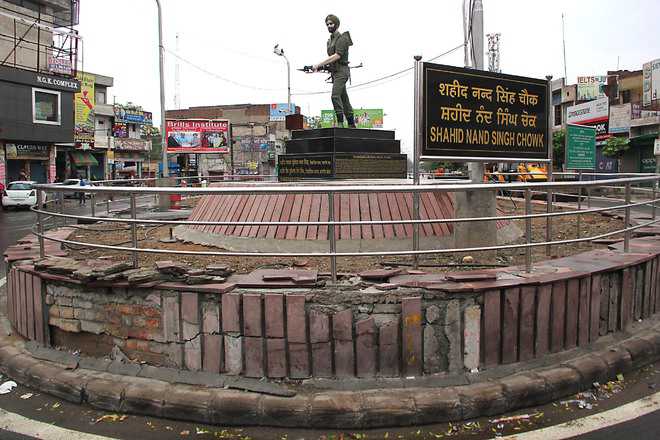
Only a couple of months after it was renovated, Fauji Chowk is again crumbling in Bathinda. Tribune photo: Pawan sharma

Nikhila Pant Dhawan

Tribune News Service

Bathinda, June 30

Shahid Nand Singh Chowk, located in the centre of the city, is in a shambles.Although Fauji Chowk, as it is popularly known, was renovated by a private company only a few months ago, the tiles used for construction have started falling off.As per information, Omaxe Group had taken up the project of renovation and maintenance of the chowk as part of its Corporate Social Responsibility.Omaxe had collaborated with the Bathinda Development Authority to take care of the chowk.Apart from the project, apart from renovation and maintenance, the corporate house was also to procure some obsolete equipment from the Army and display it at the chowk.Chief administrator of the BDA, Sanyam Aggarwal, said, “The project was completely under the CSR activity of the private company. The BDA didn’t pay any money from its funds for its renovation. The proposed beautification of the chowk was not completed and now, it is in a shambles as the tie-up has ended.”He added that the BDA was looking forward to collaborating with either the Hindustan Petroleum Corporation Limited or the Army for taking up the project of beautification of the roundabout.Since 2012, the BDA has been seeking sponsorship from private companies for the renovation and beautification on build-operate-maintain basis of two roundabouts – Fauji Chowk and ITI Chowk.While Fauji Chowk’s renovation was handed over to Omaxe, the work of ITI Chowk was given to Mittal Group.Earlier, Fauji Chowk was asymmetric in shape. It was given an oval shape for smooth flow of traffic around it.As part of the beautification of roundabouts, the BDA had even held an open competition to get these roundabouts designed from various architects in the country.All designs were to be based on the history of Punjab and Bathinda and to depict the rich culture.As part of this project, the sponsoring companies were allowed to display their names on the chowks but were barred from putting up any other kind of advertisement or hoarding.The BDA had planned that initially, the work of the chowk would be allotted for five years, excluding the development period, and this time could further be extended by five years if the work was found to be satisfactory.


Sino-India standoff Old mechanisms have lost efficacy

Sino-India standoff

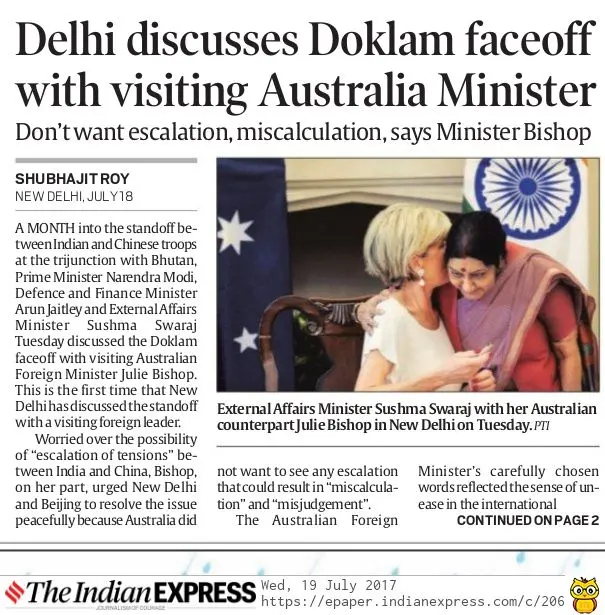
The Foreign Office usually doesn’t hold back its counsel, especially under the Modi government. At least it has never been shy of matching each Pakistani volley with one of its own or reminding Nepal of its place under the sun. In the ongoing eyeball-to-eyeball confrontation on the border with China it has adopted a more restrained position, opening the door partly to a civil dialogue on its resolution. Making the first government statement since the stalemate developed over a month ago, External Affairs Minister Sushma Swaraj spelt out the Indian stand: India wishes to peacefully resolve the issue through dialogue. But for that to happen, both countries must withdraw their troops from the faceoff point on the Doklam plateau. India can hardly withdraw first and lose face not just in the present tactical confrontation but in the entire near neighbourhood as well. This is because the Foreign Office maintains that it was the Chinese who unilaterally tried to change the status quo of the tri-junction point between China, India and Bhutan. China, however, is objecting on a different footing altogether. It finds it unacceptable that Indian troops have entered China through Bhutanese territory. The increasing frequency of Sino-Indian standoffs makes it apparent that the previous agreements to keep the border peaceful and tranquil are losing their efficacy. National Security Adviser Ajit Doval’s visit to Beijing next week should bolster attempts by diplomats to achieve closure on the jostling at Doklam. At the same time, both sides will have to start burning the midnight oil to refurbish the existing understandings on not allowing a border standoff to spill out of control. The list of disagreements between India and China has grown in the past three years. These have not been helped by a media campaign so virulent that Foreign Secretary S Jaishankar had to speak out against it. While the Chinese side has been belligerent, such confrontations do not suit the national priorities of both countries. Simultaneously, South Block may have to rework its foreign policy approach because China has displayed its ability to raise tensions at any place of its choosing on the border.


Major Thapa cremated with full military honours at his native place

Wife of Major Shikhar Thapa inconsolable in her house at Dari near Dharamsala on Wednesday. Photo: Kamaljeet

Tribune News Service

Dharamsala, July 19

Major Shikhar Thapa, who was killed in a fratricide incident in the Uri sector of Kashmir yesterday, was cremated with full military honours at his native place Dari today.The cremation was attended by Minister for Food and Civil Supplies, Transport and Technical Education GS Bali, senior Congress leader and president of state ex-servicemen league Vijai Singh Mankotia and former minister and senior BJP leader from Dharamsala Kishan Kapoor. The local Congress MLA and Minister for Urban Development Sudhir Sharma was not present.The friends who had gathered on the occasion remembered Major Thapa as a quiet but gentle person.Arvind Kumar, father of Major Thapa, who is also an ex-serviceman and  retired teacher, was composed. Serving in the Army was a tradition in the family of Major Thapa. 

Major Thapa cremated with military honours

DHARAMSHALA : In the griefstricken hill town of Dharamshala, a steady stream of hundreds of mourning residents bid a tearful adieu to Major Shikhar Thapa, 29, who was allegedly killed by a jawan after being rebuked over using his mobile phone on forward position.

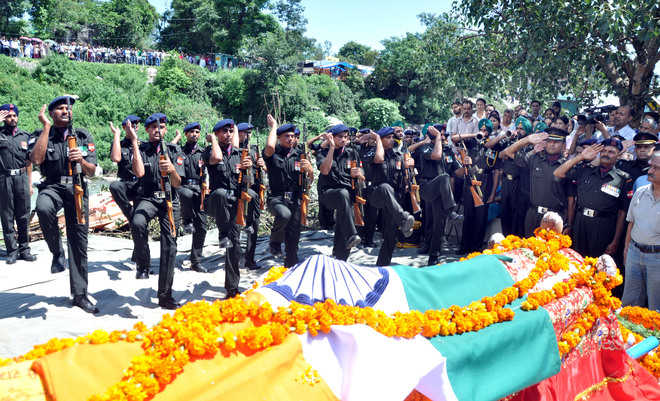
SHYAM SHARMA/HTArmy jawans, officers and relatives take the body of Major Shikhar Thapa, draped in the Tricolour, for his funeral at his native Dari village near Dharamshala on Wednesday.

When Major Thapa’s body, draped in the tricolour, was brought for the last rites, a pall of gloom descended on the locality.

Major Thapa was a 71 Armoured Regiment officer, but was attached to the counter-insurgency unit 8 Rashtriya Rifles (RR) close to the Line of Control in Uri sector of Jammu and Kashmir. Singh’s body was taken by pall bearers in the afternoon to the town crematorium, where he was consigned to the flames with full military honours. Breaking tradition, a large number of women, including the Major’s wife Suvidha and mother Poonam, came to the cremation ground.

Kangra deputy commissioner CP Verma and additional superintendent of police Gaurav Singh laid wreaths on behalf of the state government.

Transport minister GS Bali and former ministers Vijai Singh Mankotia and Kishan Kapoor also paid tributes to the slain officer. Major Thapa is survived by his father Arvind Thapa, 58, a retired soldier, mother Poonam, 55, wife Suvidha Thapa, 29, and a three-month-old son Suvir.


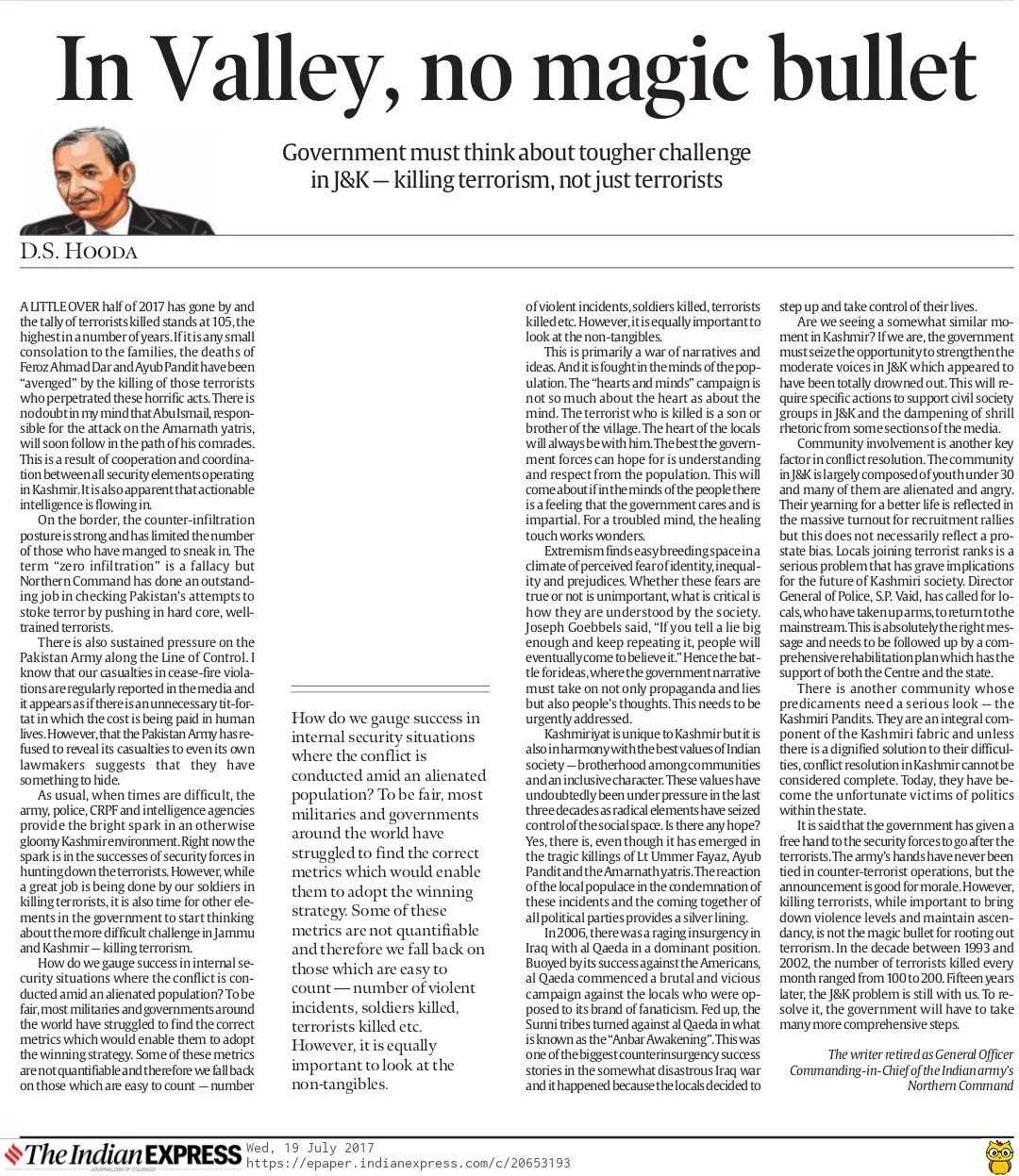
In Valley, no magic bullet by Lt Gen by D.S. Hooda

kashmir encounter, kashmir clash, militants killed, terrorists killed, kashmir terrorists, kashmir militants, pulwama encounter, army, indian express, india news

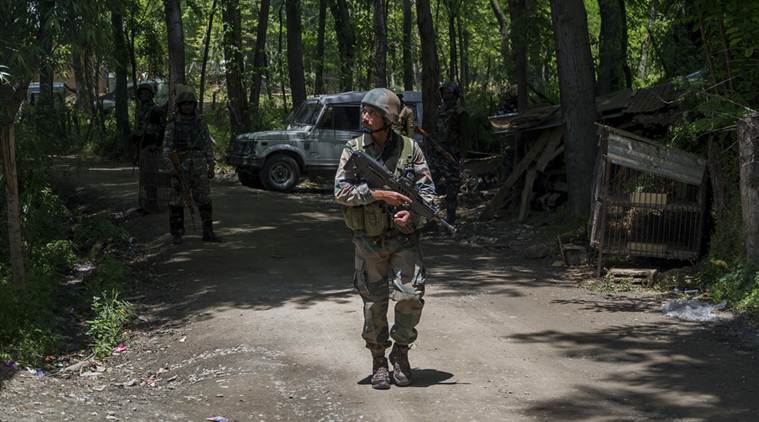
A little over half of 2017 has gone by and the tally of terrorists killed stands at 105, the highest in a number of years. If it is any small consolation to the families, the deaths of Feroz Ahmad Dar and Ayub Pandit have been “avenged” by the killing of those terrorists who perpetrated these horrific acts. There is no doubt in my mind that Abu Ismail, responsible for the attack on the Amarnath yatris, will soon follow in the path of his comrades. This is a result of cooperation and coordination between all security elements operating in Kashmir. It is also apparent that actionable intelligence is flowing in. On the border, the counter-infiltration posture is strong and has limited the number of those who have manged to sneak in. The term “zero infiltration” is a fallacy but Northern Command has done an outstanding job in checking Pakistan’s attempts to stoke terror by pushing in hard core, well-trained terrorists. There is also sustained pressure on the Pakistan Army along the Line of Control. I know that our casualties in cease-fire violations are regularly reported in the media and it appears as if there is an unnecessary tit-for-tat in which the cost is being paid in human lives. However, that the Pakistan Army has refused to reveal its casualties to even its own lawmakers suggests that they have something to hide.

As usual, when times are difficult, the army, police, CRPF and intelligence agencies provide the bright spark in an otherwise gloomy Kashmir environment. Right now the spark is in the successes of security forces in hunting down the terrorists. However, while a great job is being done by our soldiers in killing terrorists, it is also time for other elements in the government to start thinking about the more difficult challenge in Jammu and Kashmir — killing terrorism. How do we gauge success in internal security situations where the conflict is conducted amid an alienated population? To be fair, most militaries and governments around the world have struggled to find the correct metrics which would enable them to adopt the winning strategy. Some of these metrics are not quantifiable and therefore we fall back on those which are easy to count — number of violent incidents, soldiers killed, terrorists killed etc. However, it is equally important to look at the non-tangibles.

This is primarily a war of narratives and ideas. And it is fought in the minds of the population. The “hearts and minds” campaign is not so much about the heart as about the mind. The terrorist who is killed is a son or brother of the village. The heart of the locals will always be with him. The best the government forces can hope for is understanding and respect from the population. This will come about if in the minds of the people there is a feeling that the government cares and is impartial. For a troubled mind, the healing touch works wonders. Extremism finds easy breeding space in a climate of perceived fear of identity, inequality and prejudices. Whether these fears are true or not is unimportant, what is critical is how they are understood by the society. Joseph Goebbels said, “If you tell a lie big enough and keep repeating it, people will eventually come to believe it.” Hence the battle for ideas, where the government narrative must take on not only propaganda and lies but also people’s thoughts. This needs to be urgently addressed.

Kashmiriyat is unique to Kashmir but it is also in harmony with the best values of Indian society — brotherhood among communities and an inclusive character. These values have undoubtedly been under pressure in the last three decades as radical elements have seized control of the social space. Is there any hope? Yes, there is, even though it has emerged in the tragic killings of Lt Ummer Fayaz, Ayub Pandit and the Amarnath yatris. The reaction of the local populace in the condemnation of these incidents and the coming together of all political parties provides a silver lining. In 2006, there was a raging insurgency in Iraq with al Qaeda in a dominant position. Buoyed by its success against the Americans, al Qaeda commenced a brutal and vicious campaign against the locals who were opposed to its brand of fanaticism. Fed up, the Sunni tribes turned against al Qaeda in what is known as the “Anbar Awakening”. This was one of the biggest counterinsurgency success stories in the somewhat disastrous Iraq war and it happened because the locals decided to step up and take control of their lives.

Are we seeing a somewhat similar moment in Kashmir? If we are, the government must seize the opportunity to strengthen the moderate voices in J&K which appeared to have been totally drowned out. This will require specific actions to support civil society groups in J&K and the dampening of shrill rhetoric from some sections of the media.

Community involvement is another key factor in conflict resolution. The community in J&K is largely composed of youth under 30 and many of them are alienated and angry. Their yearning for a better life is reflected in the massive turnout for recruitment rallies but this does not necessarily reflect a pro-state bias. Locals joining terrorist ranks is a serious problem that has grave implications for the future of Kashmiri society. Director General of Police, S.P. Vaid, has called for locals, who have taken up arms, to return to the mainstream. This is absolutely the right message and needs to be followed up by a comprehensive rehabilitation plan which has the support of both the Centre and the state. There is another community whose predicaments need a serious look — the Kashmiri Pandits. They are an integral component of the Kashmiri fabric and unless there is a dignified solution to their difficulties, conflict resolution in Kashmir cannot be considered complete. Today, they have become the unfortunate victims of politics within the state.

It is said that the government has given a free hand to the security forces to go after the terrorists. The army’s hands have never been tied in counter-terrorist operations, but the announcement is good for morale. However, killing terrorists, while important to bring down violence levels and maintain ascendancy, is not the magic bullet for rooting out terrorism. In the decade between 1993 and 2002, the number of terrorists killed every month ranged from 100 to 200. Fifteen years later, the J&K problem is still with us. To resolve it, the government will have to take many more comprehensive steps.

The writer retired as General Officer Commanding-in-Chief of the Indian army’s Northern Command

clip

clip

clip

clip

clip

clip


Cow politics again Substitute talk with action

Cow politics again

Mr Modi’s condemnation of cow-inspired mob violence is significant for its timing and purpose. He went beyond a customary briefing on the eve of a Parliament session to make a spirited speech, parts of which were tweeted for wider notice. The issue he addressed — cow vigilantism — was on the Opposition agenda. Apart from voicing a strong disapproval of activities of gau rakshaks he talked of corruption. The Opposition also plans to raise the issue of CBI raids on the Lalu Prasad family. The PM’s immediate goal therefore appears to be to have a trouble-free monsoon session rather than address the Opposition concerns and reassure the nation on growing communal violence.  Nobody would believe that fringe elements involved in lynching incidents happening in BJP-run states cannot be reined in. It was Mr Modi’s talk of “pink revolution” in the 2014 poll campaign that had started cow politics. Now even though the movement for cow protection has grown into a cottage industry of extortions, it is still not difficult to stop it. The crucial question is: does the BJP dispensation want it to end? The leadership may be weighing electoral benefits of polarisation against the economic cost to two powerful sections of the vote bank — Dalits and farmers. The PM has treated it as a law and order issue and passed the responsibility of curbing cow vigilantism on to states. He needs to send a stern message to the BJP chief ministers, who are rather engaged in a competitive show of love for the cow, giving a long rope to criminals masquerading as gau rakshaks.  The mayhem perpetrated in the name of the cow has its consequences. The Supreme Court has stayed the Central rules to regulate cow trade. Sections of the middle class are offended. Civil society protests like the “Not-In-My-Name” drive have got wider support with international media adversely commenting on the emerging situation. This may have clearly moved Mr Modi to do some damage control (Desh ki chhavi par bhi iska asar pad raha hai). India’s emerging image as a less tolerant, illiberal society may be unacceptable to globalising Indians, here and abroad. A backlash may necessitate a rethink of the BJP strategy.

clip


‘Hovering Angel’, farewell Wing Cdr Mandeep Singh Dhillon died in a helicopter crash during a mercy mission on July 4

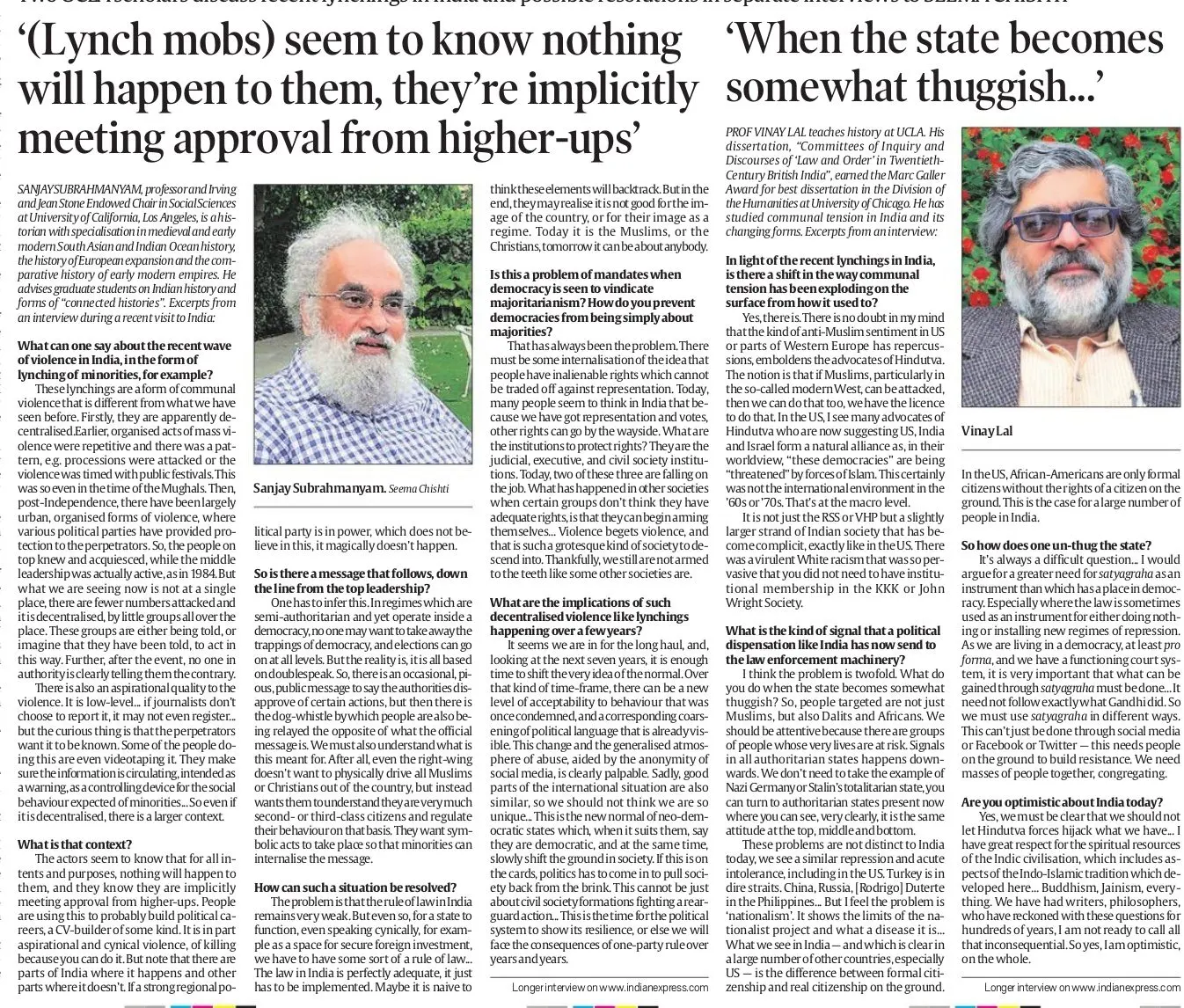
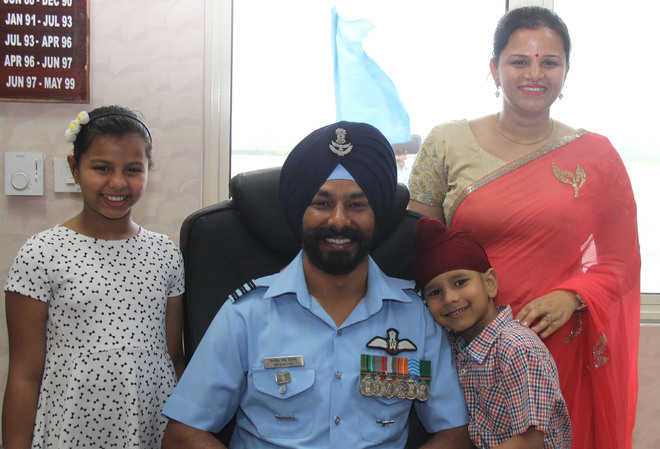
On July 4, three braveheart air warriors of the Indian Air Force led by Wing Commander Mandeep Singh Dhillon, Commanding Officer of the Tezpur-based Advanced Light Helicopter (ALH) unit, met with a tragic end when their helicopter crashed in the hills of Arunachal Pradesh.Co-pilot Flight Lieutenant PK Singh and Sergeant RY Gujar, the flight gunner, were among the other aircrew members involved in the mission involving evacuation of the landslide-hit civilians.A constable from Aruna-chal also died in the crash.On the ill-fated day, the crew reportedly evacuated 169 civilians to safety.(Follow The Tribune on Facebook; and Twitter @thetribunechd)For “Mandy”, as Wing Commander Dhillon was fondly known, saving lives was intrinsic to his life and profession. Never the one to shy away from volunteering on such mercy missions, his grooming came about at this very ‘Hovering Angels’ unit — his first operational unit and unfortunately, his last.On a hill-flying mission in the Tawang sector last year on May 19, upon learning that a number of Army jawans were injured in a vehicle accident, Mandy volunteered to evacuate them. In a series of sorties, he evacuated 13 soldiers from Jaswantgarh to Khirmu, a helipad some distance away.With nearly 4,000 hours of flying experience, including 1,200 captain hours on the ALH alone, Dhillon was one of the highly experienced helicopter pilots. Air Vice Marshal Manavendra Singh, erstwhile Commodore Commandant of ‘Hovering Angels’, was Dhillon’s first Commanding Officer in 2000. He recalls, “Mandy was one of the very bright and upcoming officers. In no time, he achieved his operational status.” “Besides being a thorough professional, he was one of the most loved persons in the station. What a great loss!” said Air Commodore KVR Raju, Air Officer Commanding, Tezpur.A second-generation IAF officer, Mandy Dhillon, who hailed from Patiala, was destined to follow in his father’s footsteps. From being a cadet at the Rashtriya Indian Military College to the NDA, followed by the Air Force Academy, it was only natural for him to opt for the helicopter stream.“Perhaps he wanted to add to the legacy of his father, Sqn Ldr PS Dhillon (retd), who was a Flight Engineer in Mi-4 helicopters in 1970s,” said Group Captain PB “Papa” Nair, Dhillon’s NDA coursemate. An avid sportsperson and an excellent cross-country runner from his school days, Dhillon imbibed much of his athletic prowess from his father, who was also a national coach in athletics.From the initial sense of shock to denial, slowly but surely, the ALH unit Dhillon once nurtured for over a year is coming around, as the pilots have once again taken to the skies in their angelic missions of saving lives.Recalling their life together in their near 14 years of matrimony, his wife Prabhpreet Kaur Dhillon describes her husband as someone who was very compassionate and helpful. Having grown up herself in the Air Force way of life (her father retired as an Air Commodore), Prabhpreet was well acquainted with the high-risk profession of her pilot husband.“He would always volunteer for such rescue and relief missions ahead of others. He just wanted to help others in every possible way and also performed ‘seva’ in langars at the gurdwara wherever possible,” she recalled. “He was a loving husband and a doting father to our daughter Sehaj and son Eshar.” On that ill-fated day, she wanted her husband to take their daughter to the Station Medicare Centre as she was running fever. “But he said he would not be able to, as he had to go for a flood relief mission. And, in the process of saving other lives he ended up losing his own life,” said Prabhpreet, wistfully remembering her last conversation with him.Despite her profound loss, Prabhpreet, as the first lady of the unit, was seen consoling family members of others who had lost their near and dear ones in the tragic accident.“Her courage in the face of adversity and personal tragedy was both astounding and admirable,” said Air Cmdr Raju.The “antim ardas” is being solemnised at their residence in Patiala.(Contributed by Smriti Rana Singh, a former Tribune staffer)


MAJ GEN SATBIR SINGH MUST STOP AGITATION AT JM AND TAKE LEGAL COURSE FREE OF COST–PART IV

medals


It is high time that Maj Gen Satbir Singh must stop his business show for own propaganda at Jantar Mantar. He must take the legal course as continuous  agitation at Jantar Mantar has already ruined the reputation of Ex-servicemen. The Public has already comparing this agitation with Trade unions,thus loosing all the credibility and respectability  and sympathy from the Public.
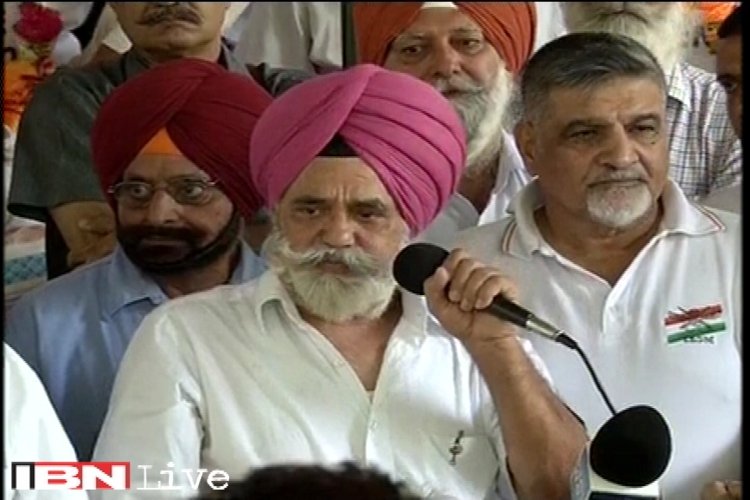
orop_breaking_pranay Ram-Jeth hqdefault


Today Maj Gen Satbir is harping on and stating that what govt has given is not OROP. If so he should come out with definite  points and bring out the deficiencies  and anomalies of the Pay/Pension Structure. We are doubly sure that Maj Gen Satbir has nothing calculated else he should circulate to all veterans or email to all , so ensure support from ESM Community

What he has been doing i Slogans at Jantar Mantar against the Govt and even involved in mimickery  of the RM Arun Jately and Honorable  PM Narinder Modi like a Joker acting. These reports have gone to the concern Ministers through vigilance which is keeping an 24 hours eye  and which is the root cause of their anger and holding up and depriving the ESM from the legitimate  balance issues of OROP.

Maj Gen Satbir is damaging the entire  ESM community for his own self interest of Political ambition and to get himself elected as Chairman of IESM ( Indian Ex-Servicemn Movement) . 

The last but not the least any mature  ESM with pride will advise him to stop his acting School Drama at JM and get on to the business of taking up the case in the Court.  

There were Volunteers  Advocate more than 21 who had offered free services to fight the case of OROP in court including Shri Ram Jethmalani, Than where  is the delay ,Maj Gen Satbir must stop burning fire at JM which is costing Rs 12000/- per Day and now 80% of ESM do not want that the  agitation to Continue and it will  also stop misusing of the donated funds by the ESM.

Even if the advocate had to be paid than there  are more than RS 2 crore collected in the bank and has 25 Lakhs in the new Account opened by Satbir. The huge amount collected  from donations is the root cause and was earlier and during JM initial agitation as Maj Gen Satbir cannot afford to apart away from it.  He has only used ESM and other organisation and left them as they wanted account of collections at JM. Till today he has not done even a single welfare work of ESM in any State or assisted any Martyrs  families or widows .
A Col Khera

Col Charanjit Singh Khera

Ex-Media Adviser UFESM

Jantar Mantar

Untitled


SUPREME COURT RULING

An imp msg received from Shri H. I. Jani, ( AGM rtrd. and Asso. Activist) I9S AS BELOW.
.
FOR INFORMATION OF ALL PENSIONERS
Forwarded as received:-
OROP.. LEGAL HELP.. 
Xxxxxxxxxxxxxxxxxxxxxxxxx 
Mr Dushyant Dave, President of Supreme Court Bar Association has said that all 21 Lawyers of the SCBA are ready to represent the Veterans in SC on OROP Pro- Bono (Pro-Bono means without cost to the applicant)
THIS IS AN IMPORTANT MESSAGE IN RETIRED BANKERS GOOGLE BLOG 
Dear friends,
It is surprising that a land mark judgement delivered by the Supreme Court of India on 01 07 2015, Civil Appeal no. 1123 of 2015 has gone unnoticed and except for a brief letter from Shri S R Sen Gupta to IBA, no other union has taken any steps. The salient features of the judgement:
1. The bench has authoritatively ruled that Pension is a right and the payment of it does not depend upon the discretion of the Government. Pension is governed by rules and a Government Servant coming within those rules is entitled to claim pension.
2.The judgement has recognised that the revision of pension and revision of pay scales are INSEPARABLE.
3.The bench has reiterated that on revision the Basic pension cannot be less than 50% of the Basic Pension in the minimum of the Pay Band in the revised scale corresponding to the pre-revised scale.
4.The government CANNOT take a plea of financial burden to deny legitimate dues of the pensioners.
5.The Government SHOULD AVOID unwarranted litigation and not to encourage any litigation for the sake of litigation.
6. When pension is upheld to be a right and NOT A BOUNTY, as a corollary to the averment that revision of pension and revision of pay scales are INSEPARABLE, upgradation of pension is also a RIGHT AND NOT A BOUNTY.
THE JUDGEMENT IS BASED ON THE DECISION ON D S NAKARA CASE.
The above details are available in the latest issue of Canara Bank Retired Officer’s Association Circular no 3/2016 dated 1st August 2015.
The judgement is very clear and I wonder how no one has noticed the important aspects and why no one has taken up the matter with the IBA/Govt.
Why no one has reacted to the judgement is surprising and perplexing.
While agitation is on why can’t we take recourse to court also as Supreme Court advocates are offering their services. One ruling by SC that govt can’t deny pension for lack of funds regarding OROP every year and VRS case.
Dear Maj Gen Satbir,
Are you aware of this decision by the Hon Supreme Court ? 
Can you have it evaluated n share your interpretation with the anxious Veterans

Govt speeds up process to procure 1.85 lakh rifles

New Delhi, July 9

Weeks after the Army rejected an indigenously built assault rifle, the government has decided to speed up the procurement process for over 1.85 lakh high-calibre guns to replace the ageing INSAS rifles.The Army has been pressing for fast-tracking the supply of the 7.62×51 mm guns and particularly sought immediate procurement of at least 65,000 rifles to enhance its fire power in border areas.Already nearly 20 gun manufacturers, including a number of foreign entities, have responded to the request for information (RFI) for the assault guns and steps are being taken to speed up the procurement process, official sources said.Last month, the Army rejected the 7.62×51 mm guns built by the state-run Rifle Factory, Ichapore, citing poor quality and ineffective fire power. The Army is badly in need of the assault rifles and the contract for the guns is likely to be finalised in next few months. Sources said there were “excessive number of faults” in the guns manufactured by the rifle factory and “complete redesigning of the magazine” was needed. — PTI


Defence board initiates work of renovation at Fauji Chowk

Nikhila Pant Dhawan

Tribune News Service

Bathinda, July 7

A week within Bathinda Tribune highlighted the bad condition of Shahid Nand Singh Chowk, the Defence Services Welfare Board took the initiative to renovate it. The roundabout is popularly called Fauji Chowk.Deputy Director, Defence Services Welfare Board, Bathinda, Colonel Sarabjit Singh Sangha, said, “We have a provision under which we can renovate and reconstruct roundabouts in the city, which we do preferably before Republic Day and Independence Day celebrations.“Recently, a heavy vehicle rammed into the roundabout due to which several red sand tiles started falling off. We took the initiative before the Independence Day celebrations,” he said.He added that since this time the renovation didn’t need much money, the DSWB spent from its own funds.“If the renovation and maintenance had required more funds, we would have written to the Deputy Commissioner for it,” he said.The Bathinda Development Authority had handed over the repair and maintenance work of Fauji Chowk to Omaxe Group, which was also to beautify it as part of its corporate social responsibility project.All repair and maintenance work done at the roundabout was undertaken entirely by private firms and no money was spent by the BDA, clarified the BDA chief administrator Sanyam Aggarwal. As the project deal with the previous private sponsors is over, the BDA is looking for a sponsor, possibly Hindustan Petroleum Corporation Limited or the Army. After holding a competition to get the city’s roundabouts designed by various architects from across the country to display the history of Punjab and Bathinda and depict the rich culture, it had handed over the build-operate-maintain project of Fauji Chowk to Omaxe and ITI Chowk to Mittal Group.


RESPONSE OF VETERAN FOR MAJ GEN SATBIR SINGH MEDALS

from: Col WS Thakur <wasitcomm@yahoo.com>
to: “sanjhamorcha303@gmail.com” <sanjhamorcha303@gmail.com>
Dear Veterans,
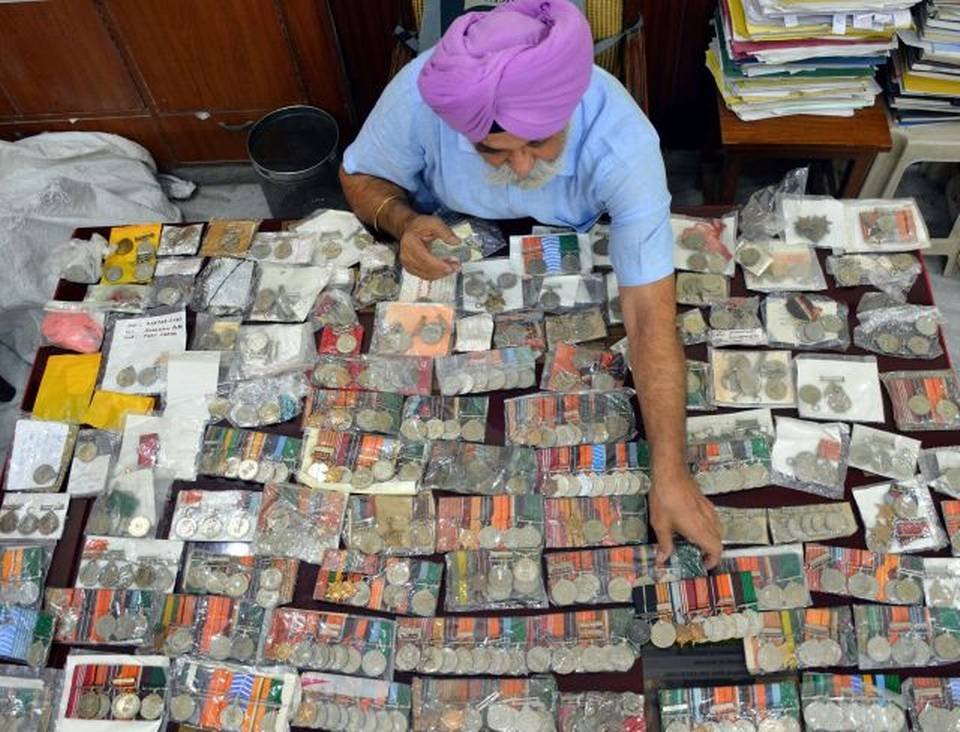
No matter how much we beg for our medals, we will never see them again in this life.  They belong to our  God-appointed CHAIRMAN.
 
Nor will we ever have a say in calling off His Tamasha at JM no matter that it is being enacted in our name, to our detriment and with our money whose accounts cannot be disclosed to us. 
No law or court matters to Him and hijacking the recent HC order, he has already pre-elected himself as Chairman IESM.  Nothing will ever get Him off our back till his cherished dream of a high political office is realised.
Best regards.
Wasit
Untitled
from: col dinesh nain nain <coldineshnainoffice@gmail.com>
to: Col WS Thakur <wasitcomm@yahoo.com>
cc: “sanjhamorcha303@gmail.com” <sanjhamorcha303@gmail.com>,
Satbir Singh <satbirsm@yahoo.com>,
Ravindra Pathak <raviwarsha@gmail.com>,
Col Anil Kaul <kaulanilvrc@yahoo.co.in>
Col Thakur sir,
the medals are govt property and if the same are not returned it amounts to crime.report can be done against people involved in not returning medals.
i believe 28000 medals were collected in 2008.out of which 22000 medals were returned  to honorable president remaining approx 6000 medals of veterans should e immediately returned with details of all medals fate ac comply.more details can be given by their chairman en kadiyan sir
jai hind
Col Dinesh Nain