Sanjha Morcha

India to buy 145 howitzers from US firm for `5k-crore

NEW DELHI: The ministry of defence on Saturday cleared India’s biggest artillery gun purchase since the Bofors deal three decades ago. It will import 145 ultra-light howitzer artillery guns from BAE Systems at an approximate cost of $750 million (`5,100 crore) for the newly-raised Mountain Strike Corps.

The decision was taken at the meeting of the Defence Acquisition Council (DAC), which met after a gap of three months and discussed 19 proposals, among them new schemes worth `28,000 crore, a top source in the DAC said.

The proposals cleared by the DAC are a balancing act between fast-tracking delayed procurement of defence equipment and the government’s flagship programme ‘Make In India’ that aims at giving a fillip to indigenous production.

The first batch of 25 guns will be delivered by the US-based BAE Systems in ready-to-use condition within six months of signing a contract. The remaining 125 will come in a knock-down condition for which a facility for “assembly, integration and testing has been set up in India,” a ministry official said.

At the same time, the Dhanush, an indigenous replacement for the 155 mm Bofors artillery gun, will go into production soon after three guns are handed over for testing sometime next week. “Three guns will be handed over by June 30 for user exploitation and three more by the end of September,” a senior ministry official said. He added the government has given bulk production clearance (BPC) for producing 18 more Dhanush guns. The Ordnance Factories Board will decide on where these will be produced, based on trials. “The DAC noted that the Dhanush had made satisfactory progress,” he said.

Former Army chief Gen VP Malik (retd) said the decision to procure ultra-light guns and start producing the Dhanush will “fill a major deficiency” in the artillery arsenal. “These are important steps. They have taken a long time. Let’s hope there are no further delays,” he told HT from Panchkula.


India fails to get into nuclear club NSG won’t make an NPT exception

India fails to get into nuclear club
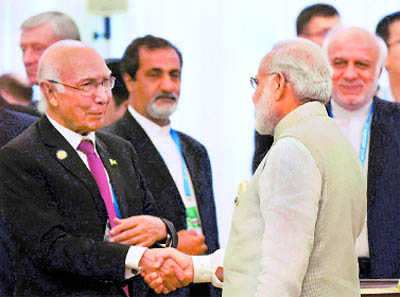
PM Narendra Modi with Sartaj Aziz, Pakistan PM’s Adviser on Foreign Affairs, at the SCO Heads of State Council meeting in Tashkent. PTI

Simran Sodhi

Tribune News Service

New Delhi, June 24

In an embarrassment, both at the diplomatic and political level, India’s bid for membership to the Nuclear Suppliers Group (NSG) was today rejected. At the end of the two-day plenary meeting of the NSG in Seoul, the nuclear club made it amply clear that it was in no mood to make an exception for India.The NSG declared its “firm support” for the “full, complete and effective” implementation of the NPT as the cornerstone of the international non-proliferation regime. India, in the meantime, pointed a finger at one country in particular which ‘persistently created procedural hurdles’.(Follow The Tribune on Facebook and Twitter @thetribunechd) China had made its opposition to India’s entry into the NSG quite clear publicly. In various statements, it had stressed on the importance of the Non-Proliferation Treaty (NPT). India is not a signatory but had hoped that given its clean record in proliferation, the NSG members would make an exception.Pakistan, on its part, submitted its membership application to the NSG a week after India did. That gave China another case to argue that India and Pakistan’s entry be considered together. But China was not alone in its opposition. Turkey, New Zealand, Austria and even India’s BRICS partner Brazil had reservations on India being let into the NSG. Switzerland also made a U-turn. Prime Minister Narendra Modi had visited the country recently and apparently managed Swiss support for India’s bid. “We understand that despite procedural hurdles by one country, a three-hour discussion took place last night on the issue of future participation in the NSG,” MEA official spokesperson Vikas Swarup said.


Guv lauds IAF help to state

Guv lauds IAF help to state
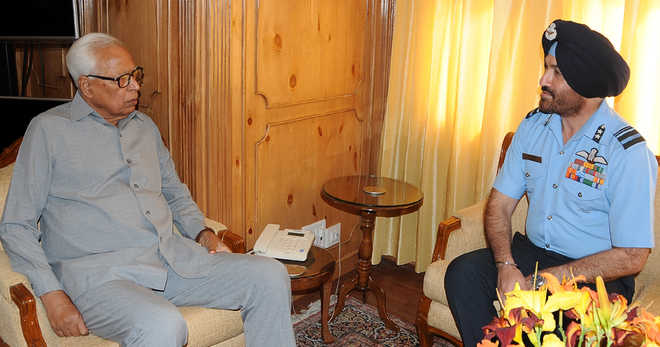
Governor NN Vohra with Air Vice Marshal GS Bedi in Srinagar on Thursday. A Tribune photo

Tribune News Service

Srinagar, June 23

Air Vice Marshal GS Bedi, Air Officer Commanding, Jammu and Kashmir, called on Governor NN Vohra here today and briefed him about various important matters relating to the role which the IAF has been playing in the state. The Governor lauded IAF’s prompt and valuable support on all occasions.


The How and Why of Normalcy in Kashmir:::: Lt Gen Syed Ata Hasnain

The How and Why of Normalcy in Kashmir

Having spent many years in Kashmir in various capacities in the hinterland from Avantipur and Srinagar to the LoC at Uri I never  the enjoyed the Valley the way I did as a child in 1956.

With my parents at Jammu’s Damana Cantt that year, we drove to Srinagar the only way then known, a public transport bus. Staying at the un-walled Badami Bagh, the delight was in the evening walks to Adoos whose cold coffee still lingers in my taste buds. The boulevard – that is what I presume it was – was awake till late and life was a breeze. The shikarawalas sang songs while paddling their oars; and there was cinema and salted peanuts just like at any other hill station. I never went back to that Kashmir again except very briefly.

Today, after 26 years of internal turbulence, the search for happiness in Kashmir ends very early. In fact it hardly begins. Unless you are booked at the high-end hotels like Lalit Grand or Taj Vivanta, cocooned in the hillsides of the Zabarwan and enjoying only the weather and the view and nothing much beyond. Within Srinagar, the unpredictable law and order situation is a fun-spoiler. Reaching the traditional tourist spots of Gulmarg and Pahalgam too is fraught with unpredictability because some anti-terror operation may be on or an ambush could have taken place on a BSF bus. If you manage to stay at an Army facility, the checking and the curfew timings for entry and exit will upset you no end.

Many who are stakeholders in Kashmir’s return to peace like to evaluate their own parameters on what peace means. Some prefer the term normalcy to the rather utopian sounding ‘peace’ because they do not think Kashmir was ever at war, or remains in any form of conflict. No need to debate the semantics because most of us would agree that much of J&K has not been normal for the last twenty six years or so. Many of us in the Army do feel that we have been in a war-like situation for all these years. The term is ‘proxy war’ and I too have been brought up on this belief which I still hold dear.

For a tourist, the understanding of normalcy would probably dwell on predictability; the ability to enjoy the Valley’s serene beauty in the company of loved ones, away from the din of Delhi and Gurgaon, without having to be confronted with shut-downs (bandhs) or cancellation of flights. Gulmarg and Pahalgam, Srinagar’s boulevard or the Nagin houseboats can’t be enjoyed if one has to keep Plan B, C and D ready to escape awkward situations.

For a taxi driver, tourist operator or restaurant owner normalcy means tourists around the year and not restricted to the season. Tourists are carefree people. They like to do things they would normally not do while at their home stations. They like to take walks at awkward times, sit beside the lake and croon a few numbers, sip coffee at midnight in a brightly-lit coffee shop or eat aloo paranthas at 2 AM; some would love to even take in a cheap-thrill Bollywood movie, something they wouldn’t touch with a bargepole otherwise. Unfortunately, the proxy war has taken out the characteristic fun of a hill station. Forget tourists, it is usually difficult to find a smiling face in the local crowds. Happiness seems to be eluding its people and the new generation used to the gun-and-checkpoint culture is brooding in this unhappiness.

I do remember that on February 6, 2011 a young man in Maidan Tsogul near Handwara lost his life because he preferred to run when challenged by an Army ambush at 9.30 PM instead of stopping and identifying himself. It was a regretful case because all that the young man was doing was meeting his sweetheart in an orchard; a huge risk no doubt, given the environment. Where should young people meet and express love in a world today in which awareness is unbounded due to social media and the Net.

The awkwardness which prevails in the psyche of the young Kashmiri today is that he is technically modern, with access to information from all over the world. He is not necessarily radicalised as many would be wont to thinking. However, how does the modernity of outlook take shape? There are no outlets for entertainment, no burger joints which are open in the evenings and no coffee shops – the natural outlets for steam within the coffee and within the hearts. During the infamous Emergency of 1975-77, one of the first casualties was Delhi’s iconic Coffee House at the place where the run-down Palika Bazaar stands today. It was the place where intellectuals sat and let out all their steam against the system, the government and against probably God himself. It was Delhi’s happening place which gave much happiness to people until it was torn down. If Kashmir needs an outlet to vent frustration of the people, it is coffee, tea and kahwa which must find place in its landscape at ‘nukkads’ and at Residency Road. I now hear something like this is emerging, not in a transformative but in a slow way. The emboldening entertainment from stone-throwing can then perhaps be stopped.

Mercifully, one does hear of an odd seminar being organized at Srinagar but the feelings are yet tentative and hesitant. Many an expert is consulted about the safety of organizing these. The wonderful facility of the Sher-e-Kashmir International Convention Centre (SKICC) must unhesitatingly host events of a cosmopolitan nature, protests from the separatists notwithstanding. Some years ago Delhi’s outstanding choir, the Capital City Minstrels, were invited by the then-Chief Minister to perform at Gulmarg and the SKICC. The event was so poorly advertised that only a few rows could be filled, and Maxell Pereira and his excellent choir could hardly find appreciation. The German Ambassador to India organized the Zubin Mehta concert at the Nishat Garden a few years ago but the Separatists got the better of the event by organizing their parallel event based on the misplaced notion that local music and song were being endangered. Speak to former Governor SK Sinha and he will tell you of the show by the Pakistani rock group Junoon on the banks of the Dal Lake, and how it was appreciated by the young public of Srinagar and other towns.

The Sher-e-Kashmir International Convention Centre must be used to organize world-class conferences at Srinagar to bring it on the international map of intellectual activities.

Kashmir’s youth needs to get out of the well in which has been been stuck. Frustration is rife, when information of the world is at your fingertips but the occasion and opportunity eludes you. Many believe and preach that cosmopolitanism is against the tenets of Islam. Yet, nowhere does Islam ban entertainment. A casual search of the Net reveals the existence of cinemas in Tehran, Dubai, Djakarta and Kuala Lumpur. Indeed they do in Pakistan too. Is there any reason why cinema should not return to Kashmir? All these cities, where people adhere to the Islamic faith, are rich in café culture contributing to the basic desire of their nationals to do what most human beings do; go out as families or with friends and sit around a table of food or steaming cups of some beverage or the other.

Good weather in Kashmir, especially around the spring season can see hundreds of families with their picnic baskets descending on picnic spots. The desire for fun and togetherness in outings is inherently there in every Kashmiri; and the ‘mehmendari’ they are used to, can even give some good Punjabis a run for their money. When a people have an unnatural environment which stymies their natural social psyche, the effect is even more frustrating.

So even as security agencies debate parameters of normalcy by comparing figures of grenade blasts and terror acts, they need to realise that security considerations go beyond physical limits. To secure a people you also need to create and promote an environment of happiness for them to thrive in. Nothing artificial; just see the desire of the people and combine what comes naturally to them from their roots. Don’t ever mar the happiness in families, for if you do so the memories would be difficult to detach.

Given the temper and anger in the streets, and the increasing tendency on the part of the public to come to the assistance of the terrorists once encounters begin, this advice will be criticised. But we seem to be hugely short on ideas on how to change the tempo in the Valley. We cannot await the end of street confrontation to commence initiatives towards changing the narrative, and we cannot be held hostage by Separatists who wish to play the religious card and keep a society from progressing. It’s a a difficult task for the government of the day: to change the concept of governance from the simple ‘roti, kapda, sadak, makan’ to something more transformational which will usher more happiness among the common people.

For the professional security provider, and for the political leadership perhaps, here is food for thought. The attempts to establish normalcy in Kashmir must have a concept that is commonly understood by both. Discussing this in only Unified Command Meetings is not going to evolve narratives that are well-understood. It has to be through brainstorming at the highest level and frequent meetings between the core agencies. As prime professionals in the game of counter-violence, perhaps the Army needs to take this more professionally, war-gaming it at all its premier institutions and giving the Nation the results of all its nurtured military intellect.




Indian Reserve Battalion to be named after Maharana Pratap: Rajnath

Indian Reserve Battalion to be named after Maharana Pratap: Rajnath
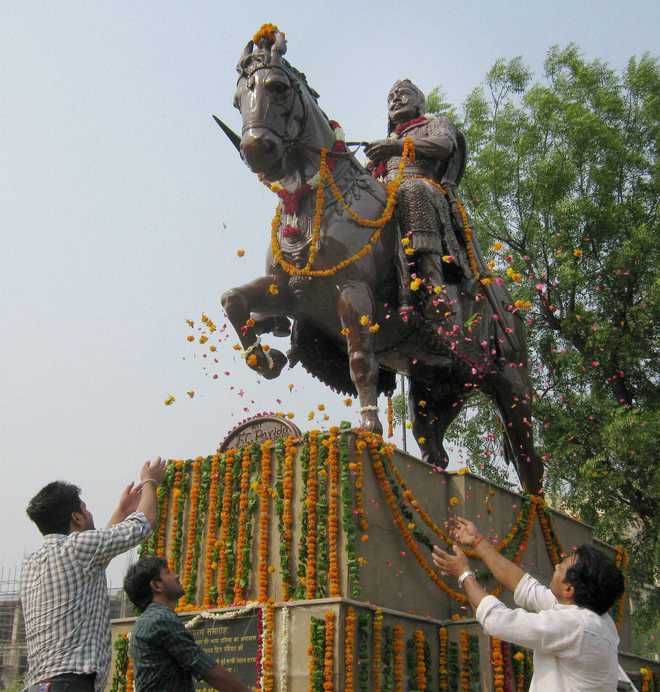
People pay tribute to Maharana Pratap statue on his birth anniversary in Gurgaon. PTI file photo

Udaipur, June 8

A new Indian Reserve Battalion in Rajasthan will be named after Maharana Pratap, the great warrior of Mewar region, Union Home Minister Rajnath Singh has said.The Home Minister, who is on a two-day visit to the state, made the announcement at a programme here yesterday.Chief Minister Vasundhara Raje had made a request to Singh in this regard.The Indian Reserve Battalion will be named after Maharana Pratap, a Rajput ruler who had fought against the Mughals and never bowed before them, Singh said.The government will make sure that his contribution is highlighted, he said.The Union minister also announced setting up of a global centre for counter terrorism at Sardar Patel University of Police, Security and Criminal Justice at Jodhpur and said the process of police modernisation will be expedited. — PTI


Three-time Everest climber wants to scale highest peaks of all continents

JAMMU: Ecstatic after scaling Mount Everest for the third time, Lieutenant Colonel Ranveer Singh Jamwal says he is targeting to scale all the highest peaks of the seven continents.

Lt Col Jamwal is the first army officer from Jammu and Kashmir and third in India to achieve the feat for a third time. He had first scaled the world’s highest peak at 8,848 metres on May 25, 2012 and the second time on May 19, 2013.

Lt Col Jamwal belongs to Badhori village in Samba district.

“Till date, out of the seven tallest peaks, I have scaled five. Till now, I have scaled Mount Everest in Asia, Aconcagua in South America, Mount Kilimanjaro in Africa, Mount Elbrus in Europe and Mount Kosciuszko in Australia,” said Jamwal.

“Now, two tallest peaks are left to be scaled which includes Mount Vinson in Antarctica and Mount McKinley in North America,” he says enthusiastically.

“The total expedition cost for Mount Vinson in Antarctica will cost at least `25 lakh and I am looking for sponsors. Usually it costs around five lakh to scale other peaks, but Antarctica being the toughest and most treacherous, the expenses are quite high. I hope that in the coming December, I am able to scale that peak too. While I will scale Mount McKinley in next June,” said Jamwal.

Asked if he loved mountaineering since childhood, Jamwal says, “I only picked up mountaineering after joining the army. After joining the mountaineering course, I felt I can scale mountains. Whatever I am today, is because of the army. I joined army as a sepoy.”

Jamwal joined the army on October 24, 1994 as a Sepoy in the Dogra Regiment (15 Dogra) but cleared the officer Examination (Army Cadet College) and joined Indian Military Academy in 1998. He got commissioned into 11 JAT regiment in June 2002.


Salaries, pensions up 23 % Not enough, say workers’ unions, call for nationwide strike next week

Girja Shankar Kaura

Tribune News Service

New Delhi, June 29

The Centre today approved recommendations of the 7th Pay Commission on pay and pension which will boost consumption and economy by putting extra disposable income in the hands of the 47 lakh Central Government employees and 53 lakh pensioners.The decision to implement the recommendations, including 23.5 per cent  hike in pay and pension, was taken at a meeting chaired by PM Narendra Modi. Briefing the media, Finance Minister Arun Jaitley said the Cabinet, however, deferred the revision of allowances. Calling the hike “inadequate”, workers’ unions have decided to start protests from next week.A panel headed by Finance Secretary Ashok Lavasa would look into the pay panel recommendations in that regard as there was resentment among employees over the suggestions to scrap four allowances. Till then, existing allowances would continue.In January, the government set up a panel headed by Cabinet Secretary PK Sinha to process pay panel recommendations. The commission had recommended a 23.5 per cent increase in pay, pension and allowances under a “business as usual” scenario. It envisaged a hike of Rs 39,100 crore in the pay bill, Rs 29,300 crore in allowances and Rs 33,700 crore in pension, taking the total financial impact for 2016-17 to Rs 1.02 lakh crore.With allowances deferred, the burden on the exchequer would be Rs 72,800 crore on account of salaries and pension and over Rs 12,000 crore on account of arrears, aggregating to Rs 84,933 crore.Of this, Rs 60,608 crore would come from the General Budget and Rs 24,325 crore from the Railway Budget.The recommendations will be effective from January 1, 2016. The Finance Minister said, “The employees had to wait for 19 months for the implementation of the 5th Pay Commission and for 32 months in case of the 6th Pay Commission. This time, the 7th Pay Commission recommendations are being implemented within six months from the due date.”The Cabinet also decided that pay and pension arrears would be paid in the current financial year (2016-17) itself, unlike in the past when parts of arrears were paid during the next financial year.The minimum pay has been raised from Rs 7,000 to Rs 18,000 per month, while the maximum pay has been capped at Rs 2.5 lakh per month. The starting salary of a newly recruited employee at the lowest level will now be Rs 18,000, while it will be Rs 56,100 for a freshly recruited Class I officer. This reflects a compression ratio of 1:3.12 signifying that pay of a Class I officer on direct recruitment will be three times the pay of an entrant at lowest level. For the purpose of revision of pay and pension, a fitment factor of 2.57 will be applied across all levels in the pay matrices. The maximum pay is set at Rs 2.25 lakh per month for apex scale and Rs 2.5 lakh per month for Cabinet Secretary and others at the same pay level (as against the current Rs 90,000 per month).The report had recommended replacing the present system of pay bands and grade pay with a new pay matrix. Separate pay matrices have been drawn up for civilians, defence personnel and Military Nursing Service. The principle and rationale behind these matrices are the same.The Cabinet approved further improvements in “defence pay matrix” by enhancing “index of rationalisation” for brigadiers and providing for additional stages for Lt colonels, colonels and brigadiers to bring parity with their Combined Armed Police Forces counterparts. The lump sum ex gratia payable in respect of civil and defence personnel has been enhanced from Rs 10-20 lakh to Rs 25-45 lakh. The rate of Military Service Pay has been revised from Rs 1,000, 2,000, 4,200 and 6,000 to Rs 3,600, 5,200, 10,800 and 15,500, for defence personnel.


Govt okays 7th pay commission report1 cr Central govt staff and pensioners to benefitRs 18,000 minimum pay, up from Rs 7,000; maximum hiked from Rs 90,000 to Rs 2.5 lakhRs 84,933 cr additional burden on the exchequer for 2016-17; this includes arrears for 6 months  

  • For a freshly recruited Class I officer, pay will be Rs 56,100
  • Gratuity ceiling up from Rs 10 to Rs 20 lakh, will increase by 25% whenever DA rises by 50%
  • The hike to be implemented  from January 1, 2016
  • Increment rate retained at 3%
  • Present system of pay bands and grade pay done away with
  • Status of an employee, hitherto determined by grade pay, will now be determined by the level in pay matrix
  • Separate pay matrices drawn up for civilians, defence personnel and for Military Nursing Service
  • Further improvements in the Defence Pay Matrix approved by enhancing Index of rationalisation for Level 13A (brigadier) and providing for additional stages in Level 12A (Lt colonel), 13 (colonel) to bring parity with Combined Armed Police Forces counterparts
  • Ceiling on House Building Advance to be raised from Rs 7.50 lakh to Rs 25 lakh

RSS affiliate Mazdoor Sangh unhappy too

  • New Delhi/Chennai: The Confederation of Central Government Employees on Wednesday rejected the pay hike announced by the government and threatened to go on a strike next week, a decision which got support from the central trade unions. The confederation said the pay hike approved by the Cabinet on the 7th Central Pay Commission’s recommendations was “not acceptable”. RSS affiliate Bharatiya Mazdoor Sangh (BMS) and other trade unions also rejected the hike, saying this was the lowest increase in the past 70 years that would increase disparity between the minimum and maximum pay. agencies

clip


Ex-servicemen burn Pak national flag

Ex-servicemen burn Pak national flag
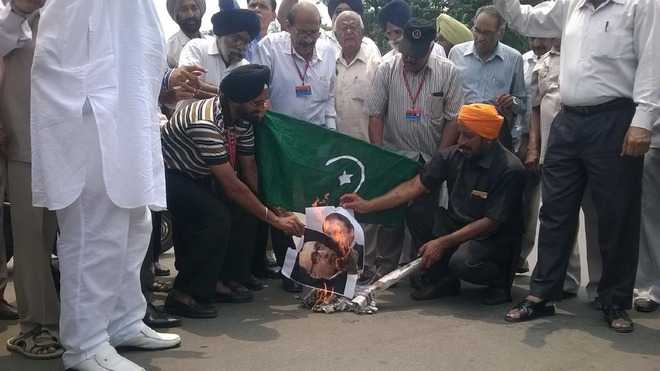
Ex-servicemen burn the national flag of Pakistan in Ambala on Monday.TRIBUNE PHOTO

Ambala, June 27

Ex-servicemen under the banner of the Ex-servicemen Welfare Committee, Ambala, today held a demonstration and burnt the national flag of Pakistan to mark their protest against the attack on a CRPF convoy in which eight security personnel were killed in Pampore.Subedar Attar Singh Multani, president of the committee, said, “For how long do we keep mourning our soldiers? We request PM Narendra Modi to take the right decision and direct the Indian forces to attack all militant camps being run in Pakistan.” — TNS


India’s fiasco at the NSG Simran Sodhi

We owe it to ourselves to take a hard look at the way we conducted ourselves, diplomatically and politically in this entire NSG saga. We have ended up looking rather indigenous, a little immature and a bit desperate to grab things. What about some quiet diplomacy

India’s fiasco at the NSG
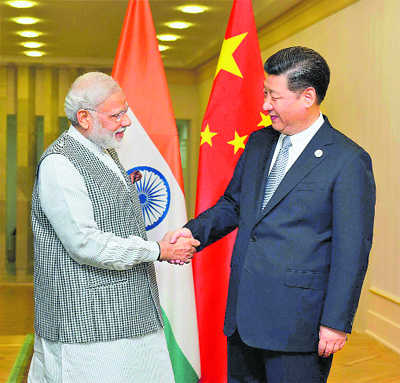
PM Narendra Modi with Chinese President XI Jinping in Tashkent:China was not the only nation that stalled India’s NSG bid. PTI

THANK heavens for Brexit. It helped take some attention off the fiasco in Seoul where India’s desperate bid to get into the elite Nuclear Suppliers Group (NSG) suffered a rejection. What makes it even more embarrassing for the government is that this is a twin failure. First, a rebuff at the diplomatic level, where despite the Foreign Secretary rushing off to Seoul failed to save the mission; and, second, a substantive failure at the political level where the Prime Minister received a royal Chinese snub. The double rebuff was totally avoidable.  India’s desire to get into the NSG is understandable but what puzzles an observer is the hype that was created around it. Any oldtimer would have told the Modi establishment; do the smart diplomatic homework before shouting about it from the rooftops. Politically, one wonders who advised Prime Minister Narendra Modi to invest his personal prestige to the extent of himself raising the issue with the Chinese President. A smart diplomat and an astute politician should know that the Prime Minister steps in only to seal a deal, not to make requests. In the case of the NSG fiasco, India messed up at both the fronts and pretty badly.It makes no sense to now make a case that it was “one country” that repeatedly raised procedural issues and thwarted India’s bid. China, to its credit, was very public in its opposition to India’s entry. In the runup to the NSG plenary meeting in Seoul on June 23-24, China repeatedly issued statements that made it amply clear that it was in no mood to let India into the elite nuclear club. India had its work cut out —  and that was to talk and convince China. From President Pranab Mukherjee travelling to China last month, to the Foreign Secretary S. Jaishankar making a below-the-radar visit to Beijing just two weeks before the NSG session, India tried convincing China — and failed. The failure to convince China should have made the Foreign Ministry more cautious about going so public about its NSG bid. Again, this failure should have alerted the top bosses in the Foreign Ministry not to advise the Prime Minister to raise the stakes by taking up matter with the Chinese President when they met on the sidelines of the Shanghai Cooperation Organisation (SCO) in Tashkent. To any observer of foreign policy, it remains a puzzling scenario as to who advised Prime Minister Modi to then raise this issue with President Xi Jinping. Did someone really think that China would reverse its decision just because the request was being made by India at the highest level? Surely, no one could have been that naïve not even in this national security establishment. Maybe it was a political decision to hype the NSG berth and for Modi to raise the issue with Xi Jinping himself. After all the headlines would have been awfully good if the Prime Minister’s request had been accepted by the Chinese leader. It makes one wonder who is doing all this fantastical thinking in the Ministry of Foreign Affairs and in the Prime Minister’s Office. Is it the Foreign Office which misled the Prime Minister in thinking that India’s NSG berth would give him the same kind of historical legacy as the Indo-US civil nuclear deal in 2008 gave former Prime Minister Manmohan Singh? Or was it a political push to the Foreign Office to deliver, to make this desperate bid so that a political historical “event” could be created? Whoever might be at fault, one thing that has emerged crystal clear from the NSG fiasco is that many of the top officials — bureaucrats and politicians — in this government are yet to grasp the brutal realities of geopolitics. If legacies were this easy to create, well, our history books would be way thicker. But both past and current history teaches us one valuable lesson — which was conveniently forgotten this time around — do the groundwork, be sure of the outcomes, before going public with it. Also, somewhere let us not be parsimonious with facts. China was not alone. Turkey, New Zealand, Brazil and even Switzerland raised their objections in Seoul. Now Switzerland is another blot here. Modi travelled all the way to Switzerland, again made a public spectacle of the Prime Minister requesting the Swiss leadership for support for a berth in the NSG. The Swiss “agreed”, a diplomatic feather was added to the Prime Minister’s hat and everyone went ga ga over how India and the Prime Minister is winning the world over. Cut short to Seoul, a few weeks later, and the Swiss don’t seem to be supporting India. Again,  should we not be asking some tough questions of the people who were leading the charge. China, yes, is uncomfortable with India’s rise and wants to always hyphenate us with Pakistan and hence no support. We always knew that, but “pray” what happened to the Swiss? Someone should be doing a lot of explaining here. Even Turkey took a “principled” stand and said that India and Pakistan’s applications be considered simultaneously. The world knows about Pakistan’s proliferation record and no one needs a re-introduction to A Q Khan, but didn’t India realise that “right” arguments do not always convince the other? We owe it to ourselves to take a hard look at the way we conducted ourselves, diplomatically and politically in this entire NSG saga. We have ended up looking rather inelegant, a little immature and a bit desperate to grab things. And as India moves into the next round of negotiations for NSG or other “clubs”, a bit more grace and quiet diplomacy should be the preferred norm.  


simraj68@yahoo.com.


7वें वेतन आयोग पर कई शंका दूर कर देगा वित्तमंत्रालय द्वारा जारी 11 बिंदुओं का ये बयान

7वें वेतन आयोग पर कई शंका दूर कर देगा वित्तमंत्रालय द्वारा जारी 11 बिंदुओं का ये बयान

नई दिल्ली: सातवें वेतन आयोग (पे कमिशन) की रिपोर्ट लागू हो गई है। नरेंद्र मोदी सरकार ने 1 जनवरी 2016 से इसे लागू करने की घोषणा कर दी है। कुछ ही दिनों में सारी प्रक्रिया पूरी कर ली जाएगी और जुलाई या फिर के अंत तक मिलने वाले वेतन में इसे शामिल कर दिया जाएगा। सरकार ने घोषणा भी कर दी है कि इसी साल जनवरी से एरियर भी दे दिया जाएगा। इसे लेकर तमाम वेबसाइटों और आज सुबह के अखबारों में तमाम बातें लिखी गई हैं। बातें इतनी हैं कि कर्मचारियों के मन में तमाम सवाल पैदा हो गए हैं। इन सिफारिशों से 1 करोड़ से भी ज्‍यादा कर्मचारी लाभान्वित होंगे। इनमें 47 लाख से ज्‍यादा केंद्रीय सरकारी कर्मचारी और 53 लाख पेंशनभोगी शामिल हैं, जिनमें से 14 लाख कर्मचारी और 18 लाख पेंशनभोगी रक्षा बलों से संबंधित हैं।

वेतन आयोग लागू करने संबंधी केंद्र सरकार के वित्त मंत्रालय ने यह बयान दिया है। 11 बिंदुओं में यह बयान जारी किया गया है।

1. पे बैंड एवं ग्रेड पे की वर्तमान प्रणाली समाप्‍त कर दी गई है और आयोग की सिफारिश के अनुरूप एक नई वेतन संरचना (पे मैट्रिक्‍स) को मंजूरी दी गई है। अब से कर्मचारी के दर्जे का निर्धारण पे मैट्रिक्स में उसके स्‍तर के आधार पर होगा, जबकि अभी तक ग्रेड पे के अनुसार इसका निर्धारण होता था। अलग-अलग वेतन संरचनाएं असैन्‍य (सिविलयन), रक्षा कार्मिकों और सैन्य नर्सिंग सेवा के लिए तैयार की गई हैं। इन संरचनाओं के पीछे सिद्धांत और तर्क एक समान हैं।

2. सभी वर्तमान स्‍तरों को नये ढांचे में समाहित कर दिया गया है। कोई नया स्‍तर शुरू नहीं किया गया है और न ही किसी स्‍तर को हटाया गया है। वेतन संरचना के हर स्‍तर पर न्‍यूनतम वेतन तय करने के लिए सुव्यवस्थीकरण के सूचकांक को मंजूरी दी गई है, जो वरिष्ठता क्रम में हर कदम पर बढ़ती भूमिका, जिम्मेदारी और जवाबदेही पर निर्भर करता है।

3. न्‍यूनतम वेतन को 7000 रुपये से बढ़ाकर 18000 रुपये प्रति माह कर दिया गया है। न्‍यूनतम स्‍तर पर किसी भी नवनियुक्‍त कर्मचारी का शुरुआती वेतन अब 18000 रुपये होगा, जबकि नवनियुक्‍त ‘क्‍लास I’ अधिकारी का शुरुआती वेतन 56100 रुपये होगा। यह 1:3.12 के संकुचन अनुपात को दर्शाता है, जिससे यह पता चलता है कि सीधी भर्ती वाले किसी भी ‘क्‍लास I’ अधिकारी का वेतन न्‍यूनतम स्‍तर पर न‍वनियुक्‍त कर्मचारी के वेतन से तीन गुना अधिक होगा।

4. वेतन एवं पेंशन में संशोधन के उद्देश्‍य से 2.57 का फिटमेंट फैक्‍टर वेतन संरचनाओं में शामिल सभी स्‍तरों पर लागू होगा। प्रचलित दर पर डीए को शामिल करने के बाद सभी सरकारी कर्मचारियों/पेंशनभोगियों के वेतन/पेंशन में 1 जनवरी, 2016 को कम से कम 14.29 प्रतिशत की बढ़त दर्ज हो जाएगी।

5. वेतन वृद्धि की दर को 3 प्रतिशत पर बरकरार रखा गया है। उच्‍च मूल वेतन की बदौलत कर्मचारी भविष्‍य में लाभान्वित होंगे, क्‍योंकि भविष्‍य में उनके वेतन में जो वार्षिक वृद्धि होगी वह वर्तमान के मुकाबले 2.57 गुना ज्‍यादा होगी।

6. कैबिनेट ने स्‍तर 13ए (ब्रिगेडियर) के लिए सुव्यवस्थीकरण सूचकांक में वृद्धि कर और स्‍तर 12ए (ले.कर्नल), 13 (कर्नल) और 13ए (ब्रिगेडियर) में अतिरिक्‍त स्‍तर (स्‍टेज) सुनिश्चित करके रक्षा संबंधी वेतन संरचना को और बेहतर कर दिया है, ताकि संबंधित स्तरों के अधिकतम पायदान पर संयुक्त सशस्त्र पुलिस बल (सीएपीएफ) के समकक्षों के साथ समता लाई जा सके।

7. रक्षा और संयुक्त सशस्त्र पुलिस बल (सीएपीएफ) कार्मिकों समेत विभिन्‍न कर्मचारियों पर असर डालने वाले कुछ अन्‍य निर्णय भी लिए गए हैं, जिनमें निम्‍नलिखित शामिल हैं।
• ग्रेच्‍युटी की सीमा 10 लाख रुपये से बढ़ाकर 20 लाख रुपये कर दी गई है। जब भी डीए 50 प्रतिशत बढ़ जाएगा तब ग्रेच्‍युटी की सीमा 25 प्रतिशत बढ़ जाएगी।
• असैन्‍य एवं रक्षा कार्मिकों के लिए अनुग्रह राशि एकमुश्त मुआवजे के भुगतान हेतु एक आम व्यवस्था की गई है, जो उनके परिजनों को देय होगा और इसके तहत वर्तमान दरों को विभिन्‍न श्रेणियों के लिए 10-20 लाख रुपये से बढ़ाकर 25-45 लाख रुपये कर दिया गया है।
• रक्षा बलों के कर्मियों की विभिन्न श्रेणियों के लिए सैन्य सेवा वेतन की दरें 1000, 2000, 4200 एवं 6000 रुपये से संशोधित करके क्रमश: 3600, 5200, 10800 एवं 15500 रुपये कर दी गई हैं।

8. कैबिनेट ने आवास निर्माण से जुड़ी अग्रिम राशि को 7.50 लाख रुपये से बढ़ाकर 25 लाख रुपये करने संबंधी आयोग की सिफारिश को भी मंजूरी दे दी है। कर्मचारियों को कोई दिक्‍कत न हो, यह सुनिश्चित करने के लिए 4 ब्‍याज मुक्‍त अग्रिमों को बरकरार रखा गया है, जिनमें चिकित्सा इलाज के लिए अग्रिम, टूर/स्‍थानांतरण के लिए टीए, मृतक कर्मचारियों के परिवार के लिए टीए और एलटीसी शामिल हैं। अन्‍य सभी ब्‍याज मुक्‍त अग्रिमों को समाप्‍त कर दिया गया है।

9. कैबिनेट ने केंद्र सरकार कर्मचारी समूह बीमा योजना (सीजीईजीआईएस) में किए जाने वाले मासिक अंशदान में भारी वृद्धि करने की सिफा‍रिश को भी न मानने का निर्णय लिया है, जैसी कि आयोग ने सिफारिश की थी।

10. आयोग ने कुल मिलाकर 196 वर्तमान भत्‍तों पर गौर किया और इन्‍हें तर्कसंगत बनाने के उद्देश्‍य से 51 भत्‍तों को समाप्‍त करने और 37 भत्‍तों को समाहित करने की सिफारिश की है।

11. सातवें सीपीसी द्वारा लगाए गए अनुमान के मुताबिक, वर्ष 2016-17 में इसकी सभी सिफारिशों पर अमल से अतिरिक्‍त वित्‍तीय बोझ 1,02,100 करोड़ रुपये का पड़ेगा। इसके अलावा वर्ष 2015-16 के दो महीनों के लिए वेतन एवं पेंशन से जुड़ी बकाया राशि के भुगतान हेतु 12,133 करोड़ रुपये का अतिरिक्‍त बोझ वहन करना पड़ेगा।