Sanjha Morcha

What’s New

Click the heading to open detailed news

Current Events :

web counter

Print Media Reproduced Defence Related News

Labour promises review of UK’s role in Op Bluestar No separate mention of Kashmir in manifesto

Labour promises review of UK’s role in Op Bluestar
File photo of Labour leader Jeremy Corbyn. Reuters

New Delhi, November 22

Britain’s main Opposition Labour Party has launched its election manifesto that promises an audit into the colonial past, including an apology to India for the Jallianwala Bagh massacre in Amritsar a century back. The manifesto also assured a public review of Britain’s role in Operation Bluestar that has been mentioned as the “Amritsar massacre”.

The promise to apologise is a step up from the deep regret expressed by then British Prime Minister Theresa May this year that was meant to coincide with the Jallianwala Bagh massacre’s 100th anniversary.

Under the sub-head “Effective Diplomacy”, the relevant part of the Labour manifesto reads: “We will issue a formal apology for the Jallianwala Bagh massacre and hold a public review into Britain’s role in the Amritsar massacre.”

The manifesto further promises to set up a judicial probe into Britain’s “injustices of the past” that includes a public review of the country’s role in Operation Bluestar.

The party did not make a separate reference to Kashmir which had not gone down well with some Indian diaspora groups when the party passed an emergency motion at its September conference, hinting at international intervention in the region. This time, Kashmir has been clubbed with hotspots such as Yemen and Myanmar where a prospective Labour government will attempt conflict prevention and build peace. — TNS


An outspoken CM who wears many hats

An outspoken CM who wears many hats

A former soldier, a royal, a military historian, a chief minister, one of the Congress party’s most powerful leaders in north India and a nationalist, Captain Amarinder Singh wears many hats.

At a time when the national fortunes of the Indian National Congress were dipping, Singh took over the reins of the party in Punjab.

Running an energetic campaign, he both capitalised on the resentment against the Akali Dal-Bharatiya Janata Party government and generated hope, leading the Congress to a spectacular victory in the 2017 assembly elections. Singh has remained politically successful, and ensured that the Congress won eight of the 13 seats in the 2019 Lok Sabha elections.

But the Punjab CM also stands out for his outspoken views both on affairs of his state and the nation. Unequivocally critical of cross-border terrorism emanating from Pakistani soil and a firm supporter of India’s armed forces, his views on security are taken seriously by even political adversaries.

Arguing strongly in favour of giving younger leaders space in the party, Singh spoke out when the Congress was going through a leadership transition after the Lok Sabha results. A firm votary of the interests of India’s states, he has played a role in strengthening federalism and diversity.


Marshals seen without caps RS Secretariat feels let down; senior officers wanted dress change

Marshals seen without caps
Rajya Sabha Chairman M Venkaiah Naidu is flanked by Upper House marshals without caps. PTI

NEW DELHI, NOVember 21

The Rajya Sabha marshals on Thursday were seen without caps which were part of ensemble of their new military-like “dress code”, in the backdrop of objections from various quarters, including ex-Army personnel.

Some members from the Opposition benches also made the mention about this to Chairman Venkaiah Niadu in lighter vein when the House assembled for the zero hour. “It is good,” said Congress MP Madhusudan Mistry, drawing attention of Naidu.

Naidu responded saying: “As I have said, nothing reflects like the Army,” and added that the review process is on. Sources said the Secretariat officialdom felt a bit let down on the unexpected reservations in certain quarters on the dress code’s design. There was a long-standing demand from the marshals, who are senior officers in hierarchy, for the dress code which distinguished them from the “Watch and Ward” staff in keeping with their official status. — TNS


Army Chief urges soldiers to stay abreast of latest technology, emerging threats

Army Chief urges soldiers to stay abreast of latest technology, emerging threats

HT Correspondent

chandigarh@hindustantimes.com

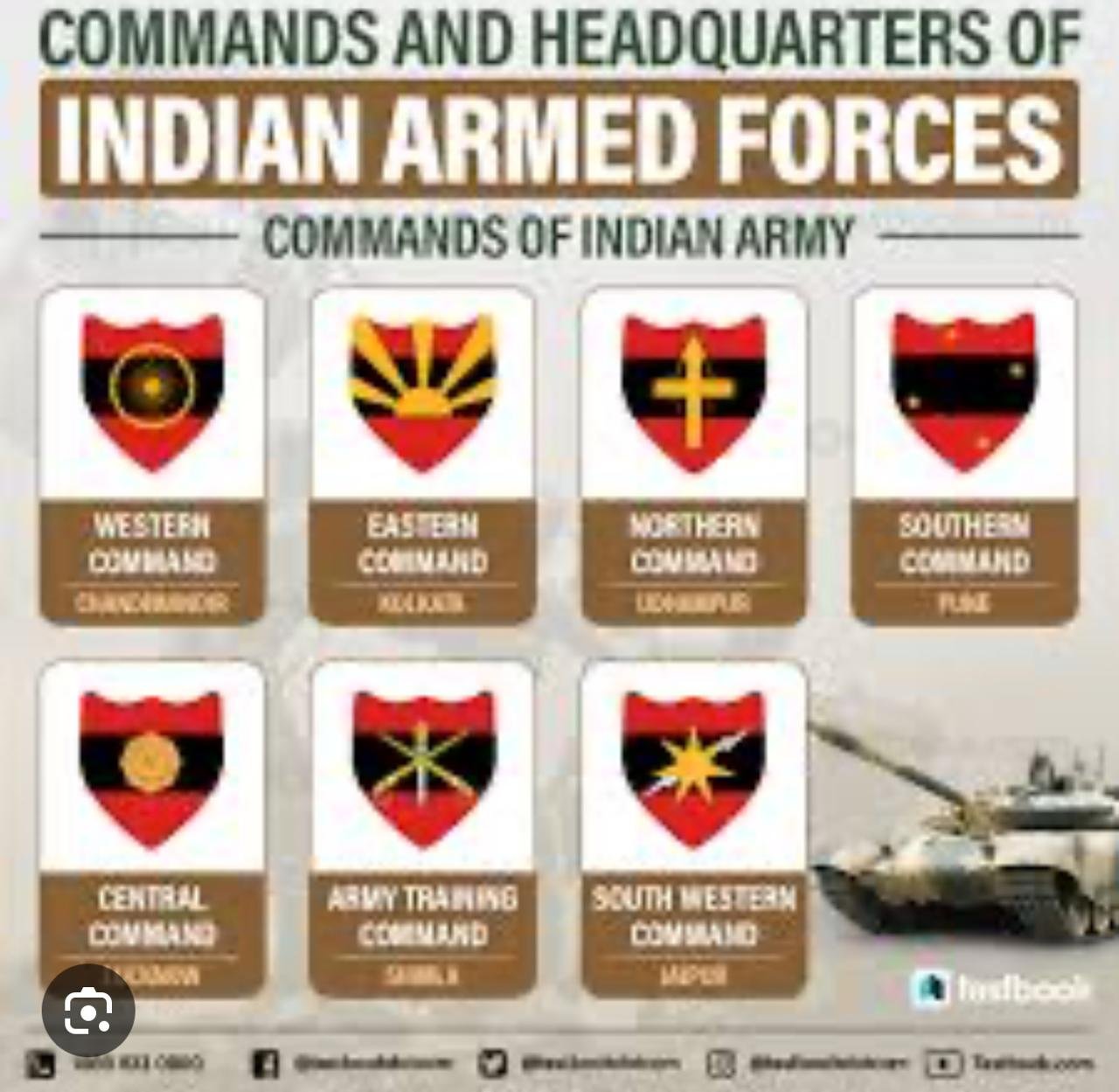
Chandigarh : The Chief of Army Staff, General Bipin Rawat visited the Chandimandir military station on Friday. He was briefed by Lt Gen RP Singh, GOC-in-C Western Command on operational preparedness.

While interacting with the troops, General Bipin Rawat commended them for their professionalism and undaunted spirit in executing assigned tasks. He also urged soldiers to stay abreast of latest trends in information technology, emerging threats and countermeasures. The Chief also reiterated that ethos, discipline and efficiency of the Army should serve as an example to the rest of the nation.


Army rescues 350 tourists, locals from snow-covered Zojila Pass

Army rescues 350 tourists, locals from snow-covered Zojila Pass
The Zojila Pass is situated at an altitude of 11,578 feet on the Srinagar-Kargil-Leh National Highway. Tribune file

Srinagar/Jammu, November 22

About 350 tourists and locals, stranded due to heavy snow, were rescued by the Army from the 11,500-foot high Zojila Pass along the Srinagar-Leh national highway, a defence spokesman said on Friday.

The night-long rescue operation in coordination with civil administration was carried out by Army rescue columns despite continuous snowfall and sub-zero temperature, Srinagar-based defence spokesman Col Rajesh Kalia said in a statement.

Visitors to the area got stuck as regions around the pass like Sonamarg, Baltal and Nilgrar received heavy snow since Thursday which also led to traffic jams at many places, leaving over 250 trucks and passenger vehicles stranded.

Since November 21, he said the vehicles had moved from Sonamarg towards the Zojila Pass but the untimely and heavy snow, especially on the higher reaches, resulted in many vehicles skidding off the road and getting stranded in the snow, causing a traffic jam at many places.

“The traffic jam resulted in a very dangerous situation, wherein approximately 300-350 people, including women and children, were stranded at a height above 11,000 feet and temperature at minus seven degrees.

“In coordination with the civil administration, the Army rescue columns moved in vehicles promptly with aid and administrative assistance to rescue the stranded civilians from the Zojila Pass,” he said.

Col Kalia said while the police and GREF personnel got busy with clearing the traffic and snow, respectively, the Army columns started providing immediate medical aid and assistance.

“The stranded vehicles were recovered and organised for moving back. The passengers of the vehicles, which were stuck badly, were evacuated safely back to Sonamarg town in Army vehicles,” he said.

He said medical assistance, hot food and blankets were provided for the night by the Army.

“This immediate and pro-active action by the Army was critical in ensuring timely rescue, relief and saving precious lives. The humanitarian assistance provided to the ‘Awam’ (people) in their hour of need was much appreciated,” the officer said.

The Zojila Pass is situated at an altitude of 11,578 feet on the Srinagar-Kargil-Leh National Highway. PTI


British Sikhs honour Imran for completing Kartarpur Corridor

Press Trust of India

letterschd@hindusatntimes.com

LONDON : Pakistan prime minister Imran Khan has been conferred with a lifetime achievement award at an awards ceremony in the UK to coincide with the 550th birth anniversary celebrations for Guru Nanak Dev.

The awards, hosted at the mayor of London’s headquarters by the UK’s All Party Parliamentary Group (APPG) for British Sikhs and London assembly member Onkar Sahota alongside British Sikh groups, honoured achievements across different fields.

London mayor Sadiq Khan, deputy mayor for social integration and mobility Debbie Weekes-Bernard and APPG for British Sikhs Chair, Labour Party politician Preet Kaur Gill, were among some of the speakers at the event, co-hosted by the Sikh Network and Sikh Federation UK – British Sikh groups known for pro-Khalistani affiliations.

“I invite Sikhs from all around the world to come to Pakistan,” said Sahibzada Jahangir, Imran Khan’s spokesperson for trade and investment in the UK and Europe, as he accepted the Lifetime Achievement Award on behalf of the Pakistan prime minister.

He spoke about Pakistan’s “pride” on the completion of the Kartarpur Sahib Corridor, which reinforced the idea of Sikhs as a bridge between cultures and countries.

India and Pakistan inaugurated the Kartarpur Corridor on November 9 to provide for Indian pilgrims to visit one of Sikhism’s holiest shrines in Pakistani town of Narowal without a visa.

The corridor links Dera Baba Nanak shrine in Gurdaspur in India to Gurdwara Kartarpur Sahib in Pakistan, the final resting place of Sikh faith founder Guru Nanak.

The 550th Gurpurb Guru Nanak Ji at City Hall in London on Tuesday also included honours for British Sikh powerlifter Kirenjit Kaur Bains, for her contribution to sports as the first Sikh woman to compete for Britain in the World Classic Powerlifting Championships earlier this year; Paul Bassi for his contribution to business; and Khalsa Aid for contribution to charity and selfless seva.

“We would like to take this opportunity to celebrate inspirational aspects of Guru Nanak Dev Ji’s life and recognise individuals from the British Sikh community who have demonstrated the teachings of Guru Nanak, in this very special 550th anniversary year,” noted the organisers of the event.


Jallianwala Bagh martyrs remembered in Kolkata

Jallianwala Bagh martyrs remembered in Kolkata
File photo

Tribune News Service

Kolkata, November 21

A concert to pay homage to the martyrs of Jallianwala Bagh was held last evening at Kolkata’s iconic Victoria Memorial Hall.

Singer Harpreet Singh mesmerised the audience with his mournful rendering of the ‘Khooni Baishakhi’ song. Written by legendary poet and novelist Nanak Singh, a survivor of the 1919 massacre carried out by the British, the iconic poem has been set to tune by the singer himself, a native of Kurukshetra who lives in Mumbai. The English translation of the poem, done by Nanak Singh’s diplomat grandson Navdeep Singh Suri, was read aloud by Bengali singer Moushumi Bhowmik.

The concert titled ‘Music and Memories from Punjab and Bengal’, organised by the Victoria Memorial Hall authorities, was a curtain-raiser to an exhibition – Ways of Remembering Jallianwala Bagh & and Rabindranath Tagore’s Response to the massacre — to be held at the hall next month.

Sarmisthsa Dutta Gupta, curator of the exhibition, said while Tagore was traumatised by the massacre, the incident scarred the minds also of many others in Bengal and found expression in the works of poets and songwriters. Touching upon the similarities in the history of Punjab and Bengal, Sarmistha said, “We have suffered together, we have sung together.”


India may escape US sanctions for buying Russian S-400

India may escape US sanctions for buying Russian S-400
The State Department approved the $1 billion sale of advanced MK 45 5 inch/62 calibre (MOD 4) navy guns to India this week

New York, November 22

A senior US official has left open the possibility that Washington may not impose sanctions on India for buying the Russian Triumf S-400 missile defence system but require New Delhi to tighten defence technology security to prevent snooping by Moscow.

The State Department official, who addressed Turkey buying the Russian S-400 missile defence system, did not directly address India acquiring the same system when it was raised during a briefing on Thursday, but brought up security issues in cooperating with India.

The State Department approved the $1 billion sale of advanced MK 45 5 inch/62 calibre (MOD 4) navy guns to India this week even though India had paid the Russian contractor $800 million as an advance in August for five S-400 units valued at about $5.4 billion.

This and the official’s response appeared to leave room for India to get a waiver from the Countering America’s Adversaries Through Sanctions Act (CAATSA), which could be applied to India for buying equipment from Russian companies. CAATSA bans countries from buying equipment worth more than $15 million from defence Russian companies listed under it and imposes sanctions against them.

The US has not yet introduced CAATSA sanctions against Turkey, a NATO partner, but has refused to provide it with the advanced F-35 stealth combat jets.

India is not seeking such advanced armaments from the US at this time.

President Donald Trump warned Turkish President Recep Erdogan during his recent visit that the Russian deal is going to put it at risk of sanctions.

But the official said: “The timeline on CAATSA sanctions is not prescribed or absolute. There is still plenty of scope that could be applied as to where sanctions and the breadth and depth of sanctions could be imposed upon Turkey.” The official appeared to appreciate the problems India faces in moving away from Russian defence supplies because of its decades-long dependence on the Soviet Union.

The official said that when Secretary of State Mike Pompeo and another official visited New Delhi they “had a consistent line and a discourse with our Indian counterparts at our respective levels, which is we recognize how India suffered at the fall of Soviet Union” because of its dependence on it for defence equipment.

The official added, “It was catastrophic if one was serving in the Ministry of Defence in India in the early 1990s. So we get that.” The official said that India should take stringent measures to prevent defence technology leakage.

US industry and the government are interested in co-research, co-development and co-production with India in the defence sector, “but we can’t do it in a fashion that will expose us as well as our industry,” the official said.

“So for India, yes, there’s opportunity, but they have got to address their protocols and their processes on protecting defence technology and procurement processes,” the official.

“What we have pushed with Indians is: tighten up your procurement processes, tighten up your defence technology security processes and protocols, and then you’re putting yourselves in a much more mature space to be a tighter, closer partner,” the official said.

The official added that the US didn’t want its technology “exposed because some Russians walking the shop floor decide to go, walk away and put it in their handbag or knapsack and take it back to Moscow. We’re not going to allow that.”

Last year India and the US signed the Communications Compatibility and Security Agreement (COMCASA) to “facilitate access to advanced defence systems and enable India to optimally utilise its existing US-origin platforms.”




US ‘shares India’s concerns’ on China’s One Belt, One Road project

US 'shares India's concerns' on China's One Belt, One Road project
File photo. AFP

Washington, November 22

The US has extended its support to India’s opposition to China’s ambitious One Belt One Road (OBOR) initiative, saying it shares New Delhi’s concern over the multibillion-dollar project while questioning the economic rationale behind it.

India is the only major country in the world to have opposed the OBOR project on the grounds of territorial sovereignty, given that its flagship project, the China-Pakistan Economic Corridor (CPEC), passes through Pakistan-occupied Kashmir, which India has always maintained is its territory.

The Belt and Road Initiative, a pet project of Chinese President Xi Jinping, focuses on improving connectivity and cooperation among Asian countries, Africa, China and Europe.

India has been “crystal clear from the outset they saw the geopolitical elements of the One Belt One Road,” Principal Deputy Assistant Secretary of State for South and Central Asia Alice Wells said in response to a question at Woodrow Wilson International Centre for Scholars think tank.

“We share India’s concerns over projects that don’t have any economic basis and that leads to country ceding sovereignty,” Wells said.

Sri Lanka is not the only country that effectively ceded sovereignty over a key asset, she added.

Struggling with debts, Sri Lanka formally handed over the southern sea port of Hambantota to China in 2017 on a 99-year lease.

Interestingly, Hambantota is the home town of the Rajapaksas.

Speaking on the construction of Gwadar port, Wells said, it feeds into Indian anxiety because the commercial basis of the project is not clear.

This has been a project very long in the making and not very evident to outsiders what’s the economic rationale that drives it, she said in response to a question.

The OBOR was designed in part to be able to export excess labour, excess capital and excess production facilities, she said.

So China was trying to solve one of its own domestic problems. It solved its domestic problems sometime at the expense of the receiving country, Wells said.

There are over 95 state-owned enterprises, a part of this belt and road initiative and that have been engaged in infrastructure projects overseas, Wells said.  PTI