Three-day field training drill tested unmanned aerial systems for surveillance, targeting and precision strikes
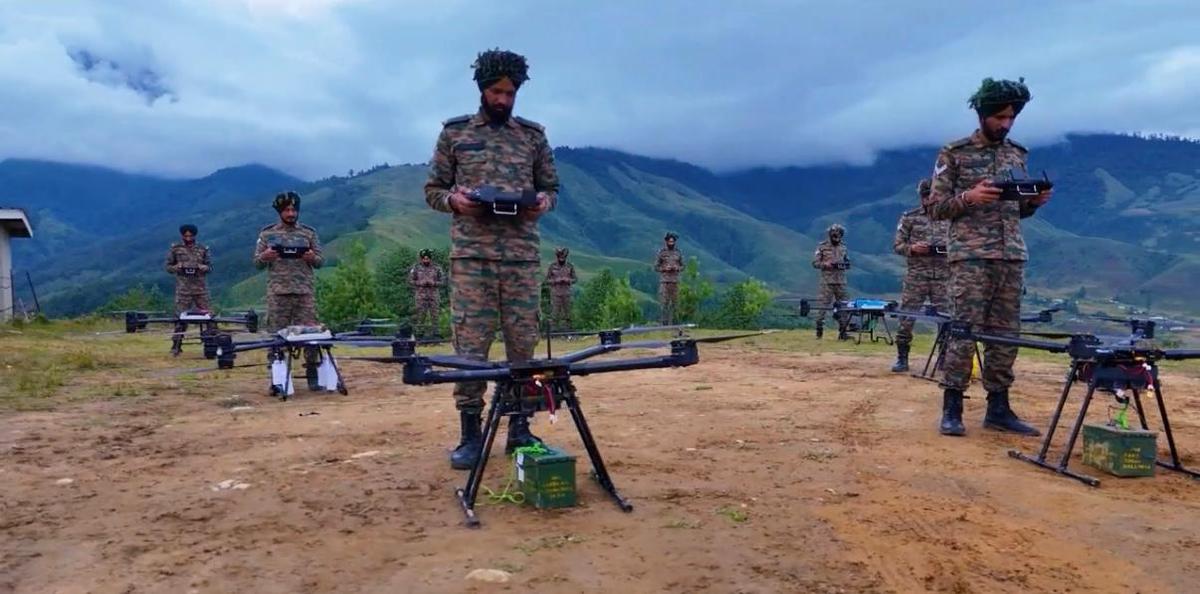
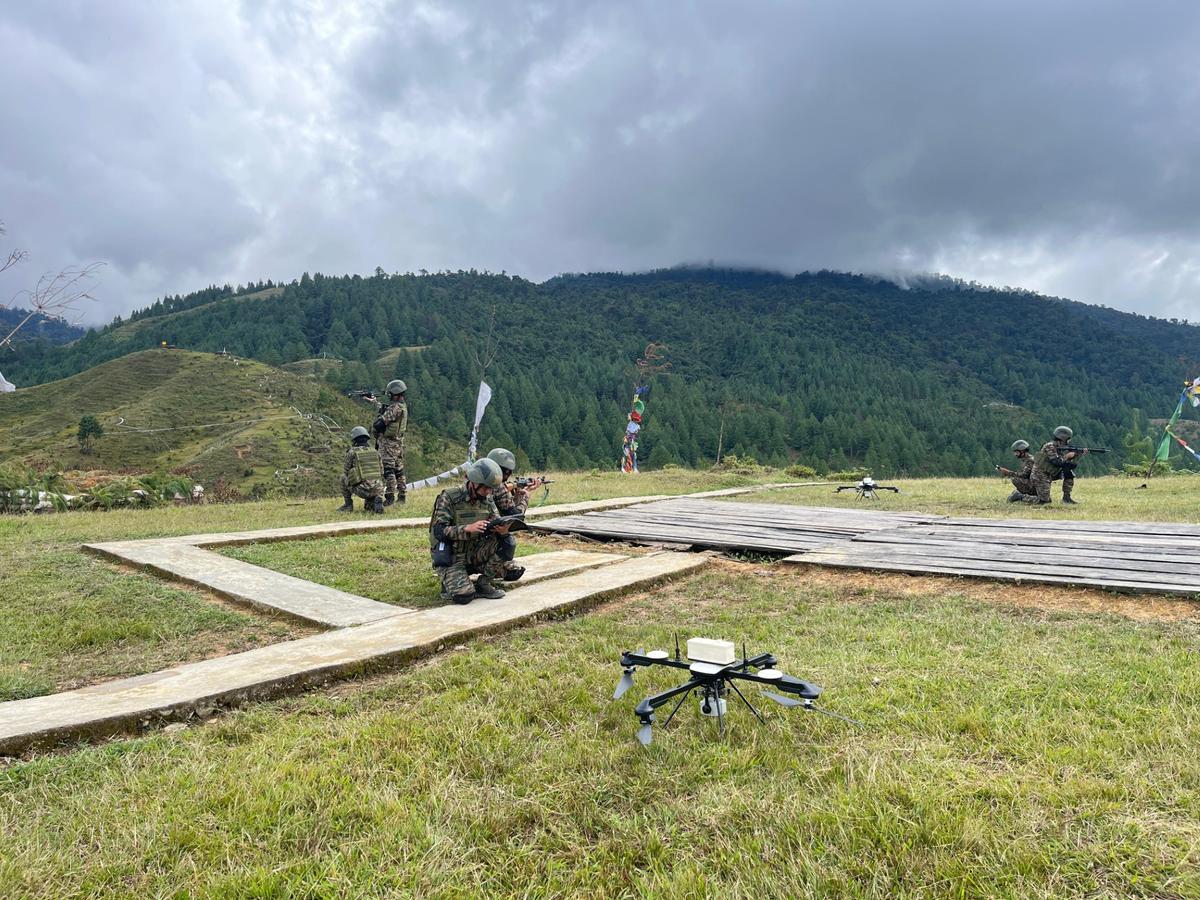
The Indian Army successfully conducted Exercise Siyom Prahar from September 8 to 10, 2025, a major field training exercise aimed at validating the employment of drone technology in modern tactical operations.
According to a senior Defence official, the exercise was held under realistic battlefield conditions and marked “a significant step in operational preparedness” by integrating unmanned aerial systems across tactical and operational depths. The drones were employed for persistent surveillance, battlefield reconnaissance, target acquisition and precision strikes, underscoring their role in enhancing combat effectiveness.
The central focus of the exercise was the development and validation of new Tactics, Techniques and Procedures for future battlefields. These included methods of fusing drone-derived intelligence with conventional firepower, refining joint targeting processes and ensuring rapid decision-making in dynamic combat environments. The exercise highlighted the importance of adaptability and synergy between traditional combat arms and emerging technological enablers, the official added.
The outcomes of the exercise are expected to provide lessons for operational integration, employment concepts and force multiplication. More importantly, it showcased the Army’s resolve to harness technology as a decisive factor in securing operational superiority.
Exercise Siyom Prahar reflected the Indian Army’s proactive approach to adapting to modern warfare and its emphasis on future-readiness.
display of operational prowess, the elite troops of the Indian Army’s Spear Corps
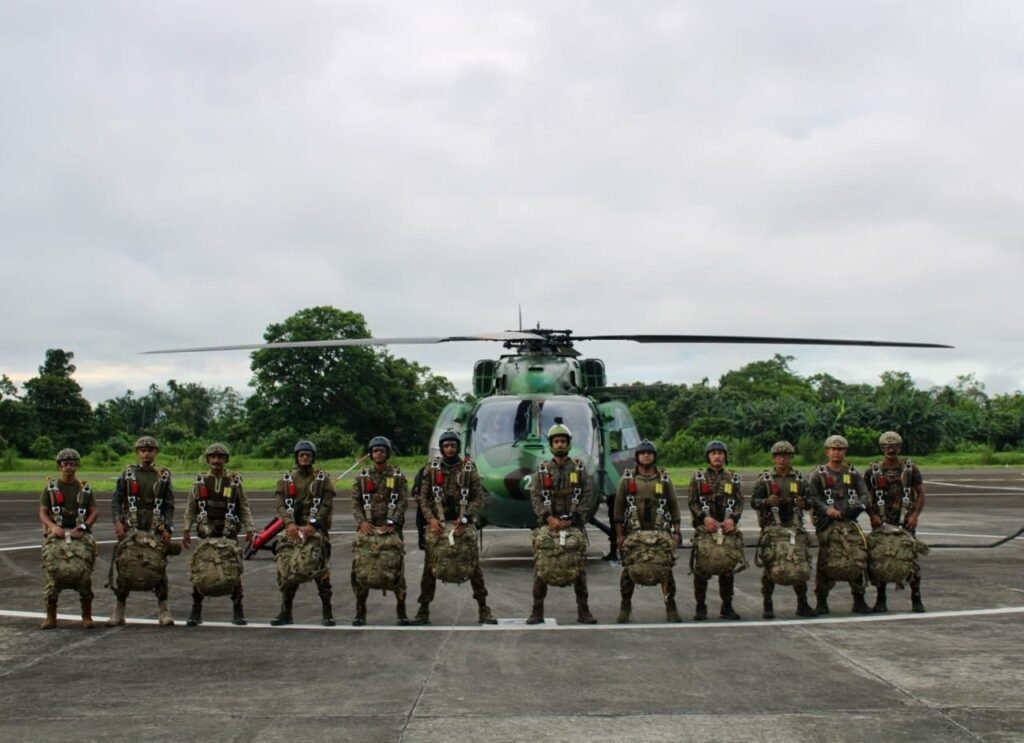
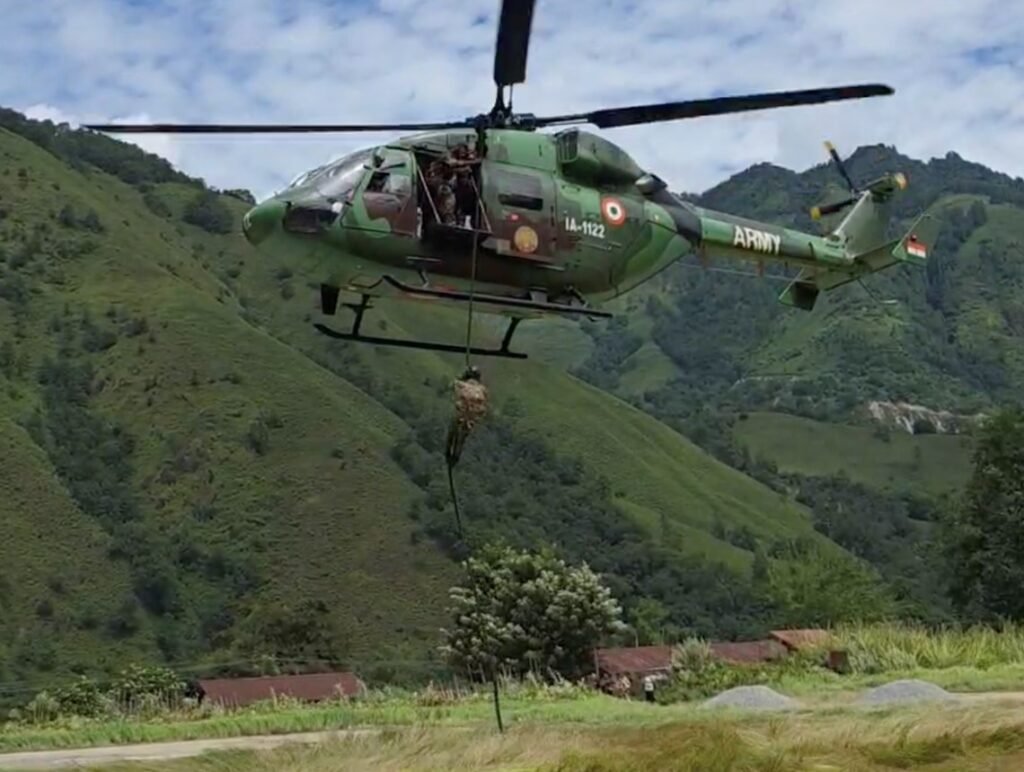
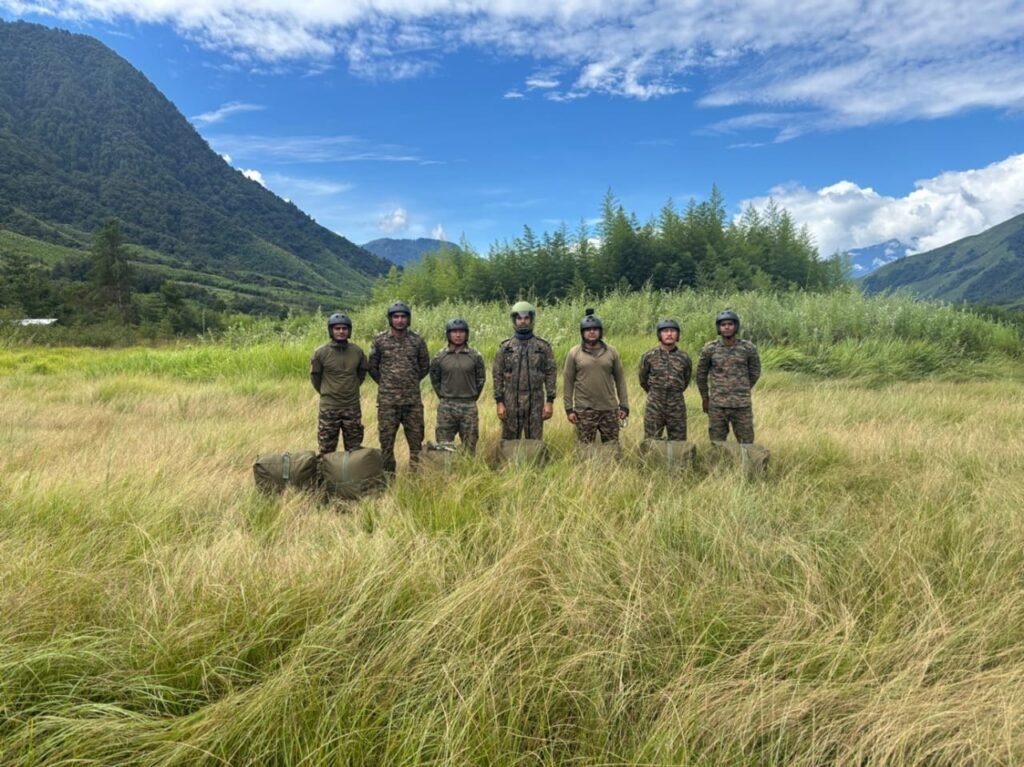
In a remarkable display of operational prowess, the elite troops of the Indian Army’s Spear Corps conducted a high-intensity exercise titled ‘Dibang Shakti’ deep in the challenging terrain of Dibang Valley in Arunachal Pradesh.
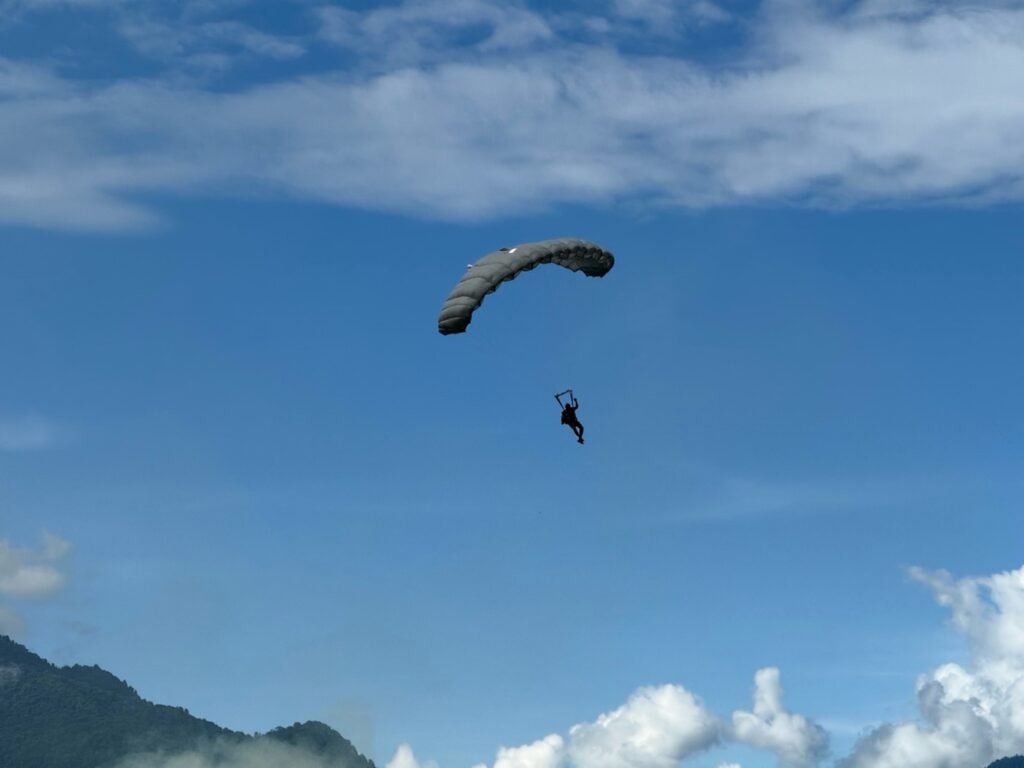
The troops showcased exceptional skill in a variety of tactical domains, including specialised survival techniques, jungle warfare, and combat free falls operations.
‘Dibang Shakti’ was aimed at reinforcing the preparedness of the troops to counter unconventional threats and conduct rapid-response operations in high-altitude and jungle environments. 🫡 🇮🇳
Indian Navy gets anti-submarine warfare ship ‘Androth’
Second in series of eight ASW-SWC, ‘Androth’ strengthens the government’s vision of ‘Aatmanirbhar Bharat’
he Indian Navy has received an indigenously-built anti-submarine warfare ship that is expected to boost its maritime prowess against the backdrop of China’s growing forays into the Indian Ocean.
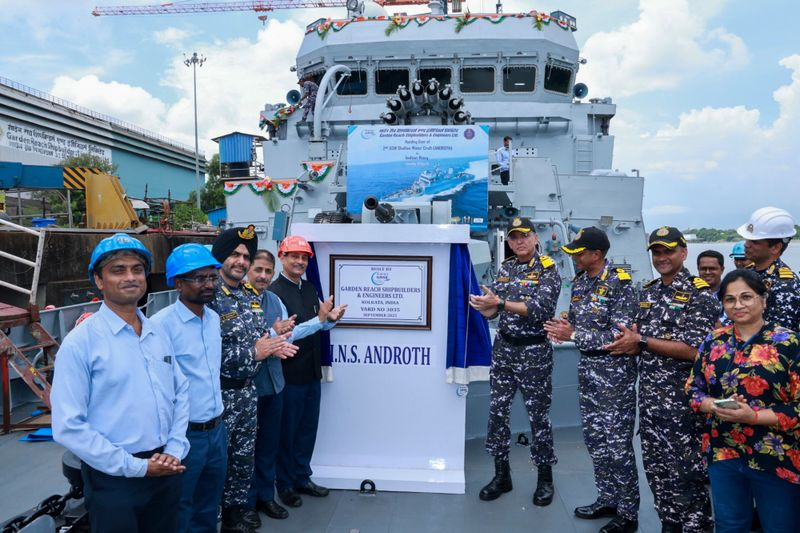
‘Androth’, the second of the eight anti-submarine warfare-shallow water craft (ASW-SWC), has been built by Garden Reach Shipbuilders and Engineers (GRSE), Kolkata.
The ship was delivered to the Indian Navy on Saturday, marking yet another step towards self-reliance in defence manufacturing, according to an official readout.
The ASW-SWC ships are being inducted into the Navy to strengthen its anti-submarine and coastal surveillance capabilities.
The name ‘Androth’ holds strategic and symbolic significance as it is derived from the Androth Island in the Lakshadweep archipelago, underscoring India’s commitment to safeguarding its vast maritime territories.
These ships at approximately 77-metre length are the largest Indian Naval warships propelled by a diesel engine-waterjet combination and are equipped with state-of-the-art lightweight torpedoes and indigenous anti-submarine warfare rockets, officials said.
“Androth’s delivery is yet another milestone in the Indian Navy’s quest for indigenous shipbuilding upholding the government’s vision of ‘Aatmanirbhar Bharat’ with over 80 per cent indigenous content and stands as a testament to growing domestic capabilities and reducing dependency on imports,” the Navy said in the readout.
Strategic win: Army runs first freight train on USBRL, to return with Kashmiri apples
The train carried 753 metric tonnes of Advance Winter Stocking load for the Army units and formations stationed in Jammu & Kashmir
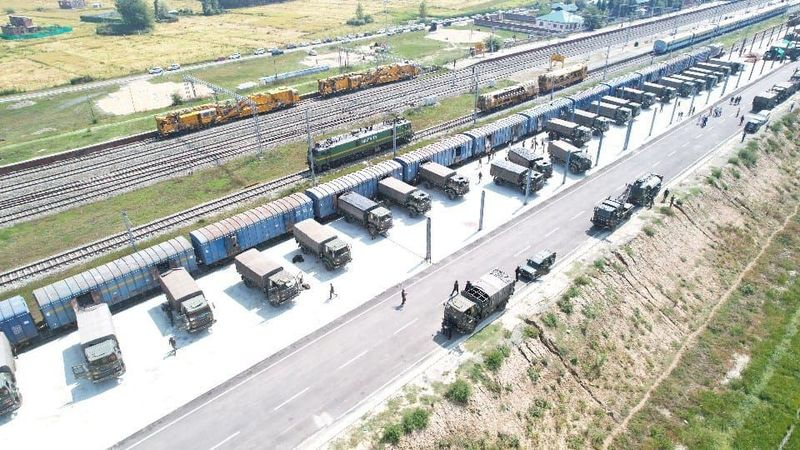
The Udhampur–Srinagar–Baramulla Rail Link (USBRL) witnessed a historic milestone with the successful run of the first exclusive freight train of the Army, from BD Bari near Samba to Anantnag on September 12-13.This is strategically significant as it gives a boost to the logistics capability of the Army.
The train carried 753 metric tonnes of Advance Winter Stocking (AWS) load for the Army units and formations stationed in Jammu and Kashmir, marking a decisive turning point in the AWS operations. This initiative underscores the Army’s ongoing capability development efforts to ensure operational preparedness in challenging Himalayan terrain, a defence spokesperson said on Monday.
Earlier, logistic support to Kashmir depended upon road convoys and in winters of monsoons, these were often disrupted due to snow and landslides. Sources said that the rail link to Kashmir would also benefit logistic support further on to Kargil and Ladakh sectors.
In a unique demonstration of dual-use logistics and military–civil fusion, the return rake of the freight train will transport Kashmiri apples to markets in the rest of India. This step not only strengthens the Army’s winter preparedness, but also provides direct benefits to local communities, Army officers said.
Farmers, who in the past suffered heavy losses due to road blockages caused by landslides and floods, will now be able to transport their produce seamlessly, ensuring both economic relief and livelihood security.
The initiative reflects the Army’s role extending beyond its core mission of defence to contribute tangibly to the socio-economic development of Kashmir. By harnessing rail infrastructure for both military and civilian purposes, the Army has taken a major stride in strengthening resilience, connectivity and prosperity in the region, the spokesperson said.
Built at a cost of Rs 43,780 crore, the 272-km-long rail link was inaugurated by Prime Minister Narendra Modi in June this year. The line cuts through some of the most challenging terrain in the Himalayas and provides all weather connectivity to Kashmir.
The project features 36 main tunnels covering nearly 120 km, eight escape tunnels and 943 bridges that span rivers, gorges, and mountain passes. Its notable features include the Chenab bridge, which at 359 metres above the riverbed, is the world’s highest railway arch bridge.
Have worst system of picking election commissioners: Quraishi
Says judiciary has been compromised as has been the poll panel
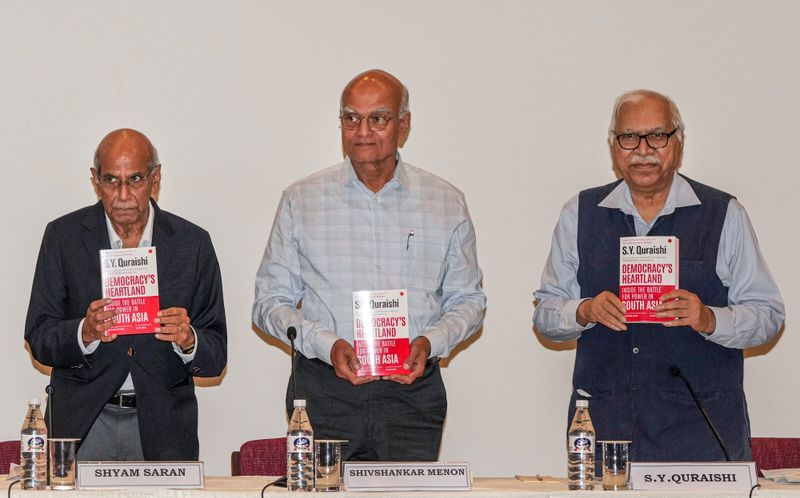
New Delhi: Historian Pushpesh Pant, former Hindu College principal Kavita Sharma, former foreign secretaries Shyam Saran and Shivshankar Menon, and former chief election commissioner S.Y. Quraishi during a discussion on the book, ‘Democracy’s Heartland: Inside the Battle for Power in South Asia’, written by Quraishi, in New Delhi, Monday, Sept. 15, 2025. (PTI Photo/Atul Yadav)(PTI09_15_2025_000426A)
Have worst system of picking election commissioners: Quraishi
Says judiciary has been compromised as has been the poll panel
New Delhi: Historian Pushpesh Pant, former Hindu College principal Kavita Sharma, former foreign secretaries Shyam Saran and Shivshankar Menon, and former chief election commissioner S.Y. Quraishi during a discussion on the book, ‘Democracy’s Heartland: Inside the Battle for Power in South Asia’, written by Quraishi, in New Delhi, Monday, Sept. 15, 2025. (PTI Photo/Atul Yadav)(PTI09_15_2025_000426A)
Advertisement
Former Chief Election Commissioner (CEC) SY Quraishi on Monday noted that despite being the biggest democracy, India had the worst system of appointment of an election commissioner. However, he added that with the Constitution giving immense powers to an election commissioner, it is up to the appointed person to show some backbone.
He even noted with concern that judiciary in India had been compromised as had been the poll panel. But he added that the Constitution could not be faulted for this, because in the words of Dr BR Ambedkar, the Constitution is as good or as bad as the people who it is administering.
However in the same breath, Quraishi refrained from commenting on how the judiciary and the EC had been subjugated, saying that it was a matter of speculation. Quraishi’s comments came amid the raging debate in recent times over the process of appointment of the CEC, where the CJI has been replaced by a Cabinet Minister from the selection panel, which is led by the PM and also consists of the Leader of Opposition.
Advertisement”In the last two to three years, there has been a debate about the process of selection of election commissioners in India. I was also a beneficiary of political benevolence as the then ruling party (the Congress) had appointed me. But the Constitution had given me protection and so the moment I sat on the chair (of the CEC), I distanced myself from the government and censured the law minister who had issued my appointment letter. We (Election Commission of India) also chargesheeted three ministers of the Congress for violation of the model code of conduct,” the former CEC said, while participating in a discussion over his latest book titled ‘Democracy’s Heartland’.
He went on to add, “India is the best and biggest democracy on Earth, but has the worst system of appointing the CEC, which affects our credibility.”
Quraishi illustrated the example of Nepal, which he said, had a much better system of appointment of an election commissioner.
To a question on whether only the system of appointment of a CEC was flawed or also the system, which says that once elections are announced, no judiciary can act against it, the former poll body chief said, “In fact, the most brilliant part of the Constitution is Article 329, which debars judiciary from interfering in elections and which is why we have managed to always conduct elections on time and not once since Independence has any election been delayed or disrupted. Article 329 was challenged in Supreme Court in 1951, but the apex court came up with the verdict that the Constitution is clear that no court, including the Supreme Court can interfere when elections are in motion.”
This is the reason why India has managed to conduct elections on time always and the transition of power has been smooth and no dispute has ever been reported, Quraishi said.
Responding to a question by the moderator of the event, Pushpesh Pant, over the probability of the judiciary choosing to look the other way and taking years in disposing of petitions challenging an election, and the Election Commission announcing polls, Quraishi said, “It is a matter of concern that our judiciary has been compromised. This institution has gone down as has the Election Commission. But it is not the fault of the Constitution, as Dr BR Ambedkar had said that a Constitution is as good or as bad as the people who it is administering. How the judiciary and the Election Commission have been subjugated is a matter of speculation and I would rather not comment on it.”
First flame of valour: Major Somnath Sharma of Veer Bhoomi Himachal lives on
Nestled in the lap of the snow-draped Dhauladhar ranges lies Veer Bhoomi Himachal, a land where every mountain peak whispers tales of valour. Among its proudest sons shines Major Somnath Sharma, India’s first Param Vir Chakra awardee, whose life and legacy embody courage, duty and sacrifice. His story, however, is not just that of one man, but of an entire family whose veins flowed with service to the nation.
The roots of a soldier
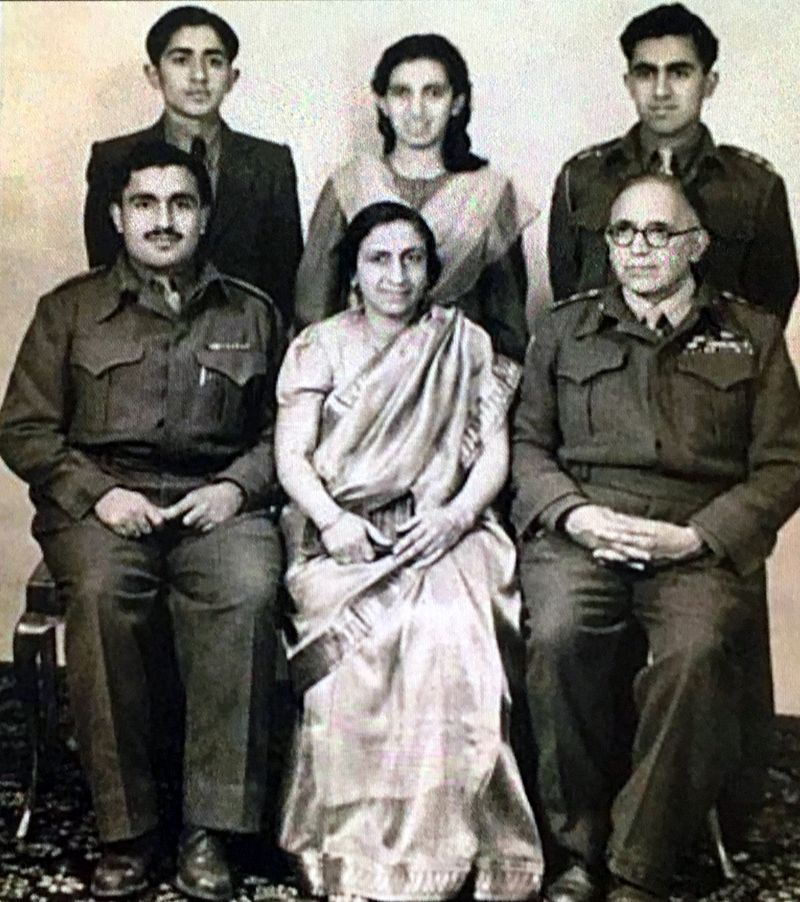
Born on January 31, 1923, in Jammu, Somnath was the eldest son of Major Gen Amar Nath Sharma and Saraswati Devi. His ancestry traced back to the royal Dogra durbar, where his grandfathers — Pandit Manohar Lal, a hakeem, and Pandit Daulat Ram, chief accountant — served Maharaja Pratap Singh.
This wasn’t just a family. It was a lineage steeped in discipline and patriotism. His brothers too carried the torch of military glory: Lt Gen Surinder Nath Sharma distinguished himself in the Army, while Gen Vishwa Nath Sharma went on to serve as the 14th Chief of Army Staff. Together, they stood as five hearts with one mission — service to the motherland.
Lessons from the Gita, spirit of the Himalayas
As a boy, Somnath was shaped by two forces: The Himalayan spirit of resilience and the timeless teachings of the Bhagavad Gita, instilled by his grandfather. The philosophy of karma and dharma became his compass, guiding him through schooling at Sherwood College, Nainital, and later at the Prince of Wales Royal Military College, Dehradun.
Commissioned into the 19th Hyderabad Regiment on February 22, 1942, he first saw action during World War II in Burma under the legendary Col KS Thimmayya. But destiny awaited him in 1947, when the newly independent India faced its first great trial.
Budgam: Where duty became immortality
On November 3, 1947, Major Somnath Sharma, his left arm in plaster, refused to stay back from action. Leading D-Company of the 4th Kumaon Regiment, he faced nearly 700 Pakistani raiders, outnumbered seven to one.
Under a hail of bullets and mortar fire, Somnath sprinted across posts, personally distributing ammunition and even manning light machine guns. His defiance bought precious hours, long enough for Indian reinforcements to secure Srinagar airport, the strategic lifeline of Kashmir.
As the enemy closed in, his final radio message echoed with unwavering resolve: “The enemy is only 50 yards from us. I shall not withdraw an inch but will fight to our last man and our last round.” Moments later, a mortar shell struck. His body was found with a Bhagavad Gita in his chest pocket, alongside the leather holster of his pistol — symbols of both his faith and his fight.
The circle of valour
In a stirring twist of fate, the Param Vir Chakra itself carried a family connection. Designed by Savitri Khanolkar, a Swiss-Indian woman married into the Army, the medal of supreme courage was first awarded posthumously to Somnath Sharma, the brother of her own son-in-law. The medal’s legacy thus came full circle, binding creator and recipient in eternal honour.
Voices of love and pride
His family never saw his sacrifice as loss, but as the fulfilment of duty. Lt Gen SN Sharma, his younger brother, recalled with quiet pride: “My elder brother did not go to the battlefield to die, but to fight and secure victory. What happened was simply in the line of duty—nothing less, nothing more.”
His father, Maj Gen Amar Nath Sharma, turned grief into service. In 1954, he established a charitable dispensary at Dadh, bringing healthcare to a region where it was once a distant dream.
His siblings, who rose to the highest ranks, carried his memory as a living flame.
Legacy beyond memorials
Today, Major Somnath Sharma’s name stands not only in stone memorials but also in living memory of India. His story continues to inspire cadets, soldiers and citizens alike — that true patriotism is quiet pride, steadfast duty and the courage to stand firm, even when outnumbered.
As the winds sweep across Kangra’s temple-studded hills, one can almost hear his vow resound in the valleys: “I shall not withdraw an inch.” In that echo lives not just the spirit of one man, but the undying flame of a family that gave India its first true hero.
Pong level rises by 2 ft after fresh rain, stays above danger mark
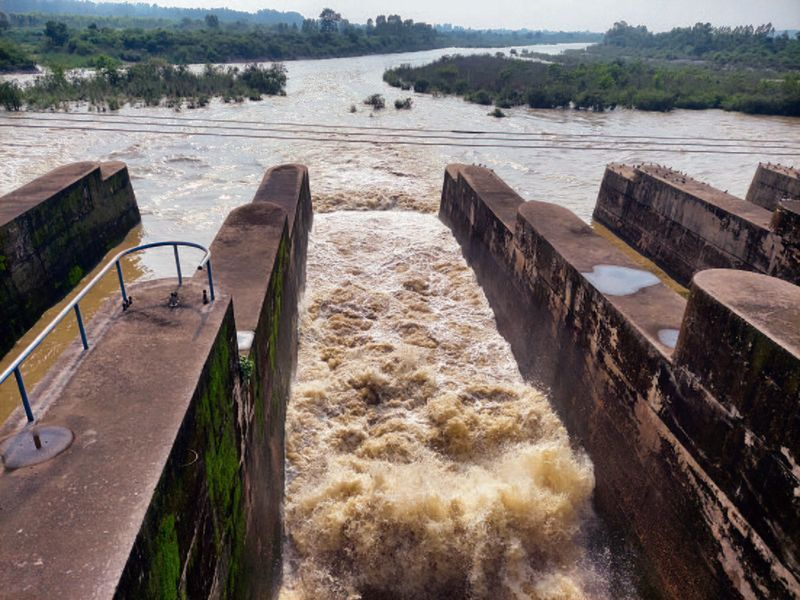
The Pong Dam water level that was already a few inches above the danger mark for the past some days rose by nearly two feet on Monday following heavy rainfall in the Beas catchment areas in Himachal Pradesh.
According to data released by the Bhakra Beas Management Board (BBMB), the water level in the dam rose to 1,392.48 feet this morning.
The swollen river had wreaked havoc in over 100 villages in Kapurthala, submerging crops on thousands of acres and damaging property worth hundreds of crores over the past one month. The BBMB operates the Pong and Bhakra dams. The data revealed that the water inflow at the dam was recorded at 64,964 cusecs, far more than 49,899 cusecs released from it on Monday morning.
This year, the Pong Dam witnessed unprecedented inflow during the August-September period, touching 2.25 lakh cusecs, with the outflow being maintained at 1 lakh cusecs for several days to discharge excess water. The Pong Dam is located in the Shivalik foothills in Kangra district of Himachal.
After originating near Rohtang Pass, the Beas flows through Kullu, Mandi and Kangra districts before entering Punjab. According to the India Meteorological Department (IMD), the rainfall has been in excess by 566 per cent in Mandi and by 207 per cent in Kangra during the past 24 hours.
In Kullu, however, it has been deficient by 36 per cent. Over the past week, the rainfall in Mandi and Kangra was above normal by 285 per cent and 128 per cent, respectively, while the overall rainfall across the state was above normal by 20 per cent. The seasonal surplus for Himachal since June 1 is 44 per cent so far.
At Bhakra Dam, which is located on the Sutlej in Bilaspur district of Himachal Pradesh, the water level was 1676.16 feet on Monday morning, almost four feet below the danger mark. The inflow into the reservoir was 40,999 and the outflow at 55,000 cusecs, according to the BBMB.
The Sutlej flows through Kinnaur, Shimla, Kullu, Mandi and Bilaspur of Himachal Pradesh, where rainfall during the past week has been below normal, except for Mandi, according to the IMD.
The weather department has predicted isolated to scattered rain across Himachal Pradesh till September 21, with fairly widespread rain and thunderstorm expected on September 16, for which a yellow alert has been issued.
In Punjab, where monsoon has been surplus by 50 per cent so far, light to moderate rain with spells of heavy rainfall occurred at isolated places over the past 24 hours. The IMD has predicted that light to moderate rain is likely to occur at some places till September 19, with dry weather thereafter.
Indian Navy joins exercise in South China Sea with US, Japan among 40 countries
India Navy has joined a multi-nation submarine-rescue exercise in the contested waters of the South China Sea. Uniquely, the US and Japan are among the 40 participants while China has a role as one of the observer countries’.
India, US, Japan, South Korea and Singapore are among the countries which have sent either their submarines or submarine rescue ships for the exercise named ‘Pacific Reach-2025’. India has sent in INS Nistar, its newly commissioned specialised submarine rescue vessel.
The Indian Navy said “the sea phase of the exercise would witness INS Nistar the engaging in multiple intervention and rescue operations with participating assets in South China Sea”.
Exercise Pacific Reach 2025, being hosted by Singapore will see participation of more than 40 nations as active participants or as observers.
Sources said China was one of the ‘observer countries’ meaning it has not sent a sea-going asset or an air asset. Military exercises have ‘observers’, the source said explaining the oddity. China has unilateral over-lapping maritime claims in the South China Sea with Malaysia, Vietnam, the Philippines, Brunei and Taiwan.
The exercise will be conducted in two phases — the harbour and sea phase.
The week-long harbour phase started today will involve in-depth discussions on submarine rescue systems, medical symposium and cross deck visits between the participating nations.
The Singapore Navy today said, “We look forward to exercising with our partners to share best practices, strengthen interoperability, all with one goal — to enhance the safety of our submariners at sea.”
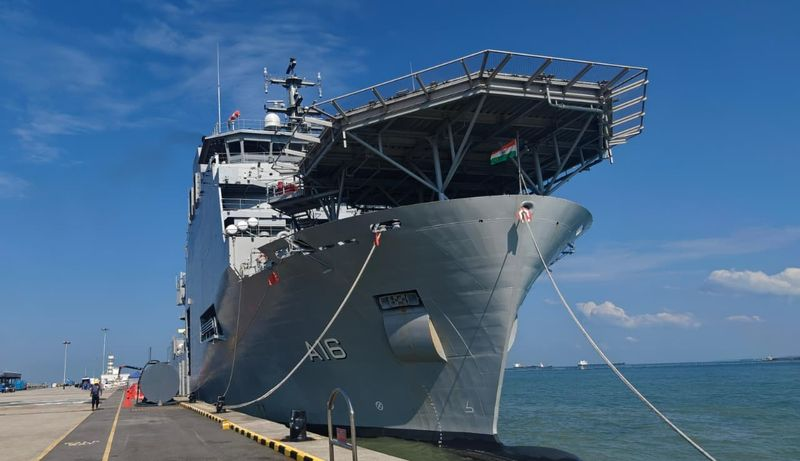
Indian Navy’s latest indigenously designed and constructed Diving Support Vessel, INS Nistar reached the port of Changi, Singapore yesterday.
INS Nistar, commissioned in July this year, will play the role of mothership for ‘deep submergence rescue vehicle (DSRV). India inducted two DSRVs in 2018-19 that are capable of rescue operations till depths of 650 meters of depth. The DSRV’s can either be deployed on ships or airlifted to the nearest mobilisation port for rapid deployment to distant seas.
One of DSRV’s will be operating from the INS Nistar for the ‘Pacific reach’ exercise, a biennial feature.
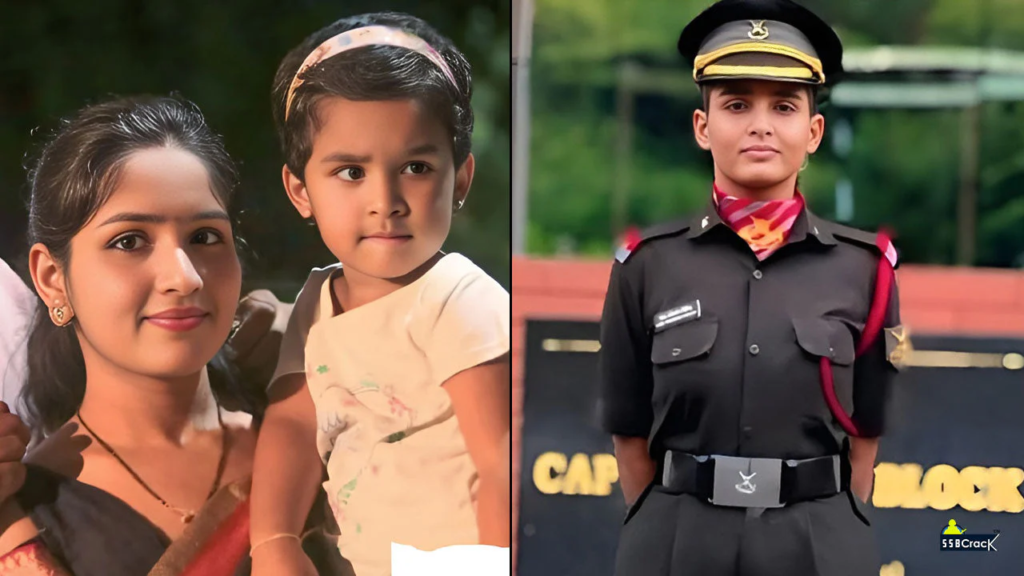
Lieutenant Priyanka Nilesh Khot’s transformation from a grieving widow to a commissioned officer exemplifies this enduring spirit. Commissioned on September 6, 2025, at the Officers Training Academy (OTA) in Chennai, her journey resonates as a beacon of resilience, particularly under the banner of NariShakti women’s empowerment and aligns with broader narratives of honoring legacies through service.
This article delves into her background, the challenges she overcame, the institutional support that enabled her path, and the wider implications of her story, drawing parallels with similar inspiring tales while acknowledging the complexities involved.
A Rural Roots and a Life Upended
Born and raised in Taradal, a modest village in Maharashtra’s Kolhapur district, Priyanka Nilesh Khot led a life rooted in simplicity and community. Her marriage to Naik Nilesh Khot, a soldier in the Indian Army’s Signals Corps, brought her into the fold of military life.
Nilesh served with distinction for 13 years, his last posting at a headquarters unit, where he contributed to communication and operational support essential to army functions. Tragedy struck in quick succession: first, the loss of her father-in-law, and then, on November 9, 2022, Nilesh succumbed to a sudden cardiac arrest. This double blow left Priyanka, then a young mother, to navigate profound grief while supporting her daughter and extended family.
In the immediate aftermath, Priyanka took up a role as a teacher in her village school, a position that provided stability and allowed her to contribute to her community. However, this period of quiet perseverance was interspersed with a growing resolve. As she reflected in a post-commissioning interview: “It was a big storm for the family. I decided to stand up for the family.” Her story underscores the often-overlooked emotional labor of military widows, who must balance mourning with practical responsibilities.
Discovering the Veer Nari Scheme: A Turning Point
The catalyst for Priyanka’s military career was the Veer Nari Special Entry Scheme, an initiative by the Indian Army to integrate widows of servicemen into its ranks. This program, part of broader efforts to support ‘Veer Naris’ (brave women), offers streamlined entry for eligible candidates, recognizing their unique circumstances. Priyanka’s discovery of the scheme “reignited her dream of serving the nation,” as noted in official army communications. Despite the challenges ranging from physical fitness requirements to psychological evaluations she cleared the Services Selection Board (SSB), a multi-stage assessment that tests leadership, intelligence, and personality.
Her training at OTA Chennai spanned 49 weeks, a rigorous regimen that includes physical drills, tactical education, and leadership development. The academy, known for producing short-service commissioned officers, hosted her passing-out parade, reviewed by Indian Air Force chief Air Chief Marshal AP Singh. Commissioned into the Army Ordnance Corps, Priyanka now handles logistics, supply chain management, and equipment procurement roles critical to operational readiness.
Quotes and Personal Reflections
In her own words, shared during media interactions at the parade, Priyanka emphasized the personal significance: “Today, I was commissioned in the Ordnance. This is truly a special moment for me and my family.” She highlighted her husband’s influence, noting his service in the Signals Corps and how his sudden loss propelled her forward. Her narrative echoes the Hindi proverb “कोशिश करने वालों की हार नहीं होती” (those who try never fail), a sentiment amplified across social media and official posts.