Sanjha Morcha

What’s New

Click the heading to open detailed news

Current Events :

web counter

Print Media Reproduced Defence Related News

China’s eye on Myanmar

China’s eye on Myanmar

Influence grows: Besides undertaking projects, China is interfering in Myanmar’s internal affairs by providing haven to separatist insurgent groups.

G Parthasarathy

G Parthasarathy
Chancellor, Jammu Central University & former High Commissioner to Pakistan

Chinese President Xi Jinping arrived in Myanmar’s capital Naypyidaw on January 18. It was the first State visit by a supreme leader of China after 19 years. Xi Jinping had meetings with Myanmar’s triumvirate — President Win Myint, Aung San Suu Kyi, and the de facto head of government, its powerful military chief, Senior General Min Aung Hlaing. The visit took place amid growing resistance by China’s maritime neighbours, Vietnam, Malaysia, Brunei, the Philippines, Taiwan and Indonesia, to Beijing’s moves to unilaterally define its maritime frontiers across the South China Sea. China has similar differences on its maritime boundaries with its northern neighbours, Japan and South Korea. China has not hesitated to use force to coerce the Philippines and Vietnam on this issue. This is despite a ruling by the International Judicial Tribunal on the Law of the Seas, rejecting Beijing’s exaggerated maritime boundary claims on the Philippines.

Xi Jinping also spent time meeting provincial leaders, primarily from areas where there are serious environmental and other concerns about Chinese projects, like the Myitsone Dam, whose construction has been halted. But, Xi Jinping’s focus remained on projects along the proposed China-Myanmar economic corridor, linking China’s Yunnan province to the Bay of Bengal Port of Kyaukphyu. As many as 33 MoUs on economic projects were signed, 13 of which were for infrastructure projects. This was in keeping with China’s policy of utilising its surplus indigenous capacities for buildings and infrastructure projects by securing the participation of its companies in infrastructure projects abroad.

The Chinese propensity to take over ports and other projects in foreign countries, if the recipient countries are unable to repay the costs incurred has raised concerns. The Myanmar government has been attempting to reduce the size and costs of large Chinese projects that could end up as white elephants. There were also discussions on agreements envisaging Chinese investments in building a transport corridor, linking the landlocked Yunnan to Kyaukphyu Port.

China is, in the meantime, interfering in Myanmar’s internal affairs by providing a safe haven, with political and armed support, to several separatist insurgent groups. China is also seeking to play the role of a mediator in negotiations between the Myanmar government and the separatist outfits. It is arming, training and financing the 23,000-strong Mandarin-speaking United Wa State Army. This group operates along China’s borders with Myanmar’s Shan. The Chinese are also allowing territory in Yunnan, bordering Myanmar and India, to provide support for a condominium of armed groups. These Myanmar-based groups, described as members of Myanmar’s ‘Northern Alliance’, also operate across the Myanmar-India border. They support groups operating in India’s Northeast, like ULFA and NSCN (K).

China’s oil supplies from the Persian Gulf are transported through the Straits of Malacca. A major concern that China has, is that India and its partners in ‘Quad’, together with Indonesia and Vietnam, could disrupt its oil supplies by closing the strategic sea lanes. There are now serious differences between China and Indonesia over maritime claims. China is also determined to counter India’s maritime capabilities by expanding the reach and size of its navy, which operates across the Indian Ocean. Its bases in Gwadar (Pakistan) and in Djibouti can also be used for expanding its Indian Ocean presence. Beijing also has ambitions to ‘persuade’ countries like Sri Lanka and the Maldives to provide naval base facilities.

Xi Jinping’s visit came at an awkward time for Suu Kyi. She had defended her government in proceedings in the world court over the alleged genocide by the Myanmar army of the Rohingya. Once an icon of the US, UK and EU, Suu Kyi is now being criticised across the western world.

Given its growing international isolation following the Rohingya refugee crisis, Myanmar had little option but to turn to China for diplomatic and financial support. India, in turn, will have to undertake a serious diplomatic initiative to create conditions for the return and rehabilitation of the Rohingya from Bangladesh to their homes in Myanmar. This effort could be facilitated by a resumption of significant economic assistance by Japan and others for the rehabilitation of an estimated 7.5 lakh Rohingya.

Myanmar has supported India consistently in dealing with insurgent groups in its Northeast. India, in turn, has acted against the separatist Arakan Army that operates from areas close to Myanmar’s Sittwe Port, which has been built by India. Interestingly, Sittwe is located not too far from the port of Kyaukphyu, which China is set to build! The BIMSTEC economic grouping, which brings together coastal and landlocked states across the Bay of Bengal, now assumes new strategic importance. BIMSTEC links countries of South Asia and Southeast Asia, who are members of either SAARC or ASEAN.

India has recently supplied Myanmar a Kilo-class submarine, modernised at Vizag. The submarine is to be deployed by Myanmar in the Andaman Sea for security operations. It symbolises the desire of both countries to ensure the safety of the sea lanes across the Bay of Bengal. It also reinforces the existing cooperation between the armies of both countries to deal with separatist and cross-border insurgencies in India’s Northeast and in Myanmar’s Kachin and Rakhine states, bordering India.


India, Lanka confront new strategic reality

ndia is Sri Lanka’s closest neighbour and Colombo will do nothing to harm its security interests even as China’s shadow is visible everywhere in Sri Lanka. Beijing was Rajapaksa’s favourite in business development, indicating how Colombo apportioned its political and economic security.

India, Lanka confront new strategic reality

Maj Gen Ashok K Mehta (retd)

Military commentator

PRIME Minister Percy Mahinda Rajapaksa, twice former President, on his first official visit to India beginning today, is letting younger brother and soldier, President Gotabaya Rajapaksa, do all the tough talking, though he will try to iron out the wrinkles it has caused. Gotabaya’s first visit abroad after becoming the President was to India when New Delhi, within hours of his swearing in, despatched Foreign Minister S Jaishankar, an old Sri Lanka hand, to invite him. Mahinda too has chosen New Delhi as his first port of call. Foreign Minister Dinesh Gunawardena also touched base, renewing discussions with South Block on the sticky fishermen issue. National Security Adviser Ajit Doval was in Colombo last month and met both Gotabaya and Mahinda, reaffirming India’s commitment towards Sri Lanka’s security, focussing on counter terrorism and intelligence sharing. None of the Sri Lankan leaders has visited either China or Pakistan yet, though their foreign ministers have called on Gunawardena. Such India First policy in an exchange of bilateral visits is unprecedented.

Before and during his first presidential visit, Gotabaya said India is Sri Lanka’s closest neighbour and a long-standing friend and Colombo will do nothing to harm India’s security interests. At the joint press conference, Prime Minister Narendra Modi said he was confident Colombo will carry forward the process of reconciliation to fulfil the aspirations of Tamils for equality, justice, peace and respect — a clear reference to the implementation of the 13th Amendment which was a byproduct of the Indo-Sri Lanka accord of 1987 and the post-war reconciliation process started in earnest by the previous regime, but making little substantial progress due to domestic political resistance.

So what has Gotabaya been saying and doing that has ruffled feathers at home and abroad? On Tuesday, during Sri Lanka’s 72nd Independence Day, for the first time since 2016, singing the national anthem in Tamil, which is a national language, was dropped. Gotabaya told Sri Lankans that as the elected leader — he was voted into power by the Sinhalese — he must serve all, even those who did not vote for him. He added that he did envisage public officials, lawmakers and judiciary not to impede his commitment to fulfilling the needs of the people. In the recent past, he has spoken about the constitutional and electoral reforms for a strong executive and legislature through removal of 19th Amendment (limits President to two terms and curbs his powers) and 15th Amendment (undermines electability of small and regional parties).

Gotabaya’s most striking stated intention though is to substitute the devolution of power in the Tamil majority north-east with development claiming full devolution could not be implemented against the feelings and wishes of a majority of the Sinhalese. The plan apparently seeks ultimately the abolition of the Provincial Council system of asymmetric devolution. For the first time, there is no Tamil/Muslim minister in the government. Further, Gotabaya had said that his government would walk out of the United Nations Human Rights Council Resolution 30/1 of 2015, co-sponsored with the US on post-war transitional justice and accountability; and release of all military personnel in jail on account of human rights violations. Some deft backtracking on the UN resolution has occurred. The International Crisis Group, in its latest report, has listed Sri Lanka on the watchlist of six countries at risk of conflict and escalation of violence in 2020 and has recommended to the European Union, deterrent measures, including withdrawal of Generalised System of Preferences (GSP) Plus benefits from Sri Lanka due to its failure to comply with its commitments on reconciliation. The UN has already curtailed Sri Lanka’s international peace-keeping slots which is a big blow to the morale of the soldiers.

Big brother Mahinda will have a tough job explaining and justifying Gotabaya’s actions and other majoritarian ideas in the pipeline, especially putting on hold full implementation of 13-A — amendment that led to the creation of provincial councils and made Tamil and Sinhala the official language — and the process of reconciliation. It was Mahinda himself who, after defeating the LTTE, had mooted the idea of replacing devolution with development in the north-east. Only after India’s persistent pressing did he renege and at least thrice thereafter, promised full implementation of 13-A and beyond — an Upper House added to the legislatures in the north- east. A mellowed Mahinda will be amenable to consider reversing the pause on reconciliation over which the establishment is already doing a rethink. In order to implement constitutional amendments, a two-thirds majority is essential. This cannot be achieved by the Rajapaksas without the support of the minority Tamil and Muslim parties. This and India prodding will sooner than later restore development with devolution in tandem and not exclusionary as advocated by the President.

China’s shadow is visible everywhere in Sri Lanka, especially in the south. In their decade-long earlier stints in government, Beijing was Rajapaksa’s favourite partner in economic development, ranging from the construction of highways, ports, airports and hotels — you name it and the Chinese companies were embedded there. Inaugurating the 269-hectare mega port city in Colombo last month, while Mahinda declared it as a future financial hub, he rubbished the China debt trap theory. The chief family strategist and a former minister, Basil Rajapaksa, has neatly apportioned the political and economic security of Sri Lanka to India and China, respectively. The Economic and Technical Cooperation Agreement — which New Delhi has sought, is unlikely to get a push from Mahinda.

The stunning return of the Rajapaksa clan is the new strategic reality in Sri Lanka. The Rajapaksas want a new beginning in their relations with India after a period of what they call ‘misunderstanding’. While the Rajapaksa brothers play ‘good cop, bad cop’, they recognise the new India, letting Mahinda, the politician, be in the driver’s seat.


114 NCC cadets accorded warm welcome at camp

114 NCC cadets accorded warm welcome at camp

A cadet interacts with top Army officers after returning from the Republic Day camp in New Delhi.

Our Correspondent

Jammu, January 5

Cadets, numbering 114, of the National Cadet Corps (NCC) from Jammu, Kashmir and Ladakh Union Territories (UTs) who participated in a month-long Republic Day camp in New Delhi arrived here on Wednesday.

On behalf of Major-General Naveen Kumar Airy, Additional Director General of the NCC, Directorate, J&K and Ladakh, Brigadier Kapil Sood, along with the staff of the Srinagar and Jammu Group, welcomed them at the camping ground, Nagrota.

The cadets brought loads of laurels for Jammu, Kashmir and Ladakh by bagging various prizes and honours at the all-India level. The Director General NCC’s commendation card was bagged by cadet Mehr-Un-Nisa from Anantnag and Cadet Rohit Billowria from Jammu.

The cadet overall best performance of Directorate was bagged by Cadet Mitali Sharma of GCW Gandhi Nagar. Cadet Mitali got the honour for the best commentator for the master of ceremony.

Mitali was highly appreciated for her vote of thanks given to General MM Narvane, Chief of Army Staff. Mitali Sharma is also expected to visit friendly countries under the NCC youth exchange programme.


APS holds painting competition

APS holds painting competition

Army Public School (APS), Kaluchak, organised Jammu Cluster Rolling Trophy Painting Competition. Army Public Schools from across Jammu viz. APS BD Bari, APS Miran Sahib, APS, Jammu Cantt, APS Damana, and APS Sunjuwan, participated in the competition. The participants competed in three categories -Junior Level comprising of Classes III-V, mid-level comprising Classes VI-VIII and senior level comprising Classes IX-XII. The main thrust of the event was towards stirring the imagination of students in creativity.


India, US set for biggest defence collaboration, says Rajnath

India, US set for biggest defence collaboration, says Rajnath

Tribune News Service

Lucknow, February 6

Defence Minister Rajnath Singh today said the India-US collaboration in defence manufacturing could prove to be the “biggest collaboration of this century”.

Speaking at a seminar organised during the ongoing DefExpo by the US-India Business Council (USIBIC), he said, “While the US is major exporter (of military equipment), the defence manufacturing sector in India is growing at a rapid pace. In such a situation, our collaboration can prove to be the biggest collaboration of this century.”

While the US is a major arms exporter, the defence manufacturing sector in India is growing at a rapid pace. Our collaboration can prove to be the biggest collaboration of the century. —Rajnath Singh, Defence Minister

India has imported equipment worth around $18 billion from the US in the past 12 years. Rajnath Singh sought to synchronise export capabilities of the US defence sector with the ever-expanding opportunities in the defence manufacturing sector available in India to take the relationship between the two countries towards a collaborative approach from the traditional “buyer-seller” arrangement. “Reform that have been made, will continue,” he said.

India also expressed its readiness to take the defence engagement with friendly African countries to the next level. Addressing the India-Africa Defence Ministers Conclave in Lucknow today, on the sidelines of the DefExpo, Rajnath Singh said, “India will

continue to intensify and deepen engagement. It will be a partnership guided by your priorities.”

He stressed on strengthening cooperation and mutual capabilities in combating terrorism and extremism.

Twelve defence ministers and 38 countries represented the India-Africa Defence Ministers’ Conclave today.


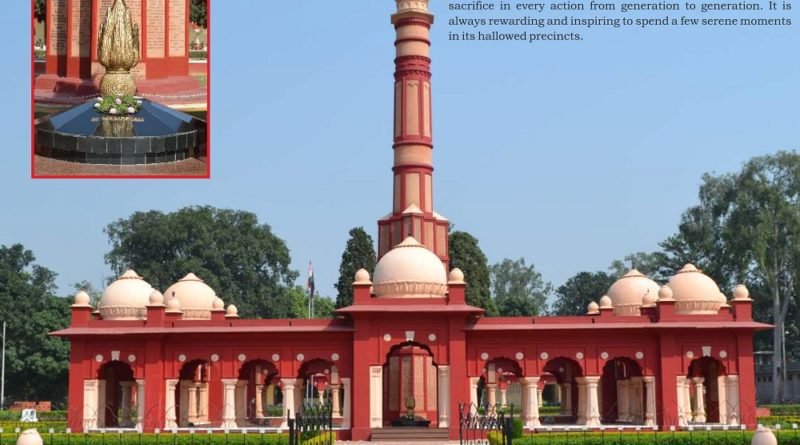
THE GODS OWN _;;;ALL INDIA BENGAL SAPPERS ( OFFICERS ASSOCIATION(BSOA) MEET —-08 MARCH2020

1 Foreward.cdr


ALL INDIA BENGAL SAPPERS OFFICERS ASSOCIATION(BSOA) MEET —-08 MARCH2020

IInd (2nd) All India BSOA meet is being org on 08 Mar 2020 : 

Details are as Under :-

  (a) Venue –—Engrs Officers Mess , 07 Parade Road ,Delhi Cantt

(b) Time –—– 1200hrs onwards , followed by contributory Lunch

2.   MAx attendance of Bengal Spr Officers , both Veterans and Serving, with their spouses is solicited please

3.  Officers are requested to give confirmation of their attendance to any of the following please:-

(a) CAMS Delhi  — 011-26143683

(b)  Col Comdt Sectt — 011-2514368327th Guns Bengal Sappers Info1

DSC_2237-800x445
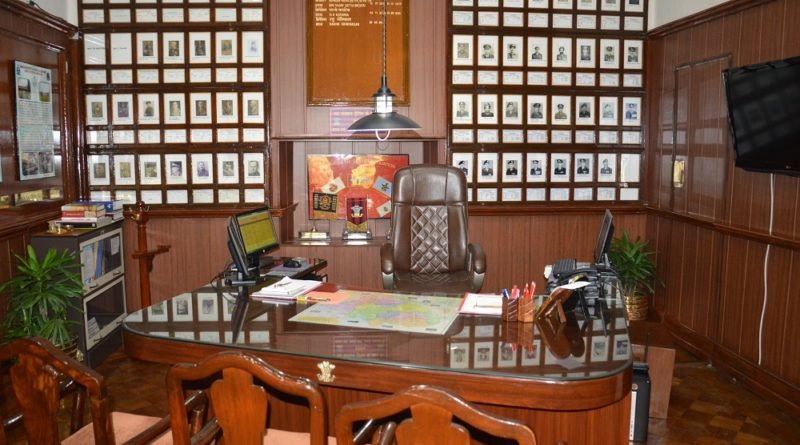
COMMANDANTS OFFICE ROORKEE


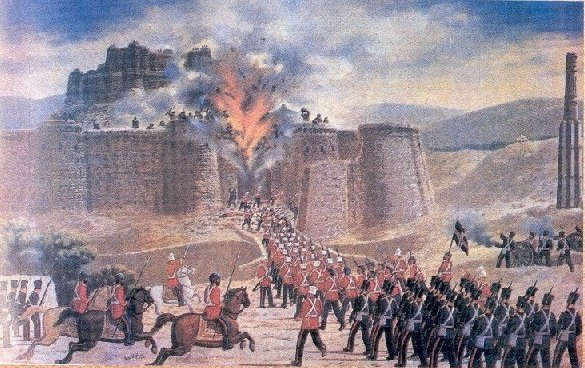
Ghuznee


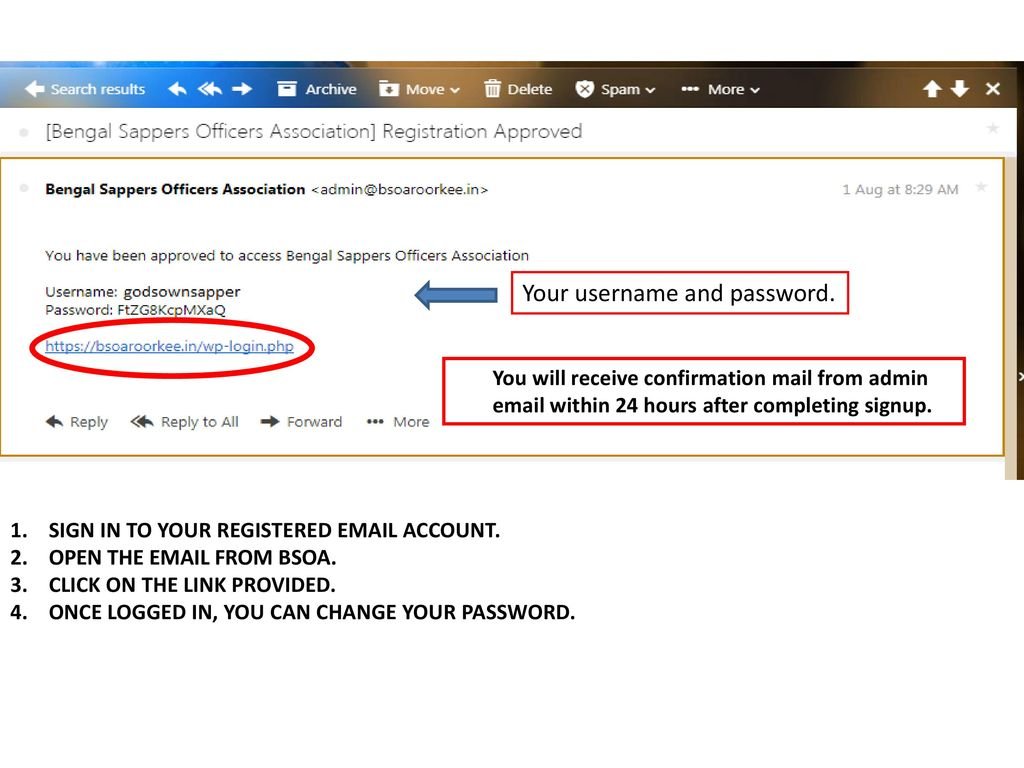
You will receive confirmation mail from admin within 24 hours after completing signup. SIGN IN TO YOUR REGISTERED ACCOUNT. OPEN THE FROM BSOA. CLICK ON THE LINK PROVIDED. ONCE LOGGED IN, YOU CAN CHANGE YOUR PASSWORD.


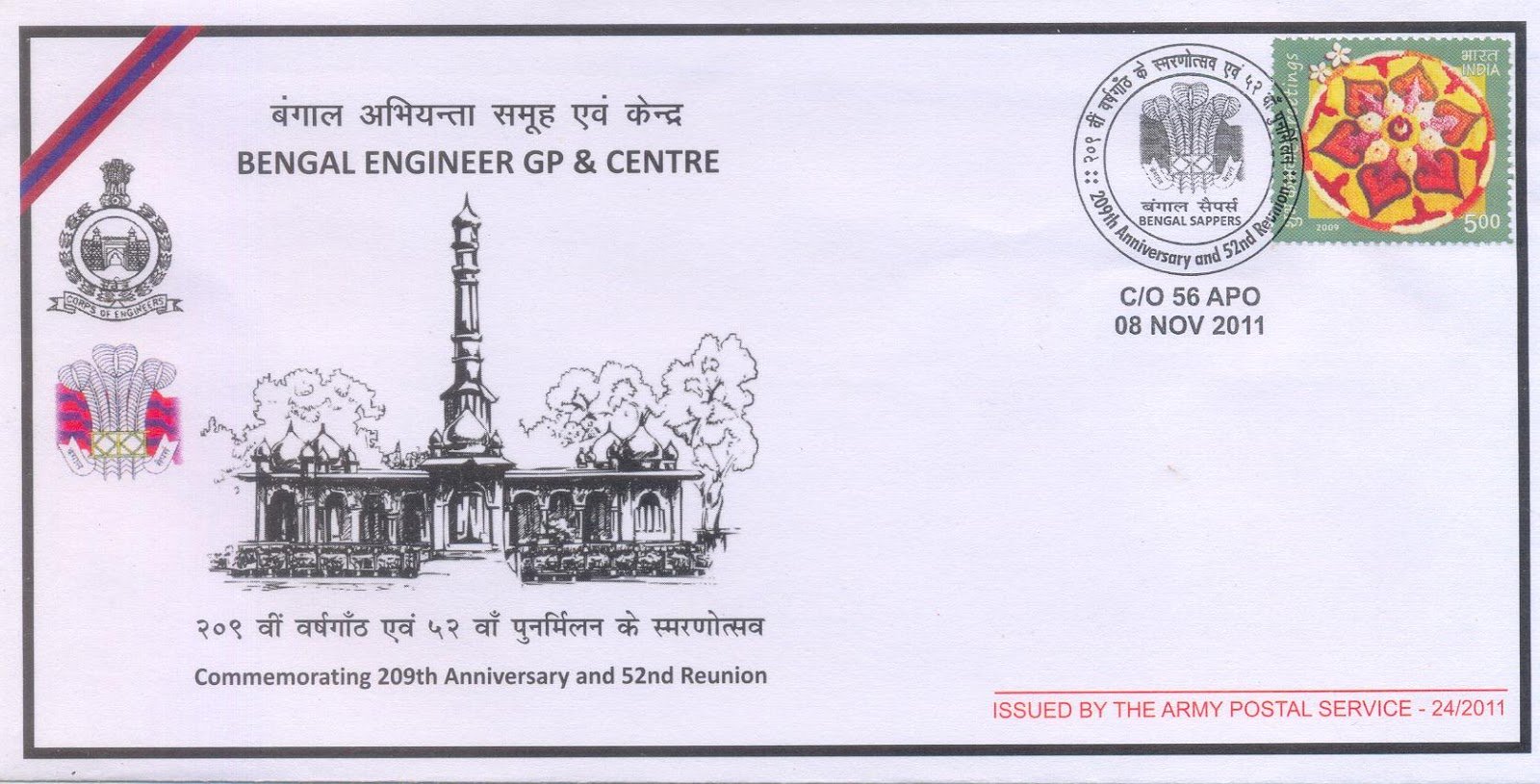
27th Guns Bengal Sappers


download
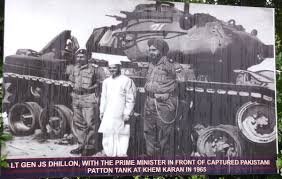
FIRST INDIAN COMMANDANT OF ROORKEE CENTRE LT GEN JS DHILLON ( THEN COL)

images


1 Foreward.cdr

1 Foreward.cdr


THE SOLDIER WHO COULDN’T HEAR THE DOORBELL

In December 1965, a young dynamic leader was commissioned as a Second Lieutenant into the Indian Armed Forces. He joined the armoured regiment and learnt how to operate the Vijayanta tank in no time. From that time onwards, he actively participated in regular tank practices and the annual War Games.

In 1971, when Pakistan attacked India, he was one of the brave men who fought for India. Though the army successfully decimated Pakistani armies and made us all proud, it all came at a cost. They lost many companions. Some lost limbs. And some had damaged hearing for the rest of their lives. The young officer who was commissioned in 1965 was one of them.

He was my late grandfather, who later retired as Maj Gen Arun Kumar Pathak. His exposure to tanks continued for many years even after the 1971 war. Because of the constant exposure to high decibel noises from tank movement and in-tank firing, there were many frequencies that he could not hear eventually. Some doorbells, certain white noise. The whistling of the winds during a wind storm. Some mobile phone ring tones. Sometimes, when we called out to him from right behind him, he wouldn’t hear us! He took it all with a soft smile.

Sounds under 70dB are not harmful to the human ear. They can at most be annoying. However, sounds over 90dB can lead to pain and even NIHL (noise-induced hearing loss). The normal noise range of tank fire extends from 150dB to 180 dB. Imagine tens of tanks going off together one after the other, for hours…And days. Officers and jawans are subjected to such loud sounds, not just during wartime but also during training and war games. It causes irreversible damage to the hearing. Even today, our men in uniform are not provided with effective protective gear to safeguard their hearing. In fact, it not even demand and is not even in the discussion.

So just like it happened with my grandfather, we can expect many brave, selfless and patriotic soldiers to lead the latter part of their lives unable to hear the many frequencies that are an integral part of our lives…and then eventually lose their hearing altogether.

They too will take it with a smile as they are big-hearted and feel it’s a small price to pay for their country. But it is not a small price and we all owe them. We owe them forever.

Arjun Pathak is a student of Class 7 in Navrachana International School, Gujarat. He wrote this story as an assignment on “Case study on Effect of Loud Sounds on Human Hearing”. It is a simple story, told with great poignancy and is published without editing

Arjun Pathak


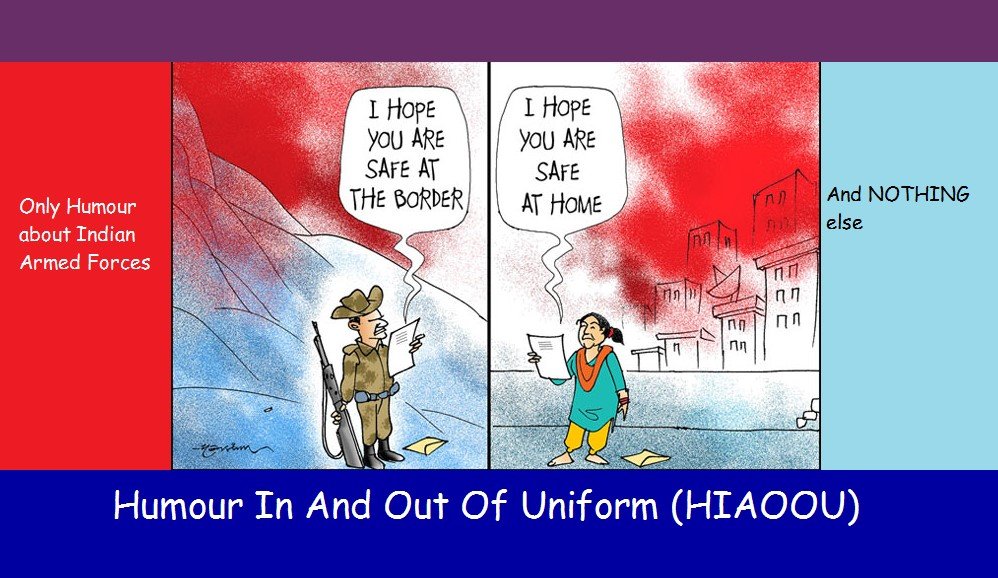
HUMOUR IN AND OUT OF UNIFORM

 Ravi84403090_10221085237501919_3622946076866117632_o Nair

An Expedition to SPR (selected place of Residence)

I read an interesting narrative of one of my friends Ravi Nair, my name sake about the good old times of his father, a VCO coming on leave from NWFA where the latter was posted. It read like an expedition to selected place of residence South of Vindhya Ranges !!!
Reading this, I too was reminded of my travails home from the borders, half a century ago. I venture to jot down my memories for the posterity.
I vividly remember coming on my first Annual leave from Mizo Hills, Vaphai Post, bordering Burma (todays Myanmar) along Tio River .
— On foot for four days to reach the road head at Tuirial- Aizol, that too at the convenience of Link Patrols, which ensured the protection to the foot columns. Then to Masimpur via Wrangte, Laylapur Rear, in a Convoy of minimum 70-80 vehicles, with a vanguard and rear guard of Armoured Cars. Crouched in the body of a Sakthiman or a Tata Mercedes Benz 3 Ton truck, winding down, forcing one to throw up till nothing is left in ones aching bowels.
And to Silchar to catch a meter gauge locomotive steaming out towards Halflong. From Halflong to Gauhati on a broad gauge rail chugging sedate in no hurry , and disgorged at Gauhati in the dead of the night. From Gauhati to New Bongaigaon on a metergauge .
At New Bongaigaon, walk across the sand banks to the waterlines of Ganges, with the coolie following lugging ones steel trunk on latter’s head. By the way, the trunk had more of bottles than of any clothes, the latter acting only as paddings between bottles so as not to break. Walk towards the River ends where the Steamer waited to ferry one across the Ganges at Farakka.
Few hours in the steamer which brought images of the huge paddle boats of Amazon. Being a First Class passenger the steamer provided steaming rice with watery daal and pickles as dinner, then in utter contrast coffee served with decoction, cream and sugar in separate ceramic pots (chinked and dirty) -in true occidental style. !!
On reaching the other bank long walk on river sand towards New Jalpai Guri railway station, where the rail rake awaited with similar seat/ berth reservation arrangements. The steam engine laboured the rake to Sealda Station and from there to Howra in a local train .
Depositing luggage in the clock room. A quick shower and shampoo at First Class Waiting Room and ‘non-itinerary visits’ to Calcutta City just to have a feel of the metro life, and returning for the night train Coromandel Express to Madras. After two nights reaching Madras early morning.
Once again the luggage to clock room. Taxi ride to relatives unannounced and to the 24 x 7 movie halls Diamond, Emerald and Sapphire, all housed in same building on Mount Road . Normally went off to sleep in the AC comfort of movie hall while intermittent watching of Taras Bulba, which had no END, kept repeating. Move to the Madras Central by evening to catch the night’s Cochin Express.
The ‘Canadian Bullet Engine’ took on the initial traction and then local snub nosed ones which sneezed burning coal and dust through out, brought one finally to Cochin Harbour Terminus by noon. ‘Runglee Rungliot’ meaning ‘thus far and no further’ .
That was the termination of journey on rails and thence forth in a ‘yellow and black’ Hindustan taxi for move to Alleppey 65 kms away.
And, Alas by evening, after a fortnight of having set forth from Vaphai, one entered ones ‘selected place of residence’ and to ones Sweet Home, waking up and surprising his mother and siblings – as the FL (Forces Letter) -FOAS (Free on Active Service) one had posted a month early from ones picquet of announcing sanctioning of his leave and tentative travel plan, had not reached his mother, after customary sensoring at 99 APO, till then. Hence, surprised indeed – they were.
The matted hair filled with few pounds of coal dust and the telltale ‘railway acquired syndromes’ for over a week, like bugs and lice, had to be scrubbed off. Answer mother knew, bar soap (used for washing clothes) and ‘besan flour’ with abrasive ‘incha scrub’, ‘Amma’s special concoction coconut oil massaged lavishly and washed down with scores of buckets of water from the well, drawn and water cannoned by ‘man Friday ‘ Bhaskara Pillai, who showed signs of kindness on promise of two pegs in the evening !!!!
By now the meagre amount of ₹200/- discounted through a Canara Bank, Boat Jetty Road Branch, Alleppey, cheque from unit Baniya (Wet Canteen Contractor), for the journey had dried out. First thing in the morning was to visit ones bankers to whom all the salary – a princely sum of ₹ 345/- was remitted after the TDS of ₹5/- every month, irrespective of where one was posted . !!! It was a big money indeed, as a Sovereign (Kuthira Pavan of 8 gms of 22 k gold) costed only ₹ 90/-. !!! Surprised to find nearly 2k in the bank to blow off. !!!!
Serving in field the entire salary got accumulated in the bank as there were no scopes to spend in a picquet, where ‘roti, kapada, makkan’ were free.!!!
With ‘kuppies’ (bottles) full in crates, crisp notes in the pocket, and cartons of 555 and Kent in lieu of few pegs to right friends with US connections!! ; And ones First Love – the original British Royal Enfield KLT 7724, always fully filled—- life was worth living ——Till the ‘kuppi (booz)’ and ‘panam (money)’ lasted !!! Then people start asking ‘when are you returning?’.
Finally one returns to Mother for a ‘non- refundable loan’ for financing the ‘expedition back’. Totally demoralised and ‘home sick’ return. !!!!, which would take a couple of Long Range Patrols to heal !!!

-The present generation soldier cannot imagine such a situation. Airforce Courier service, concessional air travels, authorised LTCs by Air, fast electric trains and the Farakka barrage over Ganges, beautiful roads wider than NHs crisscrossing and ‘spiralling’ the Mizo hills heights – where we once heaved and perambulated, and above all the mobile phones which announced and videoed live minute to minute progress of ones move etc – were non existent and couldn’t even be thought of.
To achieve surprise nowadays is difficult!!!—
– Ravi Nair- (Sikh LI)

Image may contain: 1 person, closeup
Image may contain: 2 people, people standing
Image may contain: one or more people and outdoor


Dates of next hearing in the SC  case are as under :

1.  OROP           – 10 Feb 2020.
2..NFU                – 18 Feb 2020.
3.  IT on DP        – 20 Feb 2020.
3..NFU                – 18 Feb 2020.

India-Pakistan nuclear war would harm ocean life: Study

India-Pakistan nuclear war would harm ocean life: Study

Corals, clams, oysters and other marine organisms use carbonate ions to create their shells and skeletons, according to the National Oceanic and Atmospheric Administration.

New York

A nuclear war between India and Pakistan could worsen the impact of ocean acidification on corals, clams, oysters and other marine life with shells or skeletons, says a study.

“We found that the ocean’s chemistry would change, with global cooling dissolving atmospheric carbon into the upper ocean and exacerbating the primary threat of ocean acidification,” said the study’s co-author Alan Robock, Distinguished Professor at Rutgers University in the US.

For the study, published in Geophysical Research Letters journal, the researchers looked at how climate changes stemming from nuclear war would affect the oceans.

They used a global climate model in which the climate reacted to soot (black carbon) in smoke that would be injected into the upper atmosphere from fires ignited by nuclear weapons.

They considered a range of hypothetical nuclear wars, including a relatively small one between India and Pakistan and a large one between the US and Russia.

Excess carbon dioxide from the burning of fossil fuels enters the ocean and reacts with water to form carbonic acid, which decreases ocean pH (makes it more acidic) and lowers levels of carbonate ions.

Corals, clams, oysters and other marine organisms use carbonate ions to create their shells and skeletons, according to the National Oceanic and Atmospheric Administration.

A more acidic ocean makes it harder to form and maintain shells and skeletons. The massive amount of smoke from a nuclear conflict would block sunlight and cause global cooling, the study said.

The cooling would temporarily boost the pH in the surface ocean over five years and briefly lessen the decline in pH from ocean acidification.

But the cooling would also lead to lower levels of carbonate ions for about 10 years, challenging shell maintenance in marine organisms, said researchers.

“We have known for a while that agriculture on land would be severely affected by climate change from nuclear war,” Robock said.

“A lingering question is whether the survivors could still get food from the sea. Our study is the first step in answering this question,” Robock added.


The next step is to combine projected changes in ocean chemistry with projected changes in temperature and salinity and assess their impacts on shellfish and fish stocks throughout the oceans, he said. — IANS