










Sanjha Morcha

What’s New

Click the heading to open detailed news

Current Events :

web counter

Print Media Reproduced Defence Related News

Himachal steps up vigil along China border in Kinnaur and Lahaul and Spiti districts

Shimla: After 20 Indian soldiers were killed in a stand-off with Chinese troops in the Galwan Valley in eastern Ladakh, the Indo Tibetan Border Police has stepped up vigil along the international border in tribal Lahaul and Spiti and Kinnaur districts of Himachal Pradesh.

The ITBP, a frontier force, were on alert after air incursions by Chinese helicopters were reported twice in Lahaul and Spiti district’s Sumdoh sector on April 11 and 20 and then in the first week of May.

The ITBP, which mans the international border, conducted fresh recces in the area to assess the movement of Chinese troops across the border. In a recent report sent to the Union home ministry, the ITBP said: “By and large the situation is peaceful but there is a lot of movement of civilian vehicles.”

The ITBP deputy commandant visited the border post at Lepcha to conduct fresh surveillance after the faceoff between Indian and Chinese troops in Ladakh. The army along with other intelligence agencies also took stock of the situation.

“There is no suspicious activity along the border here so far,” a police official said, requesting anonymity.

STATE INTEL UNITS ON ALERT

The Himachal Pradesh Police has issued an advisory to district police chiefs of the border districts of Kinnaur and Lahaul and Spiti, asking them to take precautionary measures to ensure security of the local population and also to collect intelligence that would enable them to draw the plan of action.

“All state intelligence units have been alerted,” said superintendent of police, criminal investigation department (CID), Khushal Chand Sharma, who is also the police spokesman.

Himachal Pradesh shares a 260-km porous border with China. Of the total border length, 140 km is in the tribal Kinnaur district, while 80km of the border falls in Lahaul and Spiti district.

SENSITIVE BORDER POSTS

Five battalions of the ITBP guard the border. In all, there are 20 ITBP posts along the Himachal border. The sensitive ones include Kaurik, the last village situated beyond Sumdoh. Besides ITBP posts are situated in Lakuma, Morrang, Morni, Dogri, Rishi Dogri, Domti and Niltah La.

The international border is jointly patrolled by the ITBP and the Indian military. Chinese army has been constantly strengthening its infrastructure along the border in Lahaul and Spiti and Kinnaur districts even as this frontier was peaceful during the 1962 aggression.

There are high passes along the Chinese border that forbids the troops from both sides to intrude into each other’s territory.

The main passes between China and India in Himachal Pradesh include the Khimokul Pass and Simthong Pass, located ahead of the Trungla Valley, which crosses into China-occupied Tibet.
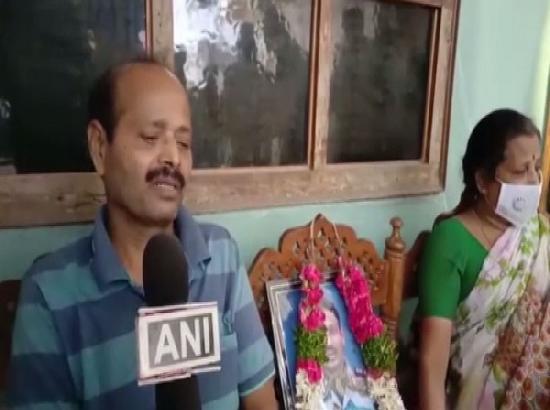

‘We are in deep shock’, say parents of Col Santosh Babu, who lost his life in violent face-off with Chinese soldiers

'We are in deep shock', say parents of Col Santosh Babu, who lost his life in violent face-off with Chinese soldiers

    • Suryapet (Telangana), June 17, 2020: Parents of Colonel Santosh Babu, Commanding Officer of the 16 Bihar Regiment, who lost his life in the violent face-off with Chinese soldiers in Galwan valley area, are shocked by the unexpected loss.

      Upender and Manjula, the parents said they had first been in disbelief but later accepted the truth after being informed by higher authorities about the face-off. Manjula, the martyred Colonel’s mother, told ANI, “We received the news, yesterday afternoon at 2 pm that my son has been martyred. I could not believe that my son has been martyred.”

      “We are under deep shock, We could not believe it when we got to know about our son. I could not believe it as he was very brave. Since the last fifteen years, he had gained success. I immediately inquired from one of the officers. Later, several officers of the Army contacted directly through my phone. They said that they are making arrangements to get the body from that place to Suryapet,” Col Santosh’s father, Upender, told ANI.

      He added that the body of his son will reach Suryapet by today evening, and also said that he has been given assurance of full support from leaders and officials, including MoS (Home) G Kishan Reddy.

      “By tomorrow the body will reach here, along with my daughter-in-law and the kids, the officer told me on phone. Kishan Reddy spoke to me on the phone as well. All the delegates from Suryapet, including, Collector has given us assurance to support us at this time. An Army official has informed that the body will start in the day and reach Suryapet at around 4 pm via Chandigarh to Hyderabad and then Suryapet,” he said.

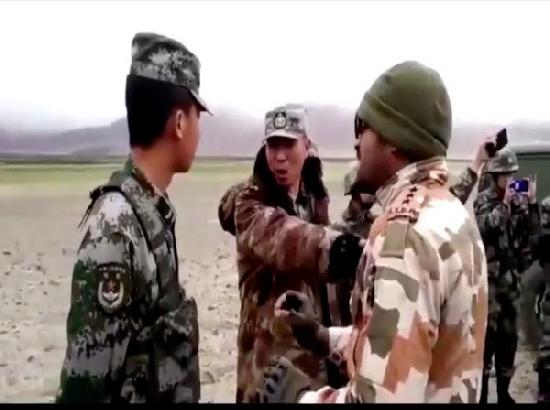
      The violent face-off happened on late evening and night of June 15 in Ladakh’s Galwan Valley as a result of an attempt by the Chinese troops to “unilaterally change” the status quo during de-escalation in Eastern Ladakh and the situation could have been avoided if the agreement at the higher level been scrupulously followed by the Chinese side, India said on Tuesday.

      The Army confirmed that 20 soldiers were killed in the face-off including 17 who were critically injured at the stand-off location and exposed to sub-zero temperatures in the high altitude terrain.

      Indian and Chinese troops have disengaged at the Galwan area in Ladakh where they had earlier clashed on the night of June 15 and 16, Indian Army said.


Give strong response to China: Capt Amarinder Singh

Give strong  response to China: Capt Amarinder Singh

Chandigarh, June 16

Expressing anger over a violent clash in Ladakh’s Galwan Valley, Chief Minister Capt Amarinder Singh on Tuesday called for a strong response from the Central Government to the repeated violations on the Indian territory by the Chinese.

“It is time now for India to stand up to these repeated incursions that are a blatant violation of our territorial rights and put a stop to such attacks on our territorial integrity,” said the Chief Minister, asserting that every sign of weakness on the part of India made the Chinese reaction more belligerent.

While it was important to defuse the tension at the border, and India was not in favour of war, Capt Amarinder said the country could not afford to show weakness at this time and needed to take a strong stand to deter the Chinese from any further intrusions and attacks on its territories and men. Even after brutally beating the commanding officer and two soldiers to death, Beijing was feigning innocence, and trying to put the blame on India, accusing it of provoking the conflict through ‘unilateral actions’, the Chief Minister said. — TNS



CO of Chinese unit among those killed in face-off with Indian troops

CO of Chinese unit among those killed in face-off with Indian troops

    • New Delhi, June 17, 2020: The commanding officer of the Chinese Unit involved in the violent face-off on the night of June 15-16, with Indian troops in the Galwan Valley is among those killed, sources confirmed to ANI.

      The increased movement of the Chinese helicopter at the face-off location showed that and Chinese suffered a significant number of casualties in the violent face-off. “The assessment is based on the number of Chinese soldiers evacuated from the face-off location on stretchers and subsequently by ambulance vehicles on the track along the Galwan river, as also the increased Chinese helicopter movement,” said sources.

      “The troops who were part of the face-off told about a significant number of Chinese casualties. Although it is difficult to specify the exact number of casualties both killed and wounded, the number is estimated to be much beyond 40,” sources added.

      On Tuesday, External Affairs Ministry spokesperson Anurag Srivastava said that violent face-off happened on late evening and night of June 15 in Ladakh’s Galwan Valley as a result of an attempt by the Chinese troops to “unilaterally change” the status quo during de-escalation and the situation could have been avoided if the agreement at the higher level been scrupulously followed by the Chinese side.

      Srivastava said both sides suffered casualties in the violent face-off and the Chinese side departed from the consensus to respect the Line of Actual Control (LAC) in the Galwan Valley.

      Responding to media queries on the situation in the western sector of the India-China border, Srivastava said that India and China have been discussing through military and diplomatic channels the de-escalation of the situation in the border area in Eastern Ladakh.


How many Chinese soldiers were killed in clashes with Indian army in Galwan?

How many Chinese soldiers were killed in clashes with Indian army in Galwan?

    • New Delhi, June 17, 2020: Indian intercepts reveal that Chinese side suffered 43 casualties including dead and seriously injured in the violent face-off in Ladakh’s Galwan valley, sources confirmed to ANI.

      However, according to American intelligence, 35 Chinese troops died, including one senior officer.

      The violent face-off happened on late evening and night of June 15 in Ladakh’s Galwan Valley as a result of an attempt by the Chinese troops to “unilaterally change” the status quo during de-escalation in Eastern Ladakh and the situation could have been avoided if the agreement at the higher level been scrupulously followed by the Chinese side, India said on Tuesday.

      At least 20 Indian soldiers were killed in the violent face-off, government sources said and added that the casualty numbers could rise.

      External Affairs Ministry spokesperson Anurag Srivastava said earlier in the day that both sides suffered casualties in the violent face-off and the Chinese side departed from the consensus to respect the Line of Actual Control (LAC) in the Galwan Valley.

      Defence Minister Rajnath Singh held two review meetings over developments in Eastern Ladakh during the day.


Galwan valley clash: Suryapet cries for its martyred son Colonel B Santosh Babu, Commanding the 16 Bihar regiment along with two soldiers were killed in violent face-off with the Chinese soldiers at Galwan Valley

Galwan valley clash: Suryapet cries for its martyred son

Colonel B Santosh Babu, who was the Commanding Officer (CO) of the 16 Bihar regiment

Naveen S Garewal

Tribune News Service

Hyderabad, June 16

A pal of gloom descended over Suryapet town of Telangana as the news of the martyrdom of Colonel B Santosh Babu, the Commanding Officer (CO) of the 16 Bihar regiment along with two soldiers reached the city following a violent face-off with the Chinese soldiers at Galwan Valley in Ladakh last night.

According to the family Colonel Babu died after hand-to-hand combat. He had been posted on the India-China border in Ladakh for the past 18 months and is survived by wife Santoshi and two kids, a daughter and a son.

Talking to the media the officer’s mother Manjula said: “I am both sad and happy,”. With tears in her eyes she added, “I am happy that my son sacrificed his life for the country but as a mother, I grieve his loss. He is my only son.”.  Son of a Physical Education Teacher, he was a resident of Vidya Nagar in Suryapet and had studied at Korukonda Sainik School, Hyderabad.

Expressing her condolences, Telangana Governor Tamilisai Soundararajan wrote, “Let us pay our homage to Col Santosh Babu. The Valiant officer made the ultimate sacrifice today at Galwan Valley. I pray for all the martyrs and their grieving families. May God bless their souls (sic).”

Earlier, Tamil Nadu Chief Minister Edappadi Palaniswami tweeted condolences to the family of Palani from Ramanathapuram district in Tamil Nadu, who was also killed in the violent face-off with Chinese soldiers at the LAC. 40-year-old Palani belonged to Kadukkalar village in Ramanathapuram.


Strategic silence’ in era of info warfare Reports from China began circulating much earlier

‘Strategic silence’ in era of info warfare

Tribune News Service

New Delhi, June 16

Disturbing tidings flowing from Galwan Valley in Ladakh and the stoic hush here became a subject of debate on whether New Delhi allowed Beijing to set the narrative on social media space.

In an age when militaries around the world practice the art of information warfare, barring an official confirmation by the Indian Army confirming the loss of three lives in the face-off, not much clarity was offered.

Reports from China began circulating much earlier with the Global Times quoting the Chinese Foreign Minister stating that Indian troops “seriously violated the consensus of the two sides by illegally crossing the border twice and carrying out provocative attacks…” The Indian reaction came late evening through the Ministry of External Affairs Spokesperson asserting that “India is very clear that all its activities are always within the Indian side of the LAC.”

Acknowledging China too suffered, Global Times Editor-in-Chief Hu Xijn said the Chinese side didn’t release the number of PLA casualties to avoid stoking public mood. While the “strategic silence” could be explained as part of a calculated effort by New Delhi not to escalate the situation, the absence of authentic information saw several other claims of greater number of casualties on the Indian side being circulated till late evening.


China warns India on borders in Ladakh, says ‘fears no conflicts’ The tone of the hard-hitting editorial in Global Times in the wake of Galwan Valley is threatening

China warns India on borders in Ladakh, says ‘fears no conflicts’

Arun Joshi

Jammu, June 17

China has warned India of staying within its borders for any violation would invite repercussions saying New Delhi while dealing with China should get rid of what it called two misjudgements – working at the behest of the US and to think that the Indian Army is more powerful than the Chinese Army.

In a hard-hitting editorial in Global Times in the wake of Galwan Valley, it has stated it clearly and in an unveiled threatening tone, “The gap between China’s and India’s strength is clear,” implying that it has superior army, weaponry and fighting skills in fighting in all terrains in all-weather conditions.

Global Times is a mouthpiece of the Communist Party of China that rules the country. The Chinese government sells its intentions and propaganda mostly through this newspaper, more than the official channels. It is a well-established practice in China, because it helps in China to live in official denial on sensitive issues without losing the opportunity to say what it wants to through this newspaper.

The editorial read, “China does not want to turn border issues with India into a confrontation. This is goodwill and restraint from China. But China is confident in the situation at the border. It does not and will not create conflicts, but it fears no conflicts either.”

This was a warning of sorts that China wanted to deliver to India. It sought to serve a strategic goal for its own people that China has a robust policy and military that can change anything on the ground.

It is evidenced from these words in the edit, “This policy is supported by both morality and strength. We will not trade our bottom line with anyone.”

It, however, meddles with the Indian foreign policy as also raises questions about the Indian Army’s strength. It has asked India against the backdrop of Ladakh clashes not to serve the US interests and noted that the US resources to invest in India-China relationship are quite limited.

China has not revealed, nor will it ever, the casualties it suffered during the physical clashes in the Galwan Valley, for this approach sits pretty with its time-tested policy of erasing history that could cause it embarrassment, militarily or politically.

The newspaper’s line echoes the Chinese official line that the clashes took place because India undertook a “provocative” action of intruding into its territory. This charge has been rejected by India.

The Chinese newspaper, in short, has asked India not to exercise its right on the territory in Galwan Valley, which is part of India, and had witnessed no contesting claims from China until May this year.

China is tweaking the narrative to browbeat India through its propaganda machinery.


PLA men prevented rescue of injured Delhi weighs options as Beijing insists on claiming entire Galwan Valley

PLA men prevented rescue of injured

The Chinese troops prevented the rescue of the Indian soldiers.

Tribune News Service

New Delhi, June 16

Following last night’s bloody clash, a series of meetings have been conducted at the military level along the Line of Actual Control in Ladakh.

Another series of meetings were held in New Delhi with Defence Minister Rajnath Singh, Foreign Affairs Minister S Jaishankar and the military brass mulling over various options.

Prime Minister Narendra Modi too reviewed the situation late on Tuesday with Rajnath Singh, Chief of Defence Staff Gen Bipin Rawat and Army Chief Gen MM Naravane.

The task at the LAC was the toughest. The physical fight between the troops of both sides ended well into start of Tuesday. At dawn, some Indian troops were noticed on the south bank of Galwan. The Chinese troops, however, prevented the rescue of the Indian soldiers.

The Commander of the Indian Army’s 3 Division, Maj Gen Abhijit Bapat, flew in a helicopter to the spot and negotiated the issue.

The meeting to resolve the impasse and restore some stability was on till 8 pm today, with several back-and-forth issues. China reportedly insisted on claiming the entire Galwan valley.

In New Delhi, the Defence Minister and the Foreign Minister met Gen Rawat and the three service chiefs. Later in the evening, Gen Naravane again briefed Singh before the two headed to meet the PM


Ladakh clash: Family planned to get him married in next vacation, but destiny had other plans

Ladakh clash: Family planned to get him married in next vacation, but destiny had other plans

Suri (West Bengal), June 17

Oldest of three siblings, Rajesh Orang, joined the Army in 2015 but the soldier died of injuries suffered in a hand-to-hand combat with the Chinese army at Galwan Valley in Ladakh region, his father Subhas was informed.

“My son served the country and gave his life for it,” was all Subhas could say on Wednesday morning as he grieved the death.

Rajesh’s mother Mamata was speechless. She was hoping to get him married when he came back on a holiday next.

Subhas said Rajesh, elder to two sisters, had joined the Army in 2015 after passing the higher secondary examination and belonged to the Bihar Regiment.

He said that he was informed by the Army authorities on Tuesday evening about the death of Rajesh, who was in his early 20s.

“From his childhood, my brother wanted to serve the country and was happy to be in the Army,” his youngest sister Shakuntala said.

“He came home on leave a few months back and talks were on for his marriage,” she said.

Subhas, a marginal farmer at Belgoria village in Mohammedbazar police station area in Birbhum district, raised his children amid poverty.

Rajesh was among the 20 Indian Army personnel killed in the fierce clash with Chinese troops in the Galwan Valley on Monday night, the biggest military confrontation in over five decades that has significantly escalated the already volatile border standoff in the region. PTI