Sanjha Morcha

What’s New

Click the heading to open detailed news

Current Events :

web counter

Print Media Reproduced Defence Related News

After clash with India, PLA says China always had sovereignty over Galwan Valley region

The People’s Liberation Army accused Indian troops of ‘breaking their promises’ and crossing the LAC in the Galwan Valley Monday evening.

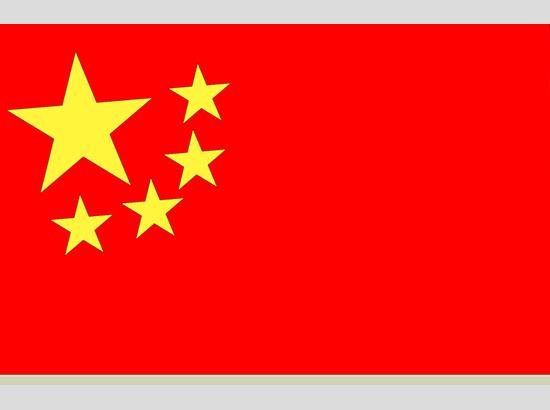
The Chinese flag (representational image) | Pixabay

he Chinese flag (representational image) | Pixabay
New Delhi: A belligerent Chinese People’s Liberation Army Tuesday laid claim to the Galwan Valley region and accused India of violating agreements, which it claimed led to the clash that left at least three Indian soldiers dead and several injured late Monday.

The statement by the Chinese military came hours after the Indian Army issued a statement saying during the de-escalation process under way in the Galwan Valley, a “violent face-off” took place “with casualties on both sides”.

Senior Colonel Zhang Shuili, spokesperson of the PLA’s Western Theatre Command, which overlooks the borders with India, said Indian troops broke “their promises and again crossed the Line of Actual Control in the Galwan Valley region Monday evening and purposely launched provocative attacks, leading to severe clashes and casualties”.

“China always owns sovereignty over the Galwan Valley region, and the Indian border defence troops are inconsistent with their words and seriously violated the agreements both countries have reached, the consensus made during the army commander-level talks and harmed the relations of the two militaries and the feelings of the two countries’ peoples (sic),” China’s Global Times quoted the spokesperson as saying.

“India should stop all provocative actions, meet the Chinese side halfway and come back to the right path of solving disputes through talks,” Zhang added.

Three Indian soldiers, including the commanding officer of an Army unit posted in Galwan Valley, were killed in action following a “violent face-off” with Chinese troops Monday. Sources said the soldiers were a mix of various units posted in the area — while the 16 Bihar unit has been posted there, more units were brought in due to the stand-off that has lasted over a month. The commanding officer of 16 Bihar had held talks with his Chinese counterpart in the Galwan Valley earlier Monday.


Also read: 1975 Arunachal ambush — the last time Indian soldiers died in clash with China at LAC


Foreign ministry’s comments

The Chinese foreign ministry also said Tuesday the country has “lodged solemn representations” with India and urged New Delhi not to “complicate” the situation along the LAC by “crossing the border or taking any unilateral action”.

There was no immediate official comment from the Ministry of External Affairs, even though its minister S. Jaishankar, Defence Minister Rajnath Singh, Chief of Defence Staff Gen. Bipin Rawat and the three service chiefs held an emergency meeting Tuesday.

Chinese foreign ministry spokesman Zhao Lijian later said he didn’t have information on the “violent face-off” that led to the killing of the three Indian soldiers, but added that two Indian soldiers had “illegally crossed” into Chinese territory twice Monday, in a “serious violation” of the consensus reached earlier between the two countries.

“They provoked and attacked the Chinese side, leading to a severe physical brawl. China has lodged protests and representations to the Indian side,” Zhao said. “China demands the Indian side restrict front-line soldiers and avoid unilateral moves that will complicate the border situation,” he said.


Also read: India needs serious China experts who can guide policy, not parachute commentators


20 Indian soldiers dead in Galwan as border tensions with China soar

A clash Monday led to the first LAC deaths in 45 years. Several Indian soldiers were also allegedly taken captive by Chinese and returned following talks at higher level.

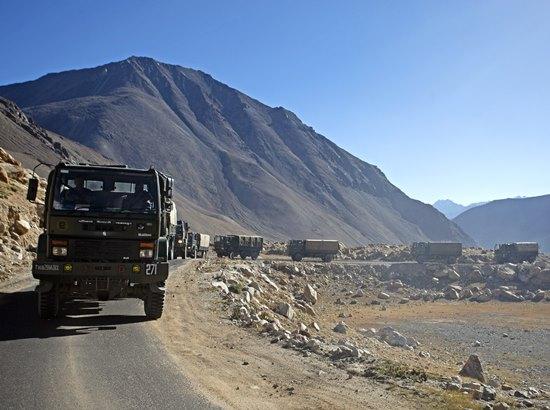
An Army convoy in Drass, Ladakh | Representational image | ANI File Photo

New Delhi: The face-off between Indian and Chinese soldiers at Galwan Valley in eastern Ladakh late Monday evening resulted in at least 20 deaths on the Indian side, including the commanding officer of 16 Bihar battalion.

Several Indian soldiers were also allegedly taken captive by the Chinese People’s Liberation Army (PLA) but returned following talks at higher level, sources in the security establishment said.

In a statement issued Tuesday night, the Army said Indian and Chinese troops have disengaged in the Galwan area “where they had earlier clashed on the night of 15/16 June 2020”.

Seventeen Indian troops who were critically injured in the line of duty at the stand-off location and exposed to sub-zero temperatures in the high altitude terrain have succumbed to their injuries, taking the total that were killed in action to 20,” the Army said.

“Indian Army is firmly committed to protect the territorial integrity and sovereignty of the nation.”

It did not mention any injuries or deaths on the Chinese side, unlike the statement issued earlier in the day that said both sides had suffered casualties.

There is speculation that some soldiers remain missing but the Army didn’t address this aspect in its statement.

The face-off Monday night is the first time in 45 years that a soldier has died along the Line of Actual Control (LAC), which remains undefined in Ladakh. It marks bilateral tensions of an intensity not seen since the 1962 war.

While the Western Theatre Command of the PLA has blamed the face-off on India, claiming Galwan Valley as Chinese territory, the Indian Ministry of External Affairs (MEA) has accused Beijing of trying to unilaterally change the status quo in the area.

The MEA cited the 6 June meeting between senior commanders of the two sides and noted that they had agreed on a process for de-escalation. Subsequently, ground commanders had a series of meetings to implement the consensus reached at a higher level, the ministry said.

“While it was our expectation that this would unfold smoothly, the Chinese side departed from the consensus to respect the Line of Actual Control (LAC) in the Galwan Valley,” it added.

“On the late-evening and night of 15 June 2020 a violent face-off happened as a result of an attempt by the Chinese side to unilaterally change the status quo there,” the ministry added.


Also Read: Why the remote Galwan Valley is a flashpoint between India and China


How and why the clash took place

According to sources, 16 Bihar Commanding Officer (CO) Col Santosh Babu had held talks with the Chinese side earlier Monday at Patrol Point 14, which is located at the mouth of the Galwan Valley.

“It was decided during the meeting that both sides will undertake some de-escalation steps and will move back by some distance. However, in the evening the CO found that Chinese did not fulfil the entire sequence of de-escalation,” a source told ThePrint.

This is said to have led to a verbal spat between the two sides, which soon “turned into pushing and jostling”. More Chinese troops subsequently came in, armed with rods and wooden spikes with nails on them.

The Indian soldiers, the sources said, were outnumbered at this point. Since the engagement was happening on a narrow slope, some soldiers fell into the confluence of the Shyok and Galwan rivers, the sources added.

More Indian troops then rushed in, and stone-pelting and physical clashes continued “several hours into the night”.

It was only in the morning that the bodies were found, including those of the soldiers who had fallen into the river. Babu was killed too.

While some of the deaths were the result of the clashes, the other soldiers died of hypothermia after falling into the cold waters of the river, sources said.


Also Read: After clash with India, PLA says China always had sovereignty over Galwan Valley region


20 Indian soldiers dead in Galwan as border tensions with China soar

An Army convoy in Drass, Ladakh | Representational image | ANI File Photo

New Delhi: The face-off between Indian and Chinese soldiers at Galwan Valley in eastern Ladakh late Monday evening resulted in at least 20 deaths on the Indian side, including the commanding officer of 16 Bihar battalion.

Several Indian soldiers were also allegedly taken captive by the Chinese People’s Liberation Army (PLA) but returned following talks at higher level, sources in the security establishment said.

In a statement issued Tuesday night, the Army said Indian and Chinese troops have disengaged in the Galwan area “where they had earlier clashed on the night of 15/16 June 2020”.

Seventeen Indian troops who were critically injured in the line of duty at the stand-off location and exposed to sub-zero temperatures in the high altitude terrain have succumbed to their injuries, taking the total that were killed in action to 20,” the Army said.

“Indian Army is firmly committed to protect the territorial integrity and sovereignty of the nation.”

It did not mention any injuries or deaths on the Chinese side, unlike the statement issued earlier in the day that said both sides had suffered casualties.

There is speculation that some soldiers remain missing but the Army didn’t address this aspect in its statement.

The face-off Monday night is the first time in 45 years that a soldier has died along the Line of Actual Control (LAC), which remains undefined in Ladakh. It marks bilateral tensions of an intensity not seen since the 1962 war.

While the Western Theatre Command of the PLA has blamed the face-off on India, claiming Galwan Valley as Chinese territory, the Indian Ministry of External Affairs (MEA) has accused Beijing of trying to unilaterally change the status quo in the area.

The MEA cited the 6 June meeting between senior commanders of the two sides and noted that they had agreed on a process for de-escalation. Subsequently, ground commanders had a series of meetings to implement the consensus reached at a higher level, the ministry said.

“While it was our expectation that this would unfold smoothly, the Chinese side departed from the consensus to respect the Line of Actual Control (LAC) in the Galwan Valley,” it added.

“On the late-evening and night of 15 June 2020 a violent face-off happened as a result of an attempt by the Chinese side to unilaterally change the status quo there,” the ministry added.


Also Read: Why the remote Galwan Valley is a flashpoint between India and China


How and why the clash took place

According to sources, 16 Bihar Commanding Officer (CO) Col Santosh Babu had held talks with the Chinese side earlier Monday at Patrol Point 14, which is located at the mouth of the Galwan Valley.

“It was decided during the meeting that both sides will undertake some de-escalation steps and will move back by some distance. However, in the evening the CO found that Chinese did not fulfil the entire sequence of de-escalation,” a source told ThePrint.

This is said to have led to a verbal spat between the two sides, which soon “turned into pushing and jostling”. More Chinese troops subsequently came in, armed with rods and wooden spikes with nails on them.

The Indian soldiers, the sources said, were outnumbered at this point. Since the engagement was happening on a narrow slope, some soldiers fell into the confluence of the Shyok and Galwan rivers, the sources added.

More Indian troops then rushed in, and stone-pelting and physical clashes continued “several hours into the night”.

It was only in the morning that the bodies were found, including those of the soldiers who had fallen into the river. Babu was killed too.

While some of the deaths were the result of the clashes, the other soldiers died of hypothermia after falling into the cold waters of the river, sources said.


Also Read: After clash with India, PLA says China always had sovereignty over Galwan Valley region


China border faceoff may take time to ease

What we forget is that this is not 1962 for the PLA, too, that has greater numerical superiority over the Indian Army and also advanced material and infrastructure in the Tibet Autonomous Region that abuts the LoAC in eastern Ladakh. Many roads lead to mountain passes bordering India to facilitate PLA mobilisation.

China border faceoff may take time to ease

Rahul Bedi

Senior Journalist

The raft of former two and three-star Indian Army gladiators, agitated over the enduring military standoff with China in eastern Ladakh, continue to clamour daily on television networks that 2020 is not 1962 for India.

Their reference is to the four-week long border war between the neighbours over the disputed Line of Actual Control (LoAC) that ended in late November 1962 and in which India came off worse, leaving some three generations of Indian Army personnel variously scarred by the experience.

So much so, that even the TB Henderson Brooks inquiry report of 1963 into the border war — named after the three-star Army officer who conducted it — has not been made public after 57 years. Senior officials in governments have incredulously claimed that the report— of which just two copies exist— remains ‘sensitive’ and of ‘current operational value’.

But what these nocturnal warriors conveniently forget to mention in their nightly bombasts is that it is not 1962 for the People’s Liberation Army (PLA) too, that not only has greater numerical superiority over the Indian Army, but also vastly advanced material and infrastructure in the Tibet Autonomous Region (TAR) that abuts the LoAC in eastern Ladakh.

It is, after all, an open secret that China has developed a wide lateral road network crisscrossing the TAR, that includes axial carriageways built to stringent military specifications. Many such roads lead to mountain passes bordering India, with the sole purpose of facilitating rapid PLA mobilisation in anticipation of hostilities.

These roads are backed by an extensive regional rail network. The Golmund-Lhasa rail line, for instance, gives the PLA the capability to mobilise 10-12 divisions of 10,000-12,000 soldiers each, backed by artillery, armour and air defence formations, over a fortnight’s timeframe. Similarly, rail links from Lanzhou to Kashi and on to Lhasa facilitate easy switching of reserves and logistics resources between the Chengdu and Lanzhou Military Region bordering India.

Additionally, six to eight, all-weather airfields across Tibet with blast-proof pens for combat aircraft, backed by 18-27 advanced landing grounds and innumerable helipads in contiguous areas, are capable of supporting extensive PLA Air Force (PLAAF) operations. The enhancement in the strategic lift capability of the PLAAF too guarantees faster troop induction. And to address the issue of rapid force application at these formidable altitudes, the PLA has constructed hyperbaric chambers for swift acclimatisation of troops launched into the area from the lower regions.

Over decades, the PLA has also increased the intensity and frequency of its exercises in the TAR, as evidenced by the recent manoeuvres earlier this year, after which neither the participating infantry units nor their artillery and armoured assets, withdrew. They simply moved closer to the LoAC and presently constitute the faceoff with the Indian Army in at least five spots over which India’s control has, for decades, been indisputably acknowledged by China.

In all these exercises, the PLA had war gamed the induction of integrated command platforms along the LoAC, besides simulating the capture of mountain passes at heights over 5,000 metres, assisted by armoured vehicles and backed by drones and fighters armed with conventional and laser-guided ordnance. These drills progressively synchronised coordination between air power, ground and air defence forces with the eventual aim of totally dominating the border regions.

Furthermore, China has been boosting its conventional and strategic missile capability in the TAR that is targeted exclusively at India. This includes the nuclear-capable Dongfeng-3 (CSS-2) and Dongfeng-21 (CSS-5) intermediate and medium range ballistic missiles, with strike ranges between 3,000 and 2,500 km, respectively. Such coercive leverage against India in the TAR and along the LoAC is further backed by Beijing’s wider regional encirclement, amplified by its Belt and Road Initiative (BRI) that involves infrastructure development and investments in nearly 70 countries and international organisations.

The pivot of President Xi Jinping’s grandiose ‘Middle Kingdom’ ambitions, the Belt enterprise, refers to overland industrial and transport corridors linking China to Eurasia, the rich Gulf Sheikhdoms and the Middle East. The ‘Road’ part aims to network Beijing’s industrial heartland with the resource-rich Indian Ocean Region (IOR) via a multi-layered web of strategic, economic and military alliances.

India considers the BRI an enlarged version of China’s earlier undeclared ‘string of pearls’ strategy of entering into a labyrinth of unfolding competitive security, defence, commercial and diplomatic pacts with all its neighbours — Bangladesh, Bhutan, Myanmar, Nepal, Pakistan, Sri Lanka and Maldives and with Iran and Afghanistan.

In its endeavour to ‘encircle’ India, Beijing has pursued a Five-Finger policy of investing in each of these states in infrastructural projects, especially ports, with the potential of supporting PLAN operations and dominating sea lanes of communication in the Indian Ocean Region. China has also disbursed generous loans, delivered assorted materiel and funded joint commercial ventures to extend its strategic and financial influence.

The China-Pakistan Economic Corridor (CEPC), however, is Beijing’s largest ever such overseas investment and entails building a 2,390 km long road and rail network, interwoven with oil and gas pipelines across the country. This elaborate, under-development grid, is aimed principally at connecting Pakistan’s Gwadar port on the Arabian Sea with China’s commercially rich western Xinjiang region in order to ensure delivery, within days, of China’s oil and gas requirements from West Asia, which presently take four to six weeks to transport by sea.

Once fully operational, Gwadar will most certainly host PLAN warships and submarines, endangering vital Indian, US and other Western interests in the Persian Gulf and further threatening the Indian Navy in the Arabian Sea. Pakistan has reportedly ‘handed over’ Gwadar to China for 40 years, but little is publicly known of their secretive arrangement.

Back at the LoAC, the intended corridor will complicate matters for India, as the passageway traverses PoK. The incursion by PLA engineers into Gilgit-Baltistan to fabricate the corridor has triggered tension between Delhi and Beijing since 2010. The current LoAC faceoff, however, forebodes further hostility between the nuclear-armed neighbours.



‘Brilliant guy both in studies and duties’: Col B Santosh Babu lived his dream in the Indian Army

Colonel Bikkumalla Santosh Babu’s father, B Upender, said he lived his ambition to join the armed forces through his son.

Colonel Bikkumalla Santosh Babu’s father, B Upender, said he lived his ambition to join the armed forces through his son.(HT photo)

Thirty-seven-year-old Colonel Bikkumalla Santosh Babu wanted to be with the Indian Army since he was a boy.

Babu, who was one of 20 Indian soldiers killed during a “violent face-off” with China’s People’s Liberation Army (PLA) on Monday night in Galwan Valley in eastern Ladakh, even completed his Class 12 from Sainik School under the ministry of defence in Andhra Pradesh’s Vizianagaram district.

He then joined the premier National Defence Academy (NDA) in Pune and the Indian Military Academy (IMA) in Dehradun.

The resident of Suryapet in Telangana was commissioned into the 16 Bihar regiment in 2004 and was posted in Jammu for the first time. Since then, he had been working on the borders in various locations.

His father, B Upender, said he lived his ambition to join the armed forces through his son.

Also read | What is China trying to achieve: 5 experts weigh in

“In fact, I wanted to join the army in my student days. But somehow the family circumstances did not permit me. I realised my dreams through my son,” the 63-year-old said.

Upender described his son, who was promoted as a colonel in February, as a “brilliant guy both in studies and duties”.

“I never expected that he would desert us like this. But I am proud he gave up his life for the country,” he said.

“I am shocked. But I am also feeling proud for my son who laid down his life in service of the country,” his mother, who was more composed than her husband, said.

The colonel is survived by his mother Manjula, wife Santoshi, nine-year-old daughter Abhigna and four-year-old son Anirudh. His wife and children live in Delhi.


Talk the talk Russia – India – China virtual meet offers a platform

Talk the talk

India’s relations with its northern neighbours are on a downswing. With China’s expansionist encroachment and Nepal’s cartographic aggression, Indian diplomats now face new challenges. Defence Minister Rajnath Singh’s assertion that the country is trying to resolve the conflict with China through talks is a welcome reaffirmation of the diplomatic process. It is also a step to cool down the overtly nationalistic jingoism that has the potential of steering the discourse towards a non-tenable position.

Nepal has shown an unusual eagerness to adopt a confrontational tone, despite India extending an olive branch. It is hard to ignore the possibility of the government in that country being susceptible to influences inimical to Indian interests. The special status that Nepalese people enjoy in India, including being allowed to serve in the Indian Army, and the traditional ties that the two nations have, all will, no doubt, work in favour of finding a resolution to this issue. However, both sides will have to climb down from their stated positions to work out a compromise. For this, they would have to prepare the political ground too.

Diplomacy is all about exploring options and finding allies. India has wisely eschewed third-party intervention offers. However, the Russia-India-China virtual meet scheduled for June 22 will provide a platform for External Affairs Minister S Jaishankar to meet his Chinese counterpart Wang Yi. This would allow the two sides to take forward the initial gains made by the military-level talks held earlier. The minister enjoys the confidence of the Prime Minister and is a seasoned diplomat. More than anyone else, he knows how to walk the talk and deploy the tools of diplomatic engagement in furtherance of the nation’s objectives. The country’s political establishment should project a united stance when faced with such foreign challenges. While the government has taken the necessary steps to tone down the rhetoric, it needs to take the Opposition into confidence, even as its diplomats continue the delicate task of furthering national interest through talks and negotiations.





Mortal remains of Mansa soldier killed in clash with Chinese army to reach home soon

Mortal remains of Mansa soldier killed in clash with Chinese army to reach home soon

Chandigarh, June 17, 2020: The mortal remains of Indian Army soldier Gurtej Singh, who laid down his life in the clash between soldiers of Indian and Chinese armies in Galwan Valley, Ladakh, on Monday night, will reach his native village Veerewala soldiers shortly.

Gurtej had joined the army just a year back. Twenty Indian Army soldiers were killed in the clash.


ndia-China-Clashes-June 2020 China suffered 43 casualties in violent face-off in Galwan Valley, reveal Indian intercepts

China suffered 43 casualties in violent face-off in Galwan Valley, reveal Indian intercepts

China suffered 43 casualties in violent face-off in Galwan Valley, reveal Indian intercepts

New Delhi [India], June 16,2020 (ANI): Indian intercepts reveal that Chinese side suffered 43 casualties including dead and seriously injured in the violent face-off in Ladakh’s Galwan valley, sources confirmed to ANI.
The violent face-off happened on late evening and night of June 15 in Ladakh’s Galwan Valley as a result of an attempt by the Chinese troops to “unilaterally change” the status quo during de-escalation in Eastern Ladakh and the situation could have been avoided if the agreement at the higher level been scrupulously followed by the Chinese side, India said on Tuesday. At least 20 Indian soldiers were killed in the violent face-off, government sources said and added that the casualty numbers could rise.
External Affairs Ministry spokesperson Anurag Srivastava said earlier in the day that both sides suffered casualties in the violent face-off and the Chinese side departed from the consensus to respect the Line of Actual Control (LAC) in the Galwan Valley.
Defence Minister Rajnath Singh held two review meetings over developments in Eastern Ladakh during the day. (ANI)


All you need to know about Galwan Valley, the site of clash between India and China

A satellite image shows the Galwan Valley in Ladakh on June 16, where violent clashes took place between Indian and Chinese soldiers on Monday.

 satellite image shows the Galwan Valley in Ladakh on June 16, where violent clashes took place between Indian and Chinese soldiers on Monday.(Reuters Photo)

A violent face-off took place between Indian and Chinese soldiers in Ladakh’s Galwan Valley on Monday night in which 20 Indian soliders were killed. Defence minister Rajnath Singh issued a statament on Wednesday in which he mourned the loss of lives of 20 soldiers.

In his first comments since the clashes on Monday, Singh said that the loss of soldiers in Galwan is “deeply disturbing and painful”. He also said that India will never forget the bravery and sacrifice of soldiers who displayed exemplary courage and valour in the line of duty and sacrificed their lives. Singh had briefed Prime Minister Narendra Modi on Tuesday evening and held two other meetings with the Chief of Defence Staff and the three service chief.


News agency ANI quoting sources said four Indian soldiers are in critical condition after the face-off.

The US media quoted reported from its intelligence officials to say that 35 Chinese troops have been killed in the clashes.

The troops fought each other with fists and rocks, people aware of the development said. Neither side fired any shots in the clash, they added.

After the clash, the two sides “disengaged” from the area where the fighting happened, the army said in a statement.

A protest was held outside the Chinese embassy in New Delhi on Wednesday.

The stand-off at Ladakh’s Galwan Valley has escalated in recent weeks due to the infrastructure projects that India has undertaken in the recent years. India is building a strategic road through the Galwan Valley – close to China – connecting the region to an airstrip.

China is opposed to any Indian construction in the area. In 1962, a stand-off in the Galwan area was one of the biggest flashpoints of the 1962 war, according to news agency Reuters.

India last year abrogated Article 370 of the Constitution, thereby ending the special status of Jammu and Kashmir. It further bifurcated the erstwhile state into two union territories – Jammu and Kashmir and Ladakh. China was among the handful of countries to strongly condemn the move, raising it at international forums including the UN Security Council.

Beijing said the move violated Chinese sovereignty but will also not change the situation on the ground as part of the area in the former state remains under Chinese control.

The Indian and Chinese armies are engaged in the standoff in Pangong Tso, Galwan Valley, Demchok and Daulat Beg Oldie in eastern Ladakh. A sizeable number of Chinese Army personnel even transgressed into the Indian side of the de-facto border in several areas including Pangong Tso.

The Indian Army has been fiercely objecting to the transgressions, and demanded their immediate withdrawal for restoration of peace and tranquillity in the area. Both sides held a series of talks in the last few days to resolve the border row.


Killing 20 Indian soldiers, China provokes a nationalist tiger: American media

Killing 20 Indian soldiers, China provokes a nationalist tiger: American media

    • Washington, June 17, 2020: Chinese People Liberation Army has provoked the “Indian nationalist tiger” by engaging in a face-off with Indian Army personnel in which 20 soldiers were killed, according to US media.

      The violent clash that took place late evening and night of June 15 was a result of an attempt by the Chinese troops to “unilaterally change” the status quo during de-escalation.

      “Beating 20 Indian soldiers to death Monday evening, China’s People’s Liberation Army has provoked the Indian nationalist tiger,” Journalist Tom Rogan wrote in an opinion piece in Washington Examiner.

      Highlighting that Prime Minister Narendra Modi’s power flows from the nationalist base, Rogan said that Modi has skillfully redirected Indian nationalist sentiments away from their prior obsession with domestic sectarian interests and toward the idea of India as a key international player.

      Rogan is of the view that PM Modi faces a distinct challenge with the recent violent clash with the PLA.

      “He (PM Modi) will feel especially pressured to respond forcefully given perceptions in his Bharatiya Janata Party that he acted too timidly to a February 2019 attack by Pakistani terrorists. Adding fuel to the fire, this isn’t the first recent Chinese escalation against Indian interests,” Rogan said.

      Over the past two months, the PLA has been increasingly aggressive along the Line of Control, frequently confronting Indian patrols on the assumed Indian side of the border, he noted

      Chinese President Xi Jinping has also allowed the PLA to send aggressive officers to engage with more diplomatically minded Indian Army commanders. This is straight out of China’s now reflexively imperialist foreign policy strategy and is designed to intimidate India into compromises that favour Beijing.

      Rogan said that the United States should stand with India in the border issue with China. “The world’s most populous democratic nation is facing the same Chinese aggression that Vietnam, Malaysia, and the Philippines experience nearly every day in the South China Sea. And it poses an existential threat to the American-led liberal international order,” he wrote.