







Sanjha Morcha

What’s New

Click the heading to open detailed news

Current Events :

web counter

Print Media Reproduced Defence Related News

Can A Repeat of The Pulwama Terror Attack Occur in Kashmir?

The Kargil sneak action by Pakistan at the lofty heights caught India by surprise in 1999 with much talk around the alleged intelligence failure. It took almost ten weeks to evict the intruders with many casualties, but what is rarely known is the extent to which the ‘surprise factor’ started to play on the minds of Indian commanders.

In August 1999 itself, we were reassessing every nook and corner of Kashmir for the potentiality of Kargil-2, the proverbial repeat which most senior commanders thought would inevitably occur. In October 2013 some large-scale terrorist activity at the Kupwara LoC was also initially assessed by some as Kargil-2.

Cut to 14 Febryary 2019, exactly a year ago, and we had the most horrendous event in the form of a 350 kilogram improvised explosive device (IED) blasted as a car bomb by a 20-year-old Kashmiri suicide bomber against a CRPF bus running as part of a convoy.

The attack claimed the lives of 40 personnel – the highest number of security men lost in any single incident in the 30-year-old proxy hybrid conflict sponsored by Pakistan.

Pulwama Caught India by ‘Surprise’

The ‘surprise factor’ was again very high; it happened against the run of events. First there was hardly a history of car bomb attacks in Kashmir; just three, with the last one in 2004. On the potential employment of a suicide bomber, the radicalisation of South Kashmir had given some forewarning but not enough.

Second, with infiltration under control and intra Valley movement under strict vigil, concentrating 350 kilograms of high explosive at one location appeared almost impossible. Yet it happened, springing a surprise on us.

On the first anniversary of the incident, it is irrelevant to even consider whether Pulwama was an intelligence failure.

Those who know the dynamics of hybrid conflict would always realise that hundred percent fool-proofing against surprise events of high intensity violence is just not possible.

After all, 9/11 occurred with 19 terrorists involved against the most high profile intelligence agencies of the world; and Brussels, London and Paris appeared cakewalks for the ISIS. Each day without a negative incident is an achievement of sorts for even high profile intelligence agencies. Thus surprise will always remain a major factor for consideration in any threat analysis.

Also Read : Most Wanted JeM Member From Pakistan Killed in Pulwama: Police

Pakistan’s Intent & Resources Available

So, can a Pulwama-2 occur anytime in the near future?

A professional military intelligence assessment would approach the issue by examining three aspects – Pakistani intent, resources available and the likely impact on the overall scenario.

On one thing, none in India will disagree, that the trust deficit with Pakistan is intense and Pakistan will apply little rationality to its decisions and actions when it comes to dealing with India, especially on J&K.ict initiation against India includes the 1965 Indo Pak War, the continuation of genocide in East Pakistan (later Bangladesh) the impact of which challenged India in 1971, the Kashmir situation in 1989, Kargil conflict of 1999, the Parliament attack 2001, Mumbai terror attack 2008, Uri terror attack 2016 and Pulwama 2019. Interspersed in between these events are several more.

India’s Tolerance Has Shrunk

In yesteryears of the proxy hybrid conflict situation, Pakistan’s assessed perception was that India’s level of tolerance for surprise and high intensity incidents was extremely high. Somewhere a misperceived notion appeared to have been created that India was completely deterred by Pakistan’s nuclear weapons and its first use of the nuclear doctrine, such that for India to think of war, a much higher red-line had to be crossed by Pakistan.

Although trans-LoC actions by the Indian Army in response to LoC-related incidents were common 20 years ago and became a little less frequent 10 years later, there is no doubt that strategic response through tactical level actions with total government ownership as a policy, came into effect only with the coming of the Modi Government at the Centre.

The surgical strikes of 2016, subsequent shallow strikes in Poonch sector in 2017 and the Balakot airstrike should have adequately conveyed to Pakistan that the level of tolerance in terms of red-lines had shrunk to a much lower level.

Also the fact that for India there is enough space for a calibrated response below full scale war.essively projected much higher by responses from 2016 to 2019.

Repeat Of Pulwama Would Be ‘Irrational’

Applying rational assessment to the prevailing situation, in which Pakistan finds itself with a dangerously failing economy, the likelihood of it risking crossing of assessed lower Indian red-lines should be extremely low. However, we come a full circle on the issue of rationality – something historically ignored by the Pakistan Army.

That makes an irrational act always possible especially when it wishes to display its muscular survivability even in the worst of times for the Pakistani nation. resources to repeat a Pulwama-type event? There is no doubt that the domination of Kashmir by the Indian Army and the police forces is much more profound today with intelligence agencies still in the process of dismantling the ecosystem, the system which has helped regenerate terrorism from time to time.

Does Pakistan or its proxies, possess the

Yet it must be remembered that within a month of Pulwama a potential repeat was prevented purely through providence; a similarly prepared car bomb malfunctioned and the potential bomber was captured two days later.

Also Read : ‘With BJP’s J&K Approach, Another Pulwama Bound to Happen’: Pak PM

With limited mobile internet facility in J&K both the ecosystem and the intelligence agencies are hamstrung; the former by limitation of coordination and the latter by the insufficiency of communication to intercept.There is an uneasy balance which seems to exist. If the lower intensity and frequency of operations since August 2019 is something to go by, it is either intelligence which has weakened with sources less active under enhanced threat to them, or the overall strength of terrorists and their leaders has drastically reduced. In such a scenario a major spectacular act will be difficult but not impossible. It is the desired impact which must be clear.

Pakistan would wish to have total deniability with some concocted solid evidence of an Indian ‘false flag’; mention of this is already being found in Pakistan media in relation to visit of President Trump to India.

That would be a preposterous eventuality, akin to the Chittisinghpura carnage of 19 March 2000 during the visit of former US President Bill Clinton, but not beyond the irrationality of Pakistan’s planners. That reminder should also make clear that thinking of only IED threats as a potential and proverbial Pulwama may be an inaccurate assessment.

What Pakistan’s deep state wishes is to kick-start the flagging militancy, force commitment of additional Indian forces, create conditions to realistically make allegations of human rights violations and prevent strengthening of the counter infiltration grid to allow scope of infiltration.

All this may not be achieved by one spectacular act but much depends on the nature and intensity of the event and where it fits into the graph of India’s red-lines.

Lastly, blinkers must not be on only for Kashmir, the Jammu region lies within the crosshairs too, and our focus must continue to remain balanced extending the scope of enhanced vigilance as far deep south as Kathua and Pathankot. Yes, a Pulwama-2 is certainly possible but the consequences of it for Pakistan will be far more unpredictable than ever before.

(The writer, a former GOC of the Army’s 15 Corps, is now the Chancellor of Kashmir University. He can be reached at @atahasnain53. This is an opinion piece and the views expressed above are the author’s own. The Quint neither endorses nor is responsible for them.)


Should women be given command posts in the Army?

Like men, women should be judged on the basis of their professionalism and merit

Last week, in response to an ongoing hearing in the Supreme Court on permanent commission for women officers, the government cited “physical” and “physiological limitations” in granting command positions to women officers in the Indian Army. To this, the Supreme Court responded that there is a need for administrative will and “change of mindset”. In a conversation moderated by Dinakar Peri, Lieutenant General Syed Ata Hasnain and Lieutenant General D.S. Hooda discuss this question. Excerpts:

Could you provide an overview of the reasoning behind the government’s stand?

Lt Gen Hasnain: Till September 2019, permanent commission for women was restricted to only two departments: the Army Education Corps and the Judge Advocate General’s branch. In September, the Defence Ministry announced that it is opening this up to eight other arms and services from April this year, for women already selected for the Short Service Commission. So, permanent commission now is open in 10 departments, or what you call arms and services. Now, women’s careers can be furthered only if they get what are called command assignments or criteria appointments. The question is, how do you define a criteria appointment? The Indian Army is what is called a command-oriented Army. That is, anyone who has to be given further positions up the chain of command has to first be experienced in command at the level of a full Colonel, a unit command. So far, this was denied to women. That is the main issue.

My opinion is that the time has come for us to at least experiment, if nothing else, and that experiment needs to be done first with the Services — Army Service Corps, Army Ordnance Corps and Corps of Electrical and Mechanical Engineers. In all these there are women who have been commissioned for the last 30 years as Short Service Commissioned officers. Many of them have commanded workshops. Some of them are in a position to be selected. The focus is on the word selected because they have to be selected through their confidential reports, a board of officers, a promotion board, which will determine whether they are fit to command. Only then will they command a unit.

Gen Hooda, apart from the point about gaining acceptability from other soldiers, the government has argued that there are other issues such as motherhood and domestic obligations. Do you believe that these are stumbling blocks in women holding command positions? For the last 30 years we have had women in the Army.

Lt Gen Hooda: There are challenges — domestic issues, fitness, pregnancy — all that has been quoted by the government in its affidavit. But this is an argument we had 30 years ago when we were inducting women into the Army. All these issues have been handled by the Army in a very mature manner over the years.

Coming specifically to the issue of whether they should be given command or not, there is very little justification in saying that while women officers can be company commanders, platoon commanders, second in command, [they should be excluded] when it comes to command appointments, commanding a unit, only on the basis that they are women. This argument doesn’t hold water. As Lt Gen Hasnain said, there is a board of officers to decide whether promotions to the rank of Colonel can take place or not for a particular officer. It’s not as if all male officers get automatically promoted as Colonels. In some cases, in some services, less than 30% of male officers are promoted to the rank of Colonel. The decision is made by a board of officers. Let the same board of officers decide whether a woman officer is fit to command a unit. Women should be judged on the basis of their professionalism and on the basis of merit.

The Commanding Officer holds a very significant position in the Army. What distinguishes the command positions and what’s the way forward to have women in these roles?

Lt Gen Hasnain: Let’s understand it from a career management angle as well as a functional angle. What are criteria appointments which someone has to fulfil before they can be promoted to even higher ranks? These appointments can be directly in command of troops or many times they are also not in command of troops. For example, there can be appointments in the Army Education Corps and the Judge Advocate General’s branch or such things where you have a certain responsibility, but you are not directly commanding troops. There are arms and services such as the Army Service Corps and Electrical and Mechanical Engineers where you have resources under your command and you have a large number of personnel under your command. In the Engineers Corps, a criteria appointment could be to set up an appointment such as the Commander Works Engineer who is responsible largely for projects of maintenance, of a lot of construction assets, and things like that, and very little responsibility for the personnel under you. So, there is a whole range of such responsibilities.

But the one important aspect is that the difference between a sub-unit command and the command by a Commanding Officer is that the Commanding Officer is the place where the buck stops. So the question many are asking is, do women have it in them to be able to accept that kind of responsibility? And will they be able to exercise that authority over male personnel under them? Now, this has only been experienced in sub-units where there could be 100-120 men serving under a lady officer of rank of a Major or Lieutenant Colonel and they have done extremely well in those appointments. So there is nothing wrong in giving them command assignments. That is why I said let’s experiment with it. Give it a five-year period, and if you find something drastically wrong, which I’m sure you will not, then maybe you can give it a review. But on the face of it, denying them this opportunity only on the basis of their gender is not legally correct, I think, though of course the Supreme Court will decide that. I don’t think it is morally correct. Because now that you have given them permanent commission, you’ve given them this on the basis of the assumption that they are equally good [as men], they’re responsible, and they can be developed to become better, I think it’s incumbent on the organisation to actually repose a certain level of trust in them and give them these command responsibilities.

Gen Hooda, you had written that there is some merit in not having women in combat roles. Can you elaborate on this?

Lt Gen Hooda: I think there is some justification in not permitting women in combat roles at this time. There are issues about soldiers and officers living on the front lines. Officers and their men all live together in, say, one bunker along the Line of Control. So, there are issues and if you are going to induct women in Combat Arms, try and shield them from some of these more difficult roles. At this stage, it could only invite more resentment regarding why we are having women in Combat Arms. We should keep that debate for later. Let’s start with mainstreaming those arms and services where women already are present.

You had mentioned stressful conditions like working in close proximity on the front lines. Now we’re talking about command positions, but combat roles in front line combat will come up after that. How can these issues be addressed?

Lt Gen Hooda: We need to look at things in a more practical manner. We’ve already started inducting women as permanent commission in some of the supporting arms and services. We need to completely integrate all the people in the Army, and that includes women officers. It’s ridiculous that we are fighting battles in court. The Supreme Court might give some judgment based on its wisdom. But within the Army, if we can internally resolve these issues, that will be a much better approach. So let’s look at both sides of the debate. And the fact is, you have to integrate women better in the Army, you have to give them their professional aspirations, their personal aspirations have to be met. Let’s start debating this and see how everyone can be pulled together. Frankly, some of the arguments that have been made in the Court — I dare say I’m using this word with a little caution — are regressive, and don’t reflect the reality on the ground today.

What were your efforts in this direction?

Lt Gen Hasnain: That’s a good question. I admit that I started with a negative mindset myself, way back in 1991. But my mind changed very early because of the demonstrated capability on the ground. In almost every arm and service, I visited in my own division on the Line of Control, I saw a detachment of engineers working feverishly on a particular operational track and the person commanding that detachment and spending time on the deck of the bulldozer at night, for three to four weeks with the men, was a lady officer. Thereafter, there have been many occasions where I’ve seen young women, convoy commanders, who’ve done a marvellous job under the most challenging circumstances in cases of ambushes on the Uri-Baramulla road.

Lt Gen Hooda: I will give you two stories. In 2005, I took over command of the Brigade from Lt Gen Hasnain, and we had this earthquake in September 2005. My Brigade Major wasn’t there [in Uri]. The officer below him, the captain who is called the G3, was injured. And we had no officers there, we were completely cut off. The Education Officer, Captain Rosie, performed the role of Brigade Major and she handled the whole operational side. Hats off to the way she handled it. So, I have no doubts about women officers handling responsibilities during a crisis. Then we had Colonel Santosh Mahadik, Commanding Officer of a unit, when I was the Army Commander, who was killed while fighting terrorists in September 2015. When my wife went to pay condolences, his wife said she wanted to join the Army. She was 35 years old, 10 years older than anybody who can get commissioned into the Officers Training Academy. We took up her case. She got commissioned in 2017 as a Lieutenant in the Ordnance (Corps). Now, the inspiration we get from her story is beyond words.

Generals, in retrospect, would you have taken orders from a woman officer?

Lt Gen Hasnain: Without blinking an eye, if someone above me, whether man or woman, was someone who demonstrated capability and leadership qualities, there is no question that I would not accept directions, orders. In the Army, we are trained to do that. It’s just a mindset [regarding women], we need to overcome that. I would have overcome it almost immediately.

Lt Gen Hooda: Soldiers respect professionalism, good leadership, irrespective of whether it is demonstrated by a male or female officer.

D.S. Hooda is a former Northern Army Commander; Syed Ata Hasnain is former GOC 15 Corps and is now the Chancellor of Jammu University.


Understanding the inner workings and selection process of army

For ease of understanding the Supreme Court’s (SC) judgment extending permanent commission (PC) to all Women Officers (WOs), including command opportunities, it is important to first understand what the army’s Arms and Services are, writes Lt Gen Syed Ata Hasnain (Retd)

Lt. Col. Seema Singh (2L) and other women army personnel after the apex court’s decision to apply permanent commission to all women officers in the Indian Army, at Supreme Court on Monday.

Lt. Col. Seema Singh (2L) and othe
r women army personnel after the apex court’s decision to apply permanent commission to all women officers in the Indian Army, at Supreme Court on Monday. (Sanchit Khanna/HT PHOTO)

The entire issue of commissioning of officers into the armed forces is a complex one not easily understood outside the uniform. In the case of the army, it is rendered even more complex because of the presence of diverse departments, across Arms and Services. For ease of understanding the Supreme Court’s (SC) judgment extending permanent commission (PC) to all Women Officers (WOs), including command opportunities, it is important to first understand what the army’s Arms and Services are.

First are the so-called Combat Arms: Infantry, Mechanized Infantry, Armoured Corps and also Artillery (the last is classically not counted among these, but by virtue of the nature of its task involving battle fires is colloquially counted as such). WOs do not get commissioned into these.

We then have the Combat Support Arms: Signals, Engineers, Army Air Defence, Aviation and Intelligence. WOs are commissioned in all five as these roles involve limited direct combat with the enemy.

Then come the Services: Army Service Corps (ASC), Army Ordnance Corps (AOC) and the Electrical and Mechanical Engineers (EME) who in conventional war serve in administrative support roles. WOs are commissioned in all three.

There are also two other departments: Army Education Corps (AEC) and the Judge Advocate General’s Branch (JAG); WOs are commissioned in both; in fact these are only two departments that, from 1992 onwards, have given PC to WOs.

From 1991 onwards, WOs have received Short Service Commission (SSC) in eight of the above 10 Arms/Services and PC in the two departments. In September 2019, the government extended PC to the eight Arms/Services too but restricted this to only WOs who have been commissioned from 2014 onwards. The order is effective from April 2020. A large number of WOs with SSC from earlier years continued to serve in the Army beyond their contracted period pending final resolution of a legal case for PC. The SC in its judgment on Monday has granted PC to all WOs, irrespective of year of commission. It is, however, unclear whether they will also have to undergo a selection process for grant of such PC as is applicable in the case of male officers.

There is a second and very important functional issue which the SC has included in its judgment — that of command opportunities. If WOs have to be placed in the same category as male officers with PC, with applicability of similar terms and conditions applicable to the latter, then their career management as PC officers has to be addressed. Thus far, under SSC, WOs were denied the requisite training and opportunity to assume command in the rank of Colonel which is the first “selection grade” rank. Male officers of this rank command units of respective Arms and Services but not all are given such opportunity; it is strictly through a stringent selection by a promotion board based upon confidential reports, record of service and qualifications. They are tested in command capability as Colonels and this makes them eligible for further selection for progression to higher ranks. The Indian Army, which is command oriented, tests its officers in command capability before any selection for promotion.

Now serving beyond the stipulated SSC terms, WOs too want command opportunity, which the army was reluctant to give them, citing acceptance problems by the men they will command as Colonels (by selection) and the physical challenges involved.

The SC has dismissed the army’s arguments and extended equal command opportunities to WOs. Since there is a deep selection procedure every WO is not going to get such opportunities — only 30% of male officers of the ASC, for instance are cleared by a promotion board. My personal experience with WOs serving under my command is that they are fully competent to command Services units; the Army may begin with affording them command of peacetime establishments such as supply depots and then graduate to operational units. As regards to Combat Support Arms, an experimental exercise must be done to ascertain command capability of selected WOs in both peace and field conditions under close supervision of senior male officers. These units have more manpower and bear operational risks of a higher order, which involves lives of soldiers. JAG and AEC departments where the criterion of testing is different have no such problems.

The SC is right in stating that “soldiers must have the physical capability to do one’s role … women in the army is an evolutionary process”. Some parts of the army can be expected to be unhappy about the judgment. However, it needs to be realised that the army’s selection process for command has stood the test of time. The evolutionary process will ensure that WOs progressively improve with further motivation of a career in the army. Their induction into Combat Arms is likely to be the next big issue which will need a separate debate although its time too will come, albeit after a longer wait.

(The writer is former GOC of the Srinagar-based 15 Corps)


NCC plane crashes in Patiala, pilot dead

NCC plane crash, NCC pilot killed, patiala plane crash, punjab news, indian express

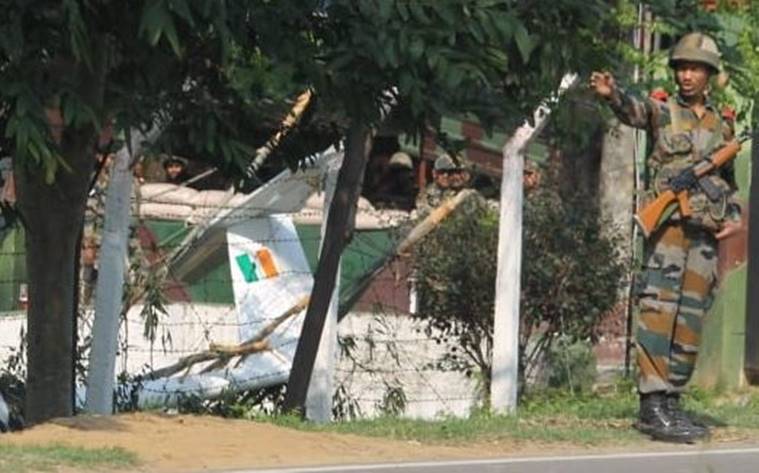
The micro-light airplane of Number 3 NCC Air Unit crashed in the military area near Patiala Aviation Club on Sangrur-Patiala road. (Express photo)

A pilot was killed and a cadet injured after a National Cadet Corps (NCC) aircraft crashed in Patiala on Monday.

According to the police, the micro-light airplane of Number 3 NCC Air Unit crashed in the military area near Patiala Aviation Club on Sangrur-Patiala road.

Patiala SSP Mandeep Singh Sidhu confirmed that a pilot died and another cadet inside the plane was injured.

SSP Sidhu said, “The plane took off from the civil aerodrome strip of the club and crashed in the military area nearby after a few minutes. Group Captain GS Cheema died and an NCC cadet was injured.”

NCC plane crash, NCC pilot killed, patiala plane crash, punjab news, indian express  The plane took off from the civil aerodrome strip of the club and crashed in the military area nearby. (Express photo: Harmeet Sodhi)

The SSP said the cadet had sustained serious injuries.

“It was a two-seater plane. The crash took place around 12.50 pm. The deceased, Group Captain Cheema of the  Indian Air Force (IAF), was on deputation with NCC to train cadets. The injured cadet, identified as Vipan Kumar Yadav, a student of Government Mohindra College Patiala, has been shifted to Command Hospital, Chandimandir. He has received serious spinal cord injuries,” said SSP Sidhu.


Playground comes up at Poonch village Locals hail Army efforts, say it will keep youth away from drugs, crime

Playground comes up at Poonch village

Ranjit Thakur

Jammu, February 23

In a bid to keep the local youth engaged, the Army is building a playground in the shelling affected village of J&K’s Mendhar tehsil in Poonch district.

The Army is working in coordination with residents of Basuni village, located along the LoC in Mendhar tehsil. The village has a population of around 2,000, but didn’t have even a single playground for the local youth.

The locals have hailed the noble gesture of the Army as this will not only keep the youth physically fit, but will also keep them away from the menace of drugs, other crimes and anti-social activities.

“Continuous shelling from the Pakistan side has kept our children away from sports and it has drastically affected their mental and physical health. We always wanted to have a playground in our village and this dream came true when the Army agreed to construct it in the village,” Mohammad Rahoof, a local, said.

“The Army is not only protecting our borders and us from shelling, but also providing every help in any case of emergency. The Army has always extended a helping hand for the poor border residents,” Mumtaz Ahmad, a villager, said.

Meanwhile, an Army official said, “The main objective of constructing a playground is to keep the youth engaged in constructive and productive purposes. More and more sports events for the youth will be organised to make them physically and mentally fit to meet any future challenges besides staying away from anti-social activities.”


‘Whole of nation approach worked in J&K’

‘Whole of nation approach worked in J&K’

The Tribune Interview Lt-Gen KJS Dhillon

Arun Joshi

Lt-Gen KJS Dhillon, Corps Commander of 15 Corps, whose tenure in Kashmir was marked by many events, some of them unprecedented in nature with new and tough challenges, said he was an extremely satisfied commander as he leaves the Valley for his next assignment.

In an e-mail interview with The Tribune, Lt-Gen Dhillon reflected on the challenges thrown up by attacks like Pulwama and the situation that had to be handled after the abrogation of Article 370 on August 5 last year. Excerpts from the interview

What have been the challenges for the Army after the revocation of Article 370?

The Indian Army, in conjunction with other security forces, has a two-fold mandate. One is on the Line of Control (LoC) and the other is counter-infiltration operations against the terrorists which are being supported by the Pakistan army and pushed through the LoC. In the hinterland, the Indian Army is working in synchronisation with other security forces for counter-terrorist operations wherein most of the terrorist leadership of various “tanzeems” (organisations) has been neutralised in the past year. There is a sense of security and peace prevailing in the Valley, which is visible in business, tourism, BDC elections, recent board examinations and the day-to-day routine life of a normal Kashmiri. The morale of the forces, including the administrative and logistic support, has been of very high standard and we continue to maintain it.

at is the ‘Whole of Nation’ approach to maintain peace in Kashmir?

After August 5 last year, the strategy to maintain peace and calm in the Valley was based on well-synergised, coordinated and integrated actions involving all stakeholders, including security forces, JKPF, CAPFs and, most importantly, the civil administration. In addition, other societal stakeholders like opinion-makers, elders of society, mediapersons and professionals from government organisations were also consulted regularly to arrive at the most suitable and appropriate methodology to deal with the situation and ground-level feedback.

In a nutshell, I can say, it was a “Whole of nation” approach. I am very satisfied with the way calm and peace have prevailed in the Valley. In spite of best efforts of Pakistan-sponsored terrorism, minimal loss of civilian life and security forces has been the hallmark of efforts of all stakeholders for the maintenance of peace in Kashmir. There are no restrictions whatsoever other than mobile Internet beyond 2G and some apps. Markets are open, business is booming, tourists are arriving and winter sports are being organised on a grand scale.

What has been the Army’s responsibility to strengthen relations with people after the revocation of Article 370?

In addition to our conventional role and mandated job, we have a responsibility towards the “awam” (public) of Kashmir whom we treat as our “humsaya’. Various initiatives of the Army to support aspirations and daily needs, especially of women and youth, are being pursued in a very organised and proactive manner. There are at least 28 Army Goodwill Schools (AGSs), 10,000 students, and not a single student has become terrorist, with 100 per cent result in most of the AGS exams. Our initiative of “Operation MAA”, an appeal to mothers of local boys who have gone astray, has been highly successful in generating a positive atmosphere for the “return” of local youths who have joined terrorist organisations. We have been successful in the “return” of more than 50 such boys.

What has been the impact of Internet shutdowns on anti-militancy operations?

Counter-terrorist operations are based on inputs from various intelligence sources, including human intelligence, with technical intelligence being only one of them. Hence, the blocking of the Internet and mobile services temporarily did not have any major impact on counter-terrorist operations.

What have been the challenges after the Pulwama attack?

We are trained for facing challenging situations and we take considered and most appropriate decisions to deal with any emerging situation. The perpetrators of the Pulwama attack were brought to justice within 100 hours by the efforts of all security forces, intelligence agencies and civil administration in a very integrated manner. Terrorist threats are being neutralised almost daily, in one way or the other. All agencies dealing with counter-terrorist operations continue to be on work 24 x 7 to ensure peace in the Kashmir Valley.

What is AFSPA shield?

The AFSPA is an act of Parliament and we (Army) in India, being a mature democracy, are governed by the legislations passed by Parliament.

Your comments on stone-throwing incidents and challenges of upcoming summer in Kashmir.

Pakistan-sponsored proxies who are instigating and indulging in stone throwing have failed in their attempts and these incidents have come down to negligible in recent months. The recruitment of local youths in terrorist groups has also reduced by more than 45 per cent from 2018 to 2019. Besides the “Whole of nation” approach, we have plans (for 2020 summer season in Kashmir) in place to thwart any attempts by Pakistan to disrupt the prevailing peace and cause damage to life and property of Kashmiris. All stakeholders are very much part of the plan.

Have you been a satisfied commander?

As a professional, all my assignments through my career, spanning approximately 37 years, have had their fair share of adventure, challenge and, most importantly, professional satisfaction at the end of each tenure, having accomplished the job assigned to me in a most professional and ethical manner in keeping with the traditions and ethos of the great Indian Army. A major hallmark of my tenure as the Corps Commander, 15 Corps, was the tremendous synergy achieved amongst various security forces, intelligence agencies and civil administration, with the singular aim of maintenance of peace in the Kashmir Valley. We have been able to touch the lives of the common Kashmiris, particularly those who ‘returned’ from the clutches of terrorism back to their families, due to the efforts of all stakeholders, especially under “Operation MAA”. I am an extremely satisfied commander.


Army to hold recruitment rally

Our Correspondent

Rajouri, February 23

The Army will hold a recruitment rally at its Advance Landing Ground in Rajouri from April 20 to 29. The recruitment is being held for the candidates from all 10 districts of the Jammu province.

As per details, the candidates from Poonch, Rajouri, Kathua, Samba, Jammu, Udhampur, Ramban, Reasi, Doda and Kishtwar districts can apply.

The recruitment will be held for soldier general duty (all arms), soldier technical, nursing assistant for the Army Medical Corps and for veterinary.

The age limit for the soldier general duty should be between seventeen and a half and 21 years, while for technical, the age limit is 23 years. The height and weight for the eligible candidate for all categories should be 163 cm and 48 kg, respectively.

The education qualification for the soldier general duty should be Class X pass with 45 per cent marks in aggregate and 33 per cent in each subject

For the technical category, the education qualification should be 10+2/intermediate pass in physics, chemistry, mathematics and English with 50 per cent in aggregate and 40 per cent in each subject. For the nursing assistant/veterinary, the education qualification should be 10+2/intermediate with physics, chemistry, English with biology or botany and zoology.

For the candidates, online registration is mandatory. They can register themselves from February 22 to April 6. The eligible candidates will get the admit cards through registered email and have to reach the venue on the given date and time.


Peace achieved in Valley: Gen Dhillon

Peace achieved in Valley: Gen Dhillon

Arun Joshi

Jammu, February 23

Lt Gen KJS Dhillon, Corps Commander of 15 Corps, who led the troops in Kashmir in 2019 when the Pulwama terror attack took place and Article 370 was given a constitutional farewell, declared on Sunday: “Peace has been achieved in the Valley owing to efforts of all agencies working for a common goal.”

In an e-mail interview with The Tribune, he said utmost “synergy” between the forces and other agencies had brought about peace in the Valley with militancy now gasping and stone-throwing fallen to level zero, almost.

Enumerating the parameters of peace, he mentioned opened markets, arrival of tourists, high percentage of students appearing in exams and more than 95 per cent polling in Block Development Council elections.

Regarding the almost 30-year-old Armed Forces Special Powers Act that gives immunity to soldiers in counter-terrorism operations, Gen Dhillon offered a middle of the line response. “AFSPA is an act of Parliament and we in India, being a mature democracy, are governed by legislations passed by Parliament,” he said.


Hon Naib Subedars get pension parity

Hon Naib Subedars get pension parity

Chandigarh, February 23

Granting financial relief to pensioners holding the rank of Honorary Naib Subedar in the Army, the Ministry of Defence (MoD) has issued orders granting parity to pre-2006 and post-2006 retirees with effect from January 1, 2006, thereby finally implementing a decision passed by the Chandigarh Bench of the Armed Forces Tribunal in November 2017.

AFT Bench comprising Justice MS Chauhan and Lt Gen Sanjiv Chachra had directed the Central Government to re-fix their pension in line with earlier decisions of the tribunal as upheld by the High Court and the Supreme Court.

While implementing recommendations of 6th Pay Commission, the MoD, in 2009, issued directions to notionally grant pension of the rank of Naib Subedar to Havildars promoted as Honorary Naib Subedars. However, on the insistence of the defence accounts department, the benefit was extended only to post-2006 retirees. That resulted in an anomaly wherein pre-2006 Honorary Naib Subedars continued to be paid the pension based on the scale of Havildar. The cut-off date was struck down by the tribunal and the judgment was upheld by the Supreme Court. The Karnataka High Court had also passed similar orders.

In 2010 and 2013, when military pensions were enhanced, the ministry again refused to grant enhancement to pre-2006 Honorary Naib Subedars. Quashing the discrimination, the tribunal ordered the enhancement of pension of pre-2006 retired Honorary Naib Subedars also. — TNS