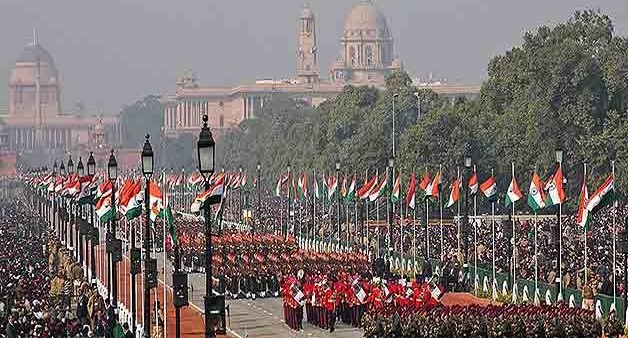
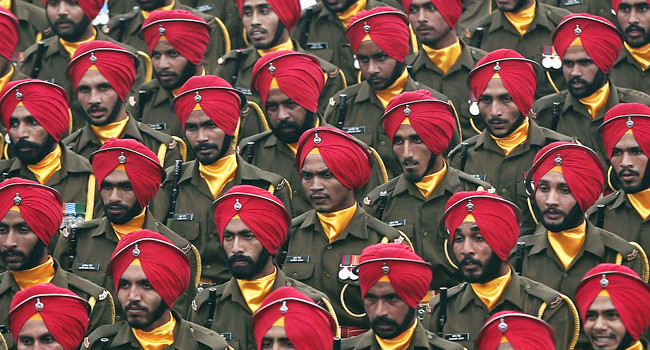
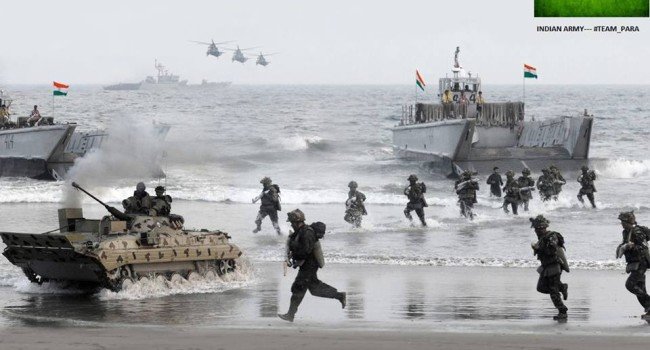
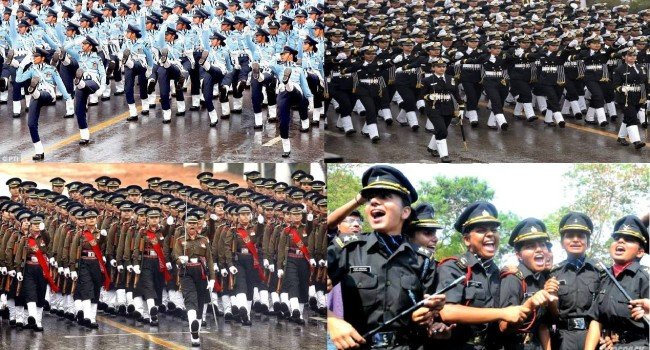
While there is a need for a diplomatic reset, enhanced military capabilities and economic policies to reduce dependence on China, one other area which requires greater investment is the expertise on China in India(AP)
There is now no doubt that China will remain India’s greatest strategic threat in the decades to come. Beijing is not just interested in taking control of strategic areas or in stopping India’s infrastructure build-up at the border. As is visible in the statements emerging from retired officials and its State-controlled media, China wants to send a message to India — to accept Chinese dominance in the Asian hierarchy of power, stop deepening the partnership with the United States, and reconcile to a curtailed global role .
New Delhi cannot do this, for its own national interests are at stake. While there is a need for a diplomatic reset, enhanced military capabilities and economic policies to reduce dependence on China, one other area which requires greater investment is the expertise on China in India. India is too dependent on a very limited set of retired diplomats and military officials who have engaged with China, select intelligence officials and diplomats who speak Mandarin, and a small set of academics outside government. This is not tenable. To understand Chinese motivations better, India needs more experts on the decision-making apparatus in China, the functioning of the Chinese Communist Party, the dynamic between the party and the People’s Liberation Army, China’s economic drivers and changing social dynamics, and its quest for digital dominance. For this, India must invest in language training, field visits, fellowships, and dedicated institutes. To battle China, understand it better.
At LAC, continue to ramp up infrastructure The Modi government has done well in prioritising border infra and patrolling. This has rattled China
There has been a great leap in infrastructure development at the Indo-China border on the Indian side which has served as a deterrent to China(Prashanth Vishwanathan/Bloomberg)
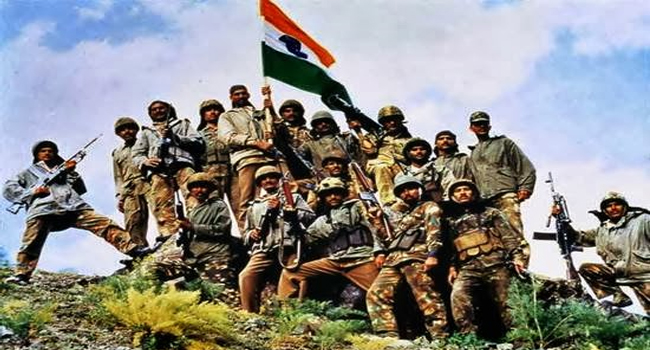
Prime Minister (PM) Narendra Modi recently stated that 20 jawans were martyred but not before they taught a lesson to those who had dared to raise an eye towards “Bharat Mata”. PM assured the nation that, today, it has the capability that no one could eye even an inch of its territory. He suggested that the infrastructure in the border areas had improved greatly, leading to heightened patrolling and close monitoring of movements at the border. PM also made it clear that India would respond firmly to any attempts to transgress the Line of Actual Control (LAC).
China has always made a creeping annexation part of its policy towards India. The Congress, when in power, turned a blind eye to the encroachment on India’s territories by the Chinese through continuous transgressions and border violations. Though the country entered into as many as six bilateral agreements in 1988, 1993, 1996, 2005, 2012 and 2013, it did not address the dispute over LAC. When the Chinese intruded and pitched tents deep inside India’s territory at Depsang, in 2013, the then Prime Minister Manmohan Singh merely spoke in Parliament about the Chinese having a different perception about LAC. Confidence-Building Measures (CBMs) were misused by the Chinese to resort to psychological warfare and “salami slicing”. This is because, after 1962, defence forces were neglected and infrastructure was shoddy.
After Modi assumed power, strengthening infrastructure became a national priority. Today, there has been a great leap in infrastructure development at the Indo-China border on the Indian side which has served as a deterrent to China. Had the infrastructural development started in past regimes, India would have been in a more dominant position today. After 2014, India created a strong road network through the Border Roads Organisation and the Central Public Works Department despite the small window, during the year, for construction, due to the harsh winter. The Border Area Development Programme (BADP) has been allocated ~784 crore in the fiscal year 2020-2021. BADP stipulates that “10% of the total allocated funds will be additionally allocated to the states/Union territories abutting Indo-China Border (Arunachal Pradesh, Himachal Pradesh, Ladakh, Sikkim and Uttarakhand) for taking up works in the districts abutting Indo-China border”. The creation of infrastructure “would help integrate these area with the hinterland, create a positive perception of care by the country and encourage the people to stay or in the border areas leading to safe and secure border” as per the ministry of home affairs.
Infrastructure has developed on all borders through the comprehensive Integrated Border Management Systems — be it border out posts, border fencing, mobile towers, the use of technology at the border and lighting. On the Indo-Tibet border, roads, helipads, tunnels and bridges have been built.
At the same time, there has been an increase in patrolling — be it long-range patrols, short-range patrols or joint patrols by the Army and the Indo-Tibetan Border Police. India has held its ground in several face-offs. Regular patrols also enable us to assess China’s activities, identify features of tactical importance, dominate infiltration routes, corroborate inputs and assert our presence. Post-2014, our patrols have been actively engaging, confronting and preventing any incursions. We have not allowed any construction activity in our territory within LAC. In Doklam, India stalled the construction of a road by the Chinese, which would have adversely affected the nation’s strategic interests. It is only after this that China became more wary of India’s diplomatic and military might.
PM Modi’s policy towards China has been a judicious mix of diplomatic, military and economic options. He and President Xi Jinping have had as many as 18 summit meetings over the past six years, including two informal meetings at Mamallapuram and Wuhan. Several meetings have been held at different levels. The 15th meeting of the Working Mechanism for Consultation and Coordination, was held on June 24, where India stressed on respecting LAC and both sides agreed to expeditiously implement the understanding on disengagement and de-escalation.
While diplomatic parleys should continue, it is imperative to continue the PM’s policy to strengthen both the nation’s infrastructural and military build-up to contain the Dragon if it challenges us again. No one can challenge a determined India. Though India is a peaceful nation, we will negotiate only from a position of strength. And this can happen when strong leadership under PM Modi is guiding India’s security policy based on national interests.
RK Pachnanda is a retired director general, Indo-Tibetan Border Police
The views expressed are personal
India, China corp commanders to meet today on border stand-off: Time, place and other details
An IAF chopper flies in the skies above Leh in Ladakh on Monday. (PTI File Photo )
Top Indian and Chinese military officials will meet for the third time on Tuesday in Ladakh’s Leh district to diffuse tension along the contested Line of Actual Control (LAC).
The meeting between corp commanders is the third—first was held on June 6 and second on June 22 in Moldo on the Chinese side of the Line of Actual Control (LAC)—after border tensions erupted between both the countries in May.
The second meeting came a week after the violent face-off between soldiers from the Indian Army and China’s People’s Liberation Army (PLA) in eastern Ladakh’s Galwan Valley.
Here are the details:
* This time the talks will be held in Chushul on the Indian side at 10:30am and led by corps commanders
* The Indian side could again demand the pullback of Chinese troops from several friction points and also the restoration of status quo ante in strategic areas.
* On June 22, Lieutenant General Harinder Singh, commander of the Leh-based 14 Corps, and Major General Liu Lin, commander of the South Xinjiang military region, led the meeting between delegations for nearly 11 hours. It was held a week after the June 15 brutal clash between soldiers from the Indian Army and China’s People’s Liberation Army (PLA) in eastern Ladakh’s Galwan Valley.
* The marathon dialogue was held in a cordial, positive and constructive atmosphere and there was “mutual consensus to disengage”. “Modalities for disengagement from all friction areas in eastern Ladakh were discussed and will be taken forward by both the sides,” an official, in the know of the details, had said then asking not to be named.
* During that meeting, India had demanded the pullback of Chinese troops from the Finger Area—a cluster of strategic features in the north bank of Pangong Tso—where the PLA has set up bunkers, pillboxes and observation posts.
* They said the army was also demanding the withdrawal of the PLA troops from Galwan Valley and the restoration of status quo ante in key strategic areas of in the Finger Area, Gogra Post-Hot Springs and Galwan Valley.
* On June 6, Lt Gen Singh and Maj Gen Liu led the meeting between the delegations and was the first meeting of top military officials since the two armies locked in the border standoff that began with a confrontation between rival patrols near Pangong Lake on May 5.
* After the seven-hours-long meeting, the external affairs ministry had said India and China will continue military and diplomatic contacts to resolve the stand-off along LAC.
* It “took place in a cordial and positive atmosphere”, MEA had said and added that both sides agreed to work towards peacefully resolving the situation.
‘Ban on 59 Chinese apps for safety, security and integrity of India’, says government
India on Monday banned 59 Chinese mobile applications amid border stand-off with the neighbouring country. The government has cited national security for banning these apps.
The ban covers some of the most popular apps in India like TikTok, SHAREiT, UC Browser and WeChat.
Almost all the apps banned have some preferential Chinese interest and the majority have parent Chinese companies.
The decision to ban these apps was taken after it was found that “they are engaged in activities which is prejudicial to sovereignty and integrity of India, defence of India, the security of the state and public order”, the Ministry of Information Technology said in a release on Monday.
The release further said that the ministry has received many complaints from various sources including several reports about the misuse of some mobile apps available on Google’s Android and Apple’s iOS platforms for stealing and surreptitiously transmitting users’ data in an unauthorised manner to servers which have locations outside India.
“For safety, security, defence, sovereignty & integrity of India and to protect data & privacy of people of India the Government has banned 59 mobile apps. Jai Hind!” Law, Electronics and Information Technology Minister Ravi Shankar Prasad said on Twitter.Indian intelligence agencies had been trying to restrict the mobile applications on grounds that the apps were designed to extract data and park them outside the country, where at a later stage they could be used to intrude into the privacy of Indian citizens.
Confederation of All India Traders (CAIT) and domestic social media app ShareChat welcomed the move. “This huge unprecedented step will go a long way in strengthening the ‘Boycott China’ campaign of CAIT. Boycott China movement is now well and truly a national reality and seven crore traders of India stands in solidarity with the Union Government,” CAIT Secretary General Praveen Khandelwal said in a statement.
ShareChat Director Public Policy Berges Malu the company expects the government to continue their support for the Indian startup ecosystem.
Relations between the two countries have been strained following the deaths of 20 Indian troops in a stand-off in Ladakh’s Galwan Valley on June 15.
Most of the applications are highly popular in India, including ByteDance-owned video-sharing app TikTok, with a combined user base of more than half a billion.
There are estimated to be about 120 million TikTok users in India, making the South Asian nation of 1.3 billion people the app’s biggest international market.
Chinese mobiles have an almost 65 per cent share in the local smartphone market.
From toys, cosmetics, makeup and handbags to home appliances, pharma, auto components, and steel, China exports more than 3,000 products to India.
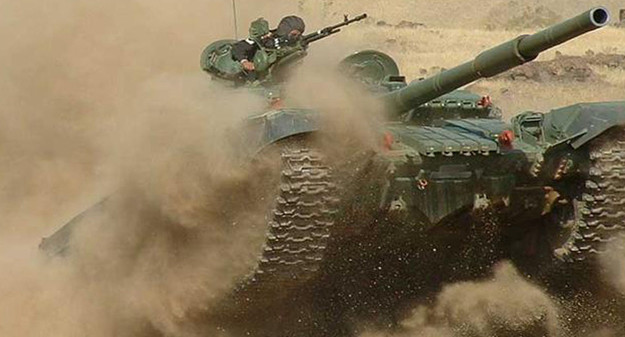
India deploys T-90 tanks in Galwan Valley after China’s aggressive posturing at LAC
Infantry combat vehicles along with 155mm howitzers have been deployed all along 1597 km long LAC in East Ladakh.
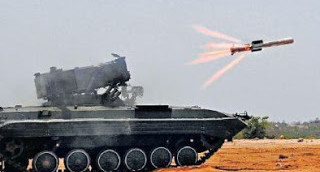
T-90 missile firing tank deployed in Galwan Valley sector.
Signalling that it is all for peaceful restoration of status quo ante in East Ladakh but is also prepared for the worst case scenario, the Indian Army has deployed six T-90 missile firing tanks and top-of-the-line shoulder fired anti-tank missile systems in the Galwan Valley sector. The senior military commanders from India and China are meeting at Chushul on Tuesday to work out the de-escalation and disengagement process on mutual terms.
The army’s decision to deploy the T-90 Bishma tanks was taken after the Chinese People’s Liberation Army (PLA) had beefed up its positions on the river bed with armoured personnel carriers and troop tents. The Indian Army is occupying the dominant heights in the sector within its side of the Line of Actual Control (LAC).
Infantry combat vehicles along with 155mm howitzers have been deployed all along 1597 km long LAC in East Ladakh with two tank regiments deployed in Chushul sector to repel any aggressive plans of the adversary through the Spanggur Gap. While Chinese PLA wants to make a deal on the LAC in this sector as part of withdrawal, the Indian Army is no mood to give an inch as the military aggression came from the Western Theatre Command of China with the intention of redefining the LAC.
According to military commanders, India is prepared for a long haul in this limited spectrum with capability of a full spectrum retaliation in case the red flag goes up. With the water temperature in the river already touching 10 below zero and the river bed temperatures more frosty than the dominant heights due to temperature inversion, it is only a matter of time when “General Winter” takes over the area and makes Chinese positions in Galwan Valley untenable.
While the PLA propaganda talks about introduction of troops trained in martial arts in the East Ladakh sector, fact is that the Chinese foot soldier is conscripted into the army for two years unlike the Indian hardy trooper who stays a minimum of 17 years. Since 1984, the Indian trooper has been trained in high altitude war to repel Pakistan Army from taking over Siachen glacier and has been sitting heights of over 15,000 feet in both Kargil as well as East Ladakh sector.
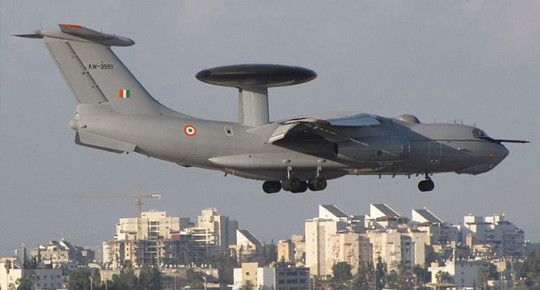
The general morale of the Indian military commanders and troops is very high with both Indian Air Force and Indian Navy deployed in highest state of alertness. Majority of Chinese PLA Air Force fighters are taking off from Hotan air base in Taklamakan desert, some 240 km from the LAC with surface to air missiles deployed to counter the Indian fighters.
Grant emergency refugee protection to Afghan Sikhs, Hindus: UNITED SIKHS to US administration
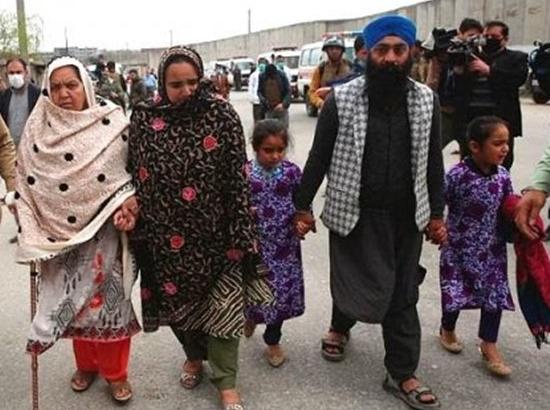
New York, June 30, 2020: For over four decades, Afghan Sikh and Hindu communities have endured targeted assaults. After the March 25, 2020 terrorist attack on the Kabul Gurdwara, UNITED SIKHS was quick to set up its relief operations on ground in Afghanistan, providing relief assistance and legal aid to the families impacted by the attacks from the Islamic State Terrorists.
Our advocacy efforts on the hill have included request the U.S government to dismantle the terror networks and hateful ideology, bring all perpetrators in Afghanistan to justice under International Law or by Military Tribunal. This requires better coordination between the U.S State Department and the U.S. Department of Defense at a higher official level with decision makers.
UNITED SIKHS Chief Legal Counsel, Wanda Day Sanchez said, “We urge Secretary of State Mike Pompeo and Secretary of Defense Mark Esper to make a bold move now by granting emergency refugee protections to Afghan Sikh and Hindu communities. Time is the one asset one can never regain”.
In addition to the 26 U.S. members of Congress, on June 25, 2020 another 20 U.S. Senate members raised concerns to Mike Pompeo, Secretary of State, bringing his attention to the rising existential threats on Aghan minority communities.
UNITED SIKHS International Humanitarian and Disaster Relief Services Director, Gurvinder Singh said, “Afghanistan has everything to gain by expelling draconian ideology and entering a new age of change in 2020. These targeted atrocities on the religious minorities at the time of COVID-19 has further amplified their difficulties and has brought life of an entire community at a standstill.”
United States of America is morally obligated in protecting the withering Afghan Sikh and Hindu minority communities from more strife, grief and further loss of life. The resettlement request by both branches of government: 25 Congress members and 20 Senators; directs the State Department to protect the civil and religious liberties of those persecuted. Jasmit Singh, Advocacy Director said “Ambassador Brownback, we call upon you to stand up to these evil plagues of ideological opportunists from within Afghanistan, hold regional stakeholders to a high level of accountability if interference may be linked and to prevent any more bloodshed against Afghan Sikh and Hindu minorities.”
Singh, added, “The disbursement of monetary aid recently released should reach down to the struggling minorities greatly affected by the COVID pandemic. Poverty has been exasperated due to lockdowns and it has increased the levels in the misery index of the Afghan Sikh minorities.”
Similar to the letter dated May 04, the committee letter dated June 25, 2020 has also emphasized the State Department to provide emergency refugee protection to Afghan Sikhs and Hindus by referring them to the FY20 U.S. Refugee Admissions Program through Priority 1 (P1) embassy referrals, further requesting the Department to consider designating this group for Priority 2 (P2) referrals as well, to widen the scope of opportunity for resettlement on account of persecution or fear of religious persecution.
The UNITED SIKHS National Director for Security, Jason Keller said, “The Sikh and Hindu minorities have never taken up arms during the long civil war, under two decades of American or allied occupation. The US government should before leaving provide additional security and even consider training the unarmed minorities to protect themselves and their family members.”
UNITED SIKHS extends its gratitude and appreciation towards the United States Senate for urging the U.S. State Department Administration to grant emergency refugee protections to Afghan Sikh and Hindu communities. We sincerely hope for a swift and methodical relocation with due support of the State Department.
If you or someone you know needs help or legal assistance, please call our national helpline UMEED at (855)-878-6333.
Ladakh face-off: US senators express solidarity with India
Republican Senator Marco Rubio spoke with India’s ambassador to the US, Taranjit Singh Sandhu, to “express our solidarity with the people of #India as they firmly confront unwarranted and lawless armed aggression by the Communist Party of China”.
An Indian Army convoy moves along a highway leading to Ladakh, at Gagangeer in Ganderbal district.(HT photo)
Expressing solidarity with the people of India on the Ladakh face-off with China, a top US senator has said India had made it clear that it would not be bullied by Beijing.
Republican Senator Marco Rubio spoke with India’s ambassador to the US, Taranjit Singh Sandhu, to “express our solidarity with the people of #India as they firmly confront unwarranted and lawless armed aggression by the Communist Party of China”.
“India has made it clear, they will not be bullied by Beijing,” the senator from Florida tweeted.
On the Senate Floor, Senator Majority Leader Mitch McConnell, for the second time in less than a week, accused China of aggression against India.
A day earlier, Senator Tom Cotton slammed China for its aggression against India.
“China has resumed its submarine intrusions in the Japanese contiguous zones and picked deadly fights with India at high altitude,” the top Republican Senator had said.
Pakistan violates ceasefire along LoC in Naugam sector of Jammu and Kashmir
The BSF personnel patrolling on the fence at International Border at Suchetgarh about 30 km from Jammu(Nitin Kanotra /HT File Photo )
Pakistani troops opened unprovoked fire towards Indian positions along the Line of Control (LoC) in Naugam sector of Jammu and Kashmir on Tuesday in violation of a ceasefire agreement, an army official said.
“On 30 Jun 2020, in the morning hours, Pakistan initiated an unprovoked ceasefire violation (CFV) along the LoC in Naugam sector (in north Kashmir’s Kupwara district) by firing mortars and other weapons,” the official said.
He said befitting response is being given to the Pakistani aggression.
June 20, 2020, 11:32 AM IST Ambreen Zaidi in Barracks and Beyond | India | TOI
Dear General, We the families of serving and retired personnel of the armed forces stand steadfast with our soldiers, our army. No, we are not scared; yes, we are praying for the safety of our men. But we need to know about what happened in Galwan Valley. I do understand there are reasons why strategic decisions or outcomes are not shared in the public domain. But with a super active social media, so many contradicting statements and horrifying photographs doing the rounds, where do we go, whom do we trust? – How did we suffer so many casualties, including that of a Commanding Officer, if there were no intrusions by China? – Not only were our soldiers barbarically killed, their bodies were mutilated. Why? – Did they enter the enemy territory on their own (as claimed by China) and got attacked in defence? – Why us there a new spin to the Ladakh Disaster, everyday? – Will we ever know the truth? – Did our soldiers fell into the trap laid by their own? Our soldiers are not cannon fodder, they cannot be butchered for diplomatic gains. As crazy as it may sound, more than the Chinese military, it is you that we are warier of. Your policies, your directives and so ever evident step-motherly treatment to your very own is what concerns us more. When the post of the Chief of the Defence Staff was created and it was communicated that all the tri-services, Indian Army, Navy, and Airforce will come under one umbrella so that India is better protected, it was reassuring. We felt safe more, on all the frontiers. But what is happening is completely opposite. We are facing a tough time both internally as well as externally. Even though every citizen of the country stands with our soldiers, the members of our armed forces are not in the highest of their sprits, because of your interventions to a large extent. The Ladakh disaster made it more than evident how the various Headquarters of the Indian army across the hierarchy stood clipped of all their powers, because of your constant interference. The whispers in the corridors are now the screams to save our soldiers from any such fiascos in the future. We lost our men in an unsoldierly manner and there are major cover-ups after cover-ups to hide the ground reality. Their blood could be on the hands of the political decision-makers and on YOURS too, to a large extent! It certainly must be a nice feeling to have a powerful Godfather in the govt from the same village as yours. Someone, who protects you, gets you promoted superseding the other best, has a cushy appointment custom made for you so that you can serve your country for a longer period. Fantastic! Not everyone is so blessed. With such a strong connection in the government and the incredible power it wields, imagine how beautifully the organisation would have benefited, if only, you STILL considered yourself truly part of this family of olive greens. But you preferred to play the part of the boss who loved to strip his own, of their basics. For once please put a hand on your heart and reflect- – Did you do justice to the responsibilities and privileges showered on you? – Did you stand up for your brothers in arms? – Did you not let the politicians make you the scapegoat and get some decisions made which invariably harmed the organisation? – Did you not fail our soldiers in Ladakh? I am sure you know the answers. Ever considered putting your foot firmly on the ground for your boys fighting it out and getting killed in sub-zero temperatures with not even adequate protective gear. Yes, then go ahead do it, we stand in solidarity with you. No? What about resigning on moral grounds, then? While we stand with our soldiers and will not bat an eyelid when they go for a war, we request you to ensure that they are not cheated, not asked to go unarmed or don’t use the weapon, we would certainly not want them to be butchered the way they were by China. No!! Let Ladakh be the gamechanger…. Jai Hind.
DISCLAIMER : Views expressed above are the author’s own.
AUTHOR
Ambreen Zaidi
Ambreen is a well-known journalist and blogger. She has won several awards for her work. She has also worked with UNICEF and NASSCOM Foundation. As an Army .
. *FREEBIES IN ARMY* *Free Ration*…. The name Free Ration is the biggest jhaansa giving an idea to Indian Public that Fauj me toh sab kuch free hota hai. *Public Must Know*
*Free Ammunition, Free Hathiyar, Free Tank, Free Topain, *Free Border Posting,* *Free mein Siachen Visit*, *Free ki Golian aur IED Blasts, Bum dhamake,* *Free ka Vanvas,* *Free ka Frequent Change of Station,* *Free ka Encounter* with Militants, *Free ke Zakhm etc. etc.*
*Aisi kaun si cheez hai jiske liye hum paisa dete hain.*
Lekin Haan,
*Income Tax zarur pura dete hain*, *Apni Life Insurance ka payment hum khud dete hain.*
Par fir bhi *itne raees* hain, *APNE KHOON KO PAANI KI TARAH BAHATE HAIN.*
Crossed Shyok river barefoot with ice cutting our feet: 1962 war veteran recalls Galwan
Naik Elihud George, who served in 1962, said today’s India-China scenario is more precarious & needs diplomacy to avoid a World War III-like event.
Naik Elihud George, who served in the 1962 India-China war, in Leh | Photo: Sajid Ali
Leh: After India and China decided to start the process of de-escalation along the Line of Actual Control, tensions are still rife, notably in the Ladakh region. While many have been calling for war, revenge or at least a boycott of Chinese-made goods, quite a different message comes from Naik Elihud George, who served in the 1962 war between India and China.
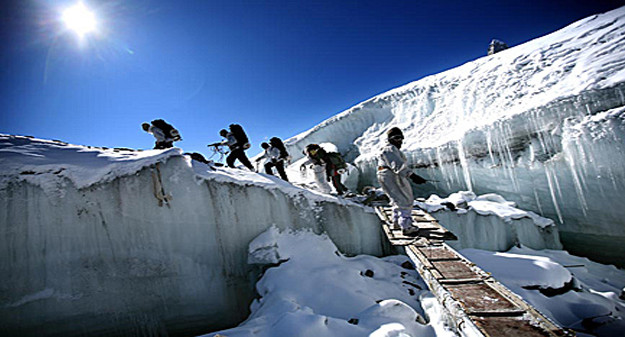
Meeting ThePrint’s team in Leh, the war veteran, who lives on the outskirts of Ladakh, recalled his and his platoon’s experience of the harsh terrain of the Galwan Valley. A frozen river with ice chips that cut into the bare feet of soldiers’, Naik George called this a “punishing terrain” that even horses didn’t survive.
He also pointed out that in terms of arms and ammunition, both countries are now in a very different place than they were in 1962. For instance, both are nuclear powers, and so any escalation could lead to a World War-like situation, which must be avoided, George said.
Of the 20 Indian soldiers who died on the intervening night of 15 and 16 June in Eastern Ladakh’s Galwan Valley, several had died from hypothermia after falling into the freezing waters of the Shyok River with injuries.
Recalling the 1962 war, 77-year-old Naik George said that the terrain in Galwan Valley was just as punishing then, and survival at 18,000 feet is extremely difficult. “My platoon started with 30 men and 130 horses on a 13-day journey to reach Galwan Valley. By the time we reached Daulat Beg Oldie, we were left with 90 horses though our men managed to survive,” he said.
Reaching Galwan Valley by crossing the Shyok river, also known as the river of death, was a herculean task, he said.
“We had to cross the freezing Shyok river barefoot in March 1962. There were pieces of ice that cut through our bare feet, but we had to go along. After the Shyok, we had to cross the Chip Chap river, which flows in a zig-zag manner. It took us 180 tries to cross it. We set up camp along the Galwan River and on the 13th day, we reached Daulat Beg Oldie,” he recalled.
The face-off on 15 June is the first bloody clash between India and China in several decades. It was a culmination of events that began weeks before, when reports of Chinese construction activity emerged in May. Naik George said there was a similar pattern of events in 1962.
“When we reached Daulat Beg Oldie, we realised that the Chinese had already built roads behind the Karakoram Range. We found that road building would even continue in night with one lantern attached to each PLA soldier’s back. And then finally, on the night of 22 October, the Chinese attacked three of our posts,” he said.
Now, Naik George’s son is a Havildar deputed at Pangong Lake and is facing the Chinese just as his father did almost six decades ago.
The war veteran, however, explained that India in 2020 is not the same country as it was in 1962.
“Now we have all the sophisticated weaponry that the Chinese have. We no longer fight wars with rifles and swords as we used to. Both sides are nuclear powers and an escalation may result in a World War III-like scenario, with different countries siding with either India or China. A diplomatic solution is essential and must be found to ensure that such a dangerous escalation can be avoided,” he said.