Sanjha Morcha

What’s New

Click the heading to open detailed news

Current Events :

web counter

Print Media Reproduced Defence Related News

India-China standoff: Vigil along LAC in Depsang crucial, say experts

Indian soldiers walk at the foothills of a mountain range near Leh, the joint capital of the union territory of Ladakh, on June 24, 2020.

Indian soldiers walk at the foothills of a mountain range near Leh, the joint capital of the union territory of Ladakh, on June 24, 2020.(AFP file photo)

    The heightened concerns about Depsang come from an earlier intrusion in this sector in 2013 when the PLA set up positions 19 km into the Indian side of the LAC and triggered a face-off that took three weeks to resolve.

As Indian and Chinese forces prepare to act on an understanding to disengage from all friction areas along the Line of Actual Control (LAC), it is crucial that the army keeps a strict vigil along the contested border with a special focus on eastern Ladakh’s Depsang plains, officials and China watchers tracking the dispute said on Wednesday.

The heightened concerns about Depsang come from an earlier intrusion in this sector in 2013 when the PLA set up positions 19 km into the Indian side of the LAC and triggered a face-off that took three weeks to resolve.

The Depsang plains lie south of Daulat Beg Oldie (DBO) in a strategic area that the military calls Sub-Sector North (SSN). DBO is the country’s northernmost outpost where India operates an advanced landing ground to support forward military deployments.

Keeping strict vigil along the disputed border, especially in sensitive areas in SSN, during the disengagement process is vital, said Lieutenant General Vinod Bhatia (retd), who was the director general of military operations during the Depsang face-off.

The 2013 Chinese intrusion into Indian territory blocked the access of Indian soldiers to several patrolling routes including the ones leading Patrol Points to 10, 10-A, 11, 12 and 13.

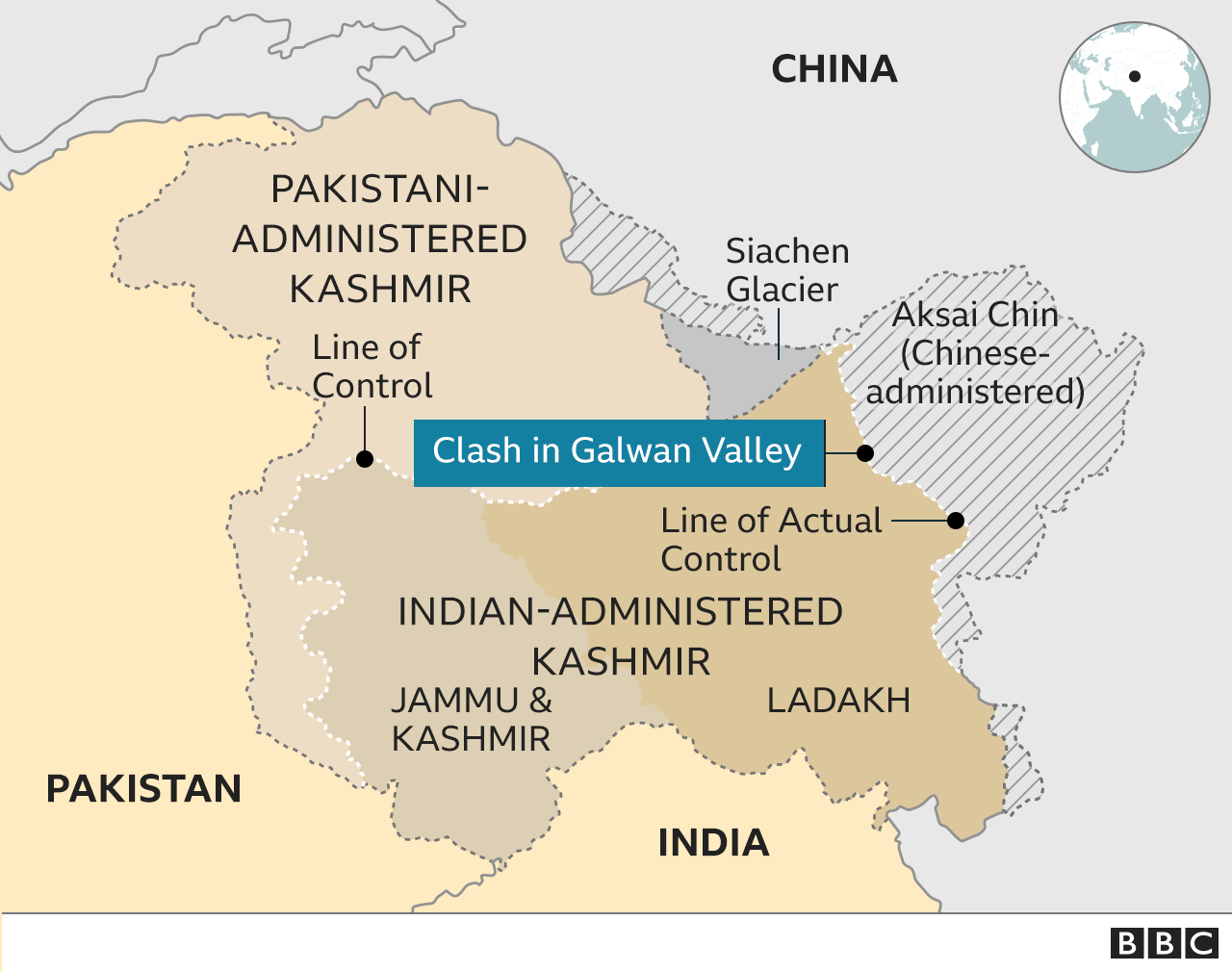
Indian and Chinese military commanders reached a “mutual consensus to disengage” from all friction areas during a 11-hour meeting at Moldo on the Chinese side of the LAC on Monday. The talks were aimed at cooling tensions and thinning the military build-up on both sides of the border which has been tense since a brutal brawl on June 15 left 20 Indian army personnel and an unconfirmed number of Chinese troops dead in Galwan Valley.

“The SSN, including Depsang area, is of huge strategic significance and there’s no question of the army lowering its guard there. The Darbuk-Shyok-Daulat Beg Oldi (DS-DBO) runs through this area that is near the Karakoram pass,” said former Northern Army commander Lieutenant General DS Hooda (retd).

India is building a second road from Sasoma to Saser La in eastern Ladakh and it could eventually provide an alternative route to DBO, as reported by Hindustan Times on June 9. The Sasoma-Saser La road axis is south-west of DBO.

“India will have to progress cautiously during the disengagement process as the possibility of the PLA opening a new front cannot be ruled out,” said a senior officer on condition of anonymity. The disengagement process, to be carried out in different sectors, in phases is yet to kick off, he said. It is expected to gather momentum after commanders on the ground hold more meetings in the coming days.

China has deployed up to 10,000 troops in its “depth areas” across the LAC in eastern Ladakh and the military buildup includes including fighter jets, helicopters, tanks, artillery guns, missile systems and air defence radars. India has matched China’s military moves.

Neither India nor China is likely to immediately thin its deployment in the rear areas, given how volatile the disputed border has been, especially after the brutal clash at Galwan Valley, as reported by Hindustan Times on Wednesday. The clash derailed a previous disengagement plan worked out by senior Indian and Chinese commanders after their first meeting on June 6.


China’s mixed signals after deal to disengage

India and China on Wednesday said the speedy implementation of disengagement and de-escalation measures agreed on by their senior military commanders will help calm tensions triggered by an ongoing border standoff.

Chinese president Xi Jinping

Chinese president Xi Jinping(Getty Images)

India and China on Wednesday said the speedy implementation of disengagement and de-escalation measures agreed on by their senior military commanders will help calm tensions triggered by an ongoing border standoff.

However, the strains and pressure simmering beneath the surface were evident in Beijing’s reiteration of accusations that New Delhi had violated bilateral agreements and provoked the June 15 clash in Galwan Valley that resulted in the death of 20 Indian soldiers and unspecified Chinese casualties.

During a more than three-hour meeting of the Working Mechanism for Consultation and Coordination (WMCC) on border affairs, the Indian side conveyed its concerns on developments in eastern Ladakh, including the violent face-off on June 15, and emphasised both sides should “strictly respect and observe” the Line of Actual Control (LAC).

The stance adopted by both sides indicated the ongoing military and diplomatic engagements to end the standoff, especially in Galwan Valley, which has been the focus of tensions, will be a long-drawn affair with no early resolution in sight.

The meeting of WMCC, held via video conference, focused on developments along the disputed border, especially the situation in eastern Ladakh, the external affairs ministry said in a statement. The Chinese readout of the meeting described the talks as “candid” and “in-depth”.

The two sides referred to the June 17 phone conversation between external affairs minister S Jaishankar and his Chinese counterpart Wang Yi and the meeting of the corps commanders on June 22 and “reaffirmed that both sides should sincerely implement the understanding on disengagement and de-escalation that was reached by the Senior [military] Commanders on 6th June”, the Indian statement said.

“The two delegations agreed that implementation of this understanding expeditiously, in accordance with the bilateral agreements and protocols, would help ensure peace and tranquillity in border areas and the development of broader relationship between the two countries,” the statement added.

The Chinese readout said the two sides will “actively accommodate with the two military forces to implement the outcome reached during the two rounds of commander-level meetings on June 6 and 22… strengthen communication and coordination through military and diplomatic channels, and peacefully resolve relevant issues in the border areas through bilateral dialogue and consultation”. It also spoke of strengthening military confidence-building measures.

This was the second meeting of the WMCC since June 5, and the Indian side was led by joint secretary (East Asia) Naveen Srivastava of the external affairs ministry, while the Chinese side was headed by director general Hong Liang of the department of boundary affairs of the foreign ministry.

People familiar with developments on condition of anonymity said the meeting also discussed possible contours of future diplomatic engagements and parameters for taking forward the measures agreed on by military commanders to ease tensions. “This is going to be a protracted process and we have to be ready for the long haul,” said one of the people cited above.

The two sides will maintain communications at the diplomatic and military levels, including through WMCC, to resolve the situation peacefully.

But even as the meeting was underway, China’s defence and foreign ministry kept up a shrill barrage of accusations against India, blaming the Indian side for the Galwan Valley clash and alleging the external affairs ministry was behind “false reports”.

The allegations came two days after the corps commanders of the two sides reached “mutual consensus to disengage” in all “friction areas” along the LAC. People familiar with the military talks too said the process is expected to be arduous and completed in phases.

China’s defence and foreign ministry separately castigated India for allegedly violating bilateral agreements and provoking the clash. There was also a reiteration of a claim of sovereignty over Galwan Valley. India has already dismissed these allegations and said the contested valley has always been under its control.

Asked why China’s foreign ministry was repeating these contentious points amid renewed talks of peace and tranquillity on the border, spokesperson Zhao Lijian told a news briefing: “What I have just said…is meant to clarify the whole situation, tell the truth to everyone. We made the statement because the [external affairs ministry] and Indian media have made some false reports.”

In a statement read out after the briefing was over, Zhao repeated accusations that Indian troops had trespassed into Chinese territory and provoked an incident on May 6. He claimed the Indian side had agreed to withdraw from Galwan Valley and had “dismantled its facilities as requested by the Chinese side”.

Referring to the corps commanders meeting of June 6, Zhao contended the Indian side had committed it would not “trespass” into Galwan Valley for “patrol and for building”. The two sides agreed to set up observation posts on both sides of the Galwan river estuary, but “the Indian side went against these agreements and asked China to dismantle China’s posts and also it crossed the [LAC] to provoke which led to the clash”, he added.

Zhao also reiterated China’s accusation that the June 15 clash occurred because Indian troops went against the agreement reached on June 6 and “crossed the LAC and sabotaged the tents Chinese side set up”. He also alleged the Indian side attacked Chinese personnel – such accusations have been dismissed by India, which has maintained the “premeditated and planned” actions of the Chinese side led to the violence and casualties.

Separately, China’s defence ministry spokesperson Wu Qian made similar accusations during an online interaction with selected media.

Analysts questioned the divergent positions taken by the Chinese side during bilateral discussions and while making public remarks on the border stand-off.

Leading strategic analyst Brahma Chellaney tweeted: “In keeping with China’s standard playbook for camouflaging offence as defence, its foreign ministry almost daily has been branding India as the aggressor. But today, its foreign and defence ministries launched twin attacks on India. Is the ‘disengagement’ deal already unravelling?”


Bole So Nihal, Sat Sri Akal :::Chinese hate

Bole So Nihal, Sat Sri Akal

The Chinese don’t like the Sikhs, their war cry ‘ Bole So Nihal, Sat Sri Akal’ frightens them , their huge frames with long hair and beard frightens the clean shaven slick looking Chinese.
At Doklam, three years ago, the best of Chinese troops had wilted under the brute strength of the Sikhs , one of whose havildar likened the push and shove to kabaddi.

On the night of 15th June, as the 16th Bihar troops faced a murderous and treacherous unprovoked Chinese assault , taking heavy casualties, they found critical support from the gunners of the 3 Medium Field Regiment.
The valiant Khalsas launched a barehanded counter-attack with their trademark blood curling war cries about an hour after the Bihar troops had got embroiled in the savage hand-to-hand combat , having to fight with sticks , bare hands, rocks and with weapons snatched from the Chinese.
The Sikhs went straight for the jugular , attacking a ‘senior looking officer ‘ protecting by six Chinese guards.

“They killed all the six guards and dragged  the senior officer by the scruff of his neck in a bloody fight lasting for 30 minutes,” said an eye-witness of the 16th Bihar Regiment. ” They fought like men possessed, smashing Chinese heads with rocks and slashing them with swords snatched from the Chinese.”
Other Chinese troops in the vicinity fled or stayed away , in sheer fright .  Two Sikh gunners died when struck by swords but one of them strangled a Chinese to death in the squeeze of his massive biceps , all along shouting ‘Bole So Nihal, Sat Sri Akal.”
The angry , bloodied Sikhs were about to thrash the senior officers when the JCO leading them glanced at the stars on his epaulets and stopped them, imagining he must be colonel.  The JCO was right — this was the Chinese colonel who had planned the treacherous attack  on Colonel B.Santosh Babu, CO, 16th Bihar.
This CO greatly helped fast tracking of GOC level negotiations* held between the two sides on 17/18 Jun, leading to quick exchange of 10 Indians against the lone captured Chinese  Commanding Officer.
That the ten Indians including two majors were released without torture and torment might owe itself to the Chinese Colonel being in the custody of Sikh gunners.
Down India’s medieval and modern military history , the burly and fearless Sikhs have turned the fate of many a battles with sheer bravery.
They — and their corps commander Lt Gen Harinder Singh — again proved they are peerless warriors on the night of 15th June.


Uttarakhand: Bridge near Indo-China border collapses as truck with heavy equipment tries to cross it [WATCH]

uttarakhand bridge collapse

Dehradun: In a heart-stopping incident, a bridge near Indo-China border in Uttarakhand suddenly collapsed when a truck loaded with heavy equipment tried to cross it. Two persons on the truck, including the driver, sustained serious injuries and were taken to a nearby hospital.

In a video that surfaced on social media, a truck can be seen trying to cross a bridge with a person walking just behind it. The truck successfully crosses more than half of the bridge’s length but as it reaches closer to the road, the bridge collapses and the truck falls in the gorge.

According to reports, the truck was carrying heavy construction equipment and the bridge it was trying to cross is on Dhapa-Milam Road leading towards Indo-China border in Lilam Johar Valley.

The construction equipment was to be used in the construction of 65 km motorway from Milam towards China border, reports said.

RELATED NEWS

It was further reported that two persons on the truck, including the driver, sustained serious injuries in the bridge collapse. The person who was walking behind the truck when the bridge collapsed came out of the gorge unscathed.

Some local youth carried out rescue and relief operations, and both the injured persons were rushed to a nearby hospital.


Madhya Pradesh: Tea seller’s daughter flies high, becomes IAF Officer

Madhya Pradesh: Tea seller’s daughter flies high, becomes IA ..
MP: Tea seller's daughter flies high, becomes IAF officer

MP: Tea seller’s daughter flies high, becomes IAF officer

Obstacles cannot stop a person from realising dreams if one has the determination, and this has been proved by 24-year-old Anchal Gangwal, a tea seller’s daughter who recently joined the Indian Air Force as Flying Officer. She was commissioned into the Indian Air Force (IAF) a few days back, but it was not an easy journey for her as sometimes her father did not even have the money to pay for her education fees.

“Her commissioning was a proud moment for our family, but we could not make it (to the Air Force Academy at Dundigal) to see her due to the coronavirus-induced restrictions,” her father Suresh Gangwal, who works as a tea seller at a bus stand in Neemuch district, told PTI.

He said his daughter dreamt of joining the IAF after seeing the bravery of its personnel in helping people during the 2013 Kedarnath tragedy.

It was not easy for Anchal and the family to make her realise this dream, but she was determined, he said.

“She was a bright student and also a basketball player. She first wished to join the Air Force after seeing the IAF personnel helping people during the Kedarnath tragedy.

And, now her dream has come true, the proud father said.

He said after getting inspired by the bravery of IAF personnel, his daughter collected information from bookstalls on howshe could get into the defence force and started preparations in that direction.

“She was determined and got success in the sixth attempt, he said.

But, it has not been an easy journey for her and her father, who has been selling tea for the past 25 years in Neemuch, located around 400 km from Bhopal.

“One can understand my financial condition. At times, I faced problems in depositing her school or college fee. I had to borrow money from others on many occasions to deposit the fee. Sometimes I had to pretend to be out of town to delay fees deposition,” said Suresh Gangwal, who has studied till

Class 10.

Meanwhile, Madhya Pradesh Chief Minister Shivraj Singh Chouhan congratulated Anchal Gangwal for making the state proud and extended best wishes to her.

Anchal, daughter of Suresh Gangwal, who runs a tea shop in Neemuch, will now fly the fighter plane in the Air Force.

Daughter Anchal, who made Madhya Pradesh proud, will now fly in the heights of the infinite sky to protect the pride and honour of the country.

Congratulations, blessings and best wishes to the daughter, Chouhan tweeted on Monday.

ead more at:
http://timesofindia.indiatimes.com/articleshow/76526081.cms?utm_source=contentofinterest&utm_medium=text&utm_campaign=cppst

Corps Commander to raise Galwan violence with China & seek status quo in Pangong, other areas

The meeting between Lt Gen. Harinder Singh and his Chinese counterpart began Monday morning at Chushul-Moldo meeting point on the Chinese side of the LAC.

File image of Indian soldiers in Ladakh | By special arrangement

New Delhi: Lieutenant General Harinder Singh, the 14 Corps Commander, will Monday raise the issue of the brutal violence by the People’s Liberation Army (PLA) last week in Galwan Valley, Ladakh, and also seek restoration of status quo in Pangong Lake, the Hot Spring area, among others, where the Chinese have intruded.

The meeting between Lt Gen. Singh and his Chinese counterpart Major Gen. Lin Liu, the commander of the South Xinjiang Military District, began at 11.30 am at Chushul-Moldo meeting point on the Chinese side of the Line of Actual Control (LAC).

Sources in the know said Lt Gen Singh will raise the issue of the “premeditated and planned action” that led to the death of 20 Indian soldiers and injuries to several others.

China has still not confirmed the casualties on their side, but sources said “a number” of PLA soldiers suffered fatal casualties and injuries in the attack.

While the incident happened on Indian territory, the Chinese have gone back into their territory in the Galwan Valley.

This is the second meeting at the Corps Commander-level since the tensions broke out in early May.

Also read: India uses AIR Chinese service to broadcast commentary on Galwan ‘transgression’ by China


Restoration of status quo ante

Sources said another issue that will be discussed is the restoration of status quo ante in areas, which have witnessed transgressions by the Chinese, especially along Pangong Lake where the Chinese have come to Finger 4 from their base in Srijap.

For India, the LAC is at the Finger 8 after the 1962 war when the Chinese captured Srijap that was earlier controlled by India. The restoration of the status quo as of early April is the only way to reduce tensions.

As reported by ThePrint, the government has changed the rules of engagement at the LAC and the new rules do not bind the security personnel from using force, including firearms in exceptional situations, to counter the Chinese aggression and transgressions.

India has moved in over two division strength-level additional men and equipment into eastern Ladakh, which includes artillery and mechanised columns.

The Indian Air Force has also brought in Apache attack helicopters, Chinook heavy-lift choppers, besides increasing Combat Air Patrol.

While the Navy has moved additional warships into the Indian Ocean as a precautionary measure, sources said the Navy’s long-range surveillance aircraft, P8I, has also been deployed to carry out recce in the region.


Also read: China’s on India’s side in Pangong, Hot Springs. ‘Difference in perception’ line suits it


How Indian troops chased the Chinese for a kilometre over LAC in Galwan on 15 June night

Representational image | Soham Sen | ThePrint

New Delhi: It was a combination of “treachery” and breaking the terms of an agreement by the Chinese that led to the violent face-off in the Galwan Valley on the night of 15 June that left 20 Indian soldiers dead and several injured, ThePrint has learnt.

However, it was not a one-sided battle and the night witnessed an over 1-kilometre-long chase by the men from 16 Bihar Regiment and other units as the Chinese ran back to the safety of their units posted just across the Line of Actual Control (LAC), sources said.

ThePrint has spoken to a number of individuals in the know and has been able to construct a sequence of events that eventually ended with the Chinese being pushed back from the Indian territory that they briefly intruded into by a kilometre at the mouth of the Galwan Valley.


Also read: Galwan Valley has been & will always be India’s, says grandson of explorer it’s named after


Before 15 June: A military agreement

The events of last Monday night occurred along the Galwan River, which originates from Aksai Chin, and reaches the Shyok river, also known as the river of death. There is a particular point at which the Galwan river takes a sharp turn left and later meets the Shyok.

Patrol Point 14 (PP 14) is just ahead of this confluence of the Shyok-Galwan river.

Indian troops have traditionally patrolled till PP 14 but has never built a camp or any structure in accordance with the understanding between the two sides at the local level.

Similarly, the Chinese also patrol up to PP 14 from time to time. This is also the spot where the two sides meet to talk.

Early May, a Chinese tent was spotted at PP 14. This is deemed to be in Indian territory and the Indians challenged this construction in May itself and also confronted a group of Chinese soldiers who were attempting to trek down to the Shyok river.

Sources said that the Chinese later dismantled its tent and went back to their side beyond PP 14.

However, both sides had built up troops and were literally in a stand-off at PP 14.

After the 6 June meeting between 14 Corps Commander Lt Gen. Harinder Singh and his Chinese counterpart Major General Lin Liu, commander of the South Xinjiang Military District, it was decided that both sides will fall back by about 2 kilometres from their current positions at PP 14.

Accordingly, Indian troops moved behind and the Chinese did too.

However, sources said that a few days later, India found that the Chinese had reneged on the agreement and erected two fresh tents on a slope, including one which was suspected to be an observation point.

The Chinese were repeatedly asked to remove them and Indian troops forcefully dismantled one of the two tents and set it on fire on Sunday, 14 June.


Also read: Want to help Indian soldiers at LAC? Stop spreading assumptions about Galwan clash


On 15 June: The big fight

On 15 June, the Commanding Officer of the 16 Bihar Regiment, Col Santosh Babu, held talks with his Chinese counterpart at PP 14. It was decided that both sides would strictly adhere to the 6 June decisions, which would also mean that the Chinese would have to remove the structure on the slope.

At around 7 pm that night, as reported by ThePrint, Colonel Santosh along with a small group of officers and personnel went up to PP 14 to check if the Chinese had kept up their end of the agreement.

This is where the account blurs. Some sources say initially a Major and some non-commissioned officers (NCOs) had gone to PP 14 and were taken hostage, but others say it was Colonel Babu who went.

What is confirmed is that Col Santosh had about 40 other personnel with him, including officers and unit videographers, when he neared PP 14.

Seeing the tent still present, the CO asked his men to remove the tent. A small group of Chinese soldiers then came forward and began a verbal spat.

Sources said this slowly turned into pushing and shoving. At this time, the Indians outnumbered the Chinese.

This continued for about half an hour, and during the melee, the temporary structure was dismantled.

However, a larger group of Chinese soldiers came to the spot armed with iron rods, stones and even sticks with nails and barbed wires on them.

The Chinese had the tactical advantage here in terms of numbers, weapons and the geography.

The Chinese attacked the Indian soldiers and the Commanding Officer (CO) was hurt since he was at the forefront.

He fell in the icy cold waters of the Galwan River below even as the soldiers fought back with the sticks they were carrying.

The attack on the CO fired up the soldiers, who managed to wrangle the weapons being used by the Chinese away from them and turned it on them. They even fought with sheer physical force, the sources said.

“This was treachery by the Chinese. The attack on the Indian team was planned. The CO had gone there with his men in good faith because talks were held in a positive atmosphere during the day,” a source said.

Sources said that since the fight was happening over a ledge, many soldiers from both sides fell into the icy cold river water.

They added that of the 20 dead on the Indian side, about eight died directly as a result of hypothermia because they had injured themselves by falling on the rocks in the river below. It was Tuesday morning by the time a rescue was possible.

As the Indian side found out about the fight breaking out, back up was rushed in. This included troops from the 16 Bihar and other units that were posted in the area due to the stand off.

The names of these unit are not being disclosed for security and tactical reasons.

While more Indian soldiers armed with sticks rushed in, the Chinese threw stones and rolled down bigger stones onto the Indian team.

In the hand-to-hand combat, many Chinese soldiers were grievously injured, the sources said.

Such was the confusion at this point that each side pelting stones was also hitting their own soldiers.

“The area of the main fight was very narrow. In the melee, at one particular section, the Chinese were again overwhelmed by the Indian troops and they ran off to the main area of PP 14 behind which there was Chinese build up,” a source said.

A group of Indian soldiers chased them and crossed over what is the Line of Actual Control (LAC), an undrawn line.

It is here that 10 Indian soldiers were held captive since the Chinese had a bigger build-up, sources said.

The fight continued for several hours into the darkness till it subsided with both sides pulling apart.


Also read: Galwan clash is a turning point as Indian soldiers give Chinese a bloody nose


16 June: The morning after

In the morning, both sides decided to halt the fight and rescue the injured and take away bodies.

Some of the soldiers who ended up in custody on the other side were returned following the Major General level talks near PP 14.

Both sides made sure that the injured were taken care of.

However, it was only on Thursday that the Chinese returned the 10 who had crossed over the LAC in the chase.

“It was a clash that began with Chinese treachery. It was a clash of great heroism of the troops posted there who fought back the Chinese and taught the Chinese a lesson not to mess with India,” a source said.

Since the Monday clash, the Chinese have withdrawn from the Indian territory at PP 14 and have gone back to their side in accordance with the decisions taken on 6 June.

The Indians too have gone back but have maintained a strict vigil. The future talks, including the one held on 22 June, will focus on more de-escalation and will follow a policy of specifying how many troops will be at what distance from the LAC, besides new patrolling tactics.


Also read: China has an Achilles’ heel. India must take the battle there from LAC


India & China agree to step-wise de-escalation in eastern Ladakh, including Pangong

Indian and Chinese soldiers during a military exercise in Meghalaya last year | Representational image | ANI

New Delhi: India and China have agreed on “step-wise mutual disengagement” from all areas of friction in Eastern Ladakh, including the main point of concern at Pangong Lake, ThePrint has learnt.

The decision was taken following Monday’s nearly-11-hour talks between 14 Corps Commander Lt Gen. Harinder Singh and his Chinese counterpart Major General Lin Liu, commander of the South Xinjiang Military District.

According to sources in the Army, the Corps Commander-level talks between India and China at Chushul-Moldo were held “in a cordial, positive and constructive atmosphere”.

“There was a mutual consensus to disengage. Modalities for disengagement from all friction areas in Eastern Ladakh were discussed and will be taken forward by both the sides,” one of the sources said.

Speaking to ThePrint, another set of sources said the disengagement will be step-wise and take place over a period of time.

“There would be gradual de-escalation that would take place. The forces will move back a particular distance in all areas of friction. This would be different for each location,” a source told ThePrint.

This, the source said, means that disengagement numbers will vary with place and time.

“At an X date, both sides will have to reduce the number of personnel by an X amount and go back by an X distance. This cycle would be done again according to the schedule agreed,” the source added.

Army sources said that more meetings will be held at levels below that of the corps commander to ensure that disengagement takes place smoothly and according to schedule. The sources remained tight-lipped about the exact withdrawal schedule, saying it was a matter of operational secrecy.


Also Read: Xi has thrown the gauntlet at Modi. He can pick it up like Nehru, or try something new


‘No repeat of Galwan’

According to sources, Lt Gen. Singh raised the issue of the Galwan clash last Monday that led to the death of 20 Indian soldiers and injuries to several others. Sources said steps will be taken by both sides to ensure such an incident is not repeated.

The meeting between the two Corps Commanders started at 11.30 am and ended only around 10.30 pm.

Sources said the two commanders were assisted by a number of officials who thrashed out details for specific points.

The meeting was held at the Chushul-Moldo point on the Chinese side of the Line of Actual Control (LAC). It was the second one at this level since tensions began early May. There has been massive mobilisation of troops and firepower on both sides since.

Sources said the disengagement plan included the Pangong Area, where the Chinese have come in by about eight km until Finger 4, which is in Indian territory. The LAC lies at Finger 8.


Also Read: 1954 Panchsheel pact to Galwan Valley ‘violence’ — India-China relations in last 7 decades


Havildar killed in Pakistan shelling

Havildar killed in Pakistan shelling

Our Correspondent

Rajouri, June 22

An Army Havildar was killed in heavy shelling by Pakistan troops along the Line of Control (LoC) in the Kalal area of Nowshera sector in Rajouri district today.

Havildar Dipak Karki, who was guarding a forward post, was critically injured and later succumbed to injuries. He is the fourth soldier to have lost his life in truce violation by Pakistan along the LoC this month.

The Pakistan army resorted to unprovoked shelling using mortars on Indian forward posts and civil areas around 3.30 am. Sources said artillery fire was used to target forward posts.

“The intensity of shelling was very high and people had to run for cover,” said Ramesh Choudhry, sarpanch of Deeing-Kalal.

The Pakistan army also initiated unprovoked shelling in Krishna Ghati (Poonch) this morning. “At both places, the Indian Army retaliated befittingly. Havildar Dipak Karki, who suffered critical injuries later attained martyrdom,” said Defence PRO Lt Col Devender Anand.