



Sanjha Morcha

What’s New

Click the heading to open detailed news

Current Events :

web counter

Print Media Reproduced Defence Related News

Jawan, Hizb ultra killed in Doda

Amir Karim Tantray

Tribune News Service

Khutra (Doda), May 17

Jawan, Hizb ultra killed in Doda

In a breakthrough, security forces today killed a top militant, a close associate of Hizbul Mujahideen operational commander Saifullah, in a gun battle at Khutra village of Doda district. An Army jawan also lost his life in the operation.

Slain militant was behind RSS leader’s killing

  • The slain HM commander was involved in killing of RSS leader & his PSO in Kishtwar and IED blast near CRPF convoy last year
  • He was directed by HM to revive terrorism in Chenab region by targeting security forces and carrying out ‘sensational attacks’

The jawan has been identified as Naik Raj Singh of 10 Rashtriya Rifles belonging to Gurugram, Haryana.

The slain militant was identified as Hizb commander Tahir Ahmed Bhat of Malangpora in Kashmir’s Pulwama district. According to the police, Tahir was involved in the killing of RSS leader Chanderkant Sharma and his PSO in Kishtwar district in April last year.

The police said joint teams of Army’s RR, police and CRPF launched an operation on Saturday.

“The village was cordoned off and around 8 am, search parties came under fire, to which security personnel retaliated. The militant took shelter in a house. In the initial firing, an Army jawan was injured and he succumbed on way to hospital,” said a source.

The security forces blew up the house and later found the body of the militant. An AK-47 rifle, snatched during RSS leader’s killing, was also recovered.


Southern California Sikh Community pitches in to help thousands with meals, groceries Volunteers then pack the meals, comprising mostly of rice and lentils seasoned with Indian spices

Southern California Sikh Community pitches in to help thousands with meals, groceries

San Francisco, May 17

Southern California’s United Sikh Mission has been distributing about 1,400 meals daily for the past month with help from hundreds of volunteers in the local community, a media reported.

This is one of the largest operations in the region, supplying thousands of vegetarian meals not only to seniors and health-care workers at local hospitals but also through the daily drive-through, India-West news quoted a local media report as saying.

In addition, it was also distributing groceries and face masks on weekends at the Jurupa Valley temple here.

Gurpreet Singh, a coordinator with the United Sikh Mission, spoke to the Orange County Register of how their small operation, which started out serving about 175 meals daily outside the temple, grew with help from the local Sikh community into a significant project that has handed out 40,000 meals over the past four weeks.

The nutritious food is made fresh daily at local restaurants in Fontana and Upland.

Volunteers then pack the meals, comprising mostly of rice and lentils seasoned with Indian spices.The Mission is now partnering with community leaders and churches in the Inland Empire to help with meal deliveries to seniors in Jurupa Valley, Moreno Valley and Riverside and to area hospitals.

Another organization pitching in to feed those in need is the Khalsa Food Pantry in Pacoima run by the Khalsa Care Foundation, said the India-West news report.

The Food Pantry provides hot meals every Friday in partnership with Los Angeles City Councilwoman Monica Rodriguez’s office.

The pantry has started a GoFundMe page to raise donations to meet the increasing demand.

Apart from food and groceries, the pantry also provides feminine hygiene products once a month, said the report.

In Bakersfield, meanwhile, the Sikh Riders of America, is providing face shields for law enforcement, first-responders and frontline health-care workers. IANS


Ex-DGP Sumedh Singh Saini appears before SIT Police decline to divulge the details of investigation

Ex-DGP Sumedh Singh Saini appears before SIT

Sanjay Bumbroo
Tribune News Service
Mohali, May 17

Ex-DGP Punjab Sumedh Singh Saini on Sunday appeared before the Special Investigation Team (SIT) in a case registered against him and other policemen in abduction and disappearance of Balwant Singh Multani in Mataur police station.

Senior Superintendent of Police Kuldeep Singh Chahal said the former DGP had arrived at 4 pm before the SIT and the questioning continued till 5.30 pm. He said the SIT had questioned him about the case, the details of which cannot be revealed.

The roads leading to the office of the SSP had been sealed by the police till ex-DGP Saini appeared before the SIT.

According to sources, the police had cordoned off the area after Saini had requested the police for the same as he did not wish to meet anyone else except the SIT.

Pertinently ex-DGP Saini was summoned by SIT after the local court on May 11 had granted him anticipatory bail.

The court had ordered Saini to join investigation within a week and also submit the passport to the police. The court had further restricted him not to come out of his house till the lockdown period in view of the coronavirus was over.

Following the directions of the court, Saini had submitted his passport and gave undertaking that he was ready to join the investigations and was residing at the said address.

Earlier the Mohali police had constituted the SIT headed by Superintendent of Police Harmandep Singh Hans (Investigation) along with Deputy Superintendent of Police Bikramjit Singh Brar and Inspector Rajiv Kumar SHO Mataur police station to probe the case.

Palwinder Singh Multani, brother of victim Balwant Singh, had filed a complaint against the former DGP in Mohali on May 6 and the case was registered under Sections 364 (kidnapping or abduction in order to murder), 201 (causing disappearance of evidence), 344 (wrongful confinement), 330 (voluntarily causing hurt to exhort confession) and 120 (B) (criminal conspiracy).


Two Chinese helicopters violated Indian airspace, says HP police officer Copters spotted on April 11, 20

Two Chinese helicopters violated Indian airspace, says HP police officer

Tribune News Service

Chandigarh, May 17

A senior Himachal Pradesh Police officer has revealed that Chinese helicopters intruded several km iide Indian airspace in the state on two occasions last month.

Rajesh Dharmani, Superintendent of Police, Lahaul-Spiti district which shares the international border with China, told a section of the media that a Chinese helicopter had entered 12-15 km into India in the Sumdo area on April 11. Then, on April 20 another Chinese helicopter intruded into the same area.

The area in question lies to the south of Demchok in Ladakh, a region that sees significant Chinese activity and incursions. Earlier this month, there were reports of a face-off between Indian and Chinese troops in Ladakh and Sikkim.

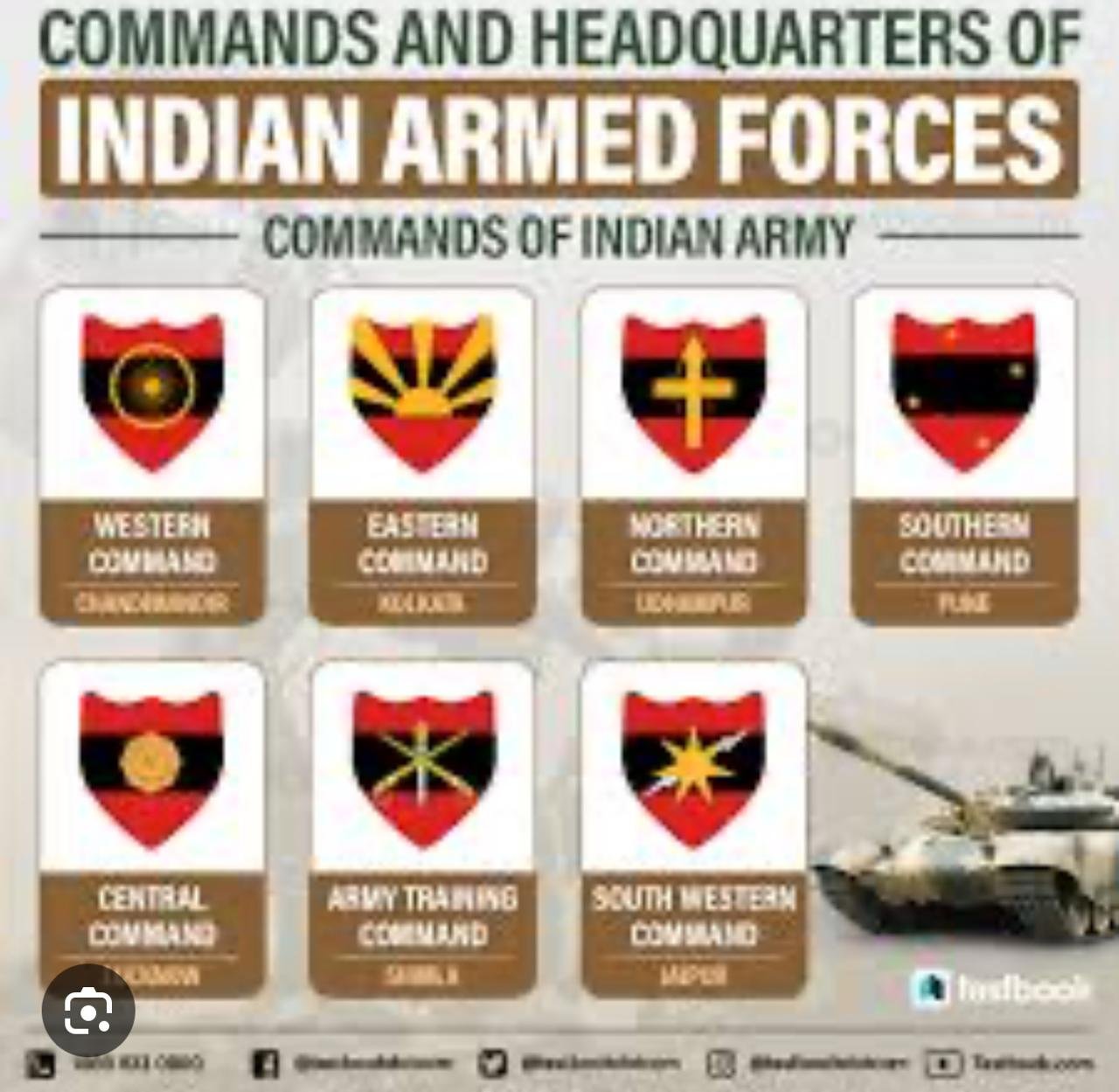
A senior officer at Headquarters Western Command, Chandimandir, under whose jurisdiction the area falls, however, declined to comment on the matter, saying that only the central government would respond to reports of any such cross border incident.

He added that all activities along the border are monitored by different agencies regularly and any untoward or unusual incident is reported and shared amongst them as per established protocols. The peacetime management of the border is with the Indo-Tibetan Border Police Forces that maintains posts on the zero line.

There have been reported instances of Chinese helicopters violating Indian airspace in Himachal Pradesh earlier. Apart from Lahaul-Spiti, Kinnaur is the other district in the state that shares borders with China. The Western Command’s formation, 26 Infantry Brigade that is responsible for this area, is headquartered in Pooh, which is about 11 km from the border as the crow flies.

A limited cross-border trade amongst locals on both sides is also conducted through the Sipki La pass along the Sutlej river during summers.


Senior Adviser to CM meets Dayalan

download (1)


Senior Adviser to CM, Lt Gen (retd) TS Shergill, along with OSD Karanveer Singh, today visited Mohali and sought feedback on areas where the services of Guardians of Governance (GoGs) may be utilised.

Shergill met DC Girish Dayalan in this regard. Shergill appreciated the proactive role of GoGs in bailing public out of the pandemic. He said dedication, devotion to duty and camaraderie of cadres stayed even when they were out of uniform.

He said the responsibility of distribution of ration, management of labour and data-mapping has been shouldered by them. — TNS

Besides, the dedicated cadre has enforced social distancing norms at many places especially the rural banks.


Pakistan Army opens fire, shells forward areas along LoC in Poonch district

Army jawan keeps vigil in Poonch

The cross-border firing started in Degwar sector around 8:40 am on 17 May, drawing retaliation from the Indian Army. No casualty has been reported on the Indian side thus far.

ammu: The Pakistan Army on Sunday opened fire and shelled forward areas along the Line of Control (LoC) in Poonch district of Jammu and Kashmir, a defence spokesman said.

The cross-border firing started in Degwar sector around 8:40 am, drawing retaliation from the Indian Army, the spokesman said.

He said there was no report of any casualty on the Indian side in the Pakistani firing.

 They started with small arms firing and later fired mortars around 9:30 am, the spokesman said, adding the cross-border firing between the two sides was going on when last reports came in.

The Pakistani firing ended over a week-long lull along the LoC.

 Pakistan last violated the ceasefire in Degwar sector on May 9 and Kirni, Qasba and Shahpur sectors of Poonch two days earlier.

Also read: Global lockdown and Covid crisis haven’t stopped Pakistan from its anti-India agenda

A gun battle broke out between security forces and terrorists in Doda district of Jammu and Kashmir on Sunday morning, officials said. An Army jawan laid down his life in the encounter which is still underway, officials said on Sunday.

IGP Jammu, Mukesh Singh said that one terrorist has also been killed in the ongoing encounter. The slain terrorist belongs to Hizbul Mujahideen. Another terrorist has been injured in the exchange of fire, police sources informed.

According to inputs from sources, a terrorist has been identified by the forces by the name Auqaaf – an associate of slain Haroon Abbas Wani.

“On a specific police input, an operation was launched late last night in Doda district. An encounter has started just now,” police spokesperson and Senior Superintendent of Police (SSP) Manoj Sheeri said. He said further details shall be shared later.

There has been a spurt in terror activities across J&K amid the coronavirus pandemic. Jammu’s Doda—comprising Doda, Kishtwar and Ramban districts which have been declared militancy free—have also witnessed terror attacks and related activities amid the lockdown.

A day after Hizbul Mujahideen’s chief Riyaz Naikoo was killed in Kashmir, security forces on May 7 arrested an overground worker of the outfit from Doda district. He was identified as Raqib Alam, 22, son of Seeraj Din of Swanda village.

Also read: In Hizbul’s Kashmir terror team, ‘military adviser’ is most brutal

Security forces on April 17 eliminated two Hizbul Mujahideen terrorists, who had hacked a special police officer (SPO) to death with an axe and critically injured another on April 13 in Dachhan area of Kishtwar district.

The National Investigation Agency (NIA) on Friday filed a charge sheet against six people, including three slain Hizbul Mujahideen (HM) terrorists and three arrested overground workers of the terror group, for providing support to Pakistan-based terrorists to kill BJP leader Anil Parihar and his brother Ajeet Parihar in Jammu’s Kishtwar.

Also read: Saifullah Mir aka Ghazi Haider is Hizbul’s new face of terror in Kashmir

The charge sheet has been filed in the special NIA Court, Jammu against the six accused under Sections 302, 120B, 109 and 34 of the Jammu and Kashmir State Ranbir Penal Code (RPC), Sections 16, 17, 18, 19, 20, 38, 39 and 40 of the Unlawful Activities (Prevention) Act and Section 25(1A) and 25 of the Arms Act.

The Parihar brothers were shot at point-blank range outside their house on November 1, 2018, when they were returning home after closing their shop.

Meanwhile, Pakistan also violated ceasefire in Malti and Digwar areas of Poonch district on Sunday morning prompting Indian Army to retaliate in equal measure.


Army Officers Career Management: Take the Bull by the Horns!

Officers Management in the Army is demanding recognition as a controversial issue that has reached cul de sac.  This clarion call comes with five rationales. One, say within the next two/three years, the armed forces will be prepared for Integrated Theatre Commands.  This will have deep repercussions on the Officer Cadre promotional structure, as the three services follow a dissimilar path in entirety, and inter-se seniority is a bugbear currently. Two, the Hon’ble Supreme Court decision on Women Officers has significantly opened the field for their taking over Command of units, which will also have a material effect. Three, the promotion opportunities for commissioned officers from all arms and services, should largely be similar, to be motivating enough to new inductee Young Officers to retain a modicum of ambition. That does not exist presently for the Services officers. Four, warfare is dramatically changing, the foci is shifting to modern, information age conflicts.  There would be a transition to newer units and to the new cutting edge in warfare.   And, five, cases are yet subjudice in the Hon’ble Supreme Court for allocation of additional vacancies at higher ranks to combat arms, the decision to which will have a more far-reaching effect.

The Army has to resolve the internal officer’s career management policies, which have been under considerable strain for the last nearly twenty years.   It is necessary to first address the Army’s imbroglio, with a short backgrounder, though majorly, it will be known to all readers.  Consequent to the lessons learnt of the 1999 Kargil War, it was considered necessary to manage the reduction of ages of officers commanding infantry battalions and brigades. With that term of reference, AV Singh Committee (AVSC) was formed, which came up with a mathematical model (colloquially later called Command Exit Model – CEM). The chronology that followed needs recounting with certain specifics:

  • The CEM was based upon two variables – the Command assignments allocated to an arm or service, and the tenure in command. The first variable, the numbers of Command assignments, was left open-ended by the AVSC and has consequently witnessed large increments.  The second variable, the command tenures was fixed, with a wide span from Infantry Commanding Officers (COs) having 30 months to Services COs of 60 months. AVSC having been approved by the Union Cabinet, made the Report as if etched in stone for times immemorial, except in 2016, when in a judgment, the Hon’ble Supreme down-scaled the command tenures for the Corps of Engineers, Signals and Air Defence.
  • AVSC rested on many basic premises, the most important of which was to make Short Service Commission (SSC) attractive, to ensure the ratio of Permanent Commission (PC) to SSC to be as near to 1:1 as possible. This would have enabled batch construction at intake in a manner that would have retained equivalence in promotability at the level of Lt Col to Colonel (for taking over Command). The second important premise was lateral absorption of Army Officers in other Governmental Ministries. Despite the two pay commissions – 6th and 7th, and countless representations, these two have not fructified. The SSC has remained singularly unattractive as an intake option, and PC: SSC ratio has largely remained in favour of PC, up to the extent of 1:4.7, with an immensely adverse effect on promotional structures.  With the finite number of promotion avenues to Colonel, say 500 a year, and with say 1600 under consideration, the promotability ratio reduces to a little over 30%.  However, cumulated with command tenures variation, the promotability can vary between 20 to 60%, between various arms and services causing great consternation. Number of Command assignments at Colonel rank also have a commensurate effect on balance colonel vacancies – for example, if the total command assignments were 1500, and total Colonels authorised on establishment were 5500, then balance 4000 vacancies were allocated on the pro-rata of the ratios of the command assignments held by that arm or service. Hence, the race commenced on designating more and more command assignments by each arm and service.
  • Since 2011 to 2019, there have been a number of Army-internal and MoD study groups that have delved into the issue. The first broad based study group in 2011-2013 was headed by an esteemed Army Commander, had made important recommendations. Subsequently, seven or eight (one looses count) studies were undertaken, even by the College of Defence Management, though none met success on the altar of unanimity, or reached fruition by dedicated decision making.
  • In the interregnum, the CEM reached the stage of litigation at the Armed Forces Tribunal (AFT) initially and Hon’ble Supreme Court later. Being subjudice, the issue was denied the requisite opportunity to be addressed internally as an Army-Government policy. While in 2015, the AFT had stuck down the CEM, the Hon’ble Supreme Court upheld it in 2016.  The Hon’ble Supreme Court also allocated additional vacancies at Colonel Rank to the Corps of Signals, Engineers and Air Defence, which still did not benefit the Services.  The case is yet subjudice, for the same arms seeking commensurate vacancies at even higher ranks.

Having broadly chronologised the last sixteen years of CEM, it is apparent that the issue has far-reaching ramifications. The Army has yet to define command, whether it is designated on the basis of the strength of personnel in a unit, equipment held or based upon the functionality of operational or administrative tasking and financial outlay. Indeed in retrospective, many command assignments may not measure up to the original rationale.  In trying to adjust to meeting some satisfaction, allocation of vacancies has witnessed many a tweak and a number of loan vacancies, all of which have further muddled the issue.  With the passage of time the positions of arms and services have hardened, with all silo-ed in individualistic concerns and believing in their indispensability and meritocracy!

The Army has large officer corps with over 42500 officers, all of the high calibre and near incessantly employed in operations.  Career management of the officer corps is a sacred responsibility. The issue has procrastinated for a very long time and cannot be allowed to fester on the doorsteps of the Courts and be decided through a litigative process.  Inability to create a policy bespeaks of avoidance of an all-important measure of cohesiveness of the organisation. Also, individual Court decisions on petitions provide solace to a number of litigants within finite numbers of promotional assignments, but it would have a corresponding negative effect on the satisfaction of many others.

The issues that need addressal at this juncture are holistic in nature. Two of these must be considered before making recommendations. First, the CEM was approved by the Union Cabinet and second, the Hon’ble Supreme Court has upheld the CEM. Any significant change hence cannot be initiated internally; it will be challengeable with the Government or litigable in the Courts.  Some views are proffered below:

  • Short service commission is not much sought after, as it causes a mid-life crisis for the officers who do not achieve permanence in the Army. Making of Short Service Commission attractive, is absolutely mandatory, for which detailed proposals exist, like for a ten year SSC, allow an officer last year of study in a professional change-of-career institute, like IIMs and IITs ( for E-MBA or M Tech), and then placement. A gratuity had been recommended that provides for each year of service rendered in the Army. This must be pushed in with vigour. This will assist in constructing a balanced PC-SSC batch for each arm and service, and assure better than 50% promotability for all from Lt Col to Colonel.
  • The Hon’ble Supreme Court has given a decision on Women Officers being granted permanent commission and command of units. This will also mandate a share of vacancies at Colonel rank.  A proposal on the methodology of implementation was recommended earlier.[1]
  • Tri-service organisations are a reality, and the difference in service profile of equivalent ranks is irksome in managing command and control. With Theatre Commands this will be even more problematic.  The joint-service experienced officer will be obligatory, prior to reaching higher rungs in the three or joint Services organisation.
  • New realms of warfare– like cyber, information, precision and hypersonic projectiles, space and drones, are in themselves wholesome in nature, and maybe deciders of future wars. There will be requirement of reconfiguring specialist multi-domain warfare units in future, with differing command expertise, equipment profiles and manpower. For career management, these will have to put inside the CEM.
  • Command has to be redefined. The logic of deciding command was that a unit ought to be operational in nature (which includes arms and services units so committed), manpower or platform (equipment) oriented. The quantum of equipment that a unit ought to be authorised with, has to be credible enough for the operational task.

Status quo is not the answer.  To ameliorate it, there are many ways and time is ripe to take the bull by the horns!  It is clear, that this cannot be done internally – for there are too many vested, parochial interests. Even at the very higher rungs, individual corps/ regimental parochialism will mar effective visionary decision making, and subsume broader organisational interests.  Any significant change will require obtaining Union Cabinet approval, superceding the previous cabinet approval and issue of a formal policy.

There can be three options. One, a well conceptualised Intra-Arm/Service Track 2, (that can involve retired seniors officers too) that will bring about a rapprochement, a balance and a via-media within the parameters of laid down CEM. At this juncture such an option seems a non-starter, due to sharp cleavages. Two, under the powers of the Union Government, a Blue Ribbon Committee be nominated, to study the gamut of the issue and make recommendations, for a Cabinet approval. Three, an HR Management Consultancy to be engaged through the Government, to study, obtain approvals, facilitate implementation and undertake a couple of years of hand-holding!  There are also Research Organisations that specialise in Human Resource issues, like XLRI, Jamshedpur and TISS, Mumbai which can be requested to study the same. Though there may be resistance to an outsider agency, for lack of in depth knowledge, for HR Professionals, adjusting policies may be a minor impediment. It is opined that obtaining professional expertise from outside the realm of Army-Government should be the best.  This will also require Government sanction/ approvals. The Courts can be informed that the issue has been taken up at the Governmental policy levels for decision-making, and details can be submitted on finalisation.

In sum, there has been undue procrastination, that has caused ill-will and it needs to put behind.  Sooner the better!

End Notes

[1] Rakesh Sharma, Supreme Court Decision on Women Officers: Need for Holistic Policy Planning, Centre for Land Warfare Studies (CLAWS), 20 Feb 2020, accessed at https://www.claws.in/supreme-court-decision-on-women-officers-need-for-holistic-policy-planning/


Troops’ retirement age Optimising service, reducing pension bill the way forward

Troops’ retirement age

Pensions account for about 30 per cent of India’s defence budget. A proposal to raise the retirement age of troops of the three armed forces is aimed not only at reducing the burgeoning post-retiral bill, but also to ensure that trained manpower stays in service for a much longer duration. The move, which could benefit about 15 lakh personnel, makes sense in both military and economic terms. The Chief of Defence Staff (CDS), General Bipin Rawat, has rightly argued in favour of getting a jawan to serve for 30 years rather than only 15-17 years. In February, General Rawat had dubbed the rise in the budget outlay for pensions of armed forces personnel as ‘unsustainable’ and stated that the three services were exploring the feasibility of extending the retirement age of jawans till 58 years. The whole idea is to pay pension for about two decades instead of the current 30-32 years. For the record, the pension budget for 2020-21 is

Rs 1.33 lakh crore, up from Rs 1.1 lakh crore in 2019-20.

As per another proposal, the Army is considering the ‘Tour of Duty’ (ToD) model to take in officers for only three years of service. With at least 90 per cent of the officers opting for permanent commission after doing 14 years’ service, the Short Service Commission (SSC) scheme’s purpose of keeping the Army lean is getting defeated. The cost incurred on an SSC officer — right from pre-commission training to the payment of gratuity — is as high as Rs 5-7 crore.

Unlike Israel’s mandatory conscription model, which dates back to 1948, ToD would be voluntary. Fighting-fit Israelis have been making the most of military service, lasting about three years, to subsequently excel in other professions. It’s a moot point to what extent unemployment and a ‘resurgence of nationalism and patriotism’, as cited by the Indian Army, can spur the youth to have a feel of military professionalism and then move on. Again, the focus is largely on reducing the payouts. The intended reforms would be worthwhile if they result in considerable savings that can facilitate much-needed modernisation of the forces.


Pakistani Army shells forward areas along LoC in Poonch district Pakistan last violated the ceasefire in Degwar sector on May 9

Pakistani Army shells forward areas along LoC in Poonch district

Jammu, May 17

The Pakistani Army on Sunday opened fire and shelled forward areas along the Line of Control (LoC) in Poonch district of Jammu and Kashmir, a defence spokesman said.

The cross-border firing started in Degwar sector around 8:40 am, drawing retaliation from the Indian Army, the spokesman said.

He said there was no report of any casualty on the Indian side in the Pakistani firing.

“They started with small arms firing and later fired mortars around 9:30 am,” the spokesman said, adding the cross-border firing between the two sides was going on when last reports came in.

The Pakistani firing ended over a week-long lull along the LoC.

Pakistan last violated the ceasefire in Degwar sector on May 9 and Kirni, Qasba and Shahpur sectors of Poonch two days earlier. PTI


CRPF orders immediate withdrawal of orderlies from retired brass in wake of COVID-19 Over 400 orderlies, cooks of CAPFs are deputed with retired, repatriated officials

CRPF orders immediate withdrawal of orderlies from retired brass in wake of COVID-19

New Delhi, May 16

The CRPF had ordered an immediate withdrawal of scores of its personnel working as domestic help and orderlies with its retired or repatriated officials fearing they might contract COVID-19 in the absence of proper healthcare facilities, officials said on Saturday.

The step had been taken in the country’s largest paramilitary force, they said, after reports emerged recently that four jawans posted with a retired Additional Director General-rank officer of another paramilitary force had been infected with COVID-19.

The force has directed its northern sector based in Delhi to “immediately withdraw” all orderlies, security personnel, drivers and cooks provided from its regular strength of 3.25 lakh personnel.

It has also begun a manpower audit to ascertain the number of men used for extending such privileges, the duration of these attachments and the order under which these postings were authorised.

“After a full manpower audit post May 17, only the most essential ones will be allowed to continue once the COVID-19 infection is contained. Action will be taken against unauthorised approvals and the names of officials enjoying these perks illegally will be notified to the Home Ministry,” a top officer, who requested anonymity, said.

The official said other Central paramilitary forces such as the Border Security Force, the Indo-Tibetan Border Police, the Central Industrial Security Force and the Sashastra Seema Bal were expected to issue such directions soon.

They said the withdrawal of personnel would also help the force to supplement its already depleted manpower as over 300 personnel from the CRPF units, based in the national capital, had either been infected by the pandemic, quarantined or were on leave.

Also, they said, that withdrawal of this jawan-rank personnel was also to make sure that they did not get infected with COVID-19 as they might not be able to take proper care of their health while rendering these duties.

Recently, another paramilitary force had admitted four such staffers and a state police personnel to an isolation facility at its camp in Chhawla in south-west Delhi.

This five personnel were posted at the residence of a senior officer in Delhi since he retired from service in February.

“We do not want a repeat of such an incident. These personnel working as domestic help and orderlies are as vulnerable to the COVID-19 disease as anyone else,” a top paramilitary officer said.

A back-of-the-envelope estimate by senior officials of these forces has found that over 100 vehicles and more than 400 orderlies and cooks of these Central Armed Police Forces (CAPFs) are deputed with various ranks of retired and repatriated officials across the country for varied periods of time.

The unofficial estimate put the expenditure of extending these perks at a few lakh rupees every year.

The Union Home Ministry had taken note of this abuse of manpower in 2016 and had said such practices ‘create a wrong impression in the public mind and are also against the basic decorum and discipline of the government service, more so of the uniformed forces.”

A directive issued on September 21, 2016, on the subject of ‘retention of manpower, vehicle etc by police officers at their residence even after their retirement’ had asked Central and state governments that such facilities should be withdrawn “within a period of one month of the retirement of any police official.”

It had said those retired police officials, who did not follow these instructions and enjoy these services by regular paramilitary personnel, “should be made to pay”.

“Similarly, action should be taken against the serving officials who do not take timely action to withdraw these privileges from the retired officials,” the Ministry of Home Affairs (MHA) order had said seeking its strict compliance. PTI