Sanjha Morcha

What’s New

Click the heading to open detailed news

Current Events :

web counter

Print Media Reproduced Defence Related News

Lust for dominance defines anatomy of war

The denunciation of the seemingly endless investment in military capacities, of the brutality of war, is central to the politics of peace and war. To react to the complexity of world affairs with military firepower or predatory economics rather than a realistic political response and diplomatic negotiations is not the solution. War, indeed, can never be the inescapable route to the settlement of differences.

Lust for dominance defines anatomy of war

Relentless march: China, the global hyperpower, has increasingly embraced imperial aspirations with all its military and economic posturing

WRITING about World War I, famous war journalist and communist activist John Reed wrote in 1917: “War means ugly mob madness, crucifying the truth tellers, choking the artists, sidetracking reforms, revolutions and the working of social forces.” The legacy of violence, especially in the 20th century, is undoubtedly a history of human barbarism, plunder and suppression, torture and genocide, and above all, deception and lies. Indeed, there can be no legitimacy of war and any form of violent action is in itself wrong. War must be resisted “because to use violence to end violence would be logically self-contradictory,” argued Christopher Caudwell in 1938.

“The one thing that enables the authorities to deceive the public,” says eminent historian Howard Zinn, “is to keep the public from thinking back to the history of war, the history of government deception, the history of media complicity.” This statement could very well sum up the history of the pervasive and systematic Indo-China cross-border militancy smacking of war as an instrument of national policy. The frontline war journalists are kept at bay and (mis)information is all that the public is fed on. Understandably, the Chinese foreign policy is the villain at whose hands India faces a slippery situation, which if allowed to escalate, would boomerang on the already declining economy of the country. But there should be no self-righteousness when we are witnessing a moment of loathsome political and social turmoil in the country.

The Charter of the United Nations declares that peaceful coexistence “is based on the principle of the sovereign equality of all members.” This in itself is a laudatory declaration. However, we are faced with a different reality at the crossroads of human nature and international politics, a reality of inequality which is elemental to it. The theory of equality embedded in the Charter misses a noteworthy fact of human nature: the fixation of world leaders with the passion for status which they feel entitled to enjoy on the international stage.

History abounds with examples of nations going to war merely for some damage to, or advancement of, position. The Falklands crisis arose out of Britain’s unshakable sense of self-esteem receiving a blow if the colony was not salvaged. Russia too could not tolerate any blemish on its status, and consequently took the anticipatory measure of an impulsive war with Germany. George Bush declared war on Iraq presumably to wipe out weapons of mass destruction but more plausibly to avenge the insult heaped on his father by Saddam Hussein.

War has seldom been a worthy initiative, waged for worthwhile causes. It’s more likely to be read as a distraction from the socio-political or economic upheaval. Misguided with a fervent ideal of pseudo nationalism, it arouses an ethno-racist pride and delivers legitimacy to a faltering national leadership guarding personal vanity and enabling enhancement of power over the malleable subjects.

The defence of international standing may often supersede any other consideration, as is apparent in the Indo-Chinese territorial skirmishes over the last half a century. The display of military prowess serves as a sense of self-importance, security and economic gain in matters of determining international consequences relating to military dominance and economic hegemony. It is a key factor driving the world, in the words of Steven Pinker, towards ‘the course of war and peace’.

China and India today are poised across the borders in a state of belligerence common to nations which, in the words of Shakespeare, are ‘jealous in honour, sudden and quick in quarrel.’ Ever since the humiliation of India in the 1962 invasion, the Chinese have persistently and periodically disturbed the peace and calm of the border with a periodic wrap on the knuckles of India, a rising power to be kept under check. Moreover, the ‘Line of Actual Control’ remains obscure and thus susceptible to cross-border disputes if only to exhibit nothing but military arrogance or national assertion. The rugged ice-covered terrain of the border, indeed, has no value in actuality for the antagonists.

The recent spat on the Ladakh border strikingly amounts to the theatre of cruelty reflecting the spectre of medieval barbarism experienced in tribal warfare, leaving Indian soldiers brutally bludgeoned by ‘martial artists’ dropped near the border. Disturbing the status quo on the border with such bloodthirsty violation of the laws of war at a juncture when India remains vulnerable in a losing battle against the novel coronavirus, undeniably seems to be ethically unneighbourly. In an era of unprecedented militarisation, China, the global hyperpower, has increasingly embraced imperial aspirations with all its military and economic posturing. Empire, which essentially is undemocratic, threatens to define the relationship between China and the rest of the world with its ramifications felt in every successive military intervention.

Both India and China have arrogantly pushed ahead in constructing better strategic infrastructure with the intention to dominate the border through the deployment of heavy forces, and whimsically walking into disputed territories. The Chinese aggression could be another 1962 type of a lesson in subjugation. India has to tread lightly and guard its hard-won equilibrium. Complacency at this juncture would be disastrous.

In spite of the advancing trade relations with India, why has then China brought on this international crisis? Only one answer comes to mind: China would like to defend its dominance in the subcontinent in the context of India’s unremitting rise as a global power. If China needs to become a part of the international comity of nations, it will have to change its posture and stop being an interventionist military power dominating the economies of other countries. The systemic confiscation of land across the border, the policing of the South China Sea or the overrunning of Tibet in the past has further antagonised world opinion against it, especially in the wake of the Wuhan crisis.

The denunciation of the seemingly endless investment in military capacities, of the brutality of war is, therefore, central to the politics of peace and war. To react to the complexity of world affairs with military firepower or predatory economics rather than a realistic political response and diplomatic negotiations is not the solution. War, indeed, can never be the inescapable route to the settlement of differences. It can only signal a dark future at home and abroad.


Russia on board PM dials Putin before his surprise visit to Ladakh

Russia on board

PM Narendra Modi with Russian President Vladimir Putin. File photo

WITH over 6 lakh Covid-19 cases each so far, old allies India and Russia are among the countries worst hit by the pandemic. It’s natural for both to envisage stronger bilateral ties in the post-Covid world, as emphasised by PM Narendra Modi during his telephonic conversation with Russian President Vladimir Putin on Thursday. There is a bigger reason why India needs Russian support — muscle-flexing by the Chinese in Ladakh. Setting its sights on a massive upgrade of its military capabilities, India is banking on Russia for the supply of fighter jets and the much-vaunted S400 anti-aircraft missile system. India has promptly reached out to its all-weather friend in recent weeks, be it through Defence Minister Rajnath Singh’s trip to Russia or External Affairs Minister S Jaishankar’s participation in a virtual trilateral conference involving Russia, India and China.

Russia, which enjoys good relations with China as well as India, can’t be expected to take sides openly. Russian Deputy Foreign Minister Igor Morgulov has made it clear that his country is not keen on acting as a mediator to resolve India-China differences, fearing that any intervention could ‘seriously hurt the efforts Beijing and New Delhi are independently making to find a way out of this situation.’ However, a prolonged standoff can impact trilateral interests and force Moscow to choose its friend. Russia’s keenness to improve cooperation with India can send a subtle message to Beijing. What Russia does behind the scenes could help India in building international consensus against Chinese transgressions.

PM Modi’s surprise visit to Ladakh on Friday, which came hours after his chat with Putin, has signalled his intent to confront the hostile neighbour head-on. Along with enhancing military firepower and reducing economic dependence on China, India needs diplomatic heft in the global arena to turn the tide. A nationwide vote in favour of constitutional amendments has cleared the decks for Putin to stay in power till 2036. Deeper ties with Russia’s undisputed leader can pay dividends to India both in the short and long terms.


Era of expansionism over, PM calls out China Modi meets troops during unannounced Ladakh visit | Given first-hand account of Commander-level talks

Era of expansionism over, PM calls out China

Tribune News Service

Jammu, July 3

Prime Minister Narendra Modi’s surprise early Friday visit to Ladakh marked a historic first as he sent out an unequivocal message directed at China with a declaration that the “era of expansionism is over” and that the Indian soldiers have demonstrated to the world the country’s strength by displaying their “fire and fury”.

Edit: Russia on board

The PM’s visit came amid a prolonged standoff between Indian and Chinese troops in eastern Ladakh, especially after the June 15 violent clashes in the Galwan valley that left 20 Indian soldiers dead.

In an address to troops, Modi paid tributes to the fallen soldiers and said tales of the bravery and valour of the armed forces were echoing in every part of the country.

‘Enemies tasted fire and fury of our soldiers’

The bravery of 14 Corps will be talked about everywhere.

Tales of your bravery and valour are echoing in every house across the country.

Bharat Mata’s enemies have seen your fire and fury.—  Narendra Modi, Prime Minister

Hailing the bravery of soldiers as “unparalleled”, the PM said the “enemies of India had seen fire and fury of our forces”. Simultaneously, he reminded China, without naming it, the “era of expansionism is over”, in a clear declaration that any misadventure of transgressing the Indian territory would not be tolerated. He asserted bravery was a prerequisite for peace and that the weak could never accomplish it.

The PM’s visit to Nimu began with a strategic review of the situation in eastern Ladakh. XIV Corps Commander Lt Gen Harinder Singh gave the PM a first-hand account of the three rounds of Commander-level talks held with Chinese counterpart Major General Liu Lin in Chushul and Moldo over the past one month.

Chief of Defence Staff Bipin Rawat and Army Chief Gen MM Naravane, who accompanied the PM from Delhi, were part of the review meeting. PM’s tone was passionate and full of messages, particularly to China and Pakistan that border Ladakh. While reflecting on the Galwan valley clashes, the PM said “due to the exemplary bravery of our armed forces in the recent weeks, the world has taken note of India’s strength”.

He sought to dispel any false notion about the country, saying India’s commitment to peace should not be seen as a weakness. He invoked Lord Krishna, saying: “We are the same people who pray to the flute-playing Lord Krishna, but we are also those who idolise the same Lord Krishna who carries the ‘Sudarshana Chakra’.”

http://

The PM later visited a military hospital in Leh where he interacted with soldiers injured in the clashes.

Chinese troops have created a war-like situation because of their actions in the Galwan valley, Hot Springs, Pangong Tso and other areas in eastern Ladakh. These are seen as part of Beijing’s expansionist designs as it has not retreated to the April 2020 position despite military and diplomatic talks.

China under Xi agressive towards India: US report

China under Xi Jinping has stepped up its ‘aggressive’ foreign policy towards India and ‘resisted’ efforts to clarify the LAC that prevented a lasting peace from being realised, says a US Congress-appointed commission report. “Since 2013, China has engaged in five major altercations with India along the LAC,” it said. PTI

http://

No power infra import

Power Minister RK Singh on Friday said India will not import electricity equipment from China, amid the ongoing border standoff. Equipment import from China and Pakistan would not be permitted, he said, while asking state discoms not to place orders for supply of equipment with Chinese firms. PTI

Delhi gets Japan backing

In a strong support to India over the LAC standoff, Japan on Friday said it opposed ‘any unilateral’ attempts to change the status quo in the region. After a meeting with FS Harsh Vardhan Shringla, Japanese Ambassador Satoshi Suzuki said they hoped for peaceful resolution of the row through talks. PTI


21 years on, Kargil veteran recalls Tiger Hill’s capture

21 years on, Kargil veteran recalls Tiger Hill’s capture

Brigadier (retd) Kushal Thakur at Tiger Hill after the Army captured it during the Kargil War in 1999.

Deepinder Manta

Tribune News Service

Mandi, July 3

The memories of the Kargil War are still fresh for Brig Kushal Thakur (retd), who commanded the 18 Grenadiers — the battalion that had captured Tiger Hill and Tololing — during the war. He is filled with nostalgia as well as pride whenever he recalls the event. The retired Brigadier is currently the CMD of the HP Ex-Servicemen Corporation.

Talking to The Tribune, he said, “As I sit and recollect those memories, I am filled with nostalgia and pride to think of all courageous men who fought with the utmost sincerity and patriotism to bring glory not only to themselves, but also to their platoons.”

“As the Commanding Officer of 18 Grenadiers, I had seen the professionalism of my men in counter insurgency operations from where we were ordered to move to the heights of Kargil almost overnight. Every unit trains its men for conventional operations and yet when one encounters it, one can never be too prepared,” he added.

“Other than the fact that we were transported in a matter of a couple of days, we faced other logistic challenges such as lack of equipment, high-altitude warfare preparations, acclimatisation and what turned out to be one of the most significant factors, artillery support,” he said.

He recalled, “What looked like infiltration on papers turned out to be preparation of a full-scale war from the enemy’s side. 18 Grenadiers and 2 Raj Rif were assigned to capture Tololing. Despite strategic and logistic challenges, the men regardless of their own safety and well-being roared and marched ahead like lions taking control of it on June 12/13, 1999.”

“This fierce battle, like any other, took its toll. I lost two of my brave officers — Lt Col R Vishwanathan, who was also my second in command and Maj Rajesh Adhikari, besides 2 JCOs and 21 other ranks,” the ex-serviceman said.

He said seeing the strength of 18 Grenadiers, Gen Mohinder Puri, the then GOC of 8 Mountain Division, ordered to take control of Tiger Hill.

Capt Sachin Nimbalkar led his company from the front. Lt Balwan Singh’s Ghatak( commando) platoon, comprising Havaldar Madan and Grenadier Yogender Yadav, carried out a surprise assault on the enemy.

“The unit was ably supported by brave turbaned soldiers of 8 Sikh. On July 4, 1999, the Tricolour flew atop Tiger Hill. The victory of Tiger Hill infused a new josh throughout the ranks of the Army. For their tenacity and unparalleled valour in the battlefield, 18 Grenadiers was honoured with 52 awards, including Param Vir Chakra, two Maha Vir Chakra, six Vir Chakra and 16 Sena Medal (Gallantry), besides many other honours,” recalled the retired Army officer.


Himachal fails to fulfil promises, martyr’s family dejected

Himachal fails to fulfil promises, martyr’s family dejected

Vikas Bhardwaj and (right) his family at Matehar village in Mandi district.

Ravinder Sood

Palampur, July 3

Rakesh Bhardwaj, father of martyr Vikas Bhardwaj, has been running from pillar to post, as the government has failed to fulfil the promises made to the family, except for providing a job to his daughter. Vikas had sacrificed his life in a militancy operation in Manipur, in 2015.

The Tribune team called the bereaved family at Matehar village in Pandol, 7 km from Baijnath, adjoining Mandi district. Bhardwaj was in tears and said Vikas was his only son and the family’s only hope. The call from the Army headquarters on June 4, 2015, to inform about the death of his son in Manipur virtually shattered the family, he said.

During his cremation, ministers and MLAs of the state reached the village and promised to construct a road to the village and name a school in his memory. A survey was conducted to construct the bridge to connect their village with the road, but no headway has been made in the last five years.

The parents and grandmother of the martyr said they had lost their 24-year-old son. They were feeling let down because of the appalling attitude of the authorities, he said. It seemed that the government had failed to recognise his sacrifice, as no one from came to meet the family and express their support in the past five years, said the martyr’s father.

“All we have are a few condolence letters from the Governor, the CM and the Commanding Officer of Vikas, but nobody cared to establish contact with us,” said Rakesh.

Vikas was a second-generation Army man. His father, retired as a Naib Subedar. With the passion for serving the nation running in his genes, joining the Army was the foremost mission for Vikas. However, the family feels so dejected that they have decided not to let any other member don the olive green uniform, the father said. “The response of the authorities to his sacrifice makes us think that his bravery was an act of foolishness,” the family said, expressing anguish and anger over the attitude of the government.

BRIDGE CONNECTING VILLAGE NOT MADE

Ministers and MLAs had promised to construct a road to the village and name a school in his memory. A survey was conducted to construct the bridge to connect their village with the road, but no headway has been made in the last five years


Russia to insulate trilateral with China, India from LAC tensions South Block briefs envoys of major countries

Russia to insulate trilateral with China, India from LAC tensions

PM Narendra Modi with military commanders in Leh on Friday.

Sandeep Dikshit

Tribune News Services

New Delhi, July 3

Over the past few days, India has briefed the envoys of most major countries, including EU members, Japan, US, France and Germany, on the tensions with China across the Line of Actual Control (LAC).

Russia, for its part, has promised to step up cooperation saying it was not interested in acting as a mediator in the border dispute. “I think any intervention in such a delicate matter as border dispute is not just inexpedient, but can also seriously hurt the efforts Beijing and New Delhi are independently making to find a way out of this situation,” said a senior Russian official. At the same time, he underscored that India and China were capable of finding solutions without any mediation from third parties.

No mediation

Any intervention in such a delicate matter as border dispute is not just inexpedient, but can also seriously hurt the efforts Beijing and New Delhi are independently making to find a way out of this situation—  Russian official

Significantly, Prime Minister Narendra Modi had initiated a phone call with Russian President Vladimir Putin on Thursday during which both sides had resolved to strengthen their bilateral partnership.

Though US Defence Secretary Mark Esper twice called up Defence Minister Rajnath Singh in a gesture of solidarity and French counterpart Florence Parly had condoled the deaths of soldiers in Galwan Valley, India’s first port of call for solidarity and military hardware after the June 15 LAC clash has been Russia.

Foreign Secretary Harsh Vardhan Shringla on Friday briefed Japanese Ambassador Satoshi Suzuki on the situation along the LAC. “Japan also hopes for a peaceful resolution through dialogue. Japan opposes any unilateral attempt to change the status quo,” Suzuki observed after the briefing. South Block has also provided its version of the tensions on the LAC to envoys from EU, US, France, Germany and Russia.

While India-China tensions continued, Moscow had initiated a meeting of RIC Foreign Ministers. In continuation with this dual-track policy, Russia on Thursday initiated a virtual meeting of sherpas from the five BRICS countries —Brazil, Russia, India, China and South Africa — in which MEA Secretary Sanjay Bhattacharya participated.

On the bilateral front, Russia said it did not set any limits. “There is an expression ‘the sky’s the limit’. For Russia and India, the sky is not the limit,” Russian Deputy Foreign Minister Igor Morgulov said in an interview with TASS news agency.

Russia found itself in the ideal position to play the role of ice-breaker as it has mutually-exclusive defence and energy ties with both China and India. During the epidemic, as against China-baiting by the West, Moscow saw Beijing as the first victim of Covid rather than the initiator.

Touching on the existing problems in the Indian-Chinese relations, Morgulov said the border dispute was “undeniable”, but it did not interfere with trilateral cooperation.

Interestingly, the Russian media is rounding off its reports on the LAC tensions by citing Indian figures for the fatalities — 20 Indian soldiers killed and 76 wounded while 45 Chinese soldiers were killed or wounded.


Book on military pensions released The book contains variety of unique and rare provisions dealing with military pensions

Book on military pensions released

uthored by a Chandigarh-based lawyer, Major Navdeep Singh, the book was released globally through online platforms on Saturday.

Tribune News Service

Chandigarh, July 3

A book, “Military Pensions: Commentary, Case Law & Provisions,” authored by a Chandigarh-based lawyer, Major Navdeep Singh, was released globally through online platforms on Saturday.

The volume is a hardcover reference book divided into 33 chapters containing commentary on various types of pension and the policies and provisions governing them. It also contains important decisions of the Supreme Court, High Courts and Armed Forces Tribunal on different facets dealing with pension.

The book contains a variety of unique and rare provisions dealing with pensions in the defence services with relevant rules from the year 1940 to the Seventh Pay Commission, including some rules promulgated in 2020.

It also contains detailed chapters on disability and operational benefits with various provisions governing the same in India and abroad. Other types of pension such as service pension, invalid pension, special pension, reservist pension and also concepts such as recovery from pension and One Rank One Pension (OROP) are also covered, Maj Navdeep Singh said.


The author has actively practiced civil and military service matters and has been associated with various landmark cases on the independence of tribunals and efforts on global reforms of military justice. He was a part of the historic “Yale Draft” which was attended by judges, jurists and representatives of the United Nations to improve upon the ‘UN Draft Principles governing the Administration of Justice through Military Tribunals’ at the Yale University. He has also been a member of the expert committee set up by the Defence Minister to recommend measures to reduce litigation in the armed forces and strengthen the system of grievance redressal.


Hall visited by Modi at Leh part of hospital, clarifies Army After questions were raised, officials say Army chief General MM Naravane and Commander Lt Gen YK Joshi had also visited the injured soldiers in the same hall on earlier occasions

Hall visited by Modi at Leh part of hospital, clarifies Army

Tribune News Service

New Delhi, July 4

After the Army was questioned on social media about the status of the medical facility Prime Minister Narendra Modi visited in Leh on Friday, it clarified on Saturday that the facility is part of the crisis expansion capacity of 100 beds and is very much part of the General Hospital complex.

The Covid-19 protocol had necessitated some wards of the General Hospital to be converted into isolation facility, said an Army statement.

Army chief General MM Naravane visited the injured soldiers. — Tribune Photo.

“The hall which otherwise is used as a training audio-video hall, was converted into a ward ever since the hospital was also designated as a Covid treatment hospital. The injured soldiers from the Galwan Valley clash (June 15-16) have been kept there since their arrival to ensure quarantine from Covid areas.

“There have been malicious and unsubstantiated accusations in some quarters regarding the status of the facility visited by the Prime Minister,” the Army said.

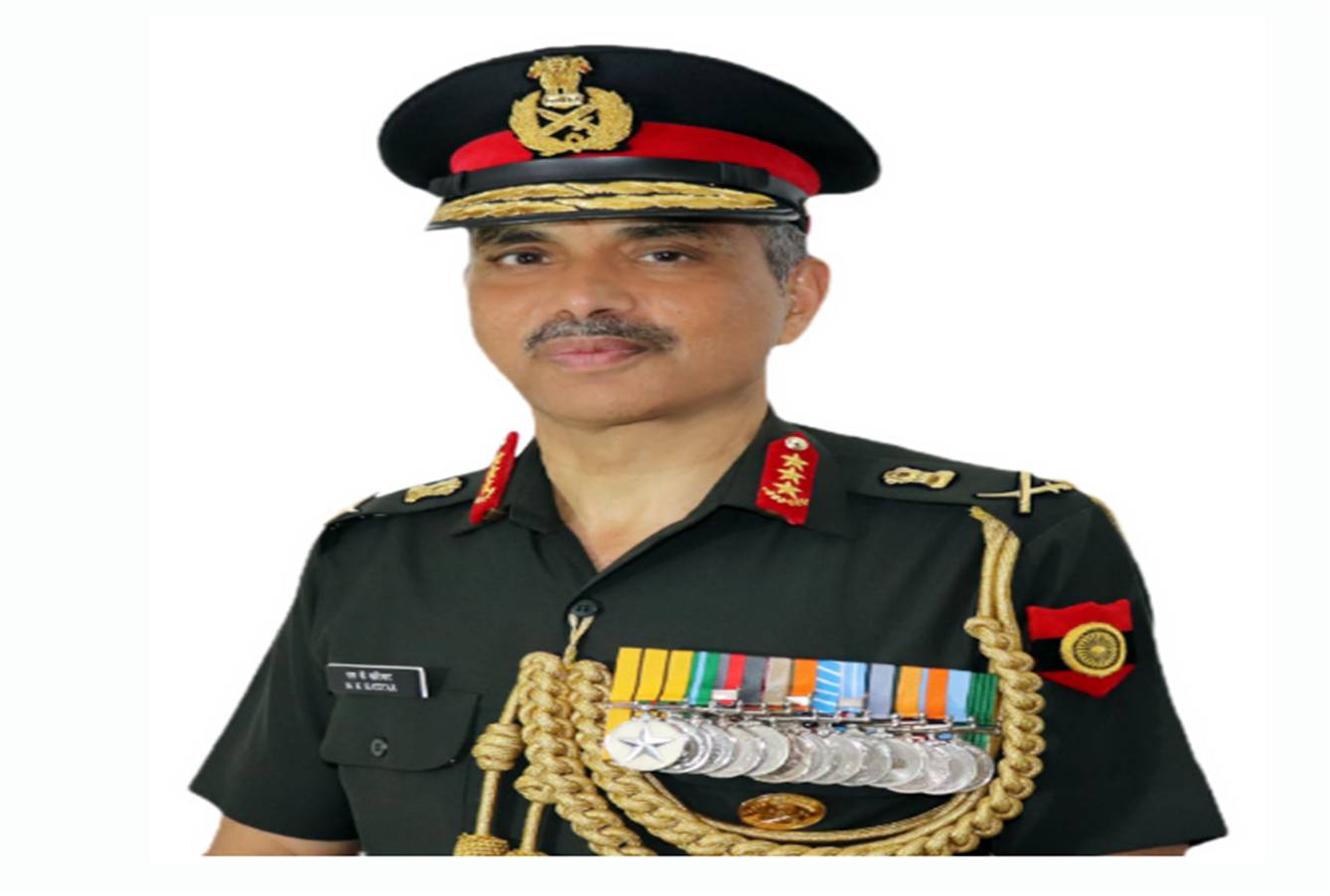
Army chief General MM Naravane and Commander Lt Gen YK Joshi had also visited the injured soldiers at the same location, officials said, pointing out to the images of  the Army chief and the Commander in the same hall meeting the injured on earlier occasions.

Commander Lt Gen YK Joshi. — Tribune Photo.

The Army response comes after people have been asking questions on social media if the place visited by the PM was a hospital since audio-visual equipment like overhead projectors is visible and no ‘hospital-like’ ancillary equipment can be seen.

The Army, in a statement, said it is unfortunate that aspersions are being cast on how our bravehearts are being treated.

Army chief General MM Naravane visited the injured soldiers. — Tribune Photo.

The great Indian strategic debate Chinese aggression has resolved it in favour of India-US ties

Each time tensions with China erupted, a familiar question was asked. Is China’s behaviour a result of India-US proximity, or is India-US proximity a result of Chinese behaviour?

Each time tensions with China erupted, a familiar question was asked. Is China’s behaviour a result of India-US proximity, or is India-US proximity a result of Chinese behaviour?(AFP)

For over two decades, ever since the process of rapprochement began between India and the United States (US) after the 1998 nuclear tests, there have been two clear views within the Indian polity and strategic community. One suggested closer ties between India and the US. Advocates of this view pointed to US power; the advantages that India could extract for its economic development; the convergence in democratic values; and the fact that the US can act as an insurance policy in the face of a rising China. The other school of thought pointed to the US track record of undermining Indian interests and its close ties with the Pakistan military; and argued that proximity will undermine India’s “strategic autonomy”, and deepen New Delhi’s disputes with Beijing.

All governments have chosen a middle way till now, even as they have tilted towards the first view. Recognising the benefits of closer ties with the US, New Delhi has deepened economic and military links with Washington. But it has been careful not to enter any formal alliance; been hesitant to institutionalise structures such as Quad; retained its independent positions on issues such as trade; and deepened its economic ties with China. Each time tensions with China erupted, a familiar question was asked. Is China’s behaviour a result of India-US proximity, or is India-US proximity a result of Chinese behaviour?

Chinese aggression at the Line of Actual Control in the last two months, and the brutal clash on June 15 which left 20 Indian soldiers dead, have now answered the question. China will be India’s greatest strategic threat in the coming decades. Whether India desires it or not, it will end up as one of the frontline states which will have to step up to contain Chinese power, not because of a third power, but because its own interests are at stake. This will mean India has no choice but to deepen its partnerships with other countries, particularly the US. And it will reduce links with China. But even as there is greater strategic clarity, walking down this path comes with responsibility and costs. It may lead to even greater Chinese aggression, and open up the prospect of an adverse two-front situation. It will mean making difficult trade-offs, since US interests do not always converge with Indian interests. It will also mean building internal economic capabilities, ensuring social peace, and evolving a cross-party consensual position. India’s choice has been made; it now has to stay the distance.


Top 10 quotes from PM Modi’s address to soldiers of Indian Army in Ladakh

Prime Minister Narendra Modi addresses soldiers during his surprise visit to Ladakh, at Nimmoo in Leh on Friday.

Prime Minister Narendra Modi addresses soldiers during his surprise visit to Ladakh, at Nimmoo in Leh on Friday.(ANI Photo)

Prime Minister Narendra Modi addressed the soldiers of the Indian Army deployed in the eastern Ladakh sector along the Line of Actual Control (LAC) with China on Friday and paid glowing tribute to their valour while delivering a strong message to China by recounting India’s history of repulsing attacks by ‘invaders’. Here are the top 10 quotes by PM Modi

1. “Your bravery and your dedication to safeguard mother India’s honour is not comparable. Your endurance is not inferior to anyone in the world. No one in the world can compete with the tough situations and the heights you embrace while serving mother India. Your courage is taller than the heights you are deployed in. Your resolve is stronger than the valleys you walk every day and your arms are as strong as the rocks that surround you. The strength of your will is indomitable like the mountains around you. I can feel it and see it today, as I am amongst you.”

2. “The knowledge that the country’s security is in your hands and is protected by your strong resolve offers reassurance not just to me but to the entire country, which has unflinching faith in you. The fact that you are guarding the borders, serves as an inspiration for the fellow countrymen to work day and night for the motherland. The resolve of ‘Aatmanirbhar Bharat’ becomes stronger because of you, your sacrifices and bravery.”

3. “The bravery that you and your compatriots have shown recently, has sent a message to the world about India’s strength. I am looking at women soldiers in front of me. In the battlefield, at the border, this view is inspiring.”

4. “I use my voice today, as was once said by national poet Ramdhari Singh Dinkar, to speak of your bravery and to salute you. I again offer my tribute to soldiers who were martyred in the Galwan Valley. The bravado and the lion-like roar of these braves has made even the earth speak of their valour. Every countrymen’s head bows with respect before your bravery. Every Indian citizen’s chest swells with pride because of your bravery. This earth is full of tales of your gallantry. The bravery of 14 Corps is being talked about everywhere. The world has seen your courage and the tales of your bravery and fortitude are echoing in every house in the country.”

5. “Bharat Mata’s enemies have seen your fire and fury. Friends, this part of Ladakh is India’s symbolic head and it represents the prestige and pride of 130 crore Indians. This land belongs to the braves that worship mother India and are ever ready to sacrifice their all for her. “

‘The enemy has seen your fire and fury as well’: PM Modi in address to soldiers in Ladakh

6. “This earth belongs to the brave. I can see your ability and your resolve in your eyes and on your face. You are the brave soldiers of the same land that has repulsed attacks by several invaders and tyrants for thousands of years. We are the same people who pray to the flute playing Lord Krishna but we are also the same people who idolise and follow the ‘Sudarshana Chakra’ carrying lord Krishna.”

7. “India has emerged stronger after every such attack. The world recognises that peace and friendship are very important for the growth of any country or of humanity, but we also know that those who are weak can never initiate peace. Bravery is a prerequisite for peace.”

8. “India is increasing its strength in all three realms of water, air and land guided by the principle of the wellbeing of the entire mankind. When India is developing modern weaponry and bringing the latest technology for its armed forces, then the message behind is driven by the well being of humanity.”

‘Leading from the front’: Top ministers hail PM Modi’s surprise Ladakh visit

9. “Whether World Wars or peace, whenever the need arises, the world has seen the victory of our braves and their efforts towards peace. We have worked for the betterment of humanity. All of you are leaders establishing this tradition of the country.”

10. Age of expansionism is over, now, is the age of development. The policy of development is the foundation of mankind and is the only policy relevant today. History has witnessed that the expansionist policy has hurt humanity the most. Expansionist policy has always threatened world peace. History has witnessed that such forces have either lost or were forced to turn back. This is what the world has experienced so far and it has once again made up its mind against the policy of expansion.