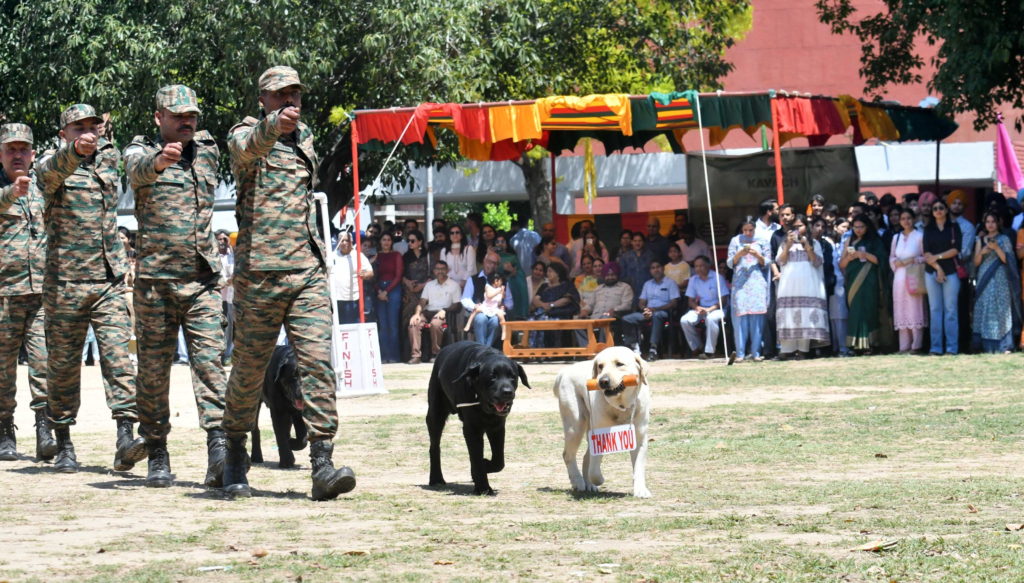
Army dog squad showcases precision and discipline on Day 1 of Panjab University’s mega-fest ‘KAVACH 3.0’ in Chandigarh on Thursday. Tribune Photo: Pradeep Tewari
Army personnel, along with trained dogs, demonstrate a drill to trace terrorists, at Panjab University on Thursday. Pardeep Tewari
The Panjab University ground turned into a display of military precision and discipline as the Department of Defence and National Security Studies (DDNSS) kicked off its two-day annual festival, “Kavach 3.0”. While the event featured various military displays, the highlight of the opening day was a spectacular dog show conducted by the Remount Veterinary Corps (RVC) of the Indian Army.
.The show featured seven highly trained dogs, five labrador retrievers and two Belgian malinois. These canines demonstrated agility and intelligence, successfully navigating complex obstacles like “Brahma Bridge” and 15-foot ladders. Beyond physical stunts, the RVC handlers showcased the technical skills these dogs use in tracking terrorists, detecting explosives and conducting rescue operations in difficult terrains.
These dogs undergo one-year of rigorous training before joining the Army squad. While their average life span is around 12 years, they typically serve for a maximum of 10 years.
The event was inaugurated by PU Vice-Chancellor Renu Vig and special guest Maj Gen Bharat Mehtani, ADG NCC. Organised by Prof Jaskaran Singh Waraich, the show is aimed at bridging the gap between civilians and the armed forces.
The first day also featured a weapon display by the Western Command, Chandimandir. The festival is scheduled to continue through Friday, featuring a horse show and NCC activities.
More than 90% planning done for theatre commands: Top military official
As reported in The Tribune, the proposed formation of theatre commands for the Indian armed forces now has new contours
A top military official on Thursday confirmed that more than 90 per cent of the planning for the creation of theatre commands — a new structure for the Indian Armed forces — has been completed.
The Tribune has reported in its print edition on Thursday morning that fresh contours of the theatre commands have emerged with a wider role for the Indian Air Force (IAF).
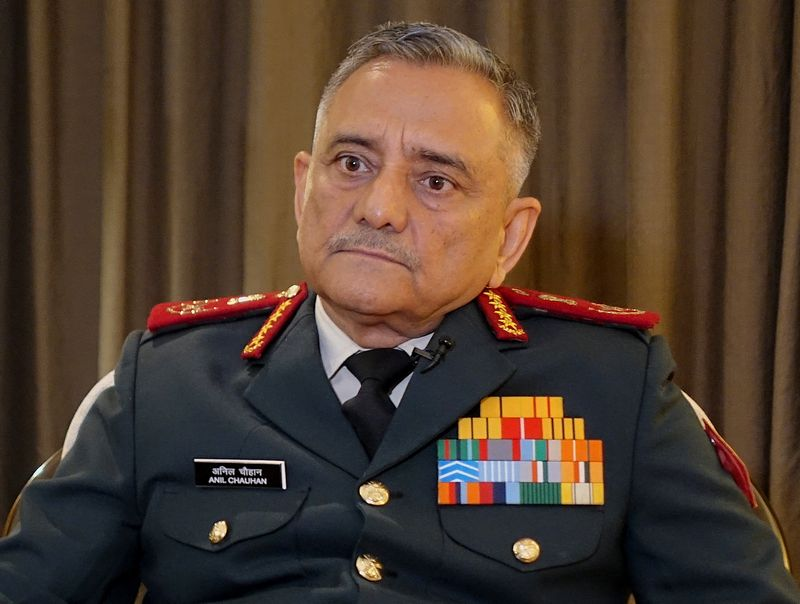
Air Marshal Ashutosh Dixit, the immediate subordinate of the Chief of Defence Staff General Anil Chauhan who has been tasked with tri-service jointness, integration and operational synergy, said, “Our move towards joint structures and Theatre Commands — with planning now reported to be more than 90 per cent complete — is a historic opportunity.”
Air Marshal Dixit warned that structures alone did not guarantee synergy. Cultural integration was what that made the structures come alive. “Jointness must evolve from mere coordination to genuine unity of effort. That requires transparency in information-sharing, clarity of authority, and most fundamentally mutual trust,” he added.
He was making the opening keynote address at the two-day (April 9-10) brainstorming session ‘Ran Samwad’ which started here.
‘Theatre commands’ is a military jargon for creating geographically defined area of operations, with a military commander heading it and controlling all war-fighting assets like planes, copter, guns, tanks, equipment and manpower.
As reported in The Tribune, the proposed formation of theatre commands for the Indian armed forces now has new contours.
The Western Theatre, focused on Pakistan, will be headed by an Indian Air Force (IAF) officer while the Northern Theatre, focused on China, will have an Army officer as its head. The Maritime Theatre Command, on expected lines, would be headed by a Navy officer.
The plan will need a nod from the Ministry of Defence and also the Cabinet Committee on Security.
These fresh contours mean the IAF has been proposed to be the permanent lead for the Western Command. This has come after looking at the devastation the IAF strikes caused during Operation Sindoor in May last year. The allocation of ‘theatre commands’ is more or less fixed and there is unlikely to be any rotation. The previous proposal featured rotation between the IAF and the Army.
The military also proposes to have a Vice Chief of Defence Staff with deputy commanders of all theatres who will be from another service.
The current CDS will retire in May this year, and he could present the fresh proposal before his tenure ends.
The key issue will be THE division of IAF assets. Some of these strategic assets could be controlled from Delhi for seamless operation across the theatres.
Incidentally, the developments come ahead of the second edition of ‘Ran Samwad’.
During the last edition of Ran Samwad in August last year, a sharp difference of opinion had emerged among the military top brass on the proposed structure of ‘theatre commands’. Navy Chief Admiral DK Tripathi had batted in favour of having ‘theatreisation’ as a goal while the IAF Chief, Air Chief Marshal AP Singh, had cautioned against having ‘theatre commands’ for now. The IAF chief had suggested a different format for military coordination, one led at the level of the service Chiefs.
The CDS, General Anil Chauhan, had acknowledged ‘dissonance’ on the subject and added that it was being ‘resolved’.
Diplomatic win for Tehran as US President accepts its 10 points as the basis of talks
A few hours before he was set to unleash “hell” on Iran, US President Donald Trump posted on Truth Social that he had agreed to “suspend the bombing and attack of Iran for a period of two weeks”. In response, Iran’s Foreign Minister Abbas Araghchi said on behalf of the country’s Supreme National Security Council (SNSC), “If attacks against Iran are halted, our Powerful Armed Forces will cease their defensive operations”.
Israel grudgingly decided to follow the American lead. Prime Minister Benjamin Netanyahu said, “Israel supports President Trump’s decision to suspend strikes against Iran for two weeks…” Thanks to this breakthrough, a ceasefire has begun. Both Trump and Iran have declared victory, while the world has heaved more than a sigh of relief.
There are crucial gaps in the protagonists’ statements on the truce. The US and Israel have made the ceasefire contingent on the reopening of the Strait of Hormuz. Trump wrote that his decision was subject to its “complete, immediate and safe” opening, but he did not prescribe a modality.
Iran has given a nuanced response. It has referred to its negotiating stand on the Strait; Tehran is keen to control the “passage through the Strait in coordination with Iran’s armed forces, which confers a unique economic and geopolitical position on Iran”. It remains to be seen how the Strait will function. Without its complete reopening, the ceasefire will not work.
Netanyahu has announced that the ceasefire does not include the fighting in Lebanon. Iran’s statement, though equivocal — and Iranian diplomacy specialises in frustrating equivocation — indicates that it does. Will Iran continue with the ceasefire if Israel persists with its attacks on Lebanon? Will Trump rein in Netanyahu on Lebanon?
The next 48 hours are critical to the continuation of the ceasefire, but there is too much at stake for Trump and the Iranians for it to fail. If Netanyahu plays spoilsport, Trump can bring him to heel.
Meanwhile, Iran can claim diplomatic success in Trump’s acceptance of its 10 points as the basis of negotiations. He wrote, “It is a workable basis on which to negotiate”. He has set aside his own 15 points. But Iran would know that its document is an opening gambit. It has mentioned its requirements — UN Security Council guarantees for non-aggression, reparation, security of its proxies, removal of sanctions, unfreezing of assets and no US bases in the Gulf — but it’s difficult to assume that most of these would be acceptable to the US.
On nuclear enrichment, an indispensable US requirement, the SNSC statement mentions “acceptance of enrichment”, but does not dwell on this point. Iran would have to make concessions on the nuclear issue.
The scene will shift to Islamabad for diplomatic action if the US confirms that talks will be held there on April 10. Iran has done so. Pakistan, which it must be admitted is the current toast of a large part of the world, has “invited” both sides, but not Israel. It is likely that at least one round of negotiations will be held in Pakistan. After Foreign Minister Ishaq Dar’s China visit, Pakistan’s mediation seemed to have flagged, but the US and Iran decided to continue relying on it.
Even as Trump has tried to put a gloss on the Iran war, he has failed in his objective of removing the Vilayat-e-Faqih system. What he, and even more Israel, wanted was to crush it, and for Iran to sue for peace, if not surrender. The decapitation strike led to regime change, but the new regime will continue to operate within the clerical system. In Iran, it will be much of a muchness.
Iran globalised the impact of the war by taking it to the Arab Gulf states and even more by effectively choking the Strait. In doing so, it removed 20% of the world’s hydrocarbons.
All wars after World War II impacted, at most, some regions. The Vietnam and Afghanistan wars of the 20th century and the ongoing wars in Ukraine and Gaza fall in this category. The Iran war is the first since 1945 that has had global implications. It has threatened the world because it has impacted global energy security and therefore, the global economy.
Indeed, the Iranian strategy of regionalising and globalising the war has been audacious but effective. Faced with an existential crisis, the Iranian system has responded successfully to save itself.
Did the US with all its war-gaming capacity not anticipate Iran’s strategy and the commitment to shahadat (martyrdom)? Trump’s chest-thumping and the use of expletives, and the bombing of Iran, cannot hide that he has not succeeded in his basic objectives. And, all this happened because the US does not care to understand the cultures of other peoples; that a people while being pragmatic can also draw on their cultural and spiritual heritage to offer resistance.
Did India, like the US and Israel, anticipate that Iran will fold up soon? If it did, as it seems so, it betrayed an inadequate understanding of Shia Islam. That would not be surprising because the Indian establishment’s knowledge of Islamic traditions is limited. That leads it to ignore or form half-baked ideas about them. It should have known that the Shia tradition of shahadat would lend resilience to Iran. Hence, the Indian articulation could have been different, even if the preponderance of its interests lay in the Arab Gulf states.
Above all, did the government realise, as the war clouds gathered, that Iran would close the Strait? Some Indian analysts believe that in the situation that confronted India, it could not but take sides and it made the right choice. In making choices, subtlety should never be lost.
In this case, India took recourse to the mantra of diplomacy and dialogue, but the perception that it had leaned towards the US and Israel remained. This was compounded by the timing of Prime Minister Narendra Modi’s visit to Israel a couple of days before the attack on Iran.
The Ministry of External Affairs’ statement welcoming the ceasefire will not be a balm for the Sangh Parivar or the PM’s supporters who may smart at the international encomiums heaped on Pakistan. Maturity demands that our neighbour should be allowed its moment in the sun. This cannot last because its domestic dynamics will, as always, be its undoing.
Iran’s insistence on continued civil nuclear enrichment is a key point of contention
ON the night of April 7-8, as US President Donald Trump’s deadline for annihilating the Iranian “civilisation” approached, a two-week ceasefire was announced. In India, the development evoked both relief and concern. It was a welcome sign that an impending economic and humanitarian crisis had been averted. However, the fact that Pakistan seized centre stage sparked fears that it could misuse its enhanced diplomatic stature to rally support on bilateral disputes like Kashmir or the sharing of river waters.
Immediately, differences emerged over the ceasefire’s scope. Israel continued pounding Lebanon, especially Beirut, with missiles, claiming exemption from the truce. Reports that Trump had accepted Iran’s 10-point plan as the basis of negotiations were also refuted.
The Speaker of the Iranian Parliament, Mohammad-Bagher Ghalibaf, wrote on X that with three conditions in the 10-point proposal violated, the Gulf of Hormuz’s opening was on hold. He referred to the ceasefire not covering Lebanon, drones entering Iran’s airspace and the denial of Tehran’s right to nuclear enrichment. He regretted that this had happened even before the start of negotiations in Islamabad (Pakistan). Reportedly, a petrochemical facility on Iran’s Lavan island and some coastal areas were targeted by airstrikes.
If the Islamabad talks are held, as scheduled, on April 10, these hiccups may pass. But their postponement can complicate matters. Collating the demands of both sides shows areas of possible agreement or serious divergence. The Iranian demand for lifting sanctions has been conceded by the US in principle, though the timeline remains unknown. The demand for reparations to compensate for the damage caused by US-Israeli air attacks has been overtaken by Iran’s plan to raise revenue by levying tariffs on ships transiting the Strait. Although the Americans want the Strait’s immediate opening, President Trump has even suggested revenue-sharing.
The areas of dissonance are: Iran insisting on continued civil nuclear enrichment, albeit under the supervision of the International Atomic Energy Agency (IAEA); seeking the US military’s exit from the region and closure of military bases; and finally, Iran’s delinking from its regional allies, like the Houthis, Hezbollah and Hamas. The US has been insisting on the complete dismantling of Iranian nuclear enrichment facilities. America reverted to this approach after seeking Iranian regime change at the war’s start. Iran’s nuclear weapon-making capability is the principal target.
Differences are surfacing between the US and Israel. The New York Times revealed how the decision was taken to attack Iran. In June 2025, the two countries had attacked Iranian nuclear facilities at Natanz, Isfahan and Fordow. On February 11 this year, Israeli Prime Minister Benjamin Netanyahu visited the White House with his national security team. He made a presentation to President Trump, arguing that a four-stage military operation could achieve regime change in Iran. First, the assassination of the Supreme Leader Ayatollah Ali Khamenei and then the destruction of Iranian offensive and defensive capabilities. This would cause a popular uprising, catalysed by Mossad-activated armed Kurdish fighters infiltrating from Iraq. Finally, a secular government would emerge. A list of possible future leaders was also shared.
The US team’s reaction was divided, with CIA Director John Ratcliffe describing the expectation of an uprising as “farcical”. Gen Dan Caine, the chairman of the Joint Chiefs of Staff, dilly-dallied, unlike the commanders during President Trump’s first term. Vice President JD Vance expressed “strong scepticism” about the prospect of regime change. Reportedly, he recently chided Netanyahu on the phone for misleading the US with unrealistic expectations.
Right from the beginning of the war, I have argued in newspaper articles and television debates that the Iranian regime would not collapse under military coercion.
It is still unclear why Prime Minister Narendra Modi suddenly visited Israel on February 25-26, two days before the war started. Israel announced his visit only on February 22. Did someone share Netanyahu’s arguments about Iranian regime change with him, encouraging the Indian government to ignore the appearance of partiality towards the US-Israel camp? Since 1991, when India established diplomatic relations with Israel, closer engagement with Tel Aviv has always been seen as beneficial for India-US ties.
Six weeks into the Iran war, the regional security architecture in the Gulf and West Asia faces restructuring. Pakistan’s diplomatic ascendancy through mediation and China’s behind-the-scenes role in militarily and economically supporting Iran have implications for South Asia. If the interim ceasefire leads to a more permanent solution, a new regional order could emerge. The six Gulf Cooperation Council (GCC) nations are now divided. Qatar has cut a deal with Iran and is seeking the removal of the US military base. The differences between Saudi Arabia and the UAE have worsened.
External Affairs Minister S Jaishankar is rushing to the UAE as the Saudis now seem fully aligned with Pakistan. The BJP-led government’s decade-old policy of wooing the Gulf’s ruling families to isolate Pakistan now appears defunct. Turkiye and Egypt are also with the Saudi-Pakistan axis, backed by the US. Saudi Crown Prince Mohammed bin Salman has always been keen to draw investments away from Dubai. Prosperity and investments may not fully return to Dubai and the UAE, so long as Iran is run by a regime with new faces but the same ideology. Additionally, the Iranian morale has been boosted by the successful defiance of the US and Israel.
The US entered the Gulf region in 1971 following the British withdrawal from the Trucial States, which preceded the UAE. The Shah of Iran and the Al Saud family of Saudi Arabia became their twin pillars of regional security. The 1973 Arab-Israel war and the resulting fuel crisis made the Gulf critical to the US economy. The 1979 Iranian Revolution upended this structure. Iraq’s Saddam Hussein became the bulwark against Iran; he got US support during the Iran-Iraq war (1980-88). Hussein’s occupation of Kuwait and subsequent ejection and the 2003 US occupation of Iraq gave periodic shocks to the region without undermining the regional order.
The Abraham Accords of 2020, crafted during President Trump’s first term, were to create a new Iran-containment structure consisting of Israel and Arab nations willing to normalise relations with it, ignoring the Palestinian issue. The October 7, 2023, attacks on Israel undid all that.
The current war is based on failed ideas of the past to harness Iran. However, the US ended up snapping the existing paradigm, based on the Iran-GCC coexistence or calibrated cooperation despite religious and political schisms.
The regional chaos may slowly settle with recalibrated bilateral relations or regress into controlled violence. However, until a more sensible leadership emerges in Israel and the US, permanent solutions are impossible. Disputes like the Palestinian issue cannot simply be discarded. Iran, too, must abandon old slogans wishing death to the UK, the US and Israel.
Theatre command proposal to be submitted to govt soon: CDS Anil Chauhan
Chief of Defence Staff Gen Anil Chauhan on Thursday said discussions among the armed forces on the creation of theatre commands have concluded, and a proposal will be submitted to the government within the next week or so.
Speaking at a fireside chat during a brainstorming session at an event titled ‘Ran Samwad’, hosted by the Ministry of Defence, Gen Chauhan said, “I should be able to complete the report of Operation Tiranga — the name given to the discussions and formulation of theatre commands — in a week or so.”
Officials later indicated that it may take about two weeks for the proposal to be formally submitted to the government.
“From our side, it is done. All three services are on board and discussions have concluded. Now, we have to take the proposal to the Defence Minister and the Cabinet Committee on Security (CCS),” the CDS said.
He added that the theatre commands concept had two aspects — the idea itself and its operationalisation. “There is 100 per cent consensus on the concept. Some differences remain on the process of implementation; however, we are moving ahead,” he said.
Earlier, a top military official confirmed that more than 90 per cent of the planning for the creation of theatre commands — a new organisational structure for the armed forces — has been completed.
Air Marshal Ashutosh Dixit, immediate junior of CDS Chauhan, who is tasked with advancing tri-service jointness, integration and operational synergy, said, “Our move towards joint structures and theatre commands — with planning now reported to be more than 90 per cent complete — is a historic opportunity.”
He cautioned that structures alone do not guarantee synergy, stressing that cultural integration is key. “Jointness must evolve from mere coordination to genuine unity of effort. That requires transparency in information-sharing, clarity of authority and, most fundamentally, mutual trust,” he said.
Theatre commands refer to geographically defined operational areas led by a single commander who controls all war-fighting assets, including aircraft, helicopters, artillery, tanks, equipment and personnel.
Under the emerging contours, the western theatre, focused on Pakistan, is likely to be headed by an Indian Air Force officer, while the northern theatre, focused on China, would be led by an Army officer. The maritime theatre command, as expected, would be headed by a Navy officer.
All stake holders including Veterans and their dependents, ECHS employees at all echelons and hospitals / other service providers are invited for direct communication with Central Organisation ECHS to reduce complaints and litigation. This will assist them in increased focus on formulation of caring policy and implementing initiatives preserving the time and resources of our veterans who have served the nation in a selfless manner. Please speak to the officer handling
non medical complaints on Tele No 09648786013 while issues related to medical aspects be discussed on Tele No – 9800310427,
Medical Claims on Tele No 9004722106 In case of non resolution, please call MD ECHS on 9971129165. Your unsettled issues can also be emailed to dircomplaints-mod@nic.in. 8218670793 ECHS Help Line 1800114115 011-25682870 Card related issues 8979800177 FOR SMART CARD RELATED QUERIES PLEASE CONTACT ON FOLLOWING NUMBERS ONLY WHATSAPP/CALL -7703818578 / 7701976194 / 8448086480 / 8448086481 / 8448086482 EMAIL ID – echs@sourceinfosys.com, jditechs1@echs.gov.in
ECHS funds syphoned off : by Sant Swaroop Singh : Sector 38 Chd ,Gurdwara hospital doctors
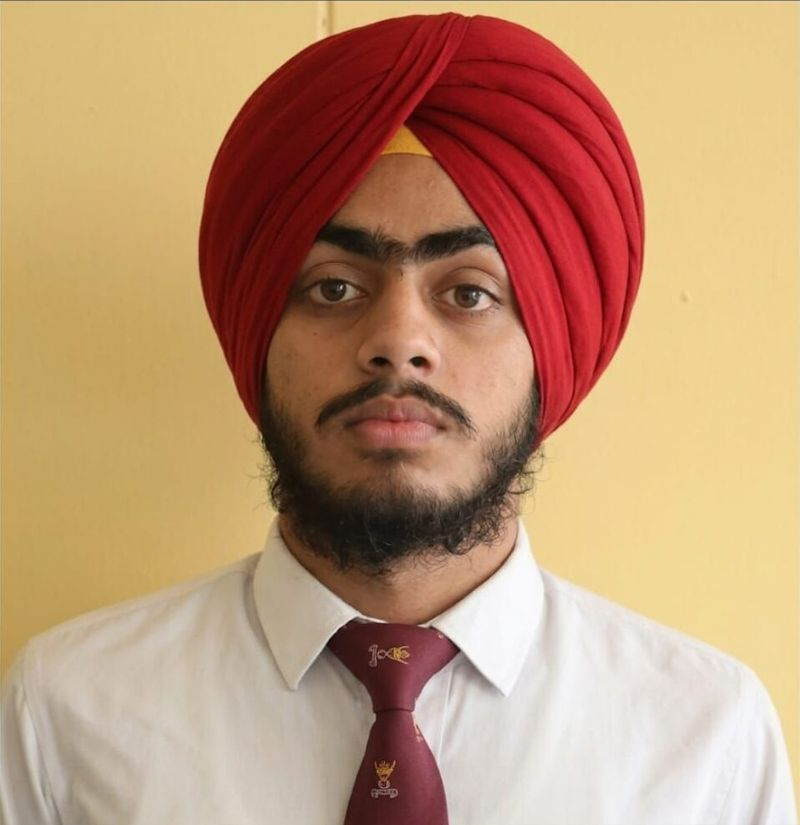
Maharaja Ranjit Singh Armed Forces Preparatory Institute (MRSAFPI) cadet Jasnoor Singh has secured the 1st All India Rank (AIR) in the Combined Defence Services (CDS) Air Force List.
Jasnoor Singh comes from a business family and hails from Pathankot. Singh will now proceed to the Air Force Academy in Hyderabad for Pre-Flying training course.
His achievement marks the fifth time, an MRSAFPI cadet has clinched the top rank nationwide, and the third such honour in just the last two years,
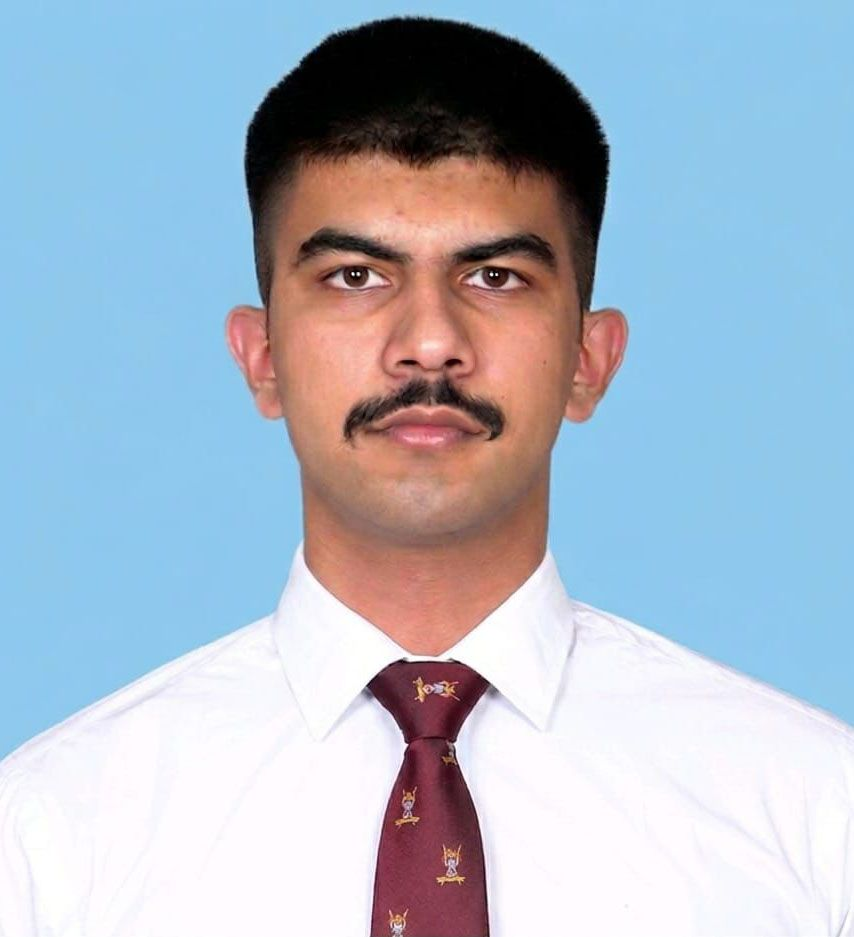
Another, MRSAFPI Cadet Sukhraj Singh Heera from Ropar has secured the 4th All India Rank, set to join the Indian Military Academy (IMA), Dehradun, for 161st course commencing in June 2026.
MRSAFPI Director Major General Ajay H Chauhan, VSM, congratulated the cadets Jasnoor and Sukhraj for bringing pride to their Alma Mater and Punjab, while adding, “We are eagerly awaiting the NDA-156 course merit list, hoping for another stellar performance.”
Another alumnus of the institute, Sukhraj Singh Heera, from Ropar, has secured the 4th all-India rank in the CDS exam and will join the Indian Military Academy (IMA), Dehradun, as part of the 161st course commencing in June. Punjab Employment Generation, Skill Development and Training Minister Aman Arora congratulated both cadets and said the state was proud of their achievement.
The institute was set up to stem the declining number of youths from Punjab opting for a career as officers in the Armed Forces. It became functional in 2011 and since its inception, 190 alumni of the institute have become commissioned officers, while several others are already undergoing training in service academies or awaiting joining after clearing the selection process.
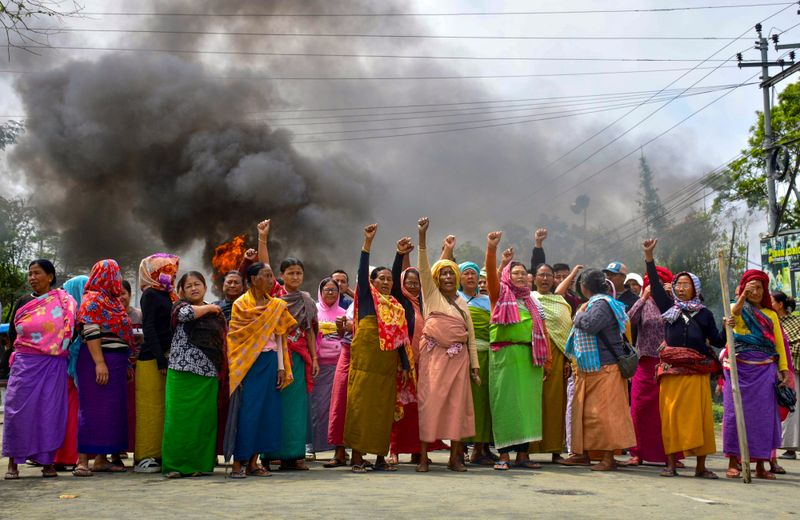
Fresh violence flared up in Manipur after a suspected militant attack left two children dead and their mother injured at Tronglaobi village in Bishnupur district in the early hours of Tuesday.
According to sources, an explosive struck a house directly, triggering a powerful blast that killed two young siblings on the spot and left their mother seriously injured. The victims have been identified as a five-year-old boy and his five-month-old sister.
The attack involved a projectile, a likely rocket, which was used by the attackers to cause maximum damage, the sources said.
They said suspected Kuki militants were learnt to have been behind the attack, even as many tribal groups condemned the incident and sought an NIA probe into it.
Hours after the incident, protests broke out near a CRPF camp. Two protesters were killed while several others were injured after security personnel reportedly opened fire to disperse the crowd.
The incident occurred after a large number of protesters gathered and attempted to storm the CRPF camp following the bomb attack in the same area that killed the two children.
Several videos of the incident were circulated on social media, but their authenticity could not be verified.
Later in the day, the Manipur Government, in a post on X, cautioned people from getting swayed by rumours.
“There are various tweets and social media posts spreading rumours claiming that security personnel have killed innocent people in Manipur carrying out a peaceful protest rally. Spreading fake news and rumours can aggravate the situation…,” it said in the post. The state police also termed news clips and videos fake and misleading.
“Fake and misleading. No such incident took place. There was an attack on a post in Bishnupur district by a violent mob of around 400. Burning of vehicles and breaking of barracks by the mob led to firing by the security personnel, which resulted in two deaths and injuries to 20. Legal action will be initiated against individuals spreading falsehood on social media,” the police said.
Tronglaobi lies along the vulnerable hill-valley fringe of Bishnupur district, close to the elevated areas of Churachandpur district, a region that has witnessed repeated tension in recent months.
Following the violent incidents, Chief Minister Y Khemchand Singh held a series of security review meetings with the state DGP, officials of the CRPF and the BSF, and with members of various political parties.
He visited the injured mother of the dead children at the hospital.
He condemned the incident, calling it a “barbaric act” and an “assault on humanity and a deliberate attempt to disrupt Manipur’s hard-earned peace”.
Following the attack, security was tightened in the area and additional forces were deployed to prevent further escalation, while surveillance and search operations were also underway in adjoining hill regions.
The Manipur Government imposed an indefinite curfew across five valley districts — Imphal East, Imphal West, Bishnupur, Kakching and Thoubal — amid heightened concerns over the prevailing law and order situation.
The state government also ordered the temporary suspension of Internet and mobile data services in the five districts for a period of three days, starting from 2 pm on April 7.
State Stalwarts
DEFENCE MINISTER
Minister Rajnath Singh
ALL HUMANS ARE ONE CREATED BY GOD
HINDUS,MUSLIMS,SIKHS.ISAI SAB HAI BHAI BHAI
CHIEF PATRON ALL INDIA SANJHA MORCHA
LT GEN JASBIR SINGH DHALIWAL, DOGRA
SENIOR PATRON ALL INDIA SANJHA MORCHA
MAJOR GEN HARVIJAY SINGH, SENA MEDAL ,corps of signals
.
.
PATRON ALL INDIA SANJHA MORCHA
MAJ GEN RAMINDER GURAYA ,MADRAS REGIMENT
sanjhamorcha303@gmail.com
PRESIDENT SOUTH ALL INDIA SANJHA MORCHA
COL SS RAJAN BOMBAY SAPPERS,
PRESIDENT UTTARAKHAND ALL INDIA SANJHA MORCHA
COL B M THAPA ,BENGAL SAPPERSS
PRESIDENT HARAYANA STATE CUM COORDINATOR ESM
BRIG DALJIT THUKRAL ,BENGAL SAPPERS
PRESIDENT TRICITY
COL B S BRAR (BHUPI BRAR)
PRESIDENT CHANDIGARH ZONE
COL SHANJIT SINGH BHULLAR
.
.
PRESIDENT PANCHKULA ZONE AND ZIRAKPUR
COL SWARAN SINGH
INDIAN DEFENCE FORCES
DEFENCE FORCES INTEGRATED LOGO
INDIAN AIR FORCE
Air Officer C-in-C WESTERN AIR COMMAND
AIR MSHL S PRABHAKARAN AVSM VM
AOC-IN-C, EASTERN AIR COMMAND
Air Marshal Inderpal Singh Walia
AOC-in-C SOUTH WESTERN AIR COMMAND
Air Marshal Vikram Singh
AOC-IN-C, SOUTHERN AIR COMMAND
Air Marshal J.Chalapati
AOC-IN-C TRAINING COMMAND
AIR MARSHAL SK GHOTIA VSM
AOC-IN-C MAINTENANCE COMMAND
Air Marshal Jagdish Chandra
Flag Officer Commanding in Chief, Western Naval Command
ice Admiral R Hari Kumar, PVSM, AVSM, VSM
Flag Officer Commanding in Chief, Eastern Naval Command
Vice Admiral Sanjay Bhalla, AVSM, NM
Flag Officer Commanding in Chief, Southern Naval Command