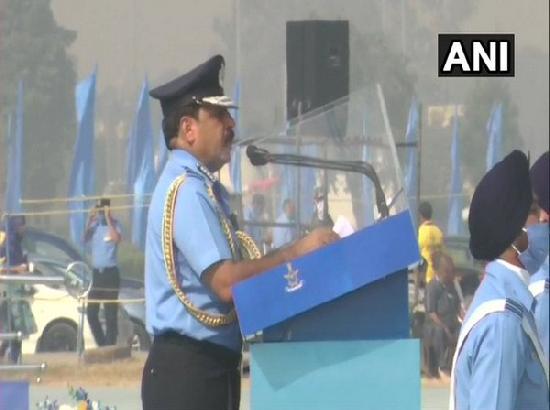
Ghaziabad, October 8, 2020: On the occasion of Indian Air Force Day, 2020 Indian Air Force (IAF) chief Air Chief Marshal Rakesh Kumar Singh Bhadauria on Thursday assured the nation that the Indian Air Force will evolve and be ever ready to safeguard India’s sovereignty and interests in all circumstances.
“I want to assure the nation that the Indian Air Force will evolve and be ever ready to safeguard our nation’s sovereignty and interests in all circumstances,” said Bhadauria at Hindon airbase.
“As we enter the 89th year, the IAF is undergoing a transformational change. We are entering an era which will redefine where we employ aerospace power and conduct integrated multi-domain operations,” he added.
Bhadauria further stated that this year has indeed been an unprecedented one. As COVID-19 spread across the globe, our nation’s response was firm.
“The tenacity and resolve of our air warriors ensured that IAF continued to retain its capability to undertake full-scale operations throughout this period,” said IAF Chief.
“I commend all air warriors for quick response in the recent standoff on the northern frontiers when we deployed our combat assets at short notice to handle any eventuality and provided proactive support to all requirements of deployment and sustenance for Indian Army,” he added.
Chief of Defence Staff General Bipin Rawat, Chief of Army Staff, General Manoj Mukund Naravane and Chief of the Naval Staff Admiral Karambir Singh attended the 88th Indian Air Force Day celebrations at Hindon airbase in Ghaziabad.
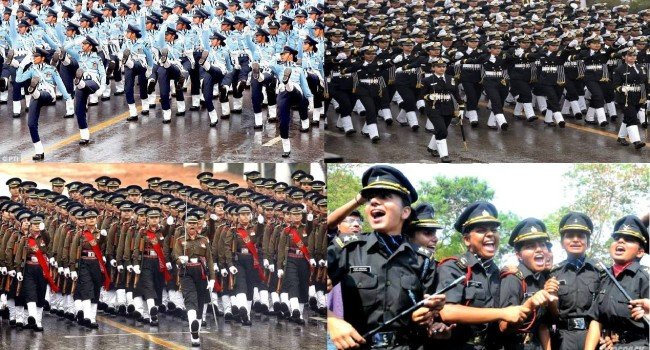
Bhadauria inspected the 88th Indian Air Force Day parade here.
Nishan Toli being led by Squadron Leader Shivangi Rajawat marched at the Hindon Air Force Station in Ghaziabad on the occasion.
Two Chinook helicopters also took part in the flypast to mark 88th Indian Air Force Day here.
IAF set to place orders for 21 MiG-29 jets from Russia by Dec to shore up aircraft strength
New Delhi: The Indian Air Force (IAF) is set to place an order with Russia for 21 twin-engine MiG-29 jets by December, ThePrint has learnt.
Of the 1980s vintage, the jets are no longer in production but 21 airframes built then remain in Russia. Top sources in the security and defence establishment said the jets purchased by India will be upgraded to the latest version before they arrive here.
The purchase comes as the IAF faces a depleting force strength due to its fleet of legacy aircraft and budgetary constraints.
The IAF, the sources said, will first place orders for the MiG-29, and then go in for another 12 Su-30 MKI, which are being manufactured by the Hindustan Aeronautics Limited (HAL) under licence from Russia.
The IAF is also expected to soon place a long-pending order for the indigenous 83 Light Combat Aircraft (LCA) Tejas Mark 1A.
“We have completed the discussions with Russia. We are getting the MiG-29s at a very good price. We will soon finalise it. The order for the 12 additional Su-30 MKI will be placed with HAL after this,” a source said, refusing to get into the pricing details.
India and Russia have been in talks for the purchase of more MiG-29 jets since last year.
The Mig-29 airframes have been lying with Moscow since the late 1980s but have never been flown. The sources said a study conducted on the airframes had found them in good condition.
“The airframes are in good quality. They will now fit all the equipment and other systems as part of the deal,” the source quoted above said.
The decision to purchase the aircraft comes amid a dwindling fighter aircraft strength in the IAF and budgetary constraints that make it difficult for the force to get new aircraft in the numbers it wants.
While the sanctioned strength of the IAF is 42 squadrons of fighters, the current strength is 30.
At his annual press conference Monday, IAF chief Air Chief Marshal R.K.S. Bhadauria said even if all acquisition plans are put in motion with strict timelines, he would be happy if the strength reaches 36-37 squadrons in the next decade.
He was also very candid about the challenge of budgetary constraints, saying their effect may not be felt immediately but will be in the future.
“Budgetary constraints will be there. It is not affecting us today. It will have an effect in due course if we don’t put the contracts in place,” he had said.
India currently has three squadrons of the MiG-29 — a twin-engine single-seat air superiority fighter aircraft. One squadron comprises 18 aircraft and all of them are currently being upgraded in-house by the IAF.
The aircraft is undergoing structural as well as avionics upgrade, besides being equipped with a new weapons package.
With the new air-to-air refuelling feature, an upgraded MiG-29 can cover larger distances compared to the previous aircraft, something the IAF is keen on, keeping in mind the possibility of a two-front war scenario.
The upgraded MiG-29s have all the latest features, including a glass cockpit with digital screens.
The upgraded aircraft can also do air-to-ground, air-to-air and even anti-shipping operations.
Madhya Pradesh CM Shivraj Singh Chouhan pays tribute to the mortal remains of CRPF jawan Dhirendra Tripathi.(PTI Photo)
The mortal remains of CRPF jawan Dhirendra Tripathi who died in a terrorist attack in Jammu and Kashmir’s Pulwama on October 5 was consigned to flames with full state honours at his native village Padiya in Madhya Pradesh’s Satna district on Wednesday, as per government officials.
Prior to the cremation, chief minister Shivraj Singh Chouhan paid tributes to Tripathi after reaching the village and announced a ‘shraddha nidhi’ of Rs one crore and a government job to a family member.
“Shraddha Nidhi of Rs 1 crore will be provided to the family of martyr Tripathi, the true son of Bharat Mata. He cannot be brought back but the state government stands with his family. Any one member of the family will be given a government job as per the wish of late Tripathi’s wife or family. A school or an institution and a road of the village will be named after the martyr. His statue will also be installed in a government school or at any other appropriate place,” Chouhan said.
A state government statement also referred to the circumstances of Tripathi’s death.
“CRPF jawan Dhirendra Tripathi was at the front during operational duty at around 5pm two days back. At about the same time, an Indian Army jawan was seriously injured in a cowardly attack by terrorists. Dhirendra Tripathi was martyred in this attack. The attack was carried out when the jawans were successfully finishing their duty and coming back to the camp. Apart from Tripathi, Shailendra Pratap Singh of Rae Bareli, Uttar Pradesh was also martyred in the attack. Three other soldiers were seriously injured in this incident.”
tags
IAF looking at leasing midair refuellers as efforts to purchase 6 go on, says Bhadauria
ir Chief Marshal RKS Bhadauria addresses a press conference in New Delhi Monday | ANI
New Delhi: The Indian Air Force (IAF) could acquire midair refuellers on lease under the government’s new leasing policy, Air Chief Marshal R.K.S. Bhadauria said Monday.
Addressing his annual press conference two days before IAF Day, Bhadauria said “leasing” has got nothing to do with budget constraints but is an evolution of the defence acquisition processes and procedures.
It will give the service some flexibility, he added.
“We have been trying (to acquire midair refuellers) for a long time, our refuellers’ strength hasn’t gone up,” he said.
Bhadauria’s statement comes as the IAF plans to float a request for proposal (RFP) to purchase six refuellers. When inducted, the refuellers, also referred to as tankers, would prove to be a vital strategic asset and force multiplier as they will allow fighter jets to stay airborne longer.
The IAF has tried to procure midair refuelling aircraft twice since 2007, but the tenders had to be cancelled because of price complications.
Currently, the IAF operates a fleet of six Russian IIyushin-78 tankers that suffer from maintenance and serviceability issues, as pointed out in an August 2017 CAG report that studied the refuellers’ operations between 2010 and 2016. The tankers were bought in 2003-04 at Rs 132 crore per aircraft.
Under the new leasing policy, which features in the recently-unveiled Defence Acquisition Procedure (DAP) 2020, the Army, the Navy and the Air Force will have the option of getting equipment on lease rather than buying them.
At present, India operates a Russian nuclear-powered attack submarine (SSN) on lease, Chakra II. In March 2019, India also signed a $3 billion deal for the lease of Chakra III, which is likely to be in Indian waters by 2025.
Bhadauria said, in several cases, where a certain platform is low in quantity, leasing is possible.
“That is where it will come in handy,” he said, without naming other platforms the IAF is considering leasing.
In an interview to ThePrint in May this year, the IAF chief had talked about plans to address the shortage of flight refuelling aircraft (FRA), saying they have been worked out in a phased manner and “short- and mid-term solutions are being looked at”.
“As a long-term measure, we have initiated the process of procuring six more FRAs. Draft ASQRs (Air Staff Qualitative Requirements) have been prepared and the RFP is likely to be floated soon,” he had said.
Last week, the deputy Chief of Air Force Air Marshal Sandeep Singh said a financial crunch had led the IAF to rethink its plans to acquire mid-air refuelling aircraft, adding that they had received feedback that it would be possible to “dry-lease (without crew, ground staff etc)” these platforms through Indian firms allowed by the DAP 2020.
Bhadauria, however, made it clear Monday that the option of buying midair refuellers still exists.
Talking about the IAF’s budget, Bhadauria acknowledged there were constraints.
He said past contracts of the IAF are fructifying now, so the force’s current capability is not affected, but added that the impact of budgetary constraints will show in due course if the IAF does not put contracts in place through the next couple of years.
“We will need to reprioritise and that’s an exercise we have done… as to what (acquisitions) we can bring forward in the next two-three years, when this effect (budgetary constraints) will continue in some form or the other and thereafter when it normalises,” he said.
“There would be a re-prioritisation and shift, and we have done this exercise already. It (financial crunch) will have an effect but that effect will show later,” he said.
Emergency procurements, in terms of spares and weapons capability, are on and will fructify in the near future, he added.
Bhadauria said the IAF will have 36-37 fighter squadrons at the end of the decade, by 2030, but won’t be able to touch 40 “even if we move at the fastest pace”.
“No way. If we get to 36-37 at the end of this decade it will be a good achievement,” he said.
Currently, the IAF has 30 active fighter squadrons, against a sanctioned strength of 42.
Bhadauria, however, said the IAF will have more than 450 indigenous aircraft in around two decades.
This includes 83 Light Combat Aircraft (LCA) Mark 1, the deal for which will be signed by the end of the current financial year, with inductions to begin by the fourth year and end by the seventh or eighth year.
He also said two squadrons of the AMCA (Advanced Medium Combat Aircraft) Mark 1 and five squadrons of AMCA Mark 2 have been planned.
The AMCA is a 5th-generation-plus fighter, which would have a multitude of technologies borne out of the indigenous production of Tejas Mk-II and other contracts under ‘Make in India’.
For the AMCA, the DRDO has given a timeline of five to seven years, he said. It has to be decided, he said, that while the AMCA is being progressed, there should be a follow-up order of Mark 1A, another version of the LCA.
Even if the induction starts by the end of this decade, 14 to 16 aircraft get inducted every year over the next decade.
“In the long term, we will have LCA versions, the AMCA, which will be the mainstay, and whatever is finalised of the MRFA (multi-role fighter aircraft),” he said. Then there would be 56 AVRO (transport aircraft) replacement, he added.
The initial order for the Light Combat Helicopter of Hindustan Aeronautics Limited (HAL) “is in place” and there would be follow-up orders and other helicopter fleet development will take place,” he added.
IAF Day 2020: Defence minister Rajnath Singh, home minister Amit Shah also extended their wishes to the force. IAF Day celebrations are taking place at the Hindon airbase in Ghaziabad, Uttar Pradesh.
IAF Day celebrations at Hindon airbase in Ghaziabad, UP (ANI)
The Indian Air Force (IAF) is observing its 88th foundation day on Thursday. President Ram Nath Kovind, Prime Minister Narendra Modi, home minister Amit Shah, defence minister Rajnath Singh and others took to Twitter to wish India’s air warriors.
Here are some top political reactions on 88th IAF Day:
President Ram Nath Kovind: On Air Force Day, we proudly honour our air warriors, veterans, and families of the Indian Air Force. The nation remains indebted to the contribution of the IAF in securing our skies and assisting civil authorities in Humanitarian Assistance and Disaster Relief.
Vice president M Venkaiah Naidu: I extend my warmest greetings to all Air Force personnel on the 88th Air Force Day. Our Air Warriors are known for their professionalism, excellence and courage. They have made the country proud in war and peace. May they touch the sky with glory.
Prime Minister Narendra Modi: Many congratulations to all the brave warriors of the Indian Air Force on Air Force Day. You not only keep the skies of the country safe, but also play a leading role in the service of humanity in times of disaster. Your courage, valour and dedication to protect Mother India is inspiring everyone.
Defence minister Rajnath Singh: The nation is proud of its men and women in blue and salutes the prowess of the IAF as it stands today ready to face challenges and deter adversaries. We remain committed to enhancement of IAF’s combat compatibility through modernisation and indigenisation.
Home minister Amit Shah: Greetings on Indian Air Force Day! From safeguarding our skies to assisting in all odds, our brave Air Force personnel have served the nation with utmost courage and determination. Modi govt is doing everything possible to keep our mighty air warriors roaring loud in the skies.
UP CM Yogi Adityanath: Best wishes to all the airmen on “Indian Air Force Day”. The entire nation is proud of your unforgettable duty from the wartime to the peacetime.
US ambassador to India Ken Juster: Congratulations to @IAF_MCC on their 88th anniversary. Defence cooperation is a cornerstone of the US-India relationship, as we work together to secure a free, open and rules-based Indo-Pacific region.
IAF set to place orders for 21 MiG-29 jets from Russia by Dec to shore up aircraft strength
New Delhi: The Indian Air Force (IAF) is set to place an order with Russia for 21 twin-engine MiG-29 jets by December, ThePrint has learnt.
Of the 1980s vintage, the jets are no longer in production but 21 airframes built then remain in Russia. Top sources in the security and defence establishment said the jets purchased by India will be upgraded to the latest version before they arrive here.
The purchase comes as the IAF faces a depleting force strength due to its fleet of legacy aircraft and budgetary constraints.
The IAF, the sources said, will first place orders for the MiG-29, and then go in for another 12 Su-30 MKI, which are being manufactured by the Hindustan Aeronautics Limited (HAL) under licence from Russia.
The IAF is also expected to soon place a long-pending order for the indigenous 83 Light Combat Aircraft (LCA) Tejas Mark 1A.
“We have completed the discussions with Russia. We are getting the MiG-29s at a very good price. We will soon finalise it. The order for the 12 additional Su-30 MKI will be placed with HAL after this,” a source said, refusing to get into the pricing details.
India and Russia have been in talks for the purchase of more MiG-29 jets since last year.
The Mig-29 airframes have been lying with Moscow since the late 1980s but have never been flown. The sources said a study conducted on the airframes had found them in good condition.
“The airframes are in good quality. They will now fit all the equipment and other systems as part of the deal,” the source quoted above said.
The decision to purchase the aircraft comes amid a dwindling fighter aircraft strength in the IAF and budgetary constraints that make it difficult for the force to get new aircraft in the numbers it wants.
While the sanctioned strength of the IAF is 42 squadrons of fighters, the current strength is 30.
At his annual press conference Monday, IAF chief Air Chief Marshal R.K.S. Bhadauria said even if all acquisition plans are put in motion with strict timelines, he would be happy if the strength reaches 36-37 squadrons in the next decade.
He was also very candid about the challenge of budgetary constraints, saying their effect may not be felt immediately but will be in the future.
“Budgetary constraints will be there. It is not affecting us today. It will have an effect in due course if we don’t put the contracts in place,” he had said.
India currently has three squadrons of the MiG-29 — a twin-engine single-seat air superiority fighter aircraft. One squadron comprises 18 aircraft and all of them are currently being upgraded in-house by the IAF.
The aircraft is undergoing structural as well as avionics upgrade, besides being equipped with a new weapons package.
With the new air-to-air refuelling feature, an upgraded MiG-29 can cover larger distances compared to the previous aircraft, something the IAF is keen on, keeping in mind the possibility of a two-front war scenario.The upgraded MiG-29s have all the latest features, including a glass cockpit with digital screens.
The upgraded aircraft can also do air-to-ground, air-to-air and even anti-shipping operations.
French Ambassador to India Emmanuel Lenain on Thursday extended best wishes to the Indian Air Force (IAF) on 88th Air Force Day.
In a tweet, Lenain mentioned that from Ouragan/Toofani in the 1950s to Mirage2000 and now Rafale, France has always partnered with the IAF.
“Congratulations @IAF_MCC on 88th Air Force Day2020! From Ouragan/Toofani in the 1950s to Mirage2000 and now Rafale, France has always partnered with the Indian Air Force!” he tweeted.
Earlier this year, India received five of the 36 rafale fighter jets from France, as part of a 2016 deal worth Rs 60,000 crores. It was the largest-ever defence deal signed by India.
On the Air Force Day 2020, President Ram Nath Kovind, Union Home Minister Amit Shah and Defence Minister Rajnath Singh have also extended their wishes.
The IAF was established on October 8, 1932, in undivided India which was under colonial rule. It was given the prefix “Royal” by King George VI for its contribution during the Second World War. The prefix was later dropped in 1950 when India became a republic.
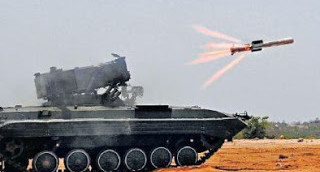
DRDO readies for another missile test, this time it’s subsonic ‘Nirbhay’
DRDO’s Nirbhay missile at the Republic Day parade | Photo: PIB via Wikipedia
New Delhi: Amid the ongoing India-China stand-off in Ladakh, the Defence Research and Development Organisation (DRDO) is preparing for yet another missile test — an 800 km-range subsonic ‘Nirbhay’ cruise missile — which is likely to take place by the end of October or in early November.
This test is likely to be the last trial before the ‘Nirbhay’ missile is inducted formally into the armed forces.
Since September, the DRDO has carried out multiple missile tests. The first test was that of the Hypersonic Technology Demonstrator Vehicle (HSTDV) on 7 September, and its success paves the way for missiles that can travel at six times the speed of sound, making India the fourth country in the world after the US, China and Russia to develop such technology.
This was followed by a test of the nuclear-capable ‘Shaurya’ missile on 3 October, and the supersonic missile-assisted release of a torpedo on 5 October. The ‘Shaurya’ missile is now ready for induction into the Strategic Forces Command (SFC), which handles India’s nuclear arsenal.
In the interim, a different version of the in-service surface-to-surface supersonic cruise missile Brahmos was also tested on 30 September. The DRDO has also carried out other tests, including one for the indigenous Anti-Tank Guided Missile (ATGM), besides a host of others.
Asked whether the back-to-back tests were part of the messaging towards China, sources explained that some of the tests were planned for earlier but got delayed due to the Covid pandemic, while in some cases the tests were scheduled for now.
“The missile tests were held up due to the Covid pandemic, even though the labs were working round the clock. These tests show that the DRDO is back to business as usual,” a DRDO source said.
Casualty evacuation from remote places in the Himalayas not connected even by rail or road is an important part of the lives of those serving in the Indian Air Force. I remember an incident from 2008 that highlights the importance of casualty evacuation.
It was winter and heavy snowfall had almost stopped normal life in the northern region. Heavy shelling by Pakistan had injured many of our soldiers. I received an emergency evacuation message in Chandigarh. We promptly activated the stand-by crew. However, when I studied the weather at Thoise in Ladakh’s Nubra Valley, from where the casualties were to be airlifted, I realised it was marginal and the crew may not be able to execute the mission.
The weather indicated that clouds were covering the entire region of Leh and Thoise. In hilly regions, one has to keep the ground in contact and keep clear of hills. Descend on instruments is a big no. I was the most experienced and the senior-most pilot in the Squadron, so I decided to attempt a landing.
The weather was such that in normal circumstances, one would not have even attempted a landing and instead waited for a clear day. But it was a matter of life and death for about 8 to 10 soldiers. We took off within half an hour from Chandigarh. The weather en-route, until Leh, was negotiable. We decided to go overhead to assess the weather for landing as we approached Thoise. We could not see the ground at all, not even through a few very clear patches.
Staying above hills in Thoise was a safe option, so we circled around and waited for a clearance to descend through the opening in the clouds, because the task of casualty evacuation was of immense importance. Thanks to our luck, we got a small break in the cloud through which we could see the airfield. Adapting all precautionary measures and keeping ground in contact, we descended and landed at Thoise. I kept the engine running.
The patients were brought to the aircraft and boarded without switching off the engine. The aim was not to waste any time on the ground because the weather was not helping our cause. With the aircraft door closing, I quickly taxied out. The doctor briefed me about the soldiers. All young men aged between 19-20 years with splinter injuries in the head and other body parts. I was to exercise caution about correct pressure maintenance in the aircraft for their comfort, even though they were heavily sedated. In head injury cases, these precautions are necessary.
The aircraft was ready for take-off but the weather played spoilsport once again. There was no break in clouding for our climb. I waited on the runway for 10 minutes without any success. Fuel was just about sufficient for the return journey to Chandigarh. I taxied back to the dispersal, where the doctor again came to the cockpit and told me something surprising.
The moment the soldiers had boarded the aircraft, even in their half-conscious state, they were sure that they were being airlifted to Chandigarh. The very thought of being airlifted to a better hospital showed a marked improvement in their overall health as indicated by their stabilised blood pressure. They were unaware that we had taxied back and not taken off yet — for them, the knowledge that they were in safe hands was clear now.
God showed some mercy and we got an opening. We took off for Chandigarh. When we reached there, we found ambulances were ready to ferry the patients to the Command Hospital. Next morning, I could not resist a visit to the hospital to see how the soldiers were doing. I met them all one by one and was happy to see them recovering. I did not disclose that it was my aircraft that had brought them here. For them, it did not matter: the very sound of An-32 had comforted them and their will power did the rest. Such incidents give one immense satisfaction about task accomplishment. It is the biggest award for your routine job and encourages one to move on with newfound enthusiasm.
AVM Suryakant Chafekar was the Commanding Officer of the 48 Squadron and retired from the Indian Air Force in 2017. Views are personal.
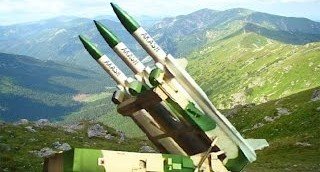
Pak, China building new missile sites along western border
NEW DELHI: Pakistan is setting up surface-to-air missile sites with the help of China in Pakistan occupied Kashmir (PoK), officials with the knowledge of the matter said on condition of anonymity.
The Chinese and Pakistan armies are reconnoitering the areas along the disputed India-Pakistan border to set up additional military infrastructure.
Indian Air Force Chief Air Chief Marshal R.K.S. Bhadauria, had said on Monday that Pakistan and China have increased their bilateral exercises in the recent past.
“There is nothing to suggest collusive threat, ” he said on Monday during an annual press conference in Delhi and added that India is keeping a close watch.
The Indian military has for long flagged the threat of two-front war. With the disputed borders with China and Pakistan active at the same point of time, the armed forces are stretched to the maximum.
A top official said: “Chinese People’s Liberation Army (PLA) troops were also seen in joint reconnaissance in forward areas at Deolian and Jura in PoK along with Pakistan’s 12 infantry brigade as well as the Minimarg-based forces under Force Commander Northern Areas (FCNA), the division size formation of the Pakistan Army.”
The official said that construction work for installation of surface-to-air missile defence system is being carried out by the Pakistan Army and the PLA at Pauli Pir near Lasadanna Dhok in PoK.
“Approximately 120 Pakistan Army personnel and 25 to 40 civilians are working on the construction site, ” said the source, adding that the control room for the system will be located at the headquarters of PoK.
“Ten PLA troops, including three officers, will be deployed at the control room, ” the source said.
“Similar constructions have also been reported at Chinar village and Chakothi village in Hattian Bala district of PoK, ” the source said.
It was further noticed that a road is being constructed by engineers from China from Jaglot to Gauri Kot and is likely to be extended till Gultari.
The PLA troops were also observed in general areas of Jaglot with the Minimarg-based 80 infantry brigade of the FCNA.
State Stalwarts
DEFENCES FORCES RANKS
ARMY, NAVY, AIRFORCE RANKS
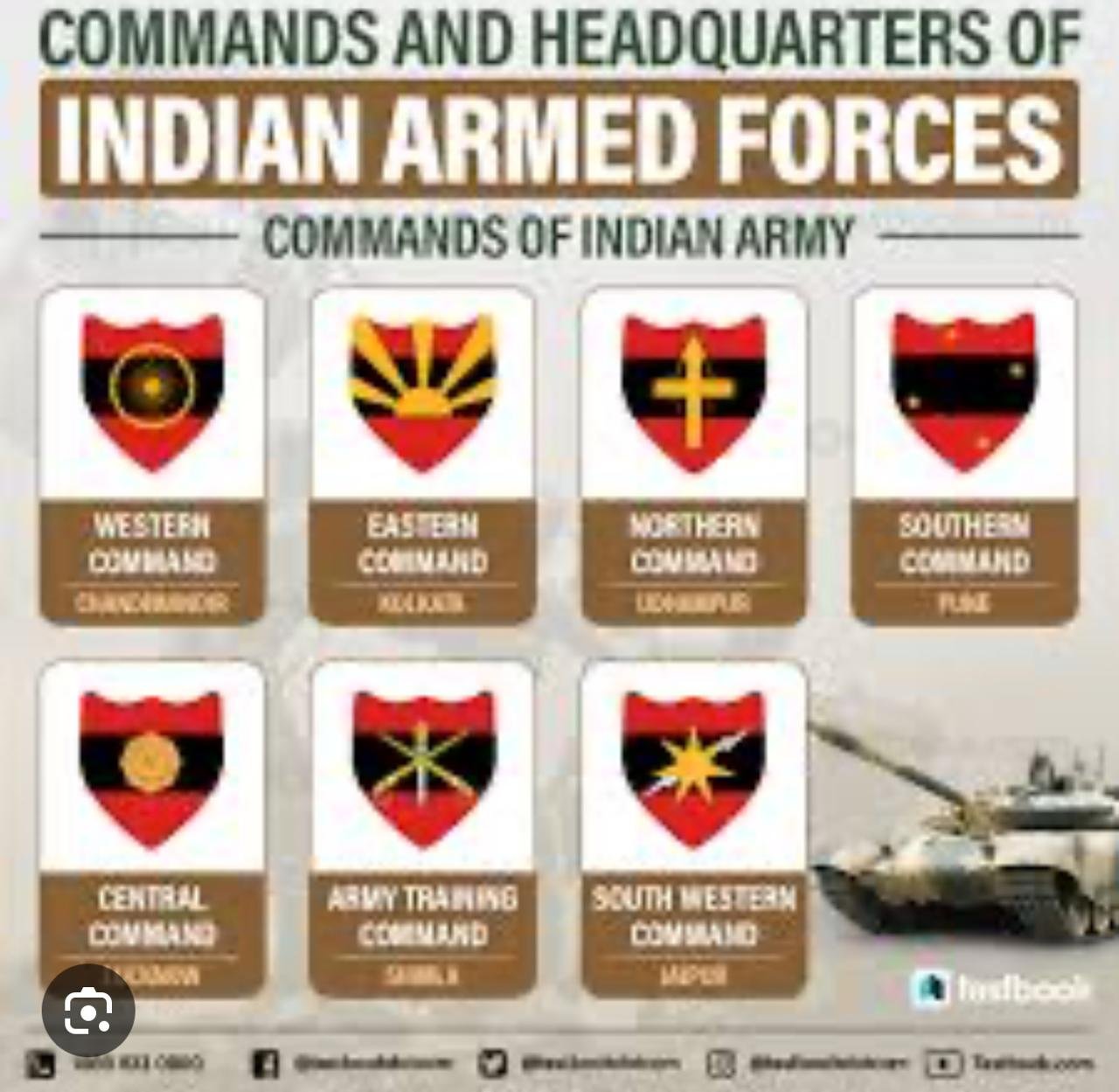
FORMATION SIGNS
FORMATION SIGNS
ALL HUMANS ARE ONE CREATED BY GOD
HINDUS,MUSLIMS,SIKHS.ISAI SAB HAI BHAI BHAI
CHIEF PATRON ALL INDIA SANJHA MORCHA
LT GEN JASBIR SINGH DHALIWAL, DOGRA
SENIOR PATRON ALL INDIA SANJHA MORCHA
MAJOR GEN HARVIJAY SINGH, SENA MEDAL ,corps of signals
.
.
PATRON ALL INDIA SANJHA MORCHA
MAJ GEN RAMINDER GORAYA , CORPS OF
sanjhamorcha303@gmail.com
PRESIDENT HARAYANA STATE CUM COORDINATOR ESM
BRIG DALJIT THUKRAL ,BENGAL SAPPERS
PRESIDENT TRICITY
COL B S BRAR (BHUPI BRAR)
PRESIDENT CHANDIGARH ZONE
COL SHANJIT SINGH BHULLAR
.
.
PRESIDENT PANCHKULA ZONE AND ZIRAKPUR
COL SWARAN SINGH
PRESIDENT SAS NAGAR (MOHALI)
COL BALBIR SINGH , ARTY
INDIAN DEFENCE FORCES
DEFENCE FORCES INTEGRATED LOGO
FORCES FLAGS
15 Th PRESIDENT OF INDIA SUPREME COMMANDER ARMED FORCES
Droupadi Murmu
DEFENCE MINISTER
Minister Rajnath Singh
CHIEF OF DEFENCE STAFF (2nd)
General Anil Chauhan PVSM UYSM AVSM SM VSM
INDIAN FORCES CHIEFS
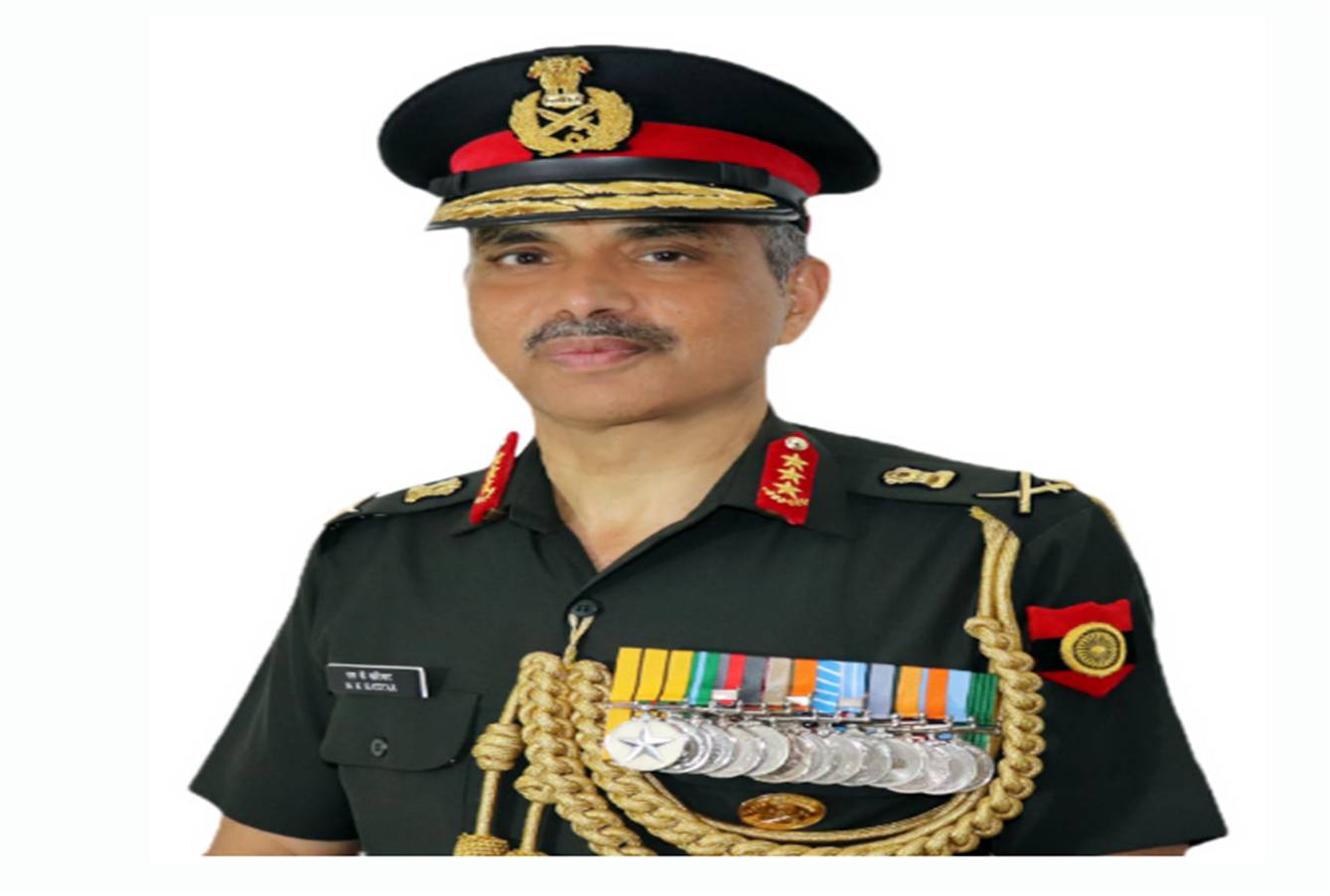
CHIEF OF ARMY STAFF(29th)
General Upendra Dwivedi, PVSM, AVSM (30 Jun 2024 to Till Date)