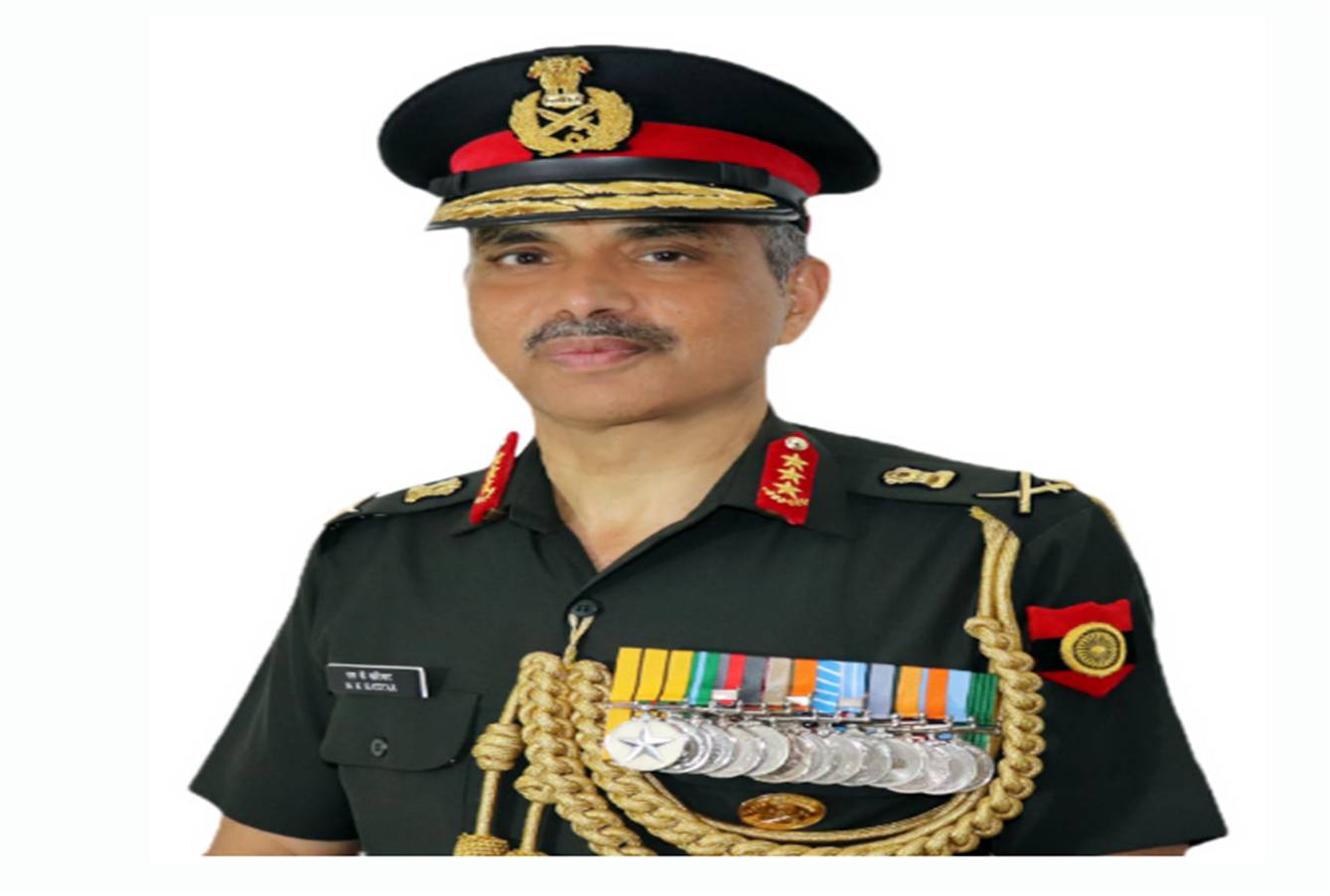
here was no report of any damage in the firing on the Indian side, the officials said. Tribune file
Jammu, December 13
Pakistani Rangers opened fire on forward posts and villages along the International Border (IB) in Kathua district of Jammu and Kashmir, officials said on Sunday.
The firing from across the border in Pansar border outpost area in Hiranagar sector started around 10 pm on Saturday, drawing strong and effective retaliation from the Border Security Force (BSF), the officials said.
They said the cross-border firing between the two sides continued till 3.45 am on Sunday, forcing border residents to spend the night in underground bunkers.
There was no report of any damage in the firing on the Indian side, the officials said. PTI
War veteran who served in Air Force, Navy & Army turns 100
Col Prithipal Singh Gill celebrates with his family in Chandigarh.
Vijay Mohan
Tribune News Service
Chandigarh, December 11
Marking a centenary is rare, and rarer still is a veteran who has had the unique opportunity of having served with not just all three branches of the armed forces but also the paramilitary.
As Col Prithipal Singh Gill (retd) celebrated his 100th birthday in the city today, he fondly reminisced his stint in the uniform and the aura, adventure and elan associated with it.
With a twinkle in his eye as felicitations poured in, he cut a cake amidst a small gathering of family members and close relatives. The World War II veteran recalled his eventful and chequered service life in the cockpit, on the high seas and with the big guns. Brigadier Ravi Kumar from the Western Command presented him a memento on behalf of the Army and another was also sent by the 71 Medium Regiment, the unit he had commanded.
Col Prithpal Singh Gill’s journey began with him joining the erstwhile Royal Indian Air Force in 1942 as a flight cadet in Karachi, without telling his family. He had just spent a little over a year with the Air Force, learning to fly the Harvard aircraft, when his father learnt from a friend that he was a “good flyer” and pulled him out because flying in those days was considered unsafe and his father was afraid that he may die in an air crash. Then at the age of 23, he joined the Navy and served for five years (from January 1943 to September 1948) as a commissioned officer in the gunnery branch. He sailed on minesweepers and escort ships. During World War II, he was assigned to undertake escort duties for maritime convoys proceeding from the Indian mainland to the Persian Gulf. It was during his days with the Navy that then Sub-Lieutenant Prithipal Singh was detailed to attend the Long Gunnery Staff Course at the Army’s School of Artillery in Deolali, where he qualified as an instructor in gunnery.
After a brief interlude with a government agency, he donned the olive green in April 1951, joining the Regiment of Artillery on account of his previous naval gunnery experience. He then served with the 34 Medium Regiment that had earlier served with distinction in Iraq, Palestine, Egypt and Italy during World War II. Later, he raised and commanded the 71 Medium Regiment that saw action during the 1965 Indo-Pak War. “The most eventful part of my service was during the 1965 Indo-Pak War when I was commanding the regiment,” he said. Born in 1920 in Patiala, he studied at Government College, Lahore. After retirement, he took up farming in his family land near Faridkot but continued to keep a healthy lifestyle
The plough of the farmer is his identity but if needed, he can also turn it into his strength. The strength and unity being put up by farmers at the Delhi border has set an example before the nation. Inspired from the struggle and strength of the protesting farmers, a Khanna-based sculptor has turned a plough into a cannon depicting the power of the agitating farmers. With so many requests for taking the sculpture to Delhi, a draw of lots will be done by him to select the farmer.
Jaswinder Singh from Mehandipur village, Khanna, a sculptor and painter by profession, has been moved by the farmers’ protest. In his own way, he has depicted their unity through his sculpture with a plough and a cannon fixed above.
Now, farmers from his village are making rounds to take the sculpture to Delhi at the protest site. “I am open to the idea but I am getting so many requests. I do not want to disappoint anyone as all villagers are either my extended family members or friends. Since I could not decide on whom to give the sculpture, I decided to arrange a draw of lots on the weekend,” he said.
“The plough has been combined with a cannon. Plough is a symbol of hard work of the farmers and the cannon symbolises their strength. The two wheels symbolise fearless treading and constantly fighting for one’s demands. The slogan of ‘Jai Jawan, Jai Kisan’ is also fully represented in this art. I have created the art as a mark of protest,” he said.
“His art piece will be a source of inspiration for the farmers to succeed in their mission. I, along with other farmers, will be marching to Delhi in the coming week. I expressed my desire to take the piece of art with me but Jaswinder candidly asked me to take part in the draw of lots,” said a farmer from Mehandipur village.
Maharaja Ranjit Singh statue vandalised in Pakistan
Statue of 19th Century Sikh ruler Maharaja Ranjit Singh. File Photo
Lahore, December 12
The statue of esteemed 19th Century Sikh ruler Maharaja Ranjit Singh was vandalised at Lahore Fort here, officials said on Saturday.
This was the second time that Maharaja Ranjit Singh’s statue was defaced in the ‘Mai Jinda’ haveli at the fort since its unveiling in June 2019.
Following the incident, the authorities closed the enclosure which displays the cold bronze figure of Maharaja Singh – popularly called Sher-e-Punjab – for public viewing.
An official of the Lahore Walled City Authority on Saturday told PTI that a teenage visitor broke the arm of the Maharaja’s statue on Friday.
“The security guards deployed there arrested the boy and handed him over to the police. The suspect has been booked under (sections) 295, 295-A and 427 of the Pakistan Penal Code,” he said, adding that the suspect told the police that his ‘religious sentiments’ were hurt seeing the statue of a Sikh ruler at the fort.
Early in August 2019, two young men belonging to a religious party – Tehreek-Labbaik Pakistan of Maulana Khaim Rizvi – had vandalised the statue. They had used sticks to damage the figure.
In June 2019, Maharaja Singh’s statue was unveiled in a colourful ceremony in which several Sikh delegates from India, Pakistan and other countries had participated. The event was organised by Bobby Singh Bansal from the UK, in collaboration with the Walled City of Lahore Authority.
The nine-feet statue is made of cold bronze. It shows the regal Sikh emperor sitting on a horse, sword in hand, complete in Sikh attire.
Sculpted by local artists, under the aegis of the Fakir Khana Museum, the statue is meant to invoke the feeling of the emperor being present, with its real life proportions, and was unveiled on his 180th death anniversary. Ranjit Singh died in 1839.
“The project was meant to commemorate the 180th death anniversary of Maharaja Ranjit Singh and to forge a lasting friendship amongst the people of Punjab,” Bobby Singh Bansal had said.
His organisation SK Foundation, UK, commissioned the statue in 2016. “We donated it to the people of Pakistan to promote Sikh heritage and tourism here,” he had said.
Maharaja Singh was the leader of the Sikh Empire, which ruled the northwest Indian subcontinent in the early half of the 19th century. PTI
India will rise to occasion, meet Chinese challenge, says EAM ‘I also believe that what has happened is not actually in the interest of China’
External Affairs Minister S Jaishankar today said India will rise to the occasion and meet the national security challenge posed by the seven-month-long border standoff with China in eastern Ladakh.
However, he refrained from crystal-gazing on how the LAC standoff will finally shape up. “I would not go into the prediction zone at all whether it is going to be easy or not, and what will be the timelines and so on,” he said on being asked whether the bid to restore status quo along the LAC will be a long haul or a breakthrough is expected soon.
S Jaishankar, External Affairs Minister
Public sentiment hit
I believe that what has happened is not actually in the interest of China, because it has significantly impacted the public sentiment in India.
“I also believe that what has happened is not actually in the interest of China, because it has significantly impacted public sentiment in India. Professionally, I have seen the evolution of how the Indian public feels about China and am old enough to remember much more difficult days, especially in my childhood and in my teens,” he said during an interaction session at the FICCI convention.
The minister admitted that South Block’s proclaimed proximity with the Trump administration did not result in a trade deal. “There was a fairly serious negotiation between our government and the Trump administration on resolving the outstanding trade issues. The general idea was — let’s deal with the differences before moving forward,” he said.
“For a variety of reasons they did not close it. On our side, we were dead serious. We wanted to deal with those issues because we thought there was something much bigger in store for the relationship,” he explained.
Jaishankar also said India would remain committed to the concept of the Indo-Pacific though US President-elect Joe Biden had used the term “Asia Pacific” while introducing his nominee for the post of Defence Secretary.
Sanjha Morcha in Support of The farmers Bandh on 08 DEC 2020
Bharat Bandh on December 8: All you need to know about how farmers’ strike will impact India tomorrow
Bharat Bandh 2020 Date, Farmers Protest December 8, 2020: Several political parties, including the Congress, Shiv Sena, AAP, DMK, Kamal Haasan’s MNM, Left parties, the TMC, and the TRS, have joined ranks with the protesting farmers. NDA constituent RLP has also supported the bandh call.
A day after protesting farmers at New Delhi’s borders called for a nationwide general strike, the demand earned support from various opposition parties, including AAP and Congress.
Delhi’s neighbouring state of Haryana, where the farmers’ stir has been gathering momentum, has called a high-level meeting to review the law and order situation ahead of the planned Bharat bandh. Farmers, on their part, said it was mutually agreed by the unions that more farmers from different states would be included in the protest
The farmers said they consider their demands “non-negotiable”, and the next round of talks will be dominated by the agenda of total repeal of the three farm laws through a special session of Parliament.
Expecting disruption in road transport in and around Delhi, the Delhi Traffic Police has suggested alternative routes to enter and exit the national capital on December 8 (Tuesday).
Assam opposition parties extend support to farmers’ Bharat Bandh call tomorrow
In Assam, all opposition parties — including Congress, AIUDF, the Left, among others — have come together to extend their “full support” to the Bharat Bandh called by the farmer unions on December 8.A statement from the Assam Pradesh Congress Committee said that apart from supporting the bandh on December 8, the party’s local units will hold protest programs with the farmers in farms across the state and burn effigies of the Prime Minister Narendra Modi.The Assam chapter of the Communist Party of India (Marxist) (CPI-M) said that the new farm laws amounted to annulling the Minimum Support Price, which the BJP had promised in its “Vision Document” for Assam.
The statement — which was signed by the Congress, CPI-ML, CPI, Liberal Democratic Party Anchalik Gana Marcha, Assam Jatiya Parishad, Raijor Dol, among others — said that the general public’s food security will be affected by the corporatisation of agriculture that the laws will result in. The statement appealed to all offices and educational institutions, including banks and courts to remain shut, and vehicles to be off the roads on December 8.Peasant organisation Krishak Mukti Sangram Samiti — founded by Akhil Gogoi — also extended their support to the bandh. In a statement, the organisation said that they would build a movement against the anti-farmer laws in Assam. “BJP is doing this to appease its corporate friends and the farmers of Assam will never accept these laws”, said the statement.
With first phase of polls on Dec 8, Kerala outfits excludes state from nationwide bandh
Farmer outfits in Kerala have decided to exclude the state from the nationwide bandh called on December 8 (Tuesday) as five districts of the state will go to polls in the first phase of the local body elections scheduled on the day. Voters in local bodies across Thiruvananthapuram, Kollam Pathanamthitta, Alappuzha and Idukki are set to cast their votes on Tuesday. Considering the hardships the bandh can potentially cause to voters and election officials, farmer outfits are exploring alternate ways of registering their solidarity with the farmers who are protesting on the borders of the national capital against the Centre’s farm laws.
KN Balagopal, state secretary of the CPM-affiliated Kerala Karshaka Sangham, and Lal Varghese Kalapakavady, chief of the Congress-affiliated Karshaka Congress, told reporters that their outfits would carry out peaceful demonstrations at select spots against the farm laws without disturbing the sanctity of the polling process. Both Left parties and the Congress have backed the nationwide bandh.
Delhi Police instructions for traffic movement
The police has advised those commuting to Delhi to use the DND instead of the Noida Link road. Chilla border on Noida link road is closed for traffic due to the farmers’ protest near Gautam Budh Dwar. “The Ghazipur border on NH 24 is closed for traffic from Ghaziabad to Delhi due to farmers’ protests. People are advised to avoid NH 24 for coming to Delhi and use Apsara/Bhopra/DND for coming to Delhi,” it tweeted.Tikri and Jharoda borders are closed for traffic movement while Badusarai border is open only for light motor vehicles like cars and two-wheelers, it said. The talks between the government and the representatives of farmer unions remained inconclusive on Saturday. (Express Photo: Prem Nath Pandey)
“Singhu, Auchandi, Lampur, Piao Maniyari, Mangesh borders are closed. NH 44 is closed on both sides,” the police said. The police advised commuters to take alternative routes via Safiabad, Saboli, NH8, Bhopra, Apsara borders, and Peripheral expressway.
Several parties support Bharat Bandh
Several political parties, including the Congress, AAP, DMK, Shiv Sena, Kamal Haasan’s MNM, Left parties, the TMC, and the TRS, have joined ranks with the protesting farmers. NDA constituent Rashtriya Loktantrik Party has also supported the bandh call.
Addressing a press conference Friday, farmers union leader Gurnam Singh Chadoni said that if the Centre did not accept their demands to repeal the laws during Saturday’s talks, they would intensify their agitation and occupy toll plazas. There have been five rounds of talks between farmers’ representatives and the government till now, and the next meeting is scheduled for December 9. After Thursday’s talks, Union Agriculture Minister Narendra Singh Tomar had hinted that the Modi government could amend three major provisions in the Farmers’ Produce Trade and Commerce (Promotion and Facilitation) Act.
Farm laws will not be rolled back, amendments can be made: MoS Agriculture
Minister of State for Agriculture Kailash Choudhary on Sunday reiterated that the three laws passed by the government are “in favour of farmers”, and they would not be repealed, though amendments could be made to them.
Farmer leaders also welcome the support of political parties to the nationwide strike against the laws and demand that the legislations be repealed
armers at the Singhu border. PTI file
New Delhi, December 7
Thousands of farmers protesting against the Centre’s new agri laws for the past 11 days here have called on people to join their Bharat bandh on Tuesday in large numbers, as police increased deployment at various Delhi border points.
Farmer leaders also welcomed the support of political parties to the nationwide strike against the laws and demanded that the legislations be repealed.
The Congress, Aam Aadmi Party, Samajwadi Party, Bahujan Samaj Party, Nationalist Congress Party, CPI(M) and DMK are among the political parties that are backing the day-long strike.
Delhi Police have increased security arrangements on Delhi’s borders with Haryana and Uttar Pradesh as a precautionary measure.
Farmers have threatened to intensify their agitation and block more roads leading to the national capital if the government did not accept their demand.
Talks between the government and protesting farmer unions so far have been futile and the sixth round of discussions is scheduled to be held on Wednesday.
Delhi Traffic Police on Monday tweeted about the closure of the Singhu, Auchandi, Piao Maniyari and Mangesh borders. The Tikri and Jharoda borders are also closed, it said.
The National Highway-44 has also been closed on both sides. So those travelling are suggested to take alternative routes through Lampur, Safiabad and Saboli borders. Traffic has also been diverted from Mukarba and GTK road, the traffic police said.
Those travelling towards Noida have been advised to take DND as the Chilla border on the Noida link road, too, is closed for traffic movement, it said.
“The Chilla border on the Noida link road is closed for traffic from Noida to Delhi due to farmers’ protests near Gautam Budh Dwar. People are advised to avoid the Noida link road for coming to Delhi and use DND,” the traffic police said on Twitter.
The Gazipur border on NH-24 is also closed for traffic from Gaziabad to Delhi. “People are advised to avoid NH-24 for coming to Delhi and use Apsara/Bhopra/DND for coming to Delhi,” it added.
However, the Badusarai border is open only for light motor vehicles like cars and two-wheelers and Jhatikara border is open only for two-wheeler traffic, police said.
They said those travelling to Haryana can take Dhansa, Daurala, Kapashera, Rajokri NH-8, Bijwasan or Bajghera, Palam Vihar and Dundahera borders. PTI
Congress MPs from Punjab, Haryana stage dharna at Jantar Mantar; want Parliament session to be convened
Ahead of the Bharat bandh called by farmers’ union demanding the repeal of three agriculture reform laws, the Congress on Monday upped the ante against the Centre staging a protest at Jantar Mantar to seek convening of a Parliament session to discuss issues and said the government had lost all credibility.
Congress MPs from Punjab and Haryana sit on a dharna at Jantar Mantar in New Delhi on Monday. Tribune photo: Manas Ranjan Bhui
Congress MPs from Punjab and Haryana Ravneet Bittu, Preneet Kaur, Gurjeet Aujla, Amar Singh, Manish Tewari, Mohammad Sadique and Deepender Hooda are currently sitting in dharna on Jantar Mantar urging the Centre to rescind the contentious laws and take further discussions to Parliament.
Punjab Congress president Sunil Jakhar, meanwhile, addressed the media saying the responsibility for any inconvenience people would face during Bharat bandh lay with the Centre that did not consult farmers before passing the laws.
“The responsibility has to be fixed and it lies squarely at the doors of the government which failed to engage the farmers before passing the laws and also rode roughshod on the opposition when it tried to question the laws in the last session of Parliament. The solution now is to repeal the laws, call a session of Parliament and discuss issues afresh,” Jakhar said.
He said the “rigid” Centre was responsible for the agitation and for farmers sitting out in bitter cold.
Jakhar also warned that the agitation was impacting food security. “Food security is an integral part of national security. Neither can be outsourced,” he said adding that the intention of the bills was suspect and farmers would not allow corporatisation of agriculture.
“Farmers cannot be run through contractors. Also rather than spending money on a new parliament building, the Centre should realise that Parliament doesn’t run on buildings. It runs on emotions,” Jakhar said accusing the government of hurting the sentiments of farmers and not taking cognisance of their feelings.
“The discussions taking place on borders today should have taken place in Parliament. Also the government should stop following the US model of lobbying. We will not let farming be outsourced. And we will not let national security outsourced,” he said.
Jakhar also warned against certain sections instigating farmers of Haryana to raise the SYL issue in the ongoing protests. “Don’t let anyone divide Haryana and Punjab farmers. Some people are asking for SYL to be included but farmers cannot be divided,” he said terming the ongoing agitation a revolution.
The Congress also appealed to commuters to “keep their inconveniences due to the bandh aside and lend support to Bharat bandh”.
Army has a new head of information warfare. But first, stop hiding facts from Indians
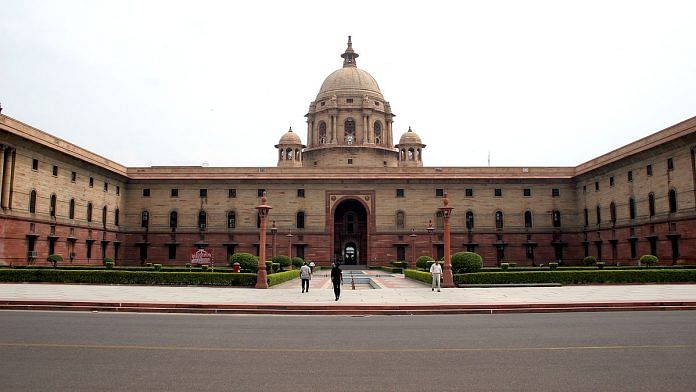
The Ministry of Defence at South Block in New Delhi | Commons
The over-supply of information during Operation Vijay in Kargil has been in stark contrast to the denial stance adopted by the Narendra Modi government since the 2017 Doklam crisis broke. Lessons learnt on information warfare in 1999 have been put aside to reveal a new methodology of controlling the story from India’s military frontline, through silence and selective friendly leaks. To put this doctrine into practice, a new post of Director General of Information Warfare has been created under the Deputy Chief of Army Staff, Strategy.
This is essentially the elevation of the already functioning Additional Director General, Public Information (ADG PI). Its roots were in a small team put together by two sections of Military Operations and Intelligence directorates, working out of a South Block dungeon called Army Liaison Cell (ALC). The 1990s’ terrorism and insurgency fuelled the need for a non-attributable, but reliable, Army HQs address for journalists, including foreign media. Access was open to all credited journalists, and even some greenhorns cutting their teeth in defence reporting. A Colonel led the group of officers, until Op Vijay broke. I was witness to the emergence of this cell, its growth, and its operational utility during conventional and counter-insurgency operations.
The outstanding Lt Gen. Paramjit S. Sangha will be India’s first Deputy Chief of Army Staff (Strategy). He will function as the ‘single-point advice’ person to the Vice Chief of Army Staff (V-COAS) and will have Directors of General Military Operations, Intelligence, Perspective Planning and Strategic Communication reporting to him. Their inputs will then be collated to deliver ‘advice’ to the V-COAS. So, in effect, four Lt Generals will report to a slightly senior Lt General who will then sift through their inputs, and share it with yet another Lt General, albeit a little more senior. This reform at the Army HQs has been approved by the Union government.
First of all, in the current scenario, information warfare has to be a tri-service effort, and the DG of Information Warfare should be responsible for handling dissemination from the three services. That is, after all, the stated objective of jointmanship and the purpose behind creating a Chief of Defence Staff.
All press reports, stemming from the same briefing, suggest that the mover behind this reform was the 2017 Doklam crisis. According to an Indian Expressreport: “The need for the creation of the single-point advice person for the Vice Chief was felt during the standoff with China in Doklam in 2017. Sources had said earlier that this was because everything was under different verticals, and several officers would provide similar inputs.” This reasoning defies imagination since those ‘several’ officers could still provide similar inputs to the Deputy Chief, and he, in turn, carry the same contents to the V-COAS. After all, if various Lt Generals are expected to render advice in a mobilisation scenario, as Doklam was, it is almost certain all would share similar views, a logical outcome of their training and experience.
So, if Doklam is being taken as the instigator of this reform, it doesn’t quite click because, by all accounts, the Army fulfilled its operational role in Doklam with suitable results. The subsequent losses in the area are not on account of the Army, but political diplomacy, and beyond the purview of this reform. When the functioning cannot be faulted, then changing structures is not reform but bureaucratic tinkering, which will not do any good for the Army HQs’ efficiency, however outstanding Lt Gen. Sangha may be. In the recent past, the Army HQs hasn’t really been found wanting during times of crisis or operational deployment.
The success, or otherwise, of Army HQs is directly proportional to the clarity of political directives, and the monies put on the table to achieve the targeted results. During far greater challenges, the Army HQs has achieved more with less, only because there was no political pussy-footing, and resources were made available as desired. The best example is Kargil and Operation Vijay, in sharp contrast to the current mobilisation in Ladakh, Operation Snow Leopard. The use of firepower is, of course, completely dissimilar between the two, but equally important is how vastly divergent information warfare was, and is being, applied in both scenarios.
Back in the ALC, the swashbuckling Maj. Gen. Arjun Ray was brought in to handle the Kargil crisis from an information perspective. He had a psychological operations background from a foreign course, and understood its immense value, as also the methodology of achieving results. Responsibility was delegated to a few young Majors and Captains drawn from across the Army, with a target audience that was within India as well as across the border in Pakistan, and thereafter, the rest of the world. In fact, the initiative was taken by two officers, one from the Armoured Corps and the other from Signals. Then Chief of Army Staff Gen. V.P. Malik gave a broad perspective to the ALC, and it was implemented with operational and intelligence inputs from the concerning directorates. The simple formula worked well even in the most trying of circumstances.
Now when the challenges are far less, capability somewhat greater, and the Modi government in an information denial mode, the new Deputy Chief of Strategy has a tough task ahead of him. Particularly since a lot more information is available to all known adversaries outside of India, as well as friendly countries. Those being denied information are only the citizens, while foreign media gets briefed, covertly, as the ALC once did. Psychological operations aimed only at the domestic audience don’t alter facts on the ground, nor the adversaries’ willingness to fight, which must always be the primary military objectiveof information warfare.
The author is a Congress leader and Editor-in-Chief of Defence & Security Alert. Views are personal.
Why Army wants a new Deputy Chief and Director General at its headquarters
Idea for a Deputy Chief (Strategy) came about during the Doklam crisis when it was felt the Army Headquarters needed closer and direct coordination between its verticals.
The Ministry of Defence at South Block in New Delhi | Commons
New Delhi: The Army aims to bring in a more cohesive approach to deal with situations like Doklam and Ladakh and undertake optimal utilisation of key verticals with the creation of a new post of Deputy Chief (Strategy) at its headquarters. It also plans to have strategic communication in play in an era of 5th Generation Warfare with the creation of Director General (Information Warfare).
The two new posts, which are part of the Army Headquarters reforms being carried out, have been approved.
Director General of Military Operations (DGMO) Lt Gen Paramjit Singh Sangha is likely to be the first Deputy Chief (Strategy).
Lt Gen Sangha, who was a key officer involved in the planning and execution of the 2016 surgical strike, has a long experience dealing with operational issues.
According to the plan, Directorate of the Military Operations (MO) and Military Intelligence, besides Operational Logistics (DGOL) and Director General (Information Warfare), will report to the new Deputy Chief (Strategy), sources in the defence and security establishment said.
Earlier, all these directorates reported to the Vice Chief individually. However, under the new set-up, the Deputy Chief will become the single-point advice person to the Vice Chief on operational issues.
Sources explained that there were a number of verticals that used to report to the Vice Chief and final assessment of issues happened at this level.
“Now we will have the new Deputy Chief who will collate all the inputs and then put forward a crystallised assessment and way forward,” a source said.
A second source said this would mean various existing verticals will be optimally utilised.
The sources said despite intelligence being a big factor in any operation or situation, the Military Intelligence was not fully utilised.
“The MO was the more dominant player in the Army’s scheme of things. A sense of competition always exists within any organisation and military is also not immune to it. Hence, it was important to have a cohesive approach to information, intelligence, operations and strategy,” a source said.
The idea for a new post came about during the Doklam crisis when it was felt the Army Headquarters needed closer and direct coordination between its verticals.
Re-organisation of the Army Headquarters was one of the four studies instituted by Chief of Defence Staff Gen Bipin Rawat when he was the Army chief.
The Army already has two deputy chiefs who look after Information Systems and Training, and Planning.
On the new post of Director General (Information Warfare), who will report to the Deputy Chief (Strategy), sources said it was important to have a common strategy on communication.
Till now, the Army has had three main verticals looking after information warfare. This included the Army PRO who came under the Ministry of Defence, the Information Warfare unit that comes under Military Operations and the Additional Director General (ADG) Public Information (PI), under Military Intelligence.
The ADGPI has now been named ADG (Strat Comm), headed by a Major General rank officer, and will report to the Director General (Information Warfare), which will be headed by a Lieutenant General-rank officer.












































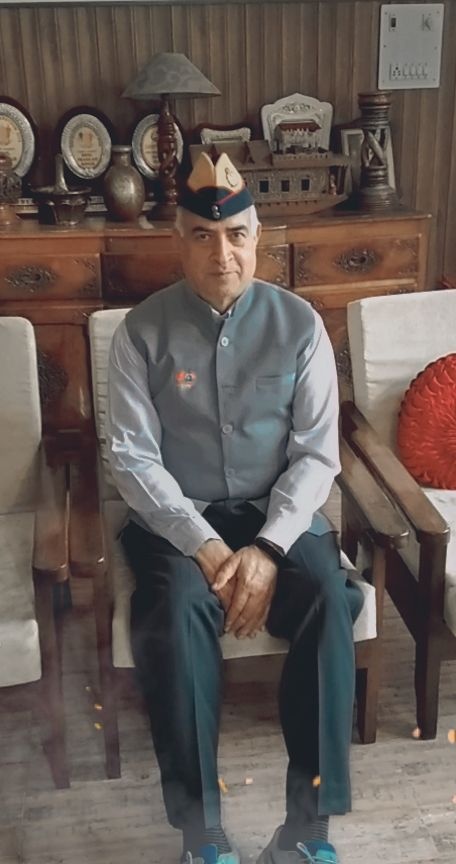






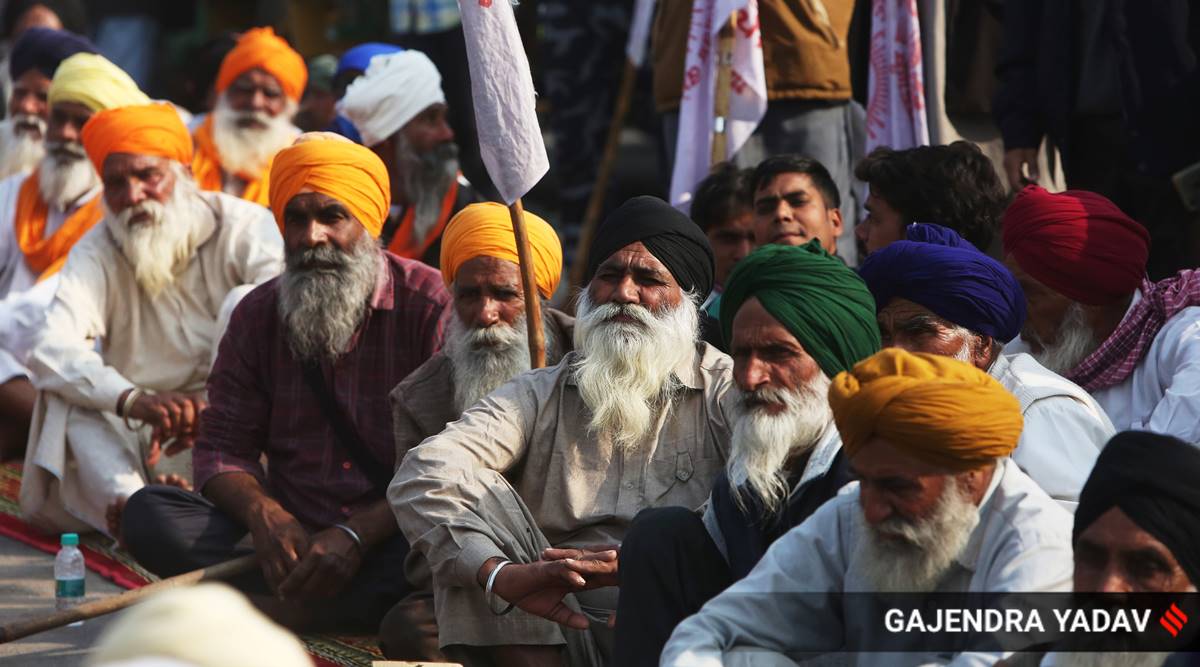
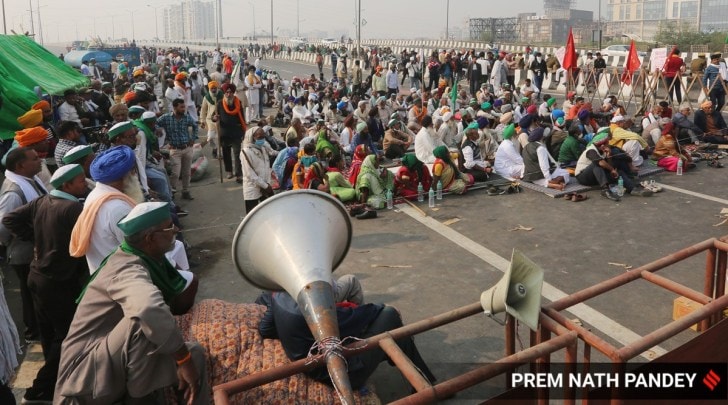 The talks between the government and the representatives of farmer unions remained inconclusive on Saturday. (Express Photo: Prem Nath Pandey)