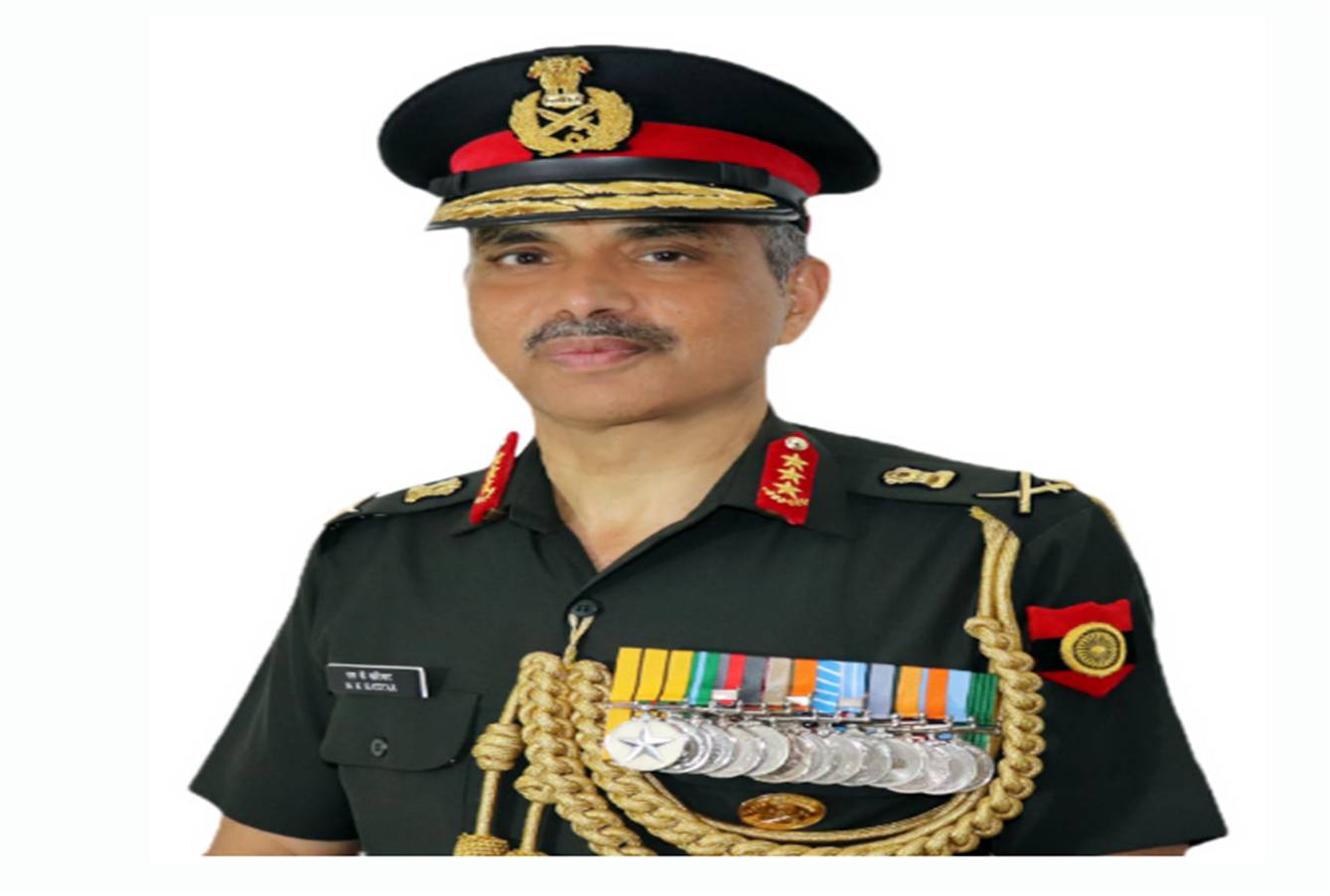
Chief of Defence Staff Gen Bipin Rawat during his visit to Kibithu in Anjaw district on Saturday. PTI
New Delhi, January 2
Chief of Defence Staff Gen Bipin Rawat on Saturday visited several frontline air bases in forward areas near the Line of Actual Control in Arunachal Pradesh and undertook a detailed review of India’s overall military preparedness in the region amid the nearly eight-month-long Sino-India standoff in eastern Ladakh.
Official sources said Gen Rawat interacted with personnel of the Special Frontier Force (SFF), the Army and Indo-Tibetan Border Police (ITBP) deployed in the “forward most” posts in Dibang valley and Lohit sector of Arunachal Pradesh and complimented them for maintaining effective surveillance and operational readiness in the region.
“Nothing can deter the Indian Armed Forces from remaining steadfast in their call for duty,” a source quoted the Chief of Defence Staff (CDS) as saying during one of the interactions.
The sources said Gen Rawat would visit several other key bases in Arunachal Pradesh on Sunday as well to gain first-hand experience of the security scenario. Most of the forward locations along the Line of Actual Control (LAC) are currently under the grip of severe cold wave with temperatures dropping to sub-zero level.
The Army and the Indian Air Force (IAF) have significantly bolstered their combat readiness in all key formations along the LAC, including in Arunachal Pradesh and Sikkim, in view of the border standoff with China in eastern Ladakh. The sources said the CDS complimented the soldiers for the innovative measures adopted to maintain effective surveillance and enhanced operational readiness. — PTI
India stocks up missile arsenal as it prepares for another tense summer in Ladakh
India has awarded a $200 million contract to Israel for supplying an undisclosed number of SPICE bomb-guidance kits, and between 300 and 320 Spike-Long Range Anti-Tank Guided Missiles.
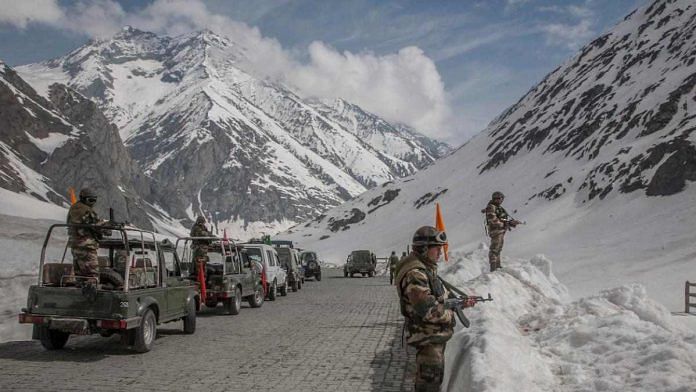
File image of Indian soldiers in Ladakh | Representational image | By special arrangement
New Delhi: India is in the process of stocking up its missile arsenal as the stand-off with China in eastern Ladakh continues for the eighth consecutive month and the services extensively plan for the challenges that may emerge in the summer.
According to a report published in Jane’s Defence Weekly, a noted publication on military matters, India has awarded a $200 million contract to Israel’s Rafael Advanced Defense Systems for supplying an undisclosed number of SPICE bomb-guidance kits, and between 300 and 320 Spike-Long Range Anti-Tank Guided Missiles (ATGMs), besides the BNET broadband IP software defined radios, which are pitched as a system for secure communications during on-the-move tactical operations.
The equipment, the report dated 24 December states, will be delivered by early 2021. It has been procured under the emergency powers given to the armed forces by the Union defence ministry this July to procure weapons systems worth up to Rs 300 crore on an urgent basis.
A senior IAF officer said the fresh purchase of the SPICE 2000 air-to-ground missiles is an emergency procurement.
“The Spice 2000 bombs have proven their worth during the Balakot strikes. It will enhance the capabilities of the IAF by adding to the inventory of missiles that can hit the targets from a long range with pinpoint accuracy, which is particularly important during the ongoing conflict,” the officer added.
He, however, said the numbers ordered will still be inadequate for the approximately 250 Sukhoi-30s and the 50 Mirage 2000s that the IAF currently has.
The SPICE 1000 bombs, which weigh 500 kg, can also be integrated onto Jaguars and the indigenous Tejas, the officer added.
Earlier this year, after the stand-off in Ladakh had begun, the IAF had opted for the French HAMMER air-to-ground precision-guided weapon system exclusively for its Rafale fighter jets.
HAMMER, or Highly Agile and Manoeuvrable Munition Extended Range, consists of a guidance kit and a range-extension kit fitted on a standard Mk 82 bomb of 250 kg.
Aside from this, the IAF’s inventory also has laser-guided bombs with a range of 10 to 15 km.
“Every ground-attack aircraft should have a minimum of five bomb loading, which means the aircraft should be able to carry 10 bombs per mission, and should have a minimum of 10×5 = 50 bombs,” said the IAF officer.
As for the ATGMs, the Army has been planning to place a repeat order for Spike-LR (Long Range) ATGMs as an emergency procurement since earlier this year.
The Army’s Leh-based 14 Corps had projected a requirement of around 40 Spike ATGM launchers with an undisclosed number of missiles, among other equipment.
India deployed its existing ATGMs at important heights in Ladakh during the ongoing stand-off.
A senior Army officer told ThePrint that the Spike is a fourth-generation missile that has an accuracy of up to 4 km, which makes it a lethal weapon during the ongoing conflict. “Though primarily anti-tank, it can be effectively used against enemy field fortifications and bunkers,” the officer said.
The new missiles ordered will add to the Indian arsenal after another massive stocking-up exercise last year.
The Modi government ordered weaponry worth about $700 million for the Indian Air Force (IAF) from Russia last year — including close to 300 short-range air-to-air missiles, the R-73, and 400 medium-range air-to-air guided missiles, the RVV-AE, also known as the R-77, and a radar-busting missile called X-31.
These missiles are designed to arm the Russian-made MiG and Sukhoi aircraft.
The R-73’s range is 30 km. The R-77 is the Russian counterpart to the US medium-range AIM-120 AMRAAM missile.
The American missile was used by the Pakistan Air Force (PAF) to target Indian Su-30 MKIs on 27 February, a day after the IAF strikes on terror camps in Balakot in the wake of the 14 February Pulwama attack.
Farmers pass through Jhajjar during ‘Chetna Yatra’ on Saturday. Tribune photo
Tribune News Service
Rohtak, January 2
Without waiting for the outcome of the proposed meeting with the Central Government on January 4, the Bhartiya Kisan Union (Ugrahan) today launched ‘Chetna Yatra’ on hundreds of tractors-trailers from the Rohad toll plaza on the Rohtak-Delhi highway to the Shahjahanpur-Khera border in Rajasthan.
Shingara Singh Maan, State President, Bhartiya Kisan Union, Ugrahan
Garnering support of locals
The yatra is aimed at enhancing local participation in the ongoing agitation to pressurise the Central Government to repeal the three ‘black’ laws. We had announced to carry out the yatra between January 2 and 4 before the last meeting between Sanyukt Kisan Morcha and the Union Government on December 30.
Farmers reached the Gangachai Jat toll plaza on the Jhajjar-Rewari highway, 10 km from Rewari city, at 7 pm after passing through Sampla (Rohtak) and Aasanda, Bhapdauda, Chhara and Jhajjar city. They camped there instead of moving ahead at night in the bone-chilling cold.
The toll barrier, too, started providing free passage to the commuters as soon as the farmers reached there. The barrier had been charging toll from the commuters despite the farmers’ call for free passage. The place is about 40 km from the Shahjahanpur border.
“The yatra is aimed at enhancing local participation in the ongoing agitation to pressurise the Central Government to repeal the three ‘black’ laws. We had announced to carry out the yatra between January 2 and 4 before the last meeting between Sanyukt Kisan Morcha and the Union Government on December 30,” said Shingara Singh Maan, state president of the BKU (Ugrahan).
Maan said they interacted with farmers in every village on the way and urged them to support the agitation. “The villagers accorded a warm welcome to the yatra and also organised a langar near Silana village in Jhajjar district. We are confident about a huge participation of locals in the protest in the coming days. We will move towards the Shahjahanpur border on Sunday morning and return to Tikri the next day,” he added.
Hakkam Singh Walia, another protester from Punjab, said police personnel extended full support to them during the yatra. Jaspal Singh, another farmer from Fazilka, said the yatra would play a vital role in further strengthening the protest.
Ashok Arya, a leader of Sanyukt Kisan Morcha, said special arrangements were being made at the Shahjahanpur border to welcome the yatra.
Ex-servicemen and farmers hold a joint rally in Abohar. Tribune Photo
Abohar, January 2
Ex-servicemen and farmers today shared a common platform and gave a “Delhi chalo” call to further strengthen the agitation that had completed its 100 days against the farm laws enacted by the Central Government. Some retired employees of the state and Central governments also extended their support.
Ex-servicemen said all people should unite against the “black” laws against which farmer unions across the country had declared a peaceful war. They said if the laws were not repealed, the ‘morcha’ at the Delhi border would attract scores of supporters in the next few days. The ex-servicemen have shown their commitment to contribute to the peasant struggle with all available resources.
Colonel Ajit Singh Samagh (retd), Colonel Inderpal Singh Ghuman (retd), Colonel Udaypal Singh Godara (retd), Colonel Satpal Rai Gaba (retd), Harbinder Singh Sandhu, Prahlad Chaudhary, Gurmeet Singh Prajapat and six former sarpanches expressed concern over the farm laws. — OC
Muktsar youths leave for border
Some visually impaired youth from Muktsar on Saturday left for the Delhi border to join the farmers’ protest. They said they did not own land but extended full support to protesters. TNS
2 more farmers from Fazilka lose lives to biting cold
Two more Fazilka farmers have lost their lives while participating in the agitation.
Fazilka, January 2
Seven days after farmer Amarjit Singh Rai, who ended his life at Tikri border by consuming some poisonous substance over agriculture laws, two more Fazilka farmers have lost their lives while participating in the agitation.
Sources said that Kashmir Lal (65), a resident of Mahmu Joyia village, had gone to the Tikri border to participate in the agitation on December 28. But he fell ill on December 31 due to severe cold conditions. He was taken to a hospital in Bahadurgarh from where he was discharged after the treatment. He then returned to his native village.
The next day, he joined the protest at the Mahmu Joyia toll plaza on the Fazilka-Ferozepur highway. While returning home after a dharna on Friday evening, his condition deteriorated again and was taken to a private hospital, where he was declared brought dead. Similarly, Kashmir Singh (69), a resident of Koharianwali village, had gone to Delhi on December 25 to participate in the protest, where he fell ill due to biting cold. He returned home on December 31. He also died last evening.
Farmers protest outside Union minister’s virtual event venue Say won’t let BJP leaders, functionaries attend any function in state
Farmers stage a protest outside a hotel in Bathinda on Saturday. Tribune photo: Pawan sharma
Tribune News Service
Bathinda, January 2
A large number of farmers protested outside a hotel on the Goniana road, where BJP leader and Union Minister of State for Social Justice and Empowerment Krishan Pal Gurjar addressed a gathering through video-conferencing.
An event for the distribution of physical aids and assistive devices to differently abled and senior citizens under ADIP and Rashtriya Vayoshri Yojana, respectively, were organised by the Ministry of Social Justice and Empowerment along with the district administration at Bathinda.
The farmers gathered outside the hotel and started raising slogans against the Narendra Modi government. Protesters said they had already announced they would boycott events of the BJP leaders in the state until the farm laws were taken back.
Former Union Minister and Bathinda MP Harsimrat Kaur Badal did not attend the event. She said: “I boycotted the event today in which BJP leader and Union Minister of State Krishan Pal Gurjar was the chief guest virtually. I have always stood for the farmers. I will continue to boycott events where BJP leaders are the guests until the farmers’ demands are met and farm laws are repealed.”
However, BKU (Ekta Ugrahan) district senior vice-president Mothu Singh Kotra said: “Harsimrat Badal was also scheduled to reach here. This shows Akalis are not concerned. On the one hand, the SAD says it has broken the alliance with the BJP, on the other Akalis are still attending functions together.”
Meanwhile, SDM Talwandi Sabo Varinder Kumar said the main objective of this virtual programme was to provide free assistive devices to the divyang persons. He said in 2018-19, free prostheses were provided to 361 senior citizens and 44 divyang persons from Bathinda.
Farmer protesting against agriculture laws kills self Suicide note asks government to repeal the controversial laws
Farmers shout slogans during their protest against the new farm laws, at Ghazipur Delhi-UP border in Ghaziabad on December 31, 2020. PTI photo
Ghaziabad, January 2
A 75-year-old farmer protesting against the Centre’s new agri laws allegedly hanged himself at the Uttar Pradesh-Delhi border in Ghazipur on Saturday morning.
Sardar Kashmir Singh, a native of Bilaspur in Uttar Pradesh’s Rampur district, hanged himself in a mobile toilet using a rope, police said.
Deputy Superintendent of Police of Indirapuram Anshu Jain told PTI that a suicide note written in Gurumukhi was found on him.
Singh wrote in the suicide note that the government must repeal these farm laws as these are against the interests of farmers, according to a leader of the Bharatiya Kisan Union (BKU).
The BKU and several other farmer unions have been spearheading the protest against the legislations at various border points of Delhi for over a month now.
In the purported suicide note, Singh expressed anguish that though some people from Punjab died during the agitation, no one from Uttar Pradesh and Uttarakhand has sacrificed his life for the cause.
He also requested the Sikh community to help his family marry off his two granddaughters and to address the domestic problems being faced by his married daughter.
His body was handed over to his grandchildren who too were part of the protest in Ghazipur, police officer Jain said.
BKU national spokesman Rakesh Tikait expressed his profound grief at the death of Kashmir Singh.
He demanded that the government provide an ex-gratia of Rs 10 lakh each to the families of Kashmir Singh and another farmer who died of heart attack at the protest site on Friday.
Tikait alleged that the government was testing the patience of farmers. Till now 47 farmers have sacrificed their lives during the protest in the country, he claimed, adding that their sacrifice would not go in vain.
Thousands of farmers have been protesting at various borders of the national capital for more than a month demanding repeal of the Farmers (Empowerment and Protection) Agreement of Price Assurance and Farm Services Act, Farmers Produce Trade and Commerce (Promotion and Facilitation) Act, and the Essential Commodities (Amendment) Act.
The government has presented these laws, enacted in September, as major agriculture reforms aimed at helping farmers and increasing their income, but the protesting unions fear that the new legislations have left them at the mercy of big corporates by weakening the MSP and mandi systems.
Meanwhile, BKU media in-charge Dharmendra Malik said in a press statement that they will gherao the Uttar Pradesh Assembly from January 10 if dues of sugarcane farmers are not paid immediately.
Arrears of Rs 4,000 crore of sugarcane growers are pending, but the government is not helping them and is favouring sugar mills, Malik claimed. — PTI
Ambani, RIL fined for manipulative trading Last 10-minute trading on settlement day for RPL shares in 2007
The Securities and Exchange Board of India (SEBI) has imposed a penalty of Rs 25 crore and Rs 15 crore, respectively, on Reliance Industries (RIL) and its Chairman Mukesh Ambani for manipulative trading.
The SEBI order observed that RIL entered into a well-planned operation with its agents to corner the open interest in the RPL (Reliance Petroleum) futures and to earn undue profits from the sale of RPL shares in both cash and futures segments and to dump large number of these in the cash segment during the last 10 minutes of trading on the settlement day, resulting in a fall in the settlement price. The case pertains to 2007. It also observed that Mukesh Ambani, being the Chairman & Managing Director of RIL, was responsible for its day-to-day affairs and thereby liable for the “manipulative trading” done by the RIL. — IANS
Women carry ‘jago’ along with PM Narendra Modi’s effigy in favour of farmers’ protest at Baghapurana town in Moga district on Friday. Tribune photo
Tribune News Service
Moga, January 1
Baghapurana women have launched an awareness campaign titled ‘Jago’ to mobilise support for the farmers’ agitation. Most of them are from sub-urban localities. They said women from urban areas were coming forward in support of the farmers.
“Women from villages are already part of the agitation. It is difficult to mobilise women from cities. Their participation signals the changing mindset,” said one of the women who launched the campaign. She hoped that the New Year would take the farmers’ agitation to its logical conclusion.
Baghapurana women said they would go to Delhi, make langar and sit on a chain fast. “Urban women were a little reluctant earlier, but they understood the issue when explained. We have been encouraging city women to protest against the controversial farm laws. It’s a question of survival of farmers. If they are hit, all others will be affected,” said Baljit Kaur of Baghapurana.
MAY GOD INSTILL SENSE OF HUMANITARIANISM IN GOVT FOR FARMERS AGITATION