Sanjha Morcha

What’s New

Click the heading to open detailed news

Current Events :

web counter

Print Media Reproduced Defence Related News

Tomar urges unions to reconsider the decision on tractor march

http://

ribune News Service

New Delhi, January 18

Two days before his scheduled meeting with unions, Agriculture Minister Narendra Singh Tomar again hailed various “pro-farmer/pro-agriculture” steps, including the three farm laws, taken by Narendra Modi government.

He said the reforms will go a long way in improving living standard of farmers and the agriculture sector.

The scheduled meeting between farmer leaders and union ministers has been postponed to January 20.

Earlier the meeting was to be held on Tuesday, January 19.

Urging unions to reconsider their decision to hold a tractor march on January 26, Tomar said farmers “should not do anything that may affect the ‘garima’ (dignity) of the country on the Republic Day”.

Ahead of the tenth round of talks on January 20, he again urged protesting farm leaders to come for a clause by clause discussion in the laws.

While farmers’ unions and the government continue to stand firm on respective stance regarding the three farm laws, in the last meeting they had reaffirmed commitment to continue with the direct dialogue process.

The talks are expected to also touch the issue related to the minimum support price as was indicated by some union leaders after the last meeting. The unions are again expected to raise the issue related to the “Home Ministry and state police repression on people associated as well as not associated with the ongoing movement, including NIA raids”.

Earlier, addressing a conference, Tomar said “the three laws enacted by the government will free farmers from all unnecessary legal bindings and help them get maximum value for their produce. Farmers will be attracted toward planting high value crops. Whenever any reform is introduced, impediments are bound to come in the way”. He also said the farm laws have been introduced after long deliberations with experts and stakeholders. “These reforms were long overdue. But previous government could not muster courage to introduce these laws. Our government under the leadership of Prime Minister Narendra Modi brought revolution in agriculture sector,” he said.

Dispelling rumours that MSP will be withdrawn, he said rather the BJP-led government has strengthened the system since it came to power in 2014. “MSP system will exist in future also. In fact we have included pulses and oilseeds under MSP purchase. We have increased the MSP on 23 crops by implementing the recommendations of Swaminathan Commission,” he said.

Yesterday, Tomar said most farmers and experts are “in favour of farm laws”.


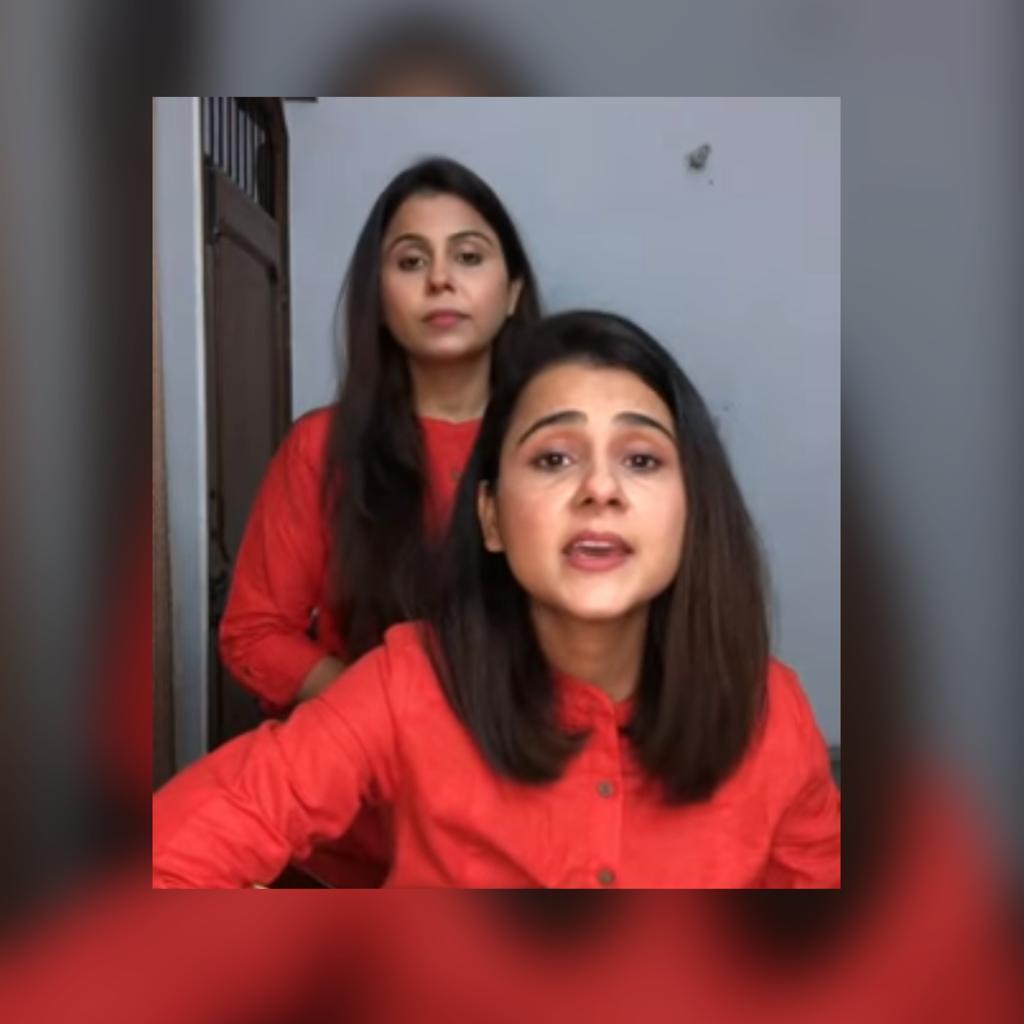
Sun Dilliye Ni Sun Dilliye’, sung by Mohali sisters on farmers’ agitation, gets thousands hits online

‘Sun Dilliye Ni Sun Dilliye’, sung by Mohali sisters on farmers’ agitation, gets thousands hits online

A screen grab of the video.

New Delhi, January 17

Even as “Sun Dilliye Ni Sun Dilliye”, a song written, composed and sung by the two young sisters on the ongoing farmers’ agitation continues to grab thousands of hits on social media from people across the world, the duo maintains that while all the praise has been extremely encouraging, what matters most is that people across barriers have been able to relate to it.

http://

“We never thought that the song (https://www.youtube.com/watch?v=0kEkwK5zS5A) would become so popular. The feedback from everyone has been very kind. However, what is most heartening is the fact that even those involved in the agitation—from leaders to protesters have liked it immensely,” says Simrita.

While both Simrita and Ramneek have post-graduate degrees in Hindustani classical music, the duo admits that they are not essentially lyricists. “But these circumstances were different. We were deeply troubled by the fact that thousands of farmers were out in the open at a time when we were sitting comfortably in our quilts,” says Ramneek.

The duo, residents of Mohali, whose parents come from an agricultural background insist that they (parents) have been very quite encouraging. “They have been extremely supportive and happy that we have been singing in support of the protests. In fact, ever since childhood, they have pushed us to find our place in our chosen field,” Simrita adds.

They feel that the most striking aspect of the movement for them has been the fact that Punjabi mothers have been encouraging their children to go out in this cold and join the protests. “And that says so much — about their spirit and heart,” feels Ramneek.

Feeling that social media has been instrumental in making youngsters’ join the agitation, Simrita adds that considering its deep penetration among youngsters, it has been successful in presenting multiple facets of the agitation. “It has given so many new perspectives unlike the mainstream media which is struck on a single narrative. Most people of our generation are heavy social media users. It has definitely succeeded in bringing about a very different level of awareness and engagement,” stresses Simrita

For them, the agitation has ‘grown’ in different ways in a short while.

“While during the initial days, we mostly saw the elderly protesting, very soon, a large number of youngsters joined the protests. Interestingly, one sees a sizable number of women protesters,” says Ramneek.

Talking about the perfect coordination between them, Simrita smiles that it is not limited only to music. She loves to cook, and “I am a foodie,” she says. — IANS


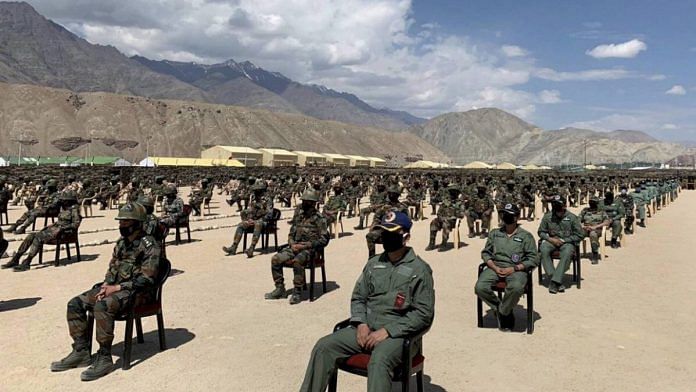
4,000 soldiers posted in Leh to get Covid vaccine starting Saturday

Indian armed forces' personnel during PM Modi's visit to Leh, 3 July | PTI

Representational image of Indian Army personnel in Ladakh | Photo: PTI

New Delhi: Nearly 4,000 Army soldiers posted in Leh, Ladakh, will receive the Covid-19 vaccine Saturday as the inoculation drive kicks off across India. The eventual aim is to ensure that all troops posted on the northern front with China get vaccinated as soon as possible, ThePrint has learnt.

Sources in the defence and security establishment said the vaccine is being given in the Ladakh sector before any other location, and the first batch of vaccinations will be for soldiers deployed in Leh, not in forward locations along the Line of Actual Control.

“The soldiers at the front will remain where they are. To start with, about 4,000 soldiers posted in Leh will be given the vaccines. Priority will be given to the medical team and those who are scheduled for rotation,” a source explained.

“Those who are at forward locations are not going to climb down to take a vaccine and go back. They are in a zone where corona is not the main concern,” the source said.

A second source said this figure of 4,000 is very small compared to the several thousands posted in Ladakh, including those facing off with Chinese troops.

“The eventual plan is to ensure that all in the Ladakh sector get the vaccines but that will be done in time… There are not enough vaccines yet for even the frontline civil health workers. As the production increases, everyone in Ladakh will get vaccinated,” the second source said.


Also read: India’s Covid vaccine drive in numbers: 66 cr doses, 2 lakh vaccinators, 70 walk-in freezers


No major outbreak in Ladakh

Covid-19 has been a major worry for the Army, especially in Ladakh, which is seeing a higher concentration of troops due to the stand-off with China that has been on since last May.

However, sources said there hasn’t been a major outbreak of the novel coronavirus in Ladakh, even though there were several cases among those coming in from leave elsewhere.

“Strict measures were put in place, which enabled us to ensure that there was no major breakout of Covid per se,” a third source said.

The first case of Covid-19 in the Army was reported in Leh on 18 March 2020 — in a 34-year-old jawan whose father had travelled to Iran.

As of September last year, nearly 20,000 military personnel had been infected, with the Army alone reporting over 16,000 cases.

So far, 32 Army soldiers have died due to Covid-19, while the respective numbers for the Air Force and Navy are three and zero.


Also read: Less than 48 hrs to Covid vaccine roll out, but it could be June before you buy it at a store


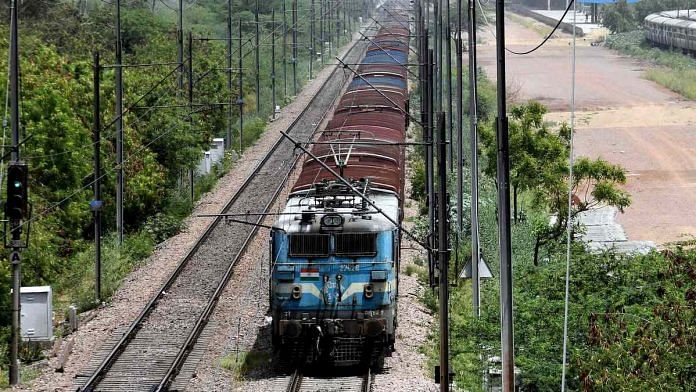
All about Mil Rail — Railways wing whose officer received an Army award for the first time

An Indian Railways goods train in New Delhi | Photo: ANI

An Indian Railways goods train in New Delhi (representational image) | Photo: ANI

New Delhi: In a rare felicitation of a civilian government servant, a Group ‘C’ officer of the Railways — who was closely involved in managing operations in the aftermath of the Pulwama attack in 2019 and the current India-China standoff — was awarded with the Chief of Army Staff Commendation Friday on the Army Day.

According to sources in the Railways, Amresh Kumar Choudhary, 50, is the head of the control room of the military wing of the Railways, which is known as ‘Mil Rail’.

In his capacity, Choudhary has been instrumental in the movement of troops, especially after the Pulwama attack and during the standoff between India and China in Ladakh.

“This is the first time a Group ‘C’ staff of the Railways has been awarded by the Army. In general, for the Army to award a civilian with this honour, the official concerned has to be extraordinary,” said an officer of the Railways.

“This is the top brass of the Army recognising the contribution of the Mil Rail… In the past, only one or two other officers of the Railways have been given such an award, but those were senior officers.”

ThePrint sent queries via WhatsApp to railway ministry spokesperson D.J. Narain regarding this special cell of the Railways, but there was no response until the time of publishing this report.

ThePrint could not contact Choudhary for a comment since Mil Rail is not authorised to speak to the media.


Also read: Railways drafts new rules for use of luxury saloon coaches by IRCTC for tourism


‘All military communication happens through this wing’

Explaining the functions of Mil Rail, the officer quoted above said it is a specialised wing of the Indian Railways, responsible for the movement of jawans, logistics and equipment, including tanks, for all the three armed forces during both peacetime and war or war-like situations.

“All the military communication happens through this wing, and not the Railway Board,” the officer said. “The wing is, in fact, situated in the Sena Bhawan, and not the Rail Bhawan.”

Another officer said the wing looks after the strategic movement for the defence forces. “It has a great role to play in strategic planning.”

The quick movement of men and material, in emergency cases like in Ladakh, happens by air, but the second tier and further deployment is done by rail, followed by roads.

Information about such trains carrying troops or equipment reaches the railway divisions concerned from the Mil Rail in the form of a code, which are subsequently deciphered by the cyber cell of the division.

Post-Pulwama operations 

A joint secretary-rank officer of the Railway’s Traffic Service is posted at Raksha Bhawan, and it is under this officer that the rest of the Mil Rail staff function.

For example, even during the nationwide Covid-19 lockdown, when all passenger trains were suspended by the Indian Railways, the Army arranged for special trains to ferry hundreds of troops from different parts of the country across the Pakistan and China borders.

The military wing also ran multiple trains to get workers from Jharkhand and nearby places to Ladakh so the Border Road Organisation could continue building roads and other infrastructure during the standoff with China.

“There is a control room within the Mil Rail, which stays in constant touch with the ministries of defence, home and all the zonal railways,” the second officer said.

“Even during peacetime, they are on alert. But during warlike situations, the control room activity peaks. Everything has to remain secret since maintaining the secrecy around the movement of troops and equipment is of the highest priority,” he added.

For example, in the aftermath of the Pulwama attack, the cell had to ensure that information regarding movement of trains for transporting troops and heavy equipment such as tanks and artillery guns was strictly kept under wraps, the officer said.

“Special instructions had to be issued saying that there could be calls made in the name of or posing as a senior railway official, defence or intelligence official, and no information pertaining to the movement can be given under any circumstances,” he added.


Also read: All-powerful CEO, end to department culture — How Railways restructure will reshape it


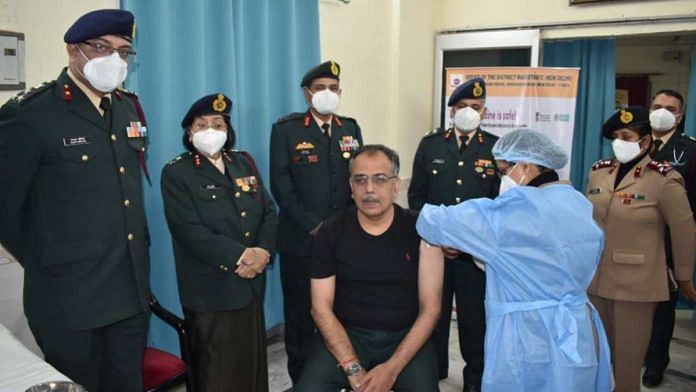
Around 3,500 armed forces’ doctors, health workers receive Covid vaccine on Day One

Medics from armed forces at the Base Hospital in Delhi gets the Covid vaccination | Source: Army

edics from armed forces get Covid vaccination at the Base Hospital in Delhi | Source: Army

New Delhi: About 3,500 armed forces’ doctors and healthcare personnel, including 3,129 from the Army, were administered Covid-19 vaccine across the country as India began its inoculation drive Saturday.

Sources in the defence and security establishment said the first doses were given to the Army medical team, who are at the forefront of the battle against the pandemic.

“A total of 3,129 healthcare workers of the Army were given the Covid vaccine. Today was the first day and the numbers will increase everyday as the supply of the vaccine increases,” a source said.

Asked about the situation in Ladakh, where thousands of Indian troops are in a tense stand-off with China, sources said only healthcare workers were vaccinated Saturday in Leh, Karu, Kargil and Kiari.

They said the first priority for the Covid vaccine were the frontline warriors and then the soldiers posted in Ladakh.

As of now, the Army in Ladakh has received about 4,000 vials of the vaccine out of the nearly 11,000 that were sent to the region as part of the first phase.

Nearly 250 Covid warriors from Navy vaccinated

In Delhi, doctors at the Base Hospital, the largest Covid hospital of the armed forces, were given vaccines, besides those at the Army Research and Referral Hospital.

The Covid warriors of the other two services — Navy and the IAF — also got vaccinated Saturday. The figure for the Navy stood at about 250, while for the IAF, it is yet to be ascertained.

Covid-19 has been a major worry for the Army, especially in Ladakh, which is seeing a higher concentration of troops since last May due to the ongoing stand-off.

However, sources said there hasn’t been a major outbreak of the novel coronavirus in Ladakh, though there were several individual cases.

As of September last year, nearly 20,000 military personnel had been infected, with the Army alone reporting over 16,000 cases.


Also read: Almost 150 Army personnel who came for R-Day, Army Day celebration test Covid positive


Xi Jinping, China’s ‘Chairman of Everything’

With his anti-corruption purges, Xi has made a large number of enemies and he can never be sure where and how they would be plotting against him, as they used to against Mao. Therefore, Xi has to be on constant guard to eliminate any opposition. With concentration of power and decision-making in one person, chances of policy mistakes and misjudgements have increased.

Xi Jinping, China’s ‘Chairman of Everything’

Unbridled power: Defence policymaking was recently transferred from the State Council to the Central Military Commission, led by Xi Jinping.

Yogesh Gupta

Former Ambassador

On December 26, 2020, China’s National People’s Congress approved several amendments in its defence law, rubberstamping President Xi Jinping’s proposal of transferring powers for making the national defence policy to the Central Military Commission (led by Xi) from the State Council (like the Cabinet).

Now the ‘gun’ will be commanded by Xi himself instead of the Chinese Communist Party (CCP). Participation of other Politburo members in defence matters, like in former President Hu Jintao’s time, will now be excluded. With his domination of policymaking role in virtually every area from politics, economics, military, diplomacy, internet, environment and other matters, Xi has been dubbed by his critics as the ‘Chairman of Everything’.

Other news trickling in from Beijing — anti-trust actions against industrialist Jack Ma’s Alibaba group, including the cancellation of its biggest IPO due to Ma’s dislike of Xi’s policies and arrest of more than 50 opposition lawmakers and activists in Hong Kong recently for alleged violations of the national security law — suggest a further hardening of the Chairman’s authoritarian posture.

Even earlier, Xi had secured unbridled powers by removing the two-term limit on staying in power, getting himself anointed as the ‘core’ of the CCP and his thoughts enshrined in the party’s constitution, like Mao. Many observers say that under Xi, China has been transformed from a one-party rule to a one-man one.

Despite China’s economy doing so well, why has Xi slowed down the market reforms and aggrandised all powers in him? Why is he so insecure to put millions of Uighurs in ‘concentration camps’ in Xinjiang?

Prof Orville Schell and other Sinologists believe that the CCP remains deeply insecure (and leaders like Mao and Xi more so), as its leaders are aware of the party’s “historical liabilities” and many wrongs it has committed against the Chinese people and foreigners. Fang Lizhi, a Chinese astrophysicist, wrote in 1990 that the CCP’s aim is to force the Chinese society to ‘forget its true history’. Totalitarian controls are necessary to ensure that the Chinese people don’t know the real face and ‘excesses’ of the party.

For instance, about 60 million Chinese died during the ‘Great Leap Forward’ and the Cultural Revolution in the 1960s and early 1970s as Mao experimented with his grotesque ideas about collectivisation and liquidated his critics. Similarly, thousands died when Deng Xiaoping ordered tanks and troops armed with assault rifles to fire at the pro-democracy demonstrators in the Tiananmen Square in April, 1989.

In Xi Jinping’s anti-corruption campaign since 2012, about 1.5 million from the party, military, public companies and others have been killed, imprisoned or removed from their jobs, without a fair legal process and many for political reasons.

Xi is also more insecure because unlike Mao and Deng, he does not have support at the grassroots among the masses, party cadres or the armed forces and needs institutional props to augment his power. Xi was selected in 2012 for his pliability as a compromise candidate between the Shanghai faction led by Jiang Zemin and the Youth League led by Hu Jintao; party elders and other senior leaders have not liked how Xi has obliterated the reforms and intra-party democracy introduced by Deng Xiaoping and usurped all powers to himself.

With his anti-corruption and other purges, Xi has made a large number of enemies and he can never be sure where and how his enemies would be plotting against him, as they used to against Mao (who survived an assassination attempt). Therefore, Xi has to be on constant guard to eliminate any opposition.

With concentration of power and decision-making in one person, chances of policy mistakes and misjudgements have increased. It was evident in January 2020 when the authorities delayed taking action to contain the spread of Covid-19 due to Xi’s unavailability.

Certain policies being followed by Xi — discontinuation of market reforms, increasing state control of economy and huge expenditures on defence — are at sharp variance with those of his predecessors; they are not liked by many people and will slow down China’s economic growth and hurt the welfare of its people.

Xi’s great power ambition, rapid military build-up and aggressive pursuit of claims on disputed territories has worsened China’s relations with the US, India, Japan, Vietnam, Australia and Taiwan. Though the second biggest economy, China is still a middle-income country with an annual per capita income of less than $11,000. It will need peace, stability and a supportive international environment for further growth.

China is changing, as many people have become rich, empowered and aspirational; many are objecting to the total suppression of dissent, lack of participation and the direction in which country is headed. Xi is making innovative uses of new technologies, such as artificial intelligence and others to firewall China from any adverse information, monitor the conduct of its people and punish them for voicing dissent.

From the dissolution of the Soviet Union, Xi has learnt that political opening is a threat to the continuation of the CCP’s rule. He believes that market reforms are weakening the party’s control on power and its current policies aimed at state control and integration of resources would achieve his ambition of transforming China into a dominant global power in due course.

History indicates that abandoning of collective decision-making and usurping of all power in one person lead to an increase of internal power struggles, as factions would compete for the powers shared earlier among them. Also, political leaders who sought a lifelong rule have caused untold miseries to their own and other people and often met an unsavoury end, leaving poor legacies.

China has become too powerful to be coerced by any external powers for amending its domestic behaviour. Political changes in China like the former Soviet Union would occur domestically and be led by its own people. The CCP would be celebrating its 100 years of history this year; how long Xi and the party would continue in power, if and when it would have its own ‘Gorbachev moment’ and where it would lead China is anyone’s guess.


Eventful first year for CDS, challenges remain

Eventful first year for CDS, challenges remain

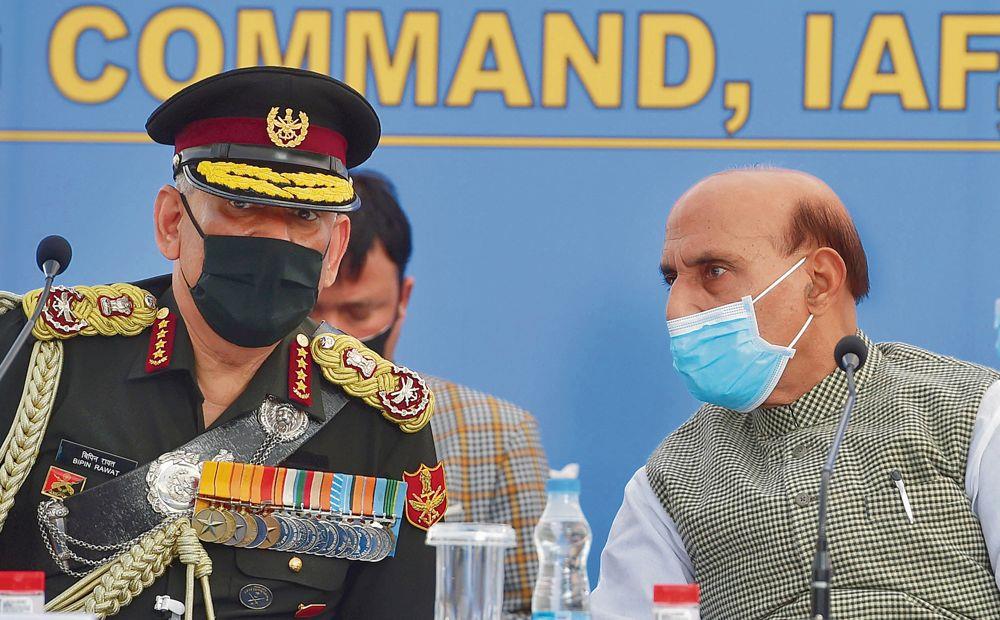
Bugbears: The three areas of prime concern in the charter of General Rawat (left) relate to jointry, acquisitions and administration. PTI

Gp Capt Murli Menon (Retd)

Defence analyst

Two decades after the Kargil Review Committee (KRC) and the consequent Group of Ministers recommended the creation of the Chief of Defence Staff (CDS), and eight years after the Naresh Chandra Committee recommended a permanent chairman of the chiefs of staff committee, the Indian government instituted the first CDS in January 2020.

Tasked essentially with promoting inter-service jointry and giving much-needed fillip to defence modernisation through timely and optimal defence acquisitions, the first incumbent to the post, General Bipin Rawat, has not given a lackadaisical performance, however contentious his initiatives have turned out to be so far.

His latest desire to win a war for India by employing indigenous weaponry, though laudable, is easier said than done, given the large gap that exists between the state-of-the-art and homegrown capabilities. Serious limitations exist in our indigenous defence capability, more so in the arena of advanced avionics, aerial weaponry and other cutting-edge technologies, such as aircraft carriers and main battle tanks.

The fact that the government chose to have a ‘first among equals’ four-star CDS rather than a five-star one as recommended by the KRC, would in the long term impinge on the effectiveness of the new dispensation.

Be that as it may, perhaps it is premature to judge whether the CDS idea was a good one or not. Three areas of prime concern comprising his charter will be analysed herein: jointry, acquisitions and administration.

Jointry has been a bugbear for most modern militaries, with single service rivalries ruling the roost generally. But this is a difficult tree to bark up, which a mere joint doctrine manual cannot deliver. The career profiles of officers and men have to build in frequent cross attachments to other sister services and mandatory ‘maroon’ tenures for the leadership for career progression.

Understanding the operating culture and peculiarities of other services is one challenge and ‘unified thinking’, more importantly, is the crucial bit.

The CDS needs to initiate policy moves in this respect to gradually build up jointmanship over time. We have a big advantage by way of initial joint training at the National Defence Academy, but a lot needs to be done to enhance tri-service jointry and consequent combat-effectiveness.

Realistic international exercises would help, no doubt, but the ultimate challenge will be to evolve as an Integrated Defence Force, wherein meaningful savings in deployment of combat assets and added combat efficiency could be achieved. Ideas of theaterisation, such as the Air Defence Command and Maritime Theatre Command, mooted by the CDS are perhaps a bit ahead of their time, given the situation in the defence forces as of now.

On defence acquisitions, whilst Make in India is a good guiding principle, practicality in technology exploitation has to be kept in mind. A classic example would be that of the Kaveri engine for the LCA, which the Gas Turbine Research Establishment (GTRE) has been struggling to indigenise, but to little avail. Hence, the recourse to the US GE 404/414 engines. There are similar handicaps for helicopter, ship and tank engines and other areas, where import becomes inescapable.

The story is the same for most high-tech weaponry for all three services, such as artillery shells, aerial weaponry like the Spice series bombs and naval anti-ship and anti-aircraft weaponry. The recent government decision to grant Rs 48,000 crore for 83 Tejas jets is another doubtful starter in indigenisation, with a proven prototype of the machine not yet being available!

The third contentious policy matter initiated recently by the Department of Military Affairs under the aegis of the CDS is the proposed modification in colour service and pension criteria. Whilst increasing the retirement age to 60 may be attractive to a section of the uniformed fraternity, it may not really assist in bringing down the defence pension Bill, which at 24 per cent of the defence budget — a whopping Rs 1.12 lakh crore — is worrisome, no doubt.

But let us not forget that the defence budget is a mere 1.15 per cent of the Gross Domestic Product, and not 3 per cent, as is expected to be, as per the recommendations of a Parliamentary Committee on Defence. Were that to be realised, the pension Bill would be 8.86 per cent of the defence budget.

Also, some of the already instituted measures, such as permanency to the short service commission, OROP already sanctioned etc. would find the DMA struggling to control its inflating pension Bill, a virtual drag on modernisation and general funding.

More innovative measures by way of lateral mobility, compulsory military service and reservists need to be put in place to achieve the desired tooth-to-tail ratio and pyramidical age and career profiles demanded by the military. Getting a handle on the often infructuous Defence Industrial Complex under the Defence Research and Development Organisation (DRDO) and meaningful indigenisation through privatisation are other areas the CDS needs to address to improve the overall combat efficiency and cutting of the flab.

The pension of defence civilians is another substantial loadstone that the CDS needs to do something about. Also, increasing the years of service to earn pension (effectively suggesting a reduction in pension to 50 per cent for service up to 35 years) may not go down well with the new entrants to the defence services, even if applied prospectively.

In any event, the malaise of a bloated manpower situation in the military has been the result of flagrant flouting of norms and uncalled-for beefing up of manpower requirements at the stage of government approval over the years.

To rectify this situation, drastic steps for manpower rationalisation would be called for.


Ex-servicemen: Don’t disrupt proceedings

Chandigarh: A number of retired defence officers today urged the farmers agitating against the three farm laws not to disrupt any Republic Day functions on January 26. The officers, led by Lieut Gen DP Vats and Lieut Gen Vishnu Kant Chaturvedi, were reacting to news reports that the agitating farmers were planning to disrupt Republic Day functions to be addressed by the state government functionaries. They asserted that since the Republic Day celebrations symbolised valour and honour of the armed forces, the farmers should desist from disrupting the function. tns


Rehearsal for Jan 26 event tomorrow

Rehearsal for Jan 26 event tomorrow

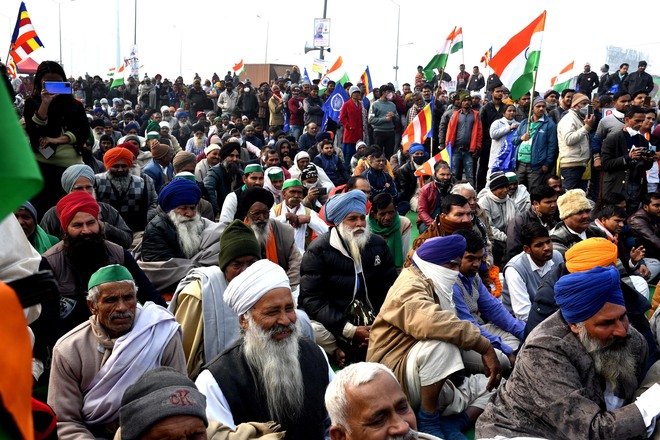
armers protest at the Ghazipur border on Sunday. Manas Ranjan Bhui

Tribune News Service

Jhajjar, January 17

Protesting farmers and retired Army personnel will hold a rehearsal for the proposed the Republic Day tractor march at the Tikri border on January 19. ‘Women’s Farmer Day’ will also be observed that day.

Representatives of Farmers’ Coordination Committee, Haryana, today told the media that their protest would continue till the Central Government repealed the three farm laws.

“It will be for the first time that Women’s Farmer Day will be observed across the nation on January 19. On the occasion, women farmers will lead the dharna at all protest sites in Punjab, Haryana, Rajasthan and Uttar Pradesh. Those who are unable to join us will assemble in their areas to mark the occasion,” said Navdeep Singh, a farmer leader.

Prahlad Singh Bharukhera said farmers and ex-servicemen would carry out a rehearsal for the proposed Delhi march at the Tikri border on January 19. “The road map for the march will soon be decided by the Kisan Sanyukt Morcha,” he added. — TNS