Sanjha Morcha

What’s New

Click the heading to open detailed news

Current Events :

web counter

Print Media Reproduced Defence Related News

‘Mahapanchayat’ at Muzzaffarnagar decides Ghazipur agitation will continue A possible wrong move by BJP turns a possible retreat by Rakesh Tikait into strengthening his hold at Ghazipur

‘Mahapanchayat’ at Muzzaffarnagar decides Ghazipur agitation will continue

Farmers during kisan mahapanchayat against the new farm laws, in Muzaffarnagar on Friday. PTI

Vibha Sharma

Tribune News Service

New Delhi, January 29

BKU (Tikait) spokesperson Rakesh Tikait’s tears appear to have done the trick. Not only have the number of protesters at Ghazipur increased with farmers from Uttar Pradesh and neighbouring Haryana joining in, support is also growing at Singhu and Tikri despite tension and clashes.

While throughout the night on Thursday meetings in Tikait’s support were held in several villages in Haryana and Uttar Pradesh, on Friday the ‘mahapanchayat’ in Muzzafarnagar  decided that Ghazipur agitation would continue.

BKU president Naresh Tikat, who had earlier called off the agitation at Ghazipur, asked supporters to go and  support the protests at the Delhi-UP border.

After his (Naresh Tikat’s) earlier announcement there were visible signs of  thinning of protests at Ghazipur. However sources say even though an “agreement” was reached with the Tikait brothers that the protest site will be vacated, the increase in security forces and presence of Loni MLA Nand Kishore Gujjar and his supporters “vitiated the atmosphere”

Asserting that he will not surrender and will also call more people to join the protest if needed, Rakesh Tikait on Thursday broke down saying that “he would rather commit suicide than leave and end the protest against the farm laws”.

As Rakesh Tikait declared he would continue the protest at the Ghazipur border and not vacate till talks with the government were held, Naresh Tikait quickly called an emergency meeting and appealed to supporters to reach Ghaziput and scheduled a mahapachayat in Muzzafarnagar.

Apparently, Naresh Tikait also said that it was “their mistake” to support BJP candidate, Union Minister Sanjiv Balyan, against RLD chief Ajit Singh in the last Lok Sabha elections.

BKU founder, late Mahendra Singh Tikait, is revered by farmers as “second messiah” after late Prime Minister Chaudhary Charan Singh in the western UP region.

Sources say optics of Rakesh Tikait, a jat/kisan leader, becoming sentimental and breaking down was enough to stir emotions among his community who “collectively felt humiliated”.

“Rakesh Tikait lost badly when he contested the polls a few years back. His support base is  limited, his father is the one who commanded the following. But then ‘Jats’ stand by each-other in ‘dukh’ (pain). It is a typical characteristic of the community which the BJP misunderstood and turned a possible retreat into a prestige issue for them.

“The basic sentiment now is that ‘BJP ne dukhi kar diya kyon ki wo Jat hai’ ( BJP created problems for him because Rakesh Tikait is a Jat)”.


Defiant Tikait refuses to surrender, Ghazipur tense

Defiant Tikait refuses to surrender, Ghazipur tense

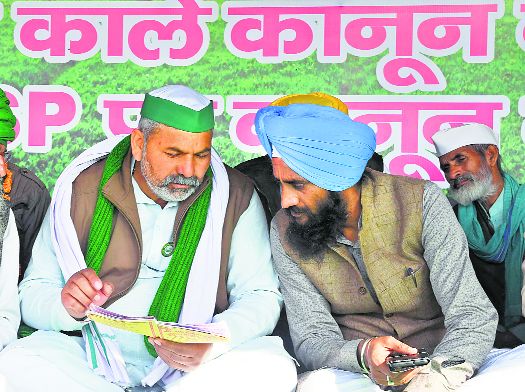
Farmers’ leaders Rakesh Tikait (L) and Jagtar Singh Bajwa at the Ghazipur protest site on Thursday. Tribune photo

Vinayak Padmadeo

Tribune News Service

Ghazipur, January 28

Tension escalated at Ghazipur bordering Delhi today with BKU national spokesperson Rakesh Tikait defying orders by the local administration to vacate the protest site and the Congress and RLD backing the farm union.

Tikait, among 37 leaders booked by Delhi Police for the Republic Day incidents, alleged there was a plot to “attack and kill” farmers and refused to budge despite Ghaziabad DM’s orders to clear the site by night.

“Police officials are here to take us away and a BJP MLA is waiting with supporters to attack and kill farmers,” Tikait claimed. “Anyone from the BJP will be taken hostage. I will hang myself but won’t call off protests until the farm laws are repealed,” he warned as police deployment at the site increased. Congress leader Rahul Gandhi and RLD chief Ajit Singh backed Tikait.


Tharoor, Sardesai booked for sedition

The UP Police have booked Congress’ Shashi Tharoor and six scribes, including Rajdeep Sardesai and Mrinal Pande, for sedition by way of ‘provocative’ posts.


To reclaim stir, unions go Gandhi way Get tough with outfits involved in Republic Day ‘sabotage’ bid; seek answers

To reclaim stir, unions go Gandhi way

Farm union leaders address protesters during the ongoing stir near Delhi on Thursday. PTI

Tribune News Service
Chandigarh, January 28

Having been “sabotaged” briefly, farmer leaders have gone back to the Gandhian way to reclaim the movement from extremist elements.

From suspending two farmer organisations, which allegedly connived with extremist groups, to sitting on hunger strike and holding ‘sadbhavna’ (goodwill) marches at Singhu, there is an attempt to dissociate the movement from the January 26 events in the national capital.

‘Sadbhavna’ rally to show unity

  • Amid talk of differences between Punjab and Haryana farm outfits, unions take out a ‘sadbhavna’ rally at Singhuin display of unity
  • Unions have announced a hunger strike on the martyrdom day of Mahatma Gandhi (January 30)
  • BKU (Krantikari) and BKU (Doaba) have been suspended from the platform of 32 organisations over R-Day ‘sabotage’ bid

On Thursday, members of the farmer organisations, holding the Tricolour and union flags, took out a “sadbhavna” rally at Singhu. Dr Darshan Pal, president, Krantikari Kisan Union, said there were some attempts at creating differences between members from Punjab and Haryana. “So we instantly planned this rally to tell our brothers from Haryana that we are united,” he said.

During the rally, senior farmer leader Balbir Singh Rajewal said they wanted to tell the countrymen the farmers were bigger nationalists than the BJP. “We have great respect for our national flag,” he said.

The vehicles in the rally bore the national flag and photographs of Bhagat Singh as slogans of ‘Long live unity of Punjab and Haryana’ rent the air.

Apart from the ‘sadbhavna’ march, the unions have announced a hunger strike on the martyrdom day of Mahatma Gandhi (January 30). “We want to tell people we were equally pained at the hooliganism that unfolded at the Red Fort on January 26,” said Rajinder Singh Deep Singhwala, vice-president of the Kirti Kisan Union.

Sources say the unions have also acted tough against organisations that allegedly became part of the “sabotage” attempt allegedly perpetrated by Deep Sidhu, Lakha Sidhana, Students For Society and Democratic Students’ Organisation on January 26.

The sources say the BKU (Krantikari) and BKU (Doaba) have been suspended from the platform of 32 farmer organisations. They have also been asked to give an explanation before a five-member committee, to be headed by Balbir Singh Rajewal, a senior farmer leader.

Till their suspension is revoked, the organisations can neither attend any meeting nor can their speakers address from

the forum stage.


Tractor parade violence: Case registered under UAPA to probe conspiracy angle Preliminary assessment suggests a coordinated plan to break the agreement reached between Delhi Police and leaders of farmers’ unions, says police

Tractor parade violence: Case registered under UAPA to probe conspiracy angle

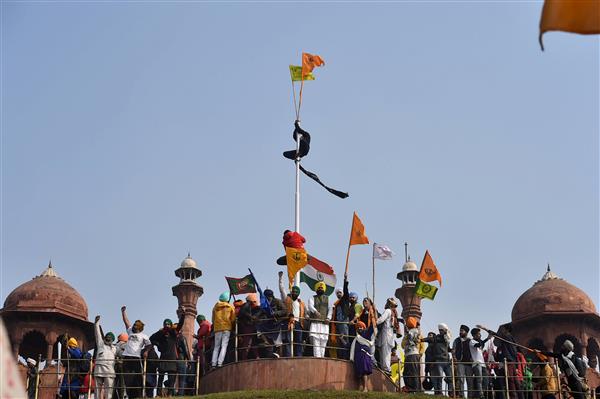
Farmers hoist flags at the Red Fort during the Kisan Gantantra Parade amid the 72nd Republic Day celebrations, in New Delhi on January 26, 2021. PTI

Tribune News Service

New Delhi, January 28

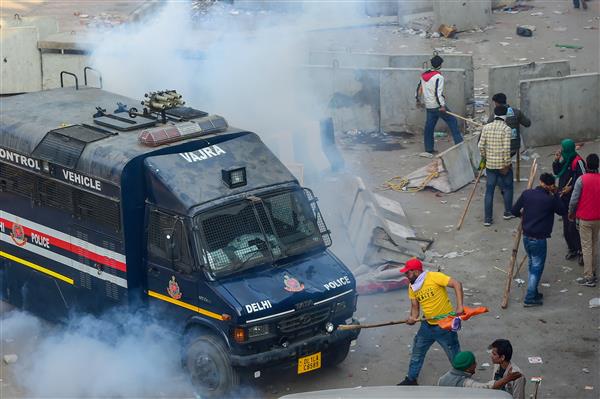
The Special Cell of Delhi Police has registered a case under stringent anti-terror law Unlawful Activities (Prevention) Act and sections of Indian Penal Code dealing with sedition to probe the criminal conspiracy angle to the whole gamut of events that led to violence during farmers’ tractor parade on the Republic Day.

The police in an official release said, “The role of conduct of organisations and individuals based in India and as well as those out of the country is being probed under the UAPA and relevant sections of the IPC dealing with sedition by the Special Cell of the police.”

“A preliminary assessment suggests there was a pre-conceived and well-coordinated plan to break the agreement reached between the Delhi Police and the leaders of farmers’ organisations, to indulge in violent confrontation with the security forces, to breach the sanctity of iconic and historical structures/monuments and to create an international embarrassment for the government on the occasion of Republic Day,” read the police release.

This means that most of the farmer leaders, including Yogendra Yadav, Medha Patkar, Rakesh Tikait and Darshan Pal, named in the FIRs will come within the ambit of the Special Cell’s probe under the UAPA and sections of the IPC relating to sedition, said a senior police official.

With this the role of banned organisation Sikhs for Justice (SFJ), which has been advocating ‘Referendum-2020’, a movement demanding a separate Sikh state, has also been brought within the ambit of probe, said the official.

A separate case under the UAPA had already been registered against the SFJ on January 8, 2021 by the Special Cell following information from intelligence agencies that the banned outfit was trying to infiltrate the farmers’ protests and had announced a reward of Rs 2.5 lakh to anyone who hoisted the Khalistan flag in New Delhi, said the official.

The police official also claimed that 1,100 Pakistan-based Twitter handles tried to disrupt the farmers’ Republic Day tractor march.


We will not be intimidated by notices sent by Delhi Police: Samkuyta Kisan Morcha SKM had condemned the UP police’s action in cutting off basic facilities for farmers at Ghazipur border

We will not be intimidated by notices sent by Delhi Police: Samkuyta Kisan Morcha

Yogendra Yadav (speaking), Rakesh Tikait (2nd R) and other leaders of Samyukta Kisan Morcha during a press conference regarding the violence in their January 26 tractor march, at Singhu border in New Delhi. PTI Photo

Tribune News Service

New Delhi, January 28

The Samyukta Kisan Morcha on Thursday condemned the action by the Uttar Pradesh police in cutting off basic facilities for the protesting farmers at Ghazipur, and its attempts to evict the farmers forcibly.

Leaders namely Rakesh Tikait, Tajinder Virk and KK Ragesh resisted the police behaviour.

Farmer leader Darshan Pal said the RSS-BJP-sponsored people came to the Ghazipur protest site and the leaders explained to the farmers to remain peaceful against the government connivance to sabotage the farmers’ struggle.

The union also said it strongly condemned the eviction of protestors at Palwal, where, the union alleges, the police instigated locals and flared up divisive sentiments.

Issuing a statement on cutting off basic facilities at Ghazipur border, Samyukta Kisan Morcha said: “The government’s efforts to discredit the ongoing farmers’ movement are continuing. The nervousness of the government is evident from how it is installing security forces on all borders. The government wants to show this movement as ‘violent’ again and again but the Samyuktaa Kisan Morcha has a unanimous approach to ensure that the movement will remain peaceful.”

SKM stated that it would not be intimidated by the notices being sent by the Delhi Police and would respond to the same.

“The BJP government, along with its state governments, is trying its best to put an end to this movement by blaming the SKM for the events of January 26, and it is not acceptable.”

Today, a ‘Sadbhavana Yatra’ was taken out by farmer union leaders at Singhu Border against the divisive forces trying to divide the protesting farmers along religious and state lines.

The yatra, which covered about 16 km at the Singhu Border protest site, with various leaders namely Balbir Singh Rajewal, Jagjeet Singh Dallewal, Darshan Pal, Gurnam Singh Chaduni, Jagmohan Singh, Jangbir Singh, Rajinder Singh, Amarjeet Singh and others, also put out a message to all protesting farmers that there was no need to feel intimidated by the increased police and security forces’ presence.

The union insisted that instead of taking action against the real criminals, the police are instead arresting farmers who were protesting peacefully.


15 more detained in connection with Republic Day violence in Delhi Nearly 400 police personnel were injured in the clashes with the protesters

15 more detained in connection with Republic Day violence in Delhi

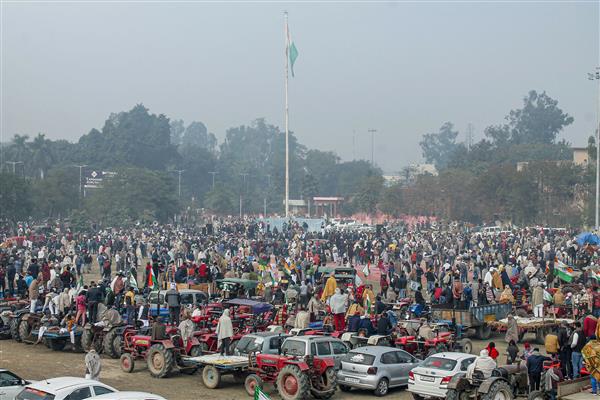
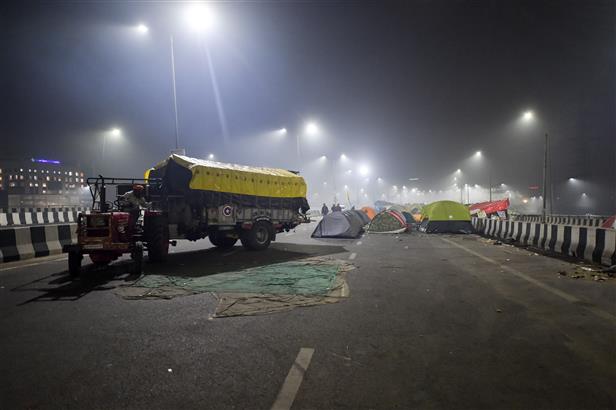
The site of farmers’ ongoing protest against the new farm laws at Delhi-Ghazipur border, near New Delhi. PTI

New Delhi, January 28

The Delhi Police on Thursday detained 15 more people for their suspected involvement in the violence during the farmers’ tractor parade in the national capital on January 26, officials said.

Nearly 30 farmers who were camping at DDA Ground in Burari were moved towards Singhu border to clear the site, they said.

Thousands of farmers protesting against the Centre’s new farm laws had clashed with the police during the tractor rally called by farmer unions to highlight their demand for the repeal of the legislations.

Nearly 400 police personnel were injured in the clashes with the protesters, according to officials.

“Around 15 people have been detained for their suspected involvement in the violence on Republic Day and for violating laws,” Additional Delhi Police PRO Anil Mittal said.

Nearly 30 farmers who were protesting at DDA Ground in Burari have been moved towards Singhu border, he said.

The ground will be cleared soon, the police said.

Earlier in the day, the Delhi Police said its Special Cell will investigate the “conspiracy” and “criminal designs” behind the violence on Republic Day.

As of Thursday, the Delhi Police had filed 25 criminal cases, arrested 19 people and detained 200 in connection with the violence.

Many of the protesters, driving tractors, reached the Red Fort on January 26 and entered the monument. Some protesters even hoisted religious flags on its domes and the flagstaff at the ramparts. — PTI


At Tikri & Singhu, locals pull away, want stir sites vacated Villages to hold panchayat today if demand not met

At Tikri & Singhu, locals pull away, want stir sites vacated

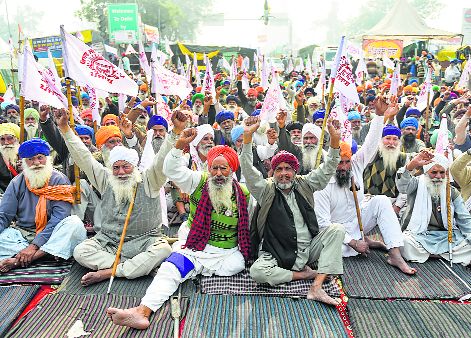
Farmers raise slogans at a dharna in Singhu on Thursday. PTI

Geetanjali Gayatri

Tribune News Service

Chandigarh, January 28

After the violence that rocked the Capital on Republic Day, it may be an uphill task for farm leaders to keep the agitation against the Centre’s farm laws on course as the first signs of resistance to their sit-ins have begun to surface in Haryana.

While the farm leaders are out to restrategise, locals from villages around Singhu and Tikri have started voicing their concern about the adverse impact of the stir on their lives and livelihood, keeping the police on their toes.

Protesting close to the main site of the agitation at Singhu, villagers of Manoli, Aterna and Sersa among others demanded that the farmers vacate the border. Stating that the traffic flow must resume between Delhi and Haryana, the residents announced the decision to hold a panchayat tomorrow to decide the future course of action if their demand was not met. In Rewari, local petrol pump dealers along with residents of some villages held a meeting on the Delhi-Jaipur highway bordering Shahjahanpur to demand that the protesters should clear the highway. They also threatened to remove the barricades if the farmers failed to do so, giving the local administration some anxious moments. They claimed that the dharna was adversely affecting the sale of fuel and resulted in sanitation issues and other problems for the nearby villages.

In Yamunanagar, a group of miscreants threw stones at a religious place and damaged several vehicles late last night during a protest march by the locals against the incidents of violence in Delhi on Republic Day. A case has been registered.

Sources said police presence had been beefed up in view of the voices being raised against the closure of borders to avert any confrontation between the farmers and those protesting their presence.

Till January 26, villagers around the Singhu and Tikri borders were extending all sorts of services to the protesting farmers, even ensuring a regular flow of supplies.


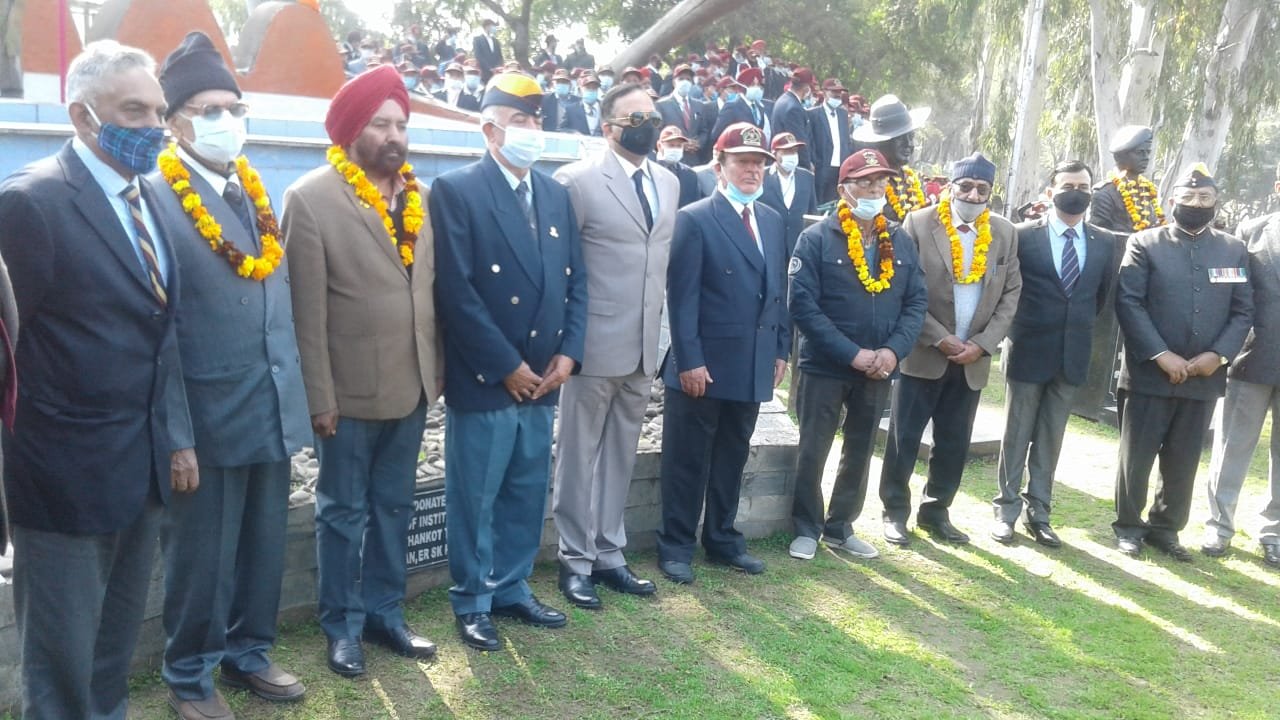
PATHANKOT GOG/Ex-SERVICEMEN SETS AN PRECEDENCE :NEVER BEFORE ON REPUBLIC DAY

GOG/EX-SERVICEMEN Lead by Brig Prahalad ,Distt Heead GOG cum  Chairman Sanjha Morcha  set a precedence to honour the Gallantry awardees at Pathankot . The other ESM organisations also should follow the example set in future in their respective locations/stations instead of gluing to the TV, in true spirit of faujis.

1. 26 Jan was celebrated by GsOG at Pathankot today in a unique manners.

MOTOR CYCLE RALLY
2. GoGs from six blocks(Six column of 30-35 MC each) converged at Tank Chowk Pathankot on Motorcycle/Scooters at 1145h. (Sort of Parade/rally on two wheels from their respective areas upto Tk Chowk.)

FLORAL TRIBUTES TO One PVC, Three Ashok Chakra,Three MVC  GALLANTRY AWARDEES AND HONORS FAMILY MEMBERS TO 

3. Floral tribute was paid to

(A) Capt GS Salaria PVC,
(B) Capt Arun Jasrotia AC,
(C ) Lt Triveni Singh AC,
(D) Lt Navdeep Singh AC,
(E) Gen AS Pathania MVC,MC,
(F) Lt Col Kaman Singh Pathania MVC and
(G) NK Dian Singh MVC.
4. Parents of three Ashok Chakra and Son of MVC all Veteran Officers were also invited and given due honor and respect.Cdr 21 Sub Area was also invited
Warm Regards

Brig Prahlad Singh

ESM with garlands are parents of Ashok Chakra and nephew of PVC.Offr without cap on extream left is son of MVC

PHOTO-2021-01-26-14-07-45_1

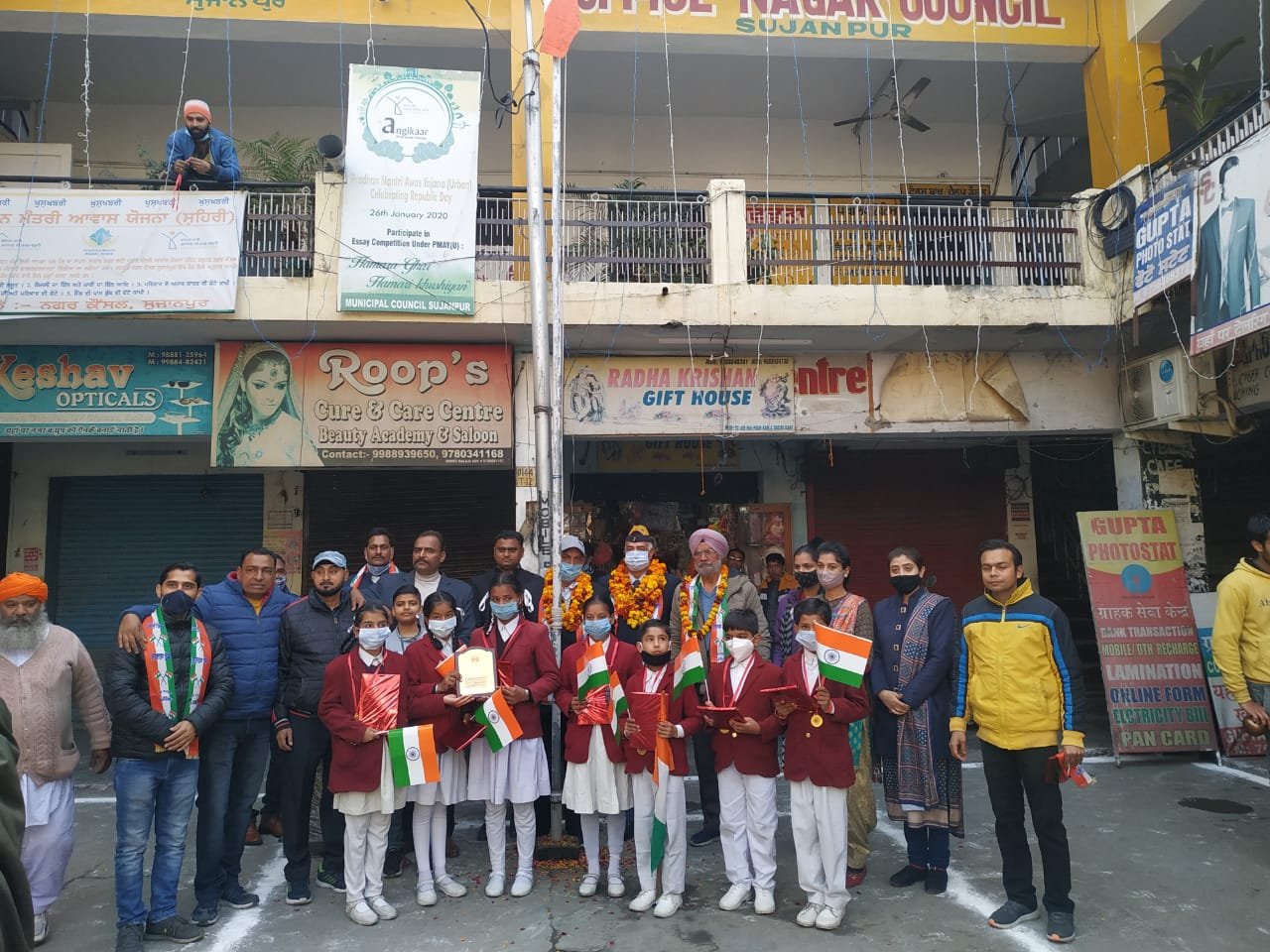
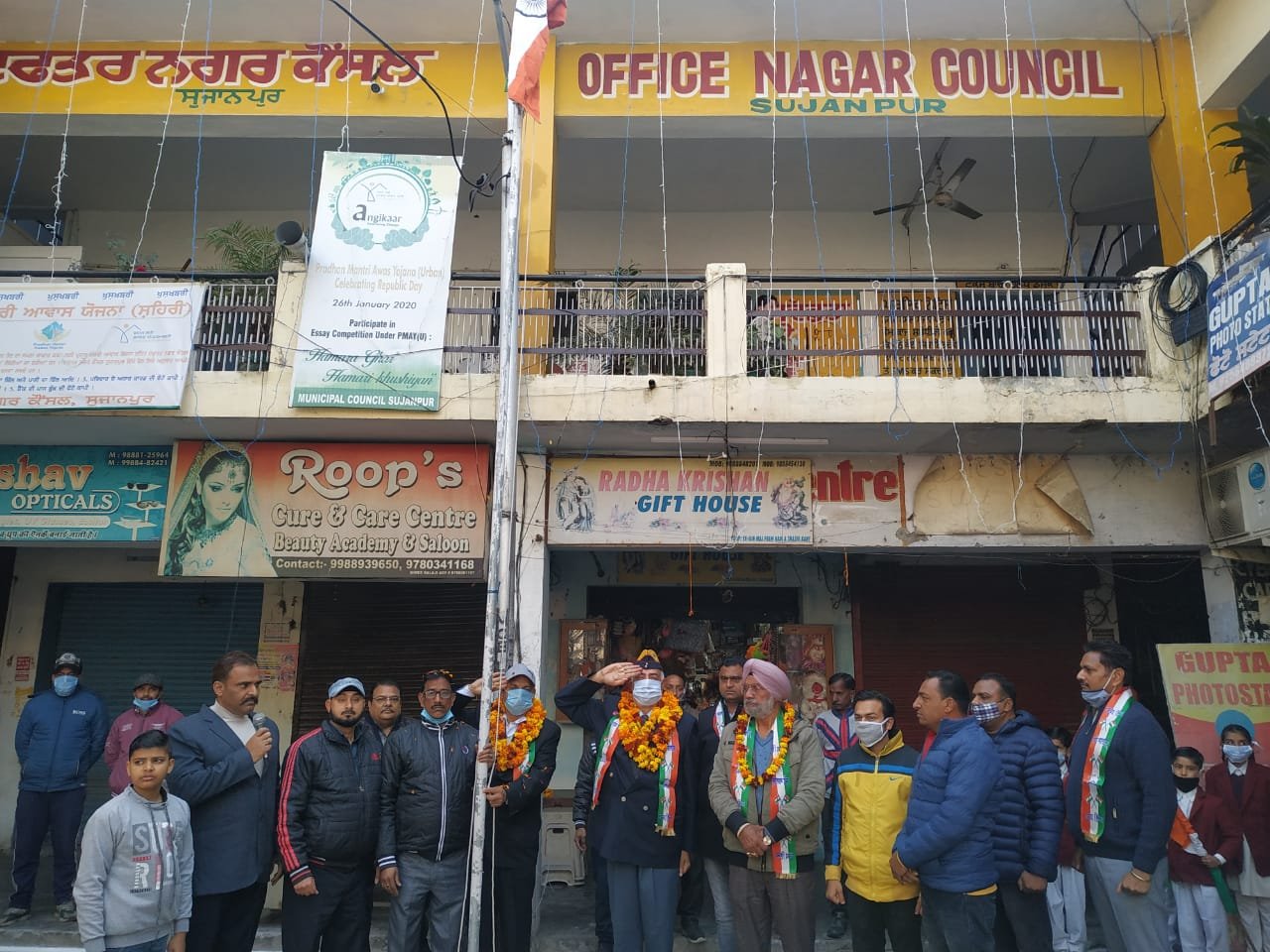
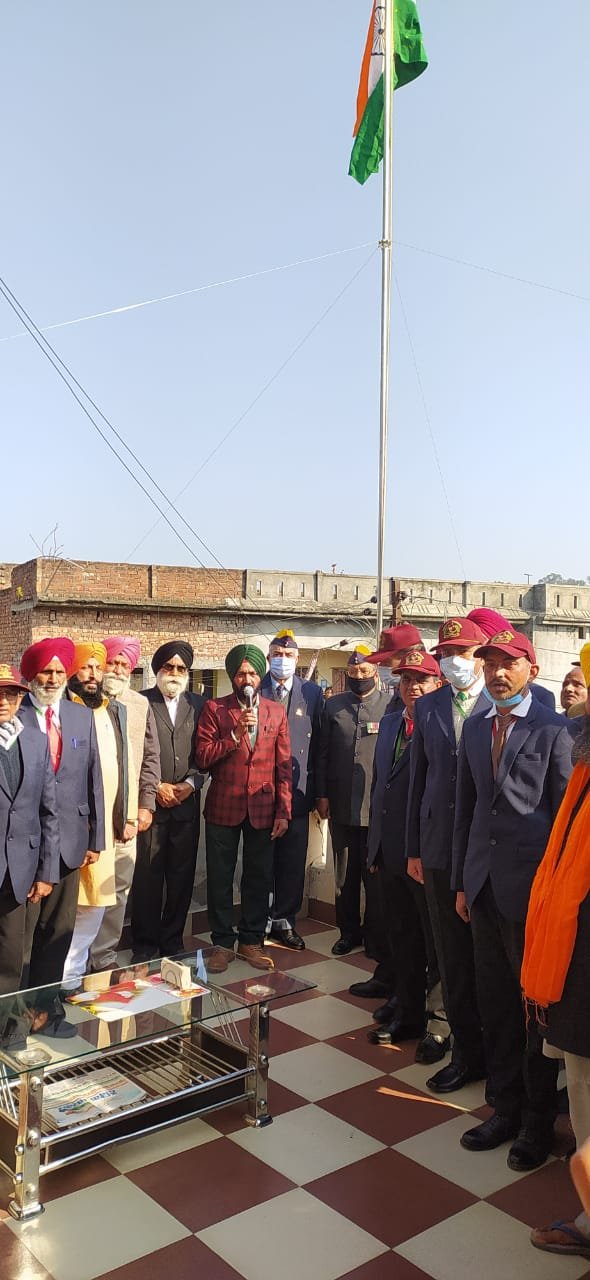
ALSO Unfurling National Flag at Municipal Council Sujanpur Today


PHOTO-2021-01-26-17-26-12 PHOTO-2021-01-26-17-26-13 PHOTO-2021-01-26-17-26-32


Farmer leaders Rajewal, Ugrahan, Darshan Pal, Yogendra Yadav, Charuni named in FIRs for Delhi violence Violence during tractor rally: 37 farmer leaders named in FIR

Farmer leaders Rajewal, Ugrahan, Darshan Pal, Yogendra Yadav, Charuni named in FIRs for Delhi violence

The violence during the tractor parade in New Delhi on Tuesday. PTI file”””

Tribune News Service
New Delhi, January 27

The Delhi Police has named 37 farmer leaders, including Darshan Pal and Yogendra Yadav, in an FIR in connection with the violence that took place during a tractor rally by farmers, officials said on Wednesday.

http://

Police said they will investigate their role.

Police have registered 22 FIRs so far in connection with the violence that left more than 300 policemen injured. A total of 200 people have been detained.

Police sources had also named Gurnam Charuni, Rajinder Singh, Balbir Singh Rajewal, Buta Singh Burjgil, Joginder Singh Ugrahan, and Satnam Pannu as being named in the FIRs earlier in the day.

Sources had said then that the FIR also mentions BKU spokesperson Rakesh Tikait.

The FIR mentions multiple IPC sections, including 307 (attempt to murder), 147 (punishment for rioting) and 353 (assault/criminal force to deter public servant from discharge of his duty), and 120B (Punishment of criminal conspiracy).

Police sources had said earlier in the day that one of the FIRs, registered in Nangloi station, names at least 40 so-called ‘farmer leaders’, who were part of the negotiations with the government. Yogendra Yadav’s name features in that FIR too.

The national capital witnessed clashes between protesters and police during the tractor parade by farmers to press their demand of repealing three new agriculture laws.


Also read:

Red Fort video surfaces, farmers chase away Deep Sidhu after saffron flag is hoisted

Punjab should boycott traitors Deep Sidhu, Satnam Pannu, Sarwan Pandher: Rajewal

Have no link with Deep Sidhu, says Sunny Deol

No fresh summons, NIA sent notice to Deep Sidhu in SFJ case last week: Officials


Sources had said then that an FIR in the Red Fort case includes charges under vandalism and robbery. The charges of robbery were included because some of the rioters had snatched away teargas shells from the police and entered the monument.

The police officials had said the case against the violence at Red Fort would be investigated by the Crime Branch.— With PTI


Spirit of the Republic needs to be revived

The Republic Day parade does not enthuse me anymore. Instead, I feel the pain of seeing the death of the ideals that once enchanted our freedom struggle. Possibly, the road to emancipation lies in the art of creative rebelliousness. Its spark can be seen in people’s movements. In recent times, the farmers have aroused this hope. Hence, their tractor rally might somehow devalue the spectacle we are otherwise used to.

Spirit of the Republic needs to be revived

Mere spectacle: Should we expect something more from our nation beyond the showcasing of techno-military might and cultural diversity? PTI

Avijit Pathak

Sociologist

These days, whenever I watch the Republic Day parade, I ask myself a pertinent question: Should we expect something more from our nation, beyond the spectacle that demonstrates the techno-military power of the state, or the sanitised/museumised version of India’s cultural diversity? Or is it that we have almost forgotten to believe that the Republic can renew its life-energy only with its moral and ethical power? Think of it. We have a mighty Prime Minister, and the media industry is never tired of valorising his charisma — his ability to take hard decisions, and transform India into a ‘Vishwa Guru’. And our military power, as it is said, is pretty strong; the occasional demonstrations of the ‘surgical strike’ seek to convince us that our ‘enemies’ fear us. Yes, these days, patriotism is often equated with the symbolism of militarism. Yet, if we keep our eyes open, we begin to feel the hollowness of this power, and realise that the Republic is really wounded. It seems that the spirit of liberty, equality and fraternity is fast disappearing with heightened socio-economic inequality, widespread network of corruption and visible signs of rising authoritarianism. In other words, despite the aura of the techno-military power, ours is a morally and spiritually wounded nation.


It is possible to have moral/spiritual power when we feel that as human subjects, we matter; when there is a creative flow of energy and inspiration to be part of this collective because it is based on the ethics of care; and when our elected representatives make us believe that far from being our masters or agents of the rich and the privileged, they are trusted co-travellers. However, we are witnessing its exact opposite. Democracy —the cherished ideal of the Republic — seems to have lost its meaning for two reasons. First, for all practical purposes, it has been reduced into the ritualisation of periodic elections. However, democracy as a way of life — the ability to live with the plurality of worldviews, the spirit of politico-intellectual freedom to question the government, and the art of dialogue and negotiation — is seldom seen.

Instead, there is inherent scepticism towards any critical voice; it is seen as ‘anti-national’. Second, in an age that has caused the standardisation of public imagination because of the huge propaganda machinery and the ever growing industry of fake news and information, it is not easy for an average voter to be guided by an informed opinion and clear thinking. All sorts of stimulant sensations in the name of caste, religion and nationalism are used to divert one’s mind from what should really matter: honest and dedicated work for collective welfare. The result is that in the name of democracy, what has emerged is the discourse of majoritarian nationalism, rising authoritarianism and the cult of narcissism.

Furthermore, it is also important to look at the pathology of a culture when there is trust deficit everywhere, and all institutions seem to have lost their legitimacy. For instance, the debates in the Lok Sabha become increasingly shallow and noisy; and, to take an illustration, the farm Bills with such huge significance can be passed through the voice vote.

In a way, we are all broken, crippled and cynical today. Corruption does not shock us anymore; we have accepted its normalcy and inevitability; it is everywhere — from the local panchayat to the government office; or from the corridors of power to the glamour industry. See its consequences. Nothing, it seems, can be trusted anymore except the power of money. It can fetch you the ‘best’ lawyer to fight your legal case even if you are corrupt and brutal; or the most ‘efficient’ network of ‘friends’ that enhance your social capital. No wonder, these days, even spirituality is some sort of a market-driven discourse of instant emancipation from all sins. Is it therefore surprising that our celebrity babas are always surrounded by top industrialists, Bollywood stars and ministers? Yes, money transforms everything into its opposite — vice into virtue, dishonesty into efficiency, crude business into service, and cultural/psychic morbidity into social pragmatism. No wonder, amid the glitz of the market and neoliberal ethos of consumerism, we continue to experience heightened inequality, marginalisation and ghettoisation. In fact, the tales of the dazzling wealth of the likes of Ambani/Adani, or the mythologies of Bollywood celebrities and cricket stars are not separated from what we see every day: poverty and malnutrition among the marginalised in rural India, street children in our metros begging and eventually taking to drugs, and the darkness that prevails in ghettoised localities. How can the Republic have its moral power with such gross inequality and injustice?

No, the Republic Day parade does not fascinate me anymore. Instead, I feel the pain of seeing the death of the ideals that once enchanted our freedom struggle. I ask myself: Where is the Ambedkarite project of annihilating caste? Where is the Gandhian dream of a society that values the religiosity of love, peace and cultural syncretism? Where is the sensitivity that once led Tagore to remind us of the danger of the psychology of violence the discourse of militant nationalism can lead to? Or, where is the revolutionary spirit of Bhagat Singh and MN Roy? Possibly, the road to emancipation lies in the art of creative rebelliousness. The spark of this rebelliousness can be seen in people’s movements. In fact, in recent times, the farmers have aroused this hope. Hence, their tractor rally on January 26 might somehow devalue the official spectacle we are otherwise used to.