















Giving thumbs down to the CM’s order on ban on gatherings due to a Covid surge, the BKU (Ekta-Ugrahan) is adamant on holding a kisan conference on Baisakhi at Talwandi Sabo on April 13. File photo
Bathinda, April 7
Giving thumbs down to the CM’s order on ban on gatherings due to a Covid surge, the BKU (Ekta-Ugrahan) is adamant on holding a kisan conference on Baisakhi at Talwandi Sabo on April 13.
BKU (Ekta-Ugrahan) state secretary Shingara Singh Mann said, “Instead of upgrading and providing better health facilities, the government is creating fear in the minds of people and trying to implement the anti-farmer policies of the Centre in the state on the pretext of Covid-19”.
He said they would definitely hold a kisan conference at Talwandi Sabo on Baisakhi and also remember the martyrs of the Jallianwala Bagh massacre. With CM Capt Amarinder Singh today taking tough measures to arrest the surge in Covid cases, it seems the Baisakhi mela at Talwandi Sabo would be a low-key affair again this year. — TNS
The High Commission for Pakistan has issued over 1,100 visas to Sikh pilgrims to participate in the annual Baisakhi celebrations from April 12-22. File photo
Amritsar, April 7
The High Commission for Pakistan has issued over 1,100 visas to Sikh pilgrims to participate in the annual Baisakhi celebrations from April 12-22. These visas have been issued as a “special gesture” by the Government of Pakistan in view of Baisakhi.
Nonetheless, the pilgrims would have to comply with the Covid guidelines. Either, a Covid-19 negative report 72 hours before departure or vaccination certificate would be mandatory for those who would accompany the jatha. The SGPC had submitted passports of around 875 devotees. A special camp for Covid-19 testing is being organized by the health department on April 9 and 10 from 9.30 am at the SGPC office. — TNS
Army HQ is in the middle of a makeover, and these are the changes introduced so far
rom having 3 deputy chiefs to DG Rashtriya Rifles being moved out to Northern Command as ADG, many key changes have taken place at the Army HQ over the last one year.
The Ministry of Defence at South Block in New Delhi | Commons
Text Size: A- A+
New Delhi: Lieutenant General C.P. Cariappa has taken over as the Master General Sustenance (MGS) of the Army — a new position that has been introduced as part of a series of reforms carried out in the force headquarters over the last year.
This week, Cariappa became the second officer to assume the role of MGS after Lt Gen S.K. Upadhya.https://9e8930646bfbe0df019372fcdb2ca0f3.safeframe.googlesyndication.com/safeframe/1-0-38/html/container.html
The post was created to replace the earlier position of the master general ordnance (MGO). The MGO was a principal staff officer (PSO) to the Army chief. However, the MGS now comes under one of the three deputy chiefs of the force.
Moreover, new posts have been created in the Army HQ over the last year while some positions have been subsumed as part of the revamp. The makeover was initiated by former chief Gen. Bipin Rawat, who is now the Chief of Defence Staff.
The plan is to eventually reduce the number of officers deployed in the HQ to 1,203 from 1,332 earlier — including the Army chief, and introduce better and faster decision making process.
While the Army had two deputy chiefs earlier besides the vice chief, there are three deputy chiefs now.
The earlier rank of deputy chief (Planning and Systems) has now been amended to deputy chief (Capability Development and Sustenance). This officer now takes care of all capital and revenue procurement. The rank is currently held by Lt Gen. Shantanu Dayal.
The MGS position comes under this officer now. While director general (DG) of Ordnance and Electronics and Mechanical Engineers (EME) used to come under the MGO earlier, these positions now report to deputy chief CD&S.
The various directorates like the DG Infantry, DG Armoured, ADG Mechanised Infantry, DG Artillery and DG Air Defence also come under the same umbrella. Moreover, the DG War Equipment has now been rechristened as DG Capability Development. The rank now comes under the Deputy Chief CD&S.
Deputy chief (Info System and Training) is the other deputy position to be amended. It has been rechristened as deputy chief (Info Systems and Coordination).https://9e8930646bfbe0df019372fcdb2ca0f3.safeframe.googlesyndication.com/safeframe/1-0-38/html/container.html
Army HQ functioning and info systems — like the DG Signal, DG Info System and DG Staff Dutymatters — come under this officer.
New deputy chief post created
A third and new post of deputy chief strategy has also been made at the Army HQ. The first officer to take over this position is Lt Gen Paramjit Singh Sangha.
According to Army sources, this is one of the most important changes carried out in the rejig.
The director general of military operations (DGMO), which was earlier a PSO rank, now reports to the newly-created deputy chief.
Along with the DGMO, the DG military intelligence, DG operation logistics and newly created vertical of DG information warfare will report to the deputy chief strategy.
Changes in vice chief secretariat
Changes have also been made in the vice chief secretariat with the creation of a new post — ADG Human Rights, who will report to the vice chief.
The post of ADG Vigilance is also being created, and will come under the Army chief.
ADG international cooperation also reports to the vice chief.
The DG Financial Planning, who used to earlier report to the erstwhile position of deputy chief of Planning and Systems, now reports to the vice chief.
The changes have not affected the positions of the military secretary and the engineer-in-chief, who continue to be PSO to the Army chief.
The military secretary takes care of all posting and movement related matters in the 13-lakh-strong force while E-in-C takes care of all engineering related aspects.
DG Rashtriya Rifles becomes ADG
Another significant change has been the re-designation of the DG Rashtriya Rifles (Lt Gen rank position) to the ADG level (Major General rank officer).
The DG rank was subsumed to create the position of the new deputy chief, which is a Lt Gen rank.
The Rashtriya Rifles ADG is now based at the Northern Army Command as earlier opposed to the Army HQ.
The Directorate General of Military Training has also been subsumed into the Army Training Command. Its Lt Gen rank was used for the creation of DG Information Warfare.
Impact of the changes
According to Army sources, the series of changes have streamlined the functioning at the headquarters.
“Now both revenue and capital procurement comes under single head. The training issues also comes under one head rather than two earlier. Also, all operational related matters like the DGMO and the MI come under one head than earlier when they used to report to multiple heads,” a source said.
A second source said these changes have also substantially increased the quality of inputs that is generated for the Army chief and vice chief.
“The deputy chief (strategy) is able to give a more concrete and holistic input to the vice chief and the chief because various critical operations related directorates now report to him,” said a third source.
It’s a similar case for the other deputy chiefs too, the source added.
Lt Gen. D.S. Hooda, former Northern Army commander, welcomed the changes, saying they streamline a lot of issues.
“All operational related matters are now under one head which is the new deputy chief (strategy). This is a very good initiative. Similarly, streamlining the procurement process under one head is also a welcome change since the office handling it now gets the complete picture. This was not so earlier because while revenue expenditure was looked after by the MGO, the capital procurement was looked after by the deputy chief (P&S),” he said.
He also welcomed the introduction of DG Information Warfare, saying this was an important step and rightly brought under deputy chief strategy.
However, while most officers the ThePrint spoke to welcomed the changes, a former high ranking officer who has served in the Army HQ said the deputy chief CD&S has been given a lot to handle. This is because the position now has the additional responsibilities of the erstwhile MGO.
Former Western Army commander Lt Gen K.J. Singh, who has served in the Perspective Planning Directorate, lauded the changes, saying the “name of the game is convergence”.
The reforms trace their origins to the tenure of former Army chief Gen V.K. Singh, who had initiated studies to make changes, he said.
“What happened in between, from the time of Gen V.K. Singh to now, is that the turf centrality of the Indian Army prevailed. Nobody wants to lose an appointment or power. The changes that have now been initiated are forward looking,” he said.
A huge paraphernalia of combination of CRPF, SIT of Chhattisgarh, local police, Cobra commandos of police numbering 2059 troops was got together to catch a Naxal Terrorist Hidma who was known to protect himself with three layers of gorillas numbering from 250-500 and whose name had surfaced in all attacks launched by Naxals against police forces. Instead of this huge force attacking Naxals, the tables were turned and Naxals ambushed this huge force killing 24 Jawans and wounding more than 40. This happened near Bijapur district of Chhattisgarh .earlier also attacks on security forces have happened in areas of Naryanpur, Sukma, Dantewada, etc which are located nearby. Once again the IPS officers who get parachuted to lead all paramilitary forces like ITBP, BSF, SSIF, and SSB are trotting forward lame excuses like these Jawans were caught in plains area while Naxals were firing from heights etc. Question is that then when such a large force was on the move why surrounding hills were not occupied? Why surrounding villages were not patrolled? Simply no lesson has been learnt by last so many incidents. Not only now but in future also, till our Netas do not allow own cadre people of these central forces to lead them, instead of incompetent IPS officers, nothing will change, these Jawans will keep on martyring themselves for lack of leadership and competence. Indian Home Minister Amit Shah cut short his election campaign in Assam and rushed to Delhi after this incident happened on the night of Saturday-Sunday on 4 April and held conference with heads of these central forces. He is hell bent on finishing off this menace of Naxals once for all. These are tall words which people the Aam Adami had heard number of times from earlier Netas also, but nothing will happen till total reforms are done in central police forces. The reforms needed are, that in Army personnel retire young, there are any number of proposals that those people who want to serve in paramilitary forces should be recruited from these retiring people as in paramilitary forces retiring age is 60., this way paramilitary forces will have highly trained and experienced man power .However due to police empire building these proposals land up in dust bins. Another important factor is Urban Naxals, these people under human rights protection are as dangerous as village Naxals, we must act against them, if necessary bring a new law. Also how these Naxals are getting sophisticated arms and ammunition? Is foreign powers or powers involved? Danik Jagran news paper in their editorial of today say that Army must be entrusted with this anti Naxal operations, why? Is internal security not the responsibility of para military forces ? So they as per this news paper twiddle their thumbs while Army does their job ? Funny? If this news paper and powers that be are really interested to finish off Naxal menace then hand over central forces a portion of, to Army .Only then things will happen. However if our Netas want police empire to continue then so be it but this Naxal problem will never finish. Brig Arun Bajpai (Retd) is a distinguished Defence and Strategic Analyst. Views expressed are of the author and do not necessarily reflect the views of IDN. IDN does not assume any responsibility or liability for the same
PAKISTAN AND INDIA CANNOT AFFORD A WAR, SAYS PAK FM
Islamabad: Pakistan Foreign Minister Shah Mahmood Qureshi has said that India and Pakistan cannot afford to engage in an all-out war, as both countries are powered by nuclear weapons. Pakistan Foreign Minister’s comments came after questions were raised over a statement by Chinese Foreign Minister Wang Yi, who had said that some counties changed their position over just one phone call. Qureshi maintained that the statement made by the Chinese Foreign Minister was not directed at Pakistan. Commenting about India-Pakistan relations, Qureshi said that it is Pakistan’s firm belief that “all issues could be resolved through dialogue”, adding that it is India’s responsibility to create a conducive environment. “Pakistan has a clear stance on trade with India. It’s now India’s turn to make the environment conducive for dialogue,” he said. Saying that Pakistan had “serious concerns” about the in situation Jammu and Kashmir, Qureshi said, “The people of Kashmir and different political parties had already rejected the Indian government’s decision of August 5, 2019.” Qureshi’s statement comes at a time when the Imran Khan-led government in Pakistan took a U-turn on its decision to open trade with India, summary of which was later rejected in the cabinet meeting, which reiterated that there can be no trade with India until it reverses its decision of August 5, 2019, which changed the special status of the erstwhile state of Jammu and Kashmir and bifurcated it into two Union Territories, by abrogating Articles 370 and 35A. While the Pakistan government maintains that its position on Kashmir cannot change, opposition benches have raised serious questions on the government’s intentions and competency in taking major decisions related to the country’s foreign policy. Moreover, questions have also been raised over the country’s foreign policy and approach after it was ignored by the US for a recent environment conference. Qureshi, however, maintained that invitations to the conference were only extended to countries, which were creating pollution. “The US government had invited only those countries, which were creating pollution. Prime Minister Imran Khan is a role model for developing countries regarding his efforts to control global warming and environmental pollution,” he said. “I wrote a letter to the special envoy to the Joe Biden administration and former Secretary of State of America, in which I have conveyed that Pakistan and America have the same policy on environment and both countries can work together on the issue,” Qureshi added.
HOW COUNTERINSURGENCY OPERATIONS CAN SUCCEED IN CHHATTISGARH
The doyen of deterrence theory, Thomas Schelling had written in 1966 that “brute force of adversaries cancels each other but pain and grief do not.” Herein lies the crux of what hurts someone and has a positive follow-on effect, and what does not. The terrible loss of 22 Central Armed Police Forces (CAPF) Jawans in Chhattisgarh is a grim reminder of the grey zone warfare ongoing since decades. In the early 1980s my father was the additional collector of Kanker, now the ground zero of the insurgency. And we made two visits there and the surrounding areas; how peaceful it was, with visits to scenic places thrown in. Peaceful? Or so we thought. When the insurgency exploded in our face a decade or so later, I asked him how it had reached such a stage. His reply stunned me when he said that they had kept reporting to the government that the writ of the state was being weakened slowly and that a parallel administration of sorts was taking place, but no one took any interest. And sure enough, by 2010 when PM Manmohan Singh called it the “biggest internal security challenge facing our country”, the situation had spiralled out of control. Governance had failed and so had the government’s deterrence. The doyen of deterrence theory, Thomas Schelling had written in 1966 that “brute force of adversaries cancels each other but pain and grief do not.” Herein lies the crux of what hurts someone and has a positive follow-on effect, and what does not. In a counterinsurgency operation, winning hearts and minds of the locals is important but for that to be sustainable they must believe in the power of the state. While successive governments in the past two decades have strived towards that, the results on ground have obviously not been sufficient. The pain and grief that an insurgent would feel and understand is the loss of grassroots support; and the grassroots support can be weaned away from him only if the locals are sure that the government security machinery is present 24×7 to protect them. The dense jungles and poor road connectivity in that area preclude an omnipresent deployment of security forces. Here, technology must be utilised copiously for gathering intelligence, making plans, deploying forces and executing operations. During the past decade, UAVs of the IAF and NTRO have been deployed sporadically for this task. With the easy availability of cheap tactical level drones, the CAPFs have them now. It is indeed surprising that with all the tall claims of ‘Techint’ capability of our forces, this latest massacre of 22 bravehearts took place. Questions must be asked and people taken to task else such killings will continue at regular intervals. Remember, after the biggest loss of 76 CRPF killed in 2010, 27 CRPF Jawans died in June 2010, 6 CISF in May 2012, 9 policemen in May 2011, 25 CRPF in Sukma 2017 – the list is sickening and is but a random narration. This writer was the Asst Chief of Air Staff looking after IAF’s transport and helicopter operations when, on April 6, 2010, that massacre of 76 CRPF Jawans took place. Helicopters were drafted in to ferry the dead back to Jagdalpur and AN-32 transport aircraft to fly the coffins to the native places of the Jawans. Never was there a ghastlier sight than to see the cargo hold of three AN-32s full of national tricolour covered coffins of those brave Jawans. The reactions that time were many. The home secretary said, “There was some failure … we should not have lost so many Jawans … our resolve against the Naxals has strengthened further.” The home minister said, “I am deeply shocked at the loss of lives.” Change the names of the personages now but the words would be similar. They, however, do not bring back the dead. Let’s go back to Schelling who said that in any conflict, perceptions are more important than actualities on ground. Everyone in the environment must have the ‘perception’ that, besides capability, the State also possesses the requisite ‘will’ to carry out its threat – this perception can get established only through resolute demonstration of that will, repeatedly and every time an occasion arises. For this demonstration, the policeman on the frontline in the dense Chhattisgarh jungles (as elsewhere too in the Red Corridor) must be supported with the full might of the nation’s technological capability: persistent ‘stare’ through drones, Techint through cyber and other resources and of course, the all-important Humint, human intelligence. Humint would only come if the locals are sure that the State has the upper hand. The circle is, thus, complete – the government, therefore, needs to review its strategy to demonstrate that it is the one that is calling the trump.
In late 2001, the BJP-led NDA government had proposed to register agents by recording their contractual, banking and financial details. At the time, the MoD reluctantly conceded that though agents performed ‘useful functions’, their working needed stricter regulation. But the conditions imposed for agents’ registration were so harsh, invasive and draconian that the proposal was scrapped, leaving the agents to function in a twilight zone that was to the advantage of all concerned.
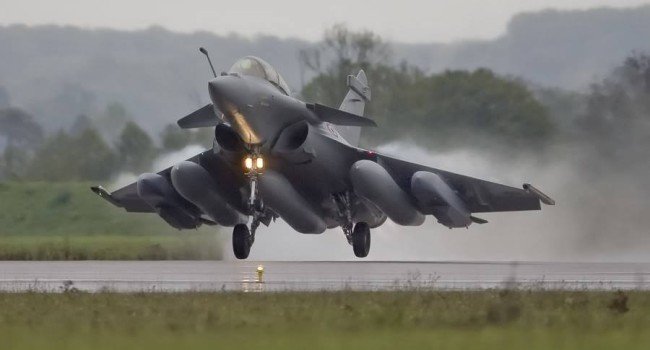
UNDER A CLOUD: Payment of euro 1 million was detected in purchase of Rafale fighters. PTI

Rahul Bedi
Indian armament agents or ‘middlemen’ appear to have an explanation for the recent French media reports regarding the ‘unexplained’ payment of 1 million euros
(Rs 8.64 crore) by Dassault to a local businessman following the euro 7.87 billion (Rs 59,000 crore) deal with New Delhi for 36 Rafale fighters in 2016.
Several such intermediaries claim that the euro 1 million paid to the Gurgaon-based Defsys Solutions was a ‘success fee’ for assisting in the government-to-government Rafale buy for the Indian Air Force (IAF). “In all likelihood, this fee was for organising meetings between Indian and French officials and providing related logistic support for the tender,” said the representative of a European armament vendor in Delhi. The amount of 1 million euros, he added, was too paltry to be deemed a bribe in the euro 7.87 billion deal.
France’s Mediapart, an online investigative journal, had reported on
April 5 that their country’s Agence Francaise Anti-corruption (AFA) — analogous to India’s Comptroller and Auditor General — had stumbled upon this curious payment to Defsys whilst auditing Dassault’s business records. Dassault, for its part, had declared this to be a ‘gift’, which under French — and Indian — law is illegal in all military deals. Established in mid-2017, the AFA operates under France’s National Financial Prosecutor’s Office, auditing government and privately-run companies in a bid to stem corruption.
Mediapart further stated that euro 1 million was disbursed to Defsys, headed by Sushen Gupta, to make 50 large replica models of the Rafale fighters, which the IAF is presently inducting into squadron service at Ambala, and thereafter in Hashimara in the north-east. Mediapart also disclosed that though Dassault could not furnish any proof to the AFA that these models had, indeed, been delivered to India, it intriguingly opted against referring the matter for prosecution. The journal also disclosed that Dassault was unable to provide the AFA with even a single document or photograph proving the Rafale models’ existence.
“It seems Defsys, which had allegedly played a major enabling role in several previous IAF combat aircraft and rotorcraft purchases, was in some way associated with the Rafale tender, possibly in providing administrative support to the French company,” said one other ‘facilitator’ in Delhi, working for a Western armaments manufacturer.
In a contract of this kind, he declared, there were innumerable managerial details that needed working out, which could only be expedited by an outside party for a variety of reasons. Consequently, payments to any and all such individuals or companies, could not be made public, prompting the vendor to ‘shroud’ their fee under innocuous heads, like making life-sized models of Rafale fighters, he stated.
According to media reports, Gupta, who is a US national, had worked as a Dassault representative in India and was reportedly associated in an undefined manner with the Rafale purchase. He is presently on bail after being arrested in March 2019 by the Enforcement Directorate in the Rs 36,000-crore import of 12 AW101 helicopters, which was terminated in January 2014 for wrongdoing, and remains under investigation.
But military and Ministry of Defence (MoD) sources said this was not the first time that ‘facilitation or enabling’ services had been employed to effect military purchases by India. Operating between the lines, several such agents like Gupta had, over decades, become vital to India’s weapons acquisition processes, helping the buyer and seller navigate the Byzantine MoD procurement guidelines.
Armament industry executives said the periodically revised procurement procedures were so convoluted that few at home or abroad could fully comprehend or decipher them. Consequently, the omnipresent agent, essentially an entrepreneur with a flair for public relations and man-management, gradually became indispensable to the country’s materiel procurement process. And, through experience, patience and tenacity in dealing with the Indian bureaucracy and the MoD’s hidebound systems, he unravelled for his principals the multi-tiered tortuous procurement processes. In return, he received handsome retainers and working expenses and a hefty commission on contract closure, similar to what probably transpired in the euro1-million payout in the Rafale contract.
Successful agents had also perfected the tactic of marshalling their clout to intervene in contracts nearing closure in a process that was compared by the former Army Chief General VK Singh, to a game of snakes-and-ladders, where there is no ladder, but only snakes. “If the snakes bite you somewhere, the whole thing comes back to zero,’ he had said in an explanation of why Indian defence equipment purchases took ages.
Privately, Indian military officers concede that no materiel can be imported without assistance from agents or local representative of original equipment manufacturers (OEMs). “We frequently meet these agents to exchange information, discuss requirements and above all liaise for trials, which in themselves are a complex bureaucratic affair requiring innumerable clearances,” a senior military officer said.
In late 2001, the BJP-led NDA government had come up with a proposal to register agents by recording amongst other minutiae, their contractual, banking and financial details. At the time, the MoD reluctantly conceded that though agents performed ‘useful functions’, their working needed stricter regulation to prevent them from influencing decision makers. But the conditions imposed for agents’ registration were so harsh, invasive and draconian that the proposal was scrapped, leaving the agents to function in a twilight zone that was to the advantage of all concerned.
However, unlike media reports glamourising agents, their expensive accoutrements and playboy lifestyles, there is little allure attached to their work, which in reality is a gruelling, at times, soul-killing and humiliating enterprise. It requires them to ingratiate themselves with grasping military men, unscrupulous MoD officials, politicians and power brokers, continually flattering them, in addition to proffering incentives for clearing their deliberately delayed paperwork in labyrinthine military departments and the MoD in the Sena Bhawan and South Block, respectively.
French news portal puts a face to Rafale allegations
The French investigative news portal, Mediapart, has claimed that there was indeed a middleman in the much-debated Rafale deal. – File photo
The French investigative news portal, Mediapart, has claimed that there was indeed a middleman in the much-debated Rafale deal. At the very outset, the Rafale deal struck by the NDA government had come in for attack from the Opposition over the pricing of the twin-engine medium multi-role combat aircraft. The Opposition had claimed that while it was in power, it had struck a much better bargain with the same Dassault Aviation for the delivery of 126 jets at a lower price with transfer of technology to Hindustan Aeronautics Limited than what was finally agreed to in 2016 for the off-the-shelf purchase of 36 aircraft at 7.87 billion euros. The agreement was vetted by the Comptroller and Auditor General and the allegations of corruption were heard and dismissed by the Supreme Court twice, first in 2018 and then in a review petition in 2019. Now, the Mediapart investigation has dug up dirt on the deal and put a face to the allegations.
According to this online journal, French anti-corruption watchdog Agence Francais Anti-corruption in its routine audit of the contract found that Dassault had agreed to pay an Indian company — middleman Sushen Gupta’s Defsys Solutions — one million euros for producing large replicas of the Rafale jet. But, according to Mediapart, the audit did not find any proof of the replicas being actually made and that ‘the head of the French Public Prosecution Services’ financial crimes branch, Eliane Houlette, shelved investigations into the evidence of corruption behind this deal despite the contrary opinion of her colleagues’.
US national Sushen Gupta was arrested for his involvement in the UPA-era VVIP chopper kickback case under the Prevention of Money Laundering Act and is now out on bail. His name getting linked to the Rafale deal brings to focus the omnipresence of middlemen in India’s defence sector and exposes the hollow claims of successive governments. Whether as brokers routing billion-dollar bribes or as puny go-betweens pocketing million-dollar facilitation fees, Indian taxpayers cannot afford these shadowy characters of the netherworld of defence contracts. The Mediapart allegations should be investigated.
Farmers gherao BJP MP in Haryana, smash car windscreen
Kurukshetra MP Nayab Singh Saini said police had a tough time in getting him away from the protesters
Kurukshetra MP Nayab Singh Saini. File photo
Kurukshetra (Haryana), April 6
Protesting farmers on Tuesday blocked a BJP MP’s car, smashing its windscreen as he tried to leave a party worker’s home, police said.
Kurukshetra MP Nayab Singh Saini said police had a tough time in getting him away from the protesters at Shahbad Markanda, 20 kms from here.
Farmers protesting over the three new farm laws were sitting on a ‘dharna’ in front of Jannayak Janta Party MLA Ram Karan Kala’s home when they learnt that the MP had reached a BJP worker’s home in nearby Majri mohalla.
They then gathered outside the BJP worker’s home while Saini had tea inside, police said.
According to Saini, when he tried to leave the place over 50 protesters ‘gheraoed’ it. A few of them jumped over the vehicle while someone smashed the windscreen with a stone or a lathi, he said.
He said it was with great difficulty that police got him out of the area in the SUV.
The Kurukshetra incident was the latest in a series of protests by farmers against ruling BJP-JJP coalition leaders in Haryana.
The MP said those who indulge in acts of violence against elected representatives cannot be farmers. Such people are defaming farmers, he added.
Police were deployed in large numbers in the after the incident.
Kurukshetra Superintendent of Police Himanshu Garg said police are investigating the matter and would file a case against those found responsible for the violence.
On Saturday, farmers had held a protest against Haryana Chief Minister Manohar Lal Khattar in Rohtak, forcing authorities to shift the landing site for his helicopter.
Farmers also held a protest last week against Deputy Chief Minister Dushyant Chautala outside Hisar airport.
Farmer leaders have said they would continue their “peaceful social boycott” of leaders from the BJP and its allies.
The Centre says the new laws will free farmers from middlemen, giving them more options to sell their crops.
The protesting farmers, however, say the laws will weaken the minimum support price (MSP) system and leave them at the mercy of big corporates. PTI

State Stalwarts
DEFENCE MINISTER
Minister Rajnath Singh
ALL HUMANS ARE ONE CREATED BY GOD
HINDUS,MUSLIMS,SIKHS.ISAI SAB HAI BHAI BHAI

CHIEF PATRON ALL INDIA SANJHA MORCHA
LT GEN JASBIR SINGH DHALIWAL, DOGRA
SENIOR PATRON ALL INDIA SANJHA MORCHA
MAJOR GEN HARVIJAY SINGH, SENA MEDAL ,corps of signals
.
.
PATRON ALL INDIA SANJHA MORCHA
MAJ GEN RAMINDER GURAYA ,MADRAS REGIMENT
sanjhamorcha303@gmail.com
PRESIDENT SOUTH ALL INDIA SANJHA MORCHA
COL SS RAJAN BOMBAY SAPPERS,
PRESIDENT UTTARAKHAND ALL INDIA SANJHA MORCHA
COL B M THAPA ,BENGAL SAPPERSS
PRESIDENT HARAYANA STATE CUM COORDINATOR ESM
BRIG DALJIT THUKRAL ,BENGAL SAPPERS
PRESIDENT TRICITY
COL B S BRAR (BHUPI BRAR)
PRESIDENT CHANDIGARH ZONE
COL SHANJIT SINGH BHULLAR
.
.
PRESIDENT PANCHKULA ZONE AND ZIRAKPUR
COL SWARAN SINGH
INDIAN DEFENCE FORCES
DEFENCE FORCES INTEGRATED LOGO
INDIAN AIR FORCE
Air Officer C-in-C WESTERN AIR COMMAND
AIR MSHL S PRABHAKARAN AVSM VM
AOC-IN-C, EASTERN AIR COMMAND
Air Marshal Inderpal Singh Walia
AOC-in-C SOUTH WESTERN AIR COMMAND
Air Marshal Vikram Singh
AOC-IN-C, SOUTHERN AIR COMMAND
Air Marshal J.Chalapati
AOC-IN-C TRAINING COMMAND
AIR MARSHAL SK GHOTIA VSM
AOC-IN-C MAINTENANCE COMMAND
Air Marshal Jagdish Chandra
Flag Officer Commanding in Chief, Western Naval Command
ice Admiral R Hari Kumar, PVSM, AVSM, VSM
Flag Officer Commanding in Chief, Eastern Naval Command
Vice Admiral Sanjay Bhalla, AVSM, NM
Flag Officer Commanding in Chief, Southern Naval Command