Sanjha Morcha

What’s New

Click the heading to open detailed news

Current Events :

web counter

Print Media Reproduced Defence Related News

More financial powers to Army Commanders

More financial powers to Army Commanders

Tribune News Service

New Delhi, February 17

The Union Cabinet on Wednesday enhanced financial powers under ‘capital procurement’ for senior commanders of the armed forces.

Powers will be for Army Commander-level officers under what is called Other Capital Procurement Procedure.

According to the approval, financial powers up to Rs 100 crore has been delegated to Army Commander (and equivalent in Navy and IAF) and regional Commanders of Indian Coast Guard.

Powers up to Rs 200 crore has been delegated to Deputy Chief of Army Staff MGS (Master General Sustenance), COM (Chief of Material), AOM (Air Officer Maintenance), DCIDS (Deputy Chief Integrated Defence Staff) and ADG ICG (Additional Director General Indian Coast Guard).

This delegation of powers will be utilised for items of ‘Capital’ nature such as overhauls, refits, upgrades etc. It will enhance the utility of existing assets and will facilitate faster processing and implementation of projects for modernisation of armed forces.


Amarinder assures support to farmers during his impromptu stop at Chandigarh’s Matka chowk Protests have been going on in the city for last three months

http://

Tribune Web Desk
Chandigarh, February 17

Punjab Chief Minister Amarinder Singh made an impromptu visit at Matka Chowk in Chandigarh on Wednesday evening, to interact with youth and professors protesting in solidarity with farmers camping at Delhi borders.

CM Amarinder ensured his and his government’s complete support to the farmers protesting against the farm laws.

“@capt_amarinder made an impromptu stop and interacted with youngsters, professionals & others sitting at Matka Chowk in Chandigarh in solidarity with farmers camping at Delhi borders. Such protests have been going on in the city for the last three months.1/2,” tweeted media adviser to Punjab CM, Raveen Thukral.

“During the interaction, CM @capt_amarinder expressed his and his government’s full support for the farmers protesting against the #Farmlaws & assured of all possible steps to protect the interests of the farming community. 2/2,” read another tweet.

https://twitter.com/i/status/1362052337762639872


Look into LAC lapses to be future-ready

The proposed review would especially need to focus on the slip-ups leading to Chinese incursions despite the three-fold surveillance grid: regular joint foot patrols by the Army and ITBP supplemented by detailed imagery provided by UAVs and satellites. The govt would do well to emulate the Kargil Review Committee instituted by the Vajpayee govt in 1999 to inquire into the lapses.

Look into LAC lapses to be future-ready

AKE STOCK: Reasons for China’s ingress into Ladakh need to be ascertained. Reuters

Rahul Bedi

Senior Journalist

With the complementary withdrawal of Indian and Chinese troops from the bitterly contested Pangong Tso or Lake region along the disputed Line of Actual Control (LAC) in eastern Ladakh underway, it is time for the government to consider launching a review into the intelligence and operational lapses resulting in the debilitating faceoff that erupted last May.

And though the People’s Liberation Army’s (PLA) ingress into the adjoining areas still awaits vacation, as does the restoration of the April 2020 military status quo ante along the LAC, a multi-disciplinary commission of inquiry needs establishing, similar to the one which followed the analogous 1999 intrusion by the Pakistan Army into Kargil, to manage the Chinese threat and Beijing’s future duplicity.

The 1962 ambush by China followed the placatory Panchsheel Treaty eight years earlier, much like the slew of five bilateral border treaties and confidence- building measures 1993 onwards aimed at managing the LAC. Thereafter, the Lt Gen Henderson Brooks inquiry into the disastrous border war was never made public, with successive governments incredulously claiming that the report, of which just two copies exist, remains ‘sensitive’ and of ‘current operational value’.

However, a cross-section of serving military officers, veterans and defence analysts concede that a ‘lessons learnt approach’ emanating from such a suggested inquiry commission or review committee would assist in future projection of India’s Comprehensive National Power, including military strength, to deal with a formidable foe like China. Such an endeavour would also help restructure tri-service cooperation, intelligence sharing, timely information dissemination and media management, amongst other aspects.

It would also assist in dealing with what is grudgingly accepted in military and security circles, that future Indian Army deployments along the LAC will duplicate those along the Line of Control and the Siachen glacier against Pakistan, as all previous Sino-Indian LAC-related protocols now stand nullified. New unassailable pacts, predicated to overarching distrust of China by India, will need to be concluded to ensure peace between the nuclear-armed neighbours till their 3,488-km-long LAC is eventually demarcated.

Doubtlessly, naysayers will assert that the Indian Army has, in recent months displayed flexibility, speed and steadfastness in its LAC deployments, as well as strategic chutzpah by seizing the commanding Kailash heights on Pangong Tso’s southern bank, which helped determine the February 10 pullback agreement. But many veterans differ, claiming that rushing an additional 50,000 troops to man the LAC, including critical Army Headquarters reserves, was more a rushed ‘battalion approach’ to man the 800-km-long LAC flank in eastern Ladakh, rather than a structured strategy.

For several decades, a resource-strapped and diffident India had followed the path of least resistance against China, sheltering behind multiple border treaties to ensure peace along the LAC with its more powerful neighbour. China, on the other hand, viewed the LAC accords as an abiding tactical measure, aimed at lulling an amenable India into a false sense of security for nearly three decades as it embarked on progressing its economy. It willfully ‘persuaded’ India, including its military into focusing on bilateral economic issues like trade and commerce, furthering diplomatic, political and even defence ties. Resolving the border imbroglio was interminably postponed despite 23 rounds of talks between the respective Special Representatives, but China’s 1959 claim lines in Ladakh, it now transpires, were not forgotten.

It’s also known in Indian security circles that its military planners, especially the Army, had set a 2010 deadline to meet the proliferating security threat from Beijing. It was widely accepted at the time that the logistical, infrastructural and materiel inequalities would become too pronounced if this schedule slipped. Alarmingly it did, as was revealed by the frantic procurement of assorted ammunition, missiles, UAVs, varied ordnance and high-altitude kit, worth over Rs 20,000 crore, June 2020 onwards.

Those opposing a review or inquiry into the PLA’s ingress also point to the Army re-orienting its Mathura-based

1 Strike Corps — one of three such ‘sword arm’ formations — to convert it into a mountain strike corps for eventual employment in Ladakh. This envisages two of its infantry divisions being trained in mountain warfare, in what analysts consider a tactical, rather than a wider strategic and holistic approach to higher defence management.

The Army also needs to abandon the Second World War concepts of attrition and manoeuvre warfare, familiar to generations of its commanders and ones they feel ‘comfortable’ planning for and executing like in the four wars with Pakistan. It requires desperately to shift focus to futuristic non-kinetic warfare technologies like robotics, artificial intelligence, cyber and network-centric operations to match the PLA capabilities.

The proposed review would especially need to focus on the slip-ups leading to the Chinese incursions despite the three-fold surveillance grid: regular joint foot patrols by the Army and the Indo-Tibetan Border Police supplemented by detailed imagery provided by UAVs and satellites. The federal government would do well to emulate the Kargil Review Committee (KRC) inquiry instituted by the BJP-led government of the then Prime Minister Atal Bihari Vajpayee on July 29, 1999, three days after the Kargil hostilities concluded, to evaluate the lapses that led to the Pakistan Army’s intrusion and the subsequent hostilities in which over 500 Indian Army soldiers died.

Headed by strategic affairs expert K Subrahmanyam, the four-member KRC interacted with over 100 military and intelligence officers, bureaucrats and even journalists, for nearly five months, before submitting its report that was tabled in Parliament in February 2000 and also made public.

Some of its sensitive portions were redacted, but despite the expurgations, the report was instructive, revealing numerous intelligence collection failures, operational shortcomings and inter-service jointness, amongst other inadequacies. Thereafter, a Group of Ministers (GoM), headed by Deputy Prime Minister LK Advani and four task forces led by seasoned officials further reviewed the KRC’s recommendations, precipitating manifold changes in India’s overall security apparatus. Obviously, these need to be reappraised following the PLA’s ingress into Ladakh and should be made public.



Protesting farmers to use social media to ‘counter fake news’ Farmer leader says they have made the strategy after the recent news about the borders being vacated

Protesting farmers to use social media to ‘counter fake news’

Photo for representation purposes. Tribune file

New Delhi, February 17

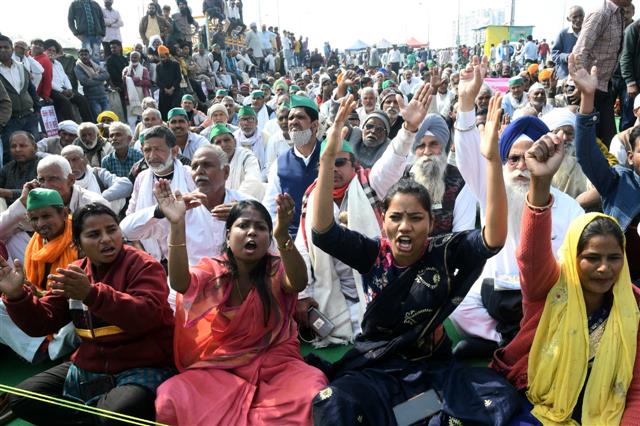
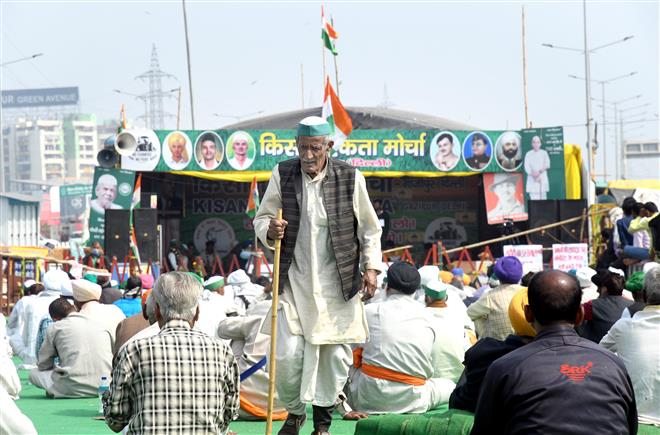
Farmers protesting against the three farm laws on the borders of Delhi have decided to use social media to tell the truth amid news of the borders being vacated.

Farmer leader Jagtar Singh Bajwa told IANS, “We are not angry with the media but with a section of the media which is constantly spreading fake news.

“We have asked the sons of the farmers to train the farmers to use social media platforms. After that, we will post the things related to agriculture and tell the truth about the protest site to everyone.

“We have made this strategy after the recent news about the borders being vacated. Our fight is not only about the farm laws now, we also have to fight against those who are trying to weaken the movement,” he added.

Farmers have been protesting on the borders demanding withdrawal of the three laws for the past 80 days. There have been 11 rounds of talks between the government and farmers’ organisations, but they have been inconclusive. IANS


House defence panel must ask 4 key questions — from lower expenditure to pension bill by Lt Gen (Dr) Prakash Menon

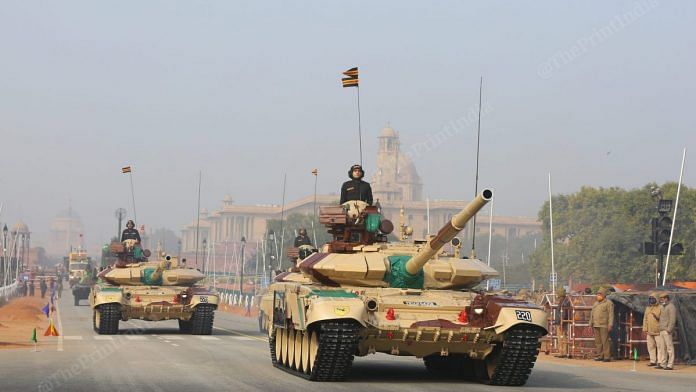
Indian Army tanks at the parade | Photo: Suraj Singh Bisht | ThePrint

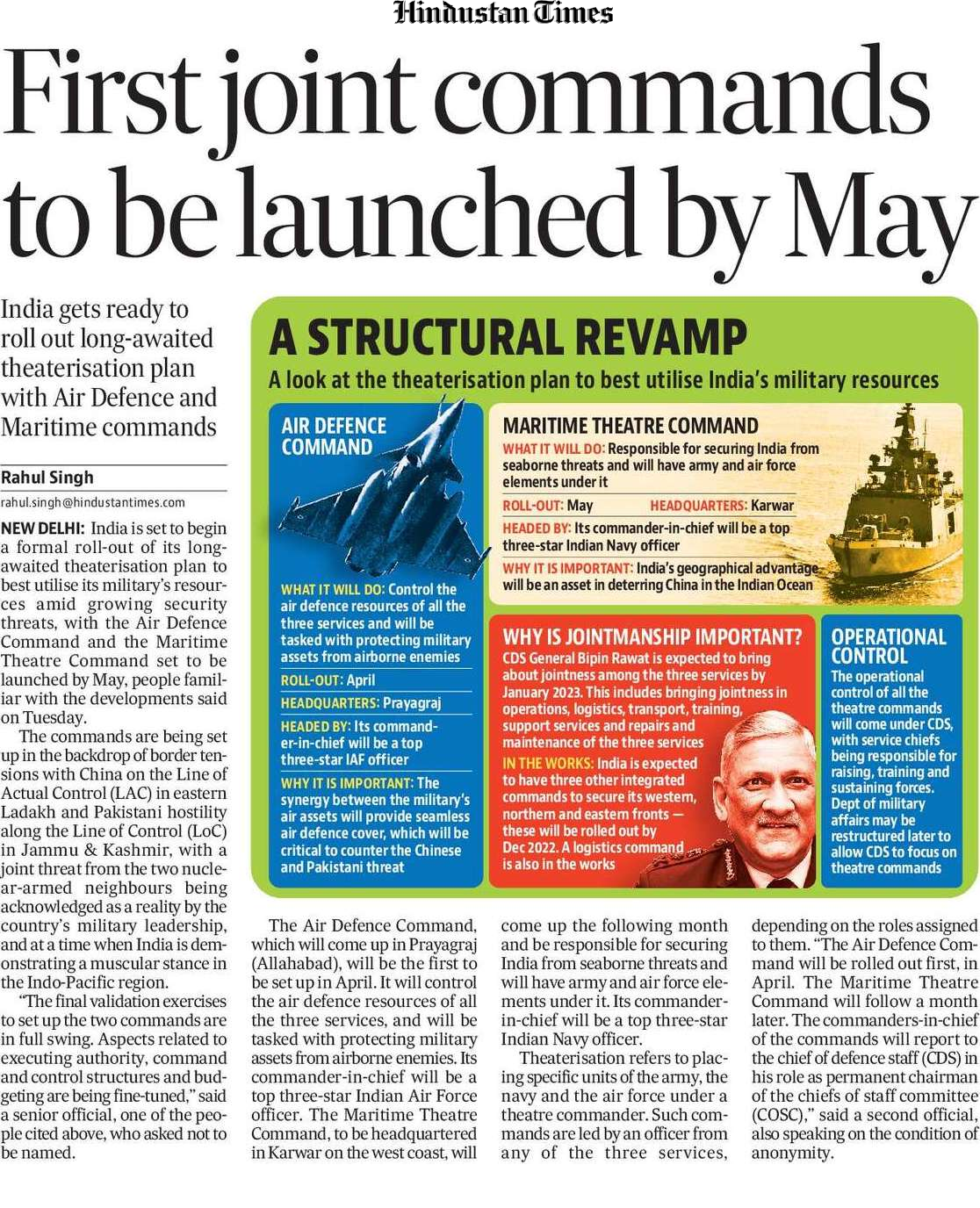
epresentational image | Indian Army tanks at the Republic Day parade | Suraj Singh Bisht | ThePrint File Photo

When the Parliamentary Standing Committee on Defence meets this week to discuss the Budget allocations made by Finance Minister Nirmala Sitharaman, we hope to get some clarity on the provisions made towards India’s national security. That’s because on defence, the Union Budget for FY2021-22 hides more than it reveals. Not only was ‘defence’ conspicuous by its absence in the finance minister’s Budget speech for the second consecutive year, the component-wise budgetary allocation also raises more questions than answers.

As the Committee examines the Demand for Grants of the defence ministry, we believe there are at least four important questions that the panel should ask.


Also read: Economic ideology is the new binary in Indian politics as Modi swerves Right & Rahul Left

Rising threat, declining expenditure 

What explains the reduction in total defence expenditure even though the threat posed by China hasn’t gone away?

Despite the rhetoric, defence expenditure for FY2021-22 is estimated to be 1.35 per cent lower than the Revised Estimates for FY2020-21 in absolute terms. The Revised Estimates themselves increased by a marginal 2.3 per cent (~Rs 13,000 crore) over what was proposed in the last Budget. Total Ministry of Defence (MoD) expenditure as a proportion of GDP continues to languish at the 2.15 per cent mark. In a year that saw the economy contracting because of the pandemic and China adopting a confrontational posture on India’s borders, these numbers do not inspire much confidence. The Committee must ask the defence ministry if the Union executive is exploring all possible options to prioritise defence financing.


Also read: How China is fast catching up with the West in the race for air-to-air missile superiority


Money to modernise 

Does the government have the financial headroom for modernisation of defence going ahead?

The Committee in 2019 had observed that the Budget allocation for modernisation, covering both committed liabilities and new schemes, did not meet even the committed liabilities. This has been the case since 2016-17, forcing the Committee to observe that inadequate allocation for committed liabilities could lead to India defaulting on contractual obligations. Long before the pandemic, even the financing of existing schemes was not guaranteed, leave alone new schemes for modernising the armed forces.

The government did course correct last year by increasing the capital outlay on defence (of which modernisation is also a part) by nearly Rs 20,000 crore during the pandemic, the Budget document revealed. Many post-Budget news reports subsequently claimed that this increase reflected emergency purchases of precision-guided munitions and drones to counter China. However, an increase of Rs 20,000 crore cannot be explained by these purchases alone. Major defence equipment isn’t available off the shelf and their payments are made over many years. So, where did the money go?

It’s more likely that the higher capital outlay was on account of payments for equipment purchased in the past. The budgetary allocations attest this claim to some extent. Of the Rs 20,000 crore increase, the Navy under the line items ‘naval fleet’ and ‘aircraft and aero engines’ accounts for nearly Rs 9,000 crore and the Air Force under ‘other equipment-air force’ accounts for another Rs 10,000 crore. Since the Budget documents don’t make any distinction between new schemes and committed liabilities, the Committee must ask the MoD to come clean on the modernisation plan.


Also read: Why Modi govt’s defence budget isn’t rising & the gap between realities, expectations


Drop in defence pension expenditure 

What explains the sudden drop in defence pension expenditure by nearly 13 per cent?

The Revised Estimates for FY2020-21 are lower than the Budget Estimates for the same year by nearly Rs 18,000 crore. This is surprising for two reasons. One, personnel expenses such as pensions are quite predictable. Two, after the introduction of One Rank One Pension, or OROP, pension outgo has been rising with a cumulative annual growth rate of over 17 per cent.

In such a situation, an absolute decline in pension expenditure is not possible without a sudden decrease in the number of retirees or a reduction in each retiree’s pension.

This sudden decline in pension outgo has sparked wild speculations. Some reports claim this reduction is due to a government proposal to increase the retirement age of officers, thereby decreasing the number of retirees. However, this move alone would still not explain a fall of nearly 13 per cent because the bulk of the pension expenditure is for personnel below officer ranks (PBORs). Moreover, this explanation still doesn’t account for a reduction in pension expenditure in the Revised Estimates of FY 2020-21.

Another claim being made is that a freeze in dearness allowance, in force since the pandemic, has caused a reduction in the pension outgo per personnel. This explanation is unsatisfactory because a decrease would have affected pay but not the pension amounts already fixed for the last year.

A third speculation is that previous years’ payments included arrears that have been compensated for already and hence the reduction in pension outgo. If that were the case, why did the Budget Estimates for FY 2020-21 include these arrears? This information is quite predictable and would have been available even before the FY 2020-21 Budget was made.

A final explanation for lower pension outgo is that the government is trying to book pension commitments over multiple years in light of the fiscal situation.

With speculations flying around, it is now up to the Committee to get the MoD to set the record straight on pensions. While reducing pension expenditure over the long term must remain an important goal, going back on existing statutory pension commitments would be counterproductive.


Also read: Nirmala Sitharaman has done her job. Now, all eyes are on RBI Governor Shaktikanta Das


Revenue concerns

What are the MoD’s plans to raise revenues on its own?

The government has given an in-principle nod to the 15th Finance Commission’s recommendation for creating a non-lapsable defence fund to finance modernisation. Three of the four sources for populating this corpus are under the domain of the MoD — disinvestment of Defence Public Sector Enterprises (DPSEs), monetisation of defence land, and transfer of defence land to state governments and public projects. The Committee must drive urgency in the MoD for raising revenues through these routes. It should ask the MoD to immediately identify DPSEs that need to be disinvested.

The Parliamentary Standing Committee on Defence can bring some much needed clarity to critical issues concerning India’s national security. What the Committee does will indicate whether legislative oversight over a powerful executive can work in the Indian setup.

Lt Gen (Dr) Prakash Menon is Director, Strategic Studies Programme, Takshashila Institution, Bangalore. Pranay Kotasthane is Research Fellow at the Takshashila Institution. Views are personal.


Pangong pullback by February 24 Verification by physical visits, drones | Commanders to meet after a week

Pangong pullback by February 24

Ajay Banerjee
Tribune News Service
New Delhi, February 16

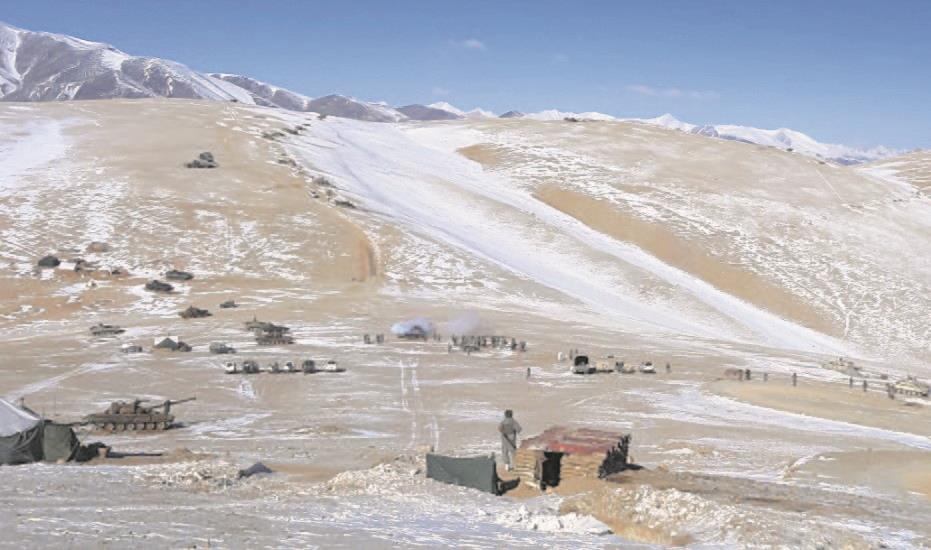
India and China have started the process to physically verify each other’s military positions on the Pangong Tso banks following the disengagement process that started on February 10 along the Line of Actual Control (LAC) in eastern Ladakh.

“The first phase of disengagement will be a two-week process and is expected to be over between February 22 and 24,” said sources, hinting that commanders of both sides could meet any time after February 24.

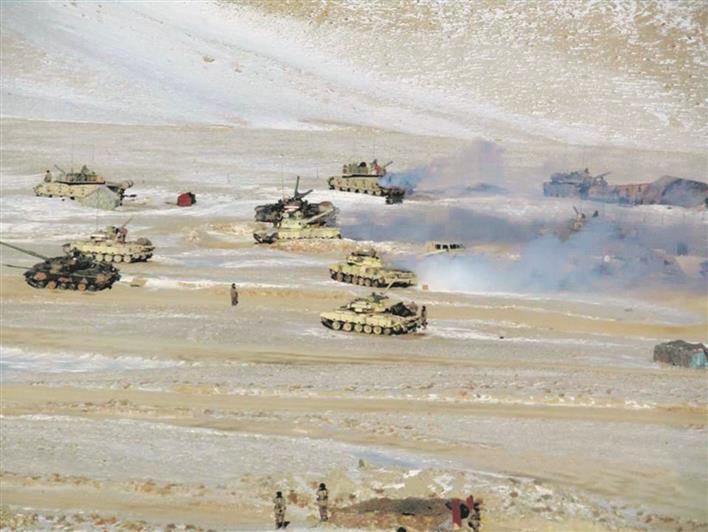
The verification process is being done using permissible means like physical visits as well as drones and cameras, sources said, adding that the de-induction of troops, tanks, artillery guns, etc, was going as per schedule. The teams for verification on either side are submitting detailed reports to their respective commands.

Dismantling bunkers, helipads part of Disengagement

  • Pullback verification teams submitting reports to their respective commanders
  • De-induction of troops, tanks, artillery guns is going as per schedule, sources say
  • Pullback includes dismantling all infra like bunkers, helipads created after April last year

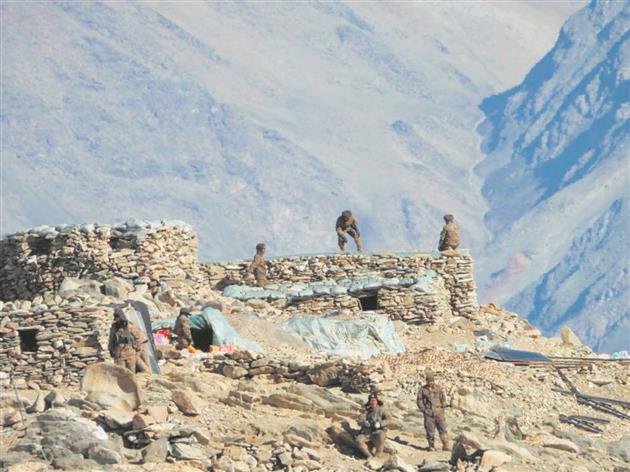
They will report back once the tanks, troops, guns and all vehicles are back at their home bases. The pullback includes dismantling of all infrastructure, including bunkers, helipads, housing units and tents, created after April last year. “The land has to be brought back to the April 2020 status,” officials said.

The disengagement process is on in eastern Ladakh. PTI

Once the process is done, commanders of the rank of Lt General are slated to meet within 48 hours and chalk out the next phases.

The first phase of the disengagement for both sides entails withdrawing from positions on the north and south bank of the Pangong Tso, a 135-km glacial lake. The next phases will see talks for similar pullback at Depsang, Gogra and Hot Springs, all located along the 823-km LAC in eastern Ladakh. Since April 2020, there has been a massive build-up on both sides.

Defence Minister Rajnath Singh told the Rajya Sabha on February 11 about the future course on the pullback. “There are still some outstanding issues with regard to deployment and patrolling at some other points along the LAC in eastern Ladakh. These will be the focus of further discussions with the Chinese side,” he said.

Along the LAC in eastern Ladakh, there are locations where troops of both sides are eyeball to eyeball.

Besides the Pangong Tso, the next phases will cover resumption of patrolling limits in areas along the LAC which are claimed by both sides. The 900-sqkm Depsang plains located north of the Shyok river will also be taken up. Located at an altitude of 16,000 feet, the Indian Army holds a large portion of the Depsang plains, while the People’s Liberation Army (PLA) of China holds the eastern edge of the plains.


ITBP-DRDO team reach site of artificial lake developed by flashflood in Uttarakhand Base camp set up; suitable location chosen for making helipad

ITBP-DRDO team reach site of artificial lake developed by flashflood in Uttarakhand

he ITBP team is also exploring ways for smooth discharge of water from the lake.

Tribune News Service

Chandigarh, February 17

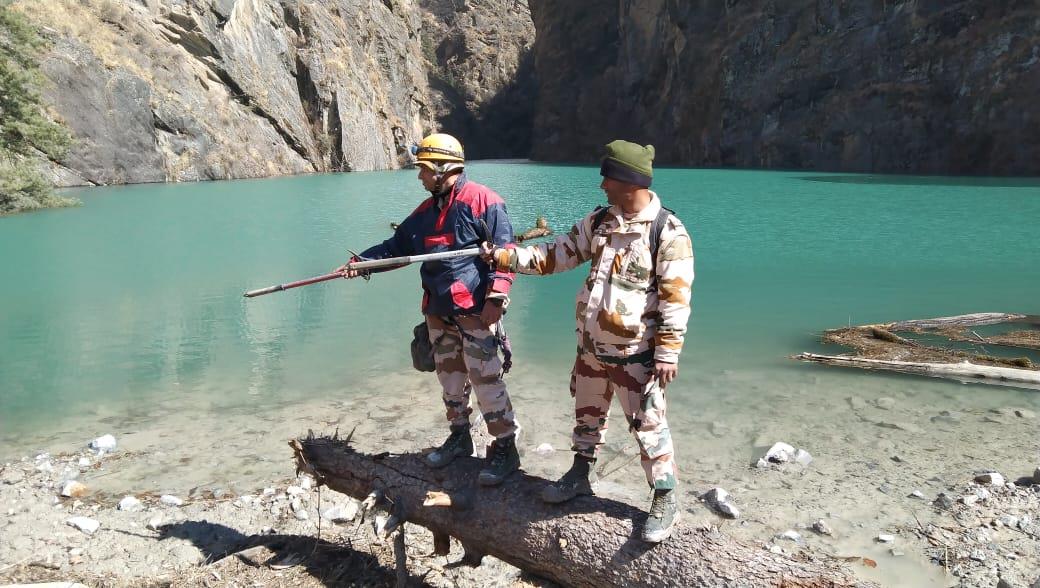
An Indo-Tibetan Border Police team with officials from the Defence Research and Development Organisation (DRDO) reached Murenda on Wednesday, where a natural lake has been formed after the recent floods in Chamoli in Uttarakhand.

The team has established its base camp and has selected a suitable location for making a helipad, an ITBP spokesperson said.

The helipad is being developed with proper markings and other aids

One ITBP party with DRDO official has also moved ahead to the lake area for recce and to access the threat level posed by the artificial lake.

The ITBP team is also exploring ways for smooth discharge of water from the lake.


Amid spate of ‘mahapanchayats’, BJP’s worries grow in Jat-dominated areas of northwest Support to farmers’ agitation from non-Jats and Muslims threatening to upset saffron party’s carefully crafted equations

Amid spate of ‘mahapanchayats’, BJP’s worries grow in Jat-dominated areas of northwest

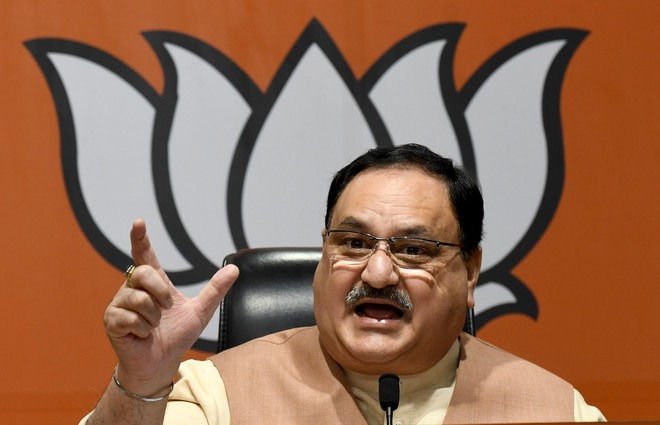
BJP national president JP Nadda. File Photo

Vibha Sharma

Tribune News Service

New Delhi, February 17

Amid the spate of ‘mahapanchayats’, BJP’s worries appear to be growing over its prospects in the Jat-dominated agrarian lands of north-west India. The “support” to farmers’ agitation from “non-Jats and Muslims” is also threatening to upset the saffron-party’s carefully crafted equations on the back of which it has been winning elections, especially in Uttar Pradesh which is due for polls in 2022.

Though the leadership has tried to give the farmers’ agitation against the three contentious agriculture laws “a two-and-half-state” angle, but the stir making international headlines has led it to discuss and devise a strategy to blunt the feeling of “alienation” among the community. This appeared to be the main theme of the meeting called by the BJP president JP Nadda on Tuesday, a day before the party took a beating in civic body elections in Punjab.

The meeting was attended by Home Minister Amit Shah, Agriculture Minister Narendra Singh Tomar and leaders from Haryana, Rajasthan and Uttar Pradesh – the states leading the stir along with Punjab – including the Muzzafarnagar MP Sanjeev Balyan, who belongs to the same ‘Balyan khap’ as BKU leader Rakesh Tikait

Notably, the growing influence of Rakesh Tikait – who has emerged as a symbol of Jat unity in these ‘khap mahapanchayats’ – in western UP, and now also in parts of Haryana and Rajasthan, influenced by the community and support of non-Jats (including Dalits) and Muslims to what was being considered a predominantly Jat-driven agitation, is a matter of concern for the BJP.

After the 2013 Muzzafarnagar riots, the Western UP region witnessed a deep polarisation with Hindu Jats, non-Jats and Dalits gravitating towards the BJP.

The saffron party has been sweeping the Western UP and Jat-dominated regions on the back of this consolidation. However, the emergence of Tikait as the new binding force at these ‘mahapanchayats’ and the support from non-farming castes and Muslims to the farmers’ agitation has the potential to upset the carefully nurtured vote bank that won it Lok Sabha and Assembly seats, say observers.

Leaders of opposition parties in UP, like the Samajwadi Party and the RLD, are already wooing these sections, building a narrative around “protecting village economy from pro-corporate policy of BJP governments”.

Sources say the BJP is planning a mega reach-out to the community to blunt the growing perception against the party. Top leaders will pitch in this campaign to “dispel politically-driven  misconceptions against the farm laws and the party”, they said.

A section in the party also agrees that ‘mahapanchayats’ in Haryana, western UP and parts of Rajasthan are a cause of concern for the party.

The government wants to resolve the issue and “our doors are always open for farmers”, they said, adding that leaders from Punjab, Haryana, Uttar Pradesh and Rajasthan have been asked to reach out to people at the ‘panchayat’ level (khaps) and ensure that communities, especially Jats,  do not feel alienated from the BJP.


Rail roko’ today, security up 20 additional RPSF companies deployed nationwide

‘Rail roko’ today, security up

n the call of the Sanyukt Kisan Morcha (SKM), farmers protesting against the three farm laws are gearing up for tomorrow’s “rail roko” protest.

Tribune News Service

Chandigarh, February 17

On the call of the Sanyukt Kisan Morcha (SKM), farmers protesting against the three farm laws are gearing up for tomorrow’s “rail roko” protest.

Even as the farm unions have called for a peaceful protest, security forces have been put on alert to avoid any untoward incident.

In a video, BKU (Charuni) chief Gurnam Singh Charuni asked the farmers to assemble at designated spots in their respective districts and make the protest a success.

“As decided by the SKM, trains will be stopped from 12 pm to 4 pm on February 18. I appeal to all farmers to fix one point in their districts and assemble at that spot. We have to ensure that the protest is held in a peaceful manner,” Charuni said.

Transit bail for Nikita

New Delhi: The Bombay High Court on Wednesday granted three-week transit bail to alleged “toolkit” case conspirator Nikita Jacob. Jacob now has time to move the appropriate court in Delhi for anticipatory bail. TNS

Sword- wielder held

Ghazipur: Maninder Singh, who was allegedly seen swinging swords at the Red Fort during the violence on Republic Day, has been arrested. TNS

Additional Divisional Railway Manager (Operations), Ambala division, Pankaj Gupta said: “We have been apprised of the locations where the farmers will block the tracks. We have made arrangements accordingly.”

The Northern Railway has stressed that no train has been cancelled or diverted in the region. The Railways has deployed 20 additional companies of the Railway Protection Special Force across the country.