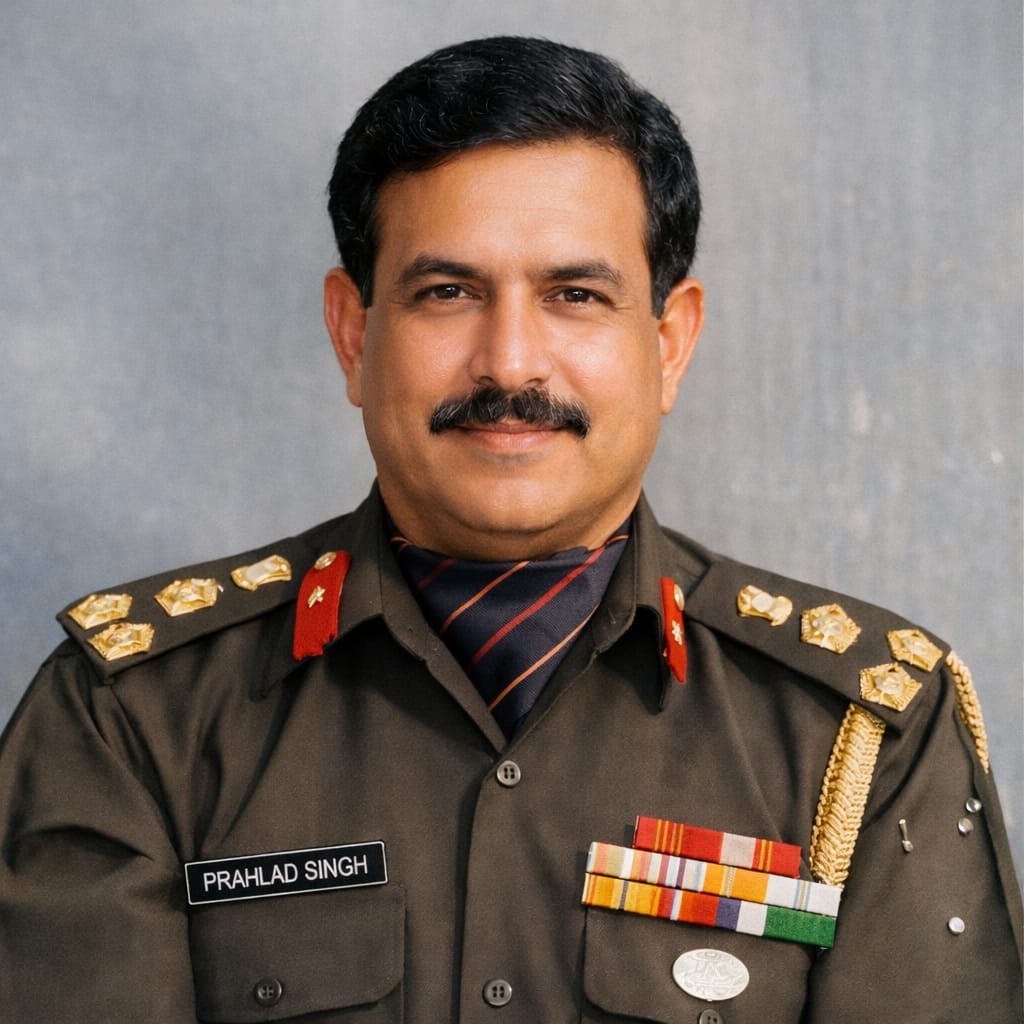
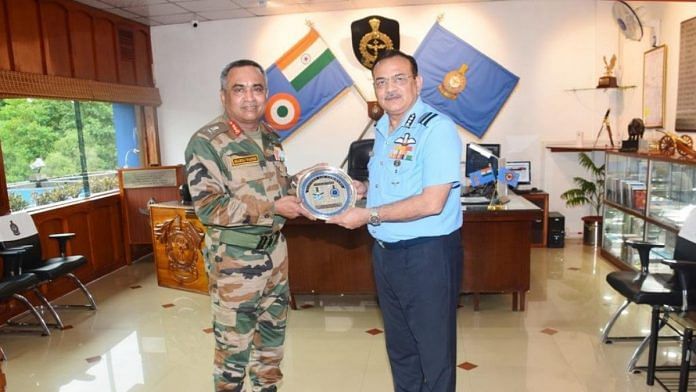
Eastern Army Commander Lt Gen Manoj Pande with Air Marshal Amit Dev in Shillong on 13 June 2021 | Twitter | ANIText Size: A- A+
Kolkata: Eastern Command GOC-in-C Lt Gen Manoj Pande on Sunday visited the Eastern Air Command (EAC) headquarters at Shillong in Meghalaya and discussed defence preparedness with EAC’s AOC-in-C Air Marshal Amit Dev, a Defence official said here.
This was the Eastern Army Commander’s first visit to the EAC headquarters since assuming charge on June 1.
“Joint operations and jointmanship were the main focus of discussions,” the official said about the deliberations between the two commanders, who trained together at the National Defence Academy and graduated from the same batch in December, 1981.
Lt Gen Pande was briefed on the details of operations by the Indian Air Force in support of the Indian Army in the Eastern Sector, he said.
“Decisions were taken on the conduct of realistic joint training exercises on a regular basis to draw out lessons for actual operations,” the official added.
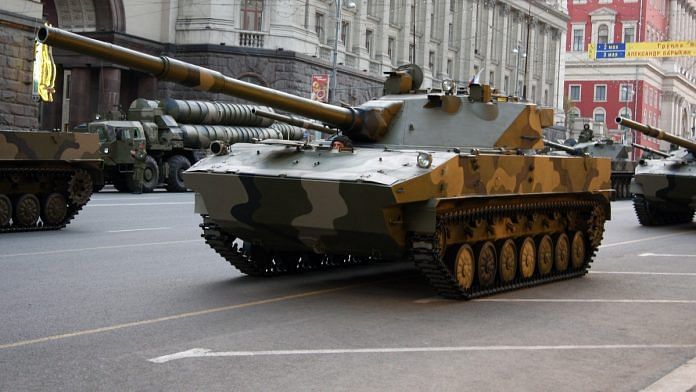
The 18-tonne amphibious Sprut-SDM1 is capable of being airlifted, parachuted with crew inside and can even disembark from a ship.
Representational image. A file photo of light Sprut-SDM1 tank in Moscow. | Photo: CommonsText Size: A- A+
New Delhi: India has set its eyes on procuring the Russian-made Sprut-SDM1 light tanks, to counter China in the mountainous terrain along the Line of Actual Control (LAC), and will also take part in the trials of the system starting late summer.
This will be a first for Russia because no other country has witnessed trials of a product that is under development.
According to sources in the security and defence establishment, India is keen on the 18-tonne Sprut because it shares the gun of the T-90 tank and fires the same kind of ammunition. India is currently operating T-90 and T-72 tanks, which are also Russian-origin, besides Arjun.
This will mean logistics and maintenance systems of the Sprut tanks will not have to be drastically different for the Armoured Corps.
While it is largely believed that the Russian forces have already inducted Sprut, sources said the tanks are still undergoing trials and are in the last stages of development.
Russia’s approval to include India in the trials of the light tanks — which can be airlifted, parachuted with crew inside and can even disembark from a ship — came after Defence Minister Rajnath Singh spoke about India’s need for light tanks during his visit to Russia in August 2020.
As reported by ThePrint then, Russia had offered India the light Sprut SDM1 tanks during Singh’s visit. The move came as India had deployed the T-90 tanks, weighing about 46 tonnes, in Ladakh during the prolonged standoff with China.
This was besides the T-72 tanks, which weigh around 45 tonnes, deployed earlier. Conversely, China had deployed its new lightweight tanks, Type 15, besides other armoured elements.
After India’s request, sources familiar with the matter said, discussions were held at various levels within the Russian establishment and a final go-ahead for inclusion in trials was given by the “very top”.
Accordingly, a team of the Indian Army will visit Russia later this year, and witness the firing and mobility trials of the tank.
Meanwhile, India has also floated a Request for Information (RFI) for 350 light tanks, which should not weigh more than 25 tonnes. This weight criteria will rule out many of the light tanks currently available in the market.
Sprut-SDM1 is the only light amphibious fighting vehicle in the world that possesses the firepower of a main battle tank, a 125mm main gun. The other unique future is the ability to fire a cannon afloat, sources said.
Other similar products are Chinese Type 15 light tank and the Turkish Kaplan MT medium tank. However, both these tanks have 105mm main guns unlike the Sprut’s 125mm main gun.
Furthermore, only the Sprut-SDM1 can fire guided missiles and has a potent armament suite that includes a 125mm gun, a 7.62mm remote-controlled machine gun and a 7.62mm coaxial machine gun.
The tank’s onboard guided missile weapon system can engage armoured targets, including explosive reactive armour (ERA)-equipped ones at ranges up to 5km, besides being able to engage low-flying helicopters by the roof-mounted machine-gun mount.
“The Sprut is a genuine light tank in terms of weight. The Chinese and Turkish tanks are heavier. Sprut should give greater mobility and combat edge over its rivals. The trials would show whether it lives up to the promise or not,” a source told ThePrint.
The Sprut can also travel over a distance of 500 km without refuelling and can be transported by military transport aircraft and landing ships besides being parachuted with a crew inside the vehicle.
While India has set its eyes on the Russian Sprut, the Defence Research and Development Organisation (DRDO) and Larson & Toubro are in talks with each other to possibly convert another tank — the K9 Vajra 155mm/52 calibre Tracked Self-Propelled Howitzer — into a light- or medium-weight tank that could be used in mountain regions like Ladakh.
DRDO and L&T are looking to reduce the tank’s weight by replacing the heavy 155mm gun with a 105mm or 120mm gun.
This will also change the tank’s turret design and the overall weight will reduce from its current 47 tonnes. More weight-reducing technology and material can also be used, which is expected to make the tank at least 10 tonnes lighter.
The aim is for the Vajra tank to actually weigh around 30 to 35 tonnes or somewhere close, which can be deployed in the mountains.
Armoured Corps first pitched for light tanks in 2009
The Armoured Directorate of the Army had first moved a proposal for light tanks in 2009. However, the Army’s top brass shot down the proposal as they felt that light tanks were not needed.
“The proposal had been kept in cold storage since then. But the Ladakh tensions showed how light tanks can play a critical role in areas where traditional main battle tanks cannot operate,” noted a source.
“Why did China deploy light tanks besides its heavier variants. This is despite the fact that China has a flatter terrain along the LAC than India, which is more mountainous. The tanks in front provide the infantry with the biggest fire power and light tanks are needed for the mountains,” he told ThePrint.
India has had light tanks in the past, which were used during the 1947-48 Kashmir operations (M 5 Stuart tank weighing about 16 tonnes) and then the 1962 and 1971 wars (PT 76 tanks weighing around 15 tonnes).
However, these paved the way for heavier tanks as the focus has been fixed on Pakistan and the plains ever since.
UT Volleyball Assn to name annual tourney after Nirmal Milkha Singh
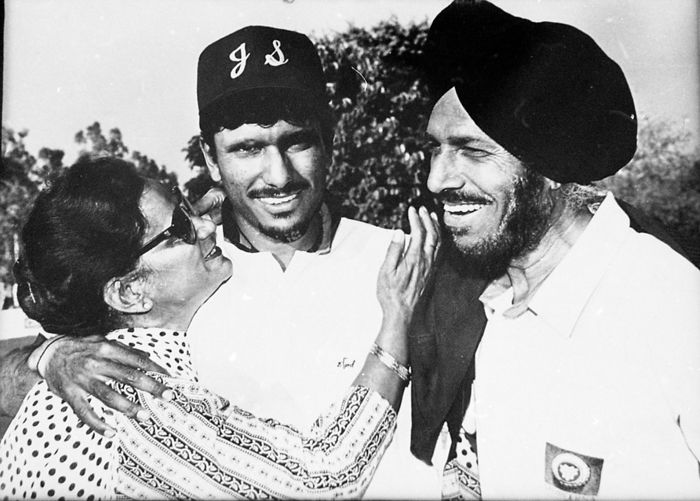
Nirmal Milkha Singh with Milkha Singh and their son Jeev Milkha Singh after the latter won a golf tournament.
Deepankar Sharda
Tribune News Service
Chandigarh, June 14
Local sports fraternity today mourned the death of Nirmal Milkha Singh, one of the founding members of the UT Sports Department.
Nirmal, who breathed her last on Sunday evening after fighting Covid-19, will always be remembered as one of the strongest pillars of sports infrastructure in the city.
Nirmal (standing left) with the then PM Indira Gandhi during a felicitation ceremony in New Delhi
While the Chandigarh Volleyball Association announced to name a tournament after her, the UT Sports Department decided to propose a tournament in its annual calendar.
“We have decided to conduct a junior (U-18) volleyball championship for boys and girls in her memory. The annual tournament will be named after her. This is the least we can do in the memory of our former president and former patron,” said Vijaypal Singh, Secretary, Volleyball Federation of India and Chandigarh Volleyball Association. He added, “The volleyball court at the Sector 26 Police Lines is also the brainchild of Nirmal. She proposed to have this court so that police personnel could spend quality time post-duty hours.”
Tejdeep Singh Saini, Director, Sports, UT, said a proposal would be sent to the higher authorities to remember Nirmal’s contribution forever. “It is a huge loss for the sports fraternity of Chandigarh. The department will propose an annual championship (hockey and volleyball) named after her,” said Saini.
“I have a special regard for her as she was just like a younger sister of my father the late SN Vohra. She always called him ‘Praaji’,” said Anil Vohra, general secretary, Hockey Chandigarh.
“I still remember my first meeting with her. After we got selected to the national shooting team, we did not receive our kits. We directly went to her (Nirmal’s) office and she not only resolved our issues but offered us a diet. We were unknown to her but she still treated us so well,” said Dr Aman Mann, Dean, Research, DAV College, Sector 10.
“The association hosted many championships, national games and three Asian championships under her supervision. The city still enjoys the infrastructure built under her guidance and support,” said Rajiv Sharma, honorary secretary, Chandigarh Rowing Association.
“The city has lost a gem. I have served under her. She was an extraordinary person who believes in promoting sports and welfare of sportspersons at any cost,” said Inder Pal Singh, former roller skating coach, UT.
Northern Command delivers medical help to Udhampur district administration
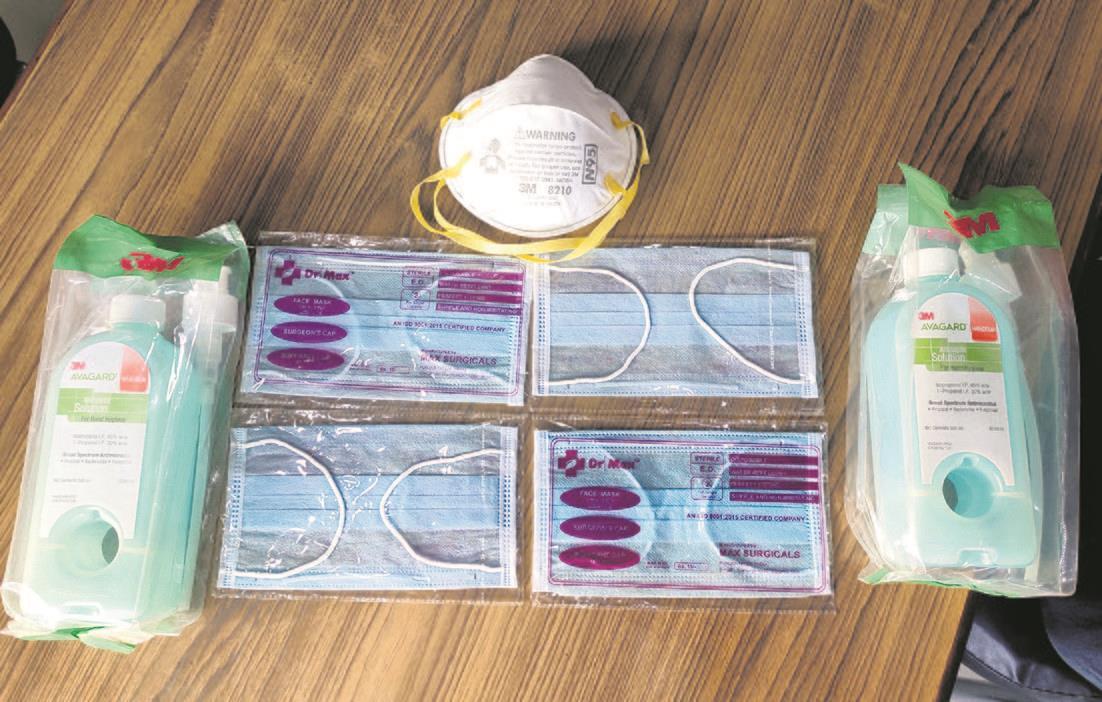
he Army’s Northern Command on Monday handed over a large number of Covid-related material, including oxygen concentrators, PPE kits, face masks and steam inhalers to Udhampur district administration. Photo for representation only
Jammu, June 14
The Army’s Northern Command on Monday handed over a large number of Covid-related material, including oxygen concentrators, PPE kits, face masks and steam inhalers to Udhampur district administration, a defence spokesman said. This was the second time in the past three weeks that the Udhampur-based Northern Command provided such a large quantity of essential medical supplies in the district. The items were handed over to Udhampur District Commissioner Indu Kanwal Chieb by the Station Commander, Udhampur Military Station, on behalf of Northern Command as part of proactive assistance to the civil administration.
“The Northern Command has taken concrete steps towards establishing special Covid care centres, sensitising the public on precautions, provisioning dedicated Covid care to ex-servicemen, etc.” the spokesman said. — PTI
50 yrs on, ‘Born to battle’ IMA batch pays homage to mates
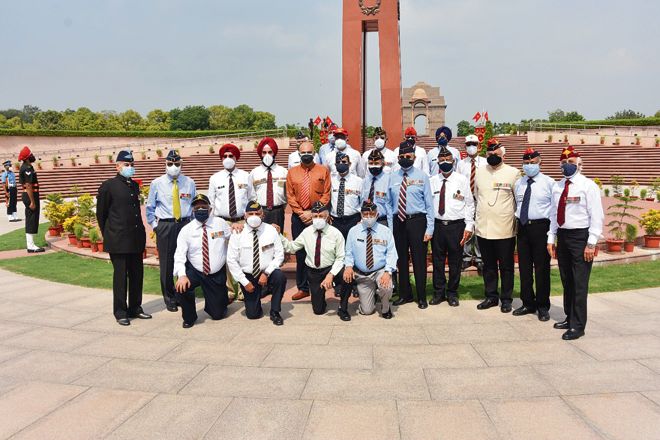
Army officers, who passed out of IMA on June 13, 1971, at the National War Memorial on Sunday.
Tribune News Service
New Delhi, June 13
Completing 50 years of having passed out of the Indian Military Academy (IMA), officers from the famed “Born to battle” course got together to pay homage to their mates at the National War Memorial in the national capital on Sunday.
The batch had passed out of the IMA on June 13, 1971, and within six months were thrust into the India-Pakistan war of December 1971, hence the sobriquet “born to battle”.
Twentysix of the batch mates got together in New Delhi today. Lt Gen Vishnu Kant Chaturvedi, one of those who attended the event, said similar events were organised at Chandimandir, Pune and Bengaluru.
A total of 349 cadets passed out of the IMA in June 1971 and 50 years later, 95 of them have passed away due to various reasons. Five officers of the batch were martyred during the 1971 war. One among them was Param Vir Chakra awardee Second Lieutenant Arun Khetarpal of the Poona Horse Regiment. He was responsible for repulsing a fierce counterattack at the Basantar river in the western sector. After having destroyed five enemy tanks, he laid down his life fighting for the country.
Col NJC Nair, Commanding Officer of the 16 Maratha light infantry, was awarded the highest peacetime gallantry award Ashok Chakra posthumously for counter insurgency operations in Nagaland.
According to the original plan, the batch mates were to reunite at the IMA, Dehradun, to celebrate the Golden Jubilee of their passing out, but the Covid-19 pandemic forced them to change the plan.
84 riots case life convict seeks sentence suspension on medical grounds
HC calls for report on medical condition of convict Naresh Sehrawat
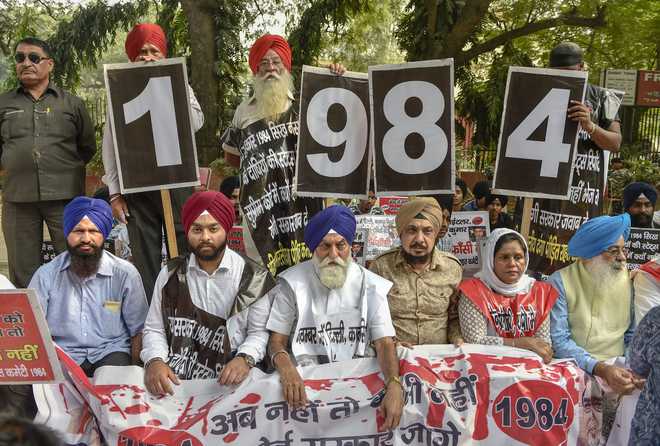
PTI file photo
New Delhi, June 14
The Delhi High Court on Monday called for a status report from the police regarding the health of a life convict in a 1984 anti-Sikh riots case who has sought interim suspension of sentence for 90 days on medical grounds.
A bench of Justices Navin Chawla and Asha Menon directed the police to file the fresh status report regarding the medical condition of convict Naresh Sehrawat before the next date of hearing on July 5.
Advocate Dharam Raj Ohlan, representing Sehrawat, told the court that he was seeking interim suspension of sentence or parole of 90 days in accordance with the guidelines laid down by the High Powered Committee (HPC) set up for decongesting jails to prevent spread of Covid-19 among prisoners.
Ohlan contended that his client was suffering from stage 4 kidney and liver ailments for which transplants were the only option and till he gets a transplant he has to be on a special diet which would not be possible while in prison.
The lawyer also told the bench that in view of Sehrawat’s medical condition he was susceptible to Covid-19 infection.
Opposing the plea, senior advocate R S Cheema, representing the Special Investigation Team (SIT), told the bench that Sehrawat has already received two doses of Covid vaccine and he was being well looked after.
To this, Ohlan said vaccination was not a 100 per cent guarantee or protection against Covid-19 infection.
Cheema also told the court that the convict was being provided all the requisite medical treatment and there was no emergency right now for grant of any relief to him.
An SIT was earlier set up by the Ministry of Home Affairs to reinvestigate the riot cases.
The trial court had awarded death penalty to convict Yashpal Singh and life term to Naresh Sehrawat in the case relating to the killing of two men in New Delhi during the 1984 riots—the first convictions in the cases reopened by the SIT.
Sherawat has also appealed against his conviction and the sentence before the high court which is pending.
The death reference as well as appeal of Singh against the capital punishment awarded to him is also pending in the high court. PTI
China’s People’s Liberation Army soldiers near Mukhpari peak. file
Ajay Banerjee
Tribune News Service
New Delhi, June 14
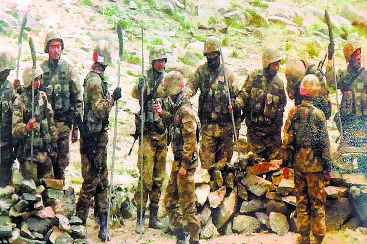
A clash between Indian and Chinese troops on the intervening night of June 15 and 16 at Galwan in eastern Ladakh last year has set a new template for military readiness along the Line of Actual Control (LAC).
No breakthrough
India-China talks to disengage in eastern Ladakh broke down on April 9
Both sides have jets, artillery guns, missiles, UAVs lined up on either side
The Galwan clash nullified all LAC peace pacts signed since 1993
All agreements stitched for maintaining peace along the LAC since 1993 now stand breached. The two nuclear-armed acrimonious neighbours maintain a deployment of armed troops within cannon-shot range of each other and talks to disengage and de-escalate broke down on April 9.
The matters don’t look to get sorted out in the next few months, in an assessment within the Indian security establishment.
India has made it clear that pulling back troops from friction points along the LAC could be done only after the Chinese army “disengaged” from areas like Gogra, Hot Springs and the Depsang plains. So far, the People’s Liberation Army (PLA) of China has been inflexible to this suggestion. As of now, the “disengagement” has happened only at one sector — Pangong Tso.
Both sides have fighter jets, armed helicopters, tanks, artillery guns, air defence missiles, UAVs and thousands of troops lined up on either side of the 823-km LAC in eastern Ladakh.
The clash at Galwan was the first fatal event since 1975 when a team of Assam Rifles was ambushed by the PLA in Arunachal Pradesh. Before that, a fully armed class had ensued in 1967 at Nathu La in Sikkim.
At Galwan, 20 Indian Army soldiers, including an officer, were killed in action. More than 900 troops on each side were involved in a physical clash, which started on the night of June 15 last year. It lasted several hours — in three phases — and ended in the early hours of June 16. Most of the deaths occurred as soldiers fell off the cliffs into a narrow valley and the Galwan river at an altitude of 15,000 ft. Some died due to hypothermia and others due to injuries.
Stones, steel poles and bamboo poles with nails embed on them were used by the Chinese to attack the Indian troops. The PLA also suffered fatal casualties even as no bullets were fired in the clash. The casualties would have been manifold had bullets been fired.
The incident had occurred after a round of talks to withdraw from the stand-off. The PLA had build a fresh post and set up arctic tents at vantage position on the south bank of the Galwan river. The post gave the Chinese better position to target the vital 255-km Darbuk Shayok Daulat Baig Oldie (DSDBO), India’s only link to Depsang, Murgo and Karakoram Pass.
The post, some 5 km from the DSDBO road, has been removed but the movement backwards has only been by a couple of kms.
China, India, Pak expanding nuclear arsenal, says report
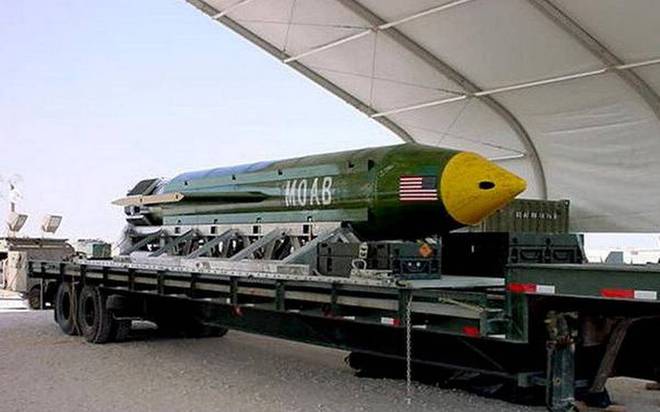
The number of nuclear warheads which are ready and deployed to fire have increased globally, while closer to home, China is in the middle of a significant modernisation and expansion of its nuclear weapon inventory.
India and Pakistan also appear to be expanding their nuclear arsenals, said a report of leading think tank released on Monday.
Swedish think-tank Stockholm International Peace Research Institute (SIPRI) released its “Yearbook 2021”, which assesses the current state of armaments, disarmament and international security. In this report is an 80-page detailed reference on nuclear weapons.https://349fa586fc75bd17dd27c08ddd462460.safeframe.googlesyndication.com/safeframe/1-0-38/html/container.html
“A key finding is that despite an overall decrease in the number of nuclear warheads in 2020, more have been deployed with operational forces,” the report said.
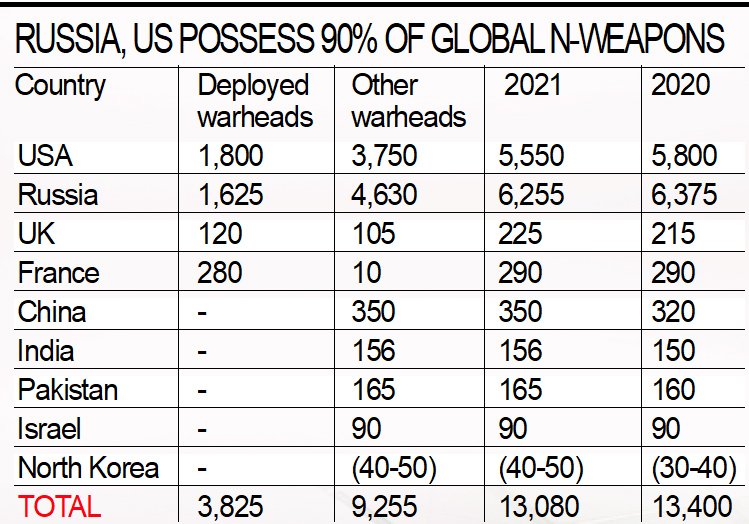
The world has nine declared nuclear-armed states — the US, Russia, the UK, France, China, India, Pakistan, Israel and the North Korea — which together possess an estimated 13,080 nuclear weapons at the start of 2021. This marked a decrease from the 13,400 that SIPRI estimated these states possessed at the beginning of 2020.
Despite this overall decrease, the estimated number of nuclear weapons currently deployed with operational forces increased to 3,825 from 3,720 last year.
Around 2,000 of these — nearly all of which belonged to Russia or the USA — were kept in a state of high operational alert. The UK and France are the other two who have deployed warheads. China, India and Pakistan are not listed in the report as having “deployed” such weapons with operational forces.https://349fa586fc75bd17dd27c08ddd462460.safeframe.googlesyndication.com/safeframe/1-0-38/html/container.html
“The overall number of warheads in global military stockpiles now appears to be increasing, a worrisome sign that the declining trend that has characterised global nuclear arsenals since the end of the cold war has stalled,” said Hans M Kristensen, Associate Senior Fellow with SIPRI’s nuclear disarmament, arms control and non-proliferation programme.
Russia and the US together possess over 90 per cent of global nuclear weapons. Both have extensive programmes under way to modernise their nuclear warheads, missile and aircraft delivery systems and production facilities.
Lt. Gen. R.P.Singh. GOC-in-C Western Command Chandimandir
Subject:Hard Times are yet to come. SOLDIERS including their AMC FRATERNITY has to remain BATTLE WORTHY ALWAYS and EVERYTIME.
Dear General,
1. I take the liberty to thank your URO TEAM headed by Col. Amit Agarwal of Command Hospital for conducting successful operation on me on 03rd June 2021.
2. I do hope ECHS will reimburse the Medical expenses incurred on me by Command Hospital Chandimandir. However, I do make a effort to reimburse a token sum of these Medical expenses incurred on my Operation less after surgery care which was largely done by me.For this; I enclose a Cheque of Rs. Five Thousand only in favour of GOC-in-C which can be utilsed to replace worn out mattresses from Officer’s ward or buy cutlery and glasses for Officer ward where one could find Singapore Air Line Fork and spoons/ forks of numerous varieties which are never found in Officers Mess.
3. That I wish I could donate atleast one wheel chair to Command Hospital as I saw a wornout chair being offered to a Officer Patient on discharge.My meager military penson prevents me from donating Wheel Chair so as to make two ends to meet honourably. My brother Veteran Officers should come out for suçh nobel ventures. The Government will always keep Armed Forces without sufficeint funds but will not shy away from using limited resources of Armed Forces be it of even Medical at the costs of Soldiers.
4. That I am aware that for setting up Covid Pandemic Hospitals the meagre manpower resources of Army Hospitals have been over taxed by civilian Centre/State governments and trained Doctors and nursing staff is deployed in these Covid Hospitals. But with ever increasing Black Fungus disease and likely THIRD WAVE of Covid Pandemic; the Army Medical resources will continue to be in use by civilians for long time due to ever ailing civil health structure where Union of India in last 72 years has pumped in Millions-Billions of rupees of tax payers mlney which has gone down the drain in pockets of ruling elite and their henchmen. The Center/State Governments may not reimburse such Army Hospital expenditure and if they do paper reimbursement then it will never reach the end expense making Army Hospitals/ Formations who will also rely on their alloted Army budget in order to shape up teeming millions who suffered the Pandemic largely due to could not care attitude of ruling Governments who still take it as a Law and Order problem and not Medical problem and still sleeping to shore up health infrastructure and does not allot atleast 6.8% GDP budget to health infrastructure of India where there are some primary health Centers/ sub centers in a thatched huts and some with no DOCTOR and some in next to cattlesheds.Even as late as 2020-21, defecting medical equipment like Oxygen Concentrators etc were purçhased by Government machinary for civil Hospitals and one Government sold off Vaccine at a profit to private hospitals only to cancel its order after hue and cry but did not punush the Health authorities who made this profit making venture that too during ongoing Pandemics. Their corrupt show goes on from 1947 to 2021, i.e. YEH KHABHI BHI NAHI SUDERENGE. Anyway coming back to Army systems.
Battle wòrthy of Army Hospitals, dedicated Health care staff and even educate Soldiers to take care of themselves if need be after surgery etc:
5. These Pandemics and during war in take of casualties will be very high. The Health care needs to sustain itself and stand tall in those trying times.Mere entering into Healthcare system does not make one FLORENCE NIGHTINGALE, but there has to be humanity and dedicated commitment from core of heart to take care of patients. A person who can not sustain 8 hourly duty will put health care of a patient Soldier to gravest risks and efforts of Army Doctors conducting succesful surgeries will go in vain which will also directly adversely affect the Armed Forces of India who will require their Soldiers made quickly medically fit to rejoin battlefields at the earliest.Thus all Soldiers should be trained for after surgery self care so that if need arises then they can recover where Nursing system crashes momentarily. 6. There is no denying the fact that Doctors and Nurses play very vital part in managing the crises of Patients, of Pandemic and especially of battle casualties during War/battles. Doctors after surgery leave it to nursing staff to provide dedicated health care so that their Patients recover quickly. 7. The nursing staff are often primary care giver in hospitals. The patient interacts with them especially after surgery during road to recovery. 8. There is a need always of quality health care service to Soldiers and Veterans. Especially during Wars/ battles and Pandemics there is requirement of health care of patients round the clock. Nurses should be well acquainted with ailments specific care. Even the worsening of life style diseases has caught up the Armed Forces where there are increase of ailments like diabetes, high blood pressure and heart ailments. The increase in cardiovascular diseases is frightening. Proper healthcare by nursing professionals will speed up recovery and reduce load on Doctors and Units will have their Soldiers back. The deep fatigue and anguish especially during war or ongoing Pandemic will need stronger “wìll power” for nursing staff to take care of critical cases, neuro care, operation theater nursing and constant updating of education, among others. The mere fact that Pandemic has put civil health care system on ventilator and exposed its deplorable conditions, has forced Army Medical Corps to step in aid of civil, thereby, increasing the burden on already over stretched Army Medical system.
9. FLORENCE NIGHTINGALE SET VERY HIGH STANDARDS OF NURSING WITH THE RESULTS MANY WOUNDED SOLDIERS QUICKLY RECOVERED AND JOINED THEIR COMRADES IN BATTLEFIELDS. Some private Hospitals pay very low wages to Nursing staff. But yet Nurses are prompt and meticulous in answering each and every call of patient, ensuring timely change of drip bottles or timely change/emptying of Urine satchel, providing medical papers, medicine and discharge slips etc on the bedside of the patient and take discharged patient on Wheel chair till exit gate of hospital ensuring patient boards vehicle. Unfortunately all this is found lackig in Command Hospital for best known reasons to their nursing staff. That is why I advocate teaching Soldiers for self care ( if need be) after surgery.
10. It was. very unfortunate that needle fixed for insertion of drip and injections prior to OT was leaking and only patients going to nursing COUNTER and explaining to the nurse then its location was changed. Patient had to ask time and again to change the enpty bottle of drip. He had to pick up empty drip bottle and its pipe in one hand and urine satchel and its pipe in other hand and then go to nursing counter to get the needle of drip system removed from nurse to stop blood flowing from viens of patient to drip pipe. Ultimately he requested the Doctor to put him on drip system for the night only if he can ensure timely replenishment so Doctor stopped the drip and patient that night used oral hydration (drank six bottles of water ) to flush out blood from his urine bladder on which surgery was performed. The person for changing/emptying urine satchel was usually missing even at night and nurse said that he attends seven wards and will only come when he can and you can tell this to Commandsnt also. There was dust on center table of recreation room. Wheel chair given to one discharged Officer patient had torn back and his relative was left to take him from the ward of his own. For medical papers, discharge slip and medicine slips patient is made to shuttle around on two counters of Nursing staff and ward master and discharge is not on displayed time by 1400 hrs. This is inspite of very highly paid nursing staff whuch is well trained by Army at Government expenses, whereas, private hospitals lowely paid nursing staff provide proper and maticulous health care after surgery as brought put above. The Army needs to do quick thinking on this aspect as during war when influx of casualitues will be very high then Soldier Patients will require meticulous and dedicated nursing staff to make these patients battle worthy quickly to rejoin their duties in battlefields at the earliest. Also I am sending cheque of token sum of payment of SURGERY only and not of healthcare after surgery which needs lot of improvement, otherwise we will be doing dis-service to the principles of FLOWRENCE NIGHTINGGALE. Please ensure ECHS reimburses all medical expenditure incurred on me by Command Hospital Chandimandir of which Urologist carried out timely and good surgery on me for which I shall remain ever indebted to Army.
CONCLUSION
10. That I once again thank Col Amit Agarwal HOD of URO TEAM for prompt and successful surgery on me. 11. Please accept my cheque of Rs. Five Thousand only as discussed above and utilise it for purchase of Mattresses/cutlery/ glasses for Officer’s Ward of Command Hospital Chandimandir. 12. Prepare both Hospitals especially their nursing system to be battle worthy always and everytime on the basic principles of FLOWERANCE NIGHTINGÀLE. 13. Educate Soldiers on self health care after surgery if need be; as and when situation arises due to increase in patients or if someone finds chink in Nursing system then after Surgery healthcare do not suffer. 14. I would request fellow Veterans Officers to donate medical equipment to Army Hospitals or pool in to do so. 15. This is plain speaking by a Soldier so that system improves itself to finest quality and its not a complaint. I have been raisng issues for betterment and upliftment of Able/disabled serving/retired Soldiers, and families, Widows and war Widows at National level since 1994 with lot of success and all at my costs. Please do acknowledge and confirm receipt and action taken telephonically and via revert Email and by post. Jai Hind! (Major Onkar Singh IC-33468N aged 69 years)
Copy to All concerned for widest publicity amongst Veteran Officers to generously come forwad to augment resources of Army Hospitals as Defence Ministry has not been doing yhis gor ages and leaves noopportunity to use the services of even AMC as bekng done on mass scale for ongoing Pandemic Covid 19 of which third wave may follow soon. I am sending cheque of Rs. Five Thousand only by post.
Copy also to: All three Chiefs through their Welfare Directorates of respective HQ
State Stalwarts
DEFENCE MINISTER
Minister Rajnath Singh
ALL HUMANS ARE ONE CREATED BY GOD
HINDUS,MUSLIMS,SIKHS.ISAI SAB HAI BHAI BHAI
CHIEF PATRON ALL INDIA SANJHA MORCHA
LT GEN JASBIR SINGH DHALIWAL, DOGRA
SENIOR PATRON ALL INDIA SANJHA MORCHA
MAJOR GEN HARVIJAY SINGH, SENA MEDAL ,corps of signals
.
.
PATRON ALL INDIA SANJHA MORCHA
MAJ GEN RAMINDER GURAYA ,MADRAS REGIMENT
sanjhamorcha303@gmail.com
PRESIDENT SOUTH ALL INDIA SANJHA MORCHA
COL SS RAJAN BOMBAY SAPPERS,
PRESIDENT UTTARAKHAND ALL INDIA SANJHA MORCHA
COL B M THAPA ,BENGAL SAPPERSS
PRESIDENT HARAYANA STATE CUM COORDINATOR ESM
BRIG DALJIT THUKRAL ,BENGAL SAPPERS
PRESIDENT TRICITY
COL B S BRAR (BHUPI BRAR)
PRESIDENT CHANDIGARH ZONE
COL SHANJIT SINGH BHULLAR
.
.
PRESIDENT PANCHKULA ZONE AND ZIRAKPUR
COL SWARAN SINGH
INDIAN DEFENCE FORCES
DEFENCE FORCES INTEGRATED LOGO
INDIAN AIR FORCE
Air Officer C-in-C WESTERN AIR COMMAND
AIR MSHL S PRABHAKARAN AVSM VM
AOC-IN-C, EASTERN AIR COMMAND
Air Marshal Inderpal Singh Walia
AOC-in-C SOUTH WESTERN AIR COMMAND
Air Marshal Vikram Singh
AOC-IN-C, SOUTHERN AIR COMMAND
Air Marshal J.Chalapati
AOC-IN-C TRAINING COMMAND
AIR MARSHAL SK GHOTIA VSM
AOC-IN-C MAINTENANCE COMMAND
Air Marshal Jagdish Chandra
Flag Officer Commanding in Chief, Western Naval Command
ice Admiral R Hari Kumar, PVSM, AVSM, VSM
Flag Officer Commanding in Chief, Eastern Naval Command
Vice Admiral Sanjay Bhalla, AVSM, NM
Flag Officer Commanding in Chief, Southern Naval Command