Sanjha Morcha

What’s New

Click the heading to open detailed news

Current Events :

web counter

Print Media Reproduced Defence Related News

Rekindling the revolutionary spirit

Bhagat Singh’s father Kishan Singh visited drought-hit Vidarbha in 1898. He did not merely distribute relief material and return; he took around 50 orphaned children from Vidarbha with him. These children were of the farmers who, unable to deal with their desperate situation, had committed suicide. Kishan Singh started an orphanage at Ferozepur for these children. At that time, he was just 20 years old.
Rekindling the revolutionary spirit

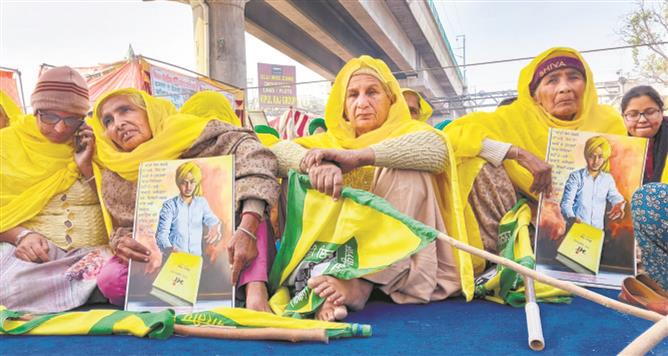
RELIVING HISTORY: The ideals of the martyrs find resonance in the ongoing agitation by the farmers against the farm laws. PTI
Sanjay Nahar

90th death anniversary of Bhagat Singh, Rajguru & Sukhdev

THIS incident dates back to 1898. The farmers in Vidarbha region were severely hit by a drought. When Sardar Kishan Singh came to know about this, he, along with Lala Bishambhar Sahay, Lala Shivram Vakil and other colleagues, reached Vidarbha. They had brought along foodgrains. Imagine the distance between Jalandhar in Punjab and Vidarbha region in Maharashtra, and that too nearly 125 years ago! However, Sardar Kishan Singh’s patriotism and his compassion for fellow farmers did not let him sit quiet. He did not merely distribute the relief material and return; he, in fact, took around 50 orphaned children from Vidarbha with him. These children were of the farmers who, unable to deal with their desperate situation, had committed suicide. Kishan Singh started an orphanage at Ferozepur for these children. At that time, Kishan Singh was just 20 years old. If you wonder who Sardar Kishan Singh was, well, he was the father of India’s great son Shaheed Bhagat Singh!

Bhagat Singh was born in such a patriotic family. He grew up seeing the life of farmers and the common people. No wonder, bringing about a change in the life of ordinary farmers was his idea of revolutionary work. Today is the 90th anniversary of the martyrdom of Bhagat Singh, Rajguru and Sukhdev. Unfortunately, the issues facing the farmers are just the same even today. One is pained to say that the dreams of the revolutionaries who made the supreme sacrifice for creating a new India are still unfulfilled.

The current issue of the farmers is not limited to Punjab, Haryana and the Jat farmers of western Uttar Pradesh; farmers across India face similar issues. Today, the farmers have taken to the streets raising the slogan ‘Pagdi Sambhal Jatta’, but the slogan echoes the feelings of farmers over a century ago. In 1907, the British had passed three Acts regarding agriculture. Bhagat Singh’s paternal uncle Ajit Singh had raised his voice against them by mobilising the farmers of Punjab. He addressed public meetings all over Punjab and had even invited Lala Lajpat Rai, a veteran Congress leader, to these meetings. Lala Banke Dayal had quit his job to join the agitation. He read out the poem ‘Pagdi Sambhal Jatta’during this agitation. The poem had a description of the farmers’ issues and the injustice being meted out to them. The poem became the signature slogan of the agitation. It became so popular that the agitation itself came to be known by that name. The agitation grew so strong that the British government had to withdraw the Acts. Today, it is our own government. Yet, the agitation has been going on for the past almost four months. History is being repeated.

During my meetings and discussions with Shaheed Bhagat Singh’s colleagues, Durga Bhabhi and Virendra ji, and his brother Kultar Singh, the topic as to why Bhagat Singh who had received the Arya Samaj doctrine and who belonged to a religious family, became an atheist, came up often. In this context, I was told about an incident when some of Bhagat Singh’s fellow revolutionaries talked about the help his family, Sardar Ajit Singh and Sardar Kishan Singh, extended to the countrymen affected by droughts, floods, earthquakes and other natural calamities. They especially praised the act of adopting orphaned farmer children from Vidarbha. Bhagat Singh had said then, “It was our duty but we need to bring about a change in the system so that no farmer or labourer is forced to commit suicide ever!” It is clear from his words that his journey towards atheism had begun with the farmers’ agitation in Punjab.

Bhagat Singh asked himself some questions after witnessing the plight of farmers and the ordinary people. These questions led him to atheism. He asked himself, ‘If this world is created by the Almighty, why is it filled with destitution and sorrow?’ Next, he asked, ‘Why doesn’t He free the entire humanity and the workers from the slavery of capitalism?’ Bhagat Singh had unequivocally said that the real age of freedom would truly begin only when countless men and women came forward thinking about the farmers and ordinary people and when they would be thinking only about serving the mankind and nothing else.

“The farmers and labourers are the most important elements of society; however, they are exploited the most by society. They are even deprived of their basic rights. The farmers who produce food for everyone are forced to die in hunger. Artisans who weave cloth for others cannot buy enough clothes for their own children. Those who build huge mansions do not have even a simple house to live in. On the other hand, the capitalists who exploit them live a comfortable life,” he said. These thoughts of Bhagat Singh clearly show that he was moved by the plight of farmers and the ordinary people.

A couple of months before he was hanged, Bhagat Singh had written a letter, in which he had highlighted issues such as ‘End of landlord system’, ‘Loan waiver for the farmers’, ‘Nationalisation of lands in order to boost community farming’, ‘Home for everyone’, ‘Complete exemption to farmers from taxation’, ‘Nationalisation of industries’, ‘Education for everyone’, ‘Reduction in the working hours of the labourers’, etc. As a nation, we are still grappling with precisely the same issues.

In this backdrop, the irony of the current farmers’ agitation in Delhi is worth noting. The agitators and the government both are using Bhagat Singh’s photos! Rekindling faith in the minds of hardworking farmers so that they can lead a life of dignity would be a true tribute to martyrs Bhagat Singh, Rajguru and Sukhdev.
3 soldiers burnt alive during Rajasthan drill

3 soldiers burnt alive during Rajasthan drill

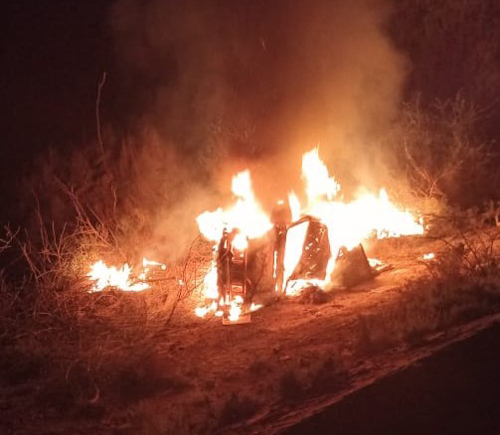
An Army Gypsy on fire in Sriganganagar district. Tribune photo

Our Correspondent

Abohar, March 25

Three soldiers were burnt alive and five others injured when a Gypsy overturned and caught fire during a training exercise on the Raziasar-Chhatargarh road in Sriganganagar district early today.

The incident took place around 1 am “near Gopalsar during the night training task when unfortunately 3 fatalities were reported”, said Defence PRO Lt Col Amitabh Sharma.

A source said eight soldiers of Bathinda-based 47-AD Army unit were in the vehicle when the mishap occurred. Three charred bodies were found from the wreckage, while five injured soldiers were admitted to the government hospital in Suratgarh, from where they were shifted to the Military Hospital.

Lt Col Sharma said the incident occurred during a routine exercise when the soldiers were being given different tasks.

Raziasar police station in charge Vikram Tiwari said the mishap occurred near Burji (pillar) No. 330 of the Indira Gandhi Canal. The vehicle rammed into shrubs, hit a tree before overturning. A fire erupted giving occupants little chance to escape, said the sources.

The deceased have been identified as Subedar EV Nazar of Andhra Pradesh, Havildars Dev Kumar Bhattacharya of West Bengal and SK Shukla of Uttar Pradesh.

Those injured are Captain Ankit Vajpayee (34), soldiers SK Prajapati (35), Umesh Yadav (27) Ashok Ojha (28) and Bhanwer Lal Bablu (27). Three of them suffered grievous injuries.

Senior Army officers visited the scene and initiated a probe. The police said an accident case had been registered. The bodies were being taken by the Army to native places of the deceased for last rites.

(With agency inputs )


Freedom fighter Bhagat Singh’s hideout in a shambles

Freedom fighter Bhagat Singh’s hideout in a shambles

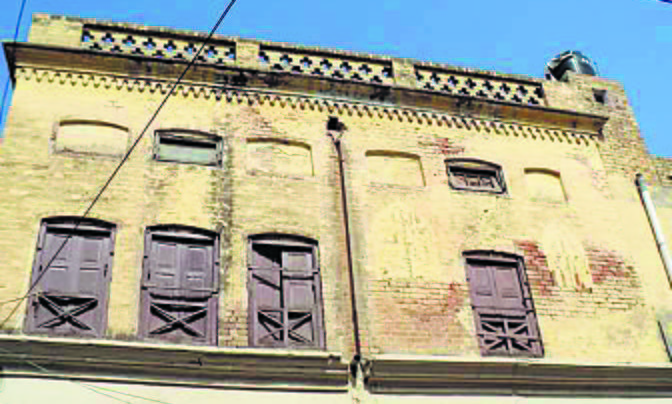
Bhagat Singh’s hideout : The old building at Turi Bazaar.

Our Correspondent

Ferozepur, March 22

Even six years after being notified as a ‘protected monument’, the state government has failed to make any concerted efforts for the development and preservation of the double-storey building that served as a hideout of the Krantikari Party led by legendary revolutionary Bhagat Singh.

After a prolonged legal battle by locals, the Department of Tourism and Cultural Affairs had declared the building as a ‘protected monument’ on December 17, 2015. Thereafter, neither any step was taken to take over the building nor any funds were allocated for it.

Modi pays tributes to Bhagat Singh, Sukhdev, Rajguru on ‘Shaheed Diwas’

At present, the building is under the control of the Krishna Bhagti Satsung Trust. Nand Kishore Sharma, one of the trustees, said his grandfather Lahori Ram Shastri had met Bhagat Singh here several times. “I am ready to do anything for the construction of a museum in the building,” he said. Earlier, the district administration had served a notice on the occupants not to alter the structure or sell the premises.

In 2016, the then Deputy Commissioner DPS Kharbanda had mooted a proposal to relocate the shop on the ground floor and family occupying the first floor to another location for which an agreement was also drafted. However, the matter is still stuck.

During his visit three years ago, former Tourism and Cultural Affairs Minister Navjot Sidhu had also promised to provide Rs 15 lakh for the renovation of the building.

Opinion: The supreme martyrs

Bhagat Singh, Rajguru and Sukhdev are a source of inspiration for one generation after another. Bhag…

“This building is no less than a pilgrimage centre for me. This was taken on rent by my father Dr Gaya Prashad under the fake name of Dr BS Nigam to run a pharmacy in 1928-29,” said Kranti Kumar Katiyar.

“While pharmacy was run on the ground floor, the first floor was used by the revolutionaries to make bombs and evolve strategy against the British rule,” said Rakesh Kumar, who has also authored several books on the monument.

Opinion: Rekindling the revolutionary spirit

When contacted, Deputy Commissioner Gurpal Singh Chahal said, “We will take up the matter with the higher authorities.” He said the state government was determined to develop all such memorials and efforts were being made for it.

NGOs ready to help

Certain NGOs have submitted proposals to the government, expressing their desire to make contribution for the restoration of the historical building. However, nothing has happened so far. Even the Sonalika Group had announced to contribute Rs10 lakh for the restoration of the martyr’s hideout.


INDIAN ARMY SPORTS TRIAL ARTILLERY CENTRE NASIK*

*ONLY FOR MALE*

*Games* 
Cross country Marathon Athletic  Kabaddi boxing Handball football hockey basketball Volleyball Archery

🏹

, fencing,, Wrestling, taekwondo,

*(swimming and diving  trial may be cancelled due to  Covid 19 Depending on recruitment authority)*

*Date of trials :-*  28 March 2021 & 29 March 2021

*Venue:-*  Artillery centre  Hyderabad Telangana

*TIMEING:-* 05:00AM

*Age limit :* 17.5 to 21years

*Qualification and education:-* 10th pass with 45%

*Only for national/State level/ District level senior and junior  medal list 1st /2nd positions. In last 2 years*

*Salary:- 40000*

*Documents to be brought :*
1. Birth Certificate
2. Caste Certificate
3. Education Certificate
4. Character Certificate from Gram Pradhan
5. Residential/Domicile Certificate
6. Six latest colour photos, one joint photo with parents & one with grandparents.
7. *Sports Participation Certificate in NATIONAL level & above.and 1ST AND 2ND POSTION IN senior category( last 2 yr)*
8. Aadhar Card.
*9. COVID 19 NEGATIVE REPORT*
All asked documents need to be shown in original and one copy of all needs to be submitted.

*“Rally can be cancelled / postponed at any time without giving any reason”*

*NO  TA/DA WILL BE GIVEN BY UNIT  HAVE TO ARRANGE OWN*

*Recruitment into the Army is a free service. Candidates are advised not to pay bribe to anyone for recruitment as it is based purely on merit. Selection process during recruitment at all stages is computerized and transparent. Therefore, candidates are advised to be beware of touts as they cannot help them at any stage.*

*FOR OFFICIAL NOTIFICATION:-* https://sikkusports.com/indian-army-sports-trial/


Defence ministry signs deal with Mahindra Defence to procure 1,300 light combat vehicles

The defence ministry says the vehicle will be authorised to various fighting units for carriage of medium machine guns, automatic grenade launchers and anti-tank guided missiles.

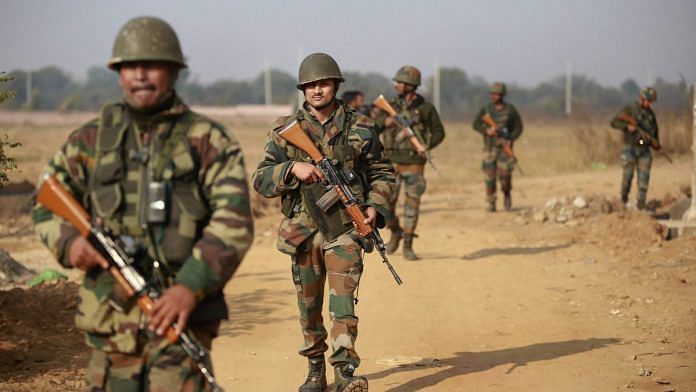
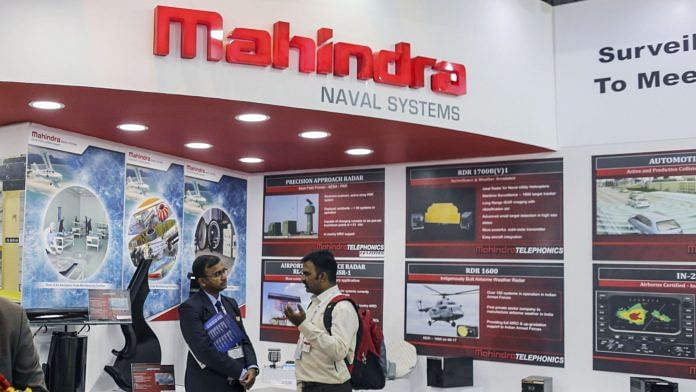
File photo of visitors at the Mahindra Defence Naval Systems booth during Aero India air show in Bengaluru | Representational image | Photo: Dhiraj Singh | Bloomberg

File photo of visitors at the Mahindra Defence Naval Systems booth during Aero India air show in Bengaluru | Representational image | Photo: Dhiraj Singh | BloombergText Size: A- A+

New Delhi: The defence ministry on Monday said it finalised a contract with Mahindra Defence Systems Ltd (MDSL) to procure 1,300 light combat vehicles for the Indian Army at a cost of Rs 1,056 crore.

The induction of the vehicles is planned to be completed in four years.

“Providing further boost to ‘Make in India’, the Ministry of Defence (MoD) signed a contract with MDSL for supply of 1,300 light specialist vehicles to the Indian Army,” the ministry said.

“The light specialist vehicle is a modern fighting vehicle and will be authorised to various fighting units for carriage of medium machine guns, automatic grenade launchers as well as anti-tank guided missiles,” it said in a statement.

The vehicle is indigenously designed and developed by MDSL.

The ministry said the vehicles are extremely agile with all-round protection against small arms fire and they will assist small independent detachments.

“This is a flagship project showcasing the indigenous manufacturing capabilities of the defence industry and will add another milestone to the ‘Atmanirbhar Bharat Abhiyaan’ and ‘Make in India’ initiative of the government,” the ministry said in a statement.

In the last few months, the ministry finalised a range of procurement projects for the three forces to enhance their overall combat capabilities.


Also read: Not military deals, but China & deeper India ties to be in focus on US defense secy’s visit


In a historic first, India could participate in military exercises in Pakistan later this year

Pakistan will hold Pabbi-Antiterror-2021, under the aegis of Shanghai Cooperation Organisation later this year. India’s participation would come amid fresh peace process between both nations.

Indian Army | Representational image | PTI

Indian Army (representational image) | PTIText Size: A- A+

New Delhi: In yet another signal that frosty ties between New Delhi and Islamabad are thawing, India could take part in a multi-nation exercise to be hosted by Pakistan later this year at its premier anti-terrorism centre in Pabbi in Nowshera district of Khyber Pakhtunkhwa. The exercise will be held under the aegis of Shanghai Cooperation Organisation (SCO).

If the plan goes through, it would be a historic event, given that it would be the first time that Indian forces will travel to Pakistan for any military exercise.

The development comes at a time when Pakistan Army chief General Qamar Javed Bajwa last week stressed on the need for India and Pakistan to “bury the past and move forward”. Just weeks ago, the two countries had agreed to observe ceasefire along the Line of Control (LoC).

Sources in the know remained non-committal about the actual participation of the Indian troops in the joint exercise “Pabbi-Antiterror-2021”, saying a final decision was yet to be taken.

The sources also said that the proposal is under consideration of the National Security Council Secretariat (NSCS). However, they did confirm that India will be participating in a joint Army exercise under SCO umbrella in Russia later this year.

The decision to hold “Pabbi-Antiterror-2021” was announced during the 36th meeting of the Council of the Regional Anti-Terrorist Structure (RATS) held in Tashkent, Uzbekistan, last week, China’s state-run Xinhua news agency reported Sunday.

Delegations of the competent authorities of India, Kazakhstan, China, the Kyrgyz Republic, Pakistan, Russia, Tajikistan, Uzbekistan and the RATS Executive Committee attended the meeting, Xinhua said, carrying a picture of the participants.

Meanwhile, sources in Pakistan said while dates and participants are yet to be confirmed, the exercise, under the aegis of the inter-governmental organisation comprising eight nations, will be held at the National Counter Terrorism Centre (NCTC) Pabbi, near Mangla Cantonment.

A Pakistani delegation had visited Tashkent-based Regional Anti-Terrorist Structure of the SCO in February to finalise the design and preparation of the Army exercise which is likely to be in second half of the year.


Also read: India, Pakistan foreign ministers likely to meet at ‘Heart of Asia’ conference in Dushanbe


What is NCTC

National Counter Terrorism Centre (NCTC) imparts specialised pre-induction training to Pakistan Army units earmarked for Federally Administered Tribal Areas (FATA) and SWAT. It also offers counter terrorism training services to law enforcement agencies including Pakistan Air Force, Pakistan Navy, Defence Services Guards, Strategic Plans Division, Punjab Rangers, among others.

The Centre, which was set up in 2014 by then Pakistan Army chief Gen. Raheel Sharif, also imparts anti-terror training to other countries.

Located near Kharian, a military station and headquarters of an infantry division, the training institution comes under the direct supervision of Kharian Division and Mangla Corps.


Also read: Bajwa’s change of heart on India isn’t enough. All of Pakistani military must be on board


India withdrew from SCO exercise in 2020

India had withdrawn from a multilateral military exercise — Kavkaz-2020 — that was scheduled to be held in southern Russia in September last year as it did not want to perform drills with Chinese soldiers amid tensions at the Line of Actual Control (LAC).

While India planned to send 200 military personnel, including 180 soldiers from an infantry battalion and observers from the IAF and the Navy, to take part in the exercise, it decided not to participate at the last minute following a high-level military and diplomatic meeting.

It was in 2018 that India and Pakistan had come together for a joint military exercise under the umbrella of the SCO. At that time, a video of Indian and Pakistani troops dancing together had gone viral.

The SCO was founded in Shanghai in 2001 by the then presidents of Russia, China, Kyrgyz Republic, Kazakhstan, Tajikistan and Uzbekistan. India and Pakistan were admitted as observers in 2005 and both countries were admitted as full members of the bloc last year.

(Edited by Neha Mahajan)


Also read: Why distrust-but-verify is a prudent response to Pakistan Gen Bajwa’s call to bury the past


India justifies designs of Pakal Dul, Lower Kalnai hydro projects in J-K as Pakistan objects

he two sides also discussed a host of other issues under the Indus Waters Treaty during the annual Permanent Indus Commission meeting

India justifies designs of Pakal Dul, Lower Kalnai hydro projects in J-K as Pakistan objects

New Delhi, March 23

Pakistan raised objections to the designs of Pakal Dul and Lower Kalnai hydropower plants in Jammu and Kashmir and sought more information on the projects in Ladakh sanctioned after the abrogation of Article 370 as the Indus Commissioners of the two countries met here on Tuesday, sources said.

On its part, India justified its stand on the designs.

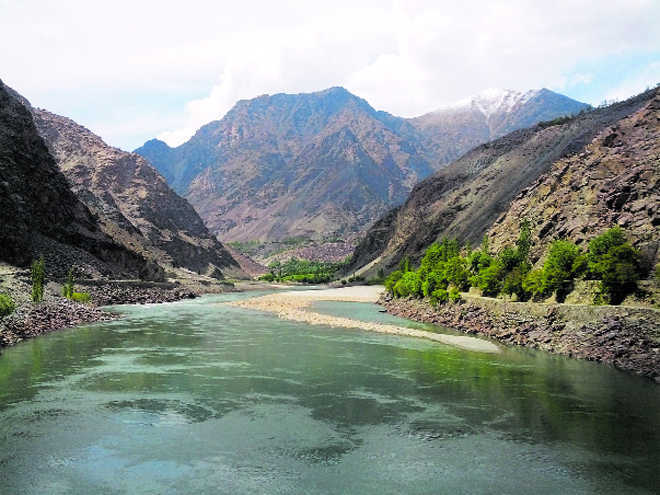
The Pakal Dul Hydro Electric Project (1,000 MW) is proposed on the Marusudar river, a tributary of the Chenab river, in Kishtwar district in Jammu and Kashmir. The Lower Kalnai project is proposed in Kishtwar and Doda districts.

The two sides also discussed a host of other issues under the Indus Waters Treaty during the annual Permanent Indus Commission meeting.

The two-day meeting which started on Tuesday is taking place after a gap of over two years. The last meeting took place in Lahore in August 2018.

The Indian delegation was led by PK Saxena, India’s Indus Commissioner, and his team from the Central Water Commission, the Central Electricity Authority and the National Hydroelectric Power Corporation.

The Pakistani delegation was led by its Indus Commissioner Syed Muhammad Meher Ali Shah. The delegation arrived here on Monday evening.

This year’s meeting is the first between the two commissioners after the August 2019 nullification of the provisions of Article 370 of the Constitution that gave special status to the state of Jammu and Kashmir.

The meeting also assumes significance as this is the first important engagement between India and Pakistan after militaries of the two countries had announced last month that they would strictly observe a ceasefire along the Line of Control and other sectors.

In 2019, the erstwhile state of Jammu and Kashmir was also bifurcated into union territories—Ladakh and Jammu and Kashmir.

India has since cleared several hydropower projects for the region.

Of these, Durbuk Shyok (19 MW), Shankoo (18.5 MW), Nimu Chilling (24 MW), Rongdo (12 MW), Ratan Nag (10.5 MW) are in Leh; and Mangdum Sangra (19 MW), Kargil Hunderman (25 MW) and Tamasha (12 MW) are Kargil. Both Leh and Kargil fall in Ladakh.

Pakistan has sought information on these projects, sources added.

The Indus Waters Treaty (IWT) warrants the two commissioners to meet at least once a year, alternately in India and Pakistan.

However, last year’s meeting scheduled to be held in New Delhi in March was cancelled, a first since the treaty came into being, in view of the coronavirus pandemic.

In July 2020, India had proposed to Pakistan that the meeting for discussing pending issues pertaining to Indus Waters Treaty (IWT) be held virtually in the wake of the coronavirus pandemic, but Pakistan insisted on holding talks at the Attari border checkpost. However, in response, India said it is not conducive to hold the meeting at the Attari Joint Check Post due to the pandemic. With the improvement in situation, this mandatory meeting is being held following all COVID-19-related protocols.         

Under the provisions of Indus Waters Treaty, signed between India and Pakistan in 1960, all the water of the eastern rivers—Sutlej, Beas, and Ravi—amounting to around 33 million acre feet (MAF) annually is allocated to India for unrestricted use. The waters of western rivers—Indus, Jhelum, and Chenab—amounting to around 135 MAF annually has been assigned largely to Pakistan.          

According to the treaty, India has been given the right to generate hydroelectricity through run-of-the-river projects on the western rivers subject to specific criteria for design and operation. The treaty also gives right to Pakistan to raise objections on design of Indian hydroelectric projects on the western rivers. PTI


787 suicides reported in armed forces since 2014, most from Army, govt data shows

According to Minister of State for Defence Shripad Naik, the Army reported 591 suicide cases, Navy 36, while the Indian Air Force had 160 between 2014 and 2021 (till 22 March).

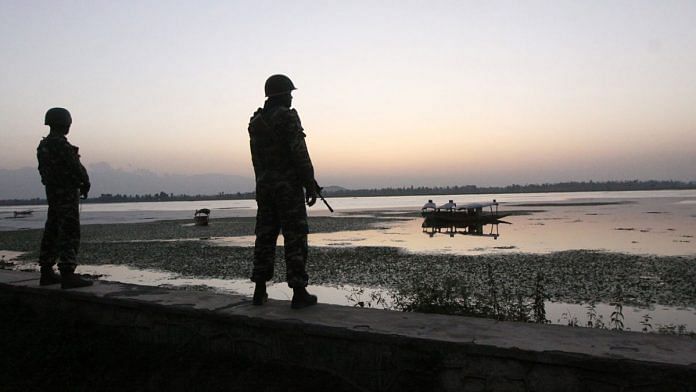
A file photo of Indian Army soldiers on a patrol near Dal Lake in Jammu & Kashmir | Praveen Jain | ThePrint

A file photo of Indian Army soldiers on a patrol near Dal Lake in Jammu & Kashmir | Praveen Jain | ThePrintText Size: A- A+

New Delhi: A total of 787 armed forces personnel died by suicide since 2014 with the Army reporting a maximum of 591 such cases, according to data provided by the government on Monday.

In response to a question, Minister of State for Defence Shripad Naik told Rajya Sabha there were 18 incidents of fratricide in the Army and two in the Indian Air Force during the period.

According to the details furnished by the minister, the Army reported 591 cases of suicide, the Navy 36, while the number in the Indian Air Force was 160 between 2014 and 2021 (till date).

Naik said the armed forces have devised measures to deal with mental health issues of their personnel and prevent incidents of suicide and fratricide.

“The issue of stress and strain is being addressed by the commanders in a comprehensive manner at various levels. Sessions for stress management are organised by commanders and psychiatrists at all major stations,” Naik said.

He said counselling has been an intrinsic component of 23 psychiatric centres in the Army which are manned by well-trained and qualified psychiatrists.

“Specific measures have been put in place as part of the multi-pronged strategy to address stress in Army,” Naik said, adding these include sensitisation of commanders on the subject, welfare measures like provision of adequate married accommodation and recreation facilities.

He said various workshops and lectures on mental health and stress management are being organised by the IAF as part of its ‘Mission Zindagi’ campaign which is conducted quarterly at all stations.

The Indian Navy has established mental health centres in Mumbai, Visakhapatnam, Kochi, Port Blair, Goa and Karwar where family counsellors provide psychological counselling, the minister added.

“In addition, based on the finding of the studies conducted by the Defence Institute of Psychological Research (DIPR), the government has taken several steps towards stress amelioration amongst troops,” Naik said.


Also read: Wrestler Ritika Phogat, cousin of Geeta and Babita Phogat, allegedly commits suicide


Let’s ensure central role for women in the police

The role of women in the police has been steadily increasing, though at a slow pace. We acknowledge the hitherto unrecognised but steady contribution of our women police personnel, who apart from performing their professional obligations, have also been championing the cause of women’s empowerment. The induction of women in the police has helped in empowering them and reducing crime against them.

Let’s ensure central role for women in the police

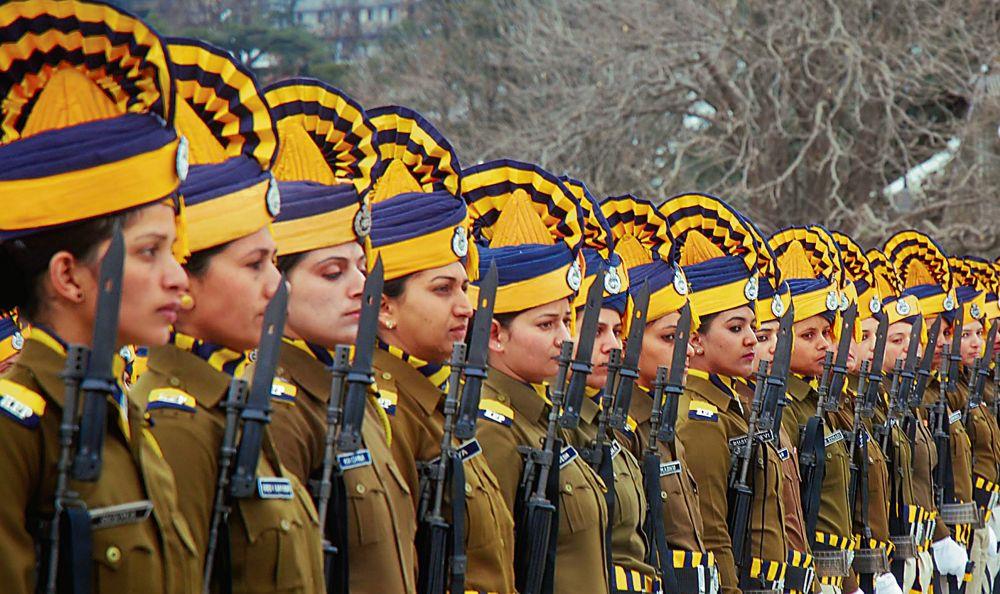
New horizon: More room for women in the police can break stereotypes. Tribune photo

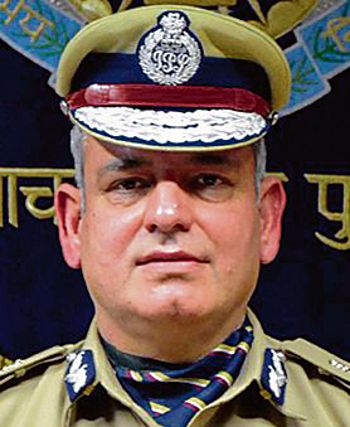
Sanjay Kundu

Director General of Police, Himachal Pradesh

In India, most people view the police as a male preserve. On the occasion of the golden jubilee of the statehood of Himachal Pradesh, we decided to revisit the contribution of our female personnel in the state police. It is also a happenstance that the induction of women in the state police in 1973 is nearing 50 years, when we made a modest beginning by recruiting three lady constables on compassionate grounds.

In 1975, the first regular batch of 28 lady constable recruits was inducted and since then, our women personnel have gone on to become an integral part of our police force with a strength of 15 IPS officers, eight HPS officers and 2,352 non-gazetted officers.

Though the absolute number of women in the police has increased, there are challenges galore in the form of lack of women in leadership and cutting-edge positions, their marginal role in overall law enforcement, gender-specific issues, lack of infrastructure and dealing with stereotyping by their male colleagues.

Since women constitute nearly 50 per cent of humanity, it is natural that they should be fairly represented in an organisation responsible for public security. Today, women account for 13 per cent of our total state police force. Himachal Pradesh is one of the seven states — the others being Bihar, Gujarat, Maharashtra, Sikkim, Tamil Nadu and Uttarakhand — where the percentage of women cops is higher than 10. In 2009, the Union Home Ministry set a target of 33 per cent for women in the police force and Himachal Pradesh hopes to get there fast enough, if not be the first. The state already has 20 per cent reservation for women at the constable level.

In his recent budget speech, the CM announced that direct recruitment of women would be increased to 25 per cent at the level of constables and sub-inspectors. Our intent goes beyond increasing their mere numbers to have women represented in leadership levels as well.

A gender-diverse force is necessary to create a safe and secure environment for women and to achieve the larger national development goals. Women are more sensitive to the sufferings of others and have greater concern for the well-being of others. They often approach and solve problems from a different perspective than their male counterparts. It is widely recognised that women cops play a crucial role in responding to and preventing gender violence and crime against women and children. However, the challenge still remains to provide meaningful roles and equal opportunities to women police in the investigation of crime, law and order, traffic and patrolling duties.

The role of women in the police has been steadily increasing, though at a slow pace. We acknowledge the hitherto unrecognised but steady contribution of our women police personnel, who apart from performing their professional obligations, have also been championing the cause of women’s empowerment, thereby gradually sowing the seeds of modernity and positive change in society. The induction of women and their increased representation in the force have not only helped women at large feel empowered, but also helped reduce crime against them, especially the ones committed on women who had come to accept them as their fate.

They are required by law to be used for search and seizure from the person of women; they are expected to be used in law and order situations involving women. The IPC and the POCSO Act require women police officers to deal with victims of sexual assault, and even juvenile delinquents are expected to be better handled by women officers. The Covid crisis has witnessed the emergence of women cops as frontline warriors. In the face of Covid-induced uncertainties, confusion and chaos, our women have been a pillar of resolute strength.

The increasing representation and contribution of women in the HP police have debunked the myth of their lack of physical or organisational capabilities.

Secondly, it has also sent out a powerful message which has had a great impact on women’s empowerment. Thirdly, it is also a reminder of the fact that women are unduly pre-judged and stereotyped and that nothing could be further from the truth. Today, we are encouraging women to take up a central, rather than a marginal role in the police.

Although women cops give their jobs total commitment, several of their gender-specific issues remain overlooked and neglected. Infrastructure development for women has not kept pace with the growth in their numbers in the police. They still do not have adequate toilet facilities for want of which some have been known to avoid drinking water before duty. Thus, it is not uncommon to find women cops on traffic duty spend their work hours without ever drinking water.

An increasing number of women cops are moving ahead with their lives by getting married and having kids. However, there are no creches for them to leave their young children in when they go to work and as a result, some of them just lock their young kids in their homes when they report for duty. Then they require regular medical examinations on account of their special hygiene and menstruation needs. These challenges need to be addressed without loss of time to enable women to make an effective contribution.

More often than not, women have to deal with bigotry, as most male colleagues tend to have a disparaging attitude towards them. Their abilities are doubted and they have to often put up with rude or supercilious behaviour or remarks. All of this needs to be addressed by better training and an attitudinal change. Training modules also follow the old male dominated versions and the need to develop gender-sensitive training cannot be overemphasised.

The role of women in the police is set to increase and one is reminded of a saying by Victor Hugo, the famous French author, “No force on earth can stop an idea whose time has come.” The idea of women in the police has come and it is for the present police leadership to make this happen. To this end, we need to move away from tokenism and ensure women a central rather than a peripheral role in the police; a role that affords them the equality of opportunity, free from stereotypical gender bias. Otherwise, their numbers may increase but their role and impact will not.


Indian Army concludes contract for procurement of 17 different types of service medals

The procurement has enabled the Indian Army to meet all outstanding demands of service medals in respect of soldiers who have served and are serving currently.

Representational image | Army personnel during the Army Day parade | Photo: Suraj Singh Bisht | ThePrint File Photo

New Delhi: The integrated headquarters of the Ministry of Defence (Army) has concluded a contract for procurement of lakhs of service medals of 17 different types.

In a tweet, Additional Directorate General of Public Information, IHQ of MoD (Army) informed: “Integrated Headquarters of Ministry of Defence (Army) has concluded a contract for procurement of a total of 17.27 lakh Service Medals of 17 different types.

“The procurement has enabled the Indian Army to meet all outstanding demands of service medals in respect of soldiers who have served and are serving in the Indian Army,” the tweet added.

Meanwhile, the Retiring Officers’ Seminar was conducted on Tuesday. Due to COVID-19 protocols, officers posted in the national capital could attend the seminar.
Chief of Air Staff, General MM Naravane commended all retiring officers for their service to the nation and bid them adieu. The officers will be superannuating on March 31.


Also read: 787 suicides reported in armed forces since 2014, most from Army, govt data shows