



Sanjha Morcha

What’s New

Click the heading to open detailed news

Current Events :

web counter

Print Media Reproduced Defence Related News

WHY THE WEST OVERLOOKS INDIA’S ISSUES WITH CHINA

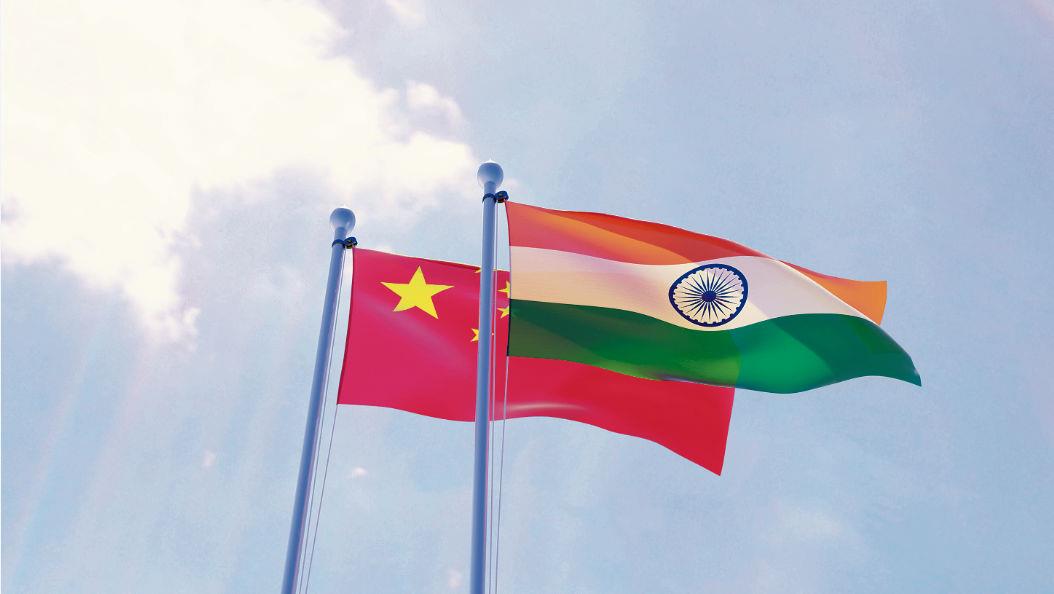
India’s border area with China is of little geopolitical significance to the main actors
Since President Joe Biden assumed office in the US, there has been a flurry of activity around China. US Secretary of State Anthony Blinken and Defence Secretary Austin recently concluded their tours of Asia holding talks with allies on issues ranging from the Indo-Pacific and Taiwan to a re-oriented Quad. It would seem that vital Asian countries are being wooed to shape the US’ ‘strategic competition’ with China.
In meetings with Indian counterparts, while the US officials have designated India as a close partner, there has rarely been a public acknowledgement of India’s main stress points with China. These include recent border skirmishes, weaponization of water resources, the Sino-Pakistan ‘unholy alliance’ on India’s borders and the massive trade, dumping and economic issues. In fact, US-India divergences on key issues (Russia, Af-Pak region) are also quite pronounced and China knows this.
Thus, while globally Taiwan, maritime disputes, Japan and Korea are the West’s red lines for China — India is the line that China will try to keep crossing. The main reasons for this are:
The global commitment of the Western bloc to India’s actual issues concerning China has traditionally been weak though efforts are being made to address India’s concerns. India’s border area with China is of little geopolitical significance to the main actors. Pakistan, which is as of now China’s closest ally, is vital to the US’s Af-Pak strategy, too.
Foreign Policy Ethos
Despite attempts to take tough stands, dependence on Pakistan will continue, complicating India’s western border position. Indian foreign policy ethos governed by its unique geopolitical realities and years of non-partisanship remains largely led by independent decisions that resist coalescence to any ‘camp’.
The second aspect relates to the compulsions of the Indian political system that the Chinese seem to have understood. Democratic power in India is based mainly on winning elections requiring big, symbolic gestures/announcements not conducive to ‘clandestine’ foreign policy manoeuvres. Every policy is sold as a ‘vote getter’ with immediate tangible results, whether it is border conflicts, surgical strikes, or ban on countries. The result has been an ethos skewing long-term strategy in favour of short-term gains and moving on to the next big thing.
China holds India’s key pulse points and though there is recognition and work towards freeing some of these chains, India is a long way away in terms of a coherent strategy. From crucial raw materials (active pharmaceutical ingredients, solar panels, rare earth metals), capital for entrepreneurs, to hold over water resources, the Chinese are ahead of us at the moment. While Indian defence forces can hold their own against most adversaries in a conventional battle, today’s wars are about technology, 5G, cyber warfare and, of course, trade and economics battles — all spheres in which China has an edge.
So, what does India need to do to equip itself for these Chinese disruptions? Here, the immediate goals need to be upped:
Re-align our economics and politics: India’s economic sector is currently poised at a critical juncture. For example, with the Covid recovery in sight, India remains a market that offers strengths — an entrepreneurial spirit unleashed further by Covid disruptions in traditional job sectors and a considerable investor interest (international and local) in key value propositions.
Combine this with a sense of ‘Atmanirbharta’, where people show a willingness to make, buy and use Indian goods. Now is the time to exploit the opportunities to realign key areas of supply chains rather than impose short-term sanctions or embargoes on imports from China.
The political class needs to realise that it cannot sacrifice India’s perceived strengths — the democratic system, an open questioning of government policies and consensus-based decision making — at the altar of politics. Whether it is the farm laws steamrollered through Parliament, unfair rules on IT, efforts to crush dissent — these need to be calibrated.
The most important is that the government needs to strategize China’s weak points to make them bargaining chips. A fresh perspective on Pakistan is not a bad idea as a major disquiet develops in the rungs of its leadership at being reduced to China’s vassal state. India needs to re-align its foreign policy toward the Indian ocean neighbours which have faced the brunt of Chinese diplomacy — a two-way strategy of infrastructure development, defence ties, resource coordination and trade and investment needs to be fostered.
This requires an overarching institution that coordinates action with ministries, the PMO, the private sector and, most importantly, with critical technology experts. In the meantime, India needs to spell out clear leverage points with Western allies. India’s participation in the Quad or access to our defence market must come with concrete guarantees — for example, CAATSA (Countering America’s Adversaries Through Sanctions Act) exemptions for India’s purchase of weapons from Russia.

Lessons from China’s nationalist narrative

From the Chinese point of view, the Indian Army, police and businessmen were part of an oppressive gang that kept China down through much of the 19th and 20th centuries. The military humiliation heaped upon India in 1962 had as much to do with China claiming the Tibetan highlands as its territory as it was to communicate to the Chinese people that they need not fear the aggressive Indians any more.

Lessons from China’s nationalist narrative

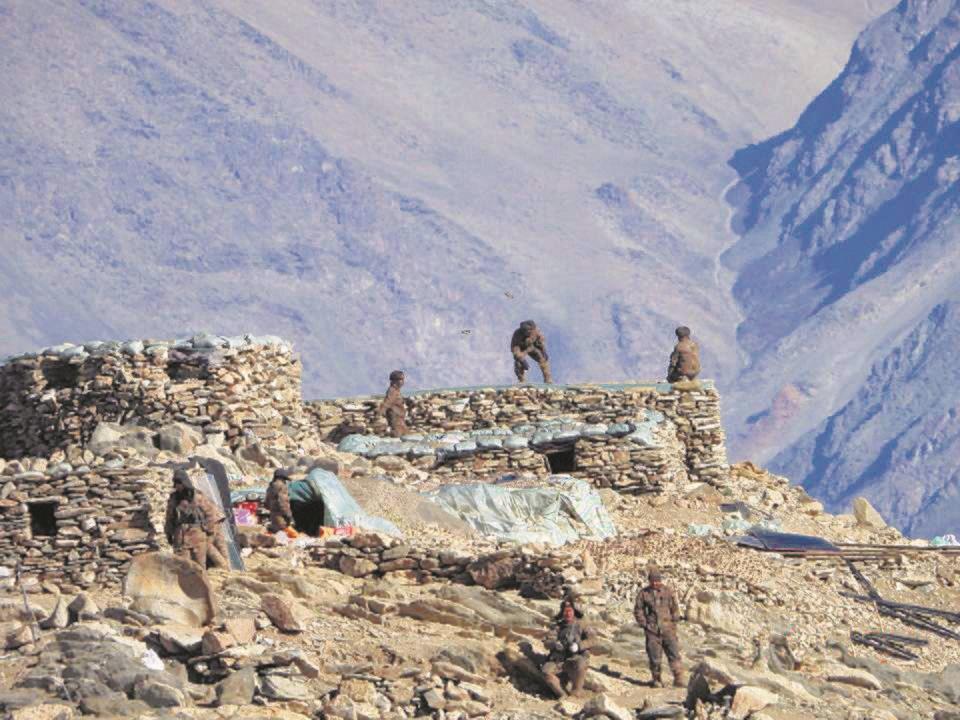
Border fracas: Only the demonstration of a confident ability to protect the nation has restricted the Chinese desire to teach India another lesson. Reuters

M Rajivlochan

HistorianAdvertisementhttps://imasdk.googleapis.com/js/core/bridge3.448.1_en.html#goog_1446472385Powered By The Tribune x eReleGo

India’s confrontation with China is not yet over. China is brimming with nationalist energy. Its booming economy, the pride that the people have in their ability to fight off the Covid pandemic, has only increased the assertiveness of the nationalist Chinese. Unaware of the transformations taking place in China, Indian thought leaders are still busy with meaningless identity politics, when they are making efforts to seek approval of the developed western nations and thinkers.

From the Chinese point of view, the Indian Army, policemen and businessmen, were part of an oppressive colonial gang that kept China down through much of the 19th and early 20th centuries. A few gestures of kindness such as that by Dr Kotnis during the 1930s continue to be appreciated in China, but China also remembers the use of Indian forces in the Opium Wars and the domineering Sikh policemen in Canton, Hong Kong, Macao and Nanking. The military humiliation heaped upon India in 1962 had as much to do with China claiming the Tibetan highlands as its territory as it was to communicate to the Chinese people that they need not fear the tall and aggressive Indians any more. Since then, China has built up its nationalist narrative much more firmly.

Few Indians, whether nationalist, anti-nationalist or extra-nationalists, realise that all nations are artificial constructs. At what point the people who constitute a nation would decide that they wish to live together, as happened for instance in the UK in the 18th century, and in France, Italy and Germany in the 19th century, is a matter of historical contingencies that forge such a will. At what point people decide they no longer wish to live together, as in the case of the USSR and Yugoslavia in the 20th century, is also a matter of popular will. It is the will to live together that is important.

The noteworthy thing is that China is even more culturally, linguistically and religiously diverse than is India. What we know as the ‘Han’ that is supposed to be the majority in China, was before the 20th century merely a term used to denote a civilised person as opposed to the barbarians; much like the word ‘Arya’ is said to have been used in India before the Indians succumbed to the idea that ‘Arya’ stands for race. ‘Han — did not refer to an ethnic group. Modern Chinese scholars Zhang Lei and Kong Qingrongin, in their 1999 book Coherence of the Chinese Nation (Zhonghua Minzu Ningjulixue), write, “According to Confucianism, the distinction between ‘hua (xia)’ (civilised Han) and ‘yi’ (minority barbarians) was a cultural boundary rather than a racial and national boundary… The barbarian-civilised distinction did not indicate racial or national exclusiveness. Instead, it was a distinction involving differentiated levels of cultural achievement.”
Actually, the Han Chinese profess different religions (Christianity, Buddhism, Taoism etc) and speak different languages. For China, creating the idea of a nation was more important than affirming divisive personal identities. Sun Yat-sen talked as early as 1912 of the need to weld together different groups of people who lived in China even while China was splitting up into numerous independent units headed by warlords. The student rebellion of 1919, which goes by the name of the May Fourth Movement, was a nationalist upsurge against the Chinese elite siding with the Japanese. The Chinese Communist Party, once it came to power in 1948, took forward the nationalist line of thinking.

In the very first decade of communist rule in China, while on the one hand, the Chinese were paying homage to the Soviet idea of internationalism, they were also building up a strong sense of nationhood. The occupation of Tibet in 1951, just two years after China got rid of colonial domination, was but an assertion of an old historical presumption that the proper national territory of China extended from the Tibetan highlands in the west to the seas in the east. While Jawaharlal Nehru and his team of historians tried to find historical evidence to dismiss China’s claims, China had no hesitation in using military force to make its point.

Also, few in India realise that China is essentially made up of six major nationalities whose languages and cultural practices are mutually as different (and unintelligible) as the languages and cultural practices of different regions in India. What holds them all together is the historic belief that they all belong to one single civilisational entity.

India, on the other hand, found it difficult to assert that there could be an Indic reality. Indians have, since the so-called Bengal renaissance, tried hard to conform to European idea of a good society. Their popular notions of self-determination by ethnic and religious minorities are largely a product of trying to live up to the European ideals of 19th-century vintage.

For centuries before British occupation, the idea of different languages did not trouble India. Civilised people routinely spoke four to five languages. And yet, the first few days of the Constituent Assembly were spent in heated debates on deciding the appropriate language in which that august gathering could conduct its deliberations. The impasse was resolved only after it was agreed to conduct most of the discussions in English while promising not to force any one Indian language on everyone.

The import of a coeval fact was lost on most: that 566 Indian princes, with a combined military strength of over 200,000 well-equipped, battle-hardened soldiers, had little hesitation in accepting the sovereignty of the impoverished and helpless, independent Government of India, burdened by over 10 million displaced persons. These princes were essentially subcontractors for the colonial government. They had inherited their titles from a warlord who had been subjugated by the British a few decades ago. For reasons that are unclear, the departing British bequeathed to these sub-contractors the grand privilege of becoming ‘sovereign’ rulers of their lands. Many of the princes played for a few months with the idea of declaring themselves as independent nation-states. Yet, all but one of them quickly fell in line despite having a distinct administration, legal system, culture, language, and a battle-hardened army.

Since the crisis at Pangong Tso in 2020, we know that only the demonstration of a confident ability to protect the nation has restricted the Chinese desire to teach India another lesson. To underpin that ability, though, we need to work towards strengthening the bonds which hold Indians together rather than trying to strengthen the differences that exist in any normal society.


After Mahindra, now TATA set to bag contract for armoured vehicles as Army upgrades mobility

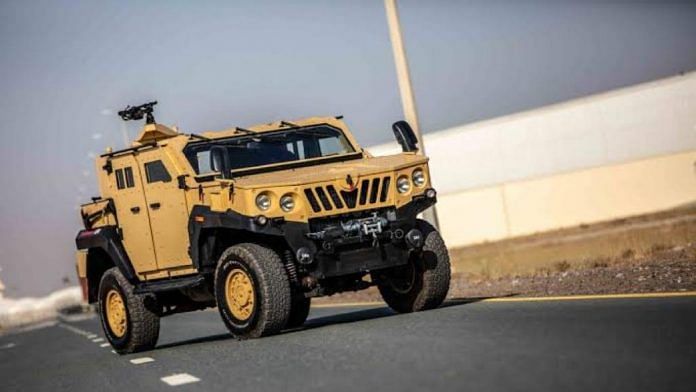
The Mahindra light specialist vehicle that the Army has placed orders for | Photo by special arrangement

The Mahindra light specialist vehicle that the Army has placed orders for | Photo by special arrangementText Size: A- A+

New Delhi: After Bharat Forge and Mahindra, the TATA Group is set to bag a contract from the Indian Army for heavy armoured protection vehicles for its soldiers deployed in key sectors, ThePrint has learnt.

Sources in the defence and security establishment said the while the programmes to ensure better mobility and protection to infantry soldiers started years ago, the recent standoff with China has shown the need for the critical capability in inhospitable terrains.https://b265daf65b3ad2bdf02527cc6f797e81.safeframe.googlesyndication.com/safeframe/1-0-38/html/container.html

The Indian capability was seen wanting in Ladakh where the Chinese displayed greater mobility, inducting and de-inducting troops from frontline areas faster as they used different kinds of vehicles for the infantry.

“The vehicles not only provide protection to the soldiers but also help in faster induction and de-induction,” a source said.

The Indian Army has now sped up the process for its own acquisition process.

The first to hit off the ground were M4 armoured vehicles, of South African origin, which were tested in Ladakh during the standoff with China.

Last month, the Ministry of Defence also signed a contract with Mahindra Defence Systems Ltd (MDSL) for a supply of 1,300 light specialist vehicles to the Indian Army, at a cost of Rs 1,056 crore.

Sources said there are two more programmes for procurement of special wheeled vehicles, one of which has TATA as the frontrunner.

However, in terms of units, the numbers are less than 100 vehicles when combined together, the sources said.

M4 and light specialist vehicles 

With the Army upgrading its mobility power, orders for 27 M4 armoured vehicles were placed in February with the Pune-based Bharat Forge of the Kalyani group, which has a tie-up with the South African firm Paramount Group.

The vehicles, a multi-role platform, designed to meet the requirements of the armed forces for quick mobility in rough terrain and in areas affected by mine and IED threats, are expensive as 27 of them cost Rs 177.95 crore.https://b265daf65b3ad2bdf02527cc6f797e81.safeframe.googlesyndication.com/safeframe/1-0-38/html/container.html

Meanwhile, the 1,300 light specialist vehicles that Mahindra is to deliver in the next four years are authorised to various fighting units for carriage of medium machine guns, automatic grenade launchers as well as anti-tank guided missiles.

The Mahindra vehicles, in fact, beat a TATA platform to be selected.

“These vehicles are different from the M4 and are meant for specific operations. The Army is looking at different types of troop carrying wheeled vehicles which offer various grades of armoured protection,” another source in the defence establishment said.

Incidentally, certain specialised units of the Army have gone in for light strike vehicles (LSVs) from Force Motors that offer a lot of room for special operations as they can be air-dropped for operations deep inside enemy territory.


Also read: Standoff with China highlighted India’s technological asymmetry. Time to update


‘A welcome modernisation’

While contracts are being signed now, the fact is that they are long pending programmes, a source explained.

He added that the LSV for the Special Forces, which was inked in 2018, was actually envisioned in 2002 as part of a study conducted by the Army for modernisation of Special Forces.

Similarly, armoured protection for infantry soldiers was a proposal that was first moved in 2011 by the department concerned in the Army, only to be set aside by the force’s top hierarchy for certain reasons.

“The contracts inked are actually a very welcome modernisation process. Infantry soldiers need to have mobility and protection. In many countries, infantry is complete mechanised infantry,” former Western Army Commander Lt Gen K.J. Singh told ThePrint.

The Mechanized Infantry Regiment of the Army is the youngest and was the brainchild of former Army chief K. Sundarji, who is also fondly called the ‘Father of the Mechanised Infantry Regiment’.

Gen Sundarji had during his tenure from 1986 to 1988, introduced a number of technical and operational initiatives for the force and went on to raise the Mechanised Infantry Regiment. With emphasis on speed, technology and mobile weaponry, the youngest arm of the Indian Army is now an integral part of the strike forces.

Given that the Army’s operational areas range from the deserts and plains to high altitudes, Lt Gen. Singh questioned why the force cannot go in for terrain-specific vehicles rather than placing larger order of all-terrain systems.

Mobility by air and water has increased

The recent standoff with China is eastern Ladakh also showcased how the ability to induct men and equipment has changed over the years.

As India raced against China in the initial phases to counter its aggression last year, the Air Force came handy with its latest fleet of transport aircraft and helicopters.

Men and some of the urgent equipment, including tanks and armoured personnel carriers, were inducted into the Ladakh sector by air.

“Army’s mobility also needs to be seen in the context of the air lifting capabilities of the Air Force. Had it not been for the IAF, induction of men and material would have taken a little more time,” a source said.

It is not just in air and land that the Army is undergoing a jump in mobility prowess but also in the waters.

Army has gone in for emergency procurement of specialised boats to counter the faster and heavy vessels of the People’s Liberation Army.

(This report has been updated to reflect that certain specialised units of the Army have gone in for light strike vehicles (LSVs) from Force Motors and not Bharat Forge, and that the contract for LSV for the Special Forces was inked in 2018 and not 2019. The error is regretted.)


Also read: From next week, troops at LoC and LAC to get new & more lethal Israeli Light Machine Guns


Farmer leader Rakesh Tikait’s convoy attacked in Rajasthan

Jaipur, April 2

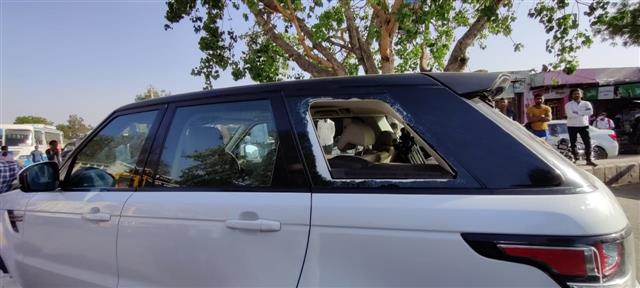
Farmer leader Rakesh Tikait’s convoy was allegedly attacked in Alwar on Friday. He alleged that the BJP men were behind the attack.

Tikait, on his Twitter handle, shared the video of his car whose window glass was smashed and accused the BJP of the attack.

राजस्थान के अलवर जिले के ततारपुर चौराहा, बानसूर रोड़ पर भाजपा के गुंडों द्वारा जानलेवा पर हमला किए गए, लोकतंत्र के हत्या की तस्वीरें pic.twitter.com/aBN9ej7AXS— Rakesh Tikait (@RakeshTikaitBKU) April 2, 2021

He said, “Attacked by BJP’s goons in Rajasthan’s Alwar district’s Tataarpur square at Bansur Road. Pics of murder of democracy.”  His supporters called for a jam to protest against the incident and hence a huge police force was deputed in the area. 

Farmer leader Rakesh Tikait’s convoy attacked in Rajasthan. — Tribune Photo

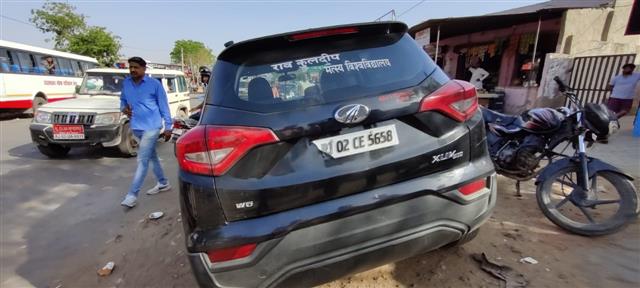
As per the officials, Tikait was on his way to Banasur road when his convoy was attacked by a few people who pelted stones on his car. The men used rods too. However, Tikait was safe and did not get any injury.

Farmer leader Rakesh Tikait’s convoy attacked in Rajasthan. — Tribune Photo

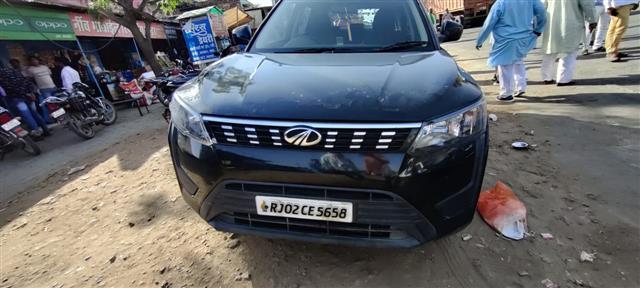
Eventually, Tikait was shifted in another car and the police arrested two people as suspects. 

Farmer leader Rakesh Tikait’s convoy attacked in Rajasthan. — Tribune Photo

Further investigations are on, police officials said. — IANS


Pakistan’s textile industry upset as govt rejects cotton import proposal from India

Pakistan’s textile industry upset as govt rejects cotton import proposal from India

Photo for representation.

Karachi, April 2

Pakistan’s struggling textile industry has voiced its disappointment after the Imran Khan government rejected a proposal to import cotton from India, the world’s biggest producer, saying it is the need of the hour to avoid a massive slump in the country’s exports.

The federal Cabinet headed by Prime Minister Khan on Thursday rejected the proposal of a high-powered committee to import cotton from India, with Foreign Minister Shah Mahmood Qureshi asserting that there can be no normalisation of ties until New Delhi reverses its decision in 2019 to revoke the special status of Jammu and Kashmir.

The Cabinet’s decision has disappointed the textile export industry, the Dawn newspaper quoted Pakistan Apparel Forum chairman Jawed Bilwani as saying.

The textile export sector, which was already under pressure due to the COVID-19 pandemic, has been continuously demanding duty-free import of cotton yarn from all over the world, including India, to avert any big loss to textile exports.

Describing Commerce Adviser Abdul Razak Dawood’s recommendation to allow import of cotton and cotton yarn from India as realistic and the need of the hour, Bilwani said that the Cabinet must give serious consideration to the proposal.

The step would send a negative message to foreign buyers as cotton yarn was not available in the country, he said, adding that prices of cotton yarn have increased after the Cabinet’s decision.

“The government must ensure availability of cotton yarn if it did not want to allow its import from India,” Bilwani said as he feared massive textile export decline if import of cotton yarn from India was not allowed.

In the current year, Pakistan faced a 40 per cent plunge in cotton production and if it was compared with 15 million bales in 2014-2015, then the drop was 50 per cent this year, he said.

“If the government did not want to permit import of cotton yarn from India then it must impose a ban on export of cotton and cotton yarn for at least next six months,” he added.

Pakistan’s U-turn on Thursday came a day after the Economic Coordination Committee (ECC), under newly-appointed Finance Minister Hammad Azhar, recommended importing cotton and sugar from India, lifting a nearly two-year long ban on its import from the neighbouring country amidst tensions over the Kashmir issue.

Speaking to The Express Tribune newspaper, Pakistan Readymade Garments Manufacturers and Exporters Association Patron-in-Chief Ijaz Khokhar said the entire value-added sector was shocked by the way the government reversed its decision

Reacting to the Pakistan Cabinet’s refusal to allow import of cotton yarn from India, he said they are planning a protest in the coming days.

“According to the World Trade Organisation laws, no one can object to trade with another country, the restrictions imposed by Pakistan on trade with India are based on political grounds, but if we allow imports of medicines from India, then why not cotton yarn,” Khokhar said.

“This step shows that mafias are still part of the government and this impression will reach our international buyers,” he said, adding, “We now fear that this step will help a certain part of the textile sector whereas the rest will lose orders as buyers will prefer India and Bangladesh over Pakistan due to such steps.”       

Pakistan Hosiery Manufacturers and Exporters Association Zonal Chairman Faisal Mehboob said his organisation has urged the government to make bold decisions, which were vital for a smooth running of the industry.

Mehboob said that any decision to lift the ban on import of cotton and yarn from India would greatly support country’s value-added knitwear sector, besides contributing to stabilising the national economy through an increase in exports.

But former All Pakistan Textile Mills Association chairman Shahzad Ali Khan said that restricting yarn imports from India was a good decision.

“Yarn imports could have pitted Pakistan’s spinning sector against the Indian counterparts and since the Indian industry is getting subsidised energy, the local industry would have been affected,” he claimed.

India is the world’s largest cotton producer and the second-largest exporter. India’s cotton exports jumped over 40 per cent to 10 million bales (of 170 kg each) in the 2018-19 marketing year on strong overseas demand.

The ECC’s decision had raised hopes of a partial revival of Pakistan-India bilateral trade relations, which were suspended after the August 5, 2019 decision of New Delhi to revoke the special status of Jammu and Kashmir.

In May 2020, Pakistan lifted the ban on import of medicines and raw material of essential drugs from India amidst the COVID-19 pandemic.

Bilateral ties nose-dived after a terror attack on the Pathankot Air Force base in 2016 by terror groups based in Pakistan. Subsequent attacks, including one on an Indian Army camp in Uri, further deteriorated the relations.

The ties strained further after India’s war planes pounded a Jaish-e-Mohammed terrorist training camp in Pakistan in February 2019 in response to the Pulwama attack in 2019 in which 40 CRPF jawans were killed.

India’s move to revoke the special status of Jammu and Kashmir in 2019 angered Pakistan, which downgraded diplomatic ties and expelled the Indian High Commissioner in Islamabad. Pakistan also snapped all air and land links with India and suspended trade and railway services. PTI


LAC issues remain, India pushes for early solution

Weighing $2 bn worth Chinese FDI proposals

LAC issues remain, India pushes for early solution

Tribune News Service

New Delhi, April 2

The lack of progress for over a month in disengagement has led India to remind China about the consensus between their foreign ministers on February 25 for quickly resolving the remaining issues along the LAC in eastern Ladakh.

The MEA’s comments on the LAC closely follow India’s critical but guarded observations on a WHO-convened global study about the origin of Covid-19 over which western countries want to corner China.

Arindam Bagchi, MEA spokesperson

‘Build up on Jaishankar-Wang consensus’

As the External Affairs Minister had pointed out to [the] Chinese Foreign Minister, a prolongation of the situation is in neither side’s interest.

China replied to India’s comments on the WHO study today with a reasoned repudiation of points raised by India. South Block is also evaluating Chinese investment proposals worth $2 billion that have been on hold since April last year.

“As the External Affairs Minister had pointed out to [the] Chinese Foreign Minister, a prolongation of the situation is in neither side’s interest,” said MEA spokesperson Arindam Bagchi at the weekly media briefing.

The February 25 talks between the foreign ministers, which took place five days after the Pangong Tso disengagement, had touched upon the setting up of a hotline. There has, however, been no response as yet even to Indian overtures for a meeting of the WMCC to take forward the agreement reflected in the statements after the Jaishankar-Wang talks.Bagchi reiterated Jaishankar’s formulation of further progress in ties being linked to disengagement in the remaining areas at the earliest. “The disengagement in the Pangong lake area was a significant step forward and it has provided a good basis for resolution of other remaining issues along the LAC,” underlined the MEA spokesperson.


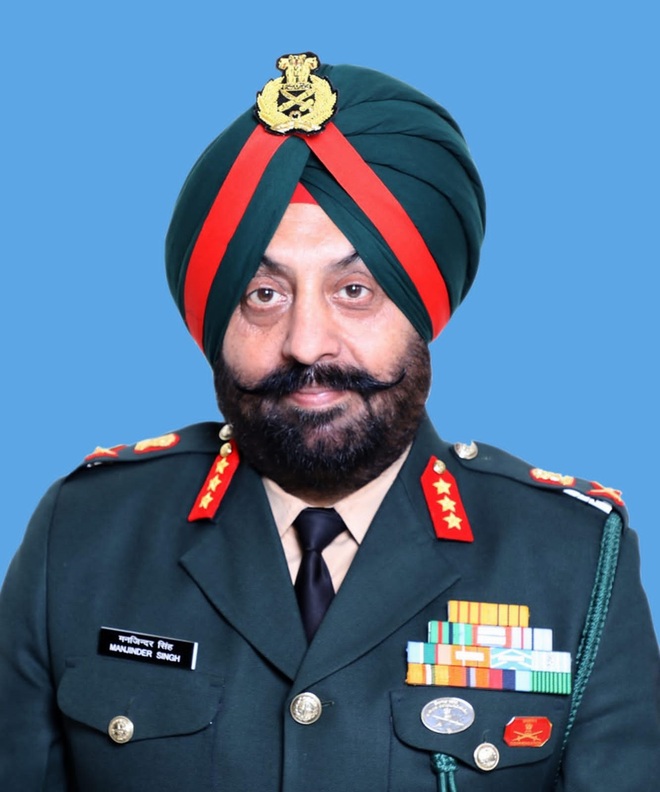
Lt Gen Manjinder Singh is Western Command chief

Lt Gen Manjinder Singh is Western Command chief

Chandigarh, April 1

Lt Gen Manjinder Singh assumed charge as the Chief of Staff, Western Command, at Chandimandir today. He takes over from Lt Gen Yogendra Dimri, who has been elevated as the General Officer Commanding-in-Chief, Central Command.

On arrival at Chandimandir, he laid a wreath at the Veer Smriti war memorial to pay homage to martyrs.

An alumnus of Sainik School, Kapurthala, the National Defence Academy, Khadakwasla, and the National Defence College in Thailand, Lt Gen Manjinder was commissioned into 19 Madras in December 1986.

During a career spanning over 34 years, he has tenanted important command appointments in varied sensitive operational sectors and high-altitude terrain. He commanded his battalion in an intense counter-insurgency environment in Jammu and Kashmir, an infantry brigade on the line of control and an infantry division as part of a strike corps. He was decorated with the Yudh Seva Medal in 2015 and the Vishisht Seva Medal in 2019. — TNS


Rebuild Indo-Pak ties with Indus Water Treaty

Run-of-the-river dams have worked to the disadvantage of both countries. For India, hydel power projects based on the run-of-the-river dams are not cost-effective. Moreover, there is the problem of silting of the dams. The thaw in Indo-Pak ties must be carried forward by changing the clause pertaining to the type of dams that can be built. Such an amendment to the treaty will benefit Pakistan too.

Rebuild Indo-Pak ties with Indus Water Treaty

devil in detail: Pakistan got inserted in the treaty the clause that the dams to be built by India on the three western rivers could be of the run-of-the-river type only. PTI

Lt gen Harwant Singh (Retd)

Former Deputy Chief of Army StaffA

The Indus Commissioners of India and Pakistan met in New Delhi on March 23-24. The main issue for discussion was the designs of the upcoming hydel projects on the tributaries of the Chenab river.

The Indus Water Treaty was signed by Pakistan and India at Karachi in 1960, with the World Bank being the third-party guarantor. India, being the upper riparian country to all six rivers (Indus, Jhelum, Chenab, Ravi, Beas and Sutlej), had the first right over the waters of these rivers. Yet, India gave to Pakistan, through this treaty, more than its due share of the waters (more than 80 per cent) of the six rivers. In addition, Pakistan got the waters of four Indian nullahs that join the Ravi. Through this largesse, India hoped to secure lasting peace with Pakistan.

Even if one was to overlook the fact that India is the upper riparian country, basing the allocation on the Indus river basin area of the two countries, the division should have been 65 per cent of the waters to Pakistan and 35 per cent to India.

India’s munificence did not end there. Canals which originated from India and carried waters to Pakistan’s fields were allowed to continue for the next 10 years, by which time Pakistan was expected to create a new set of headworks and canals as replacement of those flowing from India. India also provided funds to Pakistan for these new canals.

To take further, and somewhat mistaken, advantage, Pakistan was able to insert the devil in the details of the treaty, which it figured would work in its favour. Though the treaty allocates the waters of the three western rivers to irrigate 1.3 million acres of Indian land (in J-K), action to implement this has come under objection by Pakistan. Thus, vast tracts of virgin lands in various valleys in the Ladakh region could not be irrigated.

Pakistan was able to insert in the treaty the clause that the design of the dams to be built by India on the three western rivers could only be the ‘run of the river’ type. However, it has come to play a negative role for Pakistan. This restriction on the type of dams was, perhaps, due to apprehension that India may, in the event of a conflict, flood Pakistan.

Further, even in the construction of various run-of-the-river dams, such as Sallal, Uri, Dul Hasti, Baglihar and Neelam, Pakistan, along with the World Bank, has been creating impediments and consequent inordinate delays in their completion. In the case of the Sallal dam on the Chenab near Ryasi, which was originally built as a storage dam, it had to be converted, on Pakistan’s insistence, into a run-of-the river configuration dam.https://95072f51ef05168fb0e5c1d12faa297e.safeframe.googlesyndication.com/safeframe/1-0-38/html/container.html

These run-of-the-river dams have worked to the disadvantage of both countries, more so for Pakistan. For India, hydel power projects based on the run-of-the-river dams cannot fully exploit the flow of the water because during the rainy season, the flow is more but much less in the dry season, resulting in lesser number of turbines operating during the dry period. So, such dams are not cost-effective. There is also the problem of silting of the dams.

For Pakistan, the disadvantage from such dams is greater because it cannot store excess water of these rivers during the rainy season and, consequently, it flows into the Arabian Sea. As a result, much less water is available during the dry season and Pakistan is highly water-stressed. In addition, fertile soil and nutrients which the waters from storage dams carry downstream are arrested in the run-of-the-river dams.

On its part, India has tried to meet this shortage of water for irrigation by recklessly sanctioning tubewells and providing free electricity to them, which has resulted in the groundwater going down to dangerous levels. India has also failed to fully utilise the waters of the three eastern rivers (Ravi, Beas and Sutlej), more so of the Ravi, due to the delay in the construction of the Shahpur Kandi barrage and stopping of leakage due to poor maintenance of sluice gates at the headworks on these rivers.

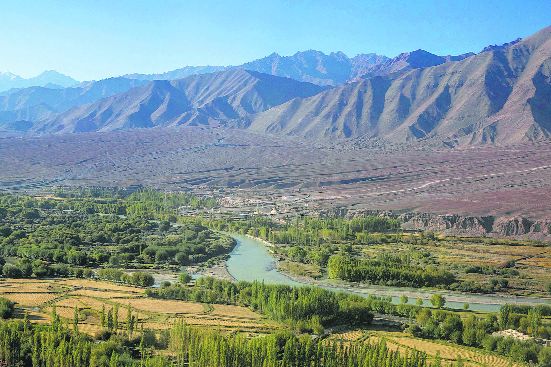
In the Ladakh region and at some locations in Himachal Pradesh, where the water current in various rivers/tributaries is very fast, it is possible to make channels and lower turbines into these waters (similar to Persian wheels working in the reverse order and with suitably designed blades). By such improvisations, electricity on a small scale can be produced for local use at remote places. A system to lift and lower turbines can be worked out, depending on changes in the water levels in these rivers.

The current thaw in the strained relations between India and Pakistan needs to be carried forward by changing the clause pertaining to the type of dams that can be built on the three western rivers. Such an amendment to the treaty will be of advantage to Pakistan in four ways.

First, wasteful flow of water into the sea during the rainy season would be reduced. Secondly, the flow of water would be regulated throughout the year for irrigation. Thirdly, abundant electricity generated from hydel projects in J-K and HP (based on storage dams) can be made available to Pakistan at concessional rates. Fourthly, soil nutrients, which otherwise get arrested at the run-of-the-river dams, would flow downstream to fertilise Pakistan’s fields.

In any case, the two dams — 850 MW and 3,800 MW — are on the tributaries of the Chenab and not on the main river and, as such, fall outside the purview of the Indus Water Treaty.

Equally, it should accept that some of the waters of the Chenab (Chandra Bhaga, as it is known in Lahaul-Spiti) be diverted into the Beas and, in lieu, some water from the Ravi can be made available to Pakistan to irrigate fields in the Kartarpur Sahib and Lahore regions. Water to this end can be released from the Madhopur headworks and, in exchange, waters of the Chenab can be diverted into the Beas. The height of the dam on the Neelam river, where its waters have been diverted to the Wular lake, can be adjusted so that downstream fields, earlier watered by this river, continue to receive the required quantity of water.

It is time for the two countries to tread the path of goodwill, friendship, and prosperity. It is an appropriate time to carry forward the spirit of goodwill projected by both the PM and the Army Chief of Pakistan.


The new detente

Relations with Pakistan will hopefully focus on trade, travel, transit and tourism

The new detente

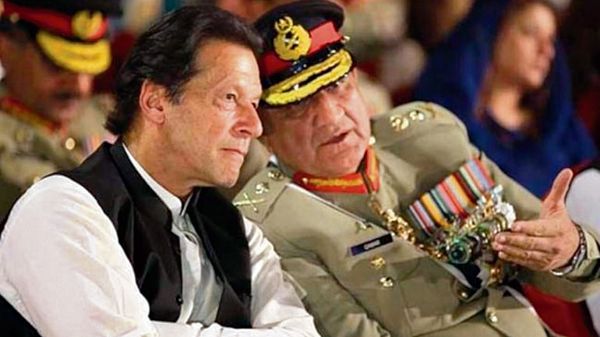
Differing stance: While Imran Khan has been less than diplomatic in his references to India, General Bajwa has been more restrained. File photo

G Parthasarathy

Chancellor, Jammu Central University & former High Commissioner to Pakistan

On the eve of its birth in December 1971, Henry Kissinger proclaimed that an independent Bangladesh would be an ‘international basket case’, dependent forever on foreign aid for its survival. Like in everything they said and did, during the Bangladesh liberation struggle, Kissinger and his boss President Nixon were soon proved wrong. Bangladesh has substantially outpaced Pakistan in virtually every social and economic indicator. At the same time, Sheikh Hasina has skilfully managed her relations with China, the West, India and other friends, to their mutual benefit.

It is Pakistan, which is today an ‘international basket case’, constantly looking for doles from China, and G20 nations, apart from international financial institutions, like the World Bank, IMF and Asian Development Bank. It is also struggling to repay its debts and borrowing from Chinese banks to meet its repayment liabilities. Bangladesh is, however, fiscally and economically strong. It is important to bear these facts in mind, when looking for options when dealing with Pakistan.

The warmth with which PM Modi was received in Bangladesh is testimony to how people in Bangladesh still remember the affection with which India received 9 million refugees. The refugees had been driven out of their homes by the depredations of Pakistan’s Gen Tikka Khan. This was an occasion to remember nationally, with Modi praising Indira Gandhi for her decisive leadership in 1971.

Time has moved on, and Bangladesh is today one of the leading exporters of textile products globally. It is proud of its achievements in key human development indicators, like women’s education. India and Bangladesh have resolved their age-old differences, including the demarcation of their land and maritime frontiers. It would, however, be only appropriate to exercise due restraint while speaking on issues of Bangladeshi immigrants in India.

While Bangladesh has made rapid strides in boosting exports, accelerating economic growth and improving human development indicators, the same cannot be said of Pakistan. Islamabad is falling well behind Bangladesh in virtually all development indicators. Apart from fomenting tensions within Bangladesh by its links with radical Islamic groups like the Jamaat-e-Islami and Hefazat-e-Islam, Pakistan has done little to promote economic cooperation with Bangladesh, either bilaterally or regionally.

Having already handed over the Shaksgam Valley in J&K to China, the stage is now being set for China to progressively take over the control of Gilgit-Baltistan, with its growing economic and military presence there. It is only a question of time before China takes over greater control of the port of Gwadar, which it has built in Balochistan. Beijing is already experienced in such takeovers, after assuming control of Sri Lanka’s Hambantota Port. Moreover, Pakistan is in contract for the purchase of four Chinese frigates and eight submarines from China — a move that will only enhance Pakistan’s immense external debt.

Amidst these developments, came an unexpected announcement on February 25, from the Directors General of Military Operations (DGMOs) of India and Pakistan. This announcement was made amidst continuing incidents of ceasefire violations across the LoC in J&K. India and Pakistan sought to address each other’s concerns by agreeing to strictly observe the provisions of all agreements for a ceasefire. It would be reasonable to conclude that discreet ‘back-channel’ discussions had paved the way for this decision. Pakistan army chief General Bajwa went a step further on March 16. He averred that it is ‘time to bury the past and move forward’. Not surprisingly, his statement was hedged and accompanied by conditions like ‘India would have to create a conducive environment, particularly in Indian Occupied Kashmir’. This was predictably accompanied with the usual ‘blackmail mantra’ that both countries possess nuclear weapons.

While Imran Khan has been less than diplomatic in his references to India, General Bajwa has been more restrained. He is more nuanced and sophisticated in his references to India than his predecessor Gen Raheel Sharif. This is not a new feature. While General Musharraf was initially hawkish, he learnt his lessons from the fiasco he led the Pakistan army into, in Kargil. Cross-border terrorism ended in 2003, and a framework for resolving the issue of J&K was broadly agreed upon. Musharraf’s chosen successor, Gen Ashfaq Kayani, disowned everything Musharraf agreed to. Kayani was responsible for the 26/11 terrorist attack by the LeT on Mumbai. Musharraf himself was initially very different from his predecessor, Jehangir Karamat, a soft-spoken officer, careful about his rhetoric and decision making. There is no guarantee that Bajwa’s successor will carry forward what his predecessor has initiated. Bajwa, under extension, is scheduled to retire in November 2022. It is, therefore, logical to recognise that unless something untoward happens, we can be reasonably assured that a carefully crafted dialogue process, largely behind the scenes, can be crafted. The only fly in the ointment would be the tempestuous Imran Khan.

Pakistan will, hopefully, learn that India is not going to be guided by Islamabad’s demands on the dialogue process, or on J&K. The entire process of taking forward the constitutional changes in J&K will be determined by India, at a pace decided by its government and people. Relations with Pakistan will hopefully focus on the ‘Four Ts’ — trade, travel, transit and tourism. Talks on J&K are best left to a ‘back channel’.

India will have to carry forward its efforts to strengthen its strategic autonomy, even while moving ahead on Quad. It will continue to work on its ties with Russia, while strengthening its relations with Japan, France and the UK. Neighbours like Sri Lanka, Bangladesh, Bhutan, Nepal and Myanmar, are now clear about India’s strategic compulsions. There is, however, much still to be done to get friends in ASEAN to show greater unity in dealing with territorial challenges posed by China.