The results showed that inactivity is strongly associated with poor Covid-19 outcomes
Regular exercise or a 30-minute brisk walk in the neighbourhood park or in your society five days a week while following the social distancing norms can improve your chances of beating Covid-19, reveals a significant study that analysed 48,440 adults who were Covid positive.
On the other hand, patients who were consistently inactive had 1.73 times greater chances of ICU admission, while the risk for death was 2.49 times greater for patients who were consistently inactive.
Other than being over the age of 60 or having a history of organ transplant, being consistently inactive conferred the highest risk for death from Covid-19.
Even patients who were inconsistently active had lower chances for severe Covid-19, suggesting any amount of physical activity has benefit, revealed the findings published in the British Journal of Sports Medicine.
“This is a wake-up call for the importance of healthy lifestyles and especially physical activity,” said Robert E Sallis, physician at the Kaiser Permanente Fontana Medical Centre in the US.
“People who regularly exercise had the best chance of beating Covid-19, while people who were inactive did much worse,” Sallis added.
For the study, the team identified 48,440 adults with a Covid-19 diagnosis from January 1, 2020, to October 21, 2020.
They found 6.4 per cent were consistently active and 14.4 per cent were consistently inactive, with the remainder falling in the inconsistently active category. Among all Covid-19 patients, 8.6 per cent were hospitalised, 2.4 per cent were admitted to the ICU, and 1.6 per cent died.
“What surprised me the most from this study was the strength of the association between inactivity and poor outcomes from Covid-19,” said Deborah Rohm Young from the Kaiser Permanente Southern California.
“Even after we included variables such as obesity and smoking in the analysis, we still saw inactivity was strongly associated with much higher odds of hospitalisation, ICU admission, and death compared with moderate physical activity or any activity at all,” Young added.
The results showed that inactivity is strongly associated with poor Covid-19 outcomes, Sallis said, while suggesting walking 30 minutes a day, five days a week at a moderate pace, to prevent Covid-19.
“Exercise is medicine that everyone should take — especially in this era of Covid-19,” Sallis said. — IANS
India in touch with Pakistan: EAM on safety of Indian Sikh pilgrims
Over 800 Indian Sikhs travelled to Pakistan to attend the Baisakhi festival
New Delhi/Lahore, April 14
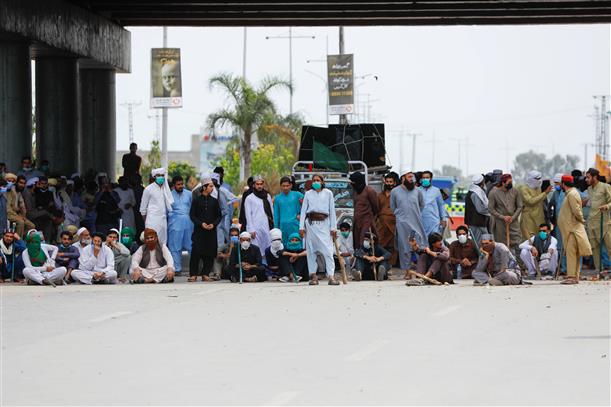
India is in touch with authorities in Pakistan regarding safety of over 800 Indian pilgrims whose visit to the neighbouring country has been affected by violent protests in several cities, including Lahore.
“Closely tracking developments. In touch with Pakistani authorities and Sikh Jatha. Will do utmost to ensure security and safe return of pilgrims,” External Affairs Minister S Jaishankar tweeted.
The minister’s response came after president of Delhi Sikh Gurdwara Management committee Manjinder Singh Sirsa, in a tweet, requested Jaishankar to look into the matter of stranded Sikh pilgrims in Pakistan.
Over 800 Indian Sikhs travelled to Pakistan to attend the Baisakhi festival. The Indian pilgrims had reached Lahore via Wagah border on Monday to attend the festival.
On Tuesday afternoon, the visiting Indian Sikhs left for Gurdwara Panja Sahib in Hassanabdal in 25 buses which were escorted by the police and the Pakistani Rangers.
“Owing to the TLP protest that blocked roads, the Sikh yatrees reached Hassanabdal at 4 am on Wednesday after over 14 hours of journey which otherwise is covered in three hours,” an official of the Punjab government told PTI in Lahore.
Protests are taking place in several parts of Pakistan by supporters of Tehreek-i-Labaik Pakistan (TLP) demanding the expulsion of the French envoy over the publication of blasphemous caricatures in France.
The Indian pilgrims attended the main event on Wednesday in which several local Sikhs also participated.
The visiting pilgrims are scheduled to visit other holy places in the Punjab province of Pakistan during their 10-day stay in the country. PTI
Bhim Army chief Chandrashekhar Azad, Dalit organisations join protesting farmers in Delhi
While Dalit organisations from Haryana joined the farmers protest at the Tikri border, Azad and a large group of workers from Punjab’s NREGA Mazdoor Association went to the Singhu border, it said
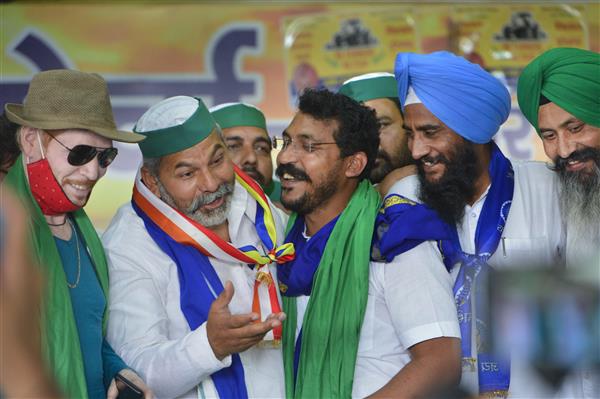
Bhim Army National President Chandrashekhar Azad and BKU leader Rakesh Tikait, during the ongoing farmers protest, at Ghazipur border in New Delhi, Wednesday, April 14, 2021. PTI
New Delhi, April 14
Bhim Army chief Chandrashekhar Azad and several Dalit organisations from Haryana joined farmers camping at Delhi borders as they observed ‘Save Constitution Day’ and ‘Kisan Bahujan Ekta Diwas’ on the occasion of B R Ambedkar’s birth anniversary on Wednesday, the Samyukta Kisan Morcha (SKM) said.
While Dalit organisations from Haryana joined the farmers protest at the Tikri border, Azad and a large group of workers from Punjab’s NREGA Mazdoor Association went to the Singhu border, it said.
Thousands of farmers, mostly from Punjab, Haryana and western Uttar Pradesh, have been camping at three border points of Delhi — Singhu, Tikri and Ghazipur — demanding a repeal of the three farm laws enacted by the Centre in September last year.
“The present government and the RSS-BJP are manipulating and destroying the Constitution in the name of reforms. This pattern is dangerous for both the economy and society. The present farmers’ movement has not only tried to save the Constitution but it is another effort to fight for the strong implementation of the Constitution,” the SKM, a joint front of farmer unions, said in a statement.
It also accused the government of implementing a “divide and rule policy” by splitting the working class into several classes, and asserted that farmers and labourers are united against the present “corporate-government nexus”.
“The marketing system and proper minimum support price (MSP) is the biggest freedom for farmers. In the same way, minimum wage and respectful work of workers protect them from exploitation. At present, both sections have been targeted by the central government.
“Not only the Essential Commodities (Amendment) Act but the other two farm laws will also affect the economy of Dalit Bahujans broadly. Today, labourers and farmers understand this well and they are fighting unitedly against these policies,” the statement said.
The Centre says the new farm laws will free farmers from middlemen, giving them more options to sell their crops.
The protesting farmers, however, say the laws would pave the way for eliminating the safety cushion of MSP and do away with the ‘mandi’ (wholesale market) system, leaving them at the mercy of big corporates. PTI
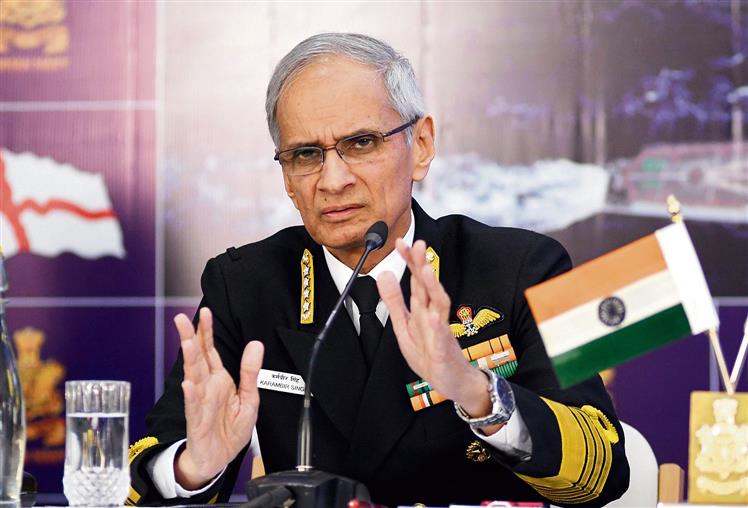
Quad navies can come together if need arises, says Navy Chief
In what could set the tone for future military cooperation to tackle growing Chinese assertiveness, Indian Navy Chief Admiral Karambir Singh on Wednesday said if an ‘opportunity arose’ the Quad navies had the capability and capacity to come together almost in a ‘plug and play’ manner – indicating seamless integration.
The Quad or Quadrilateral is the grouping of India, US, Japan and Australia.
At the Raisina Dialogue 2021, on being asked where he saw Quad, if it could take a military form and was it ready for joint military operations, the Navy Chief said Quad navies already enjoyed a high degree of interoperability and highlighted that the Malabar exercise started with the US in 1992 and it predated the Quad construct. India has bilateral naval exercises with Japan since 2012 and with the Australian Navy for the past six years. “We have robust engagement of Quad navies….So if an opportunity arises, we have the capability and capacity to come together in almost a plug and play mechanism,” the Admiral said as his statement would be deciphered in Capital across the world specially Moscow and Beijing – both are not pleased with the Quad grouping.
Admiral Karambir Singh was joined by Admiral Phil Davidson, Commander of the Indo-Pacific Command, United States, who spoke about the importance of US-India relationship. “It indispensable for the Indo-Pacific”.
The Quad, he said, must fully realise the opportunities and address common interests, including cyber and space. He blamed the Communist Party of China for seeking to exploit the pandemic for military terms. Their intent is to undermine the established rule of law in the Indian Ocean and also the South China Sea.
Earlier, Admiral Karambir Singh said the Indian Navy recognised the expanse of the Indo-Pacific and no one could do it alone, it was best to do it together. “We could see that freedom of navigation gets converted into contested water,” he said.
‘Forces already enjoy interoperability’
At the Raisina Dialogue, on being asked where he saw Quad, whether it could take a military form and was it ready for joint military operations, Navy Chief Admiral Karambir Singh said Quad navies already enjoyed a high degree of interoperability and highlighted that the Malabar exercise started with the US in 1992 and it predated the Quad construct.
An old soldier being bid farewell by his comrades in arms in a small village in Punjab. This is what soldiers are made of.
Its time f0r the Ex-Servicemen community to wake up without any expectation from the Central Govt /State Govt .
we must ensure proper respect to be given to the departed soul of any Fauji /ESM by attending funerals and paying tribute by laying wreaths on the the body and giving the last salute .
time to revive the tradition by paying respect in a proper army way and ensure the family also gets Rs 10000/- from the dependent CSD canteen and also Station HQ is supposed to send a rifleman for the salute with biggular .The families normally miss out except the pension claims or bank accounts etc .
The vedio shows the spirit of ESM of a village in paying last respect to the departed soul of an ESM
Why Indian Army plans a reduction of 1,00,000 men?
Army is also focusing on the infantry soldier manning the border
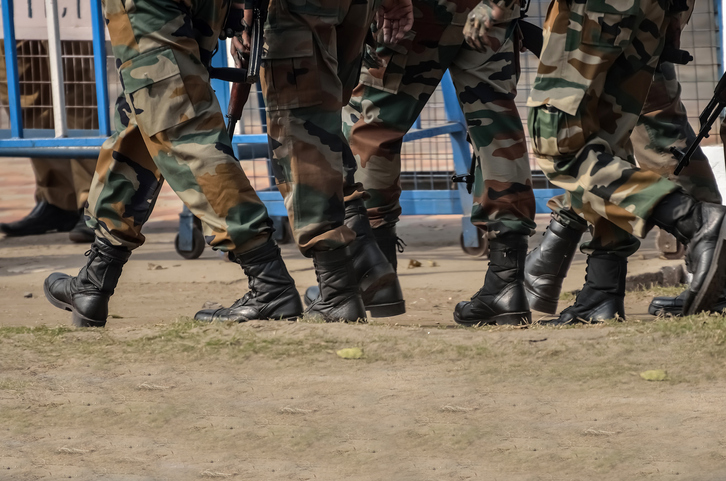
Photo for representation only. Source: iStock.
New Delhi, April 13
There’s a strong possibility of you getting a forward on social media these days, criticising Indian Army’s proposed move of reduction in manpower.
What it probably won’t mention is that it concerns the ‘non-essential’ manpower. So what is it, really and, more importantly, how and when is the reduction going to happen?
Essentially, the idea is to modernise the armed forces with the heavy infusion of cutting edge technology including Artificial Intelligence (AI), cyber warfare capability, space technology to serve small tech-intensive Integrated Battle Groups (IBF), of a tri-service nature.
To achieve that objective within limited budgets, the following steps are essential: Maintaining a healthy Teeth-to-Tail – or combat vs non-combat ratio The ‘teeth-to-tail ratio’,
in military parlance, is the amount of military personnel it takes to supply and support each combat soldier. While both ‘teeth’ and ‘tail’ soldiers may find themselves in combat or other life-threatening situations, ‘teeth’ soldiers are those whose primary function is to engage in combat.
The Army said, as detailed in the 20th standing committee report released last month, that some reduction in manpower remains the ultimate goal.
“It is an ongoing process; if you recollect, when Gen. V.P. Malik was the Chief, he thought of a reduction of 50,000 men. Our aim in the next three to four years is a reduction of about 1,00,000 men and this money that we are going to save because of the manpower costs, the government has assured us that this money will be cycled back to us for imbibing technology,” the committee was told.
Outsourcing, the new age mantra
So, while several blueprints of plans to reduce the Army manpower have been prepared over the past couple of decades, the reduction of the ‘non-essential’ manpower may finally begin after the massive upgradation of internal infrastructure done in the recent years, especially in the border areas.
The repair workshops are opening in forward locations and the Indian Army is consistently working on shortening its logistics tail and work on the Integrated Battle Group, or the IBG, concept. The small units will have a small logistics tail which too shall be outsourced.
The committee was told that, if in need of repair or service, an Army Tata vehicle no longer needs to be sent to Army Base Workshops (ABWs). With Tata workshops now operating even in places like Silchar and Guwahati, it can be sent straight to the facility run by the manufacturing company.
A couple of years ago, while reviewing the functioning of different organisations including defence workshops, the government had decided to corporatize eight Army Base Workshops on Government Owned Contractor Operated (GOCO) model while disbanding two ABWs, one Static Workshop and four ordnance depots.https://0a6aa51c3bfc4ce4bbb6c96f6c7c375f.safeframe.googlesyndication.com/safeframe/1-0-38/html/container.html
With workshops being put on the GOCO model, the manpower can be shifted to other divisions, including space, cyber and Artificial Intelligence.
Saving manpower, infusing technology
Last year, during the first anniversary of Balakot air strikes, Defence Minister Rajnath Singh had termed hybrid warfare a reality and had emphasised the need to reorient the training of soldiers to meet the challenges posed by it. With AI, high-speed weapons and space-based sensors and tools having a significant impact, he stressed that there was an urgent need to imbibe new technologies and use existing capabilities in innovative ways.
With India being a witness to a number of skirmishes in the region, CDS General Rawat too realises the fast-changing geopolitics around the globe. Time and again, he has called for maintaining credible deterrence in land, air and at sea at all times, saying that the three Services must work together concurrently to deal with any potential threats, based on the principle of theater commands.
“Credible deterrence comes from the will of the military leadership and intent of the political class while taking tough decisions. This was amply shown after the Kargil, Uri and Pulwama attacks,” General Rawat had said earlier.
With the whole concept of war undergoing transition, the Ministry of Defence is now working on introducing modern technologies, which though costly will save on manpower and even money in the long run.
“For example, let us say there is a hill feature which we are occupying. Today we occupy that hill feature with 120 men which is a company. But if that same company is given technology which ensures that it has got a complete transparency within 2000 meters of what is available there and has got weapon systems to engage, it can do the same task with about 80 men. That is what we are looking at in the future,” the committee was told.
At the same time, while looking at imbibing technology, the Army is also focusing on the infantry soldier manning the border.
“We want to give him a modern rifle; we want to give him a modern surveillance system; we want to give him technology that he can imbibe.” — IANS
US naval fleet’s defiance of Indian law is not unprecedented. India must heed the message
It had rushed in aid of West Pakistan during the 1971 Indo-Pak conflict. To defy Indian law through our EEZ in the 50th year of Bangladesh’s creation and then advertise it is downright obtuse, if not intended to send out a message.
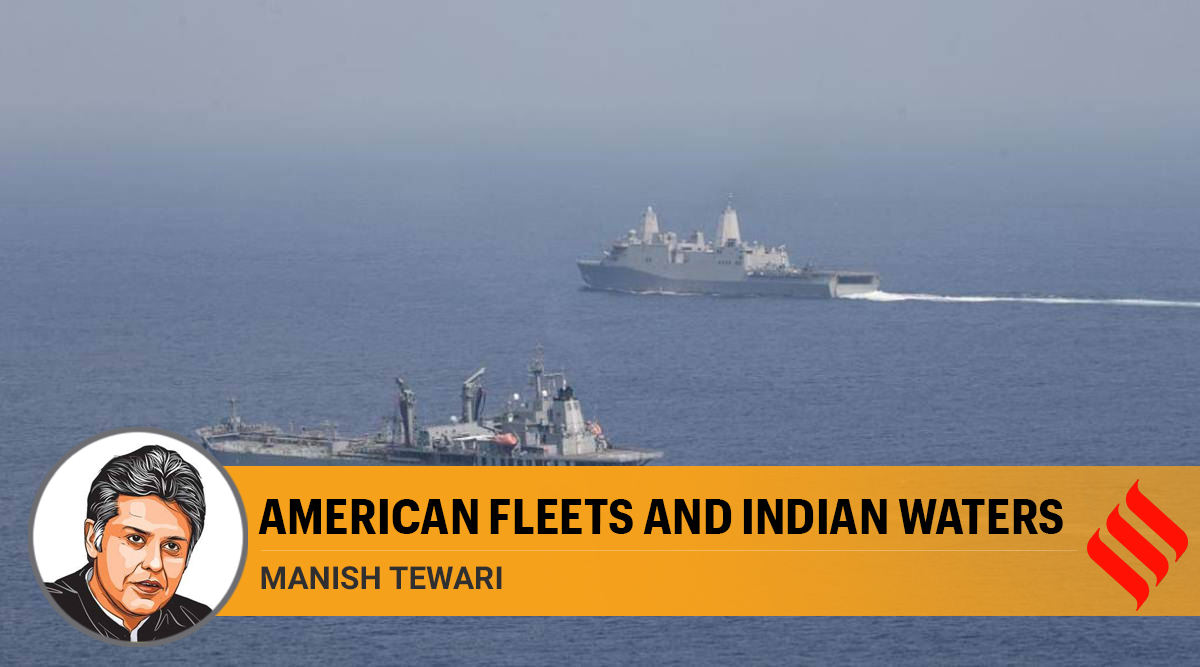
April 14, 2021 8:53:28 amIndia and US were involved in a joint naval exercise, along with navies of Japan, France and Australia in the eastern Indian Ocean region, in the La Pérouse exercise between April 5 and April 7. (Source: Twitter/@USNavy)
The United States of America has always basked in its bluntness and candour. However, what it did recently is something of an “achievement” even by its own tone-deaf standards.
On April 7, the US Navy put out a rather quixotic announcement on the official website of its Seventh Naval Fleet stating that one of its ships, USS John Paul Jones, had asserted navigational rights and freedoms approximately 130 nautical miles west of the Lakshadweep Islands inside India’s Exclusive Economic Zone (EEZ), without requesting Delhi’s prior consent. It went on to declare that the freedom of navigation operations (FONOPs) are not about one country, nor are they about making political statements.
Several elements of the Seventh Fleet entering Indian waters without permission touch on emotive issues for India with attendant overtones of patriotism. The fact that these FONOPs have happened earlier does not, in any manner, normalise what happened on April 7 — or, for that matter, why the Seventh Fleet courted ignominy half a century ago.
Herein hangs a tale. As the Indo-Pakistan conflict over the genocide in the then East Pakistan looked inevitable, US President Richard Nixon and his National Security Adviser (NSA) Henry Kissinger decided that if push came to shove, they would weigh in on West Pakistan’s side. This was notwithstanding the fact that the US administration was fully cognizant of the grave human rights violations being perpetrated by the Pakistani army in the east of the country.
Consistent with the plan in November 1971, Henry Kissinger advised his Deputy NSA General Alexander Haig to direct the US Navy to keep an aircraft-carrier-led task force ready for deployment in the Indian Ocean.
As the tide of war turned against Pakistan, US Navy’s Task Force-74 of the Seventh Fleet led by the aircraft carrier USS Enterprise was ordered to sail at battle speed into the Bay of Bengal from the Gulf of Tonkin where it was then deployed for operations in the Vietnam war. Concurrently, the British Navy also dispatched a naval group led by the aircraft carrier HMS Eagle towards the west coast of India.
An audacious and coordinated “grand bluff” to intimidate India was thus operationalised. British ships in the Arabian Sea would engage Indian naval assets, thereby providing a distraction for the US Task Force-74 to make a dash for the coast of East Pakistan to reinforce the pulverised Pakistani positions. The objective being to force an immediate ceasefire and stop Dhaka from falling into Indian hands.
Obviously, this caused great consternation in India. Articulating India’s position, Defence Minister Jagjivan Ram thundered: “Even if the US were to send the 70th fleet, we would still not be deterred”.
However, on the ground, the situation was grim. Facing the British and the American Armada was Indian Navy’s Eastern Fleet commanded by its aircraft carrier Vikrant with barely 20 light fighter aircrafts. The Indian Air Force would provide the rest of the muscle.Must Read Opinions
Invoking the Indo-Soviet Treaty signed on August 9, 1971, India requested the Soviet Union for help to call out the Nixon-Kissinger chicanery. The Soviets responded with alacrity. The 10th Operative Battle Group (Pacific Fleet) commanded by Admiral Vladimir Kruglyakov slipped anchor at Vladivostok and in double quick time reached the Bay of Bengal. The Soviets stared down the Anglo-American flotilla and the rest is history. However, the American perfidy at that critical moment is indelibly imprinted in the collective Indian psyche.
Since then, India and the US have become friends if not allies. The Quad between US, Japan, Australia and India is plugged as the fulcrum of a future Asian NATO. India and US have signed foundational agreements for better interoperability between their respective militaries. Since the Indian nuclear tests of 1998, there has been better appreciation of each other’s strategic imperatives. The US, by its own admission, has supported India logistically in eastern Ladakh.
However, it seems the understanding has not permeated deep enough to understand each other’s psyche, if not sensibilities. In the fiftieth year of the creation of Bangladesh, to sail a Seventh Fleet vessel in defiance of Indian law through our EEZ, and then advertise it is downright obtuse, if not intended to send out a message to India and the larger Indo-Pacific region. For the manoeuvre is not as innocent as it is being made to look.
The Joe Biden administration’s appreciation of the Indo-Pacific and India’s place in it is very different from that of its predecessor. While Trump saw India as an important instrument to counter the growing Chinese influence in the region, President Biden has a more nuanced, if not a softer, approach towards Beijing. The manner in which FONOP was broadcast is obviously to smoothen ruffled Chinese feathers over similar operations in the South China Sea that the US has been regularly undertaking.
Given that India and China are still locked in an eyeball-to-eyeball confrontation in eastern Ladakh, such posturing by the US does not augur well for India. Even our “time-tested ally” Russia wants to balance its position in South Asia given our “closeness” to the US, as evidenced by the Quad and our approach to Afghanistan that is more aligned to the US position than what Moscow is proposing. India will do well to weigh its options far more carefully. A stitch in time saves nine.
This column first appeared in the print edition on April 14, 2021 under the title ‘American fleet and Indian waters’. The writer is a Congress leader, lawyer, MP and former Union Information and Broadcasting Minister
China changes stance, wants de-escalation before disengagement in Ladakh. India disagrees
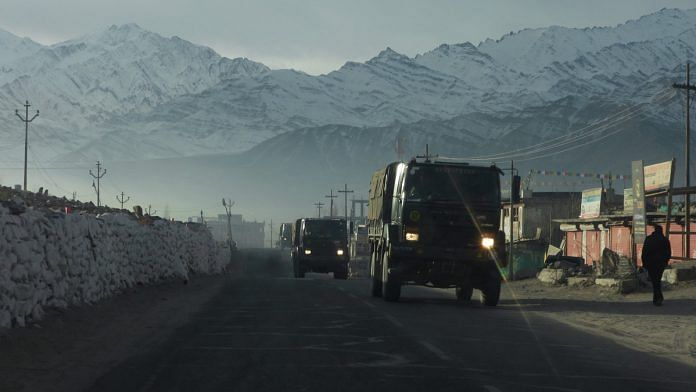
Representational image of an Indian Army convoy moving through Ladakh | Photo: ANI
Text Size: A- A+
New Delhi: Differences seem to have emerged between India and China over the next steps their armies need to take to further ease tension along the Line of Actual Control (LAC) in eastern Ladakh.
After the surprise breakthrough in February that saw both sides pulling troops and equipment back from the brink in Pangong Tso, Beijing wants the two armies to de-escalate or withdraw additional troops brought in as back-up to those in the front, ThePrint has learnt.
This is a change in Beijing’s position from what the two sides had discussed in February, it is learnt.
New Delhi, however, is insisting on disengagement from the remaining friction areas along the disputed Himalayan frontier first.
These were part of proposals exchanged between the two sides at the 11th round of Corps Commander level talks held last week, sources in the security establishment said.
De-escalation before disengagement could give China an advantage as it can move troops back to the frontline much faster than India due to the better infrastructure on its side of the Himalayan frontier, experts said.
The China Study Group, the sources said, will meet soon to take stock of the talks and discuss the proposal sent by China, and the Indian response. A key member of the group, Army chief Gen. M.M. Naravane, is currently in Bangladesh and is expected to return Tuesday.
This meeting could, however, be pushed to next week due the assembly election campaign in West Bengal and rising Covid cases. China will also discuss the proposal sent by India for disengagement at higher levels within their system.
New Delhi and Beijing, the sources said, have agreed that further escalation of tensions is in nobody’s interest but there is a difference between the modalities of the steps to be taken next and the order of those steps.
India, they said, is insisting on disengagement because troops are facing each other off in at least four other locations. Last week, ThePrint had explained how China was dragging its feet on disengagement at other friction points, including what experts say are the low-hanging fruits of Gogra and Hot Springs.
A statement released by the Army after consultation with the Ministry of External Affairs following the talks last week said, “it was highlighted also that completion of disengagement in other areas would pave the way for two sides to consider de-escalation of forces and ensure full restoration of peace and tranquility and enable progress in bilateral relations”.
At the 10th round of Corps Commander level talks, held in February after the Pangong Tso disengagement, China and India had discussed the disengagement process and broadly agreed on some steps in the Gogra and Hot Springs area, the sources said.
However, China switched to talking about de-escalation in the 11th round.
While Army officers refused to discuss the issue saying that whatever had to be said had been mentioned in the Army press statement, a veteran explained that the Chinese have better infrastructure on their side and this would allow the PLA to move troops back to the frontline much faster than India.
Considering the low trust levels between the two sides, India wants to make sure that the disengagement happens first, which will then pave the way for de-escalation, the sources said.
The Army has already implemented a series of deployment changes in Ladakh for the summer and has also redrawn the Order of Battle (ORBAT) as one of the many steps planned to counter China.
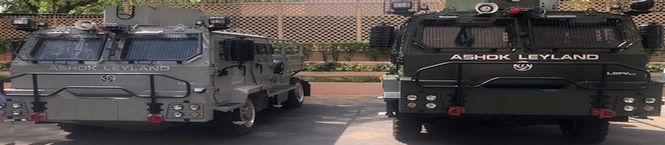
Light Bullet Proof Vehicles (LBPV) In a bid to strengthen its capability to tackle terrorists trying to launch attacks inside its air bases like the Pathankot Airbase, the Indian Air Force (IAF) has inducted specialist vehicles that can withstand bullet and grenade attacks. “The Light Bullet Proof Vehicles (LBPVs) have been inducted into the service and would be deployed at the airbases to be used during any terrorist attack to suppress them,” IAF officials told ANI here. The six-ton vehicle has been designed and developed in a way that its engine remains hidden from the front and rear side and cannot be targeted easily, they said. The vehicle has been provided protection by equipping with 6 mm thick armoured protection and a 40 mm windshield, which can withstand AK-47 and sniper rifle bullets, the officials said.
A canopy covered or protected by armour has also been provided which can allow the gunner to fire freely at its target. The vehicle can be driven at high speeds up to 100 to 120 km and can also be run on flat tyres, the officials said. The vehicles can accommodate six fully geared Garud commandos or Quick Reaction Team (QRT) members while the open space in the rear can have more men. Four terrorists had intruded the Pathankot Airbase at night on the new year’s eve of 2015-16 and tried to attack the assets deployed there, including fighter aircraft and helicopter gunships. The terrorists were killed and their mission was foiled but the incident suggested certain shortcomings in Air Force’s preparedness to tackle such attacks and manpower training for reacting to such assaults was undertaken at a large scale.
State Stalwarts
DEFENCES FORCES RANKS
ARMY, NAVY, AIRFORCE RANKS
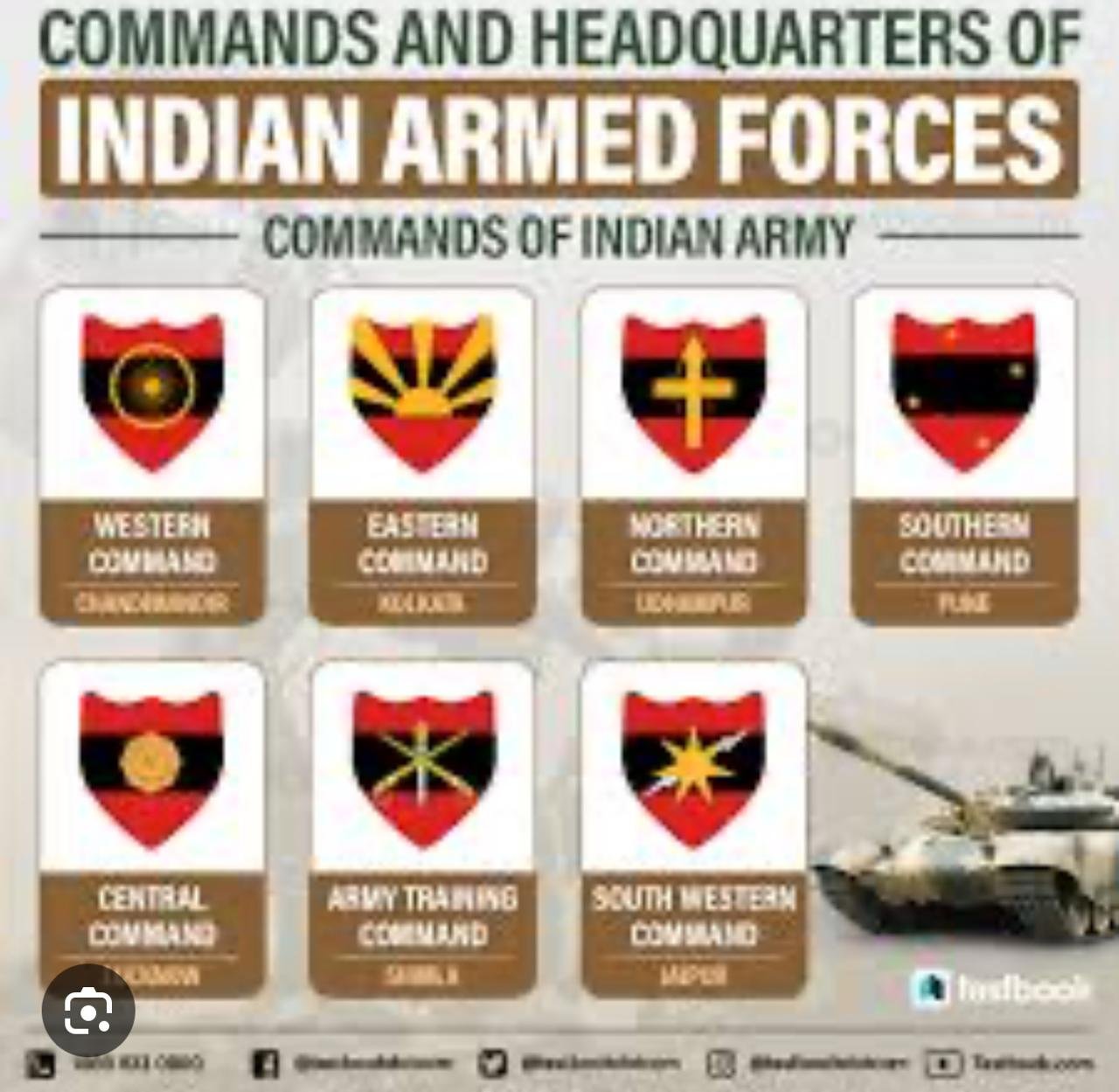
FORMATION SIGNS
FORMATION SIGNS
ALL HUMANS ARE ONE CREATED BY GOD
HINDUS,MUSLIMS,SIKHS.ISAI SAB HAI BHAI BHAI
CHIEF PATRON ALL INDIA SANJHA MORCHA
LT GEN JASBIR SINGH DHALIWAL, DOGRA
SENIOR PATRON ALL INDIA SANJHA MORCHA
MAJOR GEN HARVIJAY SINGH, SENA MEDAL ,corps of signals
.
.
PATRON ALL INDIA SANJHA MORCHA
MAJ GEN RAMINDER GORAYA , CORPS OF
sanjhamorcha303@gmail.com
PRESIDENT HARAYANA STATE CUM COORDINATOR ESM
BRIG DALJIT THUKRAL ,BENGAL SAPPERS
PRESIDENT TRICITY
COL B S BRAR (BHUPI BRAR)
PRESIDENT CHANDIGARH ZONE
COL SHANJIT SINGH BHULLAR
.
.
PRESIDENT PANCHKULA ZONE AND ZIRAKPUR
COL SWARAN SINGH
PRESIDENT SAS NAGAR (MOHALI)
COL BALBIR SINGH , ARTY
INDIAN DEFENCE FORCES
DEFENCE FORCES INTEGRATED LOGO
FORCES FLAGS
15 Th PRESIDENT OF INDIA SUPREME COMMANDER ARMED FORCES
Droupadi Murmu
DEFENCE MINISTER
Minister Rajnath Singh
CHIEF OF DEFENCE STAFF (2nd)
General Anil Chauhan PVSM UYSM AVSM SM VSM
INDIAN FORCES CHIEFS
CHIEF OF ARMY STAFF(29th)
General Upendra Dwivedi, PVSM, AVSM (30 Jun 2024 to Till Date)


















































 India and US were involved in a joint naval exercise, along with navies of Japan, France and Australia in the eastern Indian Ocean region, in the La Pérouse exercise between April 5 and April 7. (Source: Twitter/@USNavy)