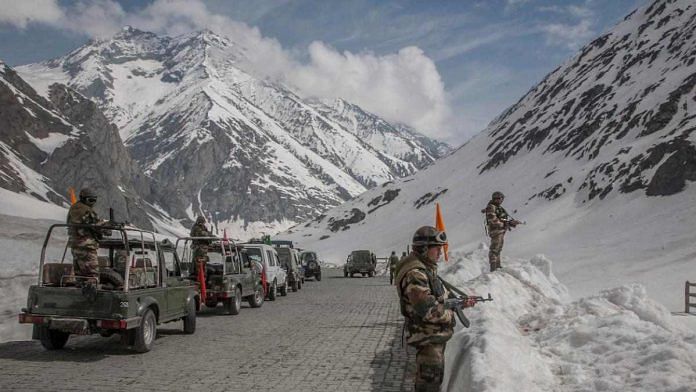
A soldier, posted in Baramulla district, shot himself on Sunday. Sources in the police said the soldier, identified as Parveen Kumar, used his service rifle to shot himself.
A police official said a case had been registered in connection with the incident. “Further investigation has been started to ascertain the reason behind his extreme step,” he added. — IANS
Vehicle ownership transfer: Road ministry notifies changes in motor vehicle rules
Now, owner can put the name of nominee at the time of registration of vehicle
Photo for representational purpose only. iStock
New Delhi, May 2
The Ministry of Road Transport and Highways has notified certain changes in the Central Motor Vehicles Rules, 1989, to facilitate the owner of a vehicle for nominating a person in the registration certificate, which would help the motor vehicle to be registered or transferred in the name of the nominee, in case of death of the owner.
Now, the owner can put the name of the nominee at the time of registration of the vehicles and can also add it later through an online application.
The process is otherwise cumbersome and non-uniform across the country.
According to the notified rules, the owner of a vehicle has to submit proof of the identity of the nominee, in case the nominee is mentioned.
“Where the owner of a motor vehicle dies, the person nominated by the vehicle owner in the certificate of registration or the person succeeding to the possession of the vehicle, as the case may be, may for a period of three months from the death of the owner of the motor vehicle, use the vehicle as if it has been transferred to him, Provided that such person has, within thirty days of the death of the owner, informed the registering authority of the occurrence of the death of the owner and of his own intention to use the vehicle,” the notification said.
It further said the nominee or person succeeding to the possession of the vehicle shall apply in Form 31 within the period of three months from the death of the owner of the motor vehicle, to the registering authority for the transfer of ownership of the vehicle in his name.
For change in nominee in case of contingencies like divorce or division of property, the owner may change the nomination with an agreed Standard Operating Procedure (SOP), it added.
Currently, in case of death of a registered owner of a vehicle, the procedure of transferring the vehicle to a nominee requires complying with a raft of procedures and frequent visits to different offices.
The Ministry of Road Transport and Highways on November 27, 2020, had proposed to amend the Central Motor Vehicles Rules, 1989, to facilitate the owner of a vehicle for nominating a person in the registration certificate.
The government “has invited suggestions and comments from public and all stakeholders on the proposed amendment…,” it had said.
Under the proposed amendment, “an additional clause is proposed to be inserted wherein ‘proof of identity of nominee, if any’ to enable the owner to nominate anyone to be the legal heir of the vehicle in case of death,” it had said.
For transferring the vehicle to the legal heir in case no nominee has been specified by the owner, it is proposed that an additional clause may be inserted to enable the owner to nominate a nominee.
In case where the nominee is already specified, the vehicle will be transferred in his/her name. PTI
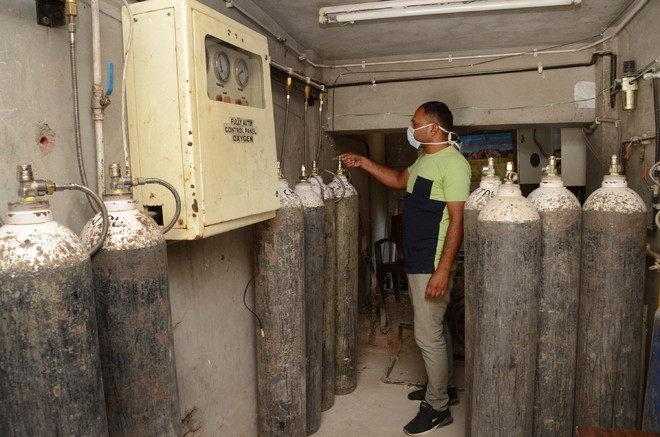
Despite attempts by official agencies and pressure groups to evict them from a prime commercial area in Shillong, Sikhs are extending a helping hand to locals at the time of crisis. They have started an “oxygen langar” for locals at the city’s largest gurdwara.
“Though hospitals have been able to take care of oxygen requirements of Covid patients, we too have made arrangements to help during the crisis,” said Kamaljeet Singh Sehdave, Shillong-based dental surgeon who is secretary of Sri Guru Singh Sabha that oversees the running of the gurdwara.
Sehdave said they had made arrangements with dealers in Guwahati to supply oxygen cylinders and concentrators. While some cylinders and concentrators had arrived, more would soon come, he said.
Appreciating the Sikh community’s efforts, Patricia Mukhim, editor of the region’s English daily, wrote in a post on the Facebook, “the Sikh community of Shillong is the first to respond and come forward with this critical facility (oxygen langar) at these daunting times. And this is the only building they have. Will those other religious institutions with huge infrastructure please come forward and open similar facilities to help overcome the medical crisis should we ever come to such a point? What’s the use of all the big buildings if they are not used to serve humanity? Preparedness is wisdom. Thank you Guru Singh Sabha, Shillong”.
Notably, Sikhs living in Shillong’s Harijan Colony have been facing pressure from some Khasi outfits as well as from the Municipal Corporation to vacate their houses where they have been living for several generations.
Retiring SSC officers in Armed Forces Medical Services to get extension till Dec: Lt Gen Kanitkar
Around 200 such medical officers, who were to retire, will continue with their services
hoto for representation. — iStock
New Delhi, May 2
Around 200 Short Service Commission (SSC) officers with the Armed Forces Medical Services (AFMS), due for retirement over the next seven months, will get an extension till December 31 in view of the Covid-19 situation in the country, a senior Army officer said on Sunday.
Lt Gen (Dr) Madhuri Kanitkar, who is part of the medical team under the Chief of Defence Staff, said they will be deployed for Covid-19 management programme initiated by the armed forces.
“Short Service Commission officers of the AFMS who are retiring in the next seven months will be given a unilateral extension. So, we have around 200 such medical officers, who were to retire, we will continue to have their services.
“So, we are holding back these medical officers who would have otherwise left us,” Lt Gen Kanitkar, the Deputy Chief of Integrated Defence Staff (Medical) under the Chief of Defence Staff, told PTI here.
The orders for implementation of this plan are expected soon as the proposal is in advance stages of approval, said Lt Gen Kanitkar, the third women officer to have reached to the level of three-star general in the armed forces.
The other two were Punita Arora, who worked with the army and later shifted to the Navy, and Air Marshall Padma Bandopadhyay.
The SSC medical officers are granted commission in the armed forces for a tenure of five years which is extendable by another 5 years for those who are willing to continue subject to laid down eligibility criteria.
Lt Gen Kanitkar feels that the present Covid-19 crisis has taken every country back to the drawing board and rework their plans according to the age-old saying ‘health is wealth’.
“I think we need to ramp up basic primary health infrastructure. In this kind of pandemic even countries with the best of the infrastructures collapsed. If we look that way, we have performed much better during the first wave of the pandemic,” she said.
Among the host of services launched by the armed forces include starting a website ‘SeHAT’ (Services eHealth Assistance and Teleconsultation) to provide assistance to the families of armed forces as well as ex-service personnel.
Having served during the Kargil war in 1999, when she was posted to the Northern Command, Lt Gen Kanitkar feels that today the doctors are frontline workers while soldiers are helping the medical fraternity in fighting the pandemic.
In addition, those retired from AFMS have been advised to help in their respective localities and the local army commanders can be their facilitator.
“Already senior doctors including a retired Director General of Armed Forces Medical Services have started providing teleconsultation to needy as well as to the ex-servicemen,” she said.
State government hospitals would be provided with Nursing Assistants, who have retired from the service, she said.
“Some of the SSC medical officers, who have recently retired from the armed forces, may also be roped in on a voluntary basis and used for Covid-19 management,” she said. PTI
Former Western Command chief dies of COVID in Delhi
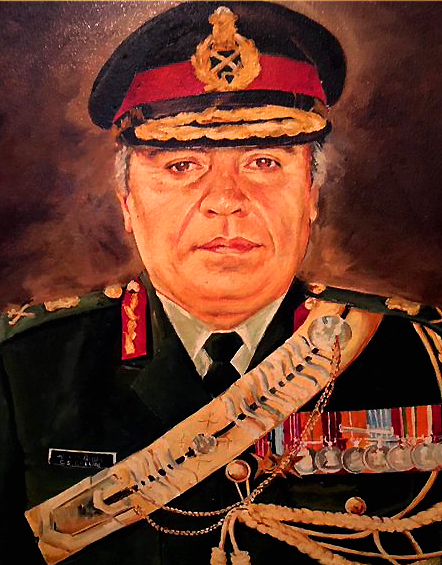
ortrait of Lt Gen GS Grewal displayed at Headquarters Western Command. Tribune photo
Tribune News Service Chandigarh, May 1
Former General Officer Commanding-in-Chief, Western Command, Lt Gen GS Grewal passed away at the Army’s Base Hospital in New Delhi on Saturday. He was 86 and had reportedly contracted COVID-19.
An Armoured Corps officer, he was commissioned into One Horse (Skinner’s Horse), one of the Army’s oldest cavalry regiment, which he had commanded. He served as the Western Army Commander from July 1, 1990 to July 31, 1992, during which he oversaw Operation Rakshak. the Army’s deployment for counter terrorism in Punjab.
Popularly known as “Goody Grewal” by his contemporaries, he was considered an outstanding commander in Army circles. He is survived by his 35-year old son, Simranjeet Singh. His wife had also passed away on April 13 this year.
SHERPA PURSUES ALLEGED CORRUPTION INQUIRY INTO INDIAN RAFALE ACQUISITION
by Pierre Tran Paris – Sherpa, a French non-governmental organization, said it filed April 28 a request for a judicial inquiry into alleged corruption on India’s acquisition of 36 Rafale fighter jets in a deal worth €7.8 billion ($9.4 billion). “Sherpa, represented by its lawyers William Bourdon and Vincent Brenghart, is filing a complaint and requesting the opening of a judicial investigation for corruption, favouritism and various financial offences likely to have occurred in the context of the sale of 36 combat aircraft produced by Dassault Aviation and sold to India in 2016,” the NGO said in a statement. The filing was in response to a lack of official action following Sherpa’s Oct. 26 2018 call for a French investigation into the pick of Reliance as the Indian industrial partner for Dassault, the anti-corruption office said. Reliance had little experience in the aeronautics industry, The French National Financial Prosecutor, in the wake of the 2018 filing, failed to conduct a full enquiry into the selection of Reliance, which was then in financial difficulty and was led by an executive close to the Indian prime minister, Sherpa said. Before the appointment of Reliance, Dassault had been in talks with state-owned Hindustan Aeronautics Ltd. (HAL) as local partner on a prospective deal for 126 Rafales. New Delhi in 2015 ditched the talks with Dassault and switched to a government-to-government order for 36 units. It was part of that €7.8 billion deal for 36 Rafales that India selected Reliance as local partner to Dassault. Apart from an informal interview with a Dassault lawyer, the French prosecutor’s office failed to conduct a detailed inquiry, and in June 2019 ruled “absence of an offence,” reported the website Mediapart, Sherpa said. Sherpa has worked on the case separately from Mediapart, a lawyer for the NGO said. Sherpa has conducted its own inquiry over the last two years, the NGO said, and the reporting of Mediapart pointed up a “passivity” of the French Anti-Corruption Agency, while there were suspicious payments, “hidden commissions” and the absence of anti-corruption clauses in weapons contracts. Mediapart reported that Dassault paid €1 million to Sushen Gupta, an Indian “middle man” who helped secure the Rafale contract. The French aircraft builder told the Anti-Corruption Agency the payment covered 50 reduced size models of the fighter, to be presented as gifts to customers in India. There was concern that the €1 million payment may have covered illegal commissions, and the excising of anti-corruption clauses from the Indian contracts may be related to that payment, Mediapart reported. The Indian authorities have conducted investigations on Gupta following corruption allegations on the 2010 sale of AgustaWestland helicopters. The Anti-Corruption Agency reported to two ministries — budget and justice — seen as placing the office under political pressure. There were flaws in a French anti-corruption system which gave “too much leeway for the implementation of internal procedures in companies to fight corruption,” Sherpa said. “The present case is an example of the failure of this approach, which relies on a convergence of the private interests of the company and those of the general interest that criminal law is supposed to protect,” Sandra Cossart, executive director of Sherpa, said in the statement. “Those latest revelations show to what extent the admissibility of associations to bring judicial actions before the courts is a central component of our democracy.” A Dassault spokesman declined to comment and referred to an April 8 company statement in response to the Mediapart reporting. Official organizations, including the French Anti-Corruption Agency, had conducted “numerous controls,” the Dassault statement said, and no violations were reported in the Indian contract for 36 Rafales. The company acted in strict compliance with the OECD anti-bribery convention and in line with national laws, particularly the French law known as Sapin-2, adopted Dec. 9, 2016, the company said. “Since the early 2000s, Dassault Aviation has implemented strict internal procedures to prevent corruption, guaranteeing the integrity, ethics and reputation of the company in its industrial and commercial relations,” the company said. “In the context of the Sapin-2 law, the company has completed and strengthened its system for the prevention and detection of corruption and influence peddling, both at the level of the parent company and its subsidiaries.”
PAKISTAN GENERALS WORRIED THAT INDIA MAY BOND WITH TALIBAN
New Delhi: Pakistan is not happy with the Taliban. A report by prominent Pakistani journalist Hamid Mir published in The News, a daily newspaper, says that Pakistani security officials have approached the Afghan Taliban leadership in Doha and made it very clear to them that their refusal to participate in the Istanbul Conference was a big blow to the Afghan Peace Process and if they do not show some flexibility they will have to face the consequences. “Enough is enough” message has been given to the Talibani leadership and the same message was conveyed to the Afghanistan President Ashraf Ghani by the Pakistani delegation last week in Kabul. According to Pakistani sources, the news has emanated from an “off the record” briefing by Pakistan’s army chief General Qamar Javed Bajwa at an “Iftar” party hosted by him for a bunch of “trusted” media persons at the military headquarters in Rawalpindi. Bajwa shared a lot of “information” with them but asked the journalists not to attribute the news to army sources. The report says that the Taliban thinks that India started engaging with Pakistan recently just because India does not want Islamabad to object to its new role in Afghanistan. This information was “leaked” by the Pakistani army chief Bajwa at a time when a lot of key changes are taking place in Afghanistan, which have crucial bearing on Pakistan’s national security and strategic interests in the long run. Bajwa is worried because he does not trust the Taliban and he would not like them moving closer to India. Pakistani security agencies found some links between Afghan Taliban and groups related to Tehreek-e-Taliban Pakistan (TTP), “They are two faces of the same coin.” The PTT is staunchly opposed to the Pakistani establishment. The India Factor Bajwa saw the ground situation changing last year when US Special Representative for Afghanistan Reconciliation Zalmay Khalilzad said that India should discuss its concerns on terrorism directly with the Taliban. The US envoy had discussed how India could play a “more active role” in the Afghan reconciliation process during his talks in Delhi. Khalilzad told Indian media that it is for India to decide its role, but engagement between India and all the key players in Afghanistan, not only in terms of the government but also in terms of political forces, society and the Afghan body politic, is appropriate given India’s regional and global position. India is an important force in Afghanistan and it would be appropriate for the India-Taliban engagement to take place. This was followed by a Taliban statement saying the group would like to have a positive relationship with India and welcomed New Delhi’s cooperation in Afghanistan. The Taliban also said that it does not support Pakistan’s ‘holy war’ against India and that Kashmir was India’s internal matter. Taliban’s spokesperson Mohammad Suhail Shaheen told an Indian audience through a webinar speech last year in April, that the group wants to build ties with India and even was willing to enact a law against foreign terror groups conducting operations against any other country. “Linking the issue of Kashmir with that of Afghanistan by some parties will not aid in improving the crisis at hand because the issue of Afghanistan is not related. Pakistan’s military establishment feels that Taliban may be looking for an opportunity to break away from Pakistan stranglehold to chart out an independent path by taking on board all sections of Afghan society for a futuristic settlement to the Afghan problem. The current Taliban leadership is known to be based in Doha. Mullah Baradar, the Taliban chief negotiator in Qatar was held by Pakistan for close to 10 years. Similarly, many other senior leaders would want to break free. In the past Taliban leaders have shown an inclination to chalk out an independent path without the baggage of Pakistani patronage leading to factional fights. While some experts believe that Taliban wants to change its image which has been that of a pawn of Pakistan, others believe that it is merely a ploy by the Taliban to project a better image. Afghanistan was the focus at the Heart of Asia Conference held in Tajikistan on 30 March and India was represented by the External Affairs Minister S. Jaishankar said, “India has been supportive of all the efforts being made to accelerate the dialogue between the Afghan government and the Taliban, including intra-Afghan negotiations”. He also declared India’s support for a regional process to be convened under the aegis of the United Nations. According to experts, India wants to safeguard its interests and investments in Afghanistan which run into billions. This calls for good relations with the upcoming leadership in Kabul, irrespective of who rules. This would also help to avert any future threats from its economic and political foes, both Islamabad and Beijing. India’s soft power is likely to have some influence over the Afghan government. If the Taliban comes to power, it may consider a positive political approach to New Delhi as India can play an important role in the development of Afghanistan.
SOLDIERS SIT TIGHT IN LADAKH AMID INDIA’S COVID CRISIS, BUT CONSTRUCTION ACTIVITY CONTINUES
New Delhi: As the second Covid wave ravages the country, the soldiers are sitting tight in Ladakh while monitoring Chinese activity through physical means besides drones and satellite imagery even as various infrastructure development activities are on to cater to enhanced troop levels and future exigencies. The Army’s Northern Command has put in place a series of protocols to ensure the virus doesn’t hit operational capabilities. This comes even as the Chinese troops maintain a considerable amount of strength in depth areas after the disengagement from the Pangong Tso including armoured columns. The second wave of Covid has meant that there is unlikely to be any Corps Commander level talks between India and China over the next couple of months, said sources in the defence and security establishment. The 11th round of talks was held on 9 April. Junior officers and local formations, however, remain in communication with their Chinese counterparts through the hotline. Currently, China is seeking de-escalation first rather than disengagement from the four friction points including Depsang, Gogra and Hot Springs. Moreover, China also wants easing of the economic offensive by India since the deadly Galwan clash last year, which affected the operations of certain Chinese businesses in India. Sources said this was indicated during the diplomatic talks that have been held and not at the military level. Infrastructure Development A Key Focus Explaining how the troops are coping in wake of the second Covid wave, a source said, “We have to prevent ourselves from the second wave. While there is almost 100 per cent vaccination coverage among the soldiers in Ladakh, we are sitting tight because we can’t afford any chances on this front.” The steps taken on the front to hold on include cancellation of all non-emergency leaves, only necessary troop rotation, limited movement and non-physical interaction as much as possible. However, the sources said the infrastructure development activities in the region are currently on despite the Covid situation. “Summer is the period when we get to carry out our infrastructure activities. This also includes habitat and other logistics work for the enhanced troop level in the region. There are also channels of transportation that need to be fixed and also made,” a source said. On 12 April, the new summer plan for China, was observed that there is a significant increase in both its defensive and combat capability than previous summers even as India pulled back many formations sent in during the peak of the crisis last year. Another source explained that while Chinese troops have disengaged from the Pangong Tso side as well as the Galwan Valley, they are much closer to the Line of Actual Control (LAC) than they were before April 2020. This means that the Chinese will take a shorter time than before to return. India, accordingly needs to have infrastructure in place to ensure that the Indians too can do the same. For example, the Chinese moved back their soldiers from the southern banks of Pangong Tso to a place called Rutog, which is about 70 kilometres from the LAC. The Chinese had built additional accommodation centres and even installed a surface-to-air missile system in this area. China Study Group Has Not Yet Met Due To Covid Crisis Asked about possible movement in the Corps Commander level talks since the last round earlier this month, the sources said the Covid outbreak meant that things have gotten delayed. It is learnt that the China Study Group — the central and sole advisor to the government on policies related to China — has not formally met because the attention currently is on steps to be taken to counter the second wave of Covid. “The next round of talks could take time. It could be held after a month or two. However, the local commanders are maintaining contact through the hotline on a regular basis,” a source cited above said. In Ladakh the troops are maintaining constant surveillance through unmanned aerial vehicles and other ways, the sources said. Asked about the recent statement by the Chinese military that India should cherish the “current positive trend” of de-escalation and cooling down of tensions in the border area, other sources said this needs to be seen in a different light. “Cherish does not mean that there will be no movement further. It means that both sides have achieved something and hopefully more positive news will come,” said a third source.
Defence ministry asks retired Armed Forces doctors to join battle against COVID-19 through online platforms
Veterans officers of the Armed Forces Medical Services requested to register themselves on e-Sehat portal
Photo for representation. Reuters
Vijay Mohan
Tribune News Service
Chandigarh, May 1
With the second wave of the COVID-19 pandemic overwhelming the medical infrastructure in the country, the Ministry of Defence (MoD) today appealed to retired armed forces doctors to render their service through online platforms.
“The country has been experiencing the second surge of COVID-19 pandemic since the past one month which needs an accelerated optimised time-bound synergic effort at a national level with the aim of reducing mortality and morbidity,” a memo issued today by the Directorate General Armed Forces Medical Services in the MoD states.
Pointing out that the nation as a whole, including the Armed Forces, have been contributing their might in efforts to contain the pandemic and provide all possible assistance to the countrymen, the memo adds that the veterans constitute a large group of the Armed Forces family who have served the nation with honour and are motivated, highly trained professionals who still have a lot to offer for a national cause.
“Hence all veterans officers of the Armed Forces Medical Services are requested to register themselves on e-Sehat portal wherein they can offer their guidance, counselling and advice to many of their fellow countrymen and help provide succour in this hour of need,” the memo states.
According to reports, Chief of Defence Staff Gen Bipin Rawat, conveyed to the Prime Minister in a briefing earlier this week that Armed Forces doctors who retired and those who took pre-mature retirement in the last two years are also being recalled to serve in COVID-19 care facilities located in proximity of their residences. In addition, doctors on staff appointments at formation headquarters are being deployed in hospitals.
e-Sehat is a cloud based platform for real time and live two-way interaction between a patient and a health-care professional, including specialists, using audio-visual telecommunications and auto-synchronizing medical diagnostic data through specialised IoT enabled medical diagnostic devices.
With the spike in COVID-19 infections across the country creating unprecedented workload on hospitals, the armed forces augmented their medical facilities and assisted the civilian administration by opening their medical facilities to treat civilians, establishing and running quarantine and treatment centres and transporting essential supplies across the country.
As part of augmenting the present capacity, the MoD recently extended the term of engagement of short service commissioned doctors serving in the Armed Forces till December 31, 2021. This implies that 238 doctors, who would have otherwise been released, will continue in service till the end of the year. In addition, additional doctors have also been hired by the Ex-servicemen Contributory Health Scheme.
Soldiers sit tight in Ladakh amid India’s Covid crisis, but construction activity continues
The 12th round of Corps Commander level talks could take a couple of months since the current focus is on Covid even as forces maintain continuous vigil at the LAC.
ile image of Indian soldiers in Ladakh | Representational image |
New Delhi: As the second Covid wave ravages the country, the soldiers are sitting tight in Ladakh while monitoring Chinese activity through physical means besides drones and satellite imagery even as various infrastructure development activities are on to cater to enhanced troop levels and future exigencies, ThePrint has learnt.
The Army’s Northern Command has put in place a series of protocols to ensure the virus doesn’t hit operational capabilities.
This comes even as the Chinese troops maintain a considerable amount of strength in depth areas after the disengagement from the Pangong Tso including armoured columns.
The second wave of Covid has meant that there is unlikely to be any Corps Commander level talks between India and China over the next couple of months, said sources in the defence and security establishment. The 11th round of talks was held on 9 April.
Currently, China is seeking de-escalation first rather than disengagement from the four friction points including Depsang, Gogra and Hot Springs. Moreover, ThePrint has learnt that China also wants easing of the economic offensive by India since the deadly Galwan clash last year, which affected the operations of certain Chinese businesses in India.
Sources said this was indicated during the diplomatic talks that have been held and not at the military level.
Explaining how the troops are coping in wake of the second Covid wave, a source said, “We have to prevent ourselves from the second wave. While there is almost 100 per cent vaccination coverage among the soldiers in Ladakh, we are sitting tight because we can’t afford any chances on this front.”
The steps taken on the front to hold on include cancellation of all non-emergency leaves, only necessary troop rotation, limited movement and non-physical interaction as much as possible.
However, the sources said the infrastructure development activities in the region are currently on despite the Covid situation. “Summer is the period when we get to carry out our infrastructure activities. This also includes habitat and other logistics work for the enhanced troop level in the region. There are also channels of transportation that need to be fixed and also made,” a source said.
On 12 April, ThePrint had reported the new summer plan for China, mentioning that there is a significant increase in both its defensive and combat capability than previous summers even as India pulled back many formations sent in during the peak of the crisis last year.
Another source explained that while Chinese troops have disengaged from the Pangong Tso side as well as the Galwan Valley, they are much closer to the Line of Actual Control (LAC) than they were before April 2020.
This means that the Chinese will take a shorter time than before to return. India, accordingly needs to have infrastructure in place to ensure that the Indians too can do the same.
For example, the Chinese moved back their soldiers from the southern banks of Pangong Tso to a place called Rutog, which is about 70 kilometres from the LAC. The Chinese had built additional accommodation centres and even installed a surface-to-air missile system in this area.
China Study Group has not yet met due to Covid crisis
Asked about possible movement in the Corps Commander level talks since the last round earlier this month, the sources said the Covid outbreak meant that things have gotten delayed.
It is learnt that the China Study Group — the central and sole advisor to the government on policies related to China — has not formally met because the attention currently is on steps to be taken to counter the second wave of Covid.
“The next round of talks could take time. It could be held after a month or two. However, the local commanders are maintaining contact through the hotline on a regular basis,” a source cited above said.
In Ladakh the troops are maintaining constant surveillance through unmanned aerial vehicles and other ways, the sources said.
Asked about the recent statement by the Chinese military that India should cherish the “current positive trend” of de-escalation and cooling down of tensions in the border area, other sources said this needs to be seen in a different light.
“Cherish does not mean that there will be no movement further. It means that both sides have achieved something and hopefully more positive news will come,” said a third source.